
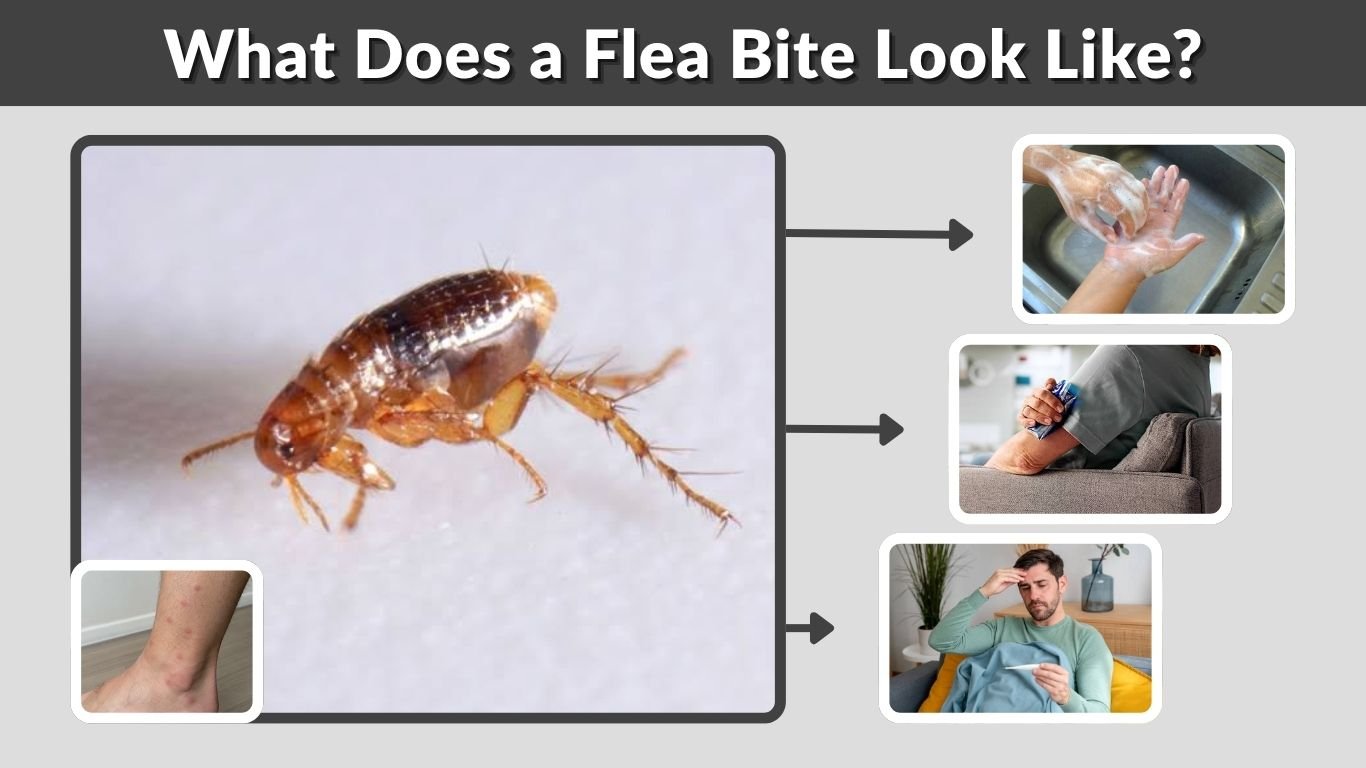
Flea bites usually look like small, itchy, red or discolored bumps that appear in clusters or short lines on the skin. They commonly affect the ankles, feet, and lower legs, although other body areas can also be bitten. On darker skin, flea bites may appear brown, purple, or darker than the surrounding skin rather than bright red. Their appearance varies depending on individual sensitivity and scratching. Understanding flea bite symptoms, skin reactions, and differences from other insect bites can help you recognize possible flea exposure.
What Does a Flea Bite Look Like on Humans?
A flea bite on human skin generally appears as a small, raised bump surrounded by mild inflammation. Some bites develop a darker central puncture mark or a discolored halo. Fleas often bite more than once, producing clusters of itchy spots. However, the appearance alone cannot confirm a flea bite because several other insects cause similar reactions.
Common Flea Bite Identification Signs
Typical flea bites have several recognizable characteristics:
- Small bumps: Usually raised, round, and relatively small.
- Redness: Pink or red inflammation on lighter skin.
- Dark discoloration: Brown, purple, or darker patches on deeper skin tones.
- Clusters: Several bites close together or arranged in short lines.
- Intense itching: Irritation that encourages frequent scratching.
- Central puncture: A tiny mark may be visible where the flea fed.
What Does a Fresh Flea Bite Look Like?
A fresh flea bite may initially appear as a tiny raised spot with mild redness or discoloration.
Itching can begin shortly after exposure or develop later. Some people experience pronounced swelling, while others develop barely noticeable bumps.
A single flea bite is possible, although multiple bites are common when fleas remain nearby.
What Do Flea Bites Look Like on Different Skin Tones?
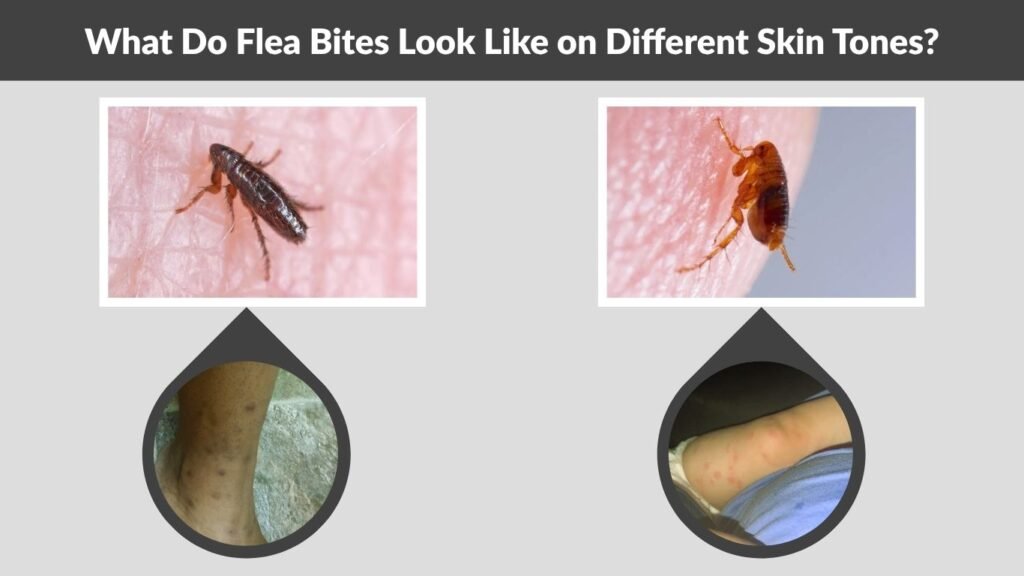
Flea bites do not look identical on everyone. Skin color, immune response, and sensitivity to flea saliva influence their appearance. On lighter skin, inflammation may produce obvious pink or red bumps. On darker skin, discoloration can be less visibly red and may appear brown or purple. Texture, swelling, and itching are important identification clues.
Flea Bites on Black or Brown Skin
On darker skin tones, flea bites may appear as raised brown, violet, or darkened bumps.
Surrounding inflammation may be difficult to recognize visually, even when the skin feels warm or swollen.
Scratching can also produce post-inflammatory hyperpigmentation, leaving darker spots after the bites heal.
Flea Bites on Babies and Children
Children may develop small, intensely itchy bumps on their legs, feet, or other exposed skin.
Frequent scratching can break the skin and increase the risk of infection.
Seek medical advice for insect bites in babies younger than one year, and obtain prompt care if a child develops worsening swelling, fever, or unusual symptoms.
Where Do Flea Bites Usually Appear?
Flea bites most commonly affect the ankles, feet, and lower legs because fleas often jump from carpets, floors, or infested surroundings.
However, bites can also occur around the waist, arms, or other accessible areas, particularly when someone rests on flea-infested furniture or bedding.
What Do Flea Bites Look Like on Dogs and Cats?
Flea bites affect dogs and cats differently from humans because their fur can conceal small skin lesions. Pet owners often recognize flea infestations through scratching, biting, hair loss, or irritated skin rather than visible puncture marks. Some animals develop flea allergy dermatitis, an allergic reaction to flea saliva that can cause substantial inflammation even after relatively few bites.
Flea Bite Symptoms on Dogs
Dogs with flea bites may show several signs:
- Red bumps: Small irritated areas beneath the fur.
- Persistent scratching: Frequent scratching or chewing.
- Hair loss: Especially near the tail base and lower back.
- Scabs: Crusted areas caused by irritation or scratching.
- Skin inflammation: Redness, swelling, or secondary infection.
What Does a Flea Bite Look Like on a Cat?
Cats may develop tiny crusted bumps, particularly around the neck, back, and tail base.
Excessive grooming can cause thinning fur or bald patches.
Because cats frequently groom themselves, fleas may be difficult to find even when flea allergy dermatitis is present.
A veterinarian can help identify the cause and recommend appropriate treatment.
Flea Bites vs. Bed Bug, Tick, and Sand Flea Bites
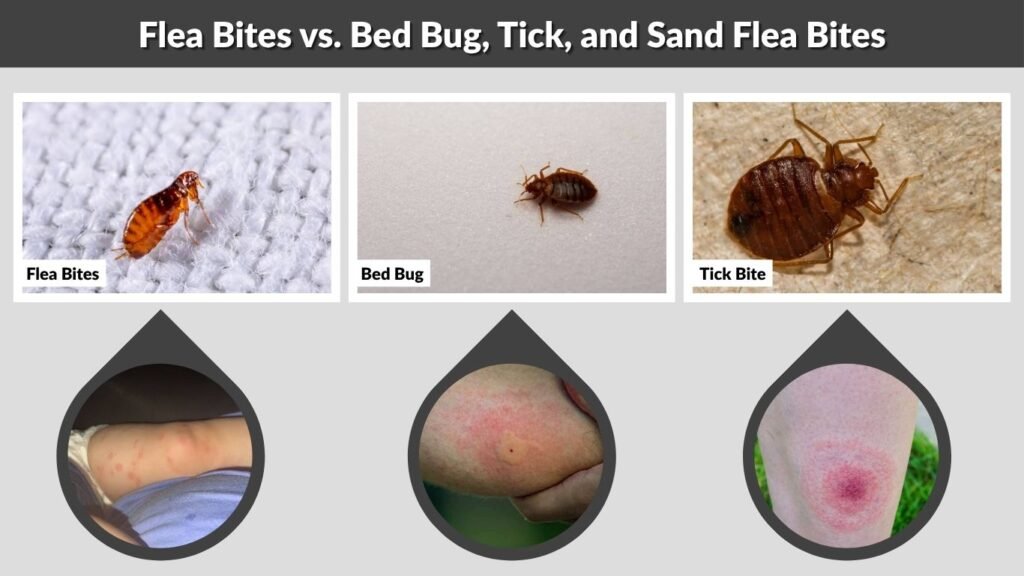
Flea bites can resemble other insect bites, making identification difficult without additional clues. Their location, pattern, and circumstances can help distinguish them from bed bug or tick bites. However, no single visual characteristic reliably identifies the responsible insect. Finding fleas, flea dirt, or other evidence of infestation provides stronger confirmation than examining bite marks alone.
Flea Bites vs. Bed Bug Bites
Flea bites commonly occur around the ankles and lower legs, often appearing as small clusters.
Bed bug bites may appear on exposed skin, including the arms, neck, shoulders, and back, particularly after sleeping.
Both can form lines or clusters, so bite arrangement alone cannot reliably distinguish them.
Flea Bites vs. Tick Bites
Tick bites often begin as a single mark where a tick is attached to the skin.
Flea bites more commonly produce multiple itchy bumps.
An expanding rash after possible tick exposure requires medical assessment, particularly when accompanied by fever or other symptoms.
What Does a Sand Flea Bite Look Like?
The term “sand flea” describes different organisms in different regions.
Some coastal biting creatures produce itchy welts resembling ordinary insect bites.
However, the true chigoe flea (Tunga penetrans) can burrow into the skin, producing a distinctive lesion that requires medical attention.
What Does an Infected Flea Bite Look Like?
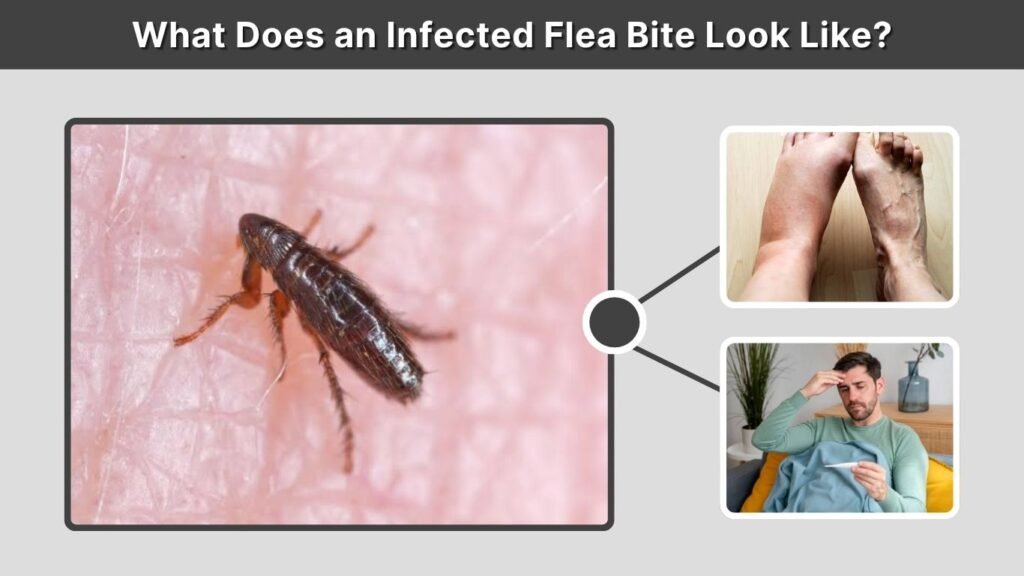
Most flea bites cause temporary itching and irritation without serious complications. However, repeated scratching can damage the skin and allow bacteria to enter. An infected bite may become increasingly painful, swollen, warm, or discolored. Recognizing abnormal changes is important because bacterial skin infections can require medical treatment, particularly when symptoms spread or become progressively worse.
Signs of an Infected Flea Bite
Possible signs include:
- Increasing swelling: The affected area becomes progressively enlarged.
- Spreading inflammation: Redness or discoloration extends beyond the original bite.
- Warmth: The surrounding skin feels unusually hot.
- Pus: Yellowish or cloudy drainage develops.
- Pain: Tenderness increases rather than improving.
- Fever: General illness develops alongside worsening skin symptoms.
When Is a Flea Bite Dangerous?
Seek medical attention for spreading infection, fever, or symptoms that do not improve.
Difficulty breathing, faintness, or swelling of the lips, tongue, or throat may indicate a severe allergic reaction and requires emergency care.
Although uncommon, fleas can also transmit certain infectious diseases.
How to Treat Flea Bites and Prevent More Bites
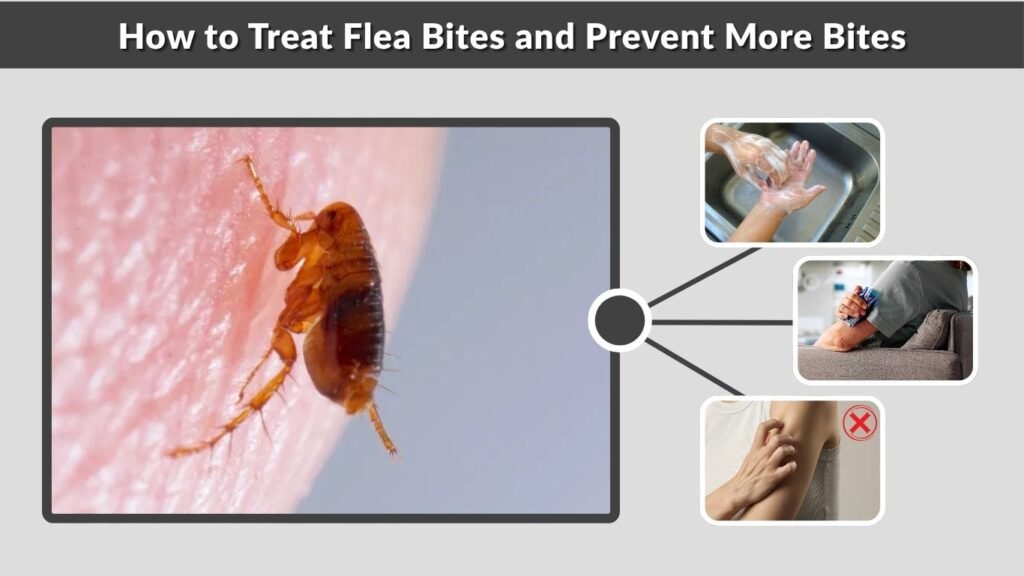
Most uncomplicated flea bites improve with basic skin care and itch relief. Washing the affected area, reducing irritation, and avoiding scratching can help prevent secondary infection. However, treating the skin alone will not stop additional bites if fleas remain in the environment. Successful prevention requires addressing infested pets, bedding, carpets, and other places where fleas develop.
How to Treat Flea Bites at Home
For mild reactions, consider these steps:
- Wash the skin: Clean the affected area with soap and water.
- Apply a cold compress: Reduce itching and swelling.
- Avoid scratching: Prevent skin damage and infection.
- Use itch relief: Consider an age-appropriate antihistamine or hydrocortisone cream according to product directions.
- Monitor symptoms: Watch for increasing pain, swelling, or discharge.
How to Prevent Future Flea Bites
Keep pets on veterinarian-recommended flea prevention and regularly inspect their coats.
Vacuum carpets, upholstered furniture, and floor edges thoroughly. Wash pet bedding and household linens regularly.
Persistent infestations may require coordinated pet and environmental treatment.
Always use flea-control products intended for the correct animal species; some dog treatments are toxic to cats.
FAQs
Flea bites are common causes of itchy skin bumps, especially in households with pets or flea-infested surroundings. Because they resemble other insect bites, people frequently ask about appearance, timing, symptoms, and healing. Understanding these details can help identify potential exposure while avoiding incorrect assumptions about the cause of a skin reaction.
1. What Does a Flea Bite Look and Feel Like?
A flea bite typically looks like a small raised bump with redness or discoloration. It often feels intensely itchy and may become tender or swollen.
2. Can One Flea Cause Multiple Bites?
Yes. A single flea can bite repeatedly, creating several small marks close together. However, multiple bumps do not necessarily mean one flea caused them.
3. How Long Do Flea Bites Last?
Mild flea bites often improve within several days. More intense reactions or repeatedly scratched areas may take longer to heal.
4. What Does a Flea Bite Rash Look Like?
A flea bite rash commonly consists of several itchy bumps grouped together. Sensitive individuals may develop larger inflamed areas or a more widespread reaction.
5. Do Flea Bites Leave Dark Spots?
Yes. Scratching and inflammation can cause post-inflammatory hyperpigmentation, particularly on darker skin tones. These marks may remain after the original irritation resolves.
