
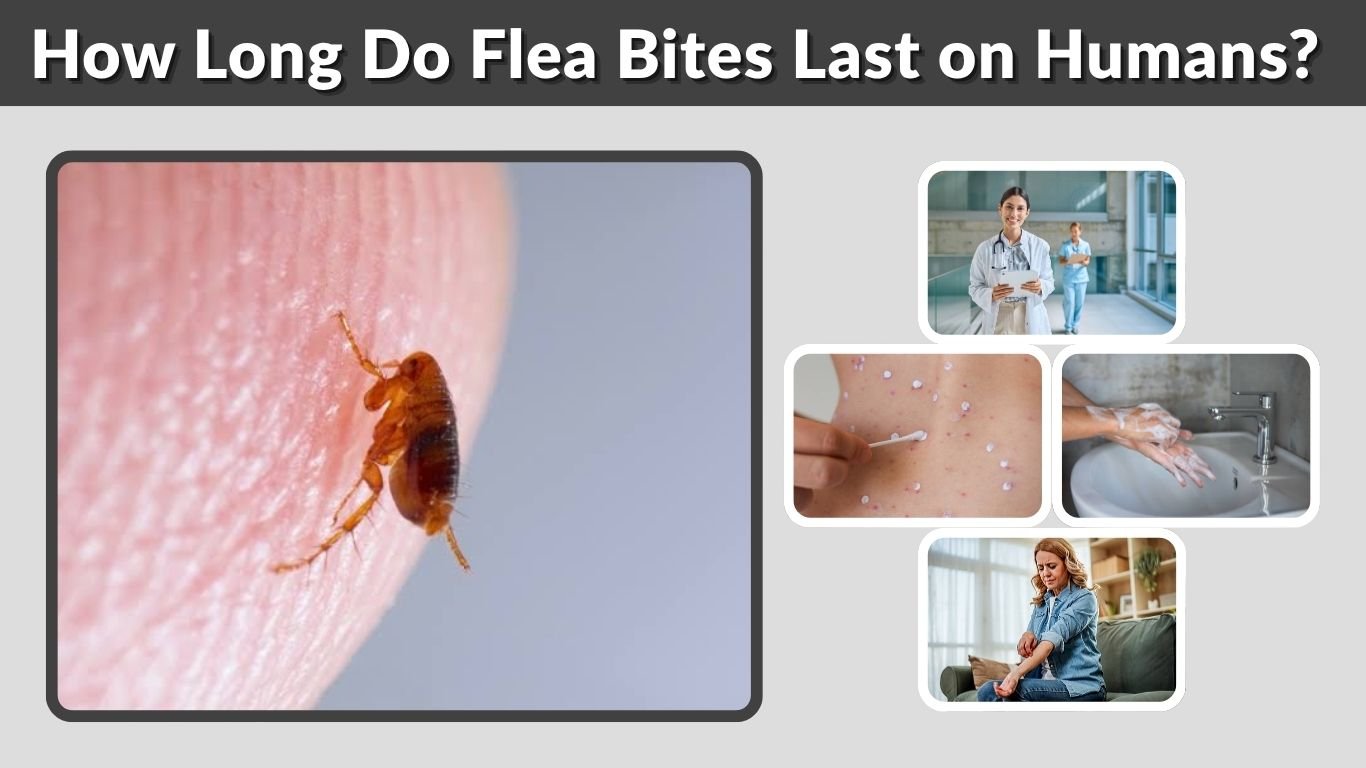
Flea bites typically stop itching within a few days, but the bumps can remain visible for a week or longer. Some people recover quickly, while others develop swelling, lingering marks, or repeated irritation. If you are wondering how long flea bites last on humans, the answer depends on skin sensitivity, scratching, and whether new fleas are still biting. This guide explains the usual healing timeline, how long itching lasts, what delayed reactions mean, and when to seek medical advice. It also covers treatment and prevention.
How Long Do Flea Bites Last on Humans?
Most uncomplicated flea bites begin improving within a few days and fade without treatment. A complete return to normal skin may take about one to two weeks, especially when scratching has irritated the affected area. However, healing times vary between individuals. Watching for gradually decreasing itching, swelling, and redness is more useful than expecting every bite to disappear on an exact day.
Typical Flea Bite Healing Timeline
Flea bites generally follow these stages:
- First 24 hours: Small, itchy bumps may develop, sometimes with redness or localized swelling.
- Days 2–3: Itching and inflammation may remain noticeable but often begin improving.
- Days 4–7: Many uncomplicated bites become flatter, less irritated, and less visible.
- Days 7–14: Persistent bumps may continue fading, especially in people with sensitive skin.
- After two weeks: Some people retain temporary dark marks even after active irritation disappears.
These stages are approximate. Symptoms can last longer when significant allergic reactions or skin infections develop.
What Affects Flea Bite Healing Time?
Several factors influence how quickly flea bites disappear.
People with sensitive skin may experience stronger inflammation. Repeated scratching can damage the skin and delay recovery.
The number of bites also matters. Someone exposed to multiple fleas may experience prolonged irritation because new bumps continue developing while older ones heal.
How Long Do Flea Bites Itch on Humans?
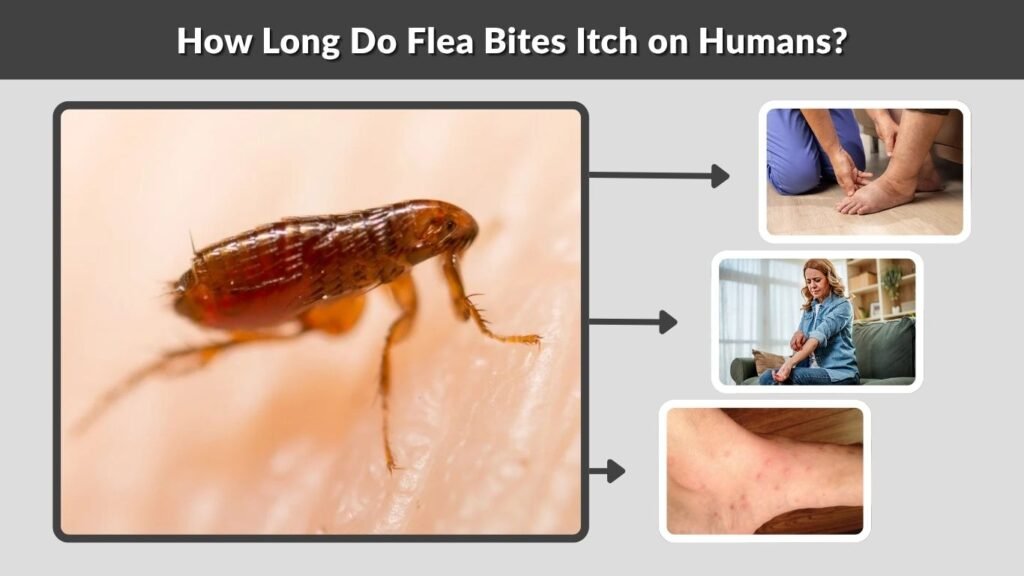
Itching is one of the most recognizable symptoms of flea bites. It develops when the immune system reacts to proteins in flea saliva. For most people, itching decreases within several days, although stronger reactions may persist for a week or longer. Understanding this process helps explain why some bites remain uncomfortable even after the flea has disappeared.
Why Do Flea Bites Itch for Several Days?
Flea saliva contains substances that trigger an inflammatory response in human skin.
The immune system releases chemical signals, including histamine, which contribute to itching, redness, and swelling.
Even after the flea finishes feeding, this reaction can continue. Frequent scratching may intensify inflammation, making itching last longer.
What Do Healing Flea Bites Look Like?
As flea bites heal, several changes may become noticeable:
- Reduced swelling: Raised bumps gradually flatten.
- Less itching: The urge to scratch becomes weaker.
- Fading discoloration: Red, pink, purple, or brown spots become less prominent.
- Drying skin: Mild dryness or small scabs may develop where scratching occurred.
- No new bumps: The number of affected areas stops increasing.
Some healed bites leave temporary dark spots, known as post-inflammatory hyperpigmentation. These marks may take several weeks or longer to fade.
How to Make Flea Bites Heal Faster
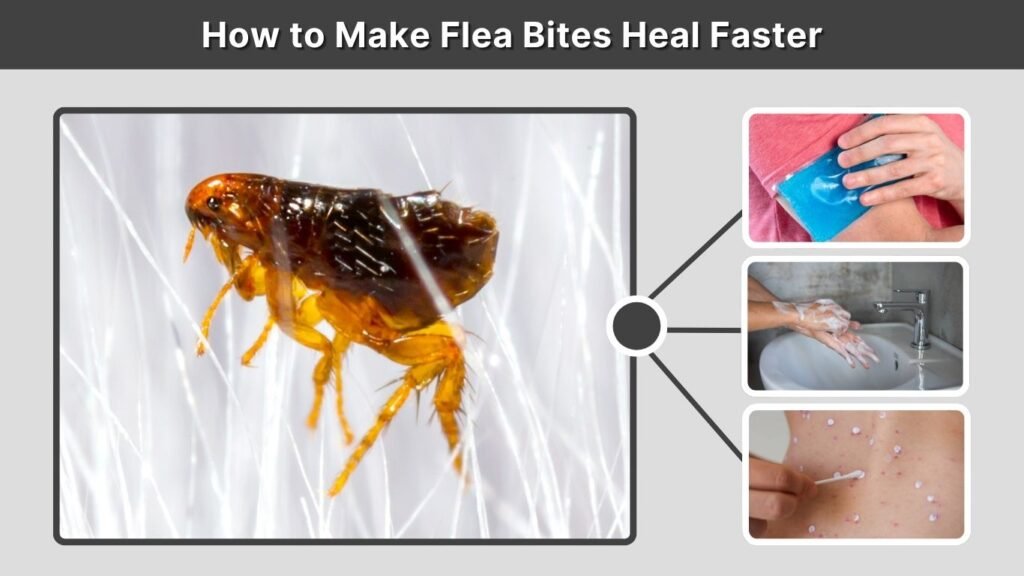
Although flea bites usually heal naturally, proper skin care can reduce discomfort and prevent complications. The main treatment goals are relieving itching, controlling swelling, and protecting damaged skin. Most mild reactions respond to simple home measures. Stronger symptoms may require advice from a pharmacist or healthcare professional, particularly when itching interferes with sleep or everyday activities.
Effective Treatments for Flea Bites
Several methods can help relieve symptoms:
- Wash the bites: Gently clean affected skin with mild soap and water.
- Apply cold compresses: Hold a cool, damp cloth against the area to reduce itching and swelling.
- Use hydrocortisone cream: Follow product instructions to relieve inflammation.
- Try calamine lotion: This may temporarily soothe irritated skin.
- Consider antihistamines: A pharmacist can recommend suitable medication for persistent itching.
- Avoid scratching: Keep fingernails short to protect the skin from infection.
Avoid applying hydrocortisone to broken or infected skin unless a healthcare professional recommends it.
What Should You Avoid During Healing?
Scratching flea bites repeatedly can create small wounds and increase the risk of bacterial infection.
Avoid harsh chemicals, bleach, concentrated essential oils, and unverified home remedies. These substances may irritate the skin rather than improve healing.
Applying excessive amounts of anti-itch medication is also unnecessary. Follow the instructions provided with each product.
Why Are My Flea Bites Taking So Long to Heal?
Flea bites sometimes remain visible longer than expected because of individual skin sensitivity, repeated exposure, or complications. A lingering mark does not necessarily mean an active bite is still present. However, increasing swelling, continued itching, or new clusters of bumps may indicate that the underlying problem has not been resolved. Identifying the cause helps determine the next step.
Can Allergic Reactions Delay Healing?
Yes. Some individuals experience exaggerated local reactions to flea saliva.
These reactions may produce larger bumps, stronger itching, or occasional small blisters. Symptoms can persist beyond the typical healing period.
Scratching may further prolong recovery and leave temporary discoloration after inflammation settles.
If swelling becomes extensive or symptoms continue worsening, medical evaluation is appropriate.
Why Do New Flea Bites Keep Appearing?
New bumps may indicate continued exposure to fleas rather than the persistence of older bites.
Flea eggs, larvae, and pupae can develop in carpets, furniture, and pet bedding. Adult fleas emerging from these environments may repeatedly bite household members.
Treating affected pets, vacuuming regularly, and cleaning bedding are essential for preventing additional exposure.
How Long Do Sand Flea Bites Last on Humans?
The term sand flea can describe different creatures, so healing times are not always the same. Some beach-related bites cause temporary irritation that settles within several days. However, true burrowing sand fleas can create more serious skin problems requiring medical treatment. Understanding the difference is particularly important after visiting tropical beaches or areas where parasitic sand fleas occur.
How Long Do Ordinary Beach Bites Last?
Bites from sand flies and other small beach-biting insects commonly cause itchy bumps that improve within several days.
Some people experience longer-lasting irritation, depending on their sensitivity and the insect involved.
These insects are different from ordinary cat and dog fleas, so their bites should not automatically be treated as identical conditions.
Are Burrowing Sand Flea Bites Different?
Yes. The chigoe flea (Tunga penetrans) can burrow into human skin, causing a condition called tungiasis.
It commonly affects the feet and toes in certain tropical and subtropical regions.
Unlike ordinary flea bites, these lesions can persist and become infected. Suspected embedded fleas require professional medical assessment rather than attempts at removal using household tools.
When Should You See a Doctor for Flea Bites?
Most flea bites do not require medical treatment, but unusual symptoms should never be ignored. Scratching can introduce bacteria into broken skin, while some people experience significant allergic reactions. Rarely, infected fleas transmit diseases. Recognizing warning signs helps distinguish ordinary healing from complications that need professional attention, especially when symptoms become more severe instead of gradually improving.
Warning Signs of Complications
Seek medical advice if you notice:
- Spreading redness or discoloration: Inflammation expands around the original bite.
- Increasing pain: The affected area becomes unusually tender.
- Pus or drainage: Fluid develops from damaged skin.
- Persistent swelling: Symptoms worsen rather than improve.
- Fever or body aches: General illness develops after possible flea exposure.
Difficulty breathing, throat swelling, or fainting requires emergency medical care.
How Can You Prevent Flea Bites From Returning?
The best prevention strategy involves controlling fleas on animals and throughout the household.
Use veterinarian-recommended flea treatments, wash pet bedding, and vacuum carpets, rugs, and furniture frequently.
Severe infestations may require professional pest control. Because flea pupae can remain protected in their environment, successful elimination may take repeated treatment and continued cleaning.
FAQs
People often wonder whether flea bites should disappear quickly, why some bumps remain itchy, and whether pet fleas cause different reactions. Healing varies with skin sensitivity, exposure, and the condition of the affected skin. The following frequently asked questions address common concerns about flea bite duration, delayed symptoms, and recovery, helping readers recognize normal healing patterns and situations requiring additional attention.
1. How Long Do Cat Flea Bites Last on Humans?
Cat flea bites usually improve within a few days, although visible bumps may take one to two weeks to disappear completely. Sensitive individuals may experience longer reactions.
2. How Long Do Dog Flea Bites Last on Humans?
Dog flea bites generally follow a similar healing pattern. Most improve within several days, while more persistent irritation may last longer.
3. How Long Do Flea Bites Take to Appear on Humans?
Flea bites may become noticeable soon after feeding, but some skin reactions develop several hours later. Timing varies with individual sensitivity.
4. Can Flea Bites Last for Several Weeks?
Yes. Strong inflammatory reactions, scratching, or secondary infections may prolong symptoms. Temporary discoloration can also remain after the bites have healed.
5. Do Flea Bites Go Away Without Treatment?
Yes. Most uncomplicated flea bites heal naturally. However, gentle cleansing, cold compresses, and appropriate anti-itch treatments can make recovery more comfortable.
