
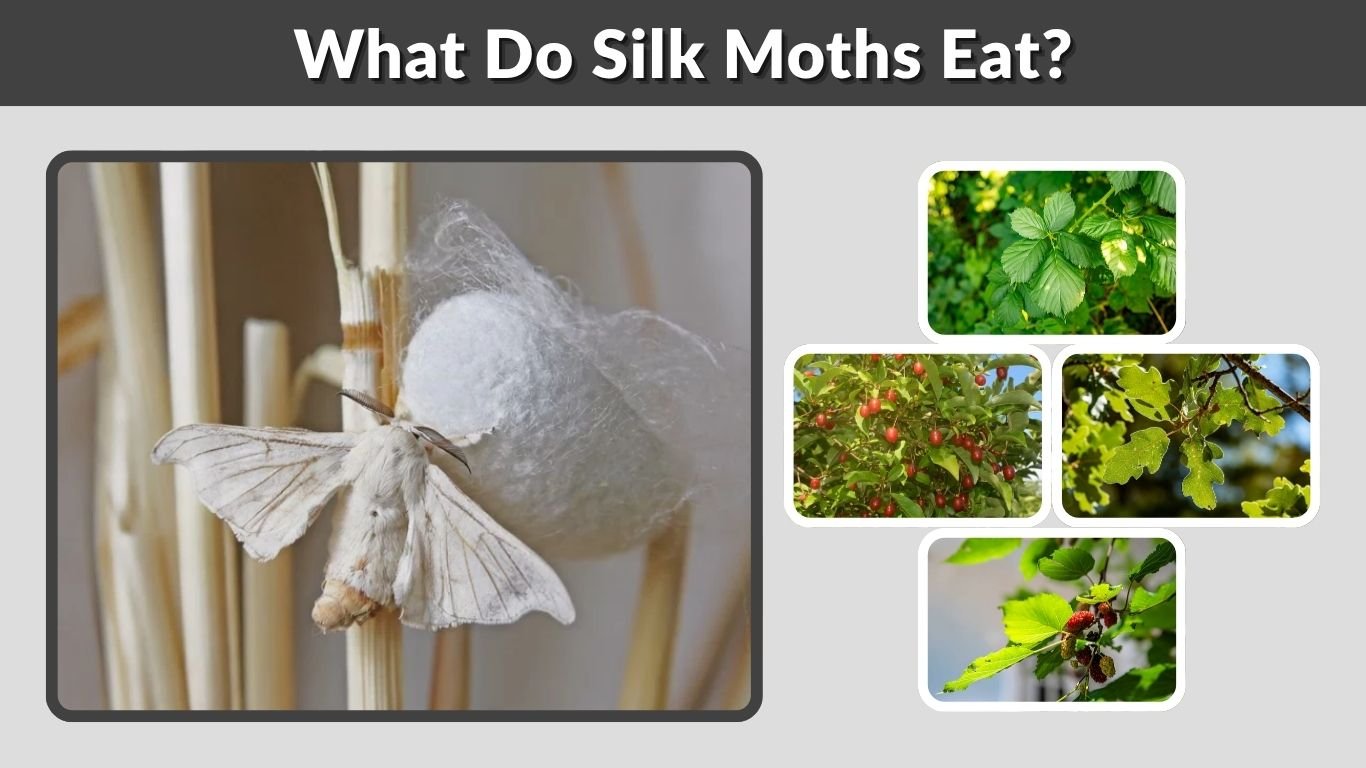
Silk moths have very different diets depending on their life stage and species. Most of the eating happens during the caterpillar stage, when larvae consume large amounts of leaves to store energy for metamorphosis. Domestic silkworm caterpillars are famous for eating mulberry leaves, while giant silk moth caterpillars may feed on oak, willow, maple, birch, cherry, sweetgum, and other host plants. Adult silk moths are different: many species, including domestic and giant silk moths, do not eat at all after emerging.
Do Silk Moths Eat?
The answer depends on whether you mean the caterpillar or adult moth. Silk moth caterpillars are active feeders and may eat continuously while growing. Once they become adult moths, however, many species have reduced or nonfunctional mouthparts. Their adult lives are devoted mainly to finding mates and reproducing rather than feeding.
Do Adult Silk Moths Eat?
Most adult silk moths in the family Saturniidae do not feed.
Examples include:
- Luna moths
- Cecropia moths
- Polyphemus moths
- Imperial moths
- Promethea moths
- Io moths
- Ceanothus silk moths
Domestic silkworm moths, Bombyx mori, also do not normally feed as adults.
Adults survive on fat and energy stored during the caterpillar stage. This is one reason silk moth caterpillars spend so much of their development eating leaves.
Why Can’t Giant Silk Moths Eat?
Many giant silk moths emerge with mouthparts that are reduced or not functional enough for feeding.
Their adult stage is relatively short. Instead of searching for food, males spend much of their time locating females, while females focus on mating and laying eggs.
Their entire adult life therefore depends on the energy accumulated while they were caterpillars.
What Do Silk Moth Caterpillars Eat?
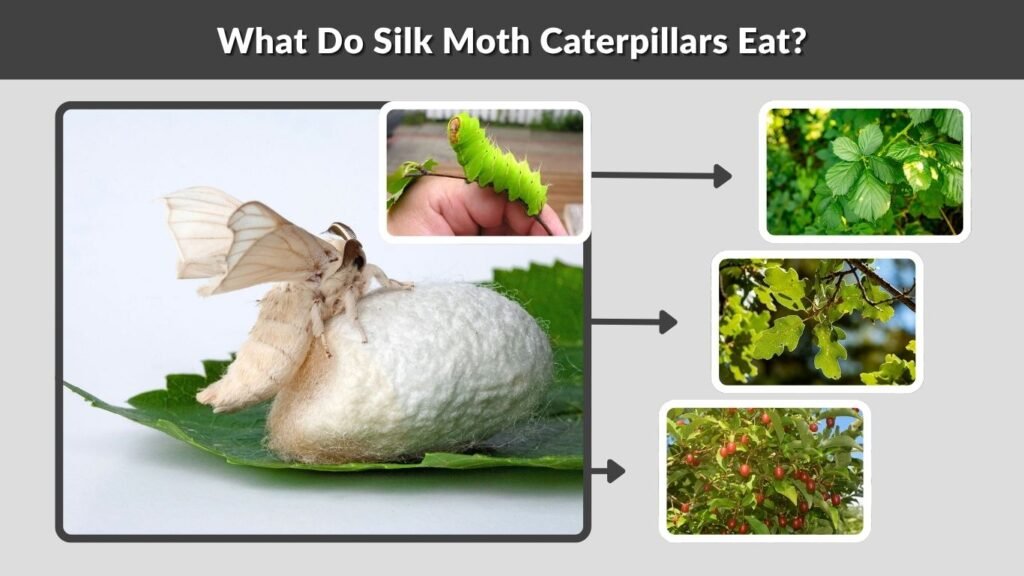
Silk moth caterpillars are primarily leaf eaters. However, not every silk moth can eat the same plants. Some species specialize on only a few host plants, while others can use many different trees and shrubs.
The safest food for any silk moth caterpillar is the host plant naturally used by that particular species.
10 Best Foods for Silk Moth Caterpillars
Common host plants include:
- Mulberry leaves
- Oak leaves
- Willow leaves
- Maple leaves
- Birch leaves
- Sweetgum leaves
- Wild cherry leaves
- Apple leaves
- Walnut and hickory leaves
- Ceanothus leaves
These plants are not interchangeable for every species. Caterpillars should be given host plants known to be suitable for their specific moth.
1. Mulberry Leaves
Mulberry is the most famous silk moth food because it is the primary host plant of the domesticated silkworm, Bombyx mori. These caterpillars have been raised on mulberry for thousands of years in silk production.
Why Mulberry Is Important
Silkworm caterpillars feed heavily on fresh mulberry foliage throughout their larval development.
Young caterpillars generally require tender leaves, while older larvae can consume larger and tougher leaves. The quality of the foliage affects growth, survival, and silk production.
Mulberry is therefore the best-known food associated with domestic silk moths.
2. Oak Leaves
Oak is an important host for several giant silk moth caterpillars, including some Polyphemus moth populations.
Oak leaves provide abundant foliage throughout much of the growing season and are widely available across forested areas.
Silk Moths That May Eat Oak
Species or groups that may use oak include:
- Polyphemus moth
- Some giant silk moth species
- Certain regional Saturniid caterpillars
Caterpillars should not automatically be transferred from their original host plant to oak, even if the species is known to use it elsewhere.
3. Willow Leaves
Willows are valuable host plants for several large moth caterpillars.
They frequently grow near streams, wetlands, ponds, and moist ground, providing plentiful foliage for insects adapted to riparian habitats.
Caterpillars That Use Willow
Willow can be used by species such as Cecropia and some other giant silk moths.
If raising a caterpillar, offer leaves from the same type of plant on which it was originally found whenever possible. Abruptly changing host plants can cause some caterpillars to stop feeding.
4. Maple Leaves
Maple trees support a number of silk moth species.
Cecropia moth caterpillars, for example, can use maple among several other deciduous host trees.
Why Maple Works as a Host
Maples offer broad leaves and substantial summer foliage. Caterpillars can feed repeatedly as they grow through successive molts.
Species that use maple naturally may consume large quantities of leaves without seriously harming a healthy mature tree when populations are moderate.
5. Birch Leaves
Birch serves as a host for several North American giant silk moths, including some populations of luna, Polyphemus, and Cecropia moths.
Birch as Caterpillar Food
Fresh birch foliage can provide suitable nutrition for species adapted to it.
However, host preferences vary geographically. A luna moth caterpillar from one region might commonly use birch, while another population may rely more heavily on walnut, hickory, or sweetgum.
6. Sweetgum Leaves
Sweetgum is one of the best-known host plants for luna moth caterpillars in parts of their range.
The star-shaped leaves are easy to recognize and often support developing larvae during summer.
Luna Moths and Sweetgum
Luna moth caterpillars may feed on:
- Sweetgum
- Walnut
- Hickory
- Birch
- Persimmon
Local host preference can differ considerably, which is why naturally occurring caterpillars are best kept on the plant where they were discovered.
7. Wild Cherry Leaves
Wild cherry is an important food plant for several giant silk moth caterpillars, especially Cecropia moths.
Silk Moths Using Cherry
Cecropia caterpillars can feed on a broad range of deciduous trees, and cherry is commonly included among their hosts.
Fresh, unsprayed leaves are important. Caterpillars can be highly sensitive to insecticide residues, including pesticides that may have been applied days earlier.
8. Apple Leaves
Apple trees can also provide food for some giant silk moth caterpillars.
Cecropia caterpillars are among those known to use apple and related plants.
Using Apple Leaves Safely
Do not collect leaves from trees that may have been treated recently with pesticides.
Orchard trees are frequently sprayed for insect pests and diseases, and chemical residues can quickly kill sensitive caterpillars.
Leaves from an untreated tree are much safer for larvae known to accept apple as a host.
9. Walnut and Hickory Leaves
Walnut and hickory are especially important for several large silk moth species.
Luna moth caterpillars are well known for using both, depending on geographic location.
Why These Trees Matter
Walnuts and hickories produce abundant foliage and support numerous native insects.
When luna moth eggs hatch on these host trees, the young caterpillars can begin feeding almost immediately and remain on the same tree throughout much of their development.
10. Ceanothus Leaves
The Ceanothus silk moth is named partly for its association with plants in the genus Ceanothus.
These shrubs are especially important in western North American habitats.
Ceanothus Silk Moth Diet
Ceanothus silk moth caterpillars may use ceanothus along with certain other shrubs and trees depending on location.
This is a good example of why the phrase “silk moth diet” covers many different feeding relationships rather than one universal food.
What Do Domestic Silk Moths Eat?
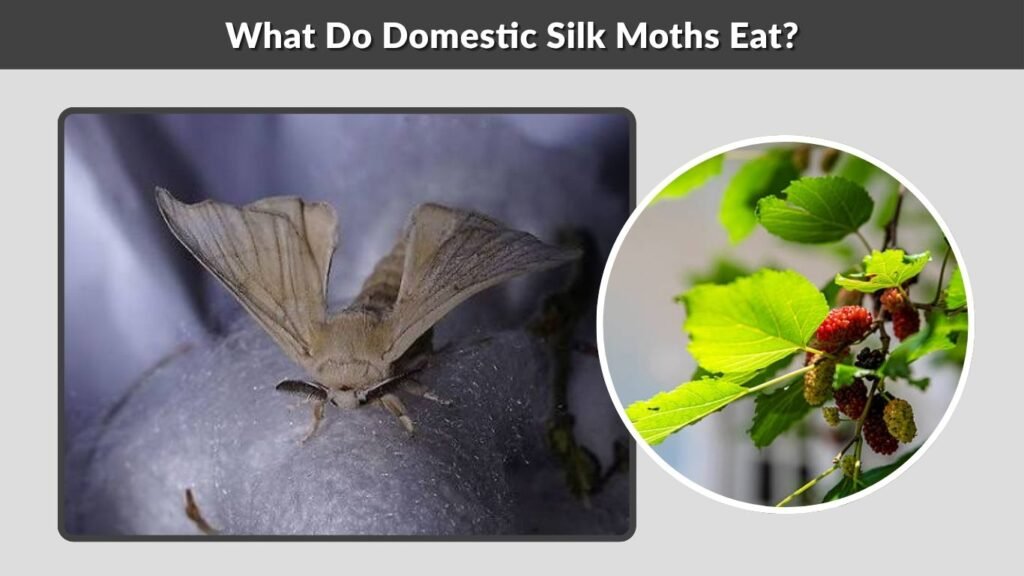
The domesticated silk moth, Bombyx mori, has been bred for silk production for thousands of years. Its caterpillars, commonly called silkworms, are much more closely associated with mulberry than most wild silk moth species are with any single host.
Domestic Silkworm Diet
The natural and traditional diet is:
- Fresh mulberry leaves
- Prepared mulberry-based silkworm food in captive culture
Commercially prepared silkworm diets are often based on powdered mulberry and other ingredients.
Adult Bombyx mori moths do not need food because they generally do not feed after emergence.
What Do Giant Silk Moths Eat?
“Giant silk moth” usually refers to members of the family Saturniidae. Their caterpillars eat leaves, but the specific host plant varies greatly between species.
Common Giant Silk Moth Host Plants
Examples include:
- Cecropia: cherry, maple, apple, birch, willow and others
- Luna: walnut, hickory, sweetgum, birch and persimmon
- Polyphemus: oak, birch, willow, maple and other trees
- Ceanothus silk moth: ceanothus and several western shrubs or trees
- Columbia silkmoth: commonly associated with larch and related hosts in parts of its range
Adult giant silk moths generally do not eat.
Do Moths Eat Silk Fabric?
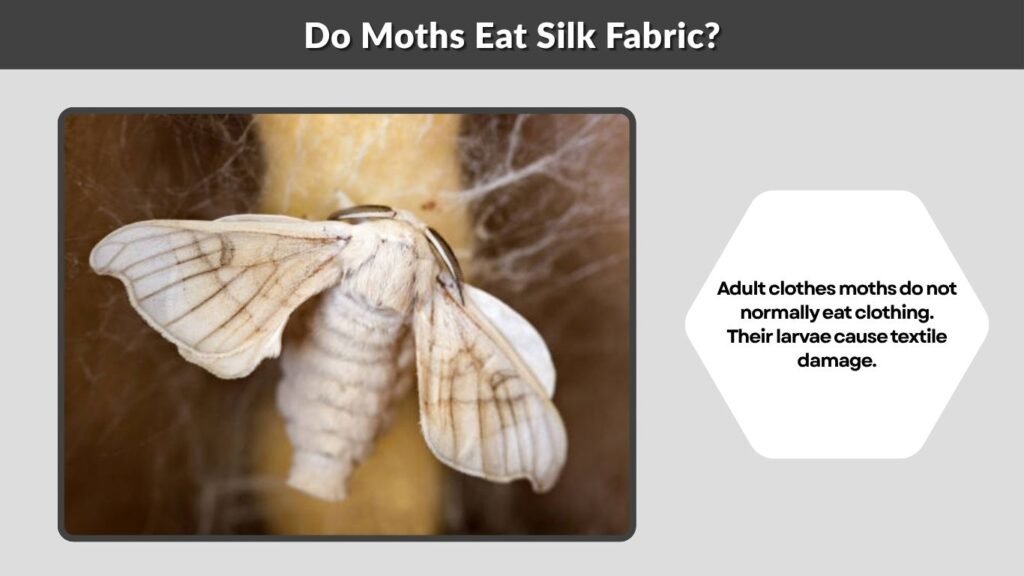
This question involves clothes moths, not the silk moths discussed above.
Adult clothes moths do not normally eat clothing. Their larvae cause textile damage.
Do Clothes Moths Eat Silk?
Clothes moth larvae primarily seek materials containing animal proteins such as keratin. Wool, fur, feathers, and hair are especially attractive.
Pure silk is not usually their preferred food compared with wool, but silk garments can still be damaged, particularly when fabric contains perspiration, food stains, body oils, or blends with other natural animal fibers.
Do Silk Moths Eat Clothes?
No. Domestic silkworm moths and giant silk moths are not clothes pests.
Their caterpillars feed on living plant foliage rather than wardrobes, rugs, curtains, or stored fabrics.
Confusing silk moths with clothes moths can lead to unnecessary concern when a large wild silk moth is found near a house.
What Do Silk Moths Drink?
Because most adult silk moths do not feed, they typically do not drink water, nectar, or sugar solutions either.
Their stored energy supports their brief adult stage.
Do Caterpillars Need Water?
Silk moth caterpillars usually obtain sufficient moisture from fresh leaves.
Providing open dishes of water is unnecessary and can be dangerous because small caterpillars can drown. Keeping host foliage fresh provides both nutrition and moisture.
How Much Do Silk Moth Caterpillars Eat?
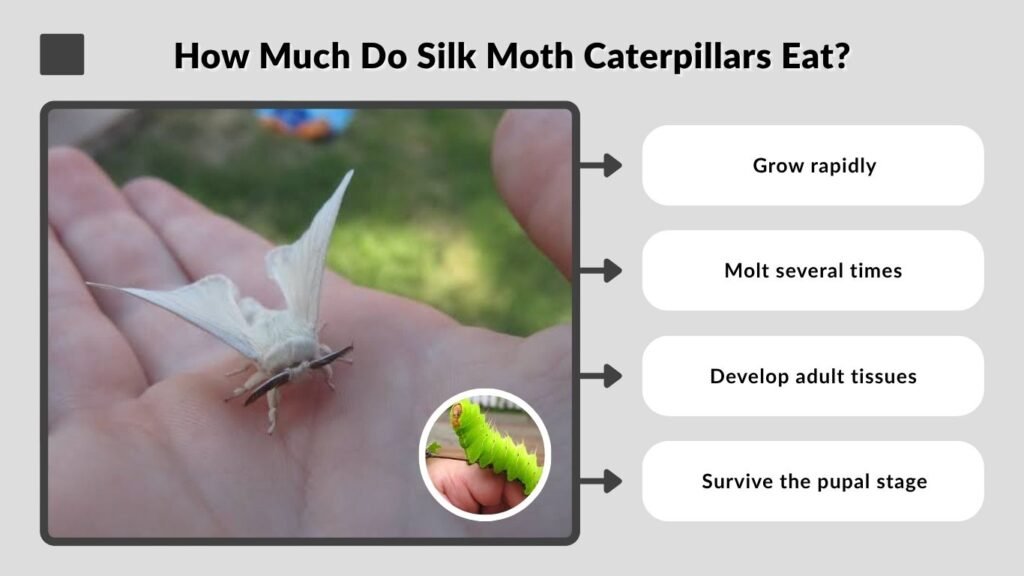
A newly hatched caterpillar eats only small amounts, but its appetite increases dramatically as it grows.
During the final larval stages, a large silk moth caterpillar can consume a surprising amount of foliage each day.
Why Caterpillars Eat So Much
They need energy to:
- Grow rapidly
- Molt several times
- Develop adult tissues
- Produce silk for cocoon construction in species that spin cocoons
- Survive the pupal stage
- Fuel the adult moth after emergence
Because adults often cannot replenish their energy, successful feeding as a caterpillar is critical.
FAQs
What do silk moths eat?
Silk moth caterpillars eat leaves from suitable host plants. Depending on species, these may include mulberry, oak, maple, willow, birch, sweetgum, cherry, apple, walnut, or other trees.
Do adult silk moths eat?
Most adult domestic and giant silk moths do not eat. Their mouthparts are reduced, and they survive using energy stored during the caterpillar stage.
What do domestic silkworm moth caterpillars eat?
Domestic silkworms, Bombyx mori, primarily eat mulberry leaves. Captive silkworms may also be raised on specially prepared mulberry-based artificial diets.
Do silk moths eat silk clothes?
No. Silk moths do not eat clothing. Clothes moth larvae are responsible for textile damage, particularly to animal-based fibers such as wool and fur.
What is the best food for a silk moth caterpillar?
The best food is the correct host plant for that particular species, ideally the same plant on which the caterpillar was found. Different silk moth species have different dietary requirements.
