
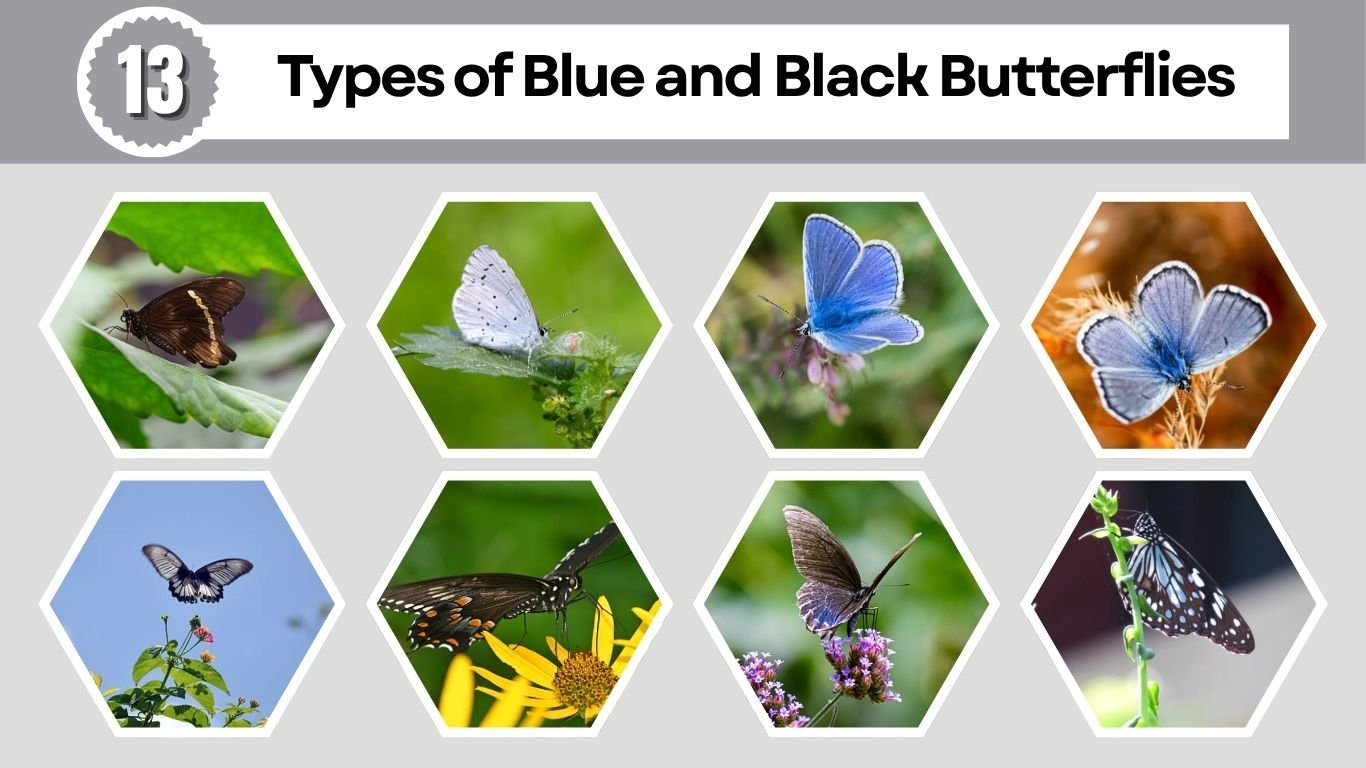
Blue and black butterflies are among the most visually stunning insects in the world, admired for their vibrant colors and unique patterns. From the shimmering Blue Morpho to the bold Black Swallowtail, each species has distinct features, habitats, and behaviors. These butterflies are found across different regions, from tropical forests to open grasslands, playing an important role in pollination and ecosystems. This guide highlights 13 beautiful blue and black butterflies, helping you identify and appreciate their natural beauty more easily.
1. Blue Morpho
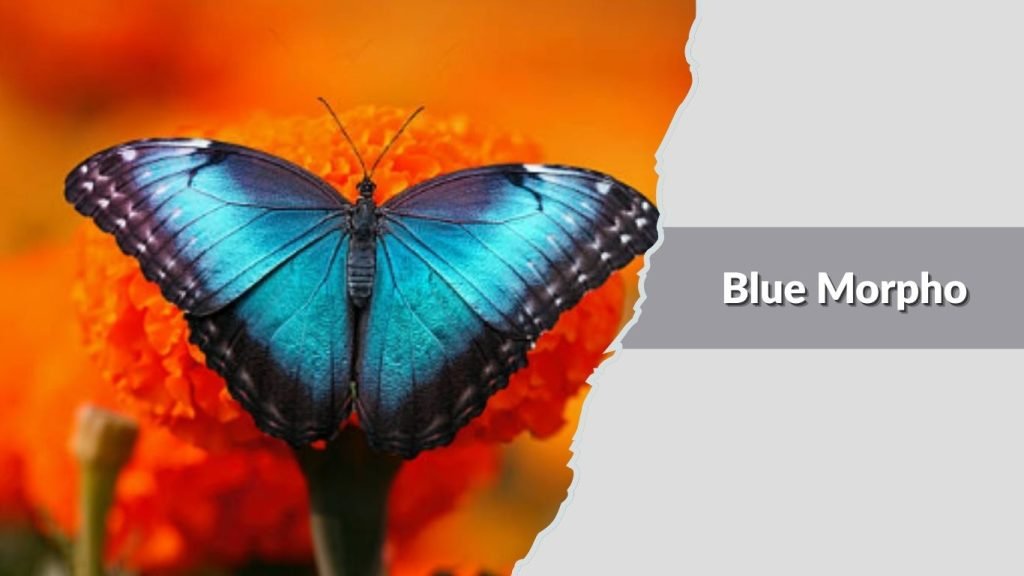
The Blue Morpho is one of the most iconic butterflies in the world, known for its brilliant shimmering blue wings. Found mainly in Central and South America, this butterfly is admired for both its beauty and its unique wing structure that reflects light, creating an almost metallic glow in flight.
Identification
- Large wingspan, typically ranging from 5 to 8 inches
- Upper wings are bright iridescent blue with black edges
- Underside of wings is brown with eye-like spots for camouflage
- Strong, slow flight pattern that makes it easy to observe
Color Pattern
The Blue Morpho’s most striking feature is its vivid blue coloration, which is not due to pigment but microscopic scales that reflect light. When the wings are closed, the underside appears dull brown with multiple eyespots, helping it blend into tree bark and leaves to avoid predators.
Habitat
This butterfly thrives in tropical forests, especially along forest edges, clearings, and riverbanks. It prefers warm, humid environments and is often seen flying at low to mid-level heights. Blue Morphos are most active during the day, gliding gracefully through sunlit areas.
Behavior
Blue Morphos are known for their slow, floating flight, which flashes bright blue as their wings open and close. Males are more commonly seen as they patrol territories. They feed on rotting fruit, tree sap, and fungi rather than flower nectar, which is unusual for butterflies.
2. Common Blue
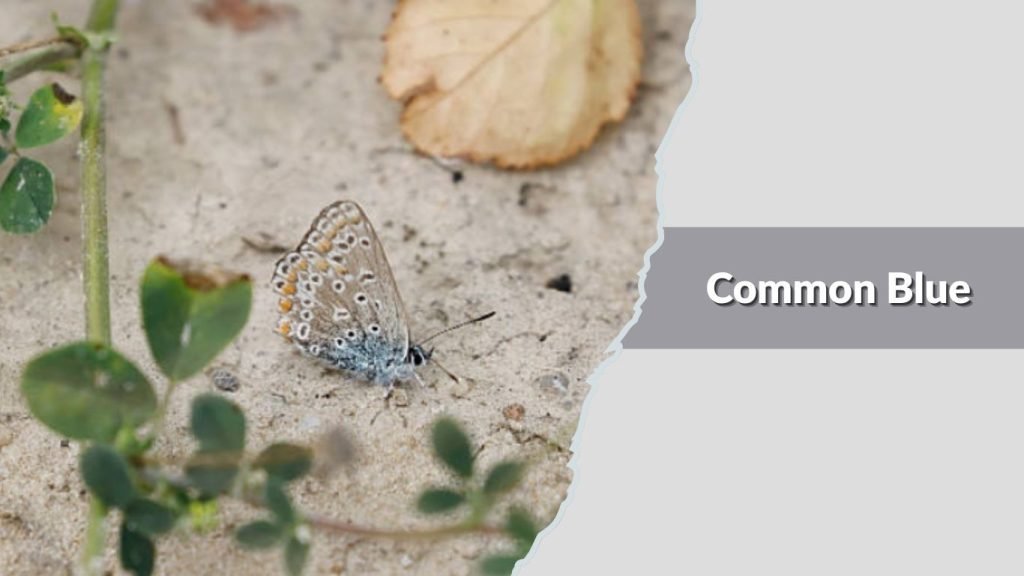
The Common Blue is a small yet striking butterfly widely found across Europe, Asia, and parts of North Africa. It is one of the most familiar blue butterflies, often seen fluttering over grasslands and open fields. Despite its delicate size, it plays an important role in pollination.
Identification
- Small wingspan, usually 3 to 4 centimeters
- Males have bright blue upper wings with thin black borders
- Females are more brown with hints of blue near the body
- Underside is light grey with small black spots and orange markings
Color Pattern
The Common Blue shows a clear difference between males and females. Males display vibrant blue wings that stand out in sunlight, while females tend to have a more subdued brown tone with occasional blue dusting. The underside pattern provides excellent camouflage against dry grass and soil.
Habitat
This butterfly prefers open habitats such as meadows, grasslands, roadside verges, and coastal dunes. It thrives in areas with plenty of low-growing plants and flowers. The Common Blue adapts well to different environments as long as there is sufficient sunlight and food availability.
Behavior
The Common Blue is active during warm, sunny days and can often be seen flying close to the ground. It feeds mainly on nectar from small wildflowers. Males are territorial and frequently patrol areas in search of females, while both sexes rest with wings closed to stay hidden from predators.
3. Karner Blue
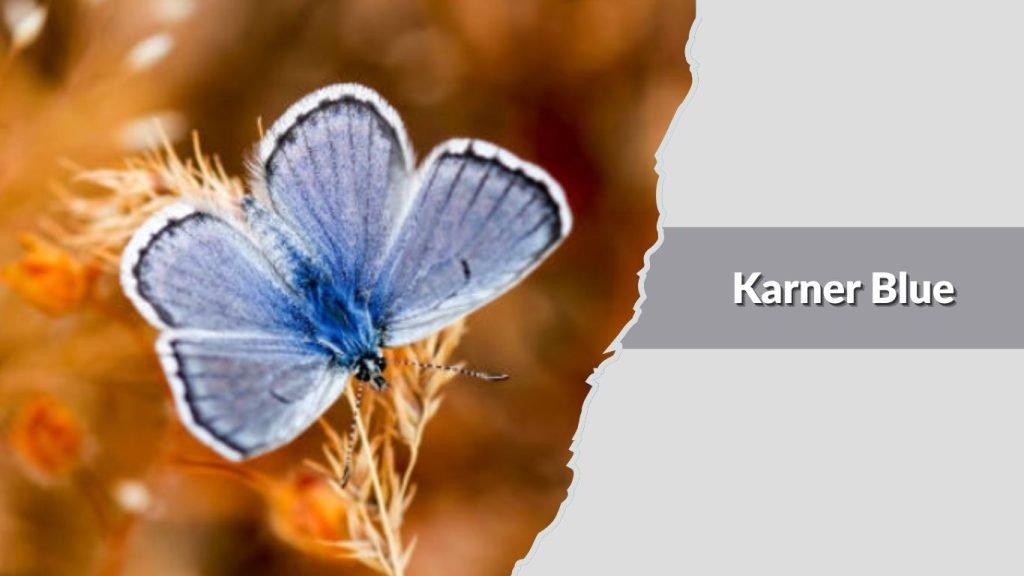
The Karner Blue is a small and rare butterfly known for its delicate beauty and conservation significance. Native to parts of North America, this species is closely tied to specific habitats and is considered endangered in many regions due to habitat loss.
Identification
- Small wingspan, about 2.5 to 3 centimeters
- Males have bright silvery-blue upper wings with narrow black edges
- Females are duller, often grayish-blue with orange spots near the edges
- Underside is pale gray with black spots and a row of orange crescents
Color Pattern
The Karner Blue displays subtle but elegant coloration. Males are more vividly blue, especially in sunlight, while females show a mix of blue and brown tones. The underside markings, including black spots and orange bands, provide effective camouflage when resting on vegetation.
Habitat
This butterfly is found in sandy pine barrens, oak savannas, and dry open woodlands. It depends heavily on wild lupine plants, which serve as the primary food source for its larvae. Because of this dependency, its distribution is limited to areas where lupine grows naturally.
Behavior
Karner Blues are active during late spring and early summer, often having two generations per year. They fly low to the ground and feed on nectar from various small flowers. Their movement is light and fluttery, and they tend to stay close to their host plants, rarely straying far from suitable habitat.
4. Adonis Blue
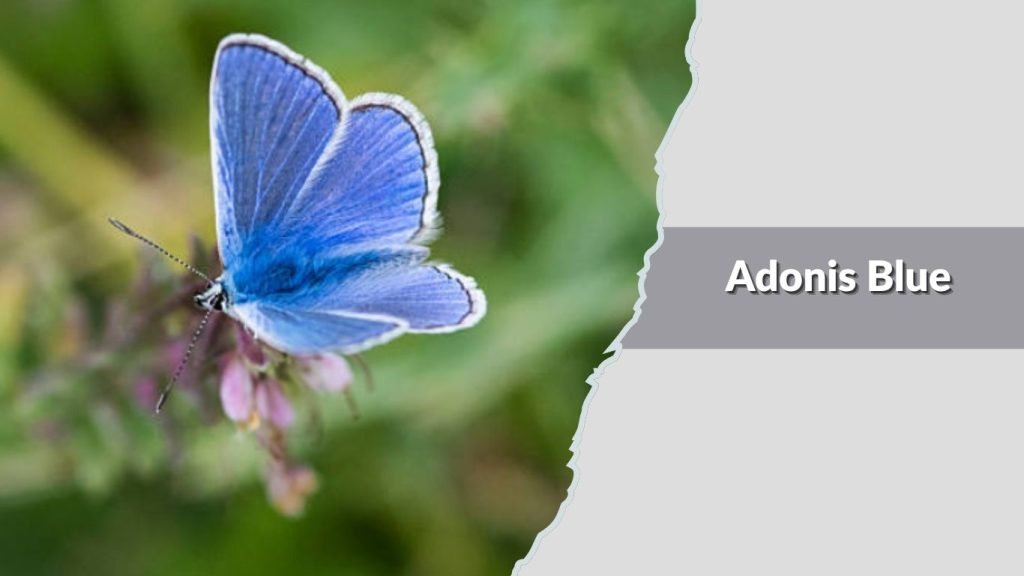
The Adonis Blue is a stunning butterfly known for its intense sky-blue coloration. Commonly found in parts of Europe, this species is especially admired for the male’s bright wings, which stand out vividly against grassy landscapes and sunny hillsides.
Identification
- Small wingspan, around 3 to 4 centimeters
- Males have bright, almost glowing blue upper wings with thin dark borders
- Females are brown with orange spots and slight blue dusting near the base
- Underside is pale grey with black spots and a row of orange markings
Color Pattern
The Adonis Blue is famous for its brilliant coloration, particularly in males, whose wings appear almost luminous in sunlight. Females are less vibrant but still attractive, with a mix of brown and subtle blue hues. The underside provides camouflage, blending well with dry grass and soil.
Habitat
This butterfly prefers chalk grasslands, open hillsides, and sunny slopes with short grass. It thrives in warm, dry environments where its host plants grow. These habitats are often rich in wildflowers, providing both food and suitable breeding grounds.
Behavior
Adonis Blues are active during sunny weather and are often seen flying low over grassy areas. Males are highly territorial and frequently patrol their territory in search of mates. They feed on nectar from small flowers and tend to rest with wings closed, making use of their camouflage to avoid predators.
5. Holly Blue

The Holly Blue is a delicate and graceful butterfly commonly found across Europe, Asia, and parts of North Africa. It is known for its soft blue coloration and gentle flight, often seen around gardens, hedgerows, and woodland edges.
Identification
- Small wingspan, typically 3 to 4 centimeters
- Upper wings are pale blue with narrow dark borders
- Females have slightly darker wing edges than males
- Underside is pale grey with small black spots
Color Pattern
The Holly Blue has a soft, powdery blue appearance that is lighter compared to many other blue butterflies. Both males and females share a similar look, though females often have more noticeable dark edging. The underside’s subtle grey with tiny spots helps it remain hidden when at rest.
Habitat
This butterfly thrives in a variety of habitats including gardens, parks, woodland edges, and hedgerows. It is especially associated with areas where holly and ivy plants grow, as these serve as important host plants for its larvae. It adapts well to both rural and urban environments.
Behavior
Holly Blues are active in warm weather and have a gentle, fluttering flight. They are often seen flying around shrubs and trees rather than open ground. Their life cycle is unique, with different generations using different host plants—holly in spring and ivy in late summer. They feed on nectar from a variety of small flowers.
6. Pipevine Swallowtail
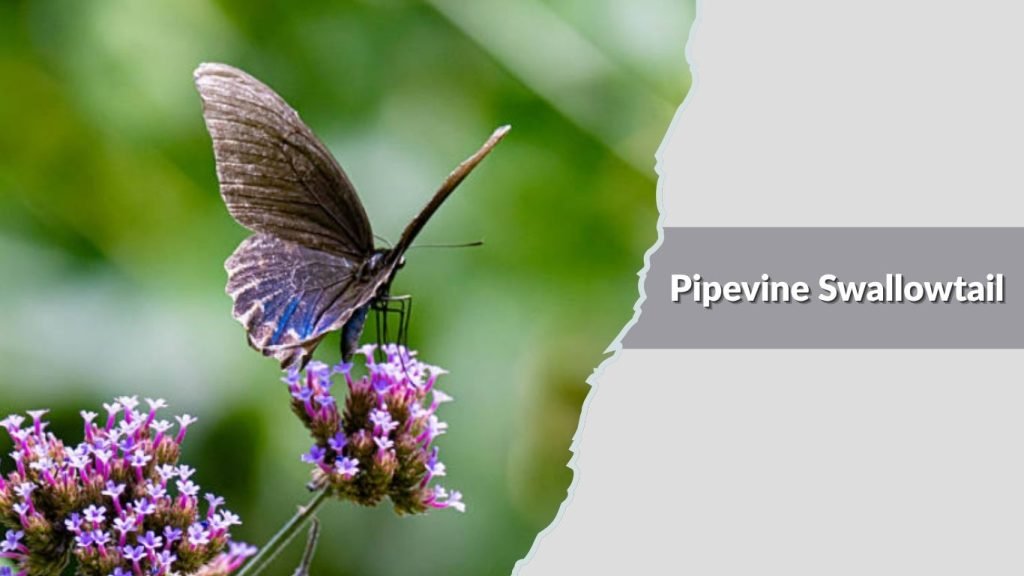
The Pipevine Swallowtail is a striking butterfly known for its dark wings with shimmering blue highlights. Native to North America, it is often recognized not only for its beauty but also for its role in mimicry, influencing the appearance of other butterfly species.
Identification
- Medium to large wingspan, about 7 to 10 centimeters
- Upper wings are black with iridescent blue or blue-green sheen (more visible in males)
- Hindwings have a row of pale spots along the edges
- Underside features bright orange spots with metallic blue accents
Color Pattern
The Pipevine Swallowtail appears mostly black at first glance, but in sunlight, its wings reveal a deep blue iridescence. The underside is more colorful, displaying vibrant orange spots that contrast with the dark background. This combination serves as a warning signal to predators.
Habitat
This butterfly is commonly found in woodlands, meadows, gardens, and near streams. It prefers areas where pipevine plants grow, as these are essential for its larvae. It can adapt to different environments as long as its host plants are available.
Behavior
Pipevine Swallowtails are active during warm days and have a smooth, gliding flight. They feed on nectar from a variety of flowers and are often seen visiting gardens. Due to their toxicity, they are avoided by predators, and many other butterfly species mimic their appearance for protection.
7. Black Swallowtail
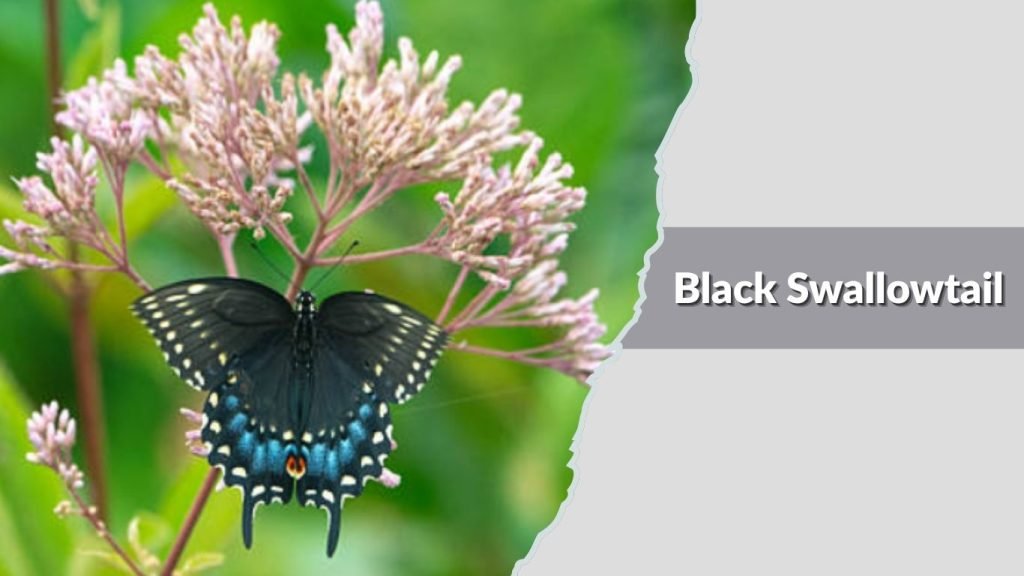
The Black Swallowtail is a bold and elegant butterfly widely found across North America. Known for its dark wings with striking yellow and blue markings, it is a common sight in gardens, fields, and open landscapes, especially during the warmer months.
Identification
- Medium to large wingspan, about 7 to 9 centimeters
- Upper wings are mostly black with rows of yellow spots
- Hindwings show blue shading and a red-orange eyespot near the tail
- Females are generally darker with more blue on the hindwings
Color Pattern
The Black Swallowtail features a dramatic contrast of black, yellow, and blue. Males have more prominent yellow patterns, while females often display richer blue tones. The bright red-orange eyespot on the hindwing helps distract predators, drawing attention away from vital body parts.
Habitat
This butterfly thrives in open areas such as meadows, gardens, farmland, and roadsides. It is especially attracted to places where plants like parsley, dill, and fennel grow, as these serve as host plants for its caterpillars. It adapts well to human-modified environments.
Behavior
Black Swallowtails are active during sunny days and are strong, steady fliers. They frequently visit flowers for nectar and are commonly seen in home gardens. Males often patrol territories in search of females, while females lay eggs on suitable host plants for their larvae to feed on.
8. Spicebush Swallowtail
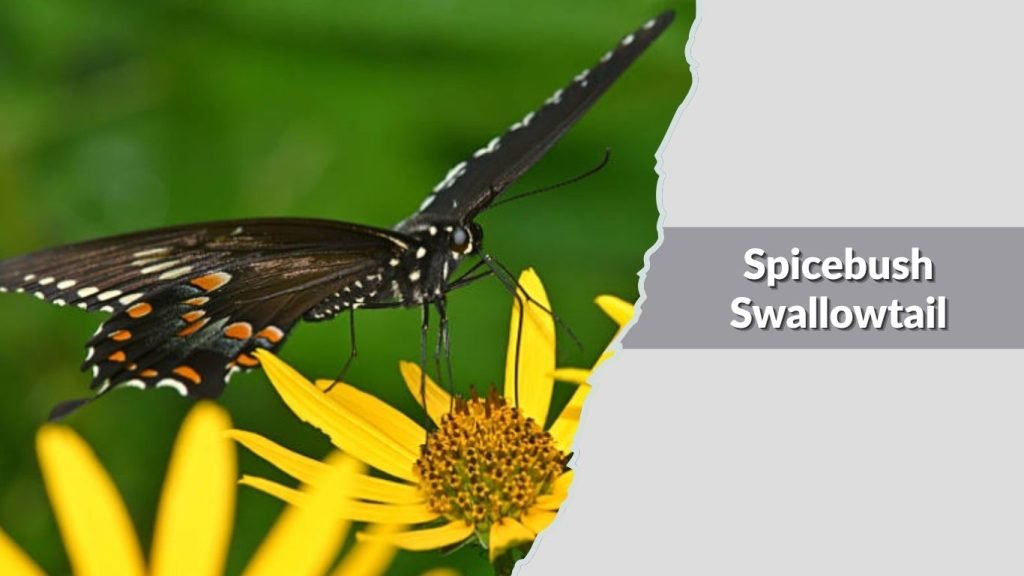
The Spicebush Swallowtail is a beautiful butterfly known for its dark wings and striking blue-green highlights. Native to North America, it is often admired for both its elegant appearance and its fascinating life cycle, especially its caterpillar’s unique defense mechanisms.
Identification
- Medium wingspan, around 7 to 9 centimeters
- Upper wings are black with light blue or greenish-blue shading on the hindwings
- Hindwings have small orange spots along the edges
- Underside is more colorful with orange and pale blue markings
Color Pattern
The Spicebush Swallowtail has a rich black base color with subtle yet eye-catching blue-green tones, especially visible in sunlight. Females often show more intense blue shading than males. The underside is brighter, featuring orange spots that create a strong contrast and help deter predators.
Habitat
This butterfly prefers wooded areas, forest edges, swamps, and gardens. It is commonly found in places where spicebush and sassafras plants grow, as these are essential host plants for its larvae. It thrives in warm, humid environments with plenty of vegetation.
Behavior
Spicebush Swallowtails are active during the day and have a smooth, gliding flight. They frequently visit flowers for nectar and are often seen in shaded areas. Their caterpillars are known for mimicking snake-like eyes to scare off predators, making them especially interesting among butterfly species.
9. Common Mormon
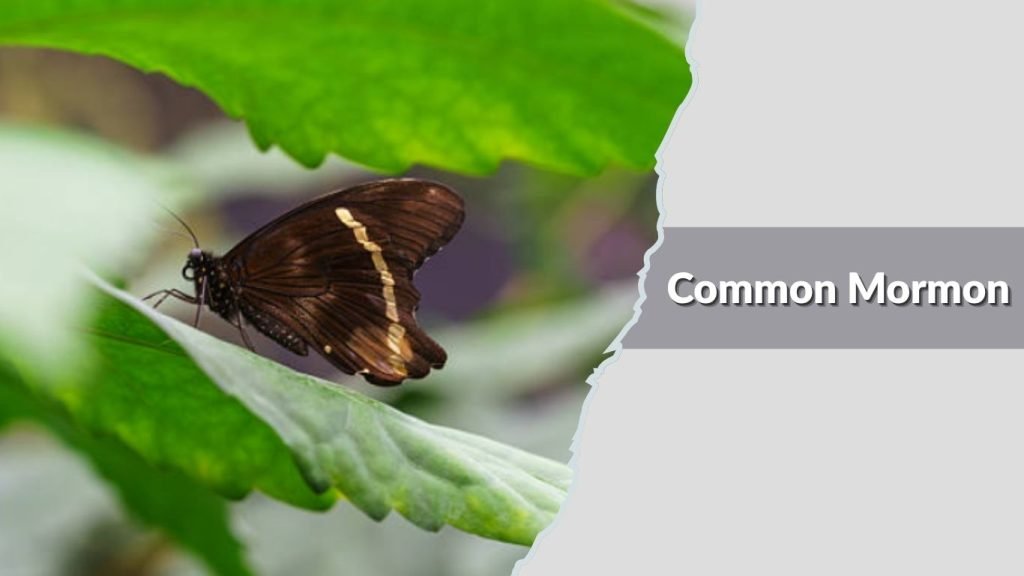
The Common Mormon is a large and graceful butterfly widely found across South and Southeast Asia. It is especially notable for its variation in female forms, some of which mimic other toxic butterfly species for protection. This adaptability makes it one of the most fascinating swallowtails.
Identification
- Large wingspan, typically 9 to 10 centimeters
- Males are black with subtle pale markings
- Females appear in multiple forms, often with white, red, or cream patterns
- Hindwings have small tails and may show red or orange spots
Color Pattern
The Common Mormon displays significant variation, especially in females. Males are mostly black with faint patterns, while females can have striking markings that mimic other butterflies. Some forms show bold white patches or red spots, helping them avoid predators through mimicry.
Habitat
This butterfly thrives in a wide range of environments including forests, gardens, urban areas, and plantations. It is commonly seen in places with abundant flowering plants. Its adaptability allows it to live comfortably in both natural and human-influenced habitats.
Behavior
Common Mormons are active during the day and are strong fliers. They are frequently seen visiting flowers for nectar in gardens and open areas. Females lay eggs on citrus plants, which serve as host plants for the caterpillars. Their mimicry behavior provides an added layer of survival advantage.
10. Blue Tiger
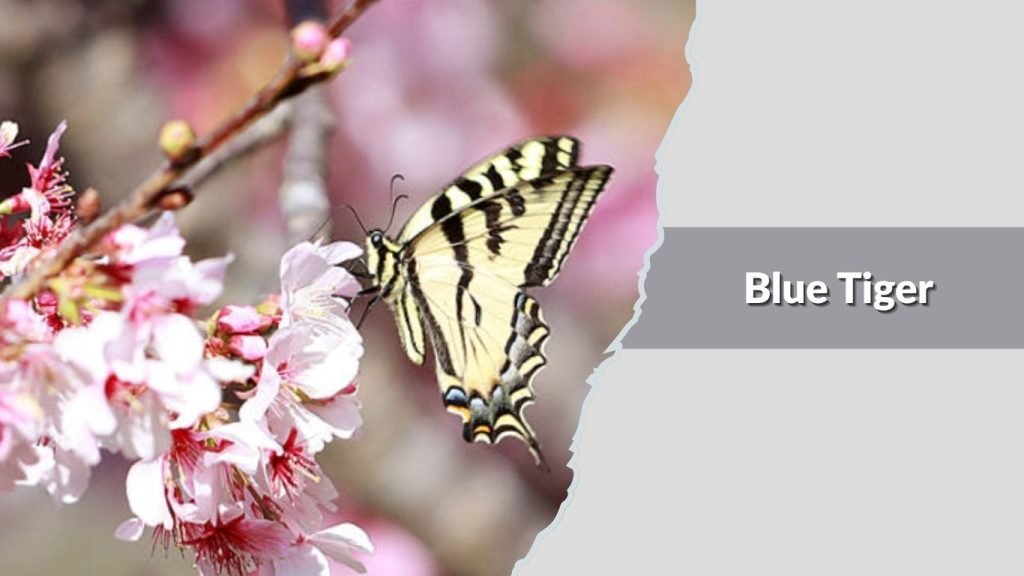
The Blue Tiger is a graceful butterfly known for its distinctive striped pattern and soft blue tones. Found across South and Southeast Asia, it is often seen gliding smoothly through open landscapes, making it a familiar and attractive species in many regions.
Identification
- Medium wingspan, about 7 to 8 centimeters
- Wings are black with semi-transparent pale blue or white streaks
- Pattern appears as elongated spots or stripes across the wings
- Body is slender with a dark coloration
Color Pattern
The Blue Tiger features a unique combination of black and bluish-white streaks that form a striped appearance. These patterns are semi-transparent and create a delicate look when sunlight passes through the wings. The contrast makes it easily recognizable even from a distance.
Habitat
This butterfly prefers open forests, gardens, grasslands, and areas near water sources. It is commonly found in tropical and subtropical regions where flowering plants are abundant. The Blue Tiger is also known to gather in large groups during migration periods.
Behavior
Blue Tigers are known for their smooth, gliding flight and are often seen flying slowly at low to medium heights. They feed on nectar from a variety of flowers and are sometimes found in clusters, especially during seasonal movements. Their calm flight makes them easy to observe in natural settings.
11. Dark Blue Tiger

The Dark Blue Tiger is a striking butterfly closely related to the Blue Tiger, but with deeper and more intense coloration. Commonly found in South and Southeast Asia, it is admired for its bold patterns and smooth, gliding flight through forests and open landscapes.
Identification
- Medium wingspan, around 7 to 9 centimeters
- Wings are dark brown to black with bluish-white streaks
- Pattern consists of elongated spots forming a striped appearance
- Body is slender and dark, matching the wing color
Color Pattern
The Dark Blue Tiger has a richer and darker tone compared to the Blue Tiger. Its wings display bluish-white streaks against a deep black background, creating a strong contrast. The semi-transparent markings give it a soft glow when seen in sunlight.
Habitat
This butterfly prefers forests, woodland edges, gardens, and open grassy areas. It thrives in tropical climates and is often seen near water sources or flowering plants. Like its relatives, it may also participate in seasonal movements or group gatherings.
Behavior
Dark Blue Tigers are known for their slow, gliding flight, often moving steadily through vegetation. They feed on nectar from various flowers and are sometimes found in groups. Their unhurried movement and bold patterns make them easy to spot in their natural habitat.
12. Great Mormon
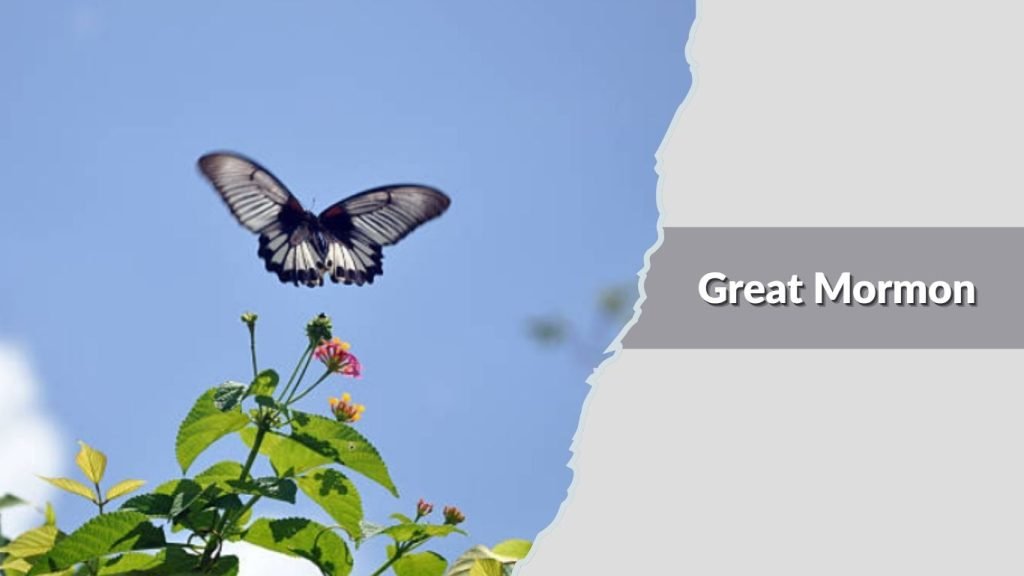
The Great Mormon is one of the largest and most impressive butterflies found in South and Southeast Asia. Known for its size and striking appearance, it is especially notable for the female’s ability to mimic other butterfly species, making it both beautiful and fascinating.
Identification
- Large wingspan, typically 12 to 15 centimeters
- Males are mostly black with subtle pale markings
- Females vary in appearance, often showing white patches and red spots
- Hindwings have short tails with distinct markings
Color Pattern
The Great Mormon shows strong variation, particularly in females. Males are generally dark with understated patterns, while females can be much more colorful, displaying white patches and bright red spots. These patterns often mimic toxic species, helping protect them from predators.
Habitat
This butterfly is commonly found in forests, gardens, plantations, and urban areas. It prefers warm, tropical environments with plenty of flowering plants. Its adaptability allows it to thrive in both natural habitats and human-modified landscapes.
Behavior
Great Mormons are active during the day and are powerful fliers despite their large size. They frequently visit flowers for nectar and are often seen in gardens. Females lay eggs on citrus plants, which serve as host plants for their caterpillars.
13. Black Veined White
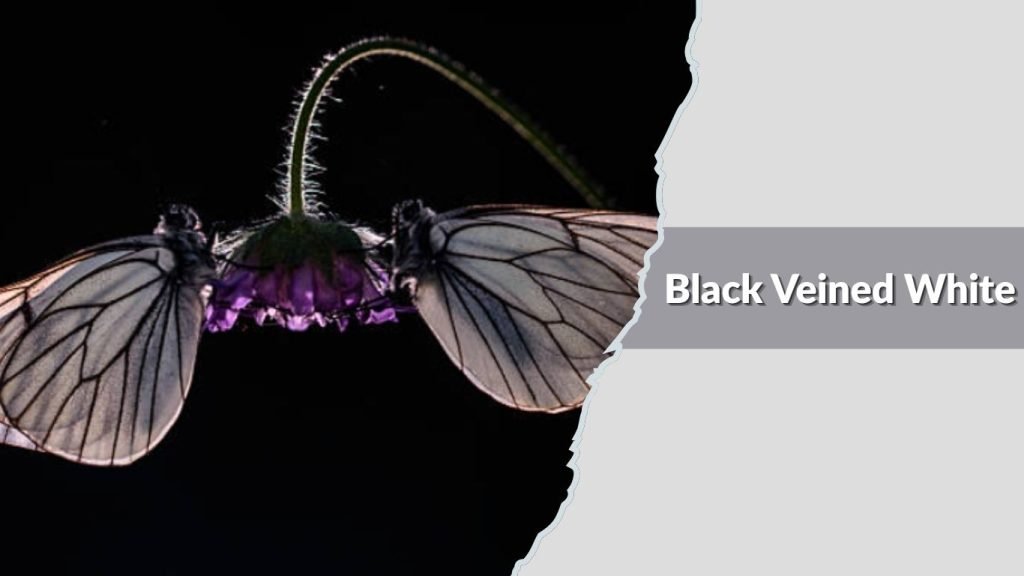
The Black Veined White is a large and elegant butterfly known for its striking contrast between pale wings and bold black veins. Once common across Europe and Asia, it is now rare in many regions, making sightings particularly special for butterfly enthusiasts.
Identification
- Large wingspan, typically 6 to 8 centimeters
- Wings are white or pale cream with prominent black veins
- Both males and females have similar appearance
- Body is dark with fine hairs, giving a slightly fuzzy look
Color Pattern
The Black Veined White features a clean and simple color pattern. Its pale wings are crossed by strong black veins, creating a net-like design. This high contrast makes it easily recognizable. The wings may appear slightly translucent in sunlight, adding to its delicate beauty.
Habitat
This butterfly prefers open woodlands, meadows, orchards, and scrubby areas. It is often associated with regions that have plenty of flowering plants and shrubs. Historically widespread, its habitat has declined due to environmental changes and agricultural practices.
Behavior
Black Veined Whites are active during warm, sunny days and are strong fliers. They are often seen gliding over open areas or visiting flowers for nectar. Unlike many butterflies, they may travel long distances, and their populations can fluctuate depending on environmental conditions.
FAQs
What makes blue butterflies appear so bright?
Blue butterflies often do not have blue pigment. Instead, their wings contain microscopic structures that reflect light, creating an iridescent effect. This structural coloration changes slightly with the angle of light, making the blue appear bright and shimmering in motion.
Are black butterflies rare?
Black butterflies are not necessarily rare, but their visibility depends on the species and region. Many black butterflies, like swallowtails, are quite common in gardens and forests. However, some species may be rare due to habitat loss or environmental changes.
Where can blue and black butterflies be found?
These butterflies are found worldwide, from tropical rainforests to temperate grasslands. Regions in Asia, Africa, and the Americas host a wide variety of species. Their presence depends on climate, availability of host plants, and suitable breeding conditions.
What do blue and black butterflies eat?
Most adult butterflies feed on nectar from flowers. However, some species prefer alternative sources like rotting fruit, tree sap, or minerals from damp soil. Caterpillars feed on specific host plants, which vary depending on the butterfly species.
Why do some butterflies mimic others?
Mimicry helps butterflies survive by avoiding predators. Some harmless species imitate the colors and patterns of toxic butterflies, making predators think they are dangerous. This natural adaptation increases their chances of survival in the wild.
