Black and orange butterflies are among the most eye-catching species in nature, known for their bold patterns and vibrant colors. These butterflies are found across different regions of the world, from gardens and meadows to forests and wetlands. Each species has unique markings, habitats, and behaviors that make them fascinating to observe. This guide highlights 12 beautiful black and orange butterflies, helping you identify them easily while also understanding their role in ecosystems and natural environments.
1. Monarch
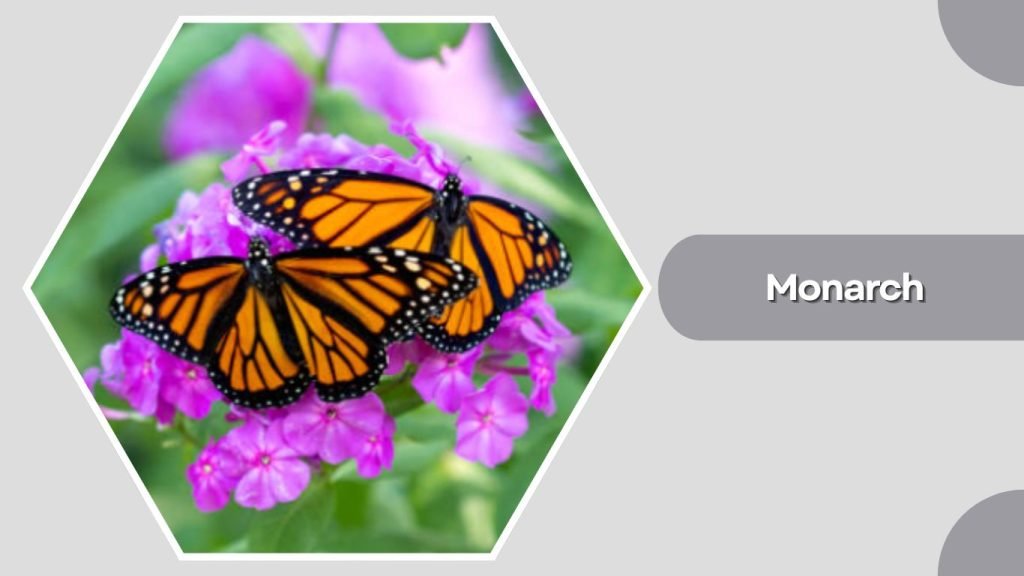
The Monarch butterfly is one of the most famous black and orange butterflies, widely recognized for its striking color and long-distance migration. Found across North America and beyond, it is admired for its beauty, resilience, and unique life cycle.
Identification
- Medium to large wingspan, about 8 to 10 centimeters
- Bright orange wings with bold black veins
- Black border with white spots along the edges
- Body is black with small white dots
Color Pattern
The Monarch displays a vivid orange base color contrasted with thick black veins, giving it a stained-glass appearance. The black borders are dotted with white spots, adding to its distinct look. This bold pattern serves as a warning to predators that it is toxic.
Habitat
Monarchs are found in open areas such as meadows, fields, roadsides, and gardens. They prefer regions where milkweed plants grow, as these are essential for laying eggs and feeding caterpillars. They are also seen during migration across various landscapes.
Behavior
Monarch butterflies are known for their incredible migration, traveling thousands of kilometers between breeding and wintering grounds. They feed on nectar from a wide range of flowers. Their slow, graceful flight and tendency to glide make them easy to observe in nature.
2. Viceroy
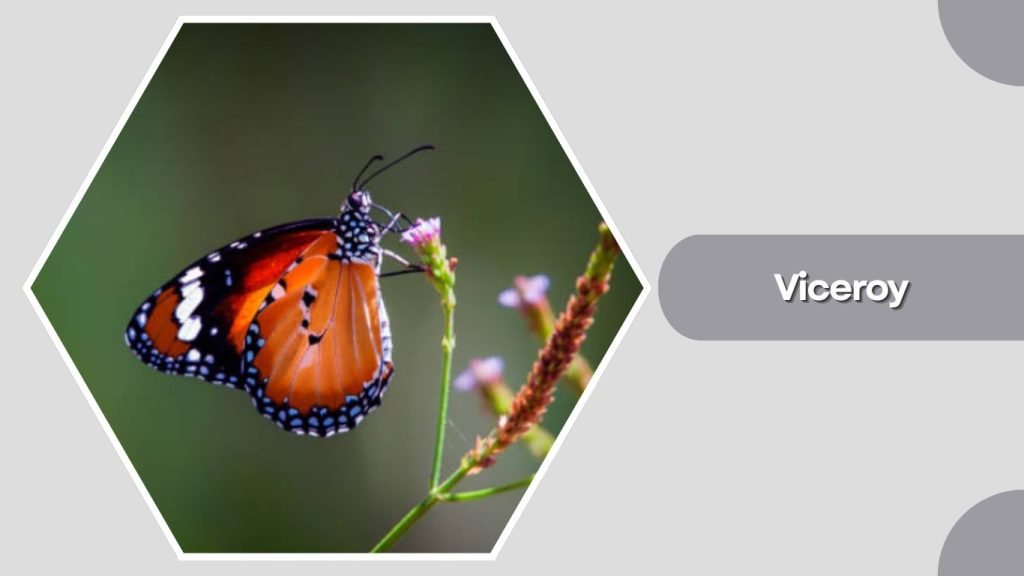
The Viceroy butterfly is a well-known black and orange species often mistaken for the Monarch due to its similar appearance. Found across North America, it is an excellent example of mimicry, using its resemblance to avoid predators.
Identification
- Medium wingspan, about 6 to 8 centimeters
- Orange wings with black veins similar to Monarch
- Distinct black line running across the hindwings
- Black border with small white spots
Color Pattern
The Viceroy closely resembles the Monarch but can be identified by the extra black band across its hindwings. Its orange and black pattern is bold and eye-catching, helping it blend into the mimicry system that protects it from predators.
Habitat
This butterfly prefers wetlands, marshes, ponds, and areas near water bodies. It is commonly found where willow and poplar trees grow, as these serve as host plants for its caterpillars. It thrives in both natural and semi-developed environments.
Behavior
Viceroys are active during warm days and have a quick, agile flight. They feed on nectar, tree sap, and decaying matter. Unlike Monarchs, they do not migrate long distances but stay within suitable habitats throughout their life cycle.
3. Red Admiral
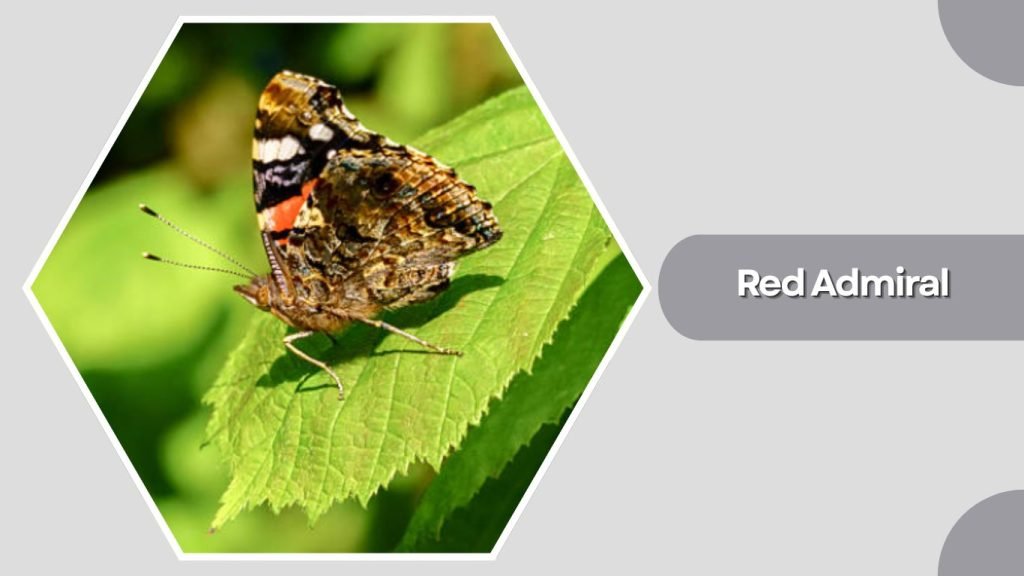
The Red Admiral is a striking black and orange butterfly known for its bold patterns and strong flight. Found across Europe, Asia, and North America, it is a highly adaptable species that often appears in gardens and urban areas.
Identification
- Medium wingspan, about 6 to 7 centimeters
- Black wings with bright orange-red bands across the forewings
- White spots near the tips of the forewings
- Underside is mottled brown for camouflage
Color Pattern
The Red Admiral features a dramatic contrast of deep black wings with vivid orange-red bands. The addition of small white spots near the wing tips enhances its distinctive look. The underside is more subdued, allowing it to blend into tree bark and surroundings when resting.
Habitat
This butterfly thrives in a wide range of environments including gardens, woodlands, parks, and open countryside. It prefers areas with plenty of nectar-rich flowers and host plants like nettles, which are essential for its caterpillars.
Behavior
Red Admirals are known for their fast and agile flight. They are territorial and often seen basking in sunny spots. They feed on nectar, tree sap, and even overripe fruit. In some regions, they migrate seasonally, making them a dynamic presence in many habitats.
4. Painted Lady
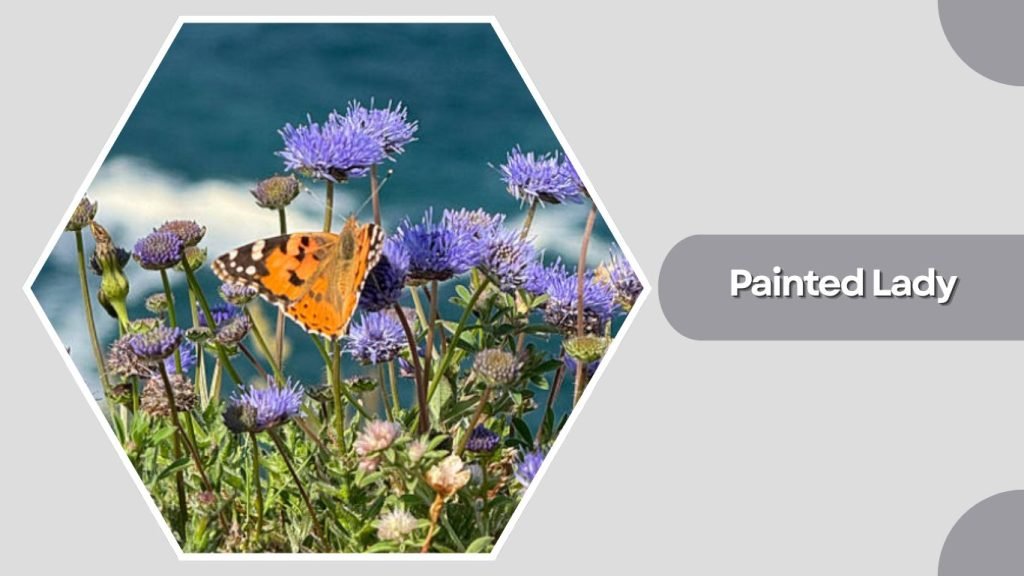
The Painted Lady is one of the most widespread black and orange butterflies in the world, known for its beautiful patterns and remarkable migration. It can be found on almost every continent, making it one of the most familiar and widely distributed butterfly species.
Identification
- Medium wingspan, about 5 to 7 centimeters
- Orange wings with black and white markings
- Forewings have black tips with white spots
- Underside is mottled with brown, grey, and small eyespots
Color Pattern
The Painted Lady displays a rich blend of orange, black, and white. The upper wings are bright and patterned, while the underside is more muted with complex designs that provide camouflage. Small eyespots on the underside help deter predators.
Habitat
This butterfly thrives in a variety of environments including gardens, meadows, deserts, and open fields. It is highly adaptable and can live in both warm and cooler climates. Its ability to survive in diverse habitats contributes to its global presence.
Behavior
Painted Ladies are strong fliers and are known for long-distance migration, sometimes traveling thousands of kilometers. They feed on nectar from many types of flowers and are often seen basking in the sun. Their movement patterns can vary depending on climate and seasonal changes.
5. American Lady

The American Lady is a beautiful black and orange butterfly commonly found in North America. It is closely related to the Painted Lady but can be distinguished by its unique markings and slightly different wing patterns.
Identification
- Medium wingspan, about 5 to 7 centimeters
- Orange wings with black patches and white spots
- Two large eyespots on the underside of the hindwings
- Forewings have a mix of black, orange, and white markings
Color Pattern
The American Lady features a warm orange base with bold black patterns and small white spots near the tips of the forewings. The underside is more muted but includes two distinct eyespots, which help in confusing predators and providing camouflage.
Habitat
This butterfly prefers open habitats such as fields, meadows, gardens, and dunes. It thrives in areas with abundant flowering plants and host plants like pussytoes, which are essential for its caterpillars. It is well adapted to a variety of climates.
Behavior
American Ladies are active during the day and are often seen flying low over open ground. They feed on nectar from many types of flowers and may bask in sunny areas. They are also known for seasonal movements, although not as extensive as some migratory species.
6. Question Mark
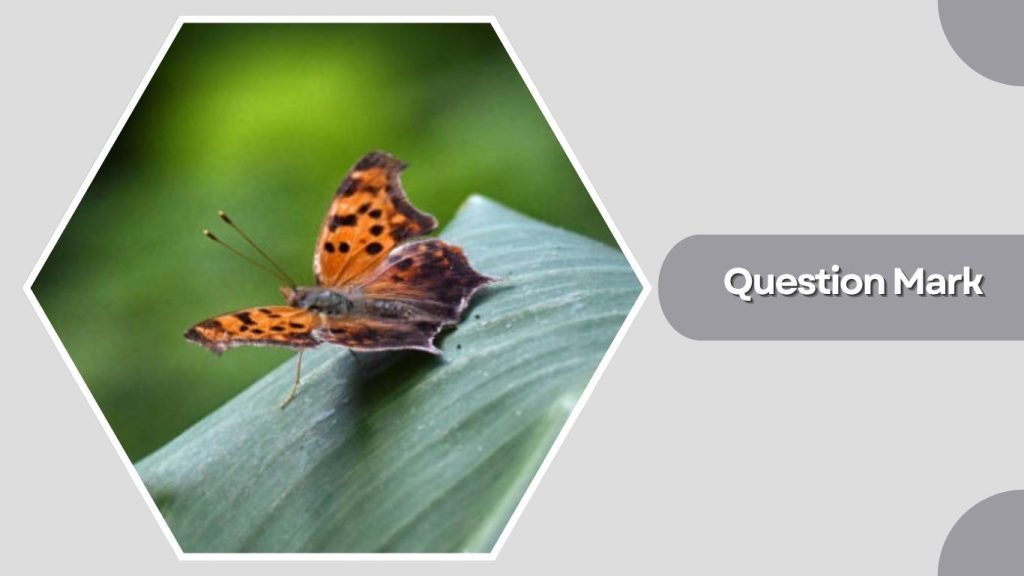
The Question Mark butterfly is a unique black and orange species named after the small, silver marking on the underside of its wings that resembles a question mark. Found in North America, it is known for its irregular wing shape and seasonal color variation.
Identification
- Medium wingspan, about 7 to 9 centimeters
- Orange wings with black spots and dark borders
- Wings have jagged, uneven edges
- Underside is brown with a silver “question mark” marking
Color Pattern
The upper side of the Question Mark butterfly is bright orange with scattered black spots, while the edges are darker. The underside is much duller, resembling dead leaves, which provides excellent camouflage. The small silver marking is its most distinctive feature.
Habitat
This butterfly is commonly found in woodlands, parks, gardens, and areas near streams. It prefers environments with trees and shrubs, especially where host plants like elm and nettle are available for its caterpillars.
Behavior
Question Mark butterflies are strong fliers and are often seen basking in sunny spots. They feed on tree sap, rotting fruit, and dung rather than flower nectar. During colder months, they hibernate as adults, hiding in sheltered places until warmer weather returns.
7. Comma Butterfly
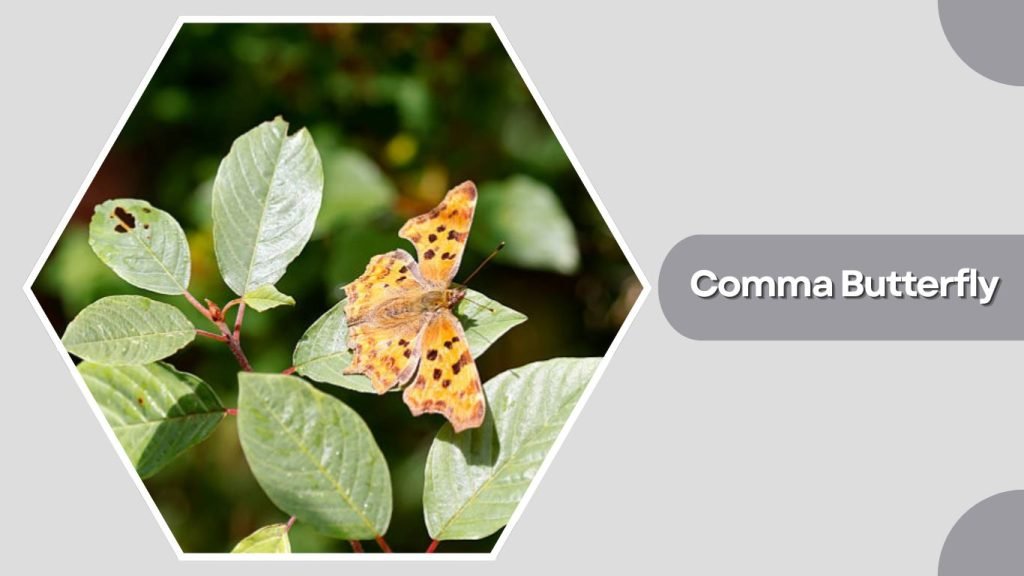
The Comma Butterfly is a distinctive black and orange species named after the small white mark on the underside of its wings that resembles a comma. It is commonly found across Europe, Asia, and North America, and is easily recognized by its ragged wing edges.
Identification
- Medium wingspan, about 5 to 6 centimeters
- Orange wings with black spots and dark edges
- Wings have deeply scalloped, irregular edges
- Underside is brown with a white comma-shaped marking
Color Pattern
The Comma Butterfly has a rich orange upper side marked with bold black spots. Its underside is much darker and resembles a dry leaf, helping it stay hidden from predators. The small white comma mark is the key feature that gives this butterfly its name.
Habitat
This butterfly prefers woodlands, hedgerows, gardens, and parks. It is often found in areas with plenty of shrubs and trees. Host plants such as nettles, hops, and elm are important for its life cycle, making these habitats ideal for its survival.
Behavior
Comma Butterflies are active during warm, sunny days and are often seen basking with wings open. They have a fast and erratic flight. Instead of relying mainly on nectar, they often feed on tree sap, rotting fruit, and other organic materials.
8. Gulf Fritillary
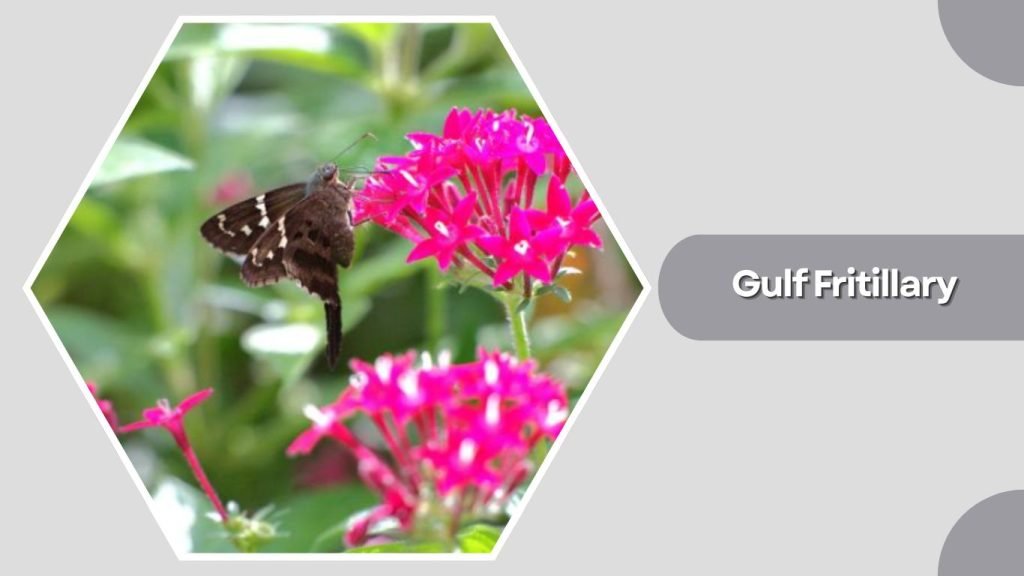
The Gulf Fritillary is a vibrant black and orange butterfly commonly found in the southern United States, Central America, and parts of South America. It is easily recognized by its bright coloration and fast, graceful flight.
Identification
- Medium wingspan, about 6 to 9 centimeters
- Bright orange wings with black spots on the upper side
- Forewings are elongated with slightly pointed tips
- Underside is brownish with silvery-white spots
Color Pattern
The Gulf Fritillary has a vivid orange upper surface covered with small black spots. In contrast, the underside is more muted, featuring brown tones with striking silver spots that shimmer in the light. This combination makes it both eye-catching and well-camouflaged when resting.
Habitat
This butterfly prefers open habitats such as fields, gardens, roadsides, and coastal areas. It is often found where passionflower plants grow, as these serve as host plants for its caterpillars. Warm climates are ideal for its survival and reproduction.
Behavior
Gulf Fritillaries are active during sunny days and are known for their quick, fluttering flight. They frequently visit flowers for nectar and are common in butterfly gardens. Their bright coloration warns predators of their unpalatability, helping them avoid being eaten.
9. Variegated Fritillary
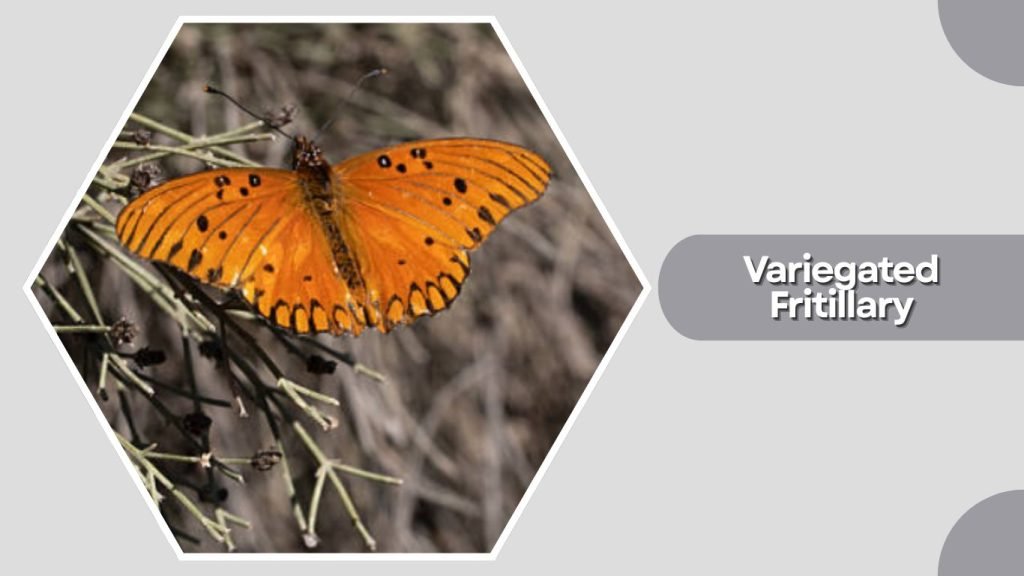
The Variegated Fritillary is a bold and colorful black and orange butterfly found across the Americas. It is known for its fast flight and distinctive patterns, often seen in open areas where it actively searches for nectar.
Identification
- Medium wingspan, about 6 to 9 centimeters
- Orange wings with irregular black markings and spots
- Forewings are slightly pointed
- Underside is brownish-orange with lighter markings and spots
Color Pattern
The Variegated Fritillary has a rich orange base with scattered black markings that appear more irregular compared to other fritillaries. The underside is duller, with a mix of brown and orange tones that provide camouflage when the butterfly is at rest.
Habitat
This butterfly thrives in open habitats such as fields, meadows, roadsides, and gardens. It prefers warm climates and areas with plenty of flowering plants. It is also commonly found in disturbed areas where host plants like passionflower grow.
Behavior
Variegated Fritillaries are fast and active fliers, often seen moving quickly from flower to flower. They feed on nectar from a wide variety of plants. Unlike some butterflies, they do not stay in one place for long, making them more challenging to observe closely.
10. Baltimore Checkerspot
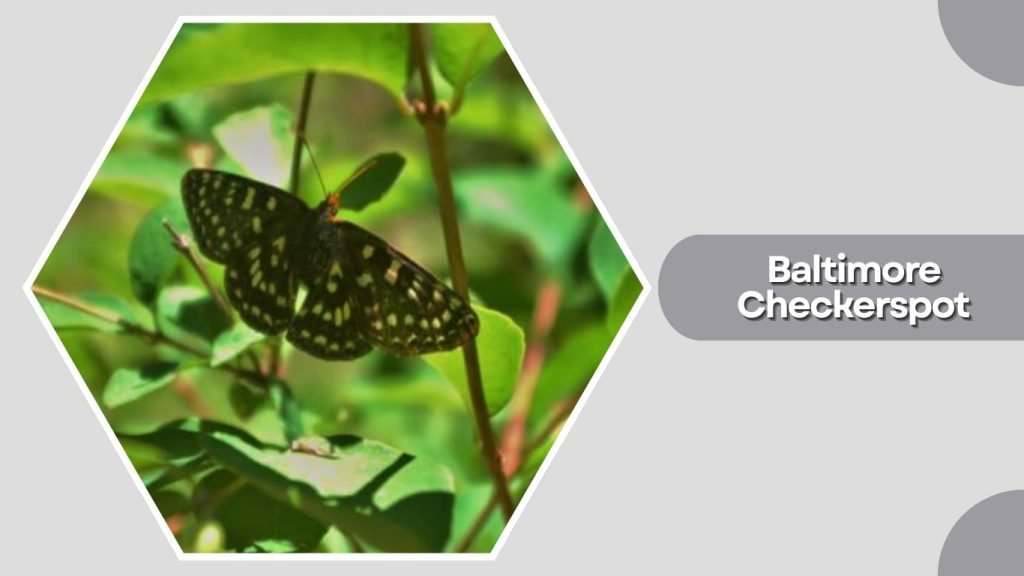
The Baltimore Checkerspot is a striking black and orange butterfly known for its bold, checkered wing pattern. Native to North America, it is admired for its vivid coloration and is often associated with wetland habitats and meadows.
Identification
- Medium wingspan, about 5 to 6 centimeters
- Wings display a mix of black, orange, and white spots
- Pattern appears checkered or patchy across the wings
- Body is dark with small light markings
Color Pattern
The Baltimore Checkerspot features a dramatic combination of black, bright orange, and white markings arranged in a checkered pattern. The contrast between these colors makes it highly noticeable. The underside is slightly duller but still retains the same patterned appearance.
Habitat
This butterfly prefers moist environments such as wetlands, marshes, meadows, and stream edges. It depends on specific host plants like turtlehead for its larvae, making its habitat somewhat limited compared to more adaptable species.
Behavior
Baltimore Checkerspots are active during warm days and are often seen flying low over vegetation. They feed on nectar from various flowers and tend to stay close to their host plants. Their populations can be sensitive to habitat changes, making conservation important for their survival.
11. Great Spangled Fritillary
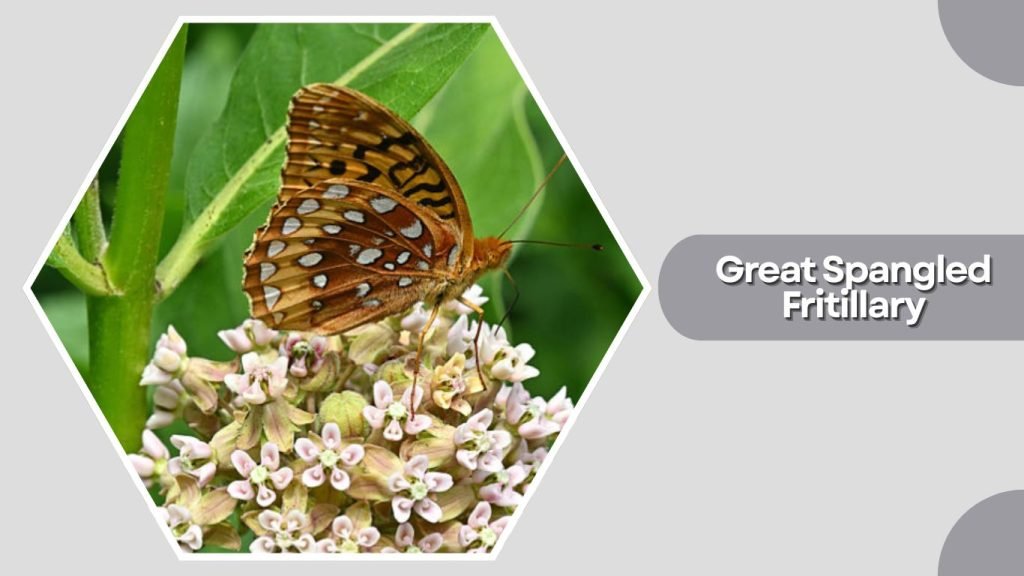
The Great Spangled Fritillary is a large and eye-catching black and orange butterfly found across North America. It is well known for its bright coloration and distinctive silver spots on the underside of its wings.
Identification
- Large wingspan, about 7 to 10 centimeters
- Bright orange wings with black spots and markings
- Forewings are slightly elongated
- Underside of hindwings has large silvery spots
Color Pattern
The upper side of the Great Spangled Fritillary is vivid orange with bold black markings, creating a striking contrast. The underside is more subdued, with brownish tones and prominent silver spots that reflect light, making it easily recognizable when resting.
Habitat
This butterfly prefers open habitats such as meadows, grasslands, gardens, and woodland edges. It is commonly found in areas where violets grow, as these plants serve as host plants for its caterpillars. It thrives in warm, sunny environments.
Behavior
Great Spangled Fritillaries are strong fliers and are often seen gliding over open fields. They feed on nectar from a variety of flowers and are active during the day. Females lay eggs near host plants, and the species follows a seasonal life cycle tied closely to its environment.
12. Fiery Skipper
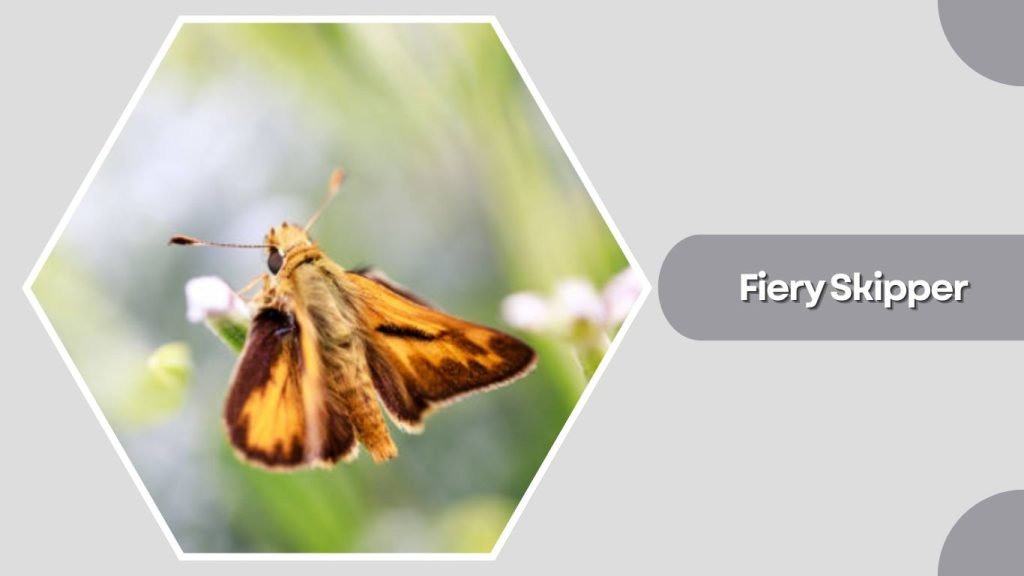
The Fiery Skipper is a small but vibrant black and orange butterfly commonly found in the Americas. Despite its size, it stands out due to its bright coloration and quick, darting flight, often seen in gardens and grassy areas.
Identification
- Small wingspan, about 2.5 to 3.5 centimeters
- Males are bright orange with dark brown to black borders
- Females are darker with orange spots and patches
- Body is stout with a fuzzy appearance typical of skippers
Color Pattern
The Fiery Skipper shows a strong contrast between bright orange and dark brown or black. Males are more vividly colored, while females have a more patterned appearance. The underside is lighter, often with a golden or yellowish tone that blends well with dry grass.
Habitat
This butterfly thrives in open habitats such as lawns, fields, gardens, and grasslands. It prefers warm climates and is commonly found in areas with plenty of grasses, which serve as host plants for its caterpillars.
Behavior
Fiery Skippers are known for their fast, skipping flight, which gives them their name. They are active during sunny days and frequently visit flowers for nectar. They often rest with wings partially open and are commonly seen in low vegetation.
FAQs
What do black and orange butterflies symbolize?
Black and orange butterflies often symbolize transformation, resilience, and change. In many cultures, they are seen as signs of renewal and personal growth. Their bold colors also represent warning and protection in nature, helping them survive by signaling predators to stay away.
Are black and orange butterflies poisonous?
Some black and orange butterflies, like the Monarch, are toxic to predators because they consume poisonous plants as caterpillars. However, not all species are poisonous. Many harmless butterflies mimic toxic ones to avoid being eaten, a strategy known as mimicry.
Where are black and orange butterflies commonly found?
These butterflies are found worldwide, especially in North and South America, Europe, and Asia. They live in a variety of habitats, including gardens, forests, grasslands, and wetlands, depending on the species and availability of host plants.
What do black and orange butterflies eat?
Most adult butterflies feed on nectar from flowers. Some species also feed on tree sap, rotting fruit, or minerals from damp soil. Caterpillars depend on specific host plants, which vary by species and are essential for their development.
How can I attract black and orange butterflies to my garden?
You can attract them by planting nectar-rich flowers like milkweed, lantana, and zinnias. Providing host plants for caterpillars, avoiding pesticides, and ensuring a sunny, sheltered environment will also help create a butterfly-friendly garden.