
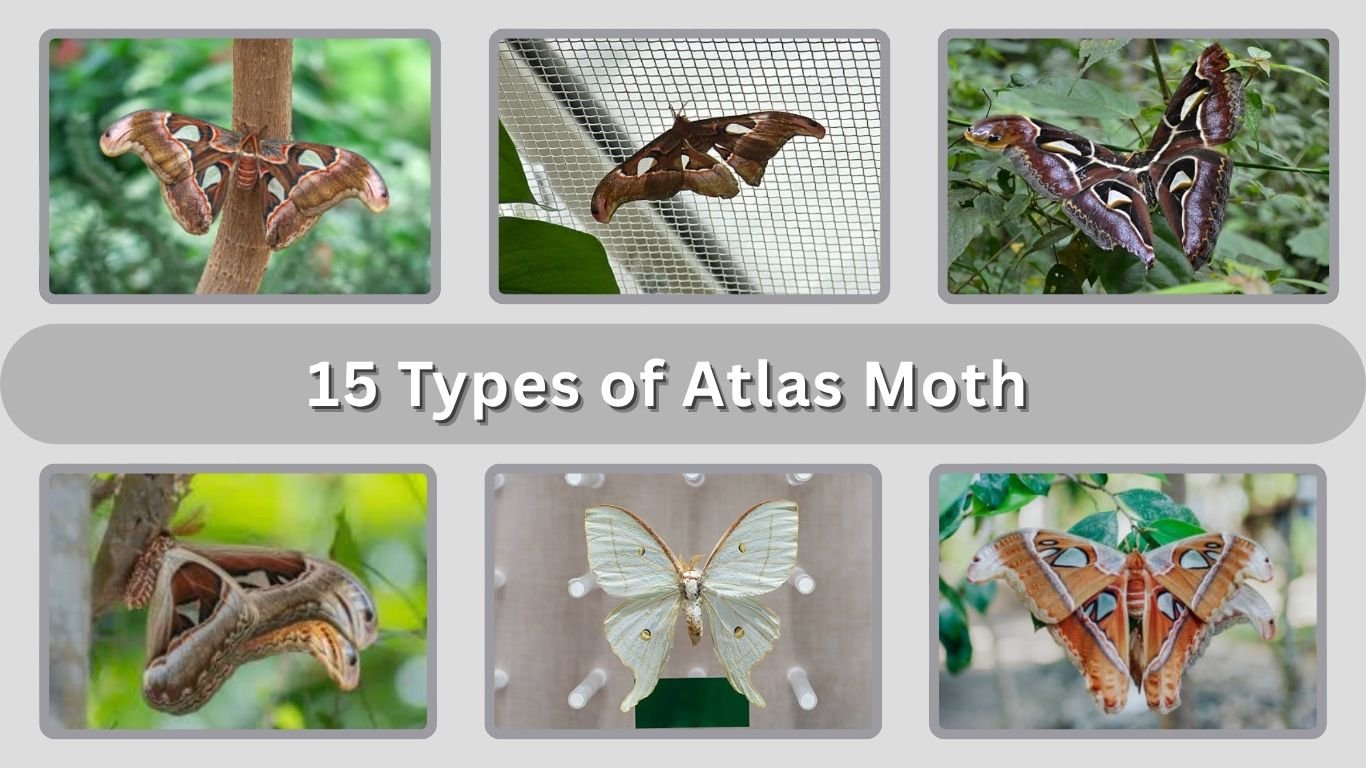
Atlas moths are among the largest and most fascinating insects in the world, admired for their massive wingspan and unique patterns. Found mainly across Asia, these moths vary slightly by region, giving rise to different types with distinct characteristics. From the well-known Atlas moth to regional variations like the Philippine and Himalayan forms, each has its own traits shaped by its environment. In this guide, you’ll explore 15 types of Atlas moths, along with their identification, habitat, behaviors, and lifecycle details.
1. Atlas Moth
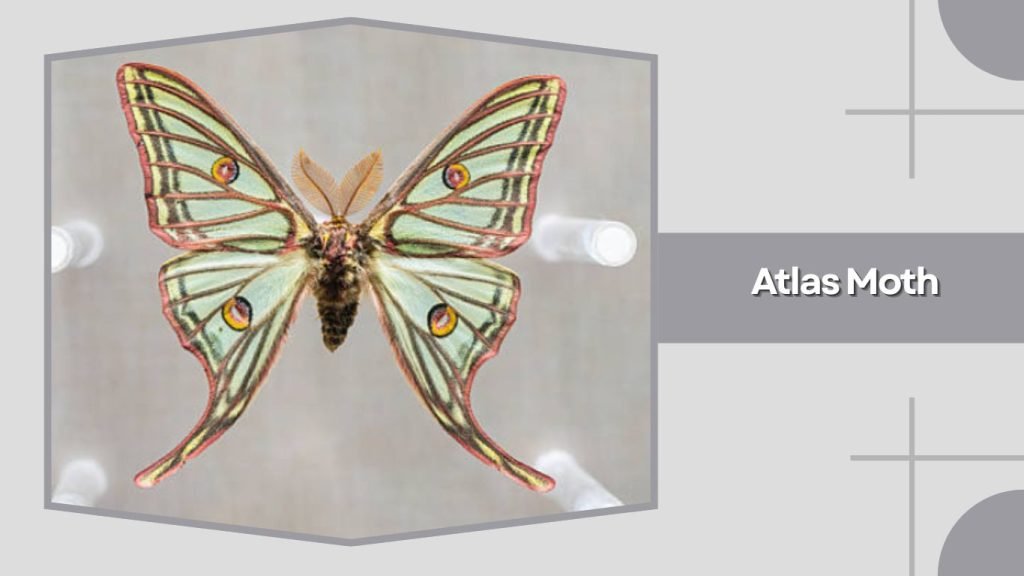
The Atlas moth is one of the largest moth species in the world, famous for its enormous wingspan and eye-catching wing patterns. Native to the forests of Asia, it is often admired for both its size and unique appearance. Despite its grandeur, the adult moth lives only for a short time, making it a fascinating example of nature’s brief but dramatic life cycles.
Identification
- Wingspan typically ranges from 24 to 30 cm, making it one of the largest moths globally
- Reddish-brown wings with intricate patterns, including shades of pink, white, and black
- Distinctive wing tips that resemble snake heads, believed to scare away predators
- Thick, furry body with a comparatively small head and feathery antennae
- Transparent “windows” on the wings that add to its unique look
Habitat
Atlas moths are commonly found in tropical and subtropical forests across South and Southeast Asia. They thrive in environments with dense vegetation, such as rainforests, secondary forests, and plantations. These habitats provide plenty of host plants for their larvae, including citrus, guava, and cinnamon trees. They are also sometimes spotted near human settlements where suitable plants are available. Warm temperatures and moderate humidity are essential for their survival, as these conditions support their growth and development. During the day, they rest on tree trunks or leaves, blending in with their surroundings due to their camouflage-like wing patterns.
Behaviors
Atlas moths are primarily nocturnal and become active during the night. They are often attracted to artificial lights, which can bring them closer to human dwellings. Adult moths are relatively inactive compared to other insects because their main purpose is reproduction. They rely heavily on their large wings for gliding rather than sustained flight. Males are more active than females, especially when searching for mates using their sensitive antennae to detect pheromones. Their snake-like wing patterns also play a defensive role, helping them avoid predators when threatened.
Diet and Lifecycle
The lifecycle of the Atlas moth includes four stages: egg, larva (caterpillar), pupa, and adult. The caterpillars are active feeders and consume leaves from a variety of host plants, growing rapidly and storing energy for later stages. Once fully grown, they spin large silk cocoons and enter the pupal stage. Adult Atlas moths emerge from these cocoons but lack functional mouthparts, meaning they cannot eat. They survive entirely on stored energy accumulated during their caterpillar stage. Their adult lifespan is very short, usually lasting about one to two weeks, during which they focus solely on mating and laying eggs to continue the cycle.
2. Philippine Atlas Moth
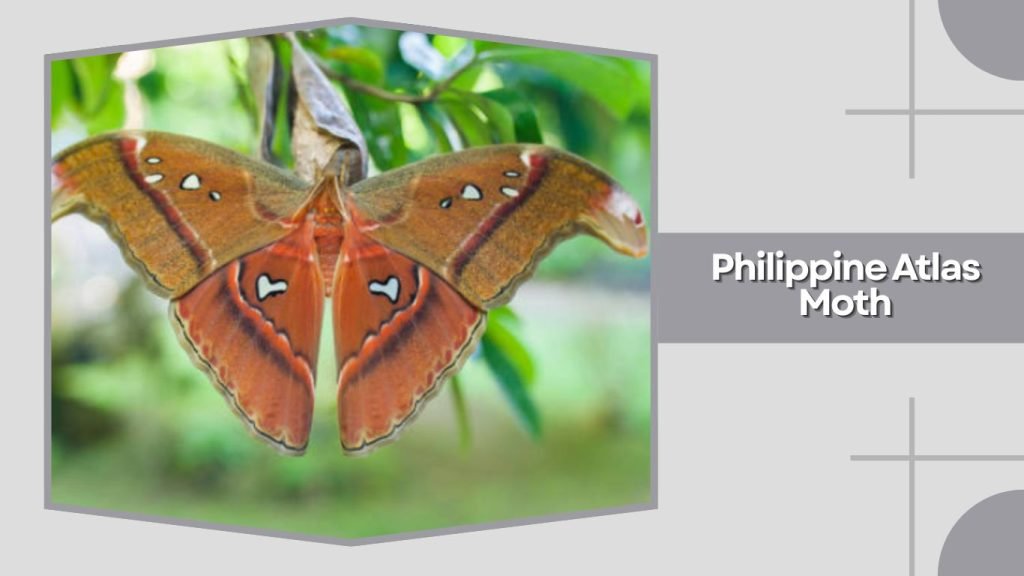
The Philippine Atlas moth is a regional variation of the Atlas moth found in the Philippines. It shares the same massive size and striking wing design but may show slight differences in coloration and pattern intensity. This moth thrives in the country’s tropical climate and is often associated with forested and rural environments.
Identification
- Large wingspan similar to the Atlas moth, often reaching up to 25–30 cm
- Brown to reddish-brown wings with bold patterns and lighter markings
- Wing tips shaped like snake heads, used as a natural defense mechanism
- Slight variation in color tones, sometimes appearing darker due to local conditions
- Robust, furry body with feathery antennae, especially prominent in males
Habitat
The Philippine Atlas moth is commonly found in tropical rainforests, lowland forests, and agricultural areas throughout the Philippines. It prefers warm, humid climates where vegetation is abundant. These environments provide ideal conditions for its larvae, which depend on a variety of host plants. It can also adapt to areas near human settlements, particularly where fruit trees and ornamental plants are present. During the day, it rests quietly on tree trunks or foliage, using its patterned wings for camouflage against predators. Forest edges and plantation zones are especially favorable habitats.
Behaviors
This moth is nocturnal and becomes active after sunset. Like other Atlas moths, it is attracted to light sources at night. Adult moths are relatively passive and do not travel long distances, conserving energy for reproduction. Males are more active as they search for females by detecting pheromones. When threatened, the moth may display its wings to emphasize the snake-head patterns, deterring predators. Its flight is slow and gliding rather than fast or erratic, giving it a graceful appearance in motion.
Diet and Lifecycle
The lifecycle follows the typical stages of egg, larva, pupa, and adult. Caterpillars are voracious feeders and consume leaves from host plants such as citrus, guava, and other native species. As they grow, they store energy necessary for their transformation. Once mature, they spin large silk cocoons and enter the pupal stage. Adult moths emerge without functional mouthparts, meaning they cannot eat. Their lifespan is short, usually around one to two weeks, during which they focus entirely on mating and laying eggs to ensure the continuation of the species.
3. Javan Atlas Moth
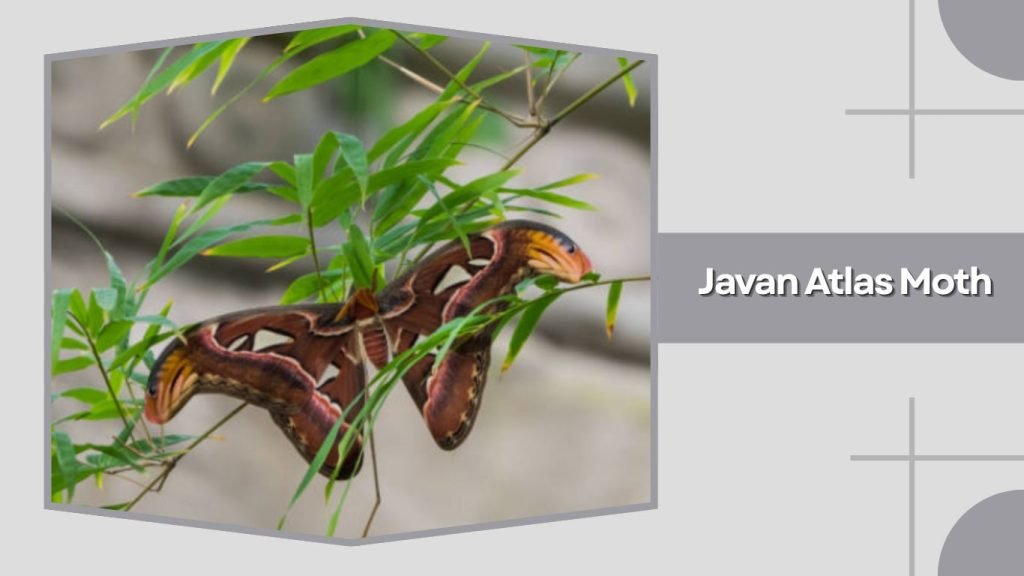
The Javan Atlas moth is a regional form of the Atlas moth found primarily in Java, Indonesia. It is known for its impressive size and slightly varied wing coloration influenced by its local environment. Like other Atlas moths, it is admired for its beauty and plays an important role in its ecosystem.
Identification
- Wingspan typically ranges between 24–30 cm
- Wings display a mix of reddish-brown and darker earthy tones
- Distinct snake-head shaped wing tips used for predator deterrence
- Patterns may appear slightly darker or more contrasted than other regional types
- Thick, hairy body with large, feathery antennae in males
Habitat
The Javan Atlas moth inhabits tropical forests, plantations, and rural landscapes across Java. It thrives in warm, humid conditions where vegetation is dense and diverse. These environments provide an abundance of host plants for caterpillars, including fruit trees and native forest species. The moth is often found resting on tree trunks or large leaves during the day, where its patterned wings help it blend into the surroundings. It can also be seen near agricultural areas, especially where crops like citrus or guava are grown. Stable temperatures and access to food plants make these habitats ideal for its lifecycle.
Behaviors
This moth is nocturnal and becomes active at night, often drawn to artificial lighting. It has a slow, gliding flight style and does not travel far distances. Adult Javan Atlas moths are relatively inactive, focusing mainly on reproduction. Males are more mobile as they search for females by following pheromone trails. When threatened, the moth may spread its wings to display the snake-like patterns, which can confuse or scare predators. Its calm and energy-conserving behavior is typical of Atlas moth species.
Diet and Lifecycle
The lifecycle consists of four stages: egg, larva, pupa, and adult. The caterpillars feed heavily on a variety of host plants, storing energy for metamorphosis. Once fully grown, they spin large silk cocoons and enter the pupal stage. After emerging as adults, they do not eat due to the absence of functional mouthparts. Their energy comes entirely from reserves built during the larval stage. The adult lifespan is short, usually lasting one to two weeks, during which they focus on mating and laying eggs to continue the species.
4. Indian Atlas Moth
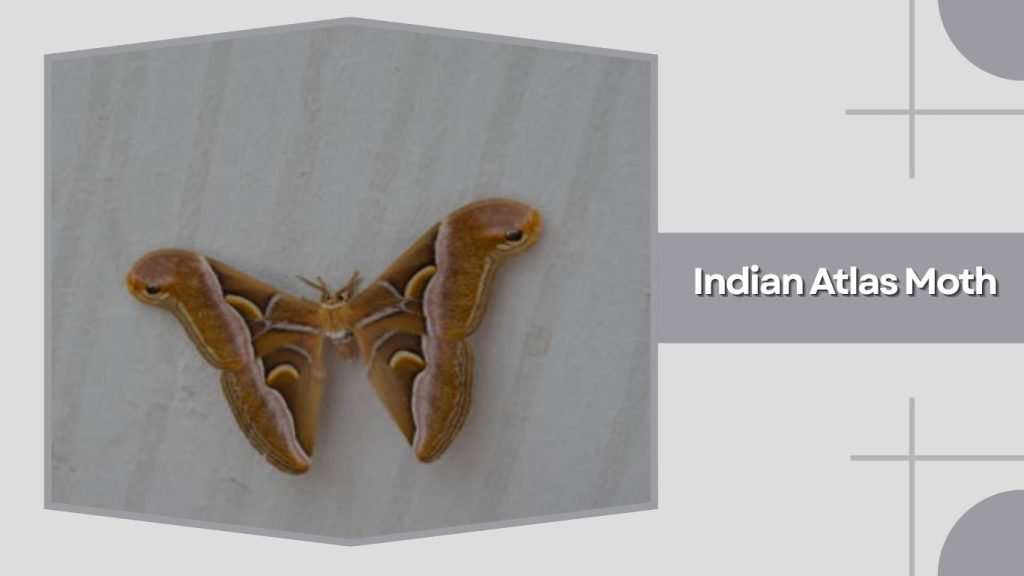
The Indian Atlas moth is a well-known regional form found across various parts of India. It is admired for its massive wings and rich coloration, often appearing slightly more vibrant due to the diverse climates it inhabits. This moth is commonly seen in forested and semi-urban areas where host plants are available.
Identification
- Wingspan typically ranges from 25–30 cm
- Reddish-brown wings with detailed patterns and pale markings
- Prominent snake-head shaped wing tips for defense
- Slight variation in shades, sometimes showing warmer or deeper tones
- Large, furry body with broad wings and feathery antennae in males
Habitat
The Indian Atlas moth is found in tropical and subtropical regions across India, including forests, gardens, and agricultural lands. It thrives in areas with abundant vegetation, especially where host plants like citrus, mango, and guava are present. These moths are adaptable and can sometimes be found near human settlements, particularly in rural or semi-urban environments. During the daytime, they rest quietly on tree trunks or foliage, blending in with their surroundings thanks to their natural camouflage. Warm temperatures and seasonal humidity support their growth and reproduction, making monsoon and post-monsoon periods especially favorable for their lifecycle.
Behaviors
This moth is nocturnal and becomes active after sunset. It is often attracted to artificial lights, which can make it visible in populated areas. The Indian Atlas moth has a slow, gliding flight and does not expend much energy on long-distance movement. Adult moths remain relatively inactive, focusing mainly on reproduction. Males actively search for females using their highly sensitive antennae to detect pheromones. When threatened, they may display their wings to highlight the snake-like patterns, helping to deter predators. Their behavior is calm and energy-efficient.
Diet and Lifecycle
The lifecycle includes egg, larva, pupa, and adult stages. Caterpillars are heavy feeders and consume leaves from a variety of plants, storing energy for later stages. Once fully grown, they spin large silk cocoons and enter the pupal stage. Adults emerge without functional mouthparts, meaning they cannot feed. They rely entirely on stored energy from their larval stage. Their adult life is short, typically lasting one to two weeks, during which they mate and lay eggs, completing their lifecycle.
5. Chinese Atlas Moth
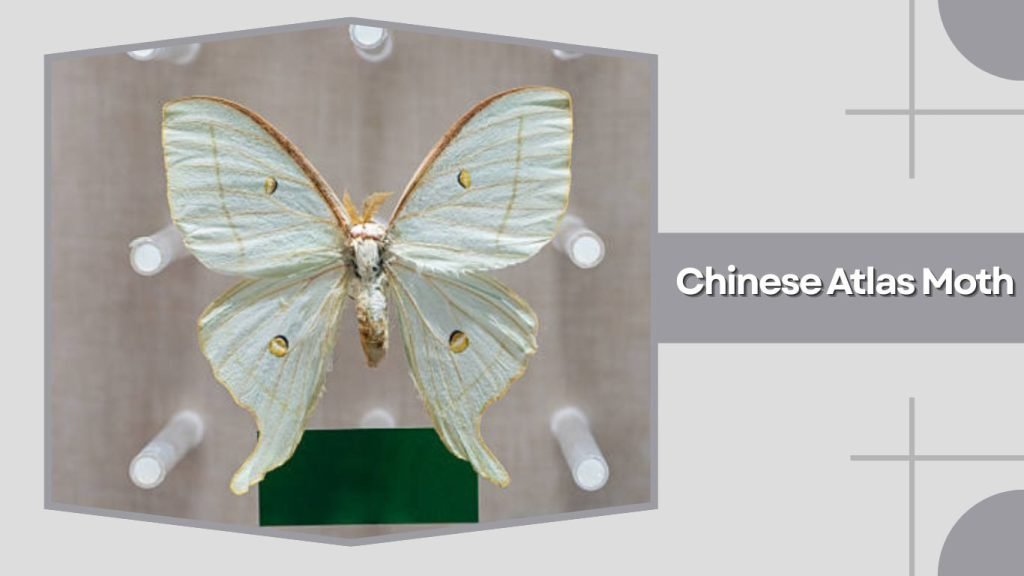
The Chinese Atlas moth is a regional variation found across parts of China, known for its large size and slightly distinct wing coloration. It shares the iconic appearance of the Atlas moth but may show subtle differences influenced by local climates and environments. This moth is often seen in forested and rural regions.
Identification
- Wingspan typically ranges from 24–30 cm
- Wings display reddish-brown to darker brown shades with intricate patterns
- Distinct snake-head shaped wing tips used for defense
- Patterns may appear more muted or slightly darker in some regions
- Thick, furry body with prominent feathery antennae in males
Habitat
The Chinese Atlas moth is commonly found in subtropical and temperate forests, plantations, and countryside areas across China. It prefers regions with dense vegetation and a steady supply of host plants. These include trees like citrus, camphor, and other native species that support caterpillar growth. The moth can also adapt to areas near human habitation, especially gardens and agricultural lands. During the day, it rests quietly on tree trunks or leaves, where its wing patterns help it blend into the environment. Seasonal climate variations, including warm summers and mild winters in some regions, support its lifecycle.
Behaviors
This moth is nocturnal and becomes active during the night. It is often attracted to artificial lighting, which can bring it closer to human-populated areas. The Chinese Atlas moth has a slow, gliding flight and tends to conserve energy. Adult moths are mostly inactive, focusing on reproduction rather than movement. Males are more active as they search for females by detecting pheromones over long distances. When disturbed, the moth may spread its wings to display the snake-like patterns, which can help scare off predators. Its behavior is generally calm and defensive.
Diet and Lifecycle
The lifecycle consists of egg, larva, pupa, and adult stages. Caterpillars feed extensively on host plant leaves, growing rapidly and storing energy for metamorphosis. Once fully developed, they spin large silk cocoons and enter the pupal stage. Adult moths emerge without functional mouthparts, meaning they do not feed. Their survival depends entirely on energy reserves built during the larval stage. The adult lifespan is short, usually lasting one to two weeks, during which they focus on mating and laying eggs to continue the species.
6. Indonesian Atlas Moth
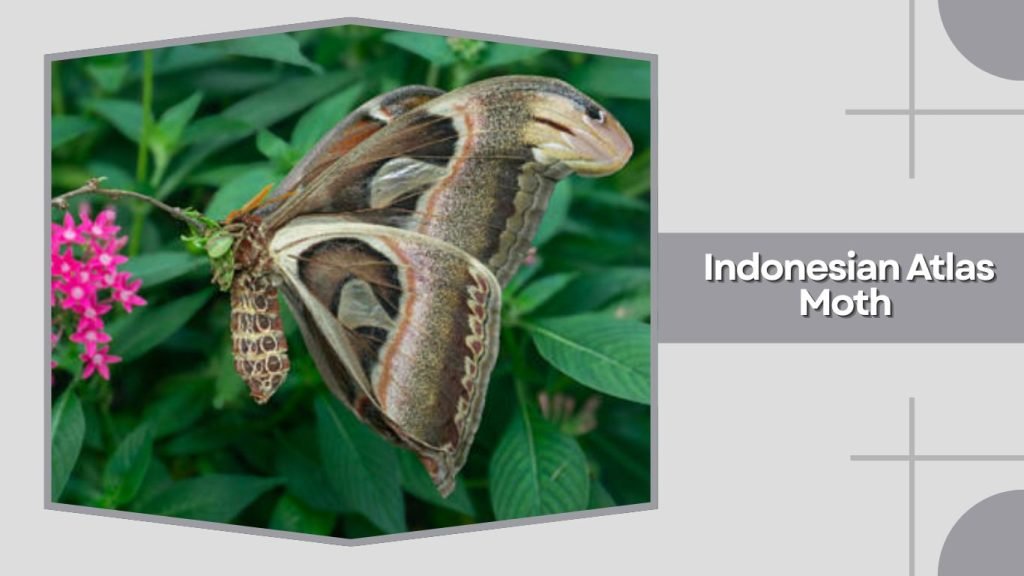
The Indonesian Atlas moth is a regional form found across the many islands of Indonesia. It is known for its impressive size and slightly varied wing patterns, influenced by the diverse ecosystems of the region. Like other Atlas moths, it is admired for its beauty and short yet fascinating life cycle.
Identification
- Wingspan typically ranges from 24–30 cm
- Reddish-brown wings with complex patterns and pale markings
- Distinct snake-head shaped wing tips used to deter predators
- Color variations may occur depending on island and environment
- Large, furry body with broad wings and feathery antennae in males
Habitat
The Indonesian Atlas moth is commonly found in tropical rainforests, plantations, and rural landscapes throughout Indonesia. It thrives in warm, humid climates with dense vegetation, which provides ideal conditions for its larvae. Host plants such as citrus, guava, and other native trees are widely available in these regions. The moth is often seen resting on tree trunks or large leaves during the day, where its wing patterns help it blend into the surroundings. It can also adapt to areas near human settlements, especially where agricultural crops are grown. The diverse geography of Indonesia allows this moth to inhabit both lowland forests and slightly elevated regions.
Behaviors
This moth is nocturnal and becomes active after sunset. It is often attracted to artificial lights, making it occasionally visible in villages and towns. The Indonesian Atlas moth has a slow, gliding flight and does not travel long distances. Adults are relatively inactive, conserving energy for reproduction. Males are more active than females, using their sensitive antennae to locate mates by detecting pheromones. When threatened, the moth may spread its wings to display its snake-like patterns, which can confuse or scare predators. Its behavior is generally calm and energy-efficient.
Diet and Lifecycle
The lifecycle includes egg, larva, pupa, and adult stages. Caterpillars are heavy feeders and consume leaves from a variety of host plants, storing energy for later stages. Once fully grown, they spin large silk cocoons and enter the pupal stage. Adults emerge without functional mouthparts, meaning they cannot feed. They rely entirely on stored energy from their larval stage. The adult lifespan is short, usually lasting one to two weeks, during which they focus on mating and laying eggs to complete their lifecycle.
7. Malaysian Atlas Moth
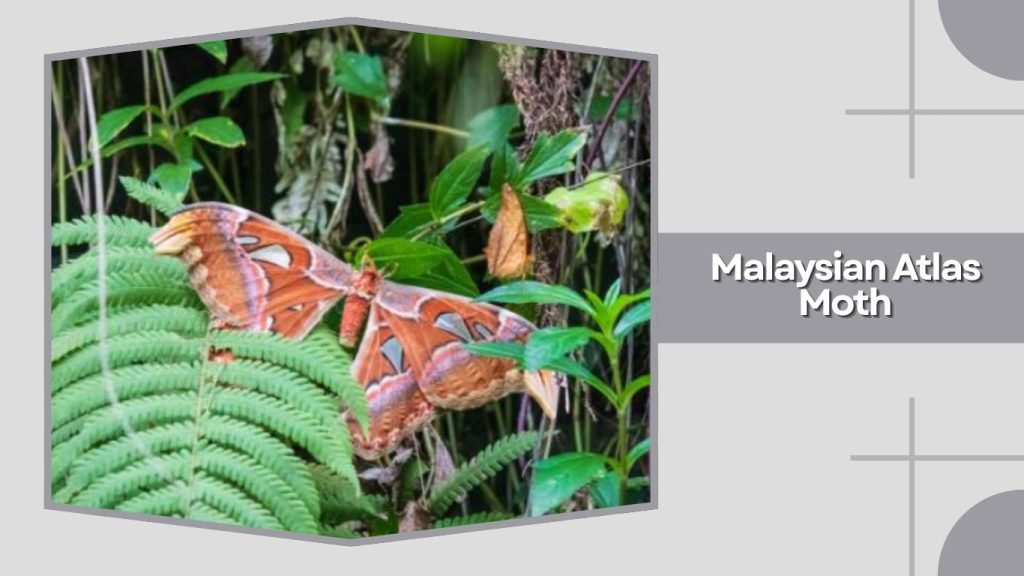
The Malaysian Atlas moth is a regional variation found in Malaysia’s rich tropical ecosystems. It is known for its large wings and striking patterns, often influenced by the country’s dense rainforests and humid climate. Like other Atlas moths, it is admired for its size, beauty, and short-lived adult stage.
Identification
- Wingspan typically ranges from 24–30 cm
- Reddish-brown wings with detailed patterns and pale, transparent patches
- Distinct snake-head shaped wing tips used for predator deterrence
- Slight variations in tone, sometimes appearing more vibrant in humid regions
- Thick, furry body with prominent feathery antennae in males
Habitat
The Malaysian Atlas moth thrives in tropical rainforests, plantations, and rural areas across Malaysia. These environments provide warm temperatures, high humidity, and dense vegetation, all of which are ideal for its survival. Host plants such as citrus, guava, and other native trees are widely available, supporting the growth of caterpillars. The moth is often found resting on tree trunks, branches, or large leaves during the day, using its natural camouflage to avoid predators. It can also adapt to areas near human settlements, especially where gardens and agricultural lands offer suitable plant life. Lowland forests and forest edges are particularly favorable habitats.
Behaviors
This moth is primarily nocturnal and becomes active at night. It is often attracted to artificial lights, making it occasionally visible in both rural and urban settings. The Malaysian Atlas moth has a slow, gliding flight and does not travel long distances. Adult moths are mostly inactive, conserving energy for reproduction. Males are more active, using their sensitive antennae to detect female pheromones over long distances. When threatened, the moth may spread its wings to display the snake-like patterns, which can help deter predators. Its behavior is generally calm and defensive.
Diet and Lifecycle
The lifecycle consists of egg, larva, pupa, and adult stages. Caterpillars are active feeders and consume leaves from various host plants, storing energy for metamorphosis. Once fully grown, they spin large silk cocoons and enter the pupal stage. Adult moths emerge without functional mouthparts, meaning they do not feed. Their survival depends entirely on the energy stored during the larval stage. The adult lifespan is short, usually lasting one to two weeks, during which they focus on mating and laying eggs to continue the species.
8. Thai Atlas Moth
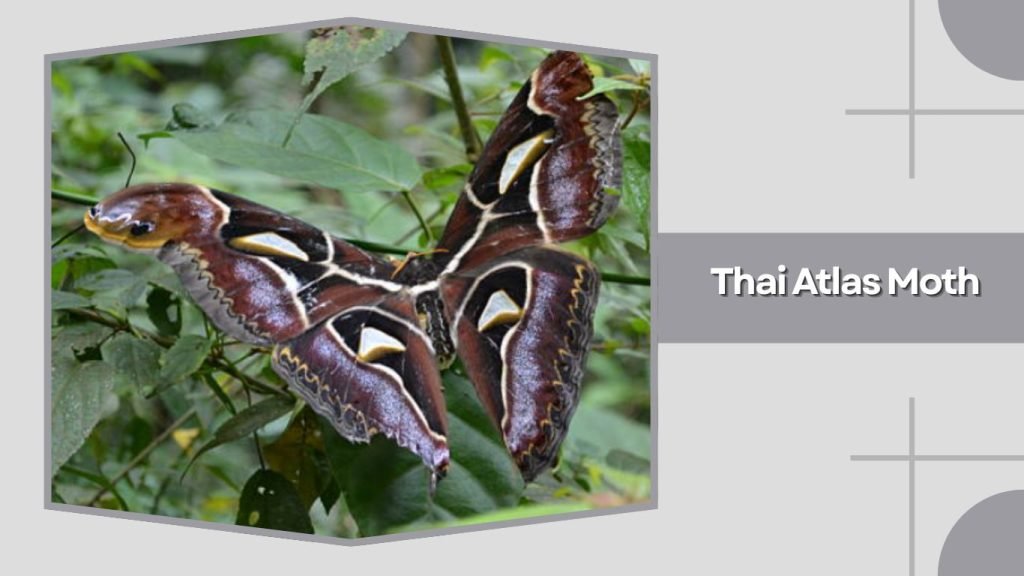
The Thai Atlas moth is a regional variation commonly found in Thailand’s tropical landscapes. It is known for its large wings and rich patterns, often influenced by the country’s warm climate and dense vegetation. Like other Atlas moths, it is admired for its impressive size and short adult lifespan.
Identification
- Wingspan typically ranges from 24–30 cm
- Reddish-brown wings with intricate patterns and pale markings
- Distinct snake-head shaped wing tips used to deter predators
- Slight variation in color, sometimes appearing brighter in tropical conditions
- Thick, furry body with large, feathery antennae in males
Habitat
The Thai Atlas moth is commonly found in tropical forests, plantations, and rural areas throughout Thailand. It thrives in warm, humid environments where vegetation is abundant. Host plants such as citrus, guava, and other native trees are widely available, providing ideal conditions for caterpillar development. The moth is often seen resting on tree trunks, branches, or large leaves during the day, using its wing patterns as camouflage. It can also be found near human settlements, especially in agricultural areas and gardens where suitable plants are present. Forest edges and lowland regions are particularly favorable habitats.
Behaviors
This moth is nocturnal and becomes active after sunset. It is frequently attracted to artificial lights, which can make it visible in populated areas. The Thai Atlas moth has a slow, gliding flight and does not travel long distances. Adult moths are relatively inactive, conserving energy primarily for reproduction. Males are more active, using their highly sensitive antennae to locate females by detecting pheromones. When threatened, the moth may spread its wings to highlight the snake-like patterns, helping to deter predators. Its behavior is calm and energy-efficient.
Diet and Lifecycle
The lifecycle includes egg, larva, pupa, and adult stages. Caterpillars feed heavily on the leaves of various host plants, storing energy for later stages. Once fully grown, they spin large silk cocoons and enter the pupal stage. Adult moths emerge without functional mouthparts, meaning they cannot feed. They rely entirely on stored energy from their larval stage. Their adult lifespan is short, usually lasting one to two weeks, during which they focus on mating and laying eggs to complete their lifecycle.
9. Vietnamese Atlas Moth
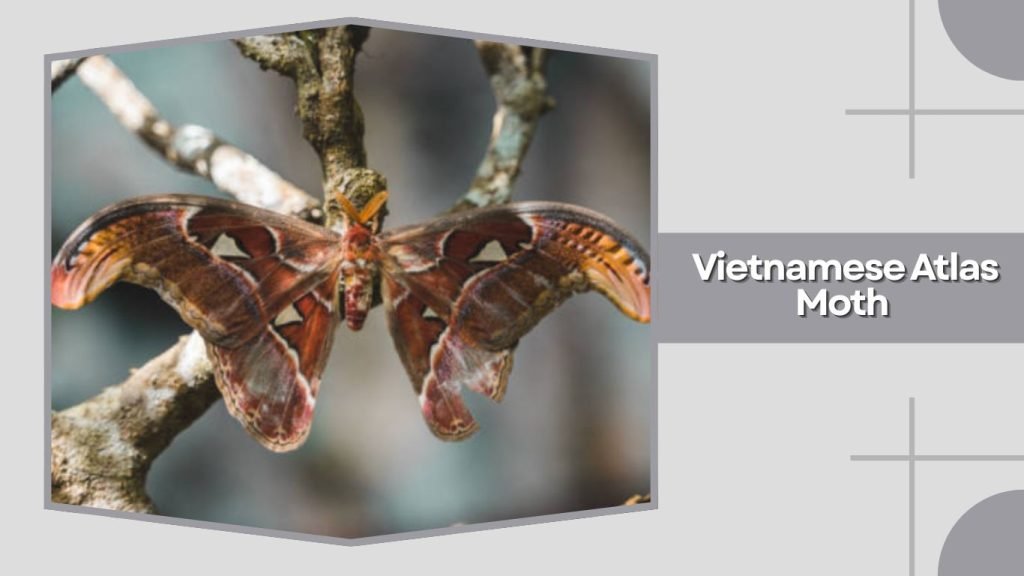
The Vietnamese Atlas moth is a regional variation found across Vietnam’s tropical and subtropical regions. It is known for its impressive wingspan and slightly varied coloration, influenced by local environmental conditions. Like other Atlas moths, it is admired for its beauty and short-lived adult stage.
Identification
- Wingspan typically ranges from 24–30 cm
- Reddish-brown wings with intricate patterns and lighter markings
- Distinct snake-head shaped wing tips used for predator deterrence
- Slight variation in tone, sometimes appearing darker or more contrasted
- Thick, furry body with large, feathery antennae in males
Habitat
The Vietnamese Atlas moth is commonly found in tropical forests, mountainous regions, and agricultural areas throughout Vietnam. It thrives in warm, humid climates with dense vegetation, which provides ideal conditions for its larvae. Host plants such as citrus, guava, and native trees are widely available in these environments. The moth is often seen resting on tree trunks or foliage during the day, using its patterned wings for camouflage. It can also adapt to areas near human settlements, especially in rural and farming regions. Forest edges and valleys with rich plant life are particularly suitable habitats.
Behaviors
This moth is nocturnal and becomes active at night. It is often attracted to artificial lighting, which can bring it closer to villages and towns. The Vietnamese Atlas moth has a slow, gliding flight and does not travel far distances. Adult moths are relatively inactive, focusing mainly on reproduction. Males are more active, using their sensitive antennae to detect female pheromones over long distances. When threatened, the moth may spread its wings to display the snake-like patterns, helping to deter predators. Its behavior is calm and energy-efficient.
Diet and Lifecycle
The lifecycle consists of egg, larva, pupa, and adult stages. Caterpillars are active feeders and consume leaves from various host plants, storing energy for metamorphosis. Once fully grown, they spin large silk cocoons and enter the pupal stage. Adult moths emerge without functional mouthparts, meaning they do not feed. Their survival depends entirely on stored energy from the larval stage. The adult lifespan is short, usually lasting one to two weeks, during which they focus on mating and laying eggs to continue the species.
10. Sumatran Atlas Moth
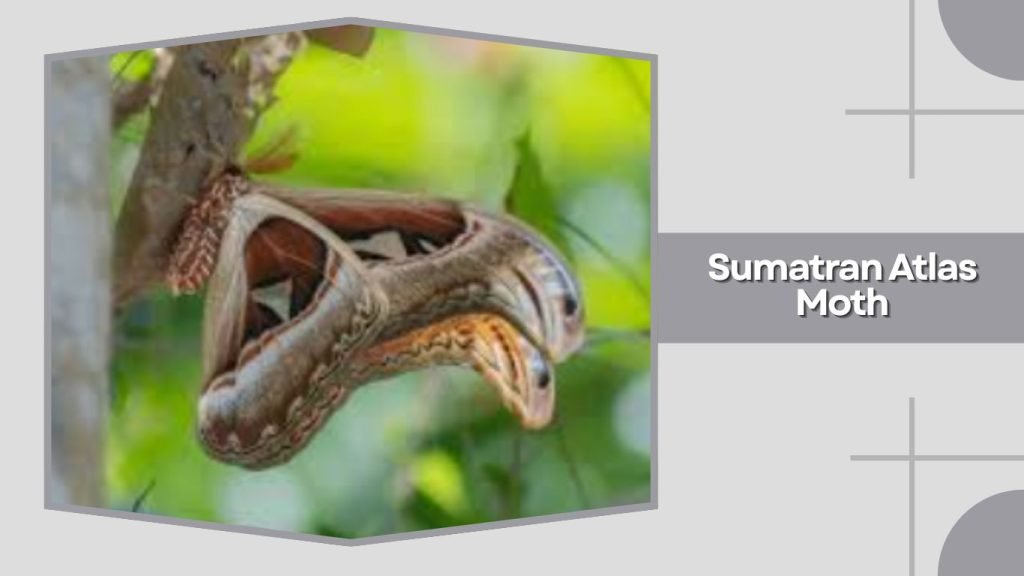
The Sumatran Atlas moth is a regional variation found on the island of Sumatra in Indonesia. It is known for its large wings and slightly deeper coloration, influenced by the island’s dense rainforests. Like other Atlas moths, it is admired for its impressive size and brief adult lifespan.
Identification
- Wingspan typically ranges from 24–30 cm
- Wings display reddish-brown to darker brown shades with detailed patterns
- Distinct snake-head shaped wing tips used for predator deterrence
- Patterns may appear richer or darker due to rainforest conditions
- Thick, furry body with large, feathery antennae in males
Habitat
The Sumatran Atlas moth thrives in tropical rainforests, lowland forests, and plantation areas across Sumatra. These environments provide high humidity, warm temperatures, and dense vegetation, which are ideal for its survival. Host plants such as citrus, guava, and various native trees are abundant, supporting caterpillar development. The moth is typically found resting on tree trunks or large leaves during the day, where its wing patterns provide effective camouflage. It may also be seen near agricultural zones and rural settlements where suitable vegetation exists. Forest interiors and edges are particularly favorable habitats for this species.
Behaviors
This moth is nocturnal and becomes active after sunset. It is often attracted to artificial lights, which can make it visible near human habitation. The Sumatran Atlas moth has a slow, gliding flight and tends to conserve energy. Adult moths are mostly inactive, focusing on reproduction. Males are more active and use their highly sensitive antennae to locate females by detecting pheromones. When threatened, the moth may spread its wings to display the snake-like patterns, which can deter predators. Its behavior is calm, with minimal unnecessary movement.
Diet and Lifecycle
The lifecycle includes egg, larva, pupa, and adult stages. Caterpillars are heavy feeders and consume leaves from a wide range of host plants, storing energy for later stages. Once fully grown, they spin large silk cocoons and enter the pupal stage. Adult moths emerge without functional mouthparts, meaning they cannot feed. They rely entirely on energy stored during the larval stage. The adult lifespan is short, usually lasting one to two weeks, during which they focus on mating and laying eggs to complete their lifecycle.
11. Bornean Atlas Moth
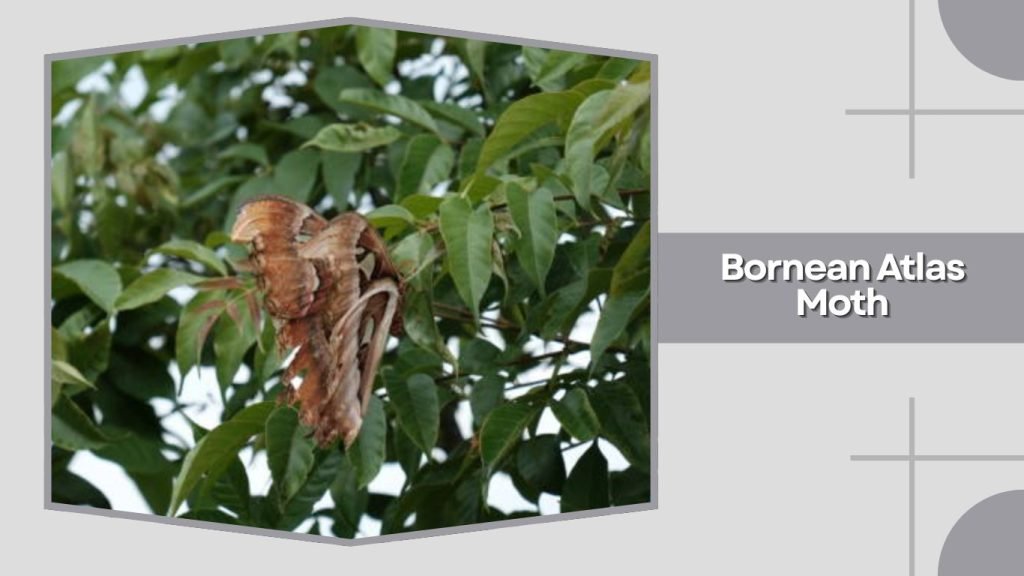
The Bornean Atlas moth is a regional variation found on the island of Borneo. It is known for its large size and rich wing patterns, often influenced by the island’s dense tropical rainforests. Like other Atlas moths, it is admired for its striking appearance and short adult lifespan.
Identification
- Wingspan typically ranges from 24–30 cm
- Reddish-brown wings with bold, intricate patterns and pale markings
- Distinct snake-head shaped wing tips used to deter predators
- Slightly deeper or more vibrant coloration due to humid rainforest conditions
- Thick, furry body with prominent feathery antennae in males
Habitat
The Bornean Atlas moth thrives in tropical rainforests, lowland forests, and plantation areas across Borneo. These habitats provide warm temperatures, high humidity, and dense vegetation, which are essential for its survival. Host plants such as citrus, guava, and various native tree species are abundant, supporting the growth of caterpillars. During the day, the moth rests on tree trunks or large leaves, using its patterned wings for camouflage. It can also be found near rural and agricultural areas where suitable vegetation exists. The rich biodiversity of Borneo makes it an ideal environment for this moth to complete its lifecycle.
Behaviors
This moth is nocturnal and becomes active at night. It is often attracted to artificial lighting, making it occasionally visible near human settlements. The Bornean Atlas moth has a slow, gliding flight and does not travel long distances. Adult moths are mostly inactive, conserving energy for reproduction. Males are more active, using their sensitive antennae to detect female pheromones. When threatened, the moth may spread its wings to display its snake-like patterns, helping to deter predators. Its behavior is generally calm and defensive.
Diet and Lifecycle
The lifecycle consists of egg, larva, pupa, and adult stages. Caterpillars feed extensively on the leaves of various host plants, storing energy for metamorphosis. Once fully grown, they spin large silk cocoons and enter the pupal stage. Adult moths emerge without functional mouthparts, meaning they do not feed. Their survival depends entirely on stored energy from the larval stage. The adult lifespan is short, usually lasting one to two weeks, during which they focus on mating and laying eggs to continue the species.
12. Himalayan Atlas Moth
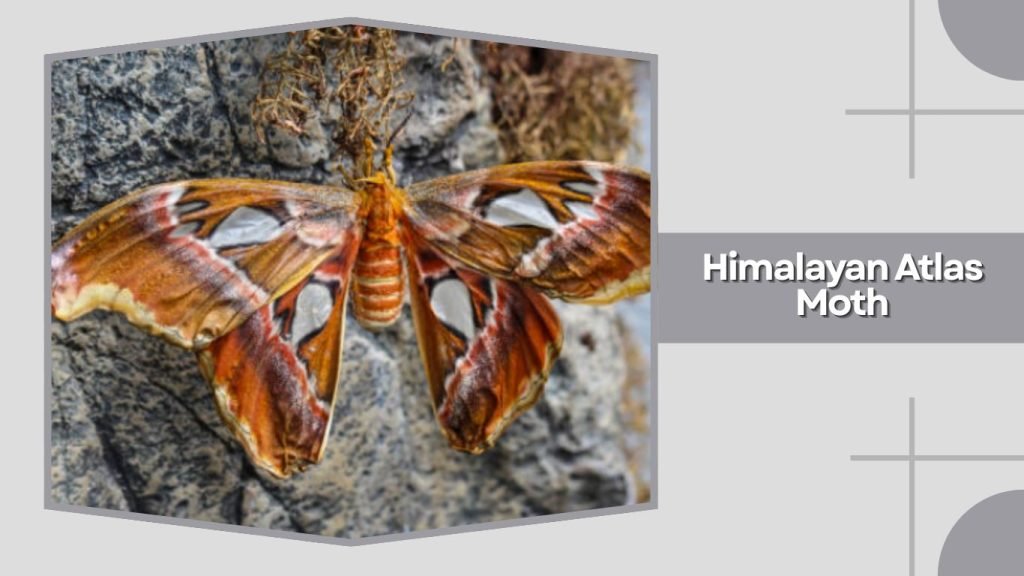
The Himalayan Atlas moth is a regional variation found in the foothills and lower elevations of the Himalayan region. It is known for its large wings and slightly adapted coloration suited to cooler and more varied climates. Like other Atlas moths, it is admired for its size and unique appearance.
Identification
- Wingspan typically ranges from 24–30 cm
- Wings show reddish-brown to slightly muted brown tones
- Distinct snake-head shaped wing tips used for predator deterrence
- Patterns may appear less vibrant due to cooler environments
- Thick, furry body with large, feathery antennae in males
Habitat
The Himalayan Atlas moth is commonly found in subtropical forests, foothill regions, and valleys along the Himalayan range. It prefers areas with moderate temperatures and sufficient vegetation, unlike the dense tropical forests of other Atlas moths. Host plants such as citrus, guava, and native trees grow in these regions, supporting caterpillar development. The moth often rests on tree trunks, shrubs, or foliage during the day, blending in with its surroundings. It may also be found near rural settlements where vegetation is abundant. Seasonal changes, including cooler winters and warm summers, influence its lifecycle and activity patterns.
Behaviors
This moth is nocturnal and becomes active after sunset. It may be attracted to artificial lights, especially in hill towns and villages. The Himalayan Atlas moth has a slow, gliding flight and tends to conserve energy. Adult moths are mostly inactive, focusing on reproduction. Males are more active and use their sensitive antennae to locate females by detecting pheromones. When threatened, the moth may spread its wings to display the snake-like patterns, helping to deter predators. Its behavior is calm and adapted to slightly cooler environments compared to other Atlas moths.
Diet and Lifecycle
The lifecycle includes egg, larva, pupa, and adult stages. Caterpillars feed on leaves from various host plants, storing energy for metamorphosis. Once fully grown, they spin large silk cocoons and enter the pupal stage. Adult moths emerge without functional mouthparts, meaning they cannot feed. They rely entirely on stored energy from their larval stage. The adult lifespan is short, usually lasting one to two weeks, during which they focus on mating and laying eggs to complete their lifecycle.
13. Southeast Asian Atlas Moth
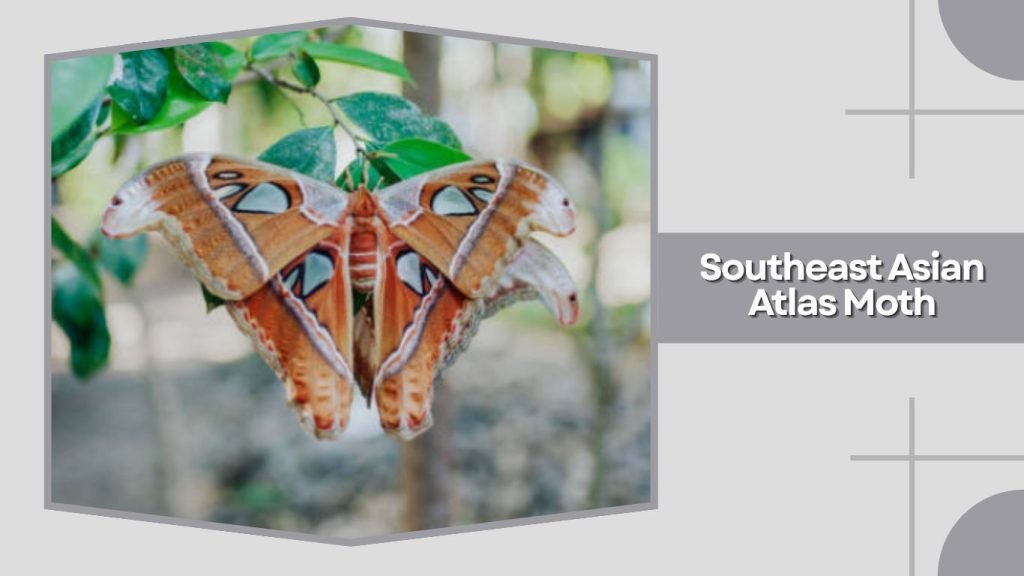
The Southeast Asian Atlas moth is a broad regional variation found across multiple countries in Southeast Asia. It represents Atlas moth populations that share similar traits but may vary slightly depending on local environments. This moth is known for its impressive size and adaptability to diverse tropical ecosystems.
Identification
- Wingspan typically ranges from 24–30 cm
- Reddish-brown wings with complex patterns and pale markings
- Distinct snake-head shaped wing tips used for defense
- Slight variation in color and pattern depending on specific region
- Thick, furry body with large, feathery antennae in males
Habitat
The Southeast Asian Atlas moth is commonly found in tropical rainforests, plantations, and rural landscapes across the region. It thrives in warm, humid climates with abundant vegetation. Host plants such as citrus, guava, cinnamon, and other native trees are widely available, supporting caterpillar growth. The moth is often seen resting on tree trunks, branches, or large leaves during the day, using its patterned wings for camouflage. It can also adapt to agricultural areas and locations near human settlements where suitable plant life exists. Forest edges and lowland regions provide especially favorable conditions for its survival.
Behaviors
This moth is nocturnal and becomes active after sunset. It is frequently attracted to artificial lights, making it visible in both rural and urban areas. The Southeast Asian Atlas moth has a slow, gliding flight and does not travel long distances. Adult moths are mostly inactive, conserving energy for reproduction. Males are more active and use their highly sensitive antennae to locate females by detecting pheromones. When threatened, the moth may spread its wings to display the snake-like patterns, helping to deter predators. Its behavior is calm and energy-efficient.
Diet and Lifecycle
The lifecycle consists of egg, larva, pupa, and adult stages. Caterpillars are active feeders and consume leaves from a wide variety of host plants, storing energy for metamorphosis. Once fully grown, they spin large silk cocoons and enter the pupal stage. Adult moths emerge without functional mouthparts, meaning they do not feed. Their survival depends entirely on stored energy from the larval stage. The adult lifespan is short, usually lasting one to two weeks, during which they focus on mating and laying eggs to continue the species.
14. Tropical Atlas Moth
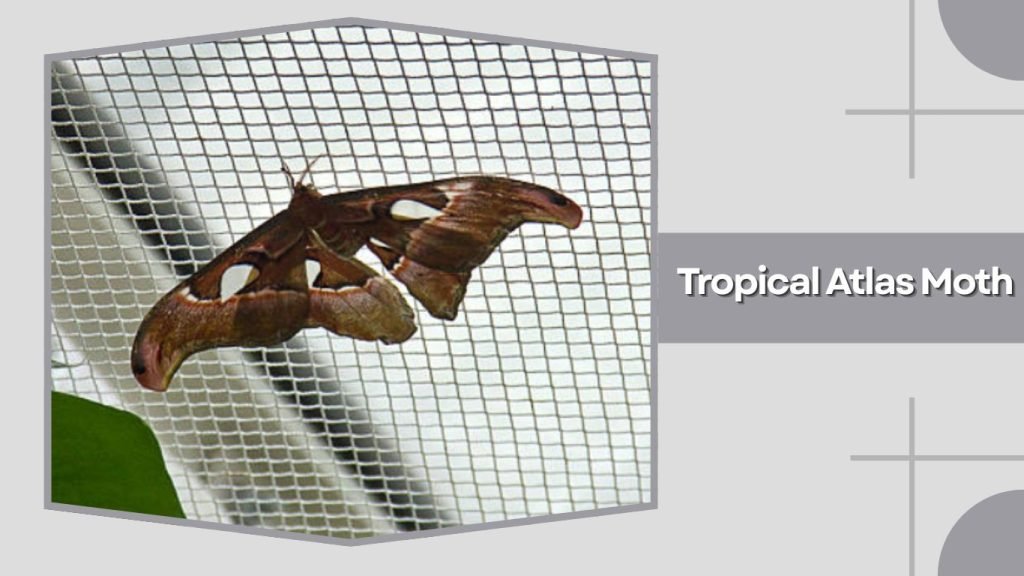
The Tropical Atlas moth is a general variation found across tropical regions where warm temperatures and high humidity dominate. It represents populations of Atlas moths that thrive in consistently hot climates with dense vegetation. Like other Atlas moths, it is known for its large size and striking wing patterns.
Identification
- Wingspan typically ranges from 24–30 cm
- Reddish-brown wings with bold, intricate patterns and pale markings
- Distinct snake-head shaped wing tips used to deter predators
- Colors may appear more vibrant due to strong tropical conditions
- Thick, furry body with broad wings and feathery antennae in males
Habitat
The Tropical Atlas moth is commonly found in rainforests, tropical woodlands, plantations, and garden areas. It thrives in environments with high humidity, consistent warmth, and abundant plant life. Host plants such as citrus, guava, and other tropical species are widely available, providing essential food sources for caterpillars. These moths often rest on tree trunks, large leaves, or shaded areas during the day, using their wing patterns as camouflage. They can also be found near human settlements, especially in regions with lush gardens or agricultural lands. Tropical lowland forests and coastal regions are particularly ideal habitats.
Behaviors
This moth is nocturnal and becomes active after sunset. It is often attracted to artificial lighting, making it visible in populated tropical areas. The Tropical Atlas moth has a slow, gliding flight and conserves energy by avoiding unnecessary movement. Adult moths are mostly inactive, focusing on reproduction. Males are more active and use their sensitive antennae to detect female pheromones over long distances. When threatened, the moth may spread its wings to display the snake-like patterns, helping to deter predators. Its behavior is calm and well-adapted to stable tropical climates.
Diet and Lifecycle
The lifecycle includes egg, larva, pupa, and adult stages. Caterpillars feed heavily on leaves from a variety of tropical host plants, storing energy for metamorphosis. Once fully grown, they spin large silk cocoons and enter the pupal stage. Adult moths emerge without functional mouthparts, meaning they cannot feed. They rely entirely on stored energy from their larval stage. The adult lifespan is short, usually lasting one to two weeks, during which they focus on mating and laying eggs to complete their lifecycle.
15. Giant Atlas Moth
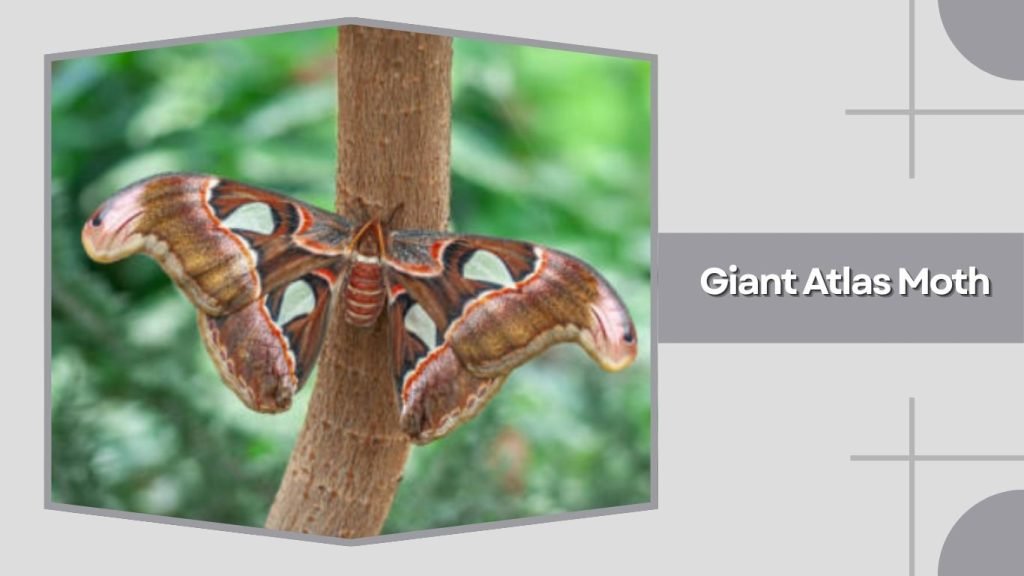
The Giant Atlas moth is a name often used to emphasize the immense size of the Atlas moth group. It represents some of the largest individuals within the species, known for their extraordinary wingspan and bold wing patterns. This moth is widely recognized as one of the biggest moths in the world.
Identification
- Extremely large wingspan, often reaching up to 30 cm or more
- Broad wings with reddish-brown coloration and intricate patterns
- Prominent snake-head shaped wing tips used for predator deterrence
- Large transparent patches on the wings that enhance its unique look
- Thick, furry body with strong, feathery antennae in males
Habitat
The Giant Atlas moth is typically found in tropical and subtropical forests across Asia. It prefers warm, humid environments with dense vegetation that supports its lifecycle. Common habitats include rainforests, plantations, and forest edges where host plants are abundant. Trees such as citrus, guava, and other native species provide ideal conditions for caterpillar development. During the day, the moth rests quietly on tree trunks or foliage, blending into its surroundings due to its camouflage-like wing patterns. It can also be seen near rural and agricultural areas where suitable vegetation is present.
Behaviors
This moth is nocturnal and becomes active at night. It is often attracted to artificial lights, which can make it visible near human settlements. The Giant Atlas moth has a slow, gliding flight and does not travel long distances. Adult moths are mostly inactive, conserving energy for reproduction. Males are more active and use their highly sensitive antennae to locate females by detecting pheromones. When threatened, the moth spreads its wings to display its snake-like patterns, helping to deter predators. Its behavior is calm and energy-efficient.
Diet and Lifecycle
The lifecycle consists of egg, larva, pupa, and adult stages. Caterpillars are voracious feeders and consume leaves from a variety of host plants, storing energy for metamorphosis. Once fully grown, they spin large silk cocoons and enter the pupal stage. Adult moths emerge without functional mouthparts, meaning they do not feed. Their survival depends entirely on stored energy from the larval stage. The adult lifespan is short, usually lasting one to two weeks, during which they focus on mating and laying eggs to continue the species.
FAQs
What is the lifespan of an Atlas moth?
The Atlas moth has a very short adult lifespan, usually lasting around one to two weeks. During this time, it does not eat because it lacks functional mouthparts. Its main purpose in the adult stage is to reproduce, relying entirely on energy stored from its caterpillar stage.
Why are Atlas moth wings shaped like snake heads?
The snake-like shape at the tips of Atlas moth wings is a natural defense mechanism. This pattern helps scare away predators such as birds and small mammals. When threatened, the moth may display its wings to mimic a snake’s head, reducing the risk of being attacked.
What do Atlas moth caterpillars eat?
Atlas moth caterpillars feed on a variety of plant leaves, including citrus, guava, cinnamon, and other native trees. They are heavy feeders and consume large amounts of foliage to store energy. This stored energy is essential because the adult moth does not eat at all.
Are Atlas moths harmful to humans?
Atlas moths are completely harmless to humans. They do not bite, sting, or carry any known danger. Even their caterpillars are generally safe, although it’s best not to handle them excessively. They play a beneficial role in nature as part of the ecosystem.
Where can Atlas moths be found?
Atlas moths are primarily found in tropical and subtropical regions of Asia, including countries like India, China, Indonesia, and the Philippines. They prefer forests, plantations, and areas with abundant vegetation, where their larvae can find suitable host plants to grow and develop.
