
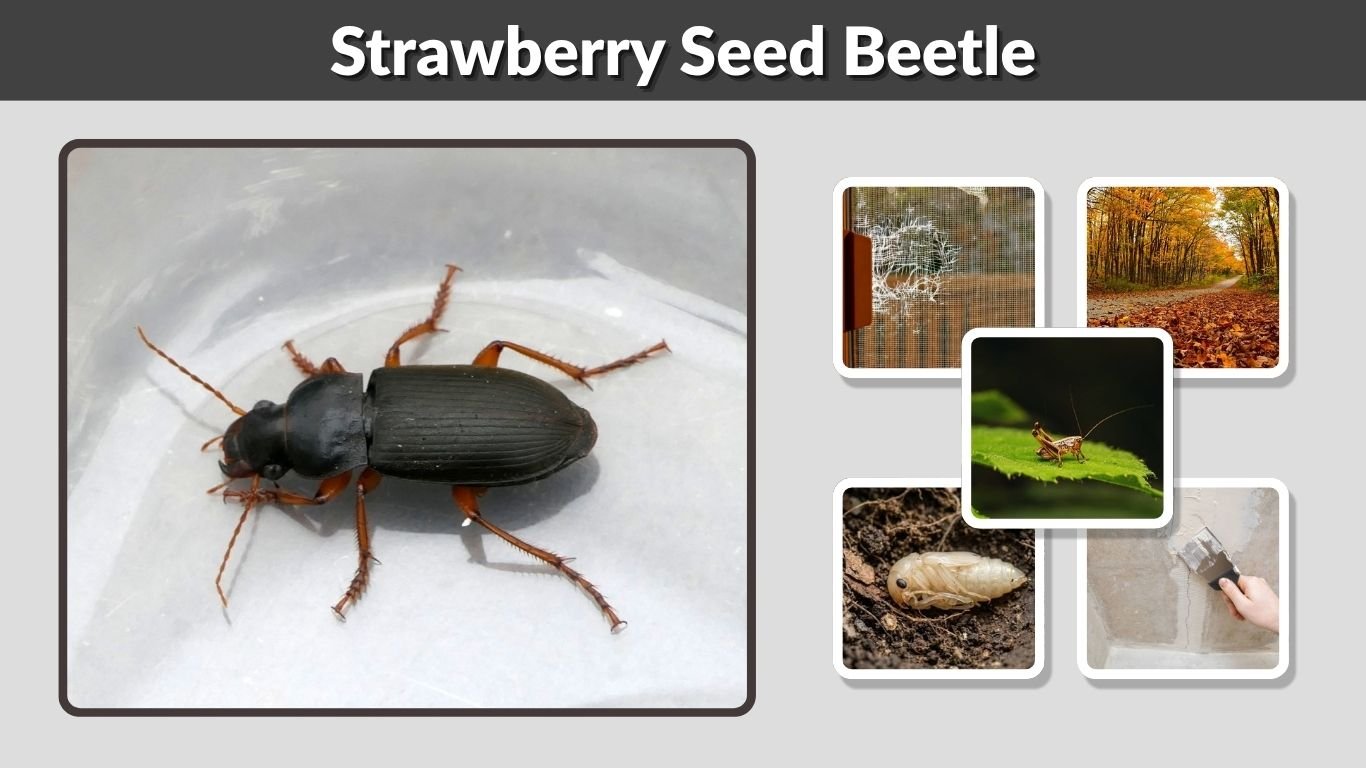
The strawberry seed beetle (Harpalus rufipes) is a ground-dwelling insect recognized by its dark body, reddish-brown legs, and finely textured wing covers. Common throughout Britain and parts of Europe, this beetle feeds on seeds and small invertebrates. Although it sometimes damages strawberries, it also helps control agricultural pests. Strawberry seed beetles occasionally wander into houses, causing concern among homeowners. Understanding their identification features, habitat, feeding habits, life cycle, and control methods can help you manage these insects without unnecessarily harming beneficial beetles.
Strawberry Seed Beetle Identification
Strawberry seed beetles belong to the ground beetle family Carabidae. Their elongated body, dark coloration, and reddish legs make them relatively easy to recognize. However, several other ground beetles have similar appearances. Examining their body length, wing-cover texture, and antennae can help distinguish this species from other insects commonly found in gardens.
Key Identification Features
- Scientific name: Harpalus rufipes
- Common name: Strawberry seed beetle or strawberry ground beetle
- Family: Carabidae
- Order: Coleoptera
- Size: Approximately 11–16 mm long
- Body color: Dark brown to nearly black
- Legs: Reddish-brown
- Antennae: Long, slender, and reddish-brown
- Wing covers: Fine grooves with short golden-yellow hairs
- Body shape: Elongated, oval, and slightly flattened
The golden hairs covering the wing cases are particularly useful for identification. These tiny hairs give the beetle a slightly dull appearance rather than a completely polished black surface.
Strawberry Seed Beetle vs. Cockroach
Strawberry seed beetles are sometimes mistaken for small cockroaches because of their dark bodies and quick movements.
However, strawberry seed beetles have hardened wing covers with visible grooves, while cockroaches typically have flatter bodies and much longer, threadlike antennae.
Cockroaches also have two short appendages called cerci at the rear of their bodies. Strawberry seed beetles lack these visible structures.
Where Do Strawberry Seed Beetles Live?
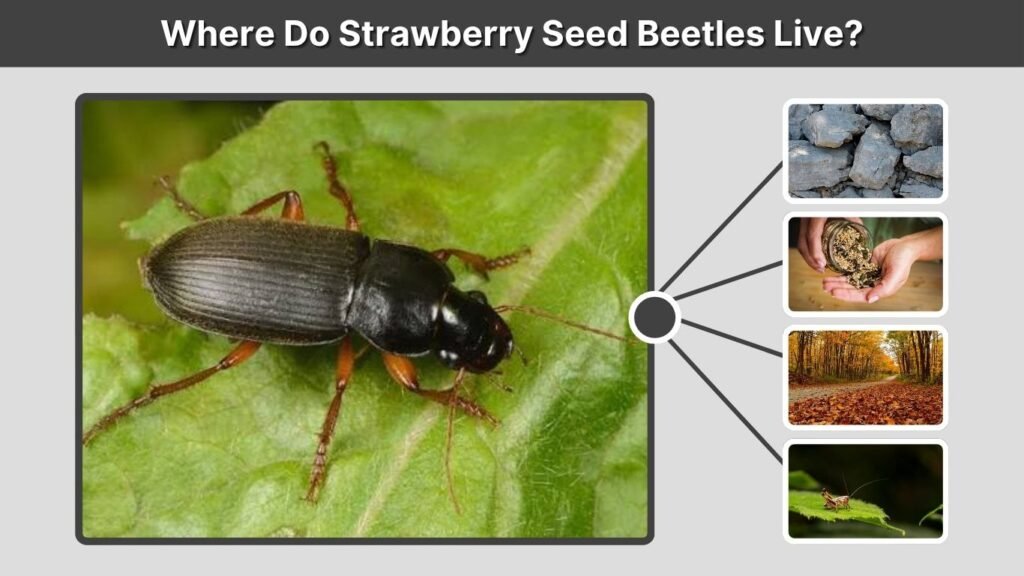
Strawberry seed beetles primarily inhabit outdoor environments where they can find shelter, seeds, and small prey. They are especially common in agricultural fields, gardens, grasslands, and open countryside. Their ability to survive in different habitats explains why they are frequently encountered around cultivated areas and occasionally near residential buildings.
Strawberry Seed Beetle Habitat
These insects commonly hide beneath stones, fallen leaves, logs, and garden debris.
They prefer ground-level environments where they can move freely and shelter during daylight hours.
Strawberry seed beetles are widespread in the United Kingdom and occur across much of Europe. Introduced populations are also established in parts of northeastern North America.
What Do Strawberry Seed Beetles Eat?
Strawberry seed beetles have a mixed diet consisting of plant seeds and small invertebrates.
Adults feed on various seeds, insects, and other small organisms. They can consume aphids and other agricultural pests.
However, they may also feed on the small seedlike structures found on strawberry surfaces.
Because of this varied diet, strawberry seed beetles can act as beneficial predators while occasionally causing damage to fruit crops.
Strawberry Seed Beetle Life Cycle
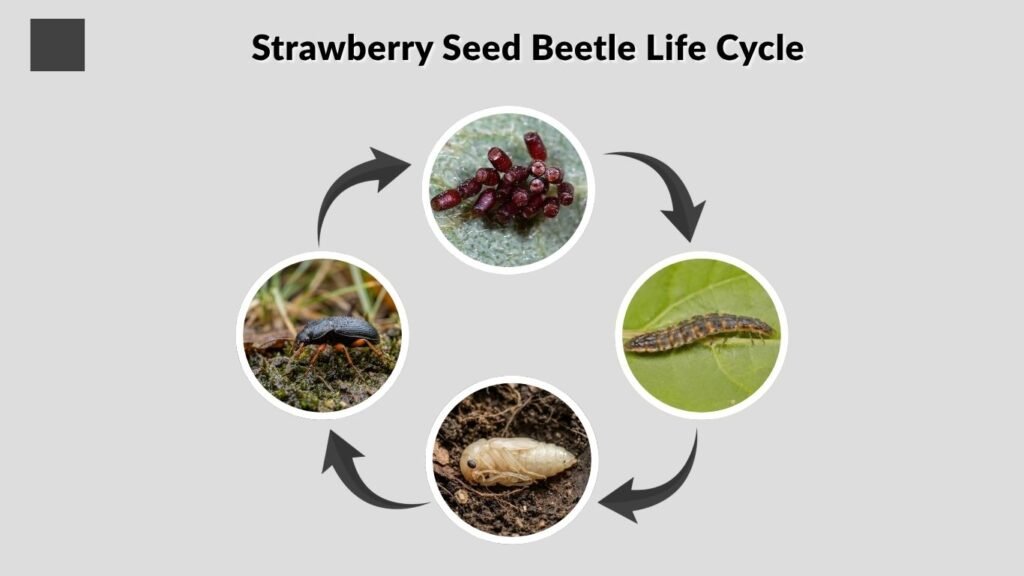
Like other beetles, the strawberry seed beetle undergoes complete metamorphosis through four developmental stages: egg, larva, pupa, and adult. Most development occurs outdoors in the soil. Seasonal temperature, food availability, and local environmental conditions influence when the different stages appear and how quickly the insects mature.
What Do Strawberry Seed Beetle Larvae Look Like?
Strawberry seed beetle larvae are elongated, segmented, and generally pale-bodied with darker, hardened head regions.
Unlike the adults, the larvae spend much of their development underground.
They create small burrows in the soil and collect seeds for food. Research has shown that larvae particularly consume grass and weed seeds, including those of lamb’s quarters.
This feeding behavior can help reduce weed seed populations in agricultural soils.
Adult Development and Reproduction
Adult beetles emerge after pupation and become active on the soil surface.
In a study conducted in Northumberland, adults were active between April and November. Females laid eggs during late summer, while larvae developed in the soil during subsequent months.
Both adults and larvae can survive the winter, depending on their developmental stage and local conditions.
Strawberry Seed Beetle in House
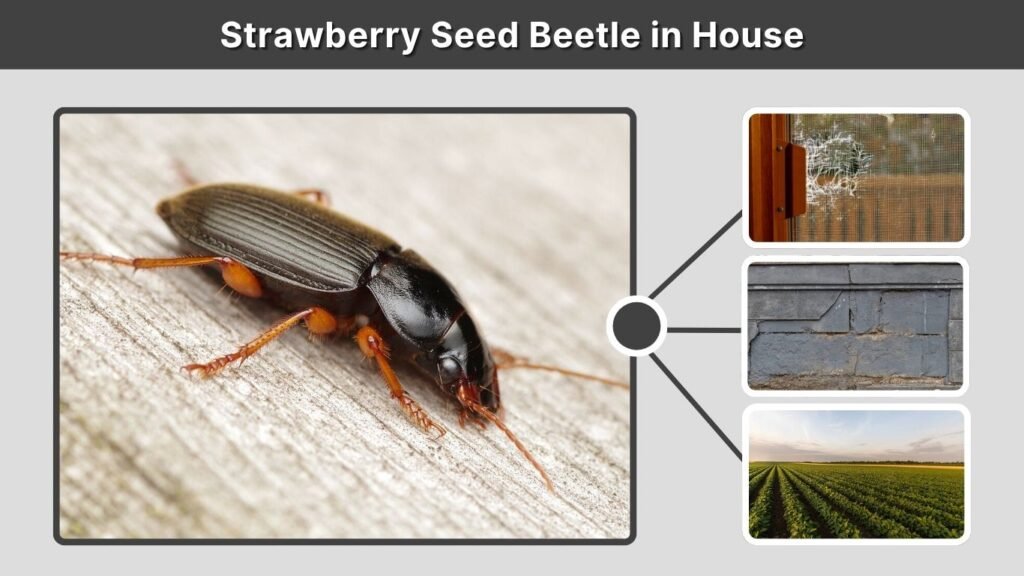
Finding a strawberry seed beetle inside your house can be surprising, particularly when several appear around windows or doors. However, these insects are primarily outdoor dwellers. They usually enter buildings accidentally while searching for shelter or moving toward artificial lights, rather than seeking household food sources or breeding locations.
Why Do Strawberry Seed Beetles Enter Houses?
Like many ground beetles, strawberry seed beetles may be attracted to artificial lighting at night.
They can enter through open windows, damaged screens, small foundation cracks, and gaps beneath exterior doors.
Homes surrounded by gardens, agricultural fields, or dense vegetation may experience occasional visits.
Indoor sightings are more likely during periods of increased outdoor beetle activity.
Can Strawberry Seed Beetles Infest Your House?
A true indoor strawberry seed beetle infestation is unlikely because these insects normally reproduce and develop outdoors.
Unlike cockroaches, they do not typically establish breeding populations in kitchens, bathrooms, or other living spaces.
Finding several beetles indoors usually indicates repeated entry from outside rather than an established indoor colony.
Do Strawberry Seed Beetles Bite or Cause Damage?
Strawberry seed beetles are generally harmless to humans and household belongings. However, their feeding habits can occasionally cause problems in strawberry cultivation. Understanding the difference between their harmless indoor presence and potential agricultural damage helps determine whether any control measures are necessary.
Do Strawberry Seed Beetles Bite Humans?
Strawberry seed beetles do not normally bite people and are not aggressive toward humans.
Like other ground beetles, they have mandibles capable of delivering a small pinch if roughly handled. However, they are not venomous and are not considered medically dangerous.
They do not feed on human blood or behave like parasitic insects.
Strawberry Seed Beetle Damage to Plants
Strawberry seed beetles sometimes damage ripening strawberries by feeding on their surface achenes, commonly called seeds.
This feeding can create small depressions or blemishes, reducing fruit appearance and marketability.
However, their predatory behavior also benefits gardens because they consume other insects.
The severity of strawberry damage depends on beetle populations and local conditions. Not every beetle found in a strawberry patch requires treatment.
How to Get Rid of Strawberry Seed Beetles
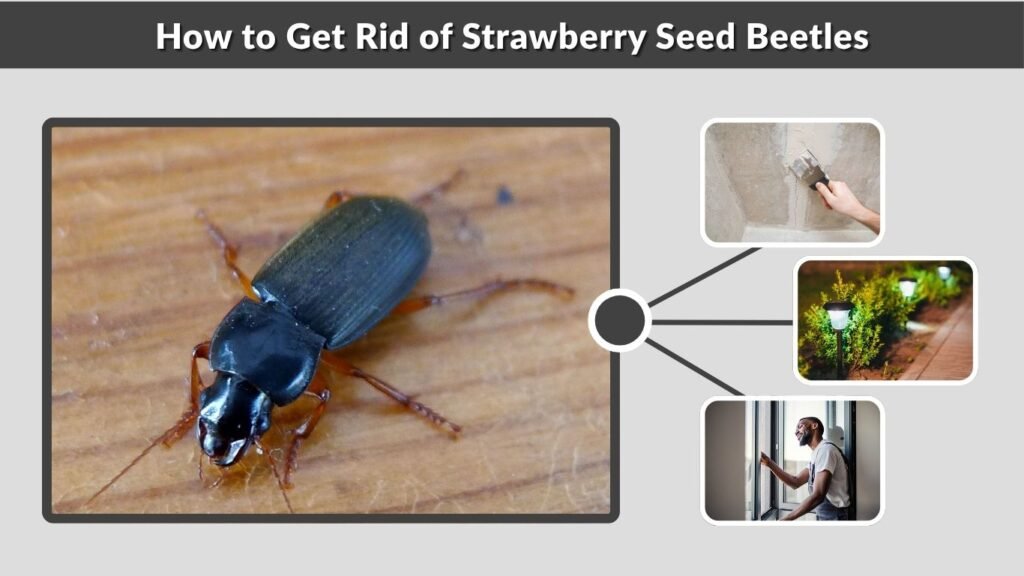
Controlling strawberry seed beetles usually requires simple preventive measures rather than extensive pesticide applications. Because these insects provide ecological benefits outdoors, management should focus on keeping them away from living spaces and protecting fruit where damage is occurring. Physical removal, exclusion, and regular monitoring are practical starting points.
Strawberry Seed Beetle Control in the House
Follow these methods to prevent strawberry seed beetles from entering or remaining indoors:
- Seal entry points: Repair cracks around windows, doors, and foundations.
- Reduce outdoor lighting: Turn off unnecessary lights or use less insect-attractive yellow lighting.
- Remove indoor beetles: Capture individuals with a container and release them outdoors.
- Clear surrounding debris: Remove excessive leaf litter and vegetation immediately against foundations.
- Install door sweeps: Close gaps beneath exterior doors.
- Inspect window screens: Repair damaged mesh and keep windows properly sealed.
These preventive measures are generally more appropriate than applying insecticides inside the home.
How to Control Strawberry Seed Beetles in Gardens
In strawberry gardens, inspect ripening fruit regularly for damage.
Remove overripe fruit promptly, monitor beetle activity around plants, and avoid unnecessary insecticide applications.
Because strawberry seed beetles also consume pest insects and weed seeds, widespread elimination may reduce their beneficial contribution.
Where damage becomes economically significant, consult a local agricultural extension service for appropriate integrated pest management recommendations.
FAQs
1. Are strawberry seed beetles harmful to humans?
Strawberry seed beetles are generally harmless to humans. They do not sting, transmit diseases through normal contact, or feed on people. Although they may occasionally pinch when roughly handled, they are not considered dangerous. Their presence indoors is mainly a nuisance rather than a health concern.
2. Can strawberry seed beetles fly?
Yes, strawberry seed beetles have wings and can fly. However, they are commonly observed running across the ground while searching for food or shelter. They may also appear near outdoor lights at night. Their strong legs allow them to move quickly through gardens and vegetation.
3. Are strawberry seed beetles beneficial?
Yes, strawberry seed beetles can be beneficial because they consume weed seeds and small agricultural pests. Their feeding activity contributes to natural pest management. However, they occasionally feed on strawberry achenes, causing cosmetic damage to fruit, so their overall impact depends on the surrounding environment.
4. How can I prevent strawberry seed beetles from entering my house?
Seal cracks around foundations, install door sweeps, repair damaged window screens, and reduce unnecessary outdoor lighting. Keep thick vegetation and excessive debris away from exterior walls. These steps help prevent ground beetles from entering buildings without requiring chemical insecticide treatments.
5. Do strawberry seed beetles damage furniture or clothing?
No, strawberry seed beetles do not normally damage furniture, clothing, carpets, or wooden structures. They primarily feed on seeds and small invertebrates outdoors. When found inside a building, they are usually accidental visitors and do not reproduce successfully in normal household conditions.
