
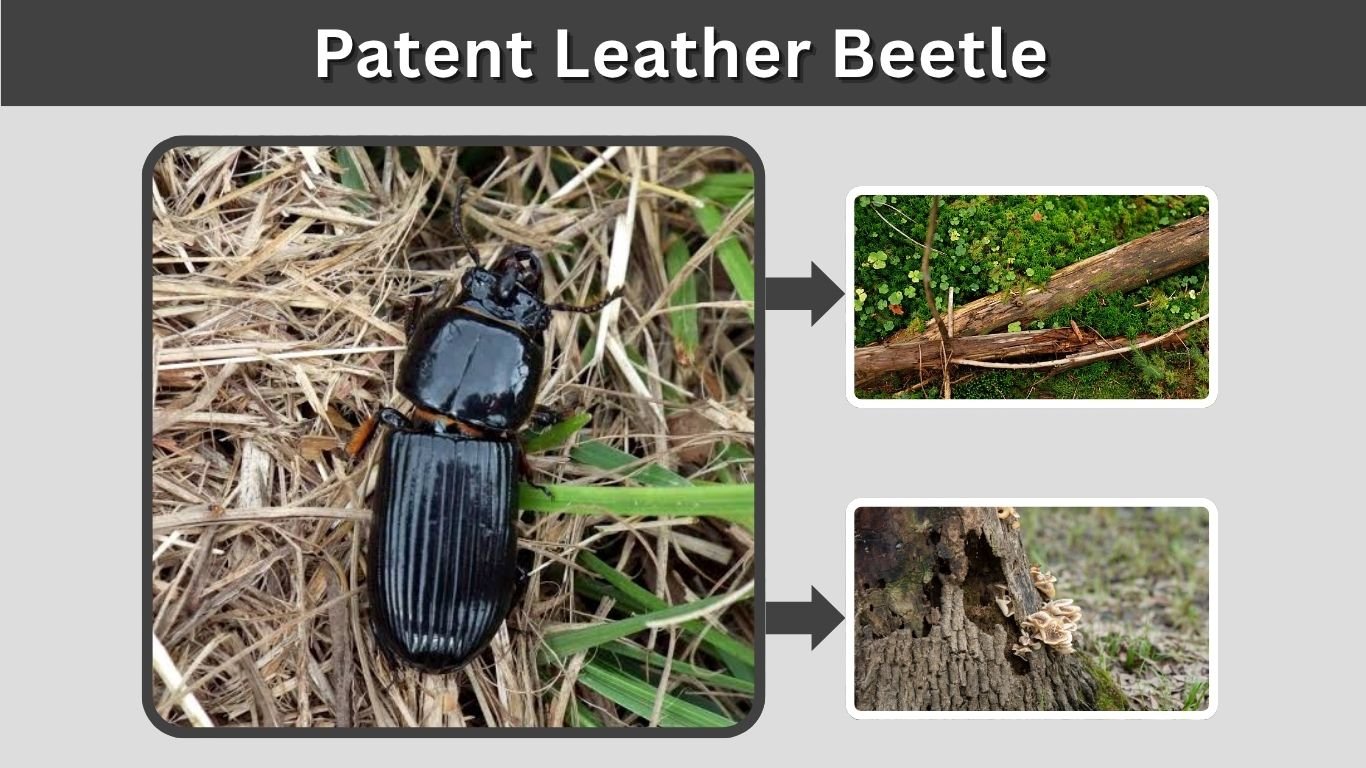
The patent leather beetle (Odontotaenius disjunctus) is a large, shiny black beetle commonly found in decaying logs and wooded environments. Also known as the bess beetle or horned passalus, this fascinating insect gets its name from its glossy, leather-like appearance. Despite its intimidating jaws and unusual horn, it is generally harmless to humans. Patent leather beetles also play an important role in decomposing dead wood and recycling nutrients. Understanding their identification features, habitat, diet, and behavior makes these remarkable beetles easier to recognize.
What Is a Patent Leather Beetle?
The patent leather beetle is a wood-dwelling insect belonging to the family Passalidae. It is one of the most recognizable bess beetles in North America because of its glossy black body, deeply grooved wing covers, and small horn. Unlike many beetles, these insects live in family groups and cooperate when raising their young.
Scientific Classification and Common Names
The scientific name of the patent leather beetle is Odontotaenius disjunctus. Its classification includes the order Coleoptera and family Passalidae.
Common names include horned passalus, bess beetle, bess bug, and betsy beetle. These names generally refer to the same familiar North American species, although some are also used for related beetles.
Patent Leather Beetle Identification
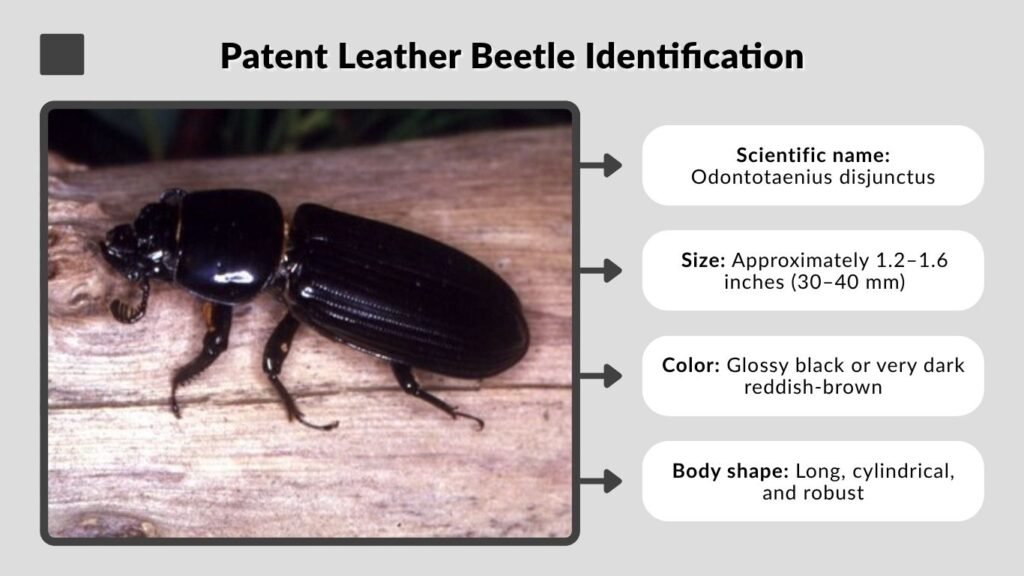
Identifying a patent leather beetle is relatively easy because of its distinctive appearance. Adults have a hard, elongated body with a polished black surface that resembles shiny leather. Their large jaws, ridged wing covers, and forward-pointing horn help distinguish them from other beetles living in forests.
Key Identification Features
- Scientific name: Odontotaenius disjunctus
- Size: Approximately 1.2–1.6 inches (30–40 mm)
- Color: Glossy black or very dark reddish-brown
- Body shape: Long, cylindrical, and robust
- Wing covers: Deep longitudinal grooves
- Head: Small curved horn between the eyes
- Legs: Strong legs with fine golden hairs
- Antennae: Short, segmented antennae with club-shaped tips
What Do Patent Leather Beetle Larvae Look Like?
Patent leather beetle larvae are creamy-white, curved grubs with brownish heads. They have three pairs of legs, although the final pair is greatly reduced and used for sound production rather than walking.
The larvae develop inside rotting wood, where adults provide them with processed food.
Patent Leather Beetle vs. Leatherwing Beetle
Patent leather beetles are sometimes confused with leatherwing beetles, but they belong to different families.
Leatherwing beetles, also called soldier beetles, belong to the family Cantharidae. They generally have softer wing covers and frequently appear on flowers. Patent leather beetles have much harder, heavily grooved wing covers and primarily inhabit decaying wood.
Where Do Patent Leather Beetles Live?
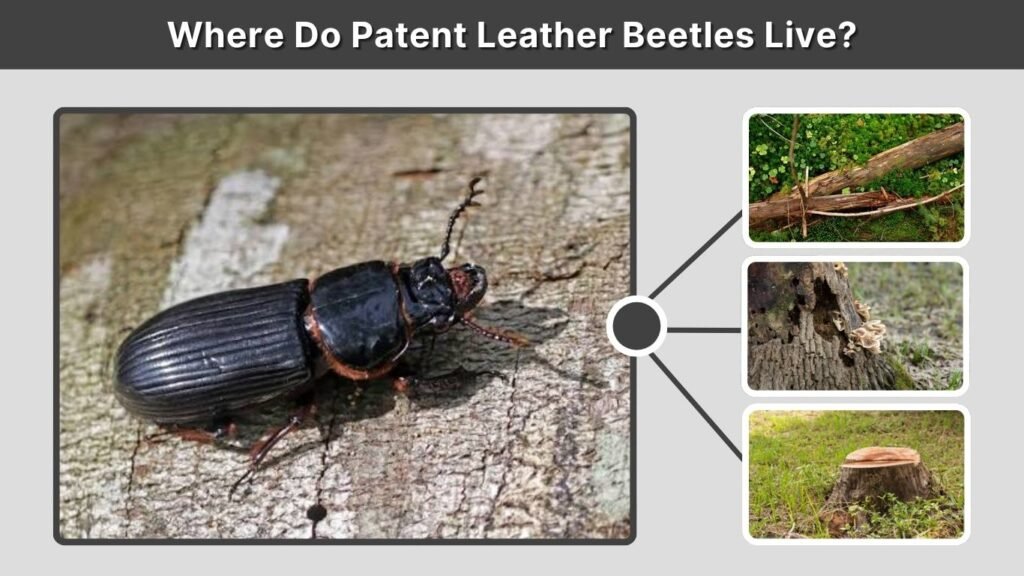
Patent leather beetles primarily inhabit deciduous forests throughout the eastern United States and parts of Canada. They prefer moist, decomposing hardwood logs, where they excavate tunnels for shelter, feeding, and reproduction. Their preference for dead wood makes them valuable members of forest ecosystems.
Natural Habitat
These beetles commonly occur beneath fallen logs, inside rotting tree trunks, and around decaying stumps. Their galleries provide protected environments where adults and larvae can remain together.
Although they spend much of their lives inside wood, adults occasionally emerge and may be attracted to lights. They are capable of flying but rarely do so.
What Do Patent Leather Beetles Eat?
Patent leather beetles primarily consume decaying wood containing microorganisms that help break it down.
Adults chew and process decomposing wood, while larvae depend heavily on food prepared by their parents. Both adults and larvae also consume nutrient-rich material derived from processed wood and beetle feces.
This feeding behavior contributes to decomposition and nutrient recycling in forests.
Patent Leather Beetle Behavior and Life Cycle
Unlike most solitary beetles, patent leather beetles display unusually developed social behavior. Adults construct tunnels, communicate through sounds, and cooperate in caring for offspring. Their family-based lifestyle makes them particularly interesting to scientists studying insect communication and parental care.
Why Do Patent Leather Beetles Squeak?
Patent leather beetles make squeaking sounds through a process called stridulation. Adults generate these sounds by rubbing parts of their wings against the abdomen.
They produce different signals for communication and defense. Researchers have documented a complex repertoire of sounds, and even larvae can communicate acoustically with adults.
Reproduction and Development
The patent leather beetle undergoes four developmental stages: egg, larva, pupa, and adult.
Females lay eggs inside galleries excavated in decomposing wood. Both parents protect the developing offspring and provide food.
Larval development can take a year or longer, depending on conditions. Young adults may remain within the family gallery and assist with caring for younger beetles.
Do Patent Leather Beetles Bite or Harm Humans?
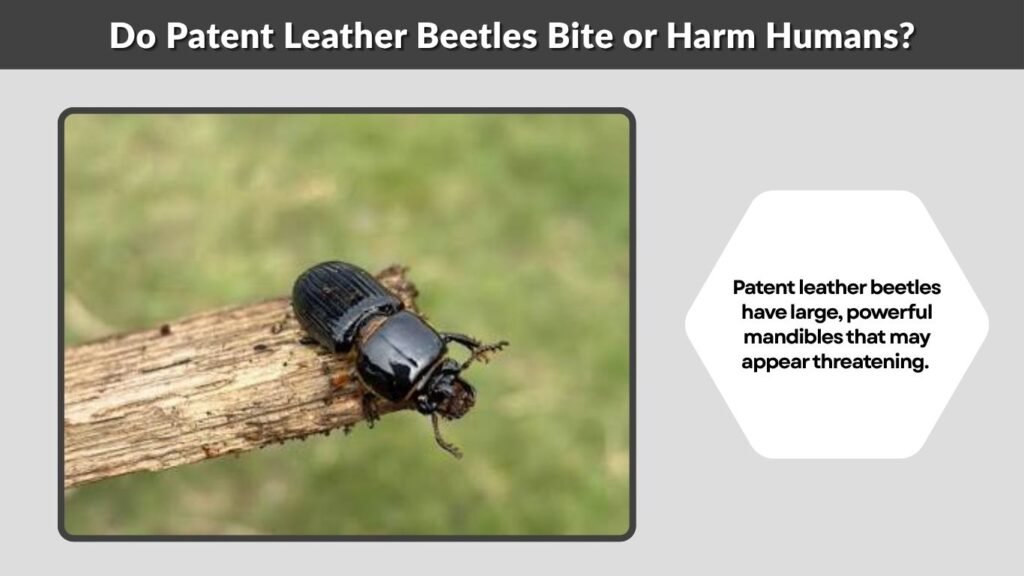
Patent leather beetles have large, powerful mandibles that may appear threatening. However, these jaws are mainly adapted for chewing decomposing wood. They are not aggressive insects, and their presence generally poses little danger to people, pets, or buildings.
Can Patent Leather Beetles Bite?
Patent leather beetles can occasionally pinch with their mandibles when handled roughly. However, they are not venomous, do not sting, and are not considered medically dangerous.
Their primary defensive behavior involves producing squeaking sounds. It is still best to handle them gently or avoid unnecessary handling.
Are Patent Leather Beetles Harmful in the House?
Finding a patent leather beetle indoors does not usually indicate an infestation. These insects need decaying wood to survive and are not typical pests of furniture, clothing, or sound structural lumber.
An individual beetle can be carefully moved outdoors to a suitable wooded area. Chemical treatment is normally unnecessary.
FAQs
1. Are patent leather beetles poisonous?
No, patent leather beetles are not poisonous or venomous. They do not have stingers or venom-delivering bites. Although their large mandibles can occasionally cause a mild pinch, they are generally harmless. These beetles are beneficial decomposers rather than dangerous household pests.
2. How long do patent leather beetles live?
Patent leather beetles have relatively long life cycles compared with many other insects. Larval development may take a year or longer, while adults can survive for an extended period under suitable conditions. Some individuals may live two years or more across their entire life cycle.
3. Can patent leather beetles fly?
Yes, patent leather beetles possess functional wings and are capable of flight. However, flying is relatively uncommon because they spend much of their lives inside decomposing logs. Adults sometimes leave their wooden galleries and may occasionally be encountered near outdoor lights.
4. Why are patent leather beetles beneficial?
Patent leather beetles help decompose dead wood and contribute to nutrient recycling. Their feeding activity breaks down decaying material, allowing microorganisms and other decomposers to continue processing it. This supports healthy forest soil and makes these insects valuable components of woodland ecosystems.
5. What should I do if I find a patent leather beetle?
If you discover a patent leather beetle outdoors, leaving it undisturbed is usually the best approach. If one enters your home, gently collect it using a container and release it near suitable decaying wood outdoors. There is generally no need to use insecticides.
