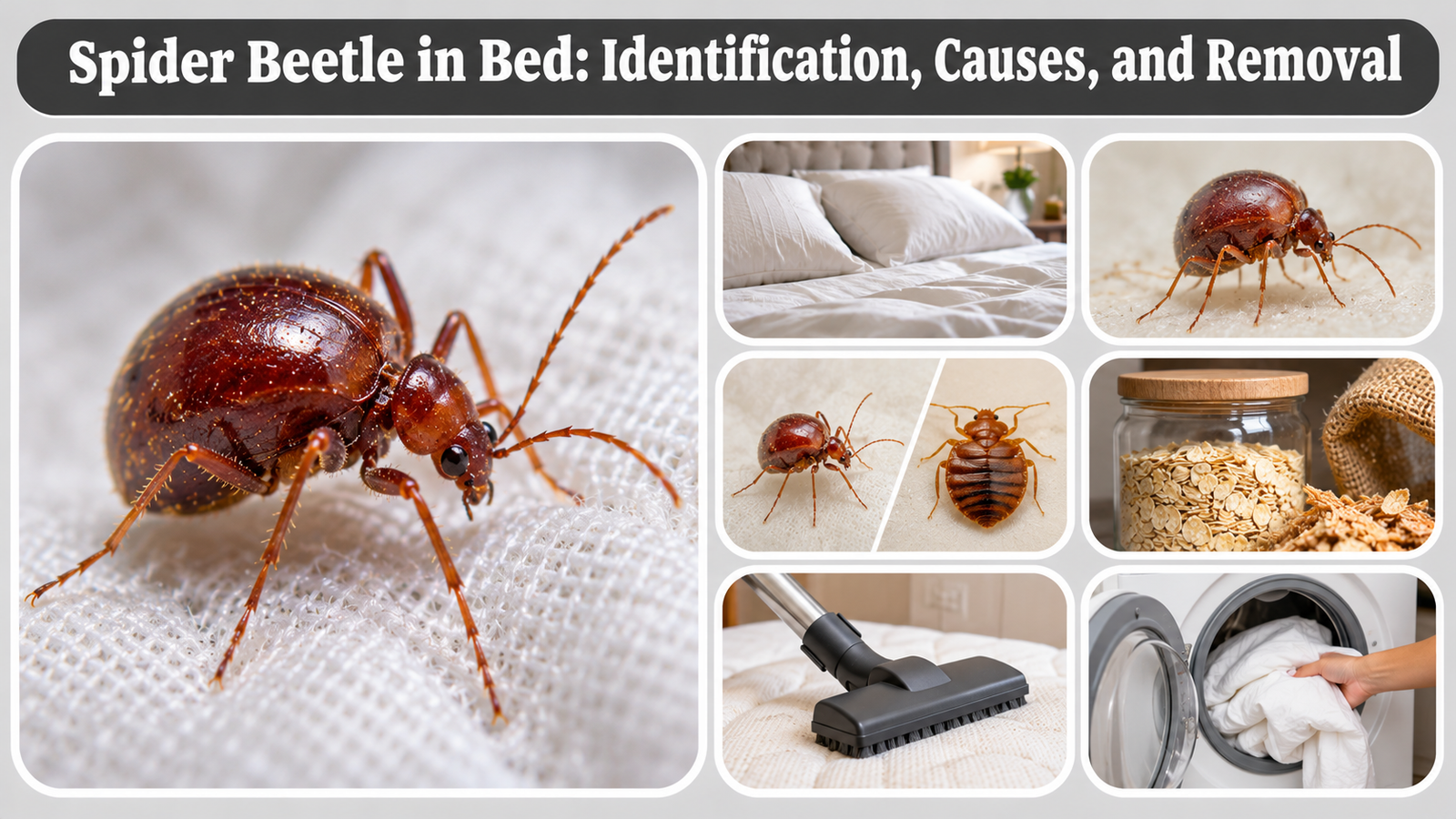
Finding a spider beetle in bed can be alarming, especially because these small, reddish-brown insects sometimes resemble bed bugs. However, spider beetles do not feed on human blood and usually enter bedrooms while searching for dry organic materials or shelter. Their rounded, shiny bodies and long legs make them easy to mistake for other household pests. Knowing the differences between spider beetles and bed bugs can help you identify the insect correctly, understand why it appeared, and remove it without unnecessary pesticide treatments or expensive mistakes.
What Is a Spider Beetle?
Spider beetles are small insects belonging to the family Ptinidae, particularly the subfamily Ptininae. They are named for their spider-like appearance, featuring rounded bodies, long legs, and slender antennae.
These beetles commonly inhabit warehouses, kitchens, storage areas, and other places containing dried organic materials. Unlike bed bugs, spider beetles are scavengers rather than blood-feeding parasites.
What Do Spider Beetles Look Like?
Adult spider beetles usually measure approximately 1–5 millimeters long. Their bodies range from reddish-brown to almost black, depending on the species. Some have smooth, shiny surfaces, while others are covered with fine hairs.
Shiny spider beetles, including Gibbium species, have particularly rounded abdomens that resemble tiny polished beads. Their long legs and antennae can make them look like miniature spiders.
Can Spider Beetles Be Found in Beds?
Yes, spider beetles can occasionally be found in beds, although mattresses are not their preferred habitat. These insects generally live near stored food, organic debris, or sheltered spaces containing suitable feeding materials.
A spider beetle discovered on a pillow, bedsheet, or mattress may have wandered there from another location. However, finding several beetles repeatedly could indicate a nearby infestation that requires investigation.
Why Spider Beetles Enter Bedrooms
Spider beetles are primarily nocturnal and often explore dark, undisturbed spaces. Bedrooms containing clutter, stored belongings, or hidden organic materials may provide suitable conditions for their activity.
Their presence does not automatically mean the mattress is infested. The original source may be inside furniture, wall cavities, closets, or nearby storage areas.
How to Identify a Spider Beetle in Bed
Identifying the insect correctly is important before attempting pest control. Spider beetles have several physical characteristics that distinguish them from bed bugs, fleas, and other household insects.
Common Identification Features
- Body shape: Rounded, globular, or oval rather than noticeably flattened.
- Color: Reddish-brown, dark brown, or nearly black.
- Size: Usually approximately 1–5 millimeters long.
- Legs: Six relatively long, slender legs resembling those of a spider.
- Antennae: Long, thin antennae extending from the head.
- Movement: Often active at night and capable of wandering across furniture.
A magnifying glass can help reveal these characteristics, especially when examining very small, shiny spider beetles.
Spider Beetle vs Bed Bug: What’s the Difference?
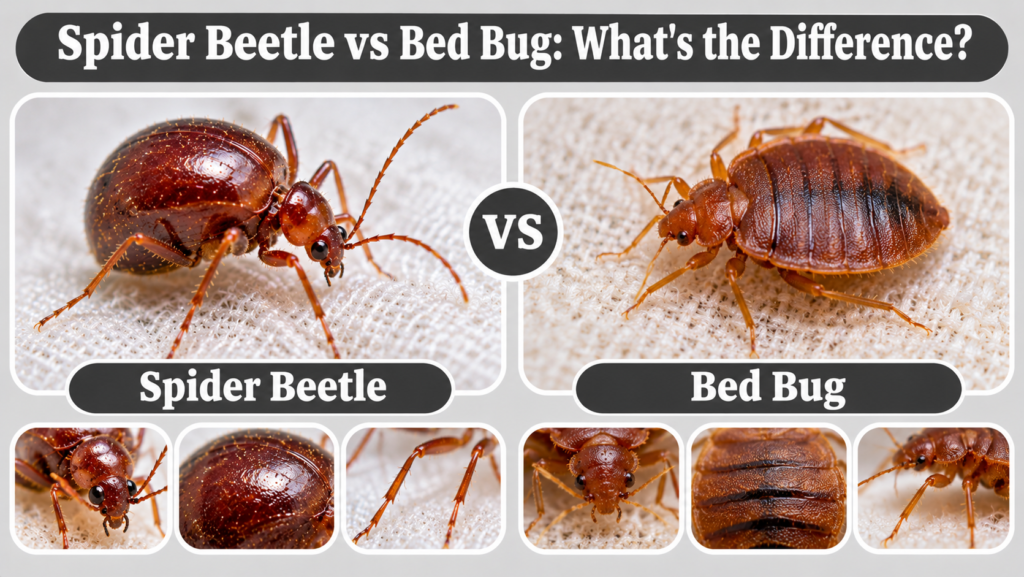
Spider beetles and bed bugs can look similar at first glance, particularly when they appear reddish-brown. However, their body structures, feeding habits, and preferred environments are quite different.
Correct identification helps determine whether you are dealing with a harmless wandering beetle or a potentially serious bed bug infestation.
| Feature | Spider Beetle | Bed Bug |
| Body shape | Rounded, often shiny | Broad, oval, flattened |
| Size | 1–5 mm | 4–7 mm as adults |
| Color | Brown to black | Reddish-brown |
| Food | Dry organic matter | Blood |
| Human bites | Not typical | Yes |
| Common habitat | Storage areas | Sleeping areas |
Shiny Spider Beetle vs Bed Bug
Shiny spider beetles have smooth, rounded abdomens that can resemble tiny droplets. Their narrow front body and long legs make them noticeably different from bed bugs under magnification.
Bed bugs have broader, visibly segmented abdomens and relatively short antennae. Their bodies become swollen after feeding, but they retain a different appearance from the rounded, hard-bodied spider beetle.
Why Are Spider Beetles in My Bed?
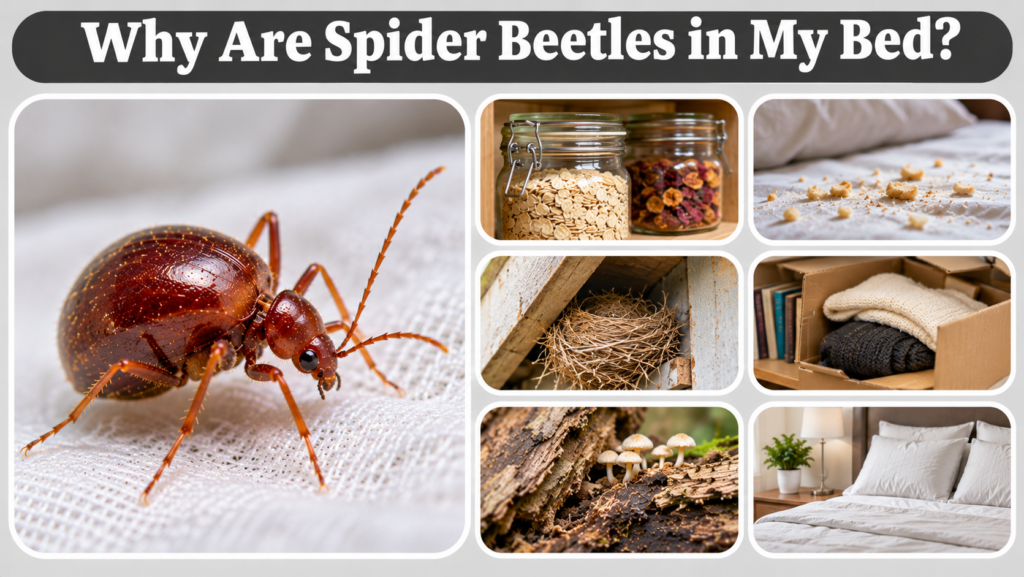
Spider beetles typically appear in bedrooms because suitable food materials or hiding places are nearby. Their presence is generally associated with environmental conditions rather than attraction to sleeping humans.
Common Causes of Spider Beetles in Bedrooms
- Stored organic materials: Dried flowers, animal-based materials, and other stored products may attract spider beetles.
- Food crumbs: Forgotten snacks and dry food debris can provide feeding opportunities.
- Bird or rodent nests: Nests inside walls, ceilings, or attics may support populations.
- Cluttered storage: Undisturbed boxes and stored belongings provide hiding places.
- Nearby infestations: Beetles may wander from pantries, closets, or other rooms.
Finding the actual food source is essential because removing individual beetles will not necessarily prevent new ones from appearing.
Do Spider Beetles Bite Humans in Bed?
Spider beetles do not normally bite humans, and they do not feed on blood. Unlike bed bugs, they are not attracted to people as a food source.
Their presence on a mattress does not mean they are responsible for unexplained skin irritation.
Spider Beetle Bites vs Bed Bug Bites
Bed bugs use specialized mouthparts to pierce human skin and consume blood. Their feeding can cause itchy welts, although some people experience no visible reaction.
Spider beetles lack this blood-feeding behavior. If you notice unexplained bites, examine the sleeping area for bed bugs or other possible causes rather than assuming spider beetles are responsible.
How to Check for Bed Bugs Instead
If an insect is found in bed, checking for additional evidence helps determine whether bed bugs are present. Bed bugs leave characteristic traces around their hiding places, particularly mattress seams and bed frames.
Signs of Bed Bugs in Your Bed
- Dark fecal spots: Small black or brown marks on mattresses, sheets, or furniture.
- Blood stains: Rust-colored spots caused by crushed or feeding bed bugs.
- Shed skins: Pale, empty insect coverings left behind during development.
- Eggs: Tiny, whitish eggs hidden inside narrow cracks.
- Live insects: Flattened reddish-brown bugs around seams and headboards.
The EPA emphasizes that skin reactions alone cannot reliably confirm bed bugs. Physical evidence and accurate insect identification are more useful.
How to Get Rid of Spider Beetles in Bed
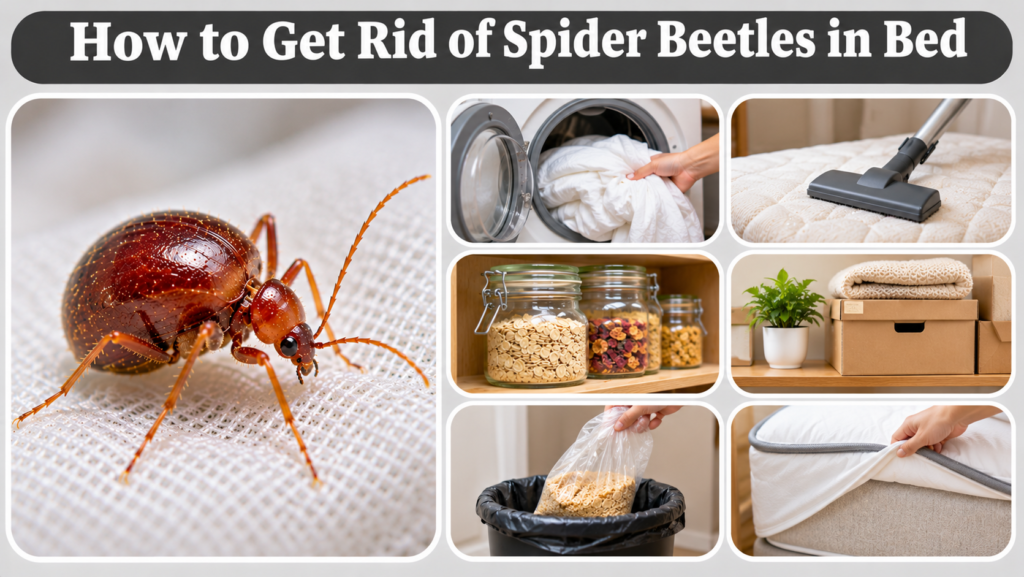
Removing spider beetles involves cleaning affected areas and eliminating nearby food sources. Because they are not typical mattress-dwelling pests, treating the bed alone may not address the underlying problem.
Effective Spider Beetle Removal Methods
- Wash bedding: Remove sheets, pillowcases, and blankets. Launder them according to their care instructions.
- Vacuum thoroughly: Clean mattress seams, bed frames, carpets, baseboards, and nearby furniture.
- Inspect stored products: Check dry foods, pet food, and stored organic materials for infestation.
- Remove infested materials: Discard contaminated products and clean the surrounding storage areas.
- Reduce clutter: Clear unnecessary items from underneath beds and inside closets.
- Monitor activity: Use suitable sticky traps to identify areas where beetles continue appearing.
Avoid spraying pesticides directly onto mattresses unless a product is specifically labeled for that use.
How to Prevent Spider Beetles in Bedrooms
Preventing spider beetles mainly involves good storage practices, regular cleaning, and eliminating hidden organic debris.
Keep Your Bedroom Clean and Dry
Vacuum under furniture, remove food crumbs, and avoid keeping unsealed dry foods in bedrooms. Store susceptible materials in airtight containers and address moisture problems promptly.
Inspect nearby storage spaces if beetles repeatedly appear. Persistent activity may indicate infested products or inaccessible materials inside wall cavities.
FAQs
1. Are Spider Beetles in Bed Dangerous?
Spider beetles are generally not dangerous to humans. They do not feed on blood, transmit diseases through biting, or normally attack people. However, their presence may indicate infested stored products or accumulated organic debris that should be removed.
2. Can Spider Beetles Live in a Mattress?
Spider beetles can occasionally hide around mattresses, but they do not normally establish colonies inside them like bed bugs. They prefer locations containing suitable dry organic materials. Repeated sightings should prompt an inspection of nearby furniture and storage areas.
3. Do Spider Beetles Eat Bed Bugs?
Spider beetles are scavengers that feed on various dried plant and animal materials. They are not recognized as effective predators of bed bugs and should never be relied upon for bed bug control.
4. Why Do I Keep Finding Shiny Spider Beetles in My Bed?
Repeated sightings may indicate a nearby food source or established population inside stored belongings, furniture, or concealed spaces. Inspect surrounding rooms and remove infested materials. If the source remains unclear, professional identification may help.
5. Are Spider Beetles and Carpet Beetles the Same?
No. Spider beetles and carpet beetles belong to different insect families. Spider beetles commonly consume dried organic matter, while carpet beetle larvae may feed on wool, feathers, and other animal-derived materials. Carpet beetle larval hairs can also irritate sensitive skin.