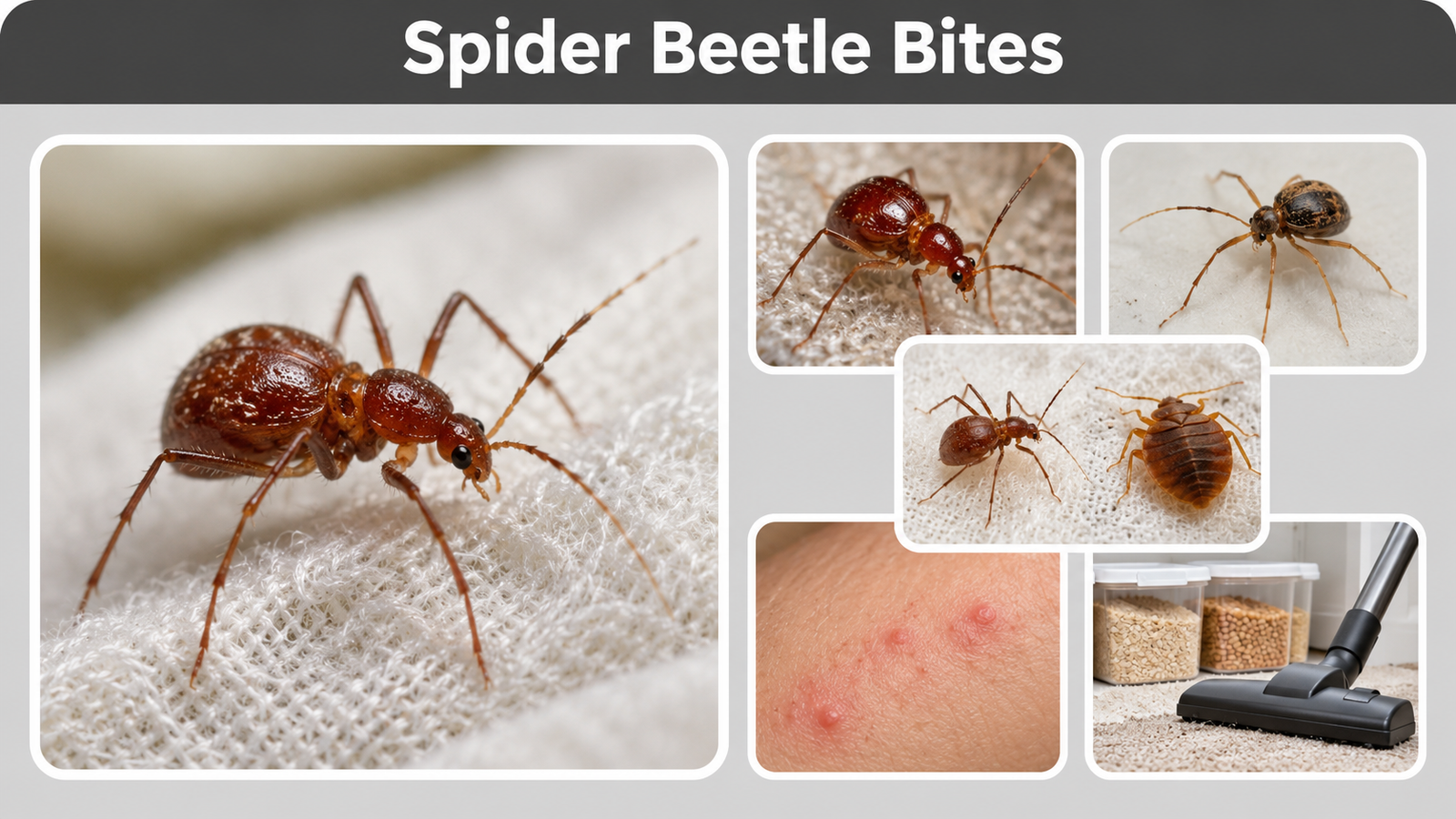
Spider beetle bites are a common concern when people discover these tiny, spider-like insects in bedrooms, kitchens, or storage spaces. Their rounded bodies and long legs can make them look alarming, but spider beetles are not blood-feeding pests and rarely cause direct skin injuries. Most unexplained itchy bumps have another explanation, such as bed bugs, fleas, or skin irritation. This guide explains whether spider beetles bite humans, what supposed bite marks may mean, how to respond to irritation, and how to keep these beetles out of your home.
Do Spider Beetles Bite Humans?
Spider beetles do not normally bite humans. These small insects belong to the family Ptinidae and primarily feed on dried organic materials rather than human blood or skin. Although an occasional defensive pinch may be possible, medically significant spider beetle bites are not generally recognized.
Spider beetles are commonly found in stored food products, old furniture, and locations containing organic debris. Their presence near humans usually occurs accidentally rather than because they are searching for a host.
Can Spider Beetles Bite?
Spider beetles have chewing mouthparts designed for consuming dry food materials. These mouthparts are not specialized for piercing human skin or feeding on blood.
Some extension experts acknowledge that incidental biting may occur, while others report that spider beetles do not bite. Both agree that these insects are not medically important biting pests.
What Do Spider Beetle Bites Look Like?
There is no established or distinctive appearance for a spider beetle bite. Since these insects rarely injure humans, photographs of red bumps attributed to spider beetles cannot reliably confirm that they caused the irritation.
If a small red mark appears after finding a spider beetle, other causes should be considered. Bed bugs, fleas, mosquitoes, and allergic skin reactions may produce similar-looking symptoms.
Spider Beetle Bite Marks
Reported spider beetle bite marks are often described as small, reddish, itchy bumps. However, these descriptions are not scientifically reliable identifiers of spider beetle bites.
If irritation develops, examine the affected area and surrounding environment. Repeated marks appearing after sleep may justify checking for bed bugs, although skin marks alone cannot identify the responsible insect.
Spider Beetle Bite Symptoms
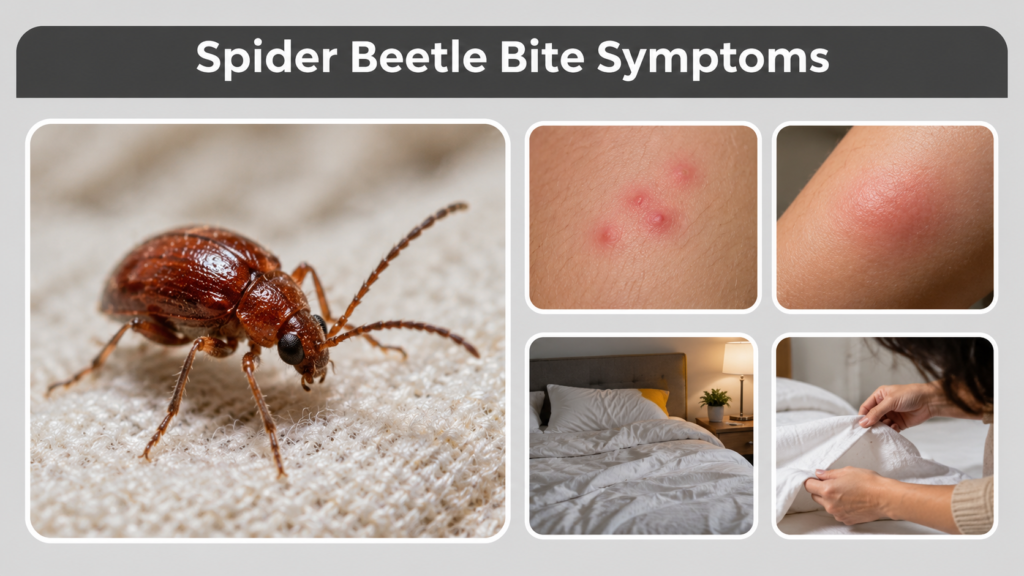
Spider beetles are not known to cause a characteristic bite-related illness in humans. However, ordinary skin irritation or a rare incidental pinch may be confused with an insect bite.
Possible Signs of Skin Irritation
- Redness: A small red area may develop from irritation or another insect bite.
- Itching: Mild or persistent itching can occur with many skin conditions.
- Swelling: Localized swelling may follow an actual insect bite or allergic reaction.
- Tenderness: Minor discomfort can occur when skin becomes irritated.
- Rash: Multiple bumps may indicate another insect, contact dermatitis, or another skin condition.
These symptoms should not automatically be attributed to spider beetles. Persistent, spreading, or worsening reactions should be evaluated by a healthcare professional.
Do Shiny and Smooth Spider Beetles Bite?
Shiny and smooth spider beetles are commonly mistaken for biting insects because of their rounded bodies and long legs. However, both are scavenging beetles rather than parasites.
They generally prefer dry organic matter, stored products, and hidden spaces containing suitable food sources.
Shiny Spider Beetle Bites
Shiny spider beetles, including Gibbium species, have rounded, glossy bodies that resemble tiny brown beads. Their appearance can be mistaken for ticks or other small pests.
They do not feed on blood and are not recognized as common causes of human bites.
Smooth Spider Beetle Bites
Smooth spider beetles, such as Gibbium aequinoctiale, also have rounded bodies and relatively long legs. They often wander through buildings while searching for food.
These beetles are not considered medically significant pests, although an incidental bite cannot be completely excluded.
American Spider Beetle Bites
American spider beetles (Mezium americanum) are small household beetles associated with stored products and organic debris. Their feeding habits do not involve human blood.
They are generally harmless to people, and finding one near irritated skin does not establish that it caused the problem.
Spider Beetle Bites vs. Bed Bug Bites
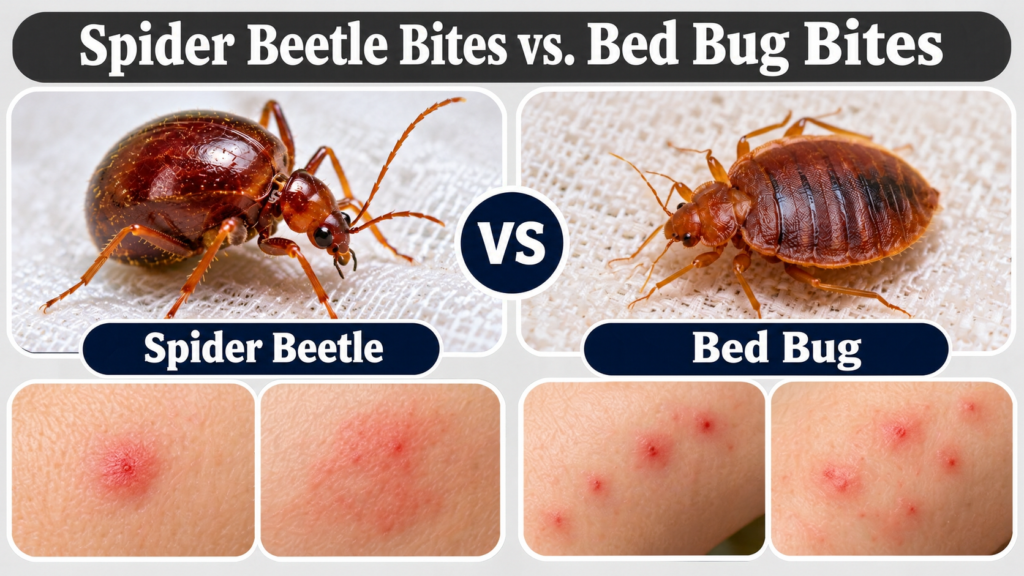
Spider beetles and bed bugs may resemble each other, but their feeding behaviors are completely different. Bed bugs are blood-feeding insects, while spider beetles mainly consume dried plant and animal materials.
Correct identification is essential because bed bug infestations require a different approach to pest control.
| Feature | Spider Beetle | Bed Bug |
| Feeds on human blood | No | Yes |
| Commonly bites humans | No | Yes |
| Body appearance | Rounded, often shiny | Flattened and oval |
| Typical habitat | Stored organic materials | Sleeping areas |
| Causes itchy bite marks | Not typically | Often |
How to Identify Bed Bug Bites
Bed bug bites may cause itchy red welts, sometimes appearing in clusters or lines. However, reactions vary considerably, and some people develop no visible marks.
Check mattress seams, headboards, and bed frames for live insects, shed skins, and dark fecal spots. These signs provide stronger evidence than the appearance of bites alone.
What Causes Bite-Like Marks Near Spider Beetles?
Finding spider beetles near a bed or sofa does not necessarily mean they caused nearby skin irritation. Several other insects and environmental factors may be responsible.
Common Causes of Unexplained Skin Marks
- Bed bugs: Feed on blood and can leave itchy welts after sleeping.
- Fleas: May produce small, itchy bumps, particularly around ankles and legs.
- Mosquitoes: Cause raised, itchy bumps following blood feeding.
- Carpet beetle larvae: Their irritating hairs can trigger dermatitis in sensitive people.
- Contact dermatitis: Soaps, detergents, fabrics, and other substances may cause rashes.
Identifying the actual cause is more useful than treating every skin mark as an insect bite.
How to Treat a Suspected Spider Beetle Bite
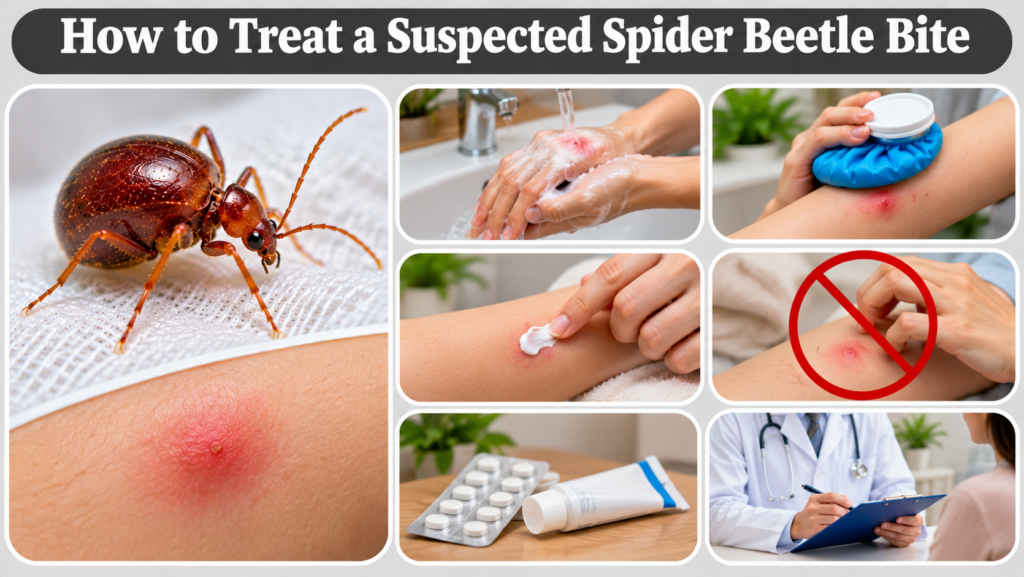
Since spider beetles rarely bite humans, treatment usually focuses on relieving unexplained minor skin irritation rather than treating a confirmed spider beetle injury.
For mild symptoms, gentle skin care is often sufficient. More serious reactions require medical attention.
Basic Skin Care and Treatment
- Wash the area: Clean irritated skin gently with soap and water.
- Apply a cold compress: Use a cool, damp cloth to reduce discomfort.
- Avoid scratching: Scratching may worsen irritation and increase infection risk.
- Relieve itching: Ask a pharmacist about appropriate anti-itch treatments.
- Monitor symptoms: Watch for increasing redness, swelling, pain, or discharge.
Seek medical care if symptoms worsen, become infected, or fail to improve. Difficulty breathing or swelling of the tongue or throat requires emergency medical attention.
How to Prevent Spider Beetles in Your Home
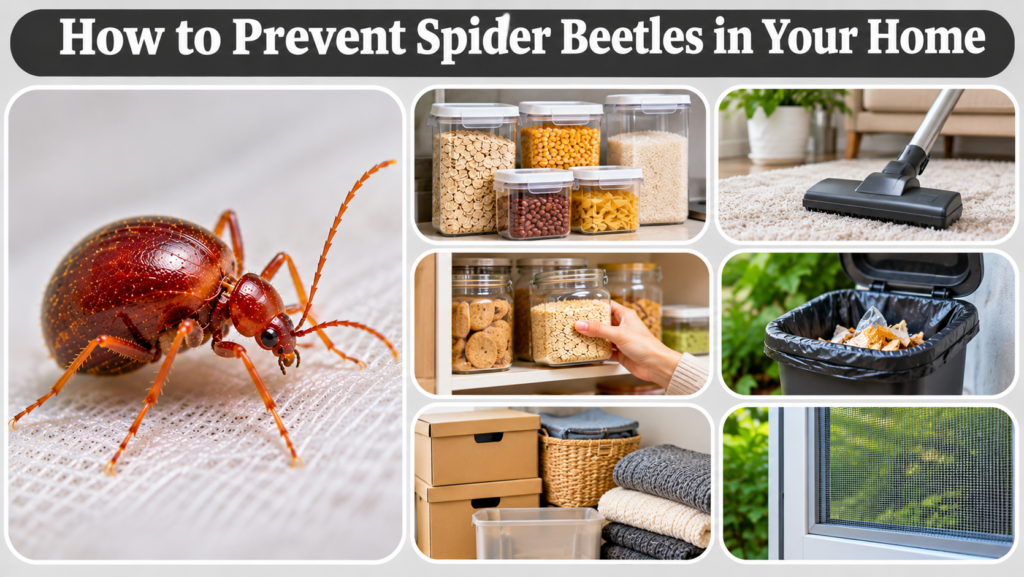
Preventing spider beetles involves eliminating suitable food sources and reducing their hiding places. These insects commonly infest stored products rather than living directly on people.
Regular cleaning and proper food storage can significantly reduce their numbers.
Effective Spider Beetle Prevention Methods
- Store flour, grains, pet food, and dried foods in sealed containers.
- Vacuum pantry shelves, floor edges, and hidden corners regularly.
- Inspect stored products for beetles, larvae, or damaged packaging.
- Remove infested materials and clean the surrounding surfaces.
- Check accessible areas for old bird nests, rodent debris, or dead insects.
- Reduce clutter that provides dark, undisturbed hiding places.
Insecticide applications are generally unnecessary when the food source can be located and removed.
FAQs
1. Are Spider Beetle Bites Dangerous?
Spider beetles are not considered dangerous biting pests. They do not feed on blood and are not known to transmit diseases through bites. If unexplained skin irritation occurs, another insect or skin condition is more likely to be responsible.
2. Do Spider Beetle Bites Itch?
There is no established pattern of itching specifically associated with spider beetle bites. Itchy bumps may result from bed bugs, fleas, mosquitoes, or skin irritation. The presence of a spider beetle alone cannot confirm the cause.
3. Can Spider Beetles Bite While You Sleep?
Spider beetles may wander across bedding, but they do not seek sleeping humans for blood meals. If you repeatedly wake with itchy marks, inspect the bedroom for evidence of bed bugs or other biting pests.
4. Do Black Spider Beetles Bite?
Black or dark-colored spider beetles are generally harmless to humans. Like other spider beetles, they feed on stored organic materials instead of blood. Their dark appearance does not indicate that they are more aggressive or dangerous.
5. How Long Do Spider Beetle Bite Marks Last?
There is no reliable healing timeline for spider beetle bite marks because these beetles rarely bite and do not cause a recognized bite pattern. The duration of unexplained skin irritation depends on its actual cause and severity.