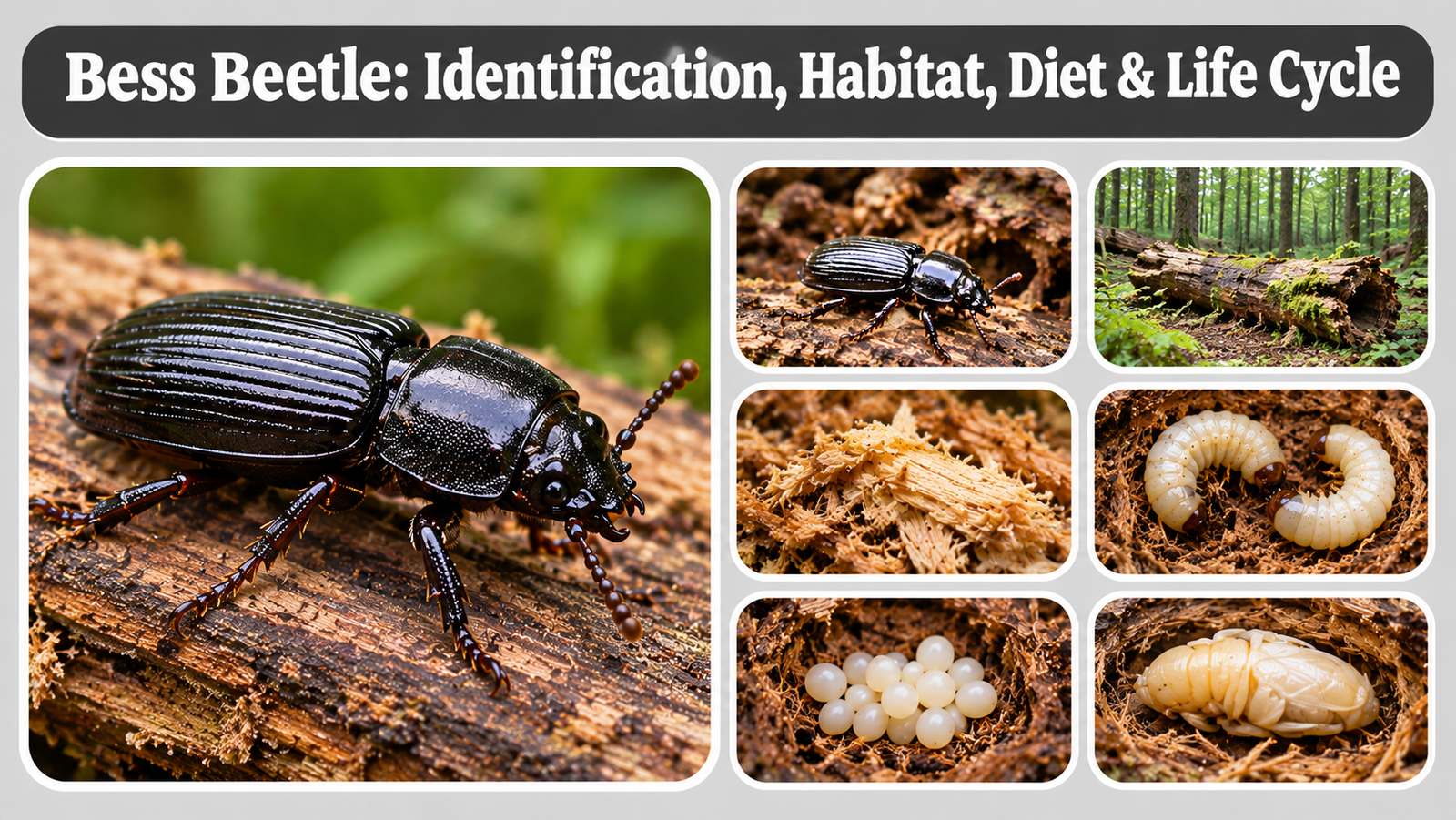
Bess beetles are fascinating wood-dwelling insects known for their shiny black bodies, strong jaws, and unusual family behavior. These beetles live inside decaying logs, where they help break down dead wood and recycle nutrients into the soil. Unlike most beetles, bess beetles communicate through sounds and care for their young. Understanding their appearance, habitat, feeding habits, and life cycle helps explain why these insects are an important part of forest ecosystems.
What Is a Bess Beetle?
A bess beetle is a large, dark-colored insect belonging to the family Passalidae and the order Coleoptera. One of the best-known North American species is Odontotaenius disjunctus, commonly called the horned passalus or patent leather beetle.
Bess beetles are recognized for their smooth, glossy appearance and their ability to live in family groups. They spend most of their lives inside rotting hardwood, where adults and larvae work together to survive.
Bess Beetle Identification and Appearance
Bess beetles have elongated, shiny black bodies with distinctive grooves across their hardened wing covers. They also have strong mandibles, curved antennae, and a small horn on the head. These features make them relatively easy to recognize among beetles found in forests.
Bess Beetle Size and Color
Adult horned passalus beetles typically measure 1.2–1.6 inches (30–40 mm) long. Their bodies are glossy black, although newly emerged adults initially have a reddish coloration before becoming darker.
Their legs and antennae sometimes have golden-brown hairs. The tough outer covering protects them while moving through tunnels and decaying wood.
Bess Beetle Anatomy and Body Parts
Like other insects, bess beetles have three main body sections: the head, thorax, and abdomen.
Their important body parts include:
- Head: Contains the eyes, antennae, horn, and mandibles.
- Mandibles: Strong mouthparts used to chew decaying wood.
- Antennae: Help detect surroundings and environmental conditions.
- Thorax: Supports six jointed legs and both pairs of wings.
- Elytra: Hardened forewings that protect the hind wings and abdomen.
- Horn: A small curved projection used during interactions with other beetles.
These structures help bess beetles navigate narrow wooden tunnels and protect themselves from predators.
Where Do Bess Beetles Live?
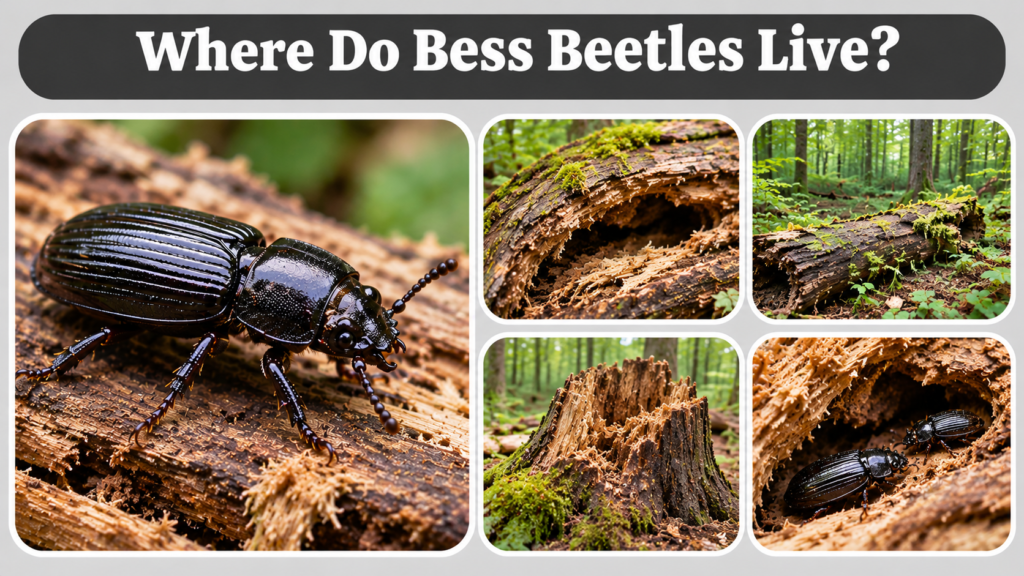
Bess beetles primarily inhabit moist, decaying hardwood logs in forests. They prefer fallen trees, rotting stumps, and decomposing wood where fungi and bacteria have already begun breaking down the material.
Bess Beetle Habitat and Distribution
Horned passalus beetles are widespread across the eastern United States and parts of southern Canada. Other members of the Passalidae family occur in tropical and subtropical regions worldwide.
Their preferred habitat provides:
- Moist wood that prevents dehydration.
- Decaying hardwood suitable for feeding.
- Protected tunnels for raising larvae.
- Microorganisms that help break down wood.
They generally avoid dry, healthy wood and are rarely found living permanently inside houses.
What Do Bess Beetles Eat?

Bess beetles primarily eat decaying wood. Unlike insects that attack living trees, they depend on wood that fungi and bacteria have already softened.
Their diet includes decomposing hardwood, partially digested wood particles, and nutrient-rich material associated with their tunnels.
How Bess Beetles Digest Wood
Bess beetles use their powerful jaws to chew rotting wood into smaller particles. Microorganisms help break down the difficult plant fibers, making the material easier to digest.
Adults also prepare softened wood mixed with processed waste for their larvae. This feeding behavior is particularly important because young larvae rely heavily on their parents for nutrition.
By consuming and processing dead wood, bess beetles contribute to decomposition and nutrient recycling in forest environments.
Female Bess Beetle vs. Male Bess Beetle
Male and female bess beetles look remarkably similar. Both possess shiny black bodies, strong mandibles, and a small horn on the head.
| Feature | Male Bess Beetle | Female Bess Beetle |
| Body color | Glossy black | Glossy black |
| Body size | Around 30–40 mm | Around 30–40 mm |
| Head horn | Present | Present |
| Parental care | Participates | Participates |
| Reproduction | Fertilizes eggs | Produces eggs |
Females may have slightly broader thoracic structures, but this difference is difficult to recognize without specialized examination.
A scientific study found that males and females cannot reliably be distinguished by their external appearance alone.
Bess Beetle Life Cycle
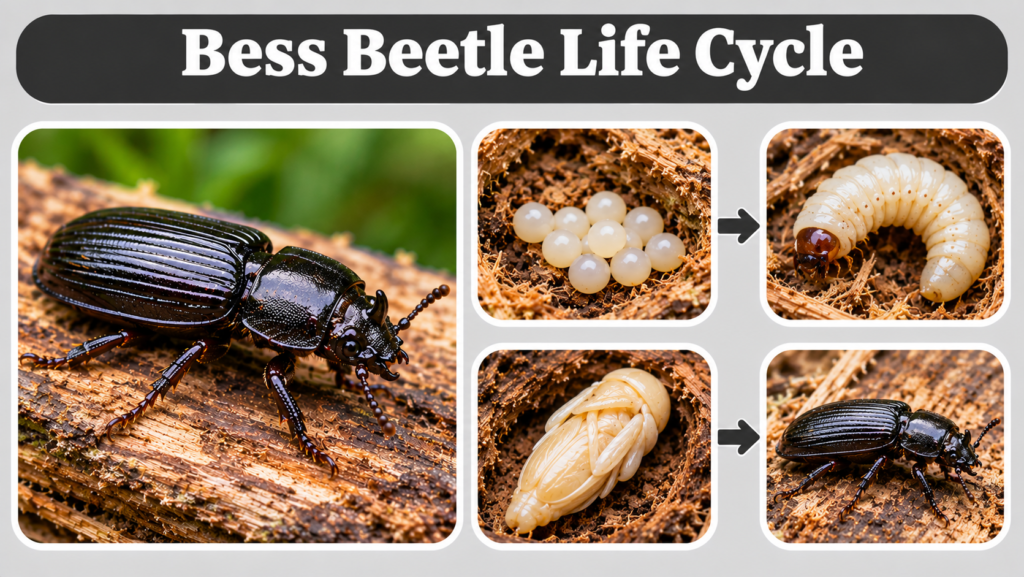
Bess beetles undergo complete metamorphosis, developing through four stages: egg, larva, pupa, and adult. Their reproduction is unusual because both parents help raise their offspring inside wooden tunnels.
1. Egg Stage
Female bess beetles lay relatively large eggs inside protected chambers in decaying wood. Parents may move the eggs to suitable locations and surround them with processed wood material.
2. Larval Stage
Bess beetle larvae are whitish grubs with brownish heads. They depend on their parents for prepared food and protection.
Interestingly, their third pair of legs is reduced and helps produce sounds rather than support movement.
3. Pupal Stage
After feeding and growing, the larva develops into a pupa inside a chamber prepared within the wood.
During this stage, the insect transforms into its adult form. The length of development depends on environmental conditions.
4. Adult Stage
New adults emerge with reddish bodies that gradually become glossy black. They may remain with their parents before eventually dispersing to new logs.
The entire developmental cycle may take several months to more than a year.
Bess Beetle Behavior and Communication
Bess beetles are considered subsocial insects because parents provide extended care for their young. Adults share wooden galleries with their larvae and sometimes with older offspring.
They protect their living spaces and cooperate in preparing food, making them unusual among beetles.
Why Do Bess Beetles Make Sounds?
Bess beetles produce squeaking or rasping sounds through a process called stridulation, which involves rubbing specialized body parts together.
These sounds serve several purposes, including communication between adults and larvae, defensive warnings, and interactions within family groups.
How Strong Are Bess Beetles?
Bess beetles have powerful muscles, strong legs, and sturdy jaws adapted for moving through rotting hardwood.
Their strength helps them excavate tunnels, shift wood particles, and defend territories. However, claims that they are the world’s strongest insects are not established simply by their impressive appearance.
Are Bess Beetles Dangerous?
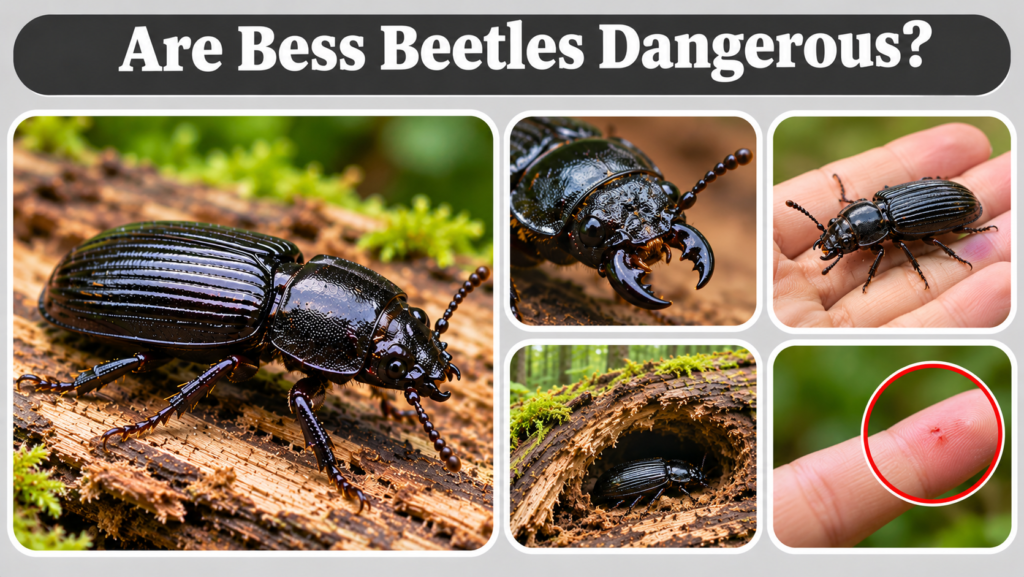
Bess beetles are generally harmless to humans. They are not venomous or poisonous and do not normally attack people.
However, their strong mandibles can deliver a pinch if they are handled roughly or feel threatened.
They do not feed on human blood, damage healthy trees, or typically infest homes. When encountered outdoors, they are best left undisturbed because of their beneficial environmental role.
Interesting Facts About Bess Beetles
Bess beetles possess several characteristics that distinguish them from ordinary beetles.
- Family cooperation: Both male and female adults help care for offspring.
- Sound production: Adults and larvae communicate through vibrations and squeaks.
- Wood recycling: They help transform fallen hardwood into smaller, decomposing material.
- Rare flight: Although they have functional wings, horned passalus beetles rarely fly.
- Long family relationships: Young adults may remain within their original log before dispersing.
These behaviors make bess beetles particularly interesting for studying insect communication, parental care, and forest ecology.
FAQs
1. How Long Do Bess Beetles Live?
Bess beetle lifespans vary with species and conditions. Adult horned passalus beetles often live a year or longer, and some research suggests they may survive for two years or more. Their protected habitat and extended family associations can contribute to their survival.
2. Can Bess Beetles Fly?
Yes, bess beetles have functional hind wings and can fly. However, flying is uncommon because they spend most of their lives inside decaying logs. Adults occasionally take flight when dispersing to find mates or suitable new habitats.
3. Do Bess Beetles Bite Humans?
Bess beetles do not normally bite people. However, their powerful jaws may pinch when they are threatened or handled carelessly. Such pinches are generally minor, and bess beetles do not possess venom or a stinging apparatus.
4. Are Bess Beetles Nocturnal?
Bess beetles spend much of their time hidden inside decaying wood, making their activity difficult to observe. They can be active in low-light conditions, and dispersing adults are sometimes attracted to artificial lights at night.
5. What Should You Do If You Find a Bess Beetle in Your House?
If a bess beetle enters your home, gently move it outdoors to a moist, wooded area with decaying logs. These beetles generally enter buildings accidentally and do not establish typical household infestations. Avoid using pesticides against them unnecessarily.