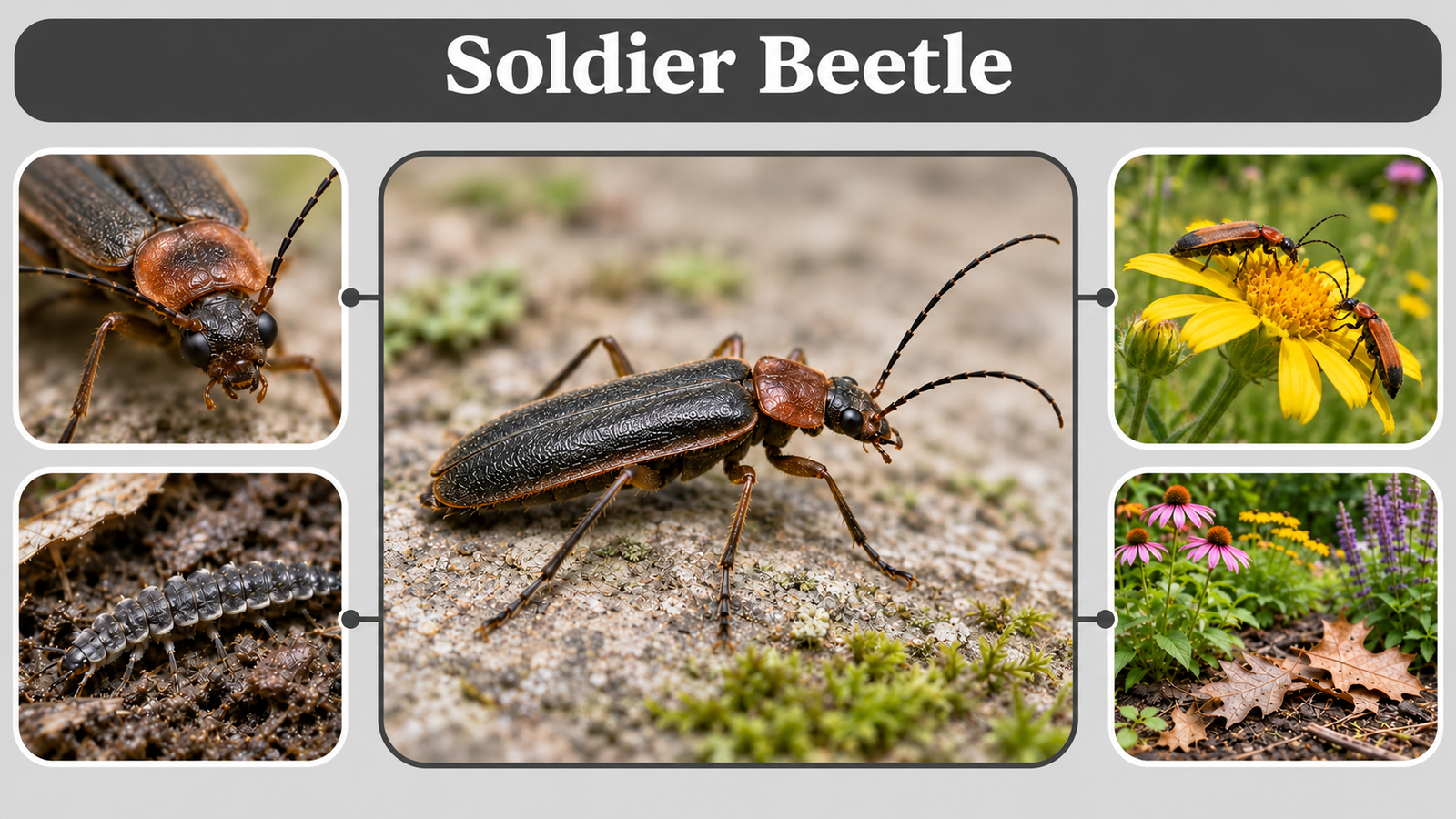
Soldier beetles are soft-bodied beetles often seen on flowers during warm weather. Many have long, narrow bodies with red, orange, yellow, brown, or black markings, though their appearance varies by species. Adults may feed on pollen and nectar, while some also hunt small insects. Their larvae usually live in soil or leaf litter, where they prey on insect eggs and larvae. Learn how to identify soldier beetles, what they eat, how they develop, and whether they are harmful to people, plants, or gardens.
What Is a Soldier Beetle?
A soldier beetle is a beetle in the family Cantharidae. The name refers to many species, not just one insect. In North America, hundreds of species belong to this family, and they vary in color, size, and behavior. Some are called leatherwings because their wing covers are softer and more flexible than the hard shells of many other beetles.
Adult soldier beetles are often found on flowers and foliage. Some feed mainly on pollen and nectar; others also prey on small, soft-bodied insects such as aphids. Their larvae usually live close to the ground and hunt insect eggs and larvae. Because adults can visit flowers and some species feed on garden pests, soldier beetles can be useful members of a garden’s wildlife community.
Soldier Beetle Identification
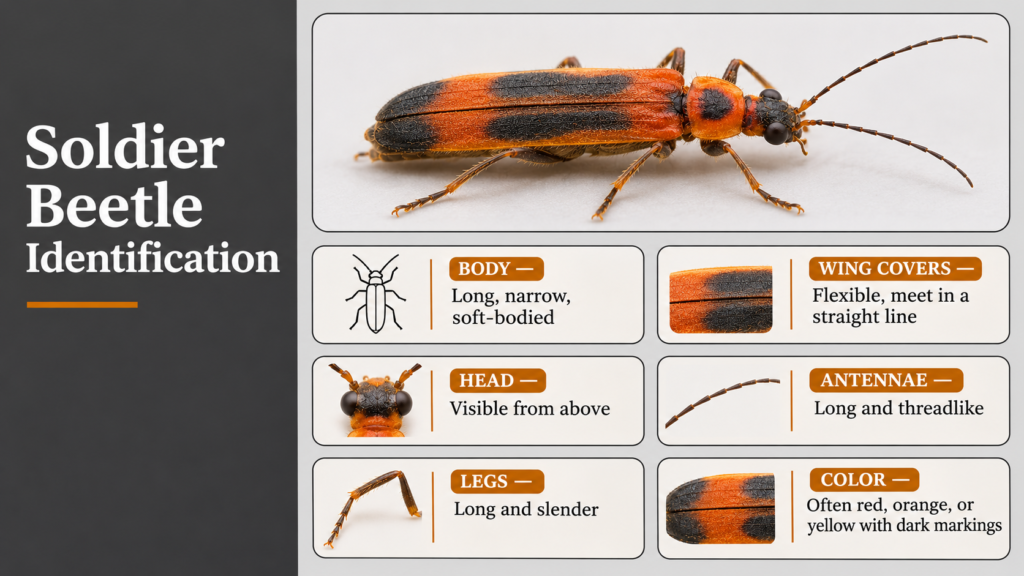
Soldier beetles can be confused with fireflies and other narrow-bodied insects. Their colors vary, so use several features together rather than relying on color alone.
- Body: Usually elongated, fairly flat, and soft-bodied, with sides that look almost parallel.
- Wing covers: Often flexible or leathery, meeting in a straight line down the back.
- Head: Usually visible from above, unlike a firefly’s head, which is partly hidden beneath the shield-like section behind it.
- Antennae: Long, slender, and threadlike.
- Legs: Relatively long and suited to walking over leaves and flowers.
- Color: Many species have red, orange, or yellow markings with black or brown. Other species may be mostly dark.
Size also varies among species. Some are only a few millimeters long, while larger soldier beetles may reach around an inch. Larvae look quite different from adults: they are elongated, segmented, and often dark or velvety. Their small legs and long bodies can make them look like tiny caterpillars or miniature alligators.
Habitat and Distribution
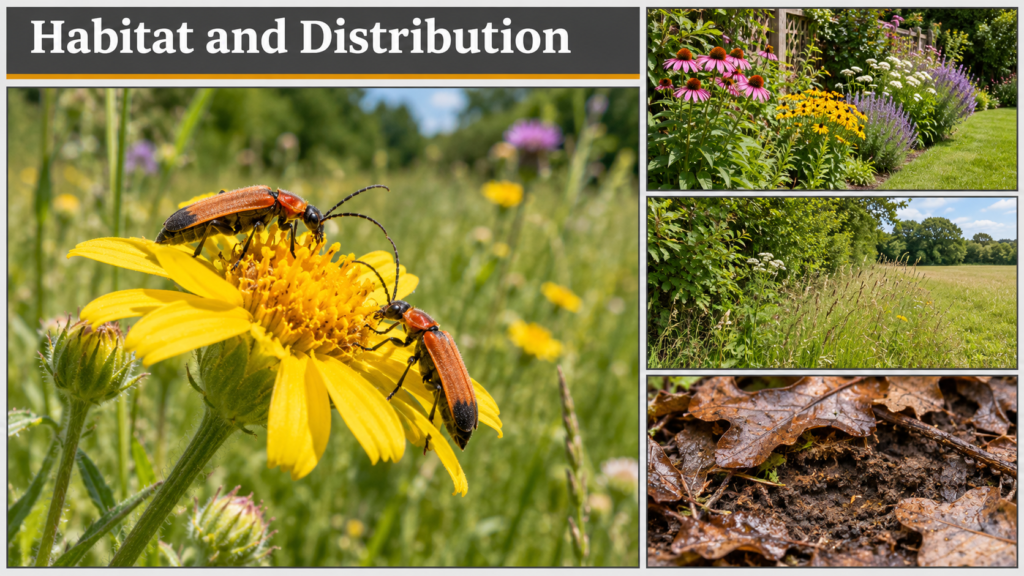
Soldier beetles live in many regions and habitats, depending on the species. Adults are commonly spotted in gardens, fields, meadows, woodland edges, and other places with flowers or leafy plants. They may gather on goldenrod, coneflowers, and similar blooms where pollen, nectar, and small prey are available.
The larvae tend to stay closer to the ground. They may shelter in leaf litter, loose soil, fallen plant material, or under rocks, logs, and loose bark. These protected spaces provide moisture and give young beetles access to small insects and their eggs.
Adult activity varies by species and local climate. In some areas, adults are especially noticeable in late summer and early fall; elsewhere, they may appear during spring or early summer. Seeing many beetles on flowers at once does not necessarily mean there is an infestation. Flowering plants can attract adults as they feed and find mates.
What Do Soldier Beetles Eat?
A soldier beetle’s diet depends on its species and life stage. Larvae are generally predators. They hunt insect eggs, larvae, and other small ground-dwelling invertebrates. Some may feed on the eggs or young of crop pests, which can help limit certain insect populations.
Adults have more varied diets. Many visit flowers to eat pollen and nectar. As they move between blooms, they may transfer pollen and contribute to pollination. Some species also hunt aphids and other soft-bodied insects found on foliage. Others feed primarily on floral resources, so it is not accurate to assume every soldier beetle eats the same things.
Soldier beetles are not usually plant-feeding pests. Adults feeding on flowers generally do not damage the blooms, and larvae are more often predators than plant feeders. If you find a soldier beetle on a flower or leaf, it is usually best to leave it alone.
Soldier Beetle Life Cycle
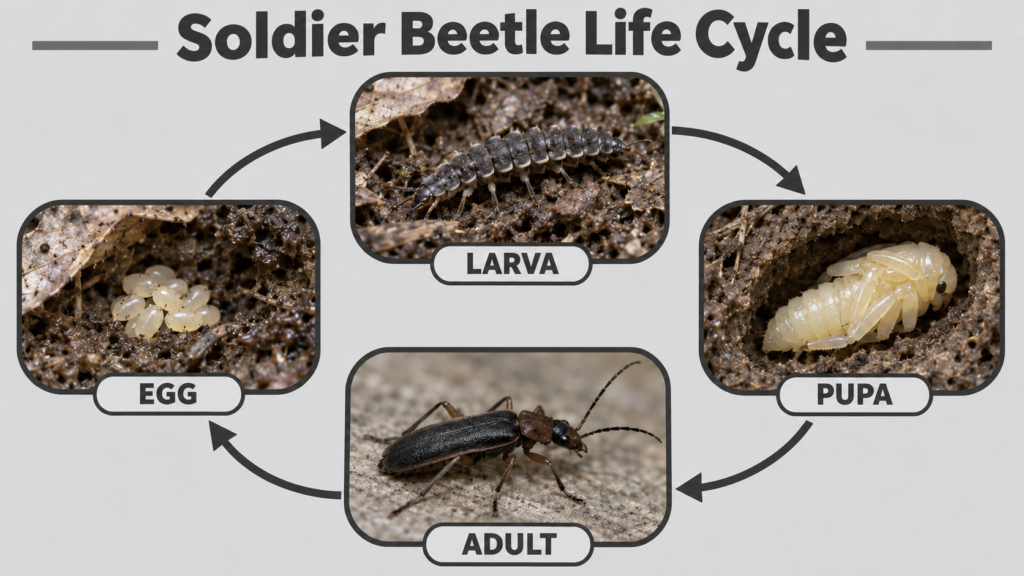
Soldier beetles undergo complete metamorphosis, passing through four stages: egg, larva, pupa, and adult. The length and timing of each stage differ among species and environments.
Egg
A female lays eggs in soil, leaf litter, or other protected organic material. Eggs are small and difficult to spot. The location gives newly hatched larvae access to damp ground and nearby prey.
Larva
The larval stage is spent mostly on or in the ground. Soldier beetle larvae hunt insect eggs, larvae, and other small prey. In some species, larvae remain in this stage through winter. This stage may last longer than the adult stage, though duration varies by species.
Pupa
When a larva has grown enough, it enters the pupal stage in a sheltered place in the soil. During pupation, its body changes into the adult form. The pupa is usually hidden, so people rarely see this stage.
Adult
The adult emerges from the soil and begins searching for food and a mate. Depending on the species, it may feed on nectar and pollen, hunt small insects, or do both. Adults lay eggs, completing the cycle. Some soldier beetle species produce one generation a year, while others may have more than one.
Are Soldier Beetles Harmful?
Soldier beetles are generally harmless to people and are not considered household pests. They do not infest stored food or damage buildings. Some species may release defensive chemicals when threatened, so avoid crushing or handling them. A beetle found indoors can usually be guided outside without pesticide.
They are also usually harmless to garden plants. Adult beetles may gather on flowers, but their presence does not automatically mean they are eating or damaging the blooms. Many adults feed on pollen and nectar, and some also prey on aphids. Larvae can help control other insects by consuming eggs and young larvae.
How to Encourage Soldier Beetles in a Garden
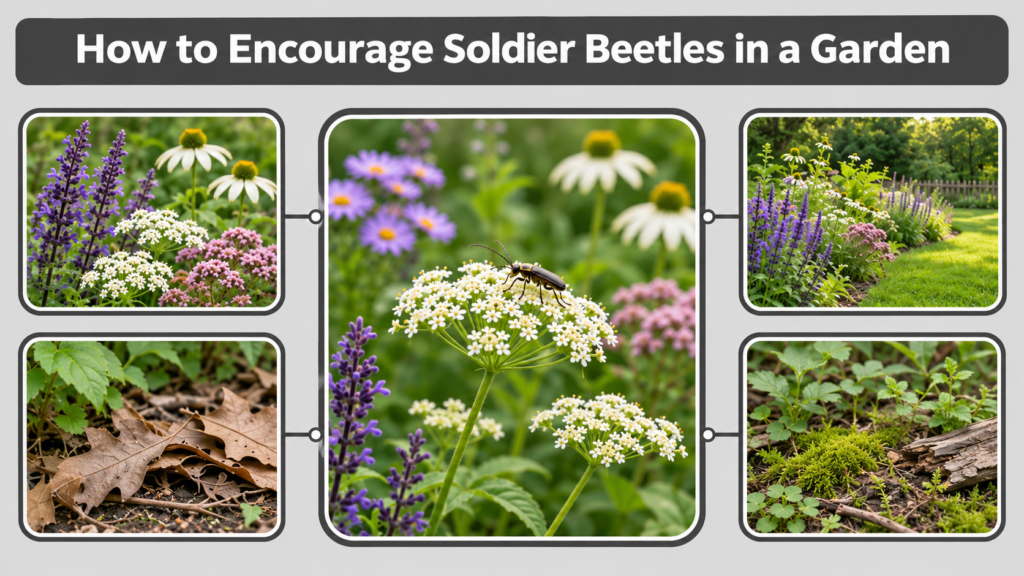
If you want to support soldier beetles and other beneficial insects, grow a variety of flowering plants that provide pollen and nectar across the season. Avoid spraying broad-spectrum insecticides on flowers, since these can harm beetles, pollinators, and other helpful insects.
Leaving some leaf litter or natural ground cover in suitable areas can also provide shelter for larvae. You do not need to introduce or handle soldier beetles. If they appear in your garden, let them forage naturally and avoid disturbing their ground-level habitat.
Soldier Beetle vs. Firefly
Soldier beetles and fireflies can look similar because both may have elongated bodies and dark markings. One useful clue is the head: a soldier beetle’s head is generally visible from above, while a firefly’s head is partly hidden by the section behind it. Soldier beetles also do not have the light-producing organs associated with fireflies. Color alone is not a reliable way to tell them apart because both groups include differently marked species.
Frequently Asked Questions
Do soldier beetles bite?
Soldier beetles are not generally considered a biting threat. Avoid handling them, since some species can release defensive chemicals when disturbed.
Are soldier beetles good for gardens?
Often, yes. Some adults pollinate flowers or eat aphids, while larvae prey on insect eggs and young larvae. Their benefits vary by species and life stage.
What do soldier beetle larvae look like?
Larvae are elongated and segmented, often dark-colored or velvety, with small legs. They look quite different from the adult beetles.
Why are soldier beetles on my flowers?
They may be feeding on pollen or nectar, looking for small insects, or finding mates. Some species are especially attracted to certain flowers, including members of the sunflower family.
Should I remove soldier beetles from my garden?
Usually, no. They generally do not harm plants, and some contribute to pollination or natural pest control. There is typically no need to control them.