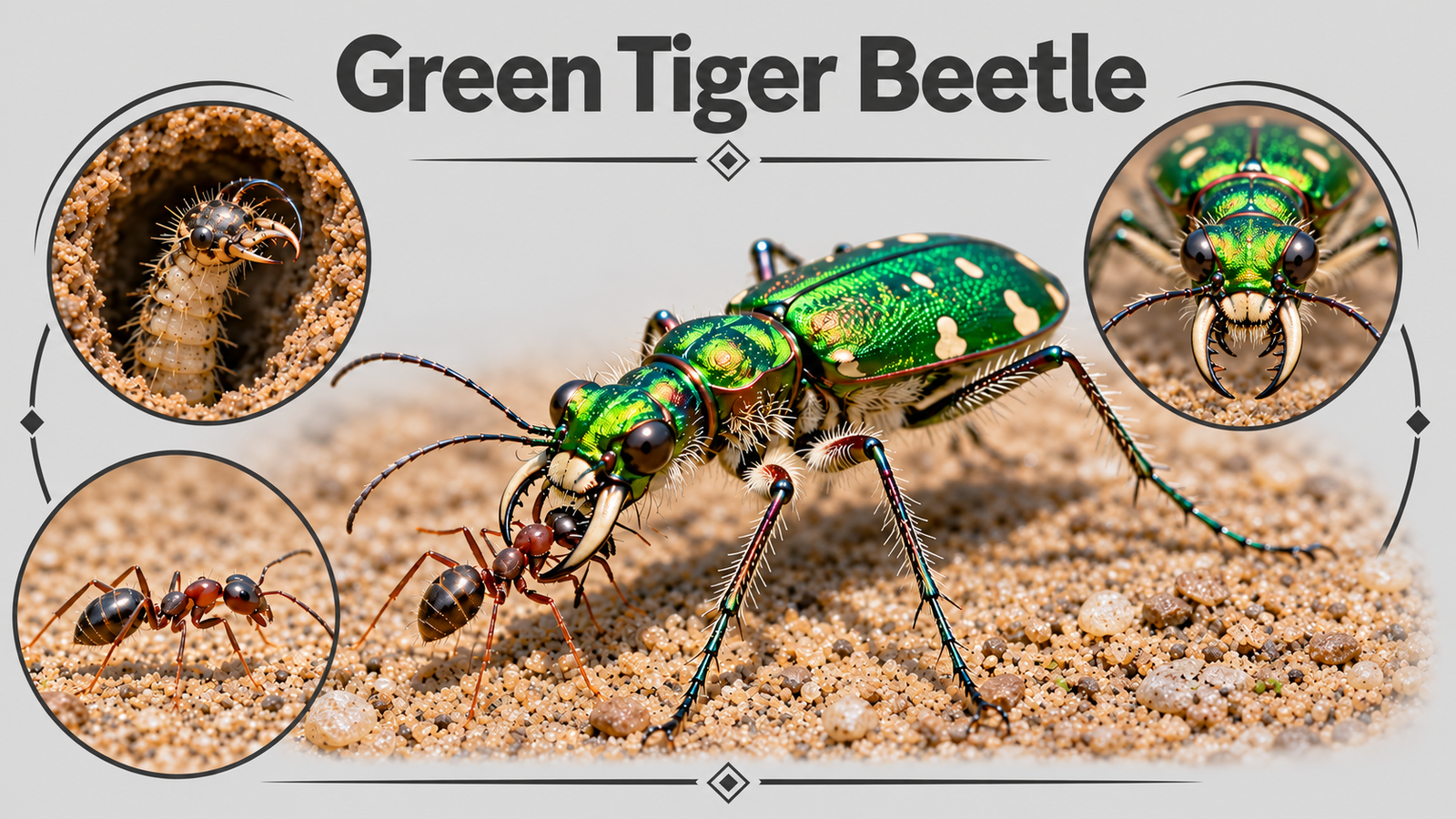
The green tiger beetle is a small but striking insect known for its metallic green body, pale wing-case markings, and remarkable speed. Often found running across sunny paths, sandy grasslands, and heathland, it is an active predator that feeds on ants, spiders, caterpillars, and other small invertebrates. Its life cycle is just as interesting: the young develop in underground burrows, where they wait to ambush passing prey. Learn how to identify the green tiger beetle, where it lives, what it eats, and whether it poses any danger to people.
What Is a Green Tiger Beetle?
The green tiger beetle is a fast-moving predatory beetle known for its metallic green coloring, pale markings, and large eyes. In Britain and much of Europe, the name usually refers to Cicindela campestris, a member of the tiger beetle family, Carabidae. It is commonly found in sunny, open habitats with patches of bare ground.
The name can also describe other green-colored tiger beetle species in places such as North America. Those beetles may look similar but belong to different species. This article focuses mainly on Cicindela campestris, the species often meant by “green tiger beetle” in European wildlife guides.
Although it is relatively small, this beetle is an active hunter. Long legs help it sprint across the ground, while strong jaws allow it to capture other small invertebrates. Adults and larvae hunt in different ways: adults chase prey on the surface, while young beetles wait near the entrances of underground burrows.
Green Tiger Beetle Identification
An adult green tiger beetle is generally about 1 to 1.5 centimeters long. Its wing cases, known as elytra, are usually a bright metallic green. Creamy or yellowish spots and markings often decorate the wing cases, while the legs and parts of the face can appear bronze, purple, or coppery. Large, prominent eyes give the beetle a distinctive look and help it detect movement.
The beetle’s color can appear different depending on the light. In direct sunshine, it may look vivid green, while at other angles it can show blue, bronze, or copper tones. Its body is relatively slim, and its long legs make it look built for running. The strong, curved jaws at the front of its head are used to seize prey.
A helpful identification clue is its behavior. When approached, a green tiger beetle may run quickly ahead, stop, and then move again as someone gets closer. If it feels threatened, it may fly a short distance before landing and running off. This stop-and-start movement can make it difficult to observe closely.
Green coloring alone is not enough to confirm the species. Other beetles can also look metallic green, including some plant-feeding beetles. Look at the combination of features: large eyes, long legs, strong jaws, pale markings on the wing cases, and active hunting on bare ground.
Habitat and Distribution
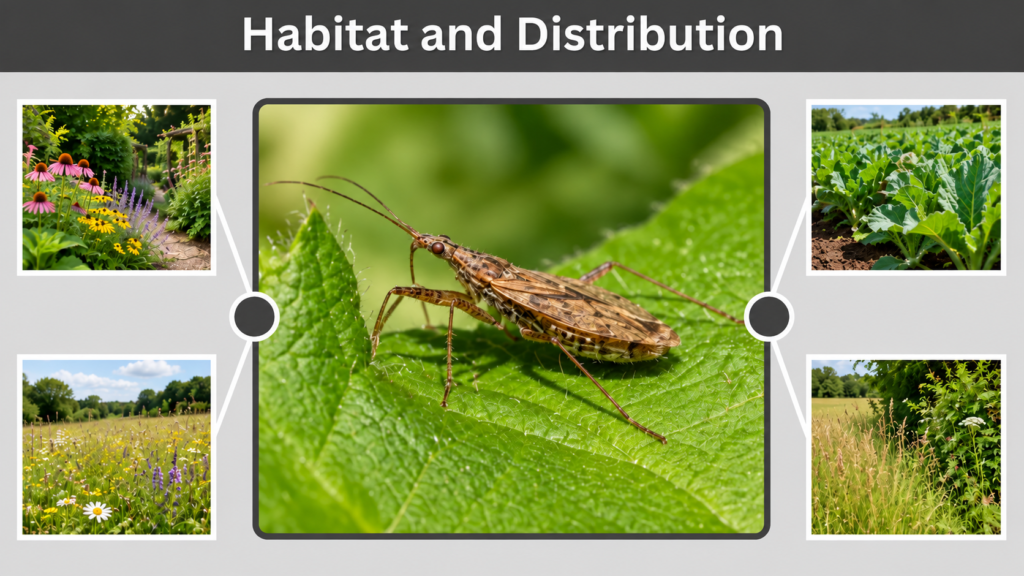
The green tiger beetle is associated with warm, open places where it can hunt and lay eggs in suitable soil. Typical habitats include heathland, sandy grassland, moorland, coastal dunes, open woodland edges, and sunny paths. It may also occur on disturbed or brownfield sites if they provide bare ground and enough prey.
Bare, firm soil is especially useful for breeding. Female beetles lay eggs in the ground, and the larvae need soil suitable for making vertical burrows. Sites with a mixture of exposed earth, sparse vegetation, and nearby cover can provide both warm hunting areas and places for prey to live.
Adults are most often seen in sunny weather during spring and summer. They rely on warmth for active movement, so they may be less noticeable on cool, cloudy days. In Britain, sightings are commonly reported from April to September, though the exact season can vary with local weather and conditions.
The species is widespread across much of Europe and parts of Asia. Its local abundance depends on the availability and condition of suitable habitat. A landscape may appear natural but offer few breeding sites if the ground is covered by dense vegetation or disturbed too frequently.
What Do Green Tiger Beetles Eat?
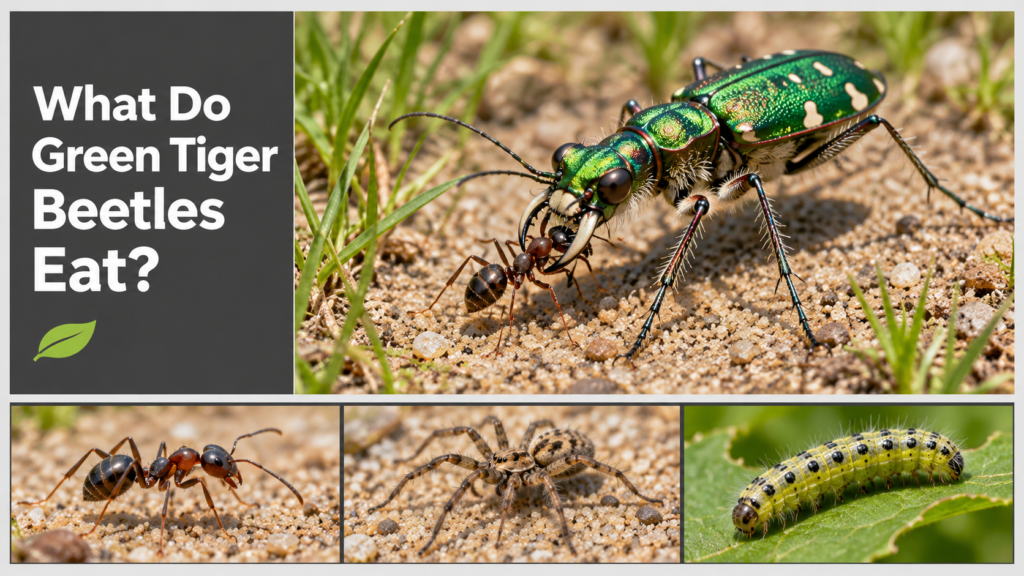
Green tiger beetles are carnivorous predators. Adults hunt small invertebrates such as ants, spiders, caterpillars, and other insects. They use their sharp jaws to grab and consume prey, often chasing it across open ground.
Their hunting style is closely tied to their speed and vision. The beetle runs toward prey, pauses to locate it, and then rushes forward again. Because it moves so quickly, it may briefly stop between runs, seemingly to reorient itself. This pattern helps it navigate across the ground while pursuing small, moving targets.
Green tiger beetle larvae are predators too, but they generally do not roam around looking for food. A larva waits at the entrance of a burrow and grabs small animals that pass close enough. Ants and other ground-dwelling invertebrates may become prey. The larva’s ambush strategy lets it hunt while remaining near the safety of its tunnel.
By feeding on other small invertebrates, green tiger beetles are part of the food web in grasslands, heathlands, and dunes. They are not pests of plants, and they do not feed on household food or damage buildings.
Life Cycle of the Green Tiger Beetle
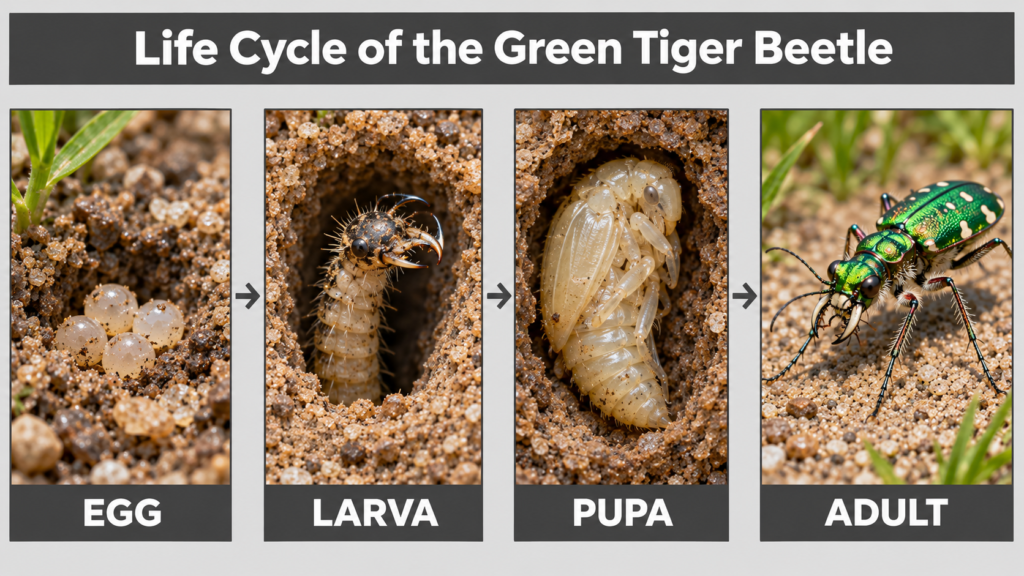
The green tiger beetle passes through four stages: egg, larva, pupa, and adult. This type of development is called complete metamorphosis. The adult stage is the most familiar because the bright green beetles are often seen running across warm, bare ground.
After mating, a female lays eggs in suitable soil. When an egg hatches, the young larva begins to make a burrow. The burrow is usually a narrow vertical tunnel, and the larva stays near its entrance to catch passing prey. The opening can be difficult to spot unless you are looking closely at exposed ground.
As it grows, the larva develops through several stages. It may use a small hook-like structure on its back to help anchor itself inside the burrow when it lunges toward prey. This adaptation can prevent the larva from being pulled out of its tunnel during a struggle.
The larval stage can last longer than the adult stage and may include time spent inactive over winter. Once it has grown enough, the larva changes into a pupa underground. An adult beetle eventually emerges, ready to hunt and reproduce. The timing of each stage can vary with local climate and habitat conditions.
Tiger beetle burrows should not be dug up or prodded. Disturbing the soil can damage the larva or its shelter. If you find small holes in a suitable sandy area, it is better to observe them without trying to uncover what is inside.
Behavior and Adaptations
The green tiger beetle is a visual hunter that depends on sunlight and warmth. Its large eyes help it detect movement, while its long legs allow it to run quickly over open ground. Strong jaws help it capture prey once it gets close.
Its fast movement has a trade-off: when the beetle runs at high speed, it may not be able to process its surroundings clearly enough to continue without stopping. Brief pauses can help it locate prey or choose its next direction. This behavior is one reason it may seem to dash a short distance, stop, and dash again.
When disturbed, an adult may take off and fly a short distance. It often lands nearby, then runs again. This response can make it appear to disappear, even though it has only moved a little farther along the path.
The larva’s burrow is another important adaptation. It serves as both shelter and a hunting post. By waiting just inside the entrance, the larva can conserve energy while remaining ready to seize passing prey.
Are Green Tiger Beetles Dangerous?
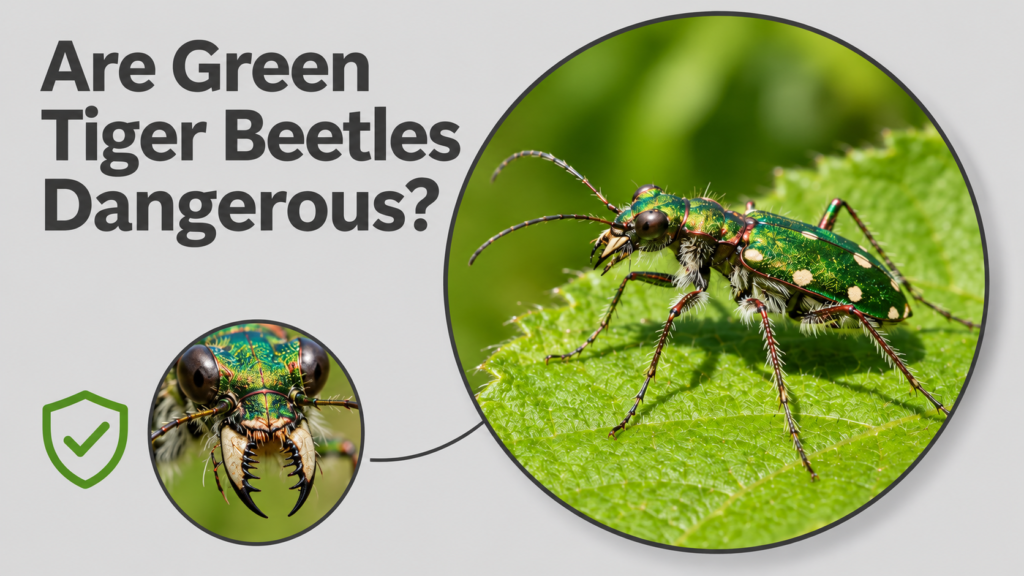
Green tiger beetles are not considered dangerous to people. They do not seek out humans, feed on household materials, or damage gardens. Their jaws are designed for catching small prey, not for attacking people.
Like many insects, a beetle may try to defend itself if handled or trapped. It is best to avoid picking one up. If you see a green tiger beetle, observe it where it is and give it room to move away.
They are also not a threat to pets under ordinary circumstances. The beetle’s small size and preference for open habitats make encounters with people and animals incidental. The best approach is simply to leave it undisturbed.
Conservation and Habitat Care
The green tiger beetle is considered common across much of its range, but local populations still depend on suitable habitat. When open sandy or grassy areas become densely overgrown, the beetles may lose the warm patches of bare soil they need for hunting and breeding.
Habitat changes can come from development, intensive land management, or the loss of heathland and dunes. Excessive trampling or repeated disturbance can also damage larval burrows. Maintaining a varied habitat—with some open ground and some vegetation—can support the beetle and other wildlife.
If you encounter one, avoid stepping on burrow openings or scraping away soil. Photographs and observations can help people learn about local wildlife, but the beetle and its habitat should be left intact.
Frequently Asked Questions
Where do green tiger beetles live?
The European green tiger beetle, Cicindela campestris, lives in open habitats such as heathland, sandy grassland, dunes, moorland, and sunny woodland edges. It needs warm ground for hunting and suitable soil for larval burrows.
What do green tiger beetles eat?
Adults eat small invertebrates, including ants, spiders, caterpillars, and other insects. Larvae wait at the entrances of underground burrows and ambush passing prey.
Can a green tiger beetle bite?
It has strong jaws for catching prey, but it is not considered dangerous to people. Avoid handling it, since any insect may try to defend itself if restrained.
Why does a green tiger beetle keep stopping while it runs?
The beetle may pause to orient itself or locate prey. Its quick dashes and brief stops are part of how it moves and hunts across open ground.
How can I identify a green tiger beetle?
Look for a small, fast beetle with a metallic green body, pale markings on its wing cases, long legs, large eyes, and strong jaws. Identification is more reliable when you consider its appearance and behavior together.