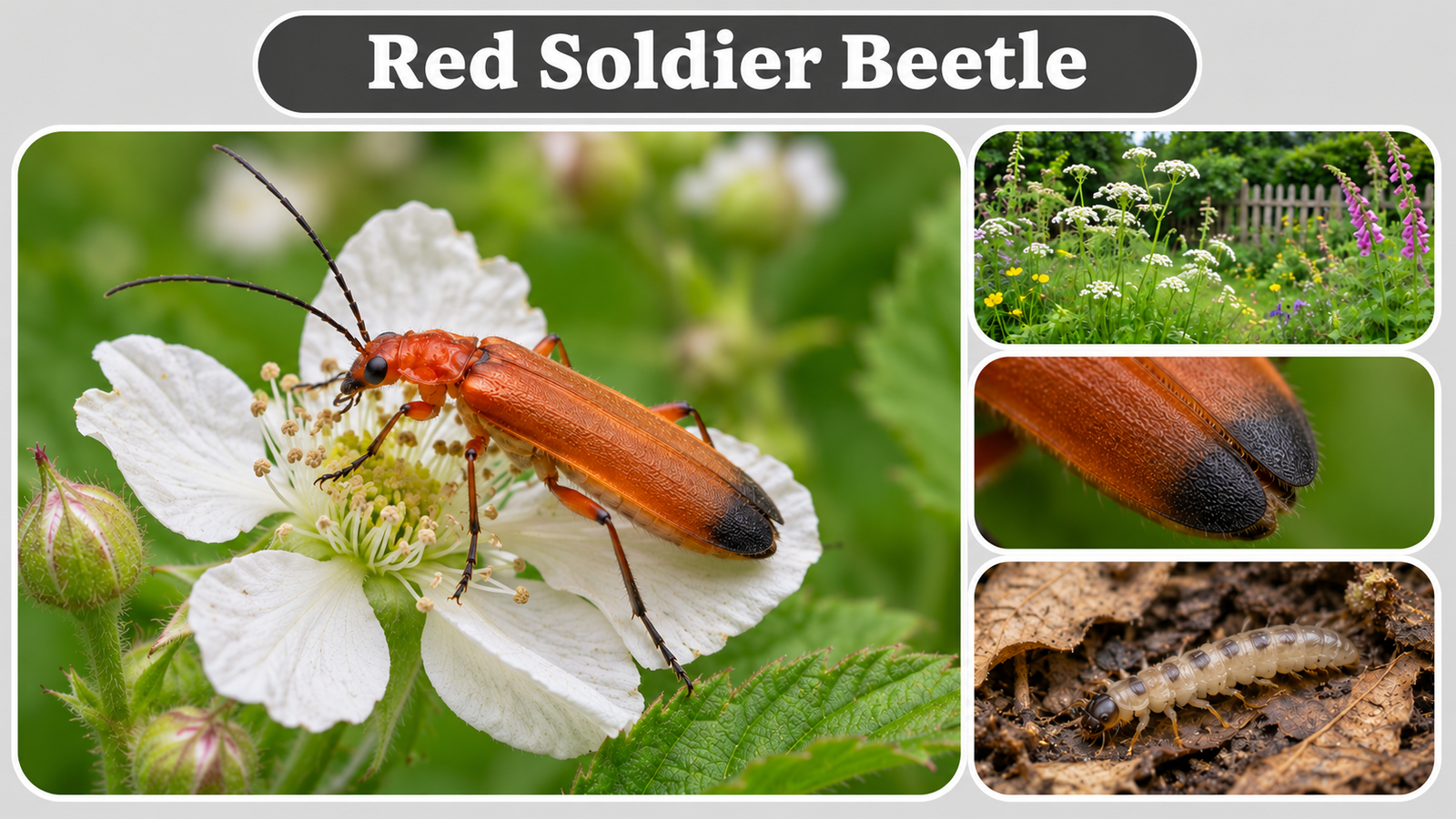
The red soldier beetle is a small, soft-bodied beetle often seen crawling over summer flowers. Its bright orange-red body and dark wing tips make it easy to notice, while its habit of visiting flowers can make it seem like a plant pest. The common red soldier beetle, Rhagonycha fulva, is generally harmless to people and plants. Adults feed on pollen, nectar, and small insects, and their larvae hunt among soil and leaf litter. This guide covers how to identify it, where it lives, what it eats, and whether it needs control.
Red Soldier Beetle at a Glance
| Feature | Details |
|---|---|
| Common name | Common red soldier beetle |
| Scientific name | Rhagonycha fulva |
| Family | Cantharidae |
| Adult length | About 7–10 mm |
| Typical adult season | Summer, often June to August in Britain |
| Common habitats | Meadows, grassland, woodland edges, hedgerows, parks, and gardens |
| Diet | Small insects, pollen, and nectar; larvae prey on ground-dwelling invertebrates |
“Red soldier beetle” can refer to more than one red or orange member of the soldier beetle family. The details below focus on Rhagonycha fulva, also called the common red soldier beetle. It is a familiar species in Britain, where it is often found on flowers during summer.
How to Identify a Red Soldier Beetle
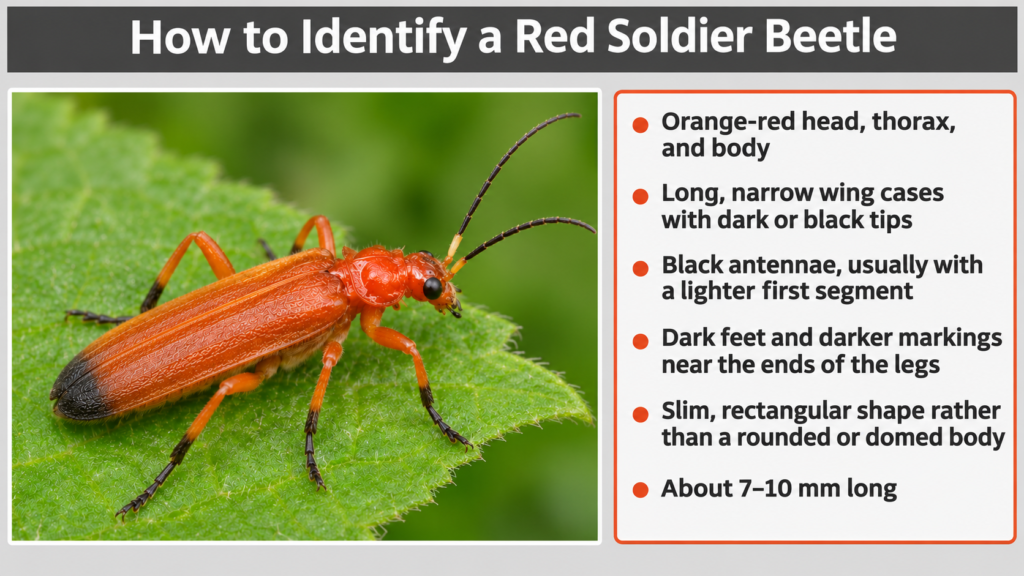
The common red soldier beetle has a narrow, elongated body and measures around 7–10 mm long. It is mostly orange-red, with a dark patch at the ends of its wing cases. Its soft-looking wing covers, long antennae, and dark feet help distinguish it from many other beetles.
Key identification features
Look for these features when identifying an adult:
- An orange-red head, thorax, and body
- Long, narrow wing cases with dark or black tips
- Black antennae, usually with a lighter first segment
- Dark feet and darker markings near the ends of the legs
- A slim, rectangular shape rather than a rounded or domed body
- A length of about 7–10 mm
Adults are often found on open flowers, where they may be feeding or mating. Seeing a pair together is common in summer. The beetle is sometimes nicknamed “bloodsucker” because of its red coloring, but it does not suck blood and is harmless to people.
Red soldier beetle or another beetle?
Several soldier beetle species have red, orange, or black markings, so color alone may not be enough for a precise identification. Some related beetles have a red thorax and black wing cases, while others are mostly orange or yellow. The common red soldier beetle’s orange-red body and black-tipped wing cases are useful clues, but a clear, close photograph can help distinguish it from similar species.
The name “soldier beetle” describes a family of beetles rather than just one species. If an insect’s markings differ from the description above, it may still be a soldier beetle, but not Rhagonycha fulva.
Where Red Soldier Beetles Live
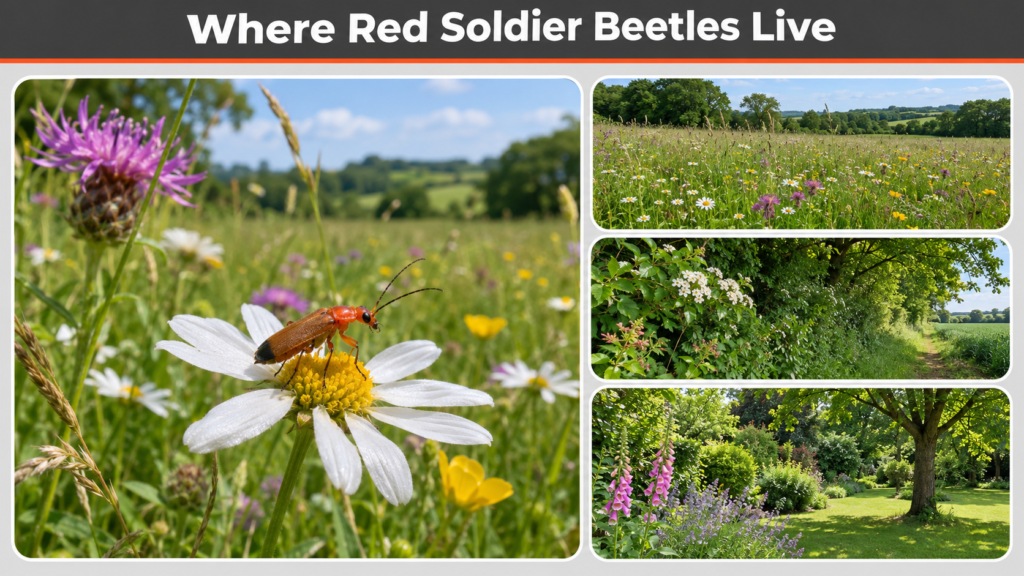
Red soldier beetles are associated with flowering, well-vegetated places. Adults are particularly easy to spot in meadows, grassland, woodland edges, hedgerows, parks, and gardens. They often rest on flower heads during the day, where they can find pollen, nectar, and small insects.
Flowers that attract adults
In Britain, adults are often seen on cow parsley, hogweed, and other plants with broad, open flower clusters. They may also visit flowers in the daisy family. A garden with varied flowers, unmown patches, and nearby grasses can provide feeding places for adults and shelter for developing larvae.
The species is widely recorded in Europe, though its local abundance and seasonal timing vary by region. In areas where it is present, adults are easiest to notice when flowers are in bloom.
What Do Red Soldier Beetles Eat?
Adult red soldier beetles have a mixed diet. They feed on pollen and nectar, and they also catch small insects found on flowers, including aphids. Flowering plants provide both food and places to find prey.
The larvae have a different lifestyle. They live closer to the ground, among leaf litter, soil, or vegetation near the base of grasses. Soldier beetle larvae are predators, but the specific prey they take can vary. The larvae of R. fulva hunt ground-dwelling invertebrates, including small slugs and snails. This makes the beetle part of a wider garden food web, though it should not be treated as a guaranteed pest-control solution.
Red Soldier Beetle Life Cycle
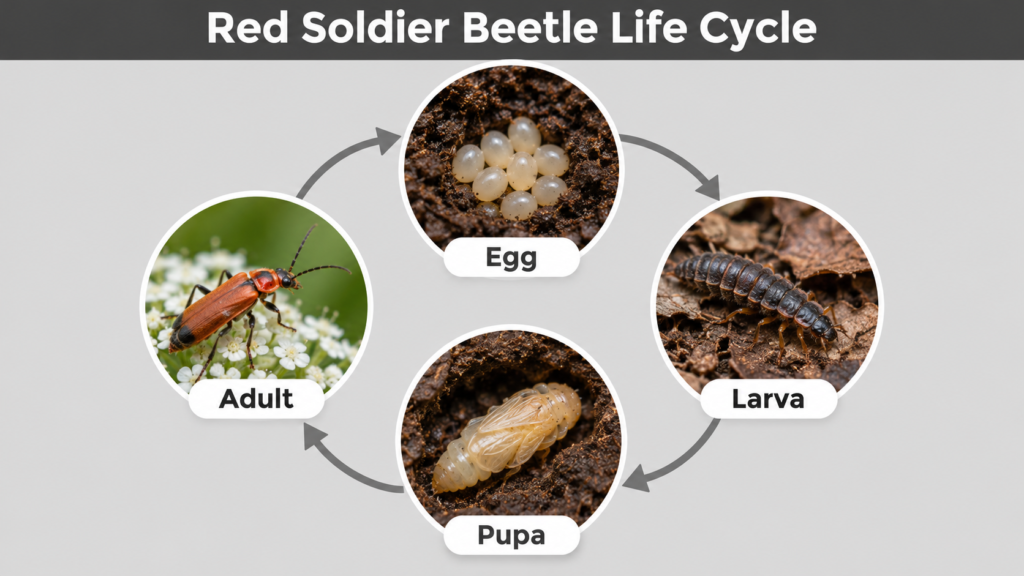
The red soldier beetle develops through four stages: egg, larva, pupa, and adult. This is complete metamorphosis, the same broad pattern seen in butterflies and many other beetles.
Eggs and larvae
After mating, females lay eggs in soil. The larvae hatch and spend much of their development in ground-level habitats, such as soil, leaf litter, and the bases of grasses. There, they hunt small invertebrates. Their dark, elongated appearance is quite different from the bright adult beetle, so people may not recognize them as the same species.
Pupation and adult activity
When the larva is ready to transform, it pupates before emerging as an adult. In Britain, adults are commonly seen during summer, often from June to August. They feed on flowers and small insects, and mating can be observed on flower heads. The exact timing depends on local conditions, including climate and the availability of suitable habitat.
Are Red Soldier Beetles Good for the Garden?
Red soldier beetles are generally considered beneficial or harmless garden visitors. Adults consume some small insects and use flowers for pollen and nectar. Their flower visits may also support pollination, although their contribution varies by plant and location. Larvae prey on ground-dwelling invertebrates.
Their presence does not mean that a plant is being damaged. If you find several beetles on flowers, they are likely feeding, resting, or mating. Soldier beetles as a group have varied diets: adults may eat pollen, nectar, and small insects, while larvae are often predators. Feeding habits differ among species, so it is best not to assume every red soldier beetle eats the same prey.
Do Red Soldier Beetles Bite or Sting?
Red soldier beetles do not sting, and they are not known for biting people. Their bright red color may look alarming, but the common red soldier beetle is harmless. It does not feed on blood, damage household materials, or act as a typical indoor pest.
As with any wild insect, avoid handling it if you do not need to. If one lands on you, let it crawl away or gently move it onto nearby vegetation. There is no need to spray it with insecticide.
How to Attract Red Soldier Beetles
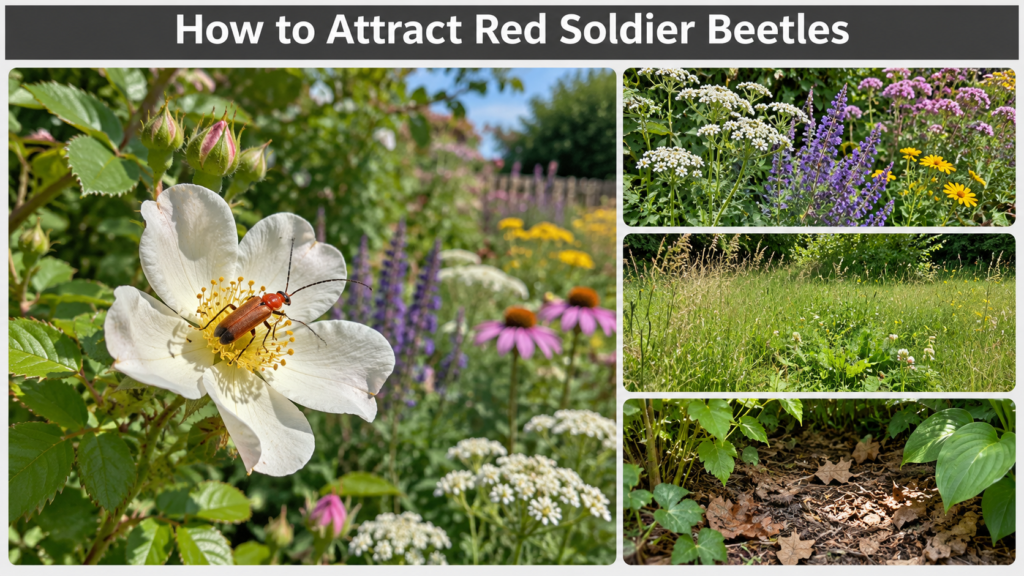
You can make a garden more welcoming to red soldier beetles by providing flowers for adults and sheltered ground-level habitat for larvae.
- Grow a variety of flowering plants, including open, accessible blooms.
- Keep some garden areas planted with grasses or other low vegetation.
- Leave a small amount of leaf litter in suitable, undisturbed spots.
- Avoid broad-spectrum insecticide use where it is not necessary.
- Allow some plants to flower rather than removing every bloom immediately.
These steps can support many beneficial insects, not just soldier beetles. Beetle numbers depend on local conditions and may naturally change from year to year.
How to Get Rid of Red Soldier Beetles
Usually, you do not need to get rid of red soldier beetles. They do not normally harm people, household belongings, or healthy garden plants. If a few adults are gathering on a flower, leaving them alone is the simplest response.
If beetles have wandered indoors, gently place a cup over one, slide paper underneath, and release it outside. Avoid using insecticide for a beetle that can be safely moved. If you see plant damage, check the plant for other insects or signs of feeding. The beetles themselves may simply be visiting the flowers, while another pest is responsible.
FAQs
Are red soldier beetles harmful?
No. The common red soldier beetle is harmless to people and is not considered a typical plant pest. Adults feed on flowers and small insects, while larvae hunt ground-dwelling prey. Their bright red color can look intimidating, but the beetles do not sting or feed on blood.
Why are red soldier beetles on my flowers?
Flowers provide pollen and nectar, and they attract small insects that adult beetles may eat. A beetle resting on a flower may also be looking for a mate. Several beetles on blooms in summer is normal and does not necessarily indicate a problem with the plant.
Do red soldier beetles eat aphids?
Adults of the common red soldier beetle may eat aphids and other small insects, as well as pollen and nectar. Their larvae prey on small ground-dwelling invertebrates. They can contribute to natural pest control, but they are not a dependable substitute for managing a serious infestation.
Can red soldier beetles damage plants?
They are not generally considered plant-damaging insects. Adults are most often seen on flowers feeding or mating. If leaves or petals are being eaten, inspect the plant for other possible causes, such as caterpillars, slugs, or other beetles, before blaming the soldier beetles.
What is the difference between a red soldier beetle and a firefly?
Both belong to the beetle order, but they are different kinds of beetles. The common red soldier beetle is orange-red with dark wing tips and is often seen on flowers. Fireflies belong to a different family, and many species are known for producing light. Color and location can help, but a clear photograph may be needed to identify a beetle confidently.