
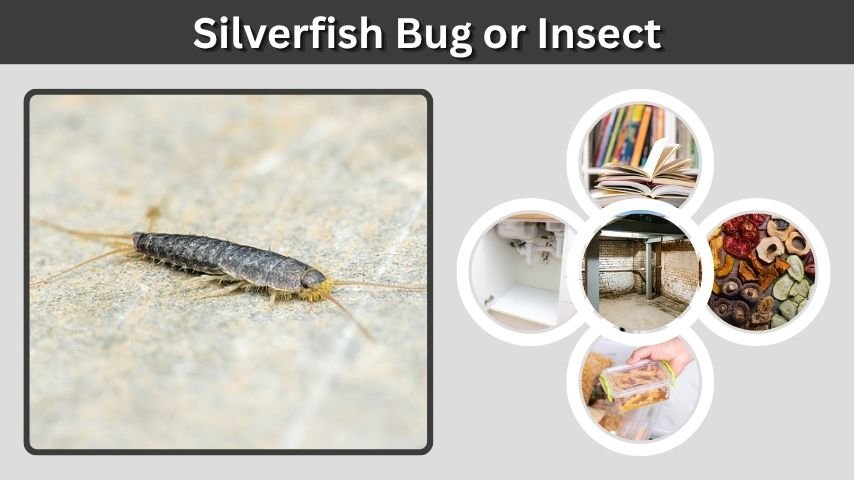
Silverfish are small, fast-moving household insects often seen in bathrooms, basements, kitchens, closets, and storage rooms. Many people call them “silverfish bugs,” but they are true insects with six legs, long antennae, and three tail-like bristles. They do not bite people or spread disease, but they can damage paper, books, wallpaper, clothing, cardboard, stored food, and other starchy materials. Understanding what silverfish look like, why they enter homes, and how to control them can help prevent a small problem from becoming a larger infestation.
What Is a Silverfish Bug?
Silverfish are primitive, wingless insects known for their silver-gray color and fish-like movement. Their scientific name is commonly listed as Lepisma saccharina or Lepisma saccharinum. They belong to an old group of insects that includes silverfish and firebrats. Penn State Extension notes that silverfish and firebrats are bristletail insects often found in homes.
Although people often use the word “bug” for any tiny crawling pest, silverfish are insects, not true bugs. True bugs belong to a specific insect order and have specialized piercing-sucking mouthparts. Silverfish do not have that kind of mouthpart. Instead, they scrape and chew soft, starchy, and cellulose-rich materials.
Silverfish are usually active at night. During the day, they hide in cracks, wall voids, behind baseboards, under boxes, inside bookshelves, and in damp corners. They move quickly and may dart away when a light is turned on.
Silverfish Identification
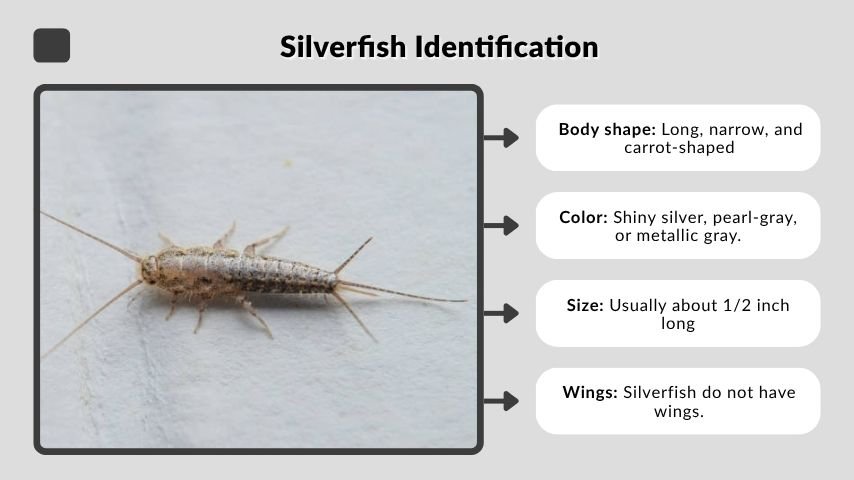
A silverfish is easy to recognize once you know its key features. The University of Maryland Extension describes silverfish and firebrats as flat, tapered, wingless insects with overlapping scales, long antennae, and three thin tail-like appendages.
Key Identification Features
- Body shape: Long, narrow, and carrot-shaped, wider near the head and narrower toward the tail.
- Color: Shiny silver, pearl-gray, or metallic gray.
- Size: Usually about 1/2 inch long, though some may appear slightly smaller or larger.
- Wings: Silverfish do not have wings.
- Antennae: Two long, thread-like antennae extend from the head.
- Tail bristles: Three long bristles extend from the rear of the body.
- Movement: They wiggle quickly in a fish-like motion.
- Activity time: Mostly nocturnal, meaning they are most active at night.
| Feature | Silverfish Appearance |
|---|---|
| Body | Flat, narrow, tapered |
| Color | Silver-gray or metallic |
| Wings | No wings |
| Antennae | Long and thin |
| Tail | Three bristle-like appendages |
| Common activity | Nighttime |
| Common rooms | Bathroom, basement, attic, kitchen, closet |
Where Do Silverfish Live?
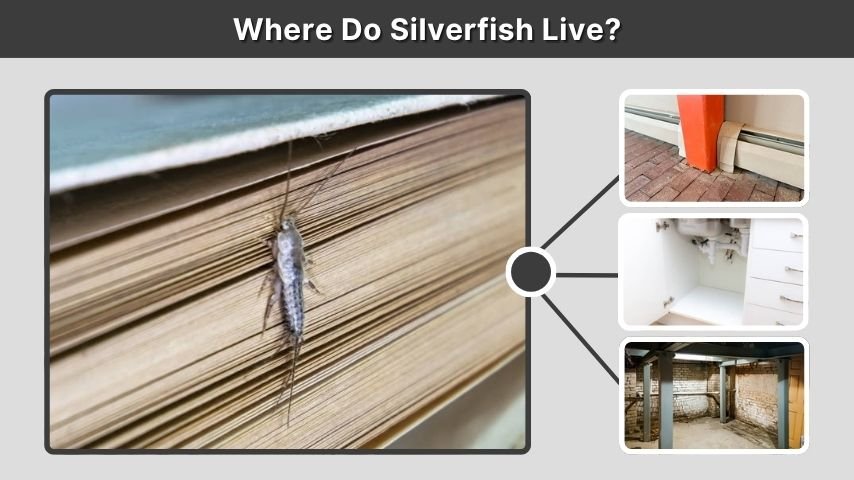
Silverfish prefer dark, humid, and undisturbed places. They are often found in rooms where moisture and food sources are available. Bathrooms, laundry rooms, basements, attics, kitchens, and storage spaces are common hiding areas.
The University of Florida IFAS Extension explains that silverfish may also live outdoors under rocks, leaf litter, in caves, and even in ant nests. Indoors, they are known pests in libraries and museums because they feed on paper, glue, and other starch-rich materials.
Silverfish may enter homes through cracks, gaps around windows and doors, openings around pipes, or infested cardboard boxes, furniture, books, and stored items. They are not always a sign of a dirty home, but clutter, moisture, and stored paper products can make a house more attractive to them.
Common Indoor Hiding Places
- Behind baseboards
- Inside cardboard boxes
- Under sinks
- Around bathtubs and showers
- In laundry rooms
- In closets
- Inside bookshelves
- Behind wallpaper
- In attics and basements
- Around stored newspapers or magazines
What Do Silverfish Eat?
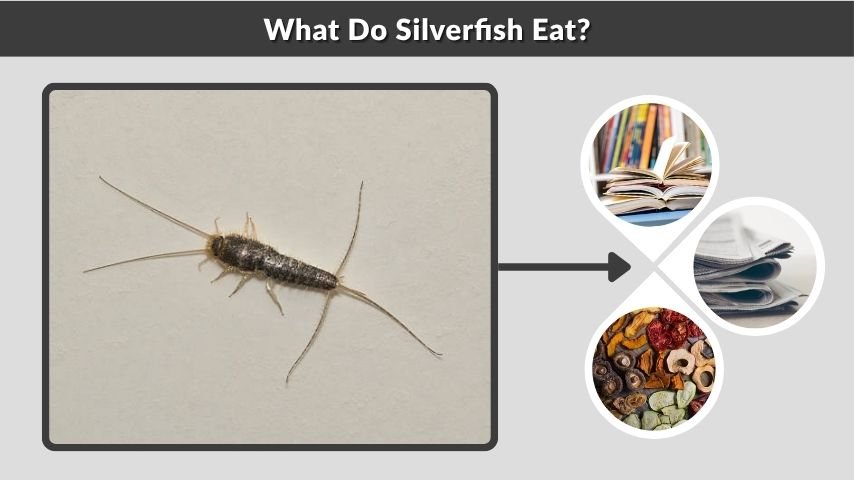
Silverfish are attracted to materials that contain starch, sugar, glue, protein, or cellulose. Their diet is one reason they become a nuisance indoors. They may feed on books, paper, wallpaper paste, cardboard, photos, labels, cereal, flour, dried food, cotton, linen, silk, and dead insects.
They do not usually destroy items overnight. Instead, damage often appears slowly over time. In stored materials, silverfish may leave irregular holes, surface scraping, yellowish stains, tiny black droppings, or shed skins.
Common Silverfish Food Sources
- Paper and books
- Cardboard boxes
- Wallpaper glue
- Book bindings
- Old magazines and newspapers
- Starchy fabrics
- Stored cereal or flour
- Dried pantry foods
- Dead insects
- Glue and paste
- Photos and documents
Because silverfish can damage paper-based items, they are especially concerning in libraries, archives, offices, storage rooms, and homes with old books or important documents.
Are Silverfish Harmful?
Silverfish are not considered dangerous to humans. They do not bite, sting, or transmit disease. However, they can still cause problems in a home.
The main issue is property damage. Silverfish can chew or scrape valuable belongings, especially books, photos, stored clothing, wallpaper, cardboard, and documents. In large numbers, they may also contaminate stored food packages or leave visible droppings and shed skins.
For most homeowners, silverfish are more of a nuisance pest than a health threat. But an infestation can be frustrating because silverfish hide well, move at night, and reproduce in hidden spaces.
Why Do I Have Silverfish in My House?
Silverfish usually appear when a home gives them three things: moisture, shelter, and food. A damp basement with cardboard boxes is almost perfect for them. A bathroom with cracks, leaks, and poor ventilation can also support silverfish activity.
Missouri Extension recommends reducing food sources by storing old books, papers, starched linens, and cardboard boxes in sealed plastic containers. It also advises sealing holes and cracks around windows and doors to help prevent entry.
Main Causes of Silverfish Problems
- High indoor humidity
- Leaky pipes or damp walls
- Poor bathroom ventilation
- Cluttered storage areas
- Old cardboard boxes
- Stacks of paper or magazines
- Open pantry foods
- Cracks around windows, doors, and pipes
- Dark, undisturbed spaces
- Infested items brought indoors
Silverfish vs Firebrats
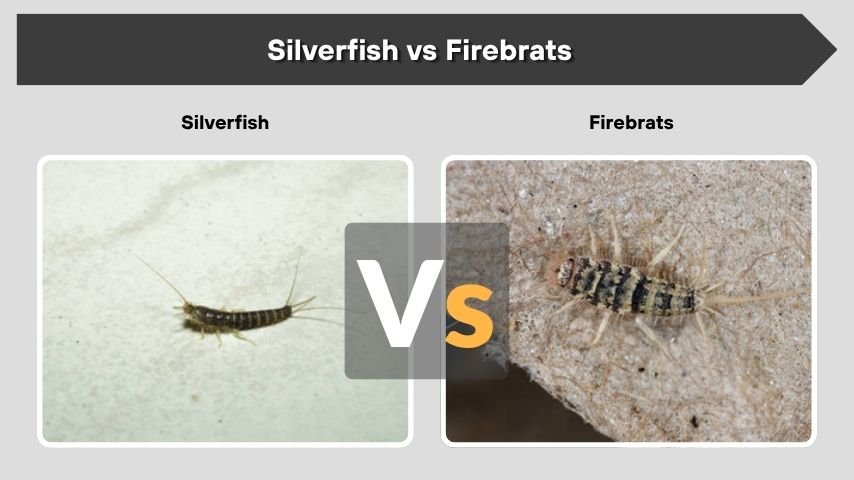
Silverfish and firebrats look similar, but they prefer slightly different conditions. Silverfish usually like cooler, damp places. Firebrats often prefer warmer areas, such as near furnaces, water heaters, ovens, boilers, or heating pipes.
Utah State University Extension identifies silverfish as shiny silver or pearl-gray insects, while firebrats are more brown or gray. Both are slender, wingless, soft-bodied insects with long antennae and three rear filaments.
| Feature | Silverfish | Firebrat |
|---|---|---|
| Color | Silver-gray or pearl-gray | Brownish or gray |
| Preferred area | Cool and damp | Warm and humid |
| Common rooms | Bathroom, basement, closet | Furnace room, boiler area, kitchen |
| Body shape | Tapered and wingless | Tapered and wingless |
| Damage | Paper, glue, fabrics, food | Similar damage |
| Activity | Mostly night | Mostly night |
Signs of a Silverfish Infestation
Seeing one silverfish does not always mean you have a major infestation. However, repeated sightings or visible damage may suggest a growing population. Since they hide during the day, you may notice signs before you see many insects.
Common Signs
- Silverfish running across floors at night
- Irregular holes in paper or fabric
- Yellow stains on books, paper, or clothing
- Shed skins in storage areas
- Tiny black pepper-like droppings
- Damage to wallpaper or book bindings
- Activity near cardboard boxes
- Silverfish in sinks, tubs, or closets
Sticky traps can help confirm where silverfish are active. NC State Extension notes that sticky traps placed in infested areas can help identify infestation “hot spots” and may provide some control for small populations.
How to Get Rid of Silverfish
Silverfish control works best when you combine cleaning, moisture reduction, sealing, trapping, and targeted pest treatment. Spraying randomly is usually not enough because silverfish hide deep in cracks and clutter.
1. Reduce Moisture
Silverfish thrive in damp conditions. Start by lowering humidity and fixing water problems.
- Repair leaky pipes.
- Use a dehumidifier in basements.
- Improve bathroom ventilation.
- Run exhaust fans after showers.
- Keep sinks and tubs dry when possible.
- Check for damp cardboard or stored items.
2. Remove Food Sources
Silverfish feed on paper, glue, starch, and fabric. Removing easy food sources makes your home less attractive.
- Store books and papers in sealed plastic bins.
- Replace cardboard storage boxes with plastic containers.
- Keep pantry foods in airtight containers.
- Vacuum dust, crumbs, and dead insects.
- Avoid storing magazines and newspapers in damp rooms.
3. Seal Entry Points
Seal cracks and small openings where silverfish can enter or hide.
- Caulk gaps around windows and doors.
- Seal spaces around pipes and conduits.
- Repair torn screens.
- Close gaps behind baseboards.
- Reduce clutter near walls and corners.
The National Pesticide Information Center recommends inspecting suspected areas, noting moisture and clutter, sealing spaces around pipes and conduits, and removing outdoor hiding places such as debris and lumber piles near the home.
4. Use Traps
Sticky traps are useful for monitoring and reducing small infestations. Place them in bathrooms, basements, closets, attics, and near bookshelves or storage boxes. Check them regularly to see where silverfish activity is strongest.
5. Consider Professional Help
If silverfish keep appearing despite cleaning and moisture control, a pest control professional may be needed. Professionals can inspect hidden areas, identify whether the pest is silverfish or firebrats, and apply treatments safely in cracks, crevices, wall voids, and other targeted locations.
Natural Ways to Prevent Silverfish
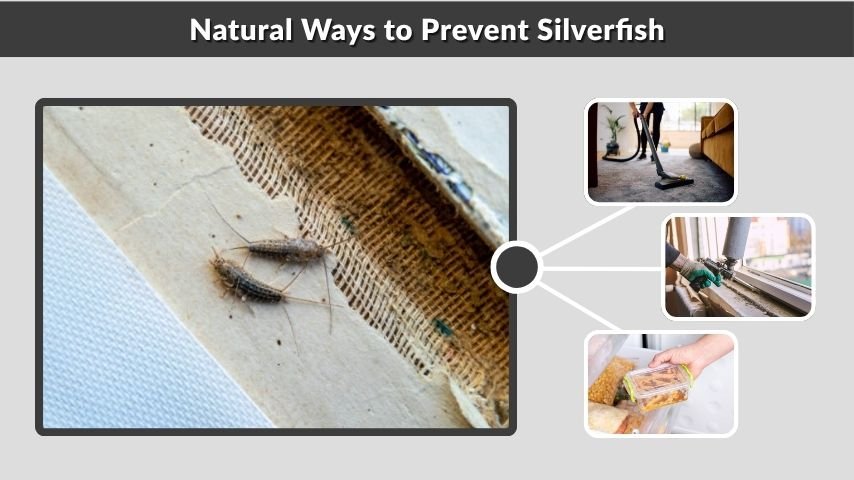
Natural prevention focuses on making the home less comfortable for silverfish. It does not always eliminate a heavy infestation, but it can help reduce activity.
| Prevention Method | Why It Helps |
|---|---|
| Lower humidity | Silverfish prefer moist areas |
| Remove cardboard | Cardboard provides food and shelter |
| Vacuum often | Removes crumbs, eggs, shed skins, and dust |
| Seal cracks | Reduces hiding places and entry points |
| Store food tightly | Removes pantry food access |
| Declutter storage rooms | Makes hiding harder |
| Improve airflow | Reduces damp, dark conditions |
Good prevention is especially important in rooms where silverfish commonly hide. Regular cleaning, dry storage, and sealed containers can make a big difference.
Do Silverfish Go Away on Their Own?
Silverfish may not go away on their own if the home still has moisture, food, and hiding places. Even if you see only one or two, there may be more hiding in walls, cracks, boxes, or storage areas.
The best approach is to act early. Reduce humidity, remove cardboard, seal cracks, and use traps to monitor activity. If silverfish are damaging books, documents, wallpaper, or clothing, stronger control steps may be needed.
FAQs
Are silverfish bugs or insects?
Silverfish are insects. People often call them “silverfish bugs,” but scientifically they are wingless insects with six legs, long antennae, and three tail-like bristles.
Do silverfish bite humans?
No, silverfish do not bite humans. They are not known to sting or spread disease. Their main problem is damage to paper, books, cardboard, wallpaper, and some fabrics.
Why do silverfish appear in bathrooms?
Bathrooms often provide moisture, darkness, warmth, and hiding places. Silverfish may hide near tubs, sinks, baseboards, drains, and cracks where humidity is high.
What attracts silverfish to a house?
Silverfish are attracted to moisture, clutter, cardboard, paper, glue, starches, open pantry foods, and dark hiding places. Damp basements, attics, closets, and storage rooms are common problem areas.
What is the fastest way to control silverfish?
The fastest practical approach is to reduce humidity, remove cardboard and paper clutter, seal cracks, store food in airtight containers, and place sticky traps in active areas. For heavy infestations, professional pest control may be needed.
