
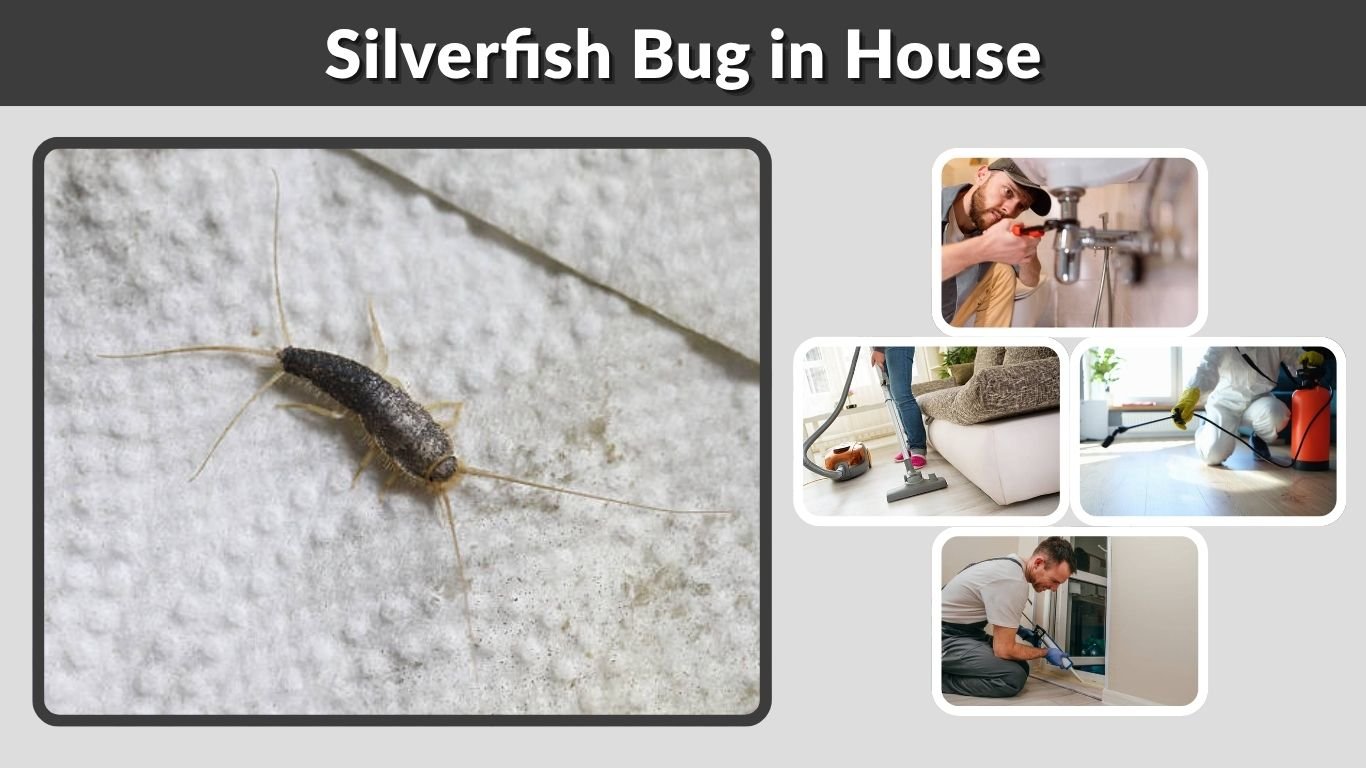
Finding a silverfish bug in your house can be unpleasant, especially when it suddenly runs across the bathroom floor, basement wall, or kitchen cabinet. Silverfish are small, silver-gray insects with long antennae, flat bodies, and three tail-like bristles. They do not bite people or spread disease, but they can damage books, paper, wallpaper, cardboard, clothing, and stored food. If you see silverfish indoors, the best response is to reduce moisture, remove hiding places, protect stored items, and use targeted control methods.
What Does It Mean If You Find a Silverfish in Your House?
Seeing one silverfish does not always mean your home has a serious infestation. Silverfish are secretive insects that hide during the day and come out at night. However, repeated sightings may mean they have found a good place to live, feed, and reproduce.
Silverfish prefer damp, dark, and quiet areas. If you keep seeing them, your home may have high humidity, water leaks, clutter, cardboard boxes, old papers, or hidden cracks where they can shelter.
Why Silverfish Enter Homes
Silverfish enter homes because indoor spaces can provide everything they need. They look for moisture, warmth, food, and hiding spots. Bathrooms, basements, attics, laundry rooms, closets, and kitchens are common places where silverfish appear.
They may enter through:
- Cracks around doors and windows
- Gaps around pipes
- Basement openings
- Foundation cracks
- Vents or utility lines
- Cardboard boxes brought inside
- Used books, papers, or stored items
- Gaps under exterior doors
Once inside, silverfish can survive for a long time if they find food and moisture. They may hide in wall voids, behind baseboards, under sinks, inside closets, or between stored boxes.
Are Silverfish Dangerous?
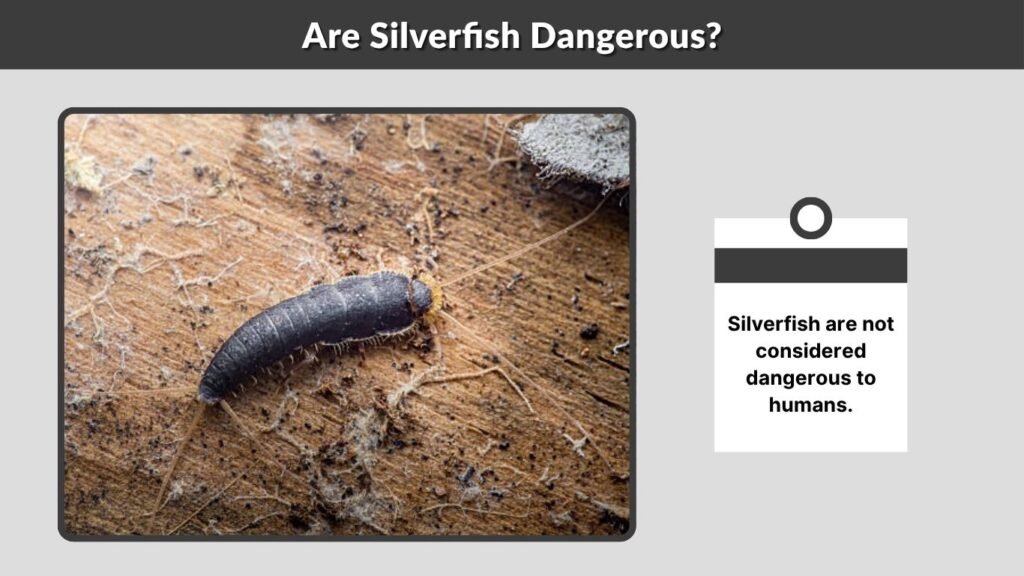
Silverfish are not considered dangerous to humans. They do not sting, they are not venomous, and they are not known to spread disease. However, they can still become a problem because of the damage they cause to household items.
Their diet includes starches, sugars, glue, paper, fabrics, and organic debris. This means they may damage books, documents, wallpaper, cardboard, stored clothing, pantry goods, and old photos.
What Silverfish Can Damage
Silverfish damage is often slow and easy to miss at first. They usually scrape or chew at the surface of materials instead of making large holes quickly.
Common damaged items include:
- Books and book bindings
- Old documents
- Wallpaper and wallpaper glue
- Cardboard boxes
- Paper labels
- Magazines and newspapers
- Photos and photo albums
- Cotton, linen, silk, and rayon
- Stored cereal, flour, and grains
- Glue, paste, and starch-based materials
They may also leave yellow stains, shed skins, and tiny black droppings near infested areas. If you find these signs along with live silverfish, you may have an active problem.
Common Places Silverfish Hide in the House
Silverfish are nocturnal, so they usually hide during the day. They like tight spaces where they are protected from light and disturbance. When you see one running across the floor, it may have come from a nearby crack, drain area, cabinet, or storage box.
Indoor Hiding Spots
- Bathroom corners
- Under sinks
- Around bathtubs and showers
- Behind baseboards
- Inside closets
- In laundry rooms
- Around water heaters
- In basements
- In attics
- Behind wallpaper
- Inside bookshelves
- Under cardboard boxes
- In kitchen cabinets
- Around pantry shelves
- Near leaky pipes
| Area of House | Why Silverfish Like It |
|---|---|
| Bathroom | Moisture, warmth, dark cracks |
| Basement | Humidity, storage boxes, low light |
| Attic | Paper storage, insulation, quiet shelter |
| Kitchen | Food crumbs, pantry goods, cabinet gaps |
| Closet | Fabrics, paper, cardboard, darkness |
| Laundry room | Moisture, warmth, lint, hiding places |
Step 1: Confirm It Is Really a Silverfish
Before treating the problem, make sure the insect is actually a silverfish. Several pests look similar, including firebrats, jumping bristletails, springtails, booklice, and house centipedes.
Silverfish are usually silver-gray, shiny, and about half an inch long. They have flat bodies, long antennae, and three thin bristles at the back. They move quickly in a wiggling, fish-like way.
Silverfish Identification Checklist
- Long, narrow, carrot-shaped body
- Silver, gray, or metallic color
- Flat body shape
- No wings
- Six legs
- Long antennae
- Three tail-like bristles
- Fast, fish-like movement
- Mostly active at night
- Common in damp indoor areas
If the insect jumps, it may be a springtail. If it has many long legs, it may be a house centipede. If it has pincers at the back, it is likely an earwig. If it is brownish and found near heat, it may be a firebrat.
Step 2: Reduce Moisture Immediately
Moisture control is one of the most important steps for getting rid of silverfish. These insects thrive in humid environments. If your home stays damp, silverfish will continue to survive even if you kill some of them.
Start by checking bathrooms, basements, kitchens, laundry rooms, and areas around pipes. Look for leaks, condensation, standing water, damp boxes, and musty smells.
Moisture Control Tips
- Fix leaking pipes and faucets.
- Use a bathroom exhaust fan after showers.
- Keep the bathroom door open after bathing.
- Use a dehumidifier in damp basements.
- Improve airflow in closets and storage rooms.
- Repair roof or wall leaks.
- Avoid storing items directly on damp floors.
- Dry sinks, tubs, and shower areas when possible.
- Clean around drains and under cabinets.
- Keep indoor humidity as low as practical.
A dry home is much less attractive to silverfish. Moisture control also helps reduce mold, booklice, springtails, and other humidity-loving pests.
Step 3: Remove Clutter and Food Sources
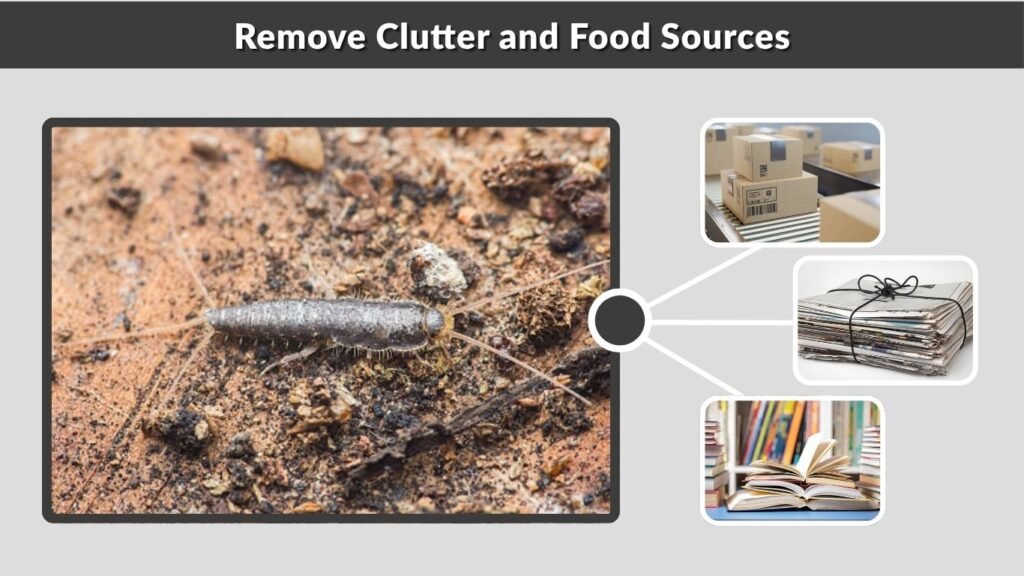
Silverfish often hide in cluttered areas because they prefer dark and undisturbed spaces. Cardboard boxes, paper piles, old magazines, and stored books provide both shelter and food.
Decluttering does not mean throwing everything away. It means storing items in a way that silverfish cannot easily access them.
Items That Attract Silverfish
- Cardboard storage boxes
- Old newspapers
- Magazines
- Paper bags
- Books
- Wallpaper glue
- Open pantry foods
- Fabric piles
- Dust and crumbs
- Old documents
- Craft paper
- Stored photos
Replace cardboard boxes with sealed plastic bins, especially in basements, attics, closets, and garages. Keep books and important papers in dry locations. Vacuum storage areas regularly to remove dust, food particles, shed skins, and insect eggs.
Step 4: Protect Books, Clothes, and Pantry Food
If you have silverfish in your house, protect valuable or vulnerable items first. Silverfish may not destroy everything quickly, but they can slowly damage belongings over time.
Books, photos, documents, clothing, and pantry foods should be stored properly, especially if they are in rooms where silverfish are active.
Best Storage Practices
Store pantry foods in airtight glass, metal, or thick plastic containers. This includes flour, cereal, rice, pasta, oats, pet food, and baking mixes.
Keep important documents in sealed containers instead of open folders or cardboard boxes. Store old photos and albums in dry, protected spaces.
For clothing, avoid leaving fabric piles on the floor. Clean closets, vacuum corners, and use sealed bins for long-term storage. Natural fabrics such as cotton, linen, silk, and rayon may be more attractive if they contain starch, sweat, stains, or food residue.
Step 5: Seal Cracks and Entry Points
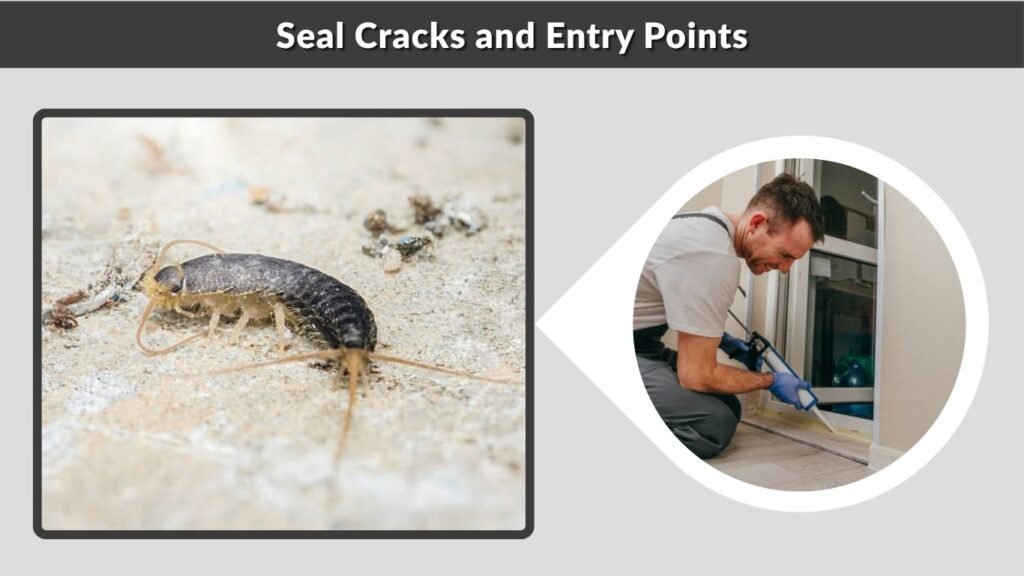
Silverfish hide in cracks during the day and move out at night to feed. Sealing cracks can reduce their hiding places and make control easier.
Focus on bathrooms, basements, kitchens, closets, and laundry rooms. Use caulk or sealant around small gaps, especially where pipes enter walls or floors.
Areas to Seal
- Gaps around baseboards
- Cracks near bathroom tiles
- Openings around pipes
- Gaps under sinks
- Window and door frames
- Foundation cracks
- Gaps around vents
- Spaces behind cabinets
- Holes near utility lines
- Cracks in pantry shelves
Sealing alone may not remove silverfish, but it helps reduce shelter and prevents new insects from entering.
Step 6: Use Traps to Find Activity
Sticky traps are useful for monitoring silverfish activity. They help you learn where silverfish are hiding and whether the problem is getting better or worse.
Place traps along walls, near baseboards, under sinks, behind toilets, in closets, near bookshelves, in basements, and around storage boxes. Silverfish usually travel along edges rather than across open spaces.
| Trap Location | What It Tells You |
|---|---|
| Under bathroom sink | Moisture-related activity |
| Basement corners | Hidden infestation areas |
| Near bookshelves | Paper or glue feeding activity |
| Closet floor | Fabric or storage issue |
| Kitchen cabinet | Food or crumb attraction |
| Laundry room | Warmth and humidity problem |
Check traps every few days. If traps keep catching silverfish in the same area, focus your cleaning, sealing, and moisture control there.
Step 7: Clean the Right Way
Regular cleaning helps remove food sources and hiding materials. Silverfish feed on crumbs, starch, glue, paper particles, dead insects, and organic debris.
Vacuuming is especially useful because it removes debris from cracks and corners. Use a crevice tool along baseboards, behind furniture, inside closets, under sinks, and around storage boxes.
Cleaning Tips for Silverfish Control
- Vacuum baseboards and corners.
- Clean under sinks and appliances.
- Remove old paper and cardboard.
- Wipe pantry shelves.
- Clean crumbs immediately.
- Dust bookshelves and storage areas.
- Wash or dry-clean stored clothing if needed.
- Remove dead insects from windowsills and light fixtures.
- Keep laundry areas free of lint and fabric piles.
After vacuuming areas with visible silverfish activity, empty the vacuum canister or bag outside if possible.
Step 8: Use Targeted Treatments Carefully
For small problems, moisture control, cleaning, sealing, and traps may be enough. For larger infestations, targeted pest treatments may help.
Insecticidal dusts, baits, and crack-and-crevice sprays are commonly used against silverfish. However, they should be applied carefully and according to the product label. Avoid applying pesticides directly to food surfaces, clothing, bedding, or children’s areas.
If you are unsure what product to use, or if silverfish are widespread, contact a pest control professional. Professional treatment may be more effective because silverfish often hide in wall voids, deep cracks, attics, and other hard-to-reach areas.
When Should You Call a Pest Control Professional?
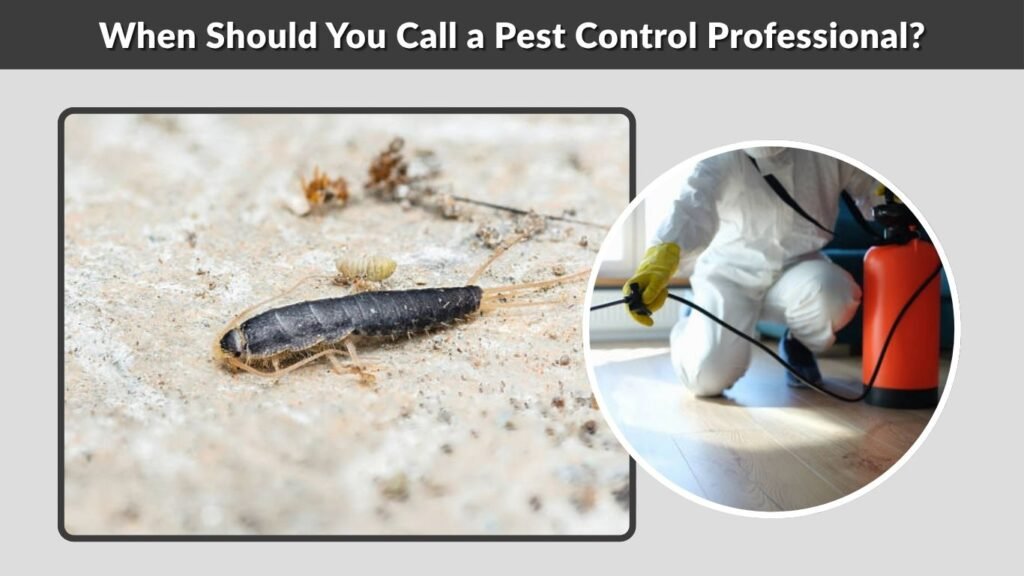
You may not need professional help for one or two silverfish. But if you see them often, find damage, or keep catching them in traps, a professional inspection may be useful.
Call a Professional If:
- You see silverfish repeatedly.
- You find damage to books, paper, or clothing.
- Silverfish appear in several rooms.
- You keep finding shed skins or droppings.
- DIY methods are not working.
- You have moisture issues you cannot locate.
- Silverfish are in wall voids, attic spaces, or large storage areas.
- You need help identifying the pest correctly.
A professional can inspect the home, identify the source, and create a treatment plan based on the size and location of the infestation.
How to Prevent Silverfish From Coming Back
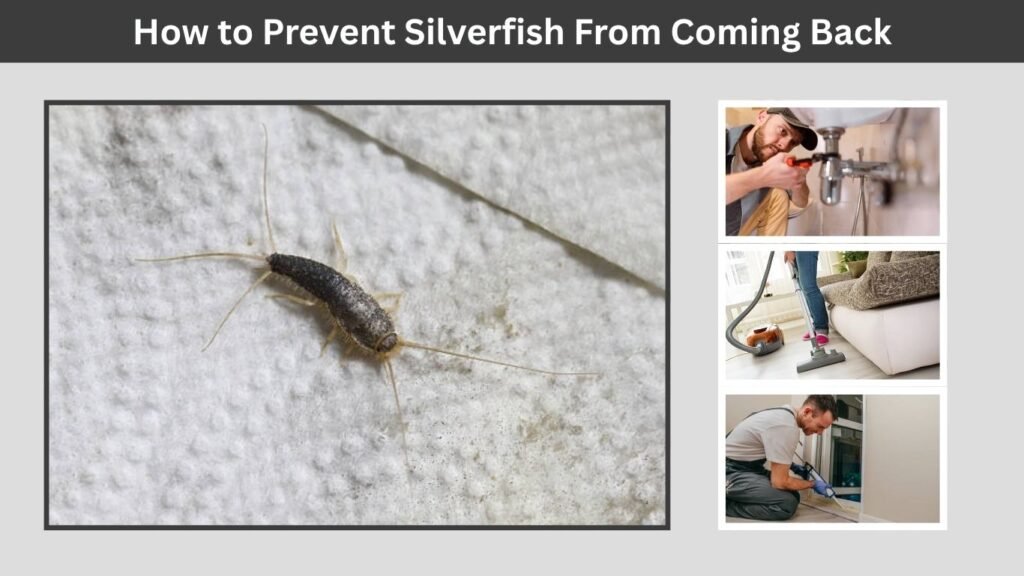
Prevention is mostly about keeping your home dry, clean, sealed, and organized. Silverfish are much less likely to thrive in a dry house with limited paper clutter and fewer hiding places.
Long-Term Prevention Tips
- Keep humidity low.
- Fix leaks quickly.
- Store paper items in sealed bins.
- Avoid cardboard storage in damp areas.
- Vacuum regularly.
- Seal cracks around walls and pipes.
- Keep pantry foods airtight.
- Improve ventilation.
- Reduce clutter in closets and basements.
- Inspect used books, boxes, and furniture before bringing them inside.
Prevention is important because silverfish can survive in hidden spaces and may return if conditions stay favorable.
FAQs
Should I be worried if I see one silverfish?
One silverfish is not always a serious problem, but it should not be ignored. Check for moisture, clutter, paper storage, and repeated sightings. If you keep seeing them, there may be more hiding nearby.
Do silverfish mean my house is dirty?
No, silverfish do not always mean a house is dirty. They are more connected with moisture, hiding places, and food sources like paper, cardboard, glue, and starches. Even clean homes can have silverfish if humidity is high.
What kills silverfish fast?
Targeted insect treatments, sticky traps, and professional pest control can reduce silverfish quickly. However, long-term control requires reducing moisture, removing clutter, sealing cracks, and protecting stored items.
Can silverfish live in beds?
Silverfish usually prefer bathrooms, basements, closets, and storage spaces, but they may occasionally appear near beds if there is food, paper, fabric, or hiding places nearby. They do not feed on people.
Will silverfish go away on their own?
Silverfish usually do not go away if your home still has moisture, food, and hiding places. They are more likely to disappear when you fix leaks, lower humidity, remove cardboard, seal cracks, and clean hidden areas.
