
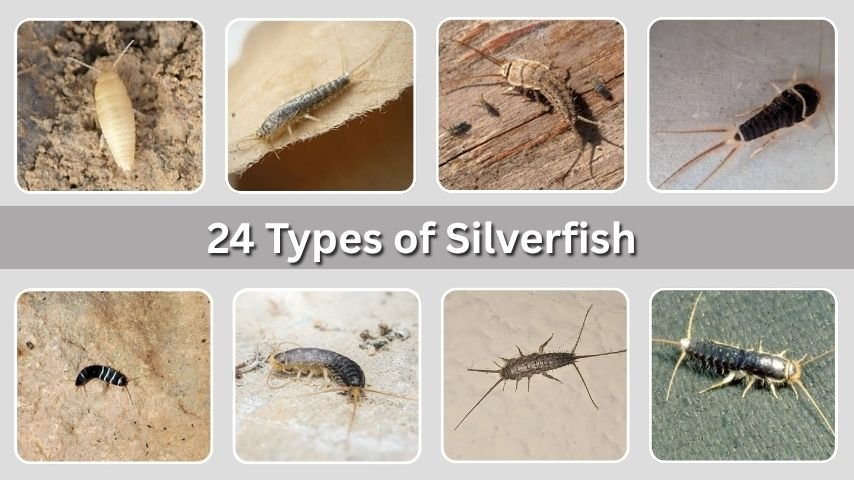
Silverfish are small, wingless insects known for their flat bodies, long antennae, quick movement, and three tail-like bristles. While the common silverfish is the species most people recognize, there are many other silverfish and silverfish-like species found around the world. Some live inside homes, while others prefer outdoor hiding places under stones, bark, leaf litter, or dry debris. Learning about different types of silverfish can help with identification, habitat understanding, and pest control decisions.
1. Common Silverfish
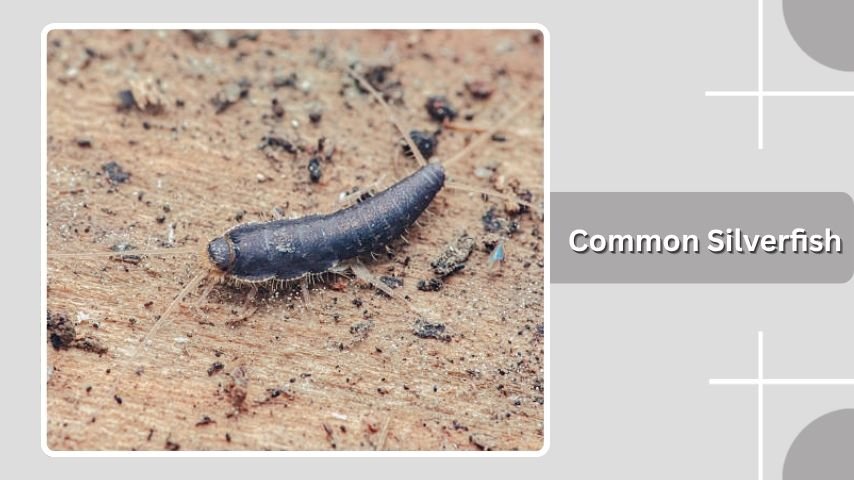
The common silverfish is the species most people think of when they hear the word “silverfish.” It is a small, wingless insect with a shiny silver-gray body, long antennae, and three thin bristles at the back. It is often found indoors in damp, dark places such as bathrooms, basements, kitchens, and closets. The common silverfish is known for feeding on starches, paper, glue, fabrics, and stored food materials.
Identification
Common silverfish have a flat, tapered body that looks wider near the head and narrower toward the tail. Their metallic silver color and quick, fish-like movement make them easy to recognize. They do not have wings, but they can move very fast when disturbed.
Habitat
This species usually prefers humid indoor areas. Bathrooms, kitchens, laundry rooms, basements, garages, and attics are common hiding spots. They stay hidden during the day and come out at night to search for food.
Diet
Common silverfish feed on materials that contain starch, sugar, glue, or cellulose. Their food sources may include books, wallpaper paste, cardboard, cereal, flour, cotton, rayon, and paper products.
Damage
Common silverfish do not bite people, but they can damage household items over time. They may leave small holes, surface scraping, yellow stains, shed skins, and tiny droppings on books, papers, boxes, and fabrics.
2. Gray Silverfish
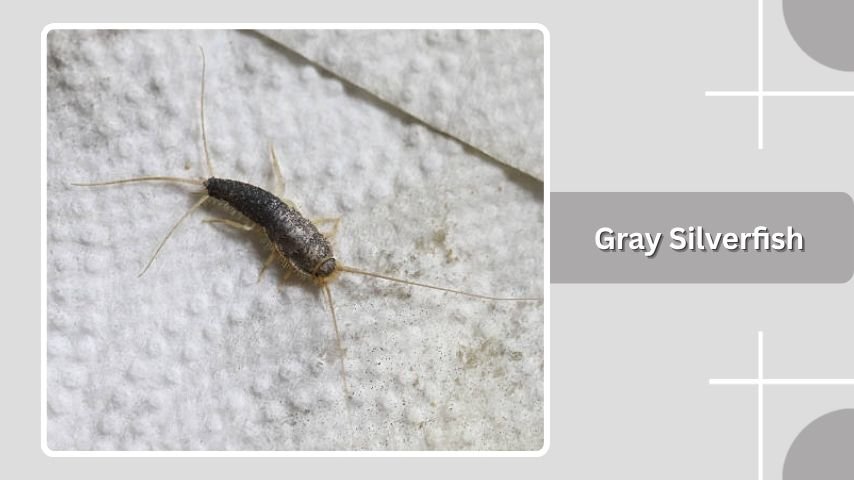
Gray silverfish, also known as long-tailed silverfish or paper silverfish, are another type of silverfish-like insect found in homes and buildings. They are usually gray rather than shiny silver and may have longer tail bristles than the common silverfish. This species has become a concern in indoor environments, especially because it can damage paper-based materials and cellulose-rich items.
Identification
Gray silverfish have a slender, flattened body with long antennae and three long appendages at the rear. Their body is usually light gray to dark gray and may look slightly duller than the shiny common silverfish.
Habitat
Gray silverfish are often found in heated buildings, apartments, offices, libraries, museums, and storage spaces. They can live in drier indoor areas than common silverfish, which makes them harder to control in some homes.
Diet
Their diet includes paper, cardboard, book bindings, cellulose-based textiles, crumbs, and other organic materials. Because they can digest cellulose, they are often associated with paper damage.
Damage
Gray silverfish may damage books, archives, documents, wallpaper, packaging, and stored paper products. They are especially unwanted in libraries, museums, and homes with important documents or book collections.
3. Four-Lined Silverfish
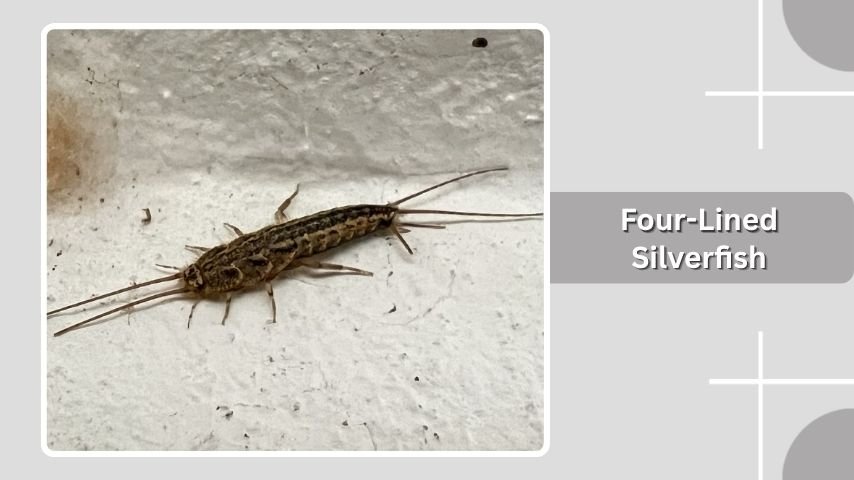
The four-lined silverfish is a silverfish relative known for the darker lines or markings along its body. It looks similar to other bristletail insects, but its striped appearance can help separate it from the common silverfish. Like other silverfish, it is wingless, fast-moving, and usually active in hidden or protected areas. Ctenolepisma is a genus of silverfish relatives with many species found indoors and outdoors in warm regions.
Identification
Four-lined silverfish have a long, narrow body with visible darker lines running lengthwise. They also have long antennae and three tail-like bristles. Their color may range from grayish to brownish with stripe-like markings.
Habitat
This species may be found in warm, sheltered places. Depending on the environment, it can occur indoors or outdoors. Indoors, it may hide near storage areas, cracks, wall voids, and undisturbed corners.
Diet
Four-lined silverfish feed on starchy and organic materials. Their diet may include paper, glue, dry food particles, cardboard, and other plant-based or cellulose-rich materials.
Damage
They can become nuisance pests when they enter homes or storage spaces. Like other silverfish relatives, they may cause light damage to paper, packaging, and starchy household materials if conditions support their survival.
4. Firebrat
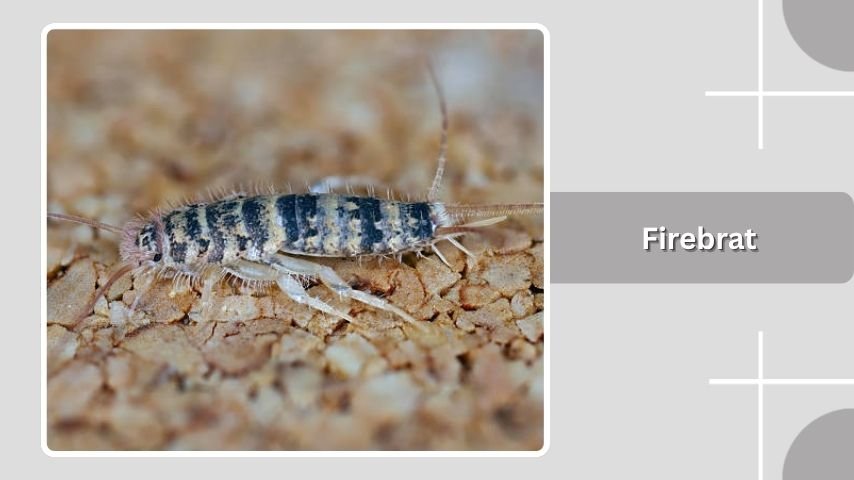
Firebrats look very similar to silverfish, but they prefer warmer places. They have long bodies, antennae, and three tail-like bristles, but their color is usually grayish-brown or mottled instead of shiny silver. Firebrats are often found near heat sources such as furnaces, boilers, water heaters, ovens, and commercial kitchens.
Identification
Firebrats have a flattened, carrot-shaped body with long antennae and three rear bristles. Their body often appears brown, gray, yellowish, or mottled. They do not have wings and move quickly when exposed to light.
Habitat
Firebrats prefer hot and humid areas. Inside homes, they may hide around heating systems, laundry rooms, boiler rooms, ovens, fireplaces, and water heaters. They are also common in bakeries and warm commercial buildings.
Diet
Firebrats feed on starches, glue, paper, wallpaper paste, crumbs, cereals, flour, book bindings, and some fabrics. Their feeding habits are very similar to silverfish.
Damage
Firebrats can damage paper, books, wallpaper, cardboard, and stored foods. They are not dangerous to humans, but their presence may indicate warm, humid hiding places inside the home.
5. Ctenolepisma longicaudatum
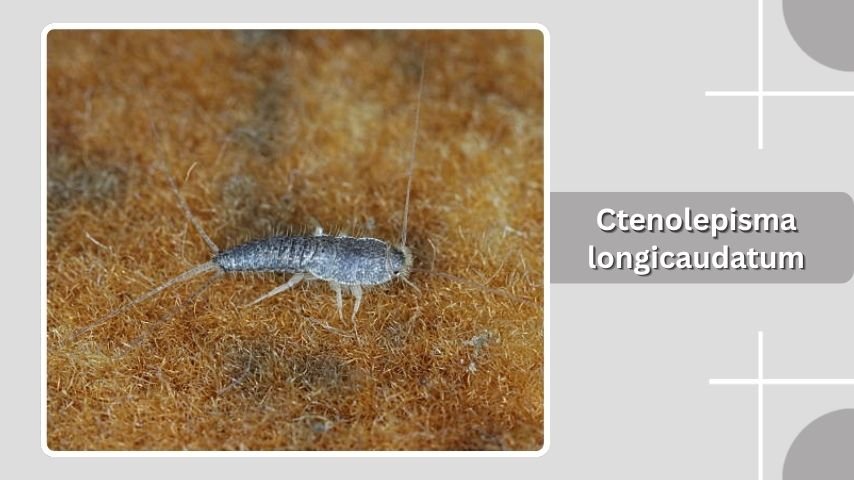
Ctenolepisma longicaudatum is the scientific name for the gray silverfish, also commonly called the long-tailed silverfish or paper silverfish. It is included separately here because many pest guides and scientific sources use the Latin name. This species is known for its long tail filaments, gray body, and ability to live inside modern buildings.
Identification
Ctenolepisma longicaudatum has a slim, gray, scale-covered body with long antennae and three long rear appendages. It may look larger or more elongated than the common silverfish, especially because of its long tail bristles.
Habitat
This species is commonly associated with indoor environments. It may live in apartments, houses, offices, libraries, storage rooms, and cultural heritage buildings. It can spread through boxes, paper goods, furniture, and building materials.
Diet
It feeds on a wide range of materials, including paper, cardboard, book glue, crumbs, dust, dead insects, and cellulose-based textiles. Its ability to use paper and cellulose makes it a concern in storage and archive settings.
Damage
The main problem with Ctenolepisma longicaudatum is damage to paper, books, documents, packaging, and similar materials. It is usually a nuisance in homes but can be more serious in libraries, museums, and archives.
6. Ctenolepisma lineatum
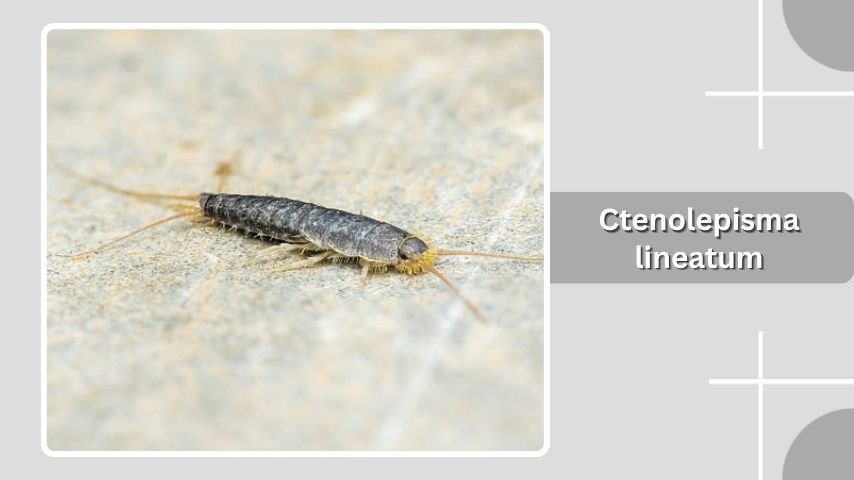
Ctenolepisma lineatum is commonly known as the four-lined silverfish. It is a silverfish relative with a long, flattened body and noticeable line-like markings. Like other silverfish species, it is wingless, fast-moving, and usually hides in dark, protected spaces. It may be found both indoors and outdoors depending on the climate and conditions.
Identification
Ctenolepisma lineatum has a narrow, tapered body with long antennae and three tail-like bristles. Its body often has dark lengthwise lines, which help separate it from the common silverfish. It may appear grayish, brownish, or slightly mottled.
Habitat
This species may live in warm, dry, or sheltered areas. Outdoors, it can hide under stones, bark, leaf litter, and debris. Indoors, it may appear in storage rooms, basements, attics, closets, wall cracks, and areas where paper or cardboard is stored.
Diet
Ctenolepisma lineatum feeds on starchy and plant-based materials. It may eat paper, glue, cardboard, crumbs, dry organic matter, and other cellulose-rich materials. Indoors, it may be attracted to stored paper goods and packaging.
Damage
The four-lined silverfish can become a nuisance if it enters homes or storage areas. It may cause light damage to paper, cardboard, wallpaper, and starchy items, although it is usually less familiar to homeowners than the common silverfish.
7. Ctenolepisma calvum
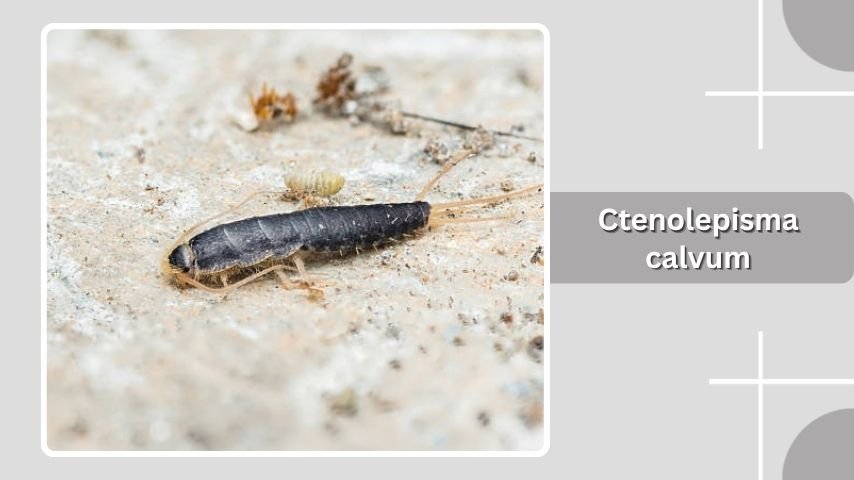
Ctenolepisma calvum is another species in the silverfish group. It is not as commonly discussed as the common silverfish or gray silverfish, but it shares many similar features, including a long body, wingless form, long antennae, and rear bristles. It belongs to the same general group of primitive insects often found in hidden spaces.
Identification
Ctenolepisma calvum has a slim, flattened body covered with small scales. Like other silverfish relatives, it has two long antennae and three thin appendages at the back. Its color may vary from pale gray to brownish gray, depending on age and environment.
Habitat
This species is usually associated with sheltered places where it can avoid light and disturbance. It may live in cracks, dry storage areas, under debris, or inside buildings when suitable food and hiding places are present.
Diet
Ctenolepisma calvum likely feeds on materials similar to other silverfish species. These may include paper, plant-based debris, starches, glue, dry food particles, and organic matter found in hidden areas.
Damage
In homes or storage buildings, Ctenolepisma calvum may cause minor damage to paper, packaging, and starchy materials. Because it is less common in household pest discussions, sightings may require careful identification to separate it from other silverfish species.
8. Ctenolepisma targionii
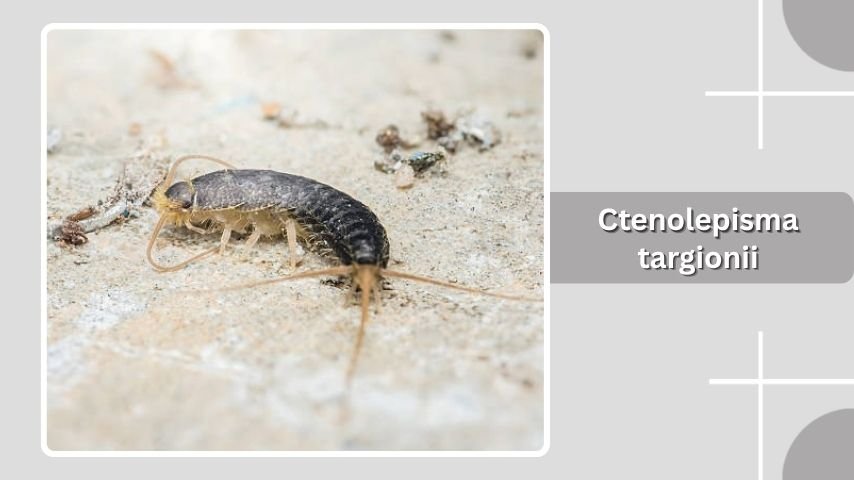
Ctenolepisma targionii is a silverfish species that looks similar to other members of the genus Ctenolepisma. It has a flattened, elongated body and moves quickly when disturbed. Like many silverfish relatives, it is usually found in concealed places and may be overlooked because of its secretive habits.
Identification
Ctenolepisma targionii has a long, narrow body, long antennae, and three rear bristles. Its body may look grayish, brownish, or patterned with fine scales. The exact markings can be difficult to judge without close inspection.
Habitat
This species may occur in warm, sheltered environments. It can hide under stones, in dry debris, in cracks, or inside buildings where conditions are suitable. Indoors, it may be found near stored paper, cardboard, or other dry organic materials.
Diet
Like other silverfish relatives, Ctenolepisma targionii may feed on starches, cellulose, glue, paper fragments, and dry organic matter. These feeding habits allow it to survive in storage areas and undisturbed corners.
Damage
If present indoors, Ctenolepisma targionii may cause nuisance damage to paper products, packaging, and starchy materials. However, it is not usually considered as common a household pest as the common silverfish or gray silverfish.
9. Ctenolepisma almeriense
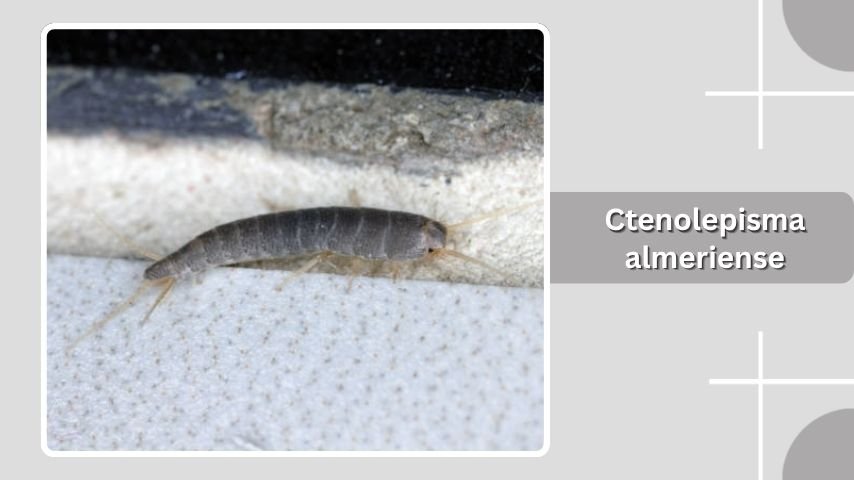
Ctenolepisma almeriense is a lesser-known silverfish species. It belongs to the same broad group of wingless insects that includes common silverfish, gray silverfish, and four-lined silverfish. It may not be a common household name, but it shares the typical silverfish body form.
Identification
Ctenolepisma almeriense has a slender, flattened body with long antennae and three tail-like bristles. Its body is likely covered with fine scales, giving it a grayish or dull appearance. Close identification usually depends on small body details.
Habitat
This species is generally associated with protected habitats. It may live in natural hiding places such as stones, leaf litter, dry vegetation, and soil-level debris. In some cases, silverfish relatives may also enter buildings if shelter and food are available.
Diet
Ctenolepisma almeriense may feed on dry plant materials, starches, paper-like materials, glue, and organic debris. Its diet is similar to many other silverfish relatives that survive on cellulose-rich or starchy materials.
Damage
This species is not one of the most widely reported indoor pests, but it may still cause minor damage if it occurs in stored paper, cardboard, or dry organic materials. Correct identification may require expert inspection because many Ctenolepisma species look alike.
10. Lepisma saccharinum
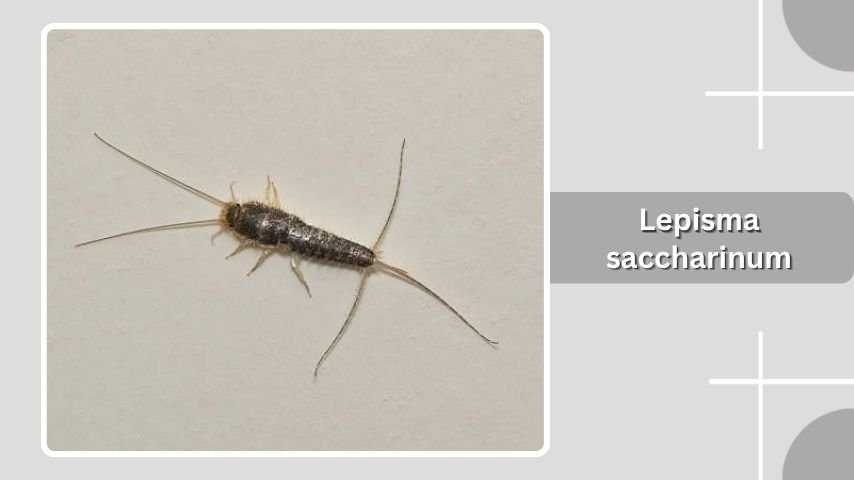
Lepisma saccharinum is the scientific name for the common silverfish. It is one of the best-known silverfish species and is frequently found in homes. This insect is recognized by its shiny silver-gray body, fast movement, and preference for damp, dark indoor areas.
Identification
Lepisma saccharinum has a flat, tapered body that is wider at the front and narrower toward the back. It has long antennae, six legs, and three thin tail bristles. Its silver-gray scales give it a metallic appearance.
Habitat
This species commonly lives in bathrooms, basements, kitchens, laundry rooms, closets, and attics. It prefers moist and dark areas where it can hide during the day. It may also live behind baseboards, under sinks, inside bookshelves, and near stored paper.
Diet
Lepisma saccharinum feeds on starches, sugars, glue, paper, cardboard, book bindings, wallpaper paste, flour, cereal, cotton, linen, and dead insects. These feeding habits make it a common nuisance in homes and storage spaces.
Damage
The common silverfish can damage books, papers, photos, wallpaper, cardboard boxes, and some fabrics. It does not bite humans, but its feeding can leave holes, scraping marks, yellow stains, shed skins, and tiny droppings.
11. Lepisma chlorosoma
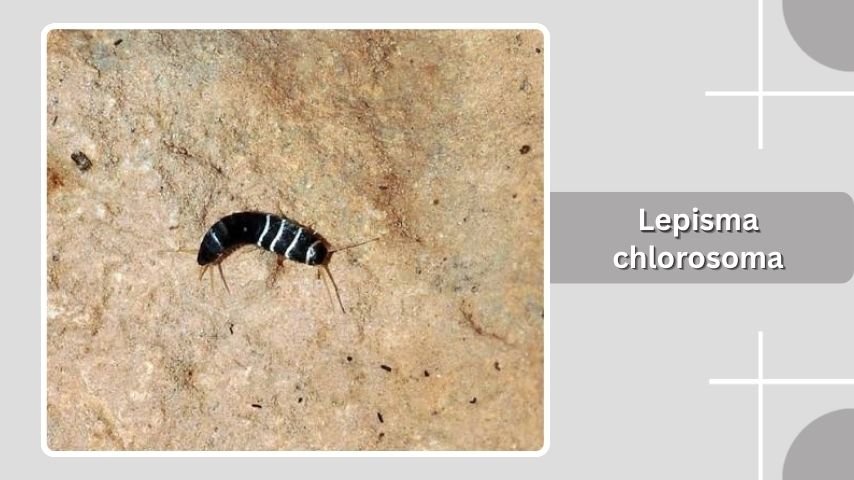
Lepisma chlorosoma is a lesser-known silverfish species within the same general group as the common silverfish. It has the typical silverfish body form, including a narrow, flattened shape, long antennae, and three rear bristles. Like many silverfish, it is usually secretive and prefers protected hiding places.
Identification
Lepisma chlorosoma has a long, slender body covered with fine scales. It may appear grayish, pale, or slightly dull depending on its age and surroundings. Because many silverfish species look similar, close identification usually requires expert examination.
Habitat
This species may live in sheltered areas where it can avoid light and disturbance. It may be found in cracks, dry debris, under stones, or in hidden indoor spaces if food and shelter are available.
Diet
Like other silverfish, Lepisma chlorosoma may feed on dry organic matter, starches, paper-like materials, glue, and plant-based debris. Indoors, it may be attracted to stored paper, cardboard, and crumbs.
Damage
If this species occurs inside a building, it may cause light damage to paper, packaging, and starchy materials. However, it is not as widely recognized as a common household pest as Lepisma saccharinum.
12. Lepisma baetica
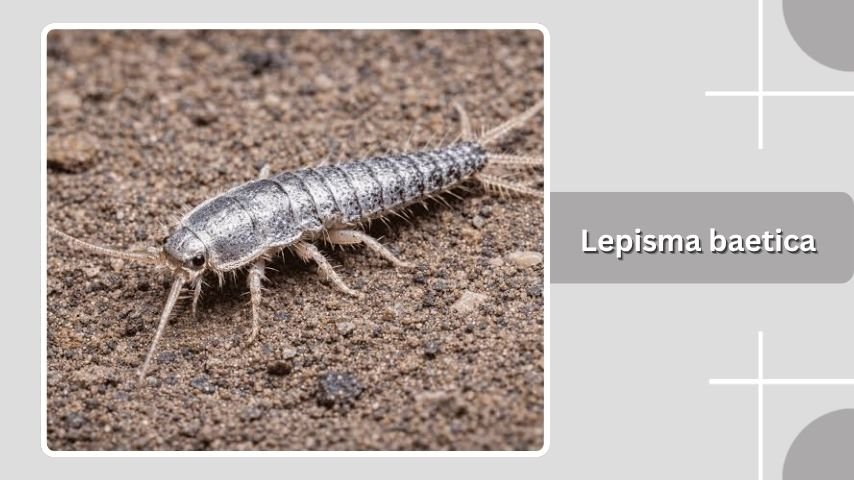
Lepisma baetica is another species in the silverfish group. It has a wingless body, long antennae, and bristle-like appendages at the rear. While it is not a common name in household pest control, it shares many features with other silverfish species.
Identification
Lepisma baetica has a flattened, tapered body with a scale-covered surface. It has six legs, two long antennae, and three tail-like bristles. Its color may appear gray, brownish gray, or pale depending on conditions.
Habitat
This species is usually associated with hidden and protected places. It may live outdoors under stones, bark, dry vegetation, or debris. In suitable conditions, it may also survive in buildings where cracks, paper products, and dry organic materials are available.
Diet
Lepisma baetica likely feeds on starchy and cellulose-rich materials. Its diet may include plant debris, paper, glue, crumbs, and other dry organic matter. This is similar to the feeding pattern of many silverfish relatives.
Damage
When found indoors, Lepisma baetica may become a minor nuisance pest. It can potentially damage paper, cardboard, and other starchy materials, but it is generally less commonly reported than the common silverfish.
13. Thermobia domestica
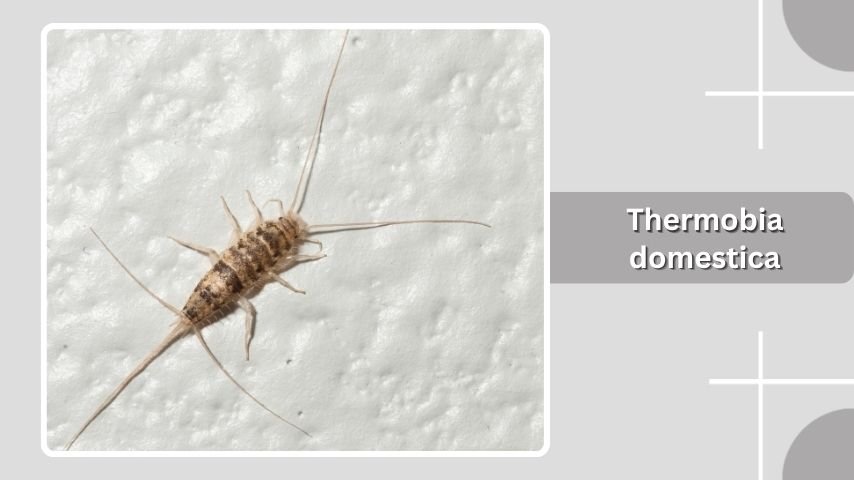
Thermobia domestica is the scientific name for the firebrat. It is often included with silverfish because it looks very similar and belongs to the same general insect order. However, firebrats prefer warmer environments than most common silverfish species.
Identification
Thermobia domestica has a long, flattened body with a brownish, grayish, or mottled pattern. It has two long antennae and three thin bristles at the rear. Unlike the shiny silverfish, firebrats usually look darker and more speckled.
Habitat
Firebrats are strongly associated with warm and humid places. They are often found near furnaces, boilers, ovens, water heaters, laundry rooms, bakeries, and commercial kitchens. In homes, they may hide behind appliances or near heating pipes.
Diet
Thermobia domestica feeds on starches, glue, paper, book bindings, wallpaper paste, flour, cereal, crumbs, and some fabrics. It can survive well in places where warm temperatures and food sources are available.
Damage
Firebrats can damage books, wallpaper, paper goods, cardboard, stored food packages, and fabric items. They do not bite people, but they can become a persistent nuisance in warm indoor areas.
14. Acrotelsella collaris
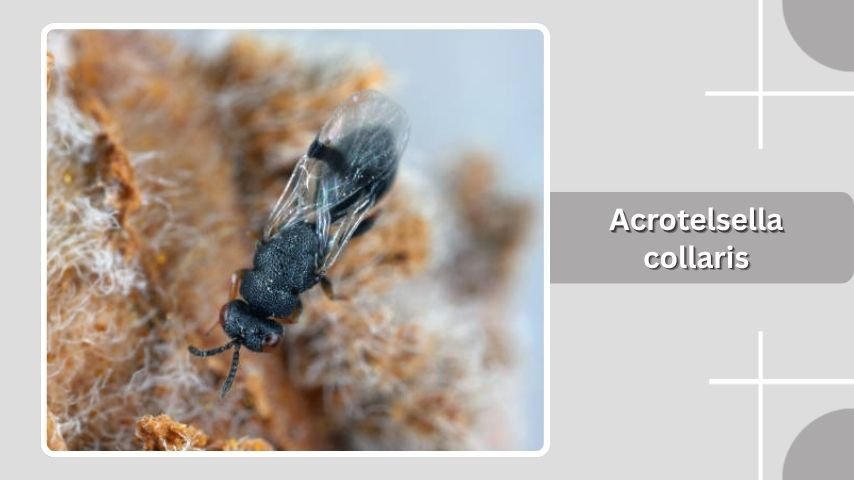
Acrotelsella collaris is a species related to silverfish and other bristletail insects. It is not usually known as a common household pest, but it has a similar primitive, wingless body shape. Like other members of this group, it can be recognized by its elongated body and rear bristles.
Identification
Acrotelsella collaris has a long, narrow body with antennae and tail-like filaments. Its body may appear grayish, brownish, or patterned with tiny scales. Correct identification often depends on small physical details that are difficult to see without magnification.
Habitat
This species is more likely to be found in natural sheltered environments than in ordinary household spaces. It may live under stones, bark, dry leaves, soil debris, or protected outdoor areas. Occasionally, related species may enter buildings by accident.
Diet
Acrotelsella collaris may feed on dry plant materials, algae, lichens, organic debris, and other natural food sources. If found indoors, it may also explore paper, crumbs, or starch-based materials.
Damage
This species is not usually considered a major indoor pest. If it enters a building, it is more likely to be a minor nuisance than a serious damaging insect. Any damage would likely be limited to dry organic or paper-based materials.
15. Acrotelsella devriesiana
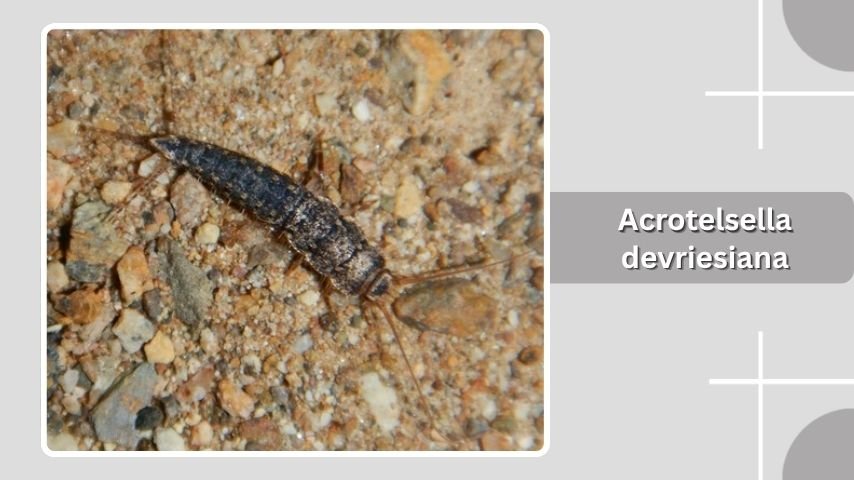
Acrotelsella devriesiana is another silverfish-like species from the bristletail group. It has the same general appearance as many primitive wingless insects, with a slim body, long antennae, and rear filaments. It is much less familiar than common silverfish or firebrats.
Identification
Acrotelsella devriesiana has an elongated, flattened body and fine scales. It may appear gray, tan, or brownish depending on its environment. Like other silverfish relatives, it has three appendages at the rear and no wings.
Habitat
This species is generally associated with protected outdoor habitats. It may hide under rocks, bark, leaf litter, and dry organic debris. In rare cases, it may be found near buildings or sheltered indoor areas if suitable conditions exist.
Diet
Acrotelsella devriesiana likely feeds on small organic particles, plant debris, algae, lichens, and dry natural matter. Its feeding habits are similar to other silverfish-like insects that survive in hidden spaces.
Damage
It is not commonly reported as a household pest. If found inside, it is usually more of an identification concern than a major infestation problem. It may cause minor nuisance activity but is not typically associated with serious home damage.
16. Acrotelsa producta
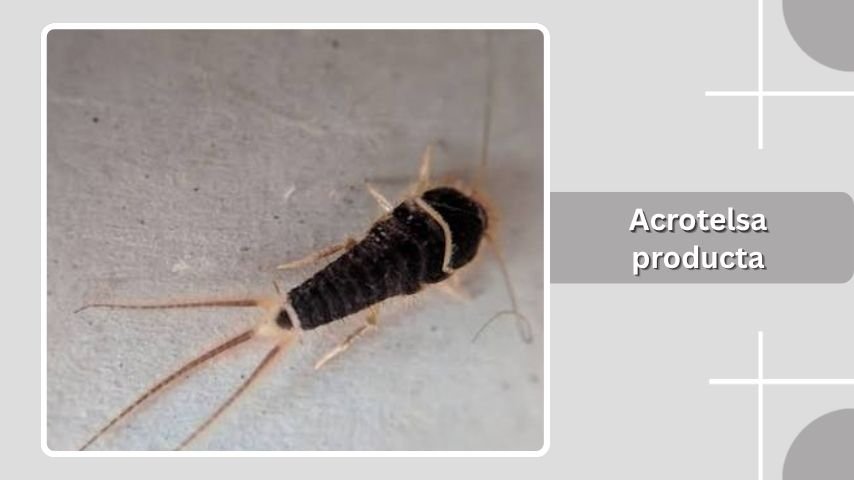
Acrotelsa producta is a silverfish-like species from the same broad group of primitive, wingless insects. It has a long body, long antennae, and tail-like filaments, which can make it look similar to other silverfish species. However, it is not as commonly recognized as the common silverfish or firebrat.
Identification
Acrotelsa producta has a slender, flattened body with fine scales. Its body color may appear grayish, tan, or brownish depending on the environment. Like other silverfish relatives, it has two antennae at the front and three bristle-like appendages at the rear.
Habitat
This species is usually associated with protected outdoor environments. It may live under stones, bark, dry leaves, logs, and organic debris. In some situations, it may appear near buildings or sheltered indoor spaces, especially where cracks and dry hiding places are available.
Diet
Acrotelsa producta likely feeds on dry organic material, plant debris, algae, lichens, and other small natural particles. If it enters a building, it may be attracted to paper, crumbs, starches, or other dry materials.
Damage
This species is not usually considered a major household pest. If found indoors, it is more likely to be a minor nuisance than a serious damaging insect. Any damage would usually be limited to paper-like or organic materials in hidden storage areas.
17. Atelura formicaria
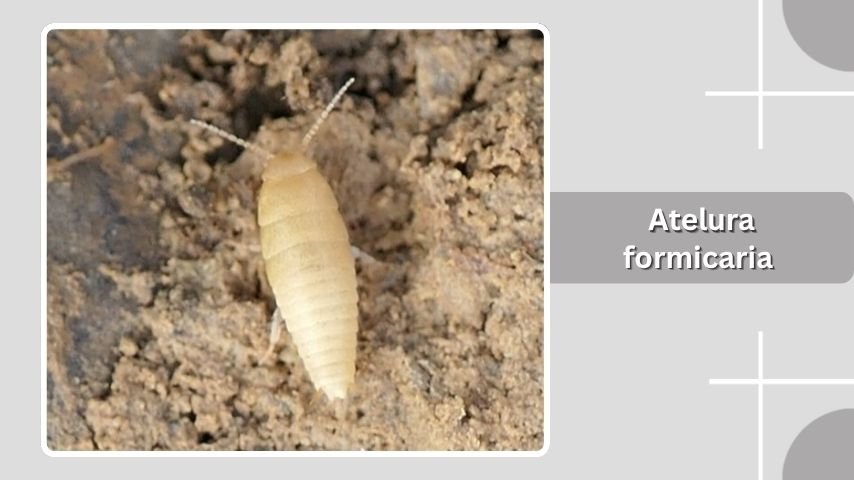
Atelura formicaria is a small silverfish-like insect known for its association with ants. Unlike common silverfish that are often found in bathrooms or basements, this species is more closely connected with ant nests. Its body shape is still similar to other bristletail insects, but its lifestyle is different.
Identification
Atelura formicaria has a small, soft, elongated body with long antennae and tail-like bristles. It is usually pale, yellowish, or light brown rather than shiny silver. Its body is more delicate-looking than many household silverfish species.
Habitat
This species is commonly found in or near ant nests. It may live among ants in soil, wood, or sheltered nesting areas. Because of this habit, it is not usually seen running across bathroom floors or pantry shelves like common silverfish.
Diet
Atelura formicaria may feed on organic debris, food particles, and materials associated with ant colonies. It may also benefit from living near ants by feeding on leftovers or waste inside the nest environment.
Damage
This species is not considered a typical household pest. It is unlikely to damage books, clothing, wallpaper, or pantry goods in the same way common silverfish can. If found indoors, it may suggest nearby ant activity rather than a silverfish infestation.
18. Ctenolepisma rothschildi
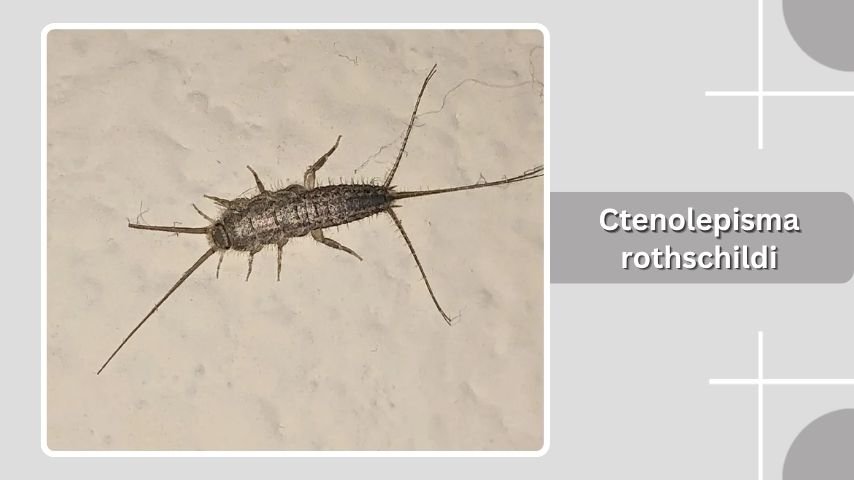
Ctenolepisma rothschildi is a member of the Ctenolepisma group, which includes several silverfish-like insects. It has the familiar flattened body, long antennae, and three rear bristles seen in many species. Because these insects often look alike, exact identification can be difficult without close inspection.
Identification
Ctenolepisma rothschildi has a narrow, scale-covered body that may appear grayish or brownish. It has long antennae and three tail-like appendages. Its body may show subtle markings or patterns, but these details are not always easy to see with the naked eye.
Habitat
This species may occur in warm, sheltered areas where it can hide from light and disturbance. It may live under stones, bark, dry vegetation, cracks, or protected spaces near buildings. If indoors, it may be found in storage rooms, wall voids, or undisturbed corners.
Diet
Like other silverfish relatives, Ctenolepisma rothschildi may feed on dry organic matter, starches, cellulose-rich materials, paper, glue, and crumbs. These foods allow it to survive in hidden indoor or outdoor spaces.
Damage
If present inside homes or storage areas, this species may cause minor damage to paper, cardboard, and other starchy materials. However, it is not one of the most commonly reported household silverfish pests.
19. Ctenolepisma ciliatum
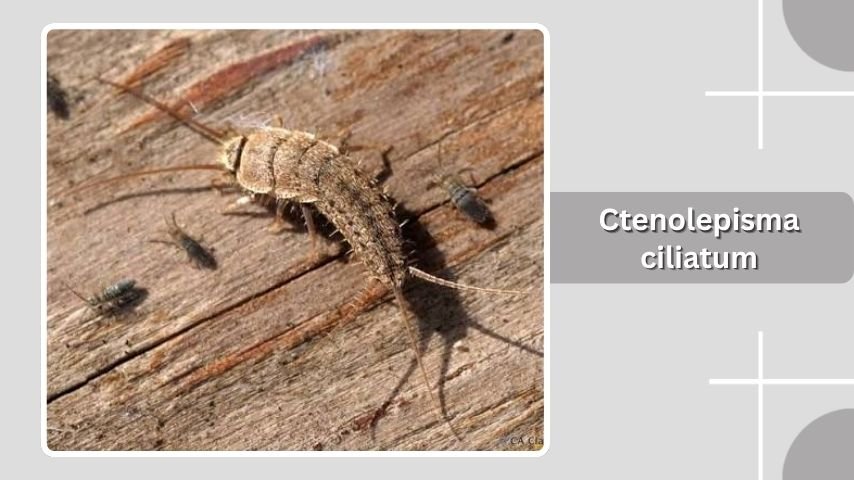
Ctenolepisma ciliatum is another silverfish species with a long, wingless body and quick movement. Like other members of its genus, it has antennae at the front and three bristles at the rear. It may resemble several other silverfish species, making careful identification important.
Identification
Ctenolepisma ciliatum has a flattened, elongated body covered with tiny scales. Its color may range from gray to brownish gray. The body may have fine hair-like or scale-like details, but these are difficult to notice without magnification.
Habitat
This species is usually found in dry, sheltered habitats. It may live under stones, bark, leaf litter, dry soil debris, or in cracks. Indoors, it may appear in storage areas, attics, wall gaps, or rooms with paper and cardboard materials.
Diet
Ctenolepisma ciliatum may feed on plant debris, dry organic particles, paper, glue, starches, and cellulose-rich materials. These feeding habits are similar to other silverfish relatives.
Damage
When found indoors, this species may become a nuisance pest. It may cause light feeding damage to paper goods, cardboard, packaging, and other starchy materials, although it is generally less familiar than the common silverfish.
20. Ctenolepisma nicoletii
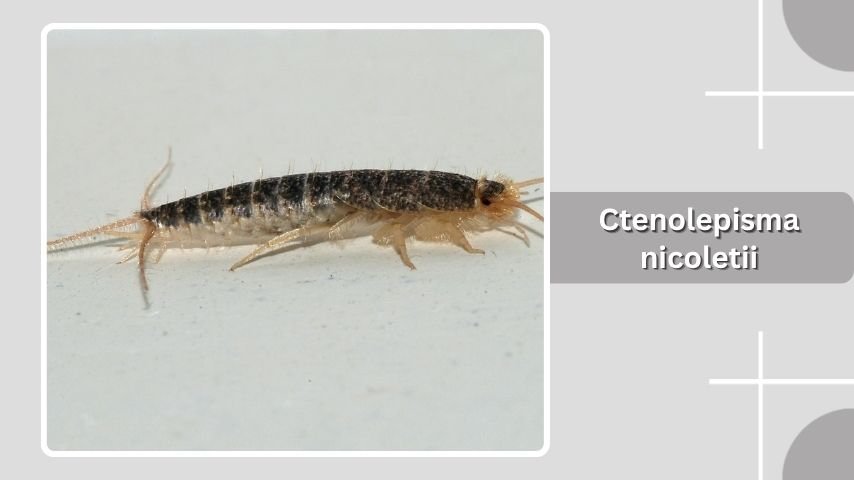
Ctenolepisma nicoletii is a lesser-known silverfish species that shares the typical features of the group. It is wingless, fast-moving, and has a slender body with long antennae and rear bristles. It may be difficult to distinguish from similar Ctenolepisma species without expert identification.
Identification
Ctenolepisma nicoletii has a long, narrow, scale-covered body. It may appear grayish, brownish, or slightly patterned depending on the specimen. Like other silverfish species, it has six legs, two antennae, and three tail-like filaments.
Habitat
This species may live in sheltered outdoor habitats, such as under rocks, bark, dry leaves, or debris. It may also survive near buildings or in indoor spaces where cracks, dry hiding places, and organic food sources are available.
Diet
Ctenolepisma nicoletii likely feeds on dry plant matter, paper-like materials, glue, starches, crumbs, and other organic debris. Its diet is similar to many other silverfish relatives.
Damage
This species is not usually known as a major household pest. However, if it becomes established indoors, it may cause minor damage to paper, cardboard, and starchy stored materials.
21. Ctenolepisma villosum
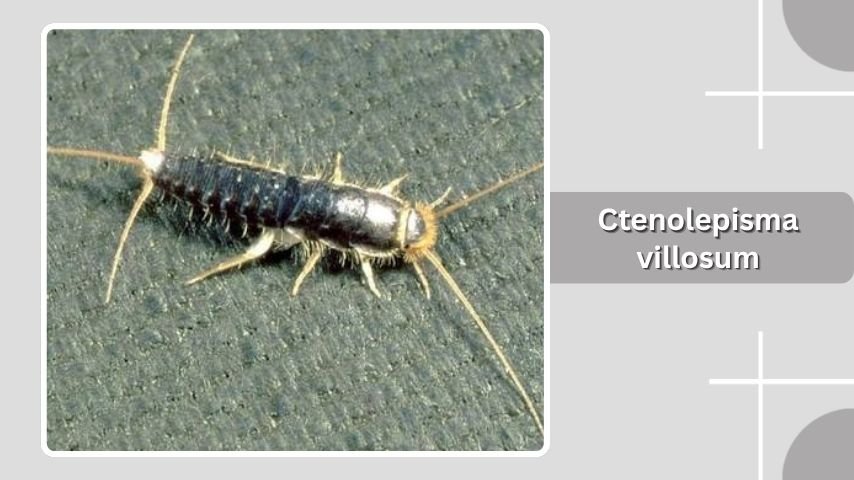
Ctenolepisma villosum is a silverfish species with the typical long, flattened body seen in many members of the Ctenolepisma group. It is wingless, fast-moving, and usually hides in protected places. Because it looks similar to several other silverfish species, exact identification often requires close inspection.
Identification
Ctenolepisma villosum has a slender, scale-covered body with long antennae and three tail-like bristles. Its color may appear gray, brownish gray, or slightly mottled. The body may have fine hair-like features, but these details are difficult to see without magnification.
Habitat
This species may live in dry, sheltered places such as under stones, bark, leaf litter, wall cracks, and hidden outdoor spaces. If it enters buildings, it may hide in storage rooms, attics, basements, or undisturbed corners.
Diet
Ctenolepisma villosum likely feeds on dry organic matter, starches, paper, cardboard, glue, crumbs, and plant-based debris. These food sources are common among silverfish and related insects.
Damage
If found indoors, this species may cause minor damage to paper goods, cardboard, packaging, and starchy materials. However, it is not as commonly reported in homes as the common silverfish or gray silverfish.
22. Ctenolepisma guadianicum
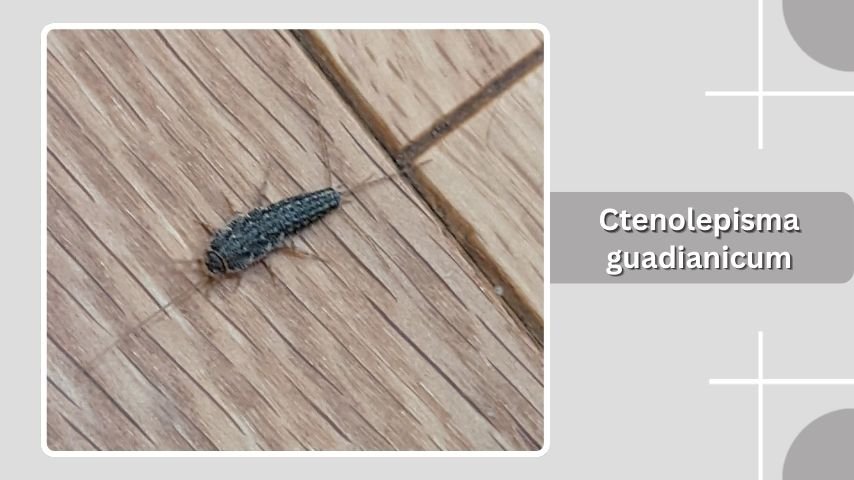
Ctenolepisma guadianicum is a lesser-known species in the silverfish group. Like other Ctenolepisma species, it has a long, narrow body and is usually active in hidden places. It may not be a common household pest, but it shares many features with better-known silverfish species.
Identification
Ctenolepisma guadianicum has a flattened body, long antennae, six legs, and three rear filaments. Its body may look grayish, brownish, or dull because of its fine scales. Close examination is often needed to separate it from similar species.
Habitat
This species is generally associated with sheltered environments. It may live under stones, dry vegetation, bark, or debris. In buildings, it may hide in cracks, storage areas, and quiet spaces where paper or organic debris is available.
Diet
Ctenolepisma guadianicum may feed on dry plant material, paper, glue, cardboard, crumbs, and other starch-rich or cellulose-rich materials. Its feeding habits are similar to many other silverfish relatives.
Damage
This species is not usually considered a major indoor pest. If it becomes established inside a building, it may cause small feeding marks on paper, cardboard, or dry stored materials.
23. Ctenolepisma michaelseni
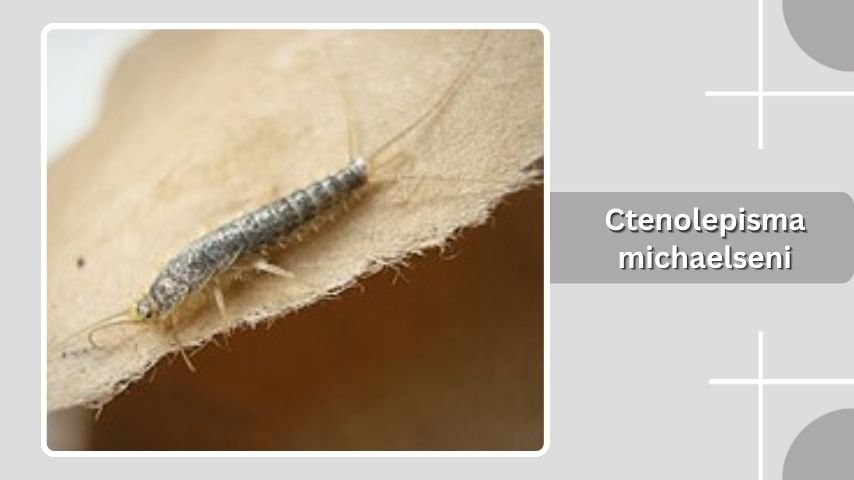
Ctenolepisma michaelseni is another silverfish species with a primitive, wingless body form. It has long antennae, a tapered body, and tail-like appendages at the rear. Like many silverfish relatives, it is secretive and may remain hidden during the day.
Identification
Ctenolepisma michaelseni has a slim, scale-covered body that may appear gray, tan, or brownish. It has three rear bristles and two long antennae. Because many silverfish species look alike, identification may depend on small body details.
Habitat
This species may occur in natural sheltered areas such as under rocks, bark, leaf litter, and dry organic debris. It may also enter buildings if it finds cracks, darkness, food sources, and protected spaces.
Diet
Ctenolepisma michaelseni likely feeds on dry organic particles, plant debris, starches, paper, glue, and cellulose-rich materials. Indoors, it may be attracted to cardboard, stored paper, and food crumbs.
Damage
If present indoors, this species may become a minor nuisance. It may damage paper, cardboard, packaging, or other starchy items, but it is not one of the most commonly reported household silverfish species.
24. Ctenolepisma iranicum
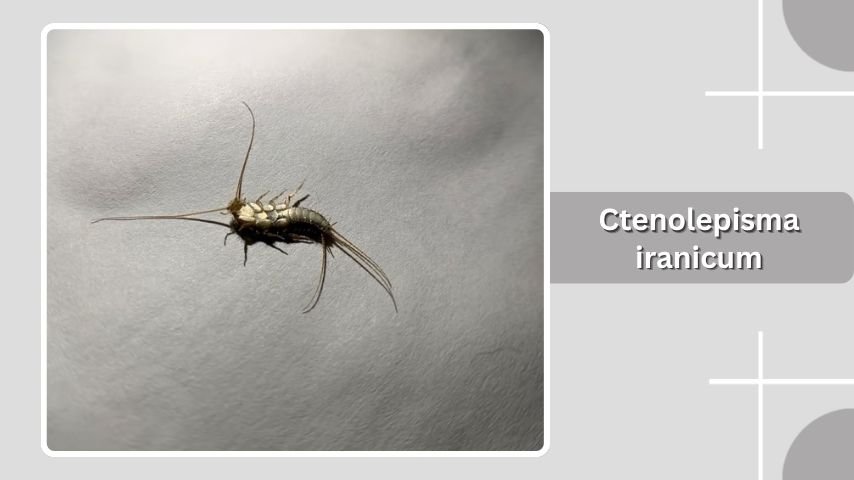
Ctenolepisma iranicum is a silverfish species in the Ctenolepisma genus. It has the familiar silverfish-like body shape, including a narrow form, long antennae, and three tail-like bristles. It is less familiar to homeowners than common silverfish, gray silverfish, or firebrats.
Identification
Ctenolepisma iranicum has an elongated, flattened body covered with fine scales. Its color may be grayish, brownish, or slightly patterned. Like other silverfish species, it has no wings and moves quickly when disturbed.
Habitat
This species may live in protected outdoor habitats, including dry debris, stones, bark, and cracks. If suitable indoor conditions are present, it may also hide in storage areas, attics, basements, or wall voids.
Diet
Ctenolepisma iranicum may feed on starches, paper-like materials, glue, plant debris, crumbs, and dry organic matter. These feeding habits are common among silverfish relatives.
Damage
This species is not usually listed as a major household pest. However, if it appears indoors, it may cause minor feeding damage to paper, cardboard, packaging, and other dry starchy materials.
