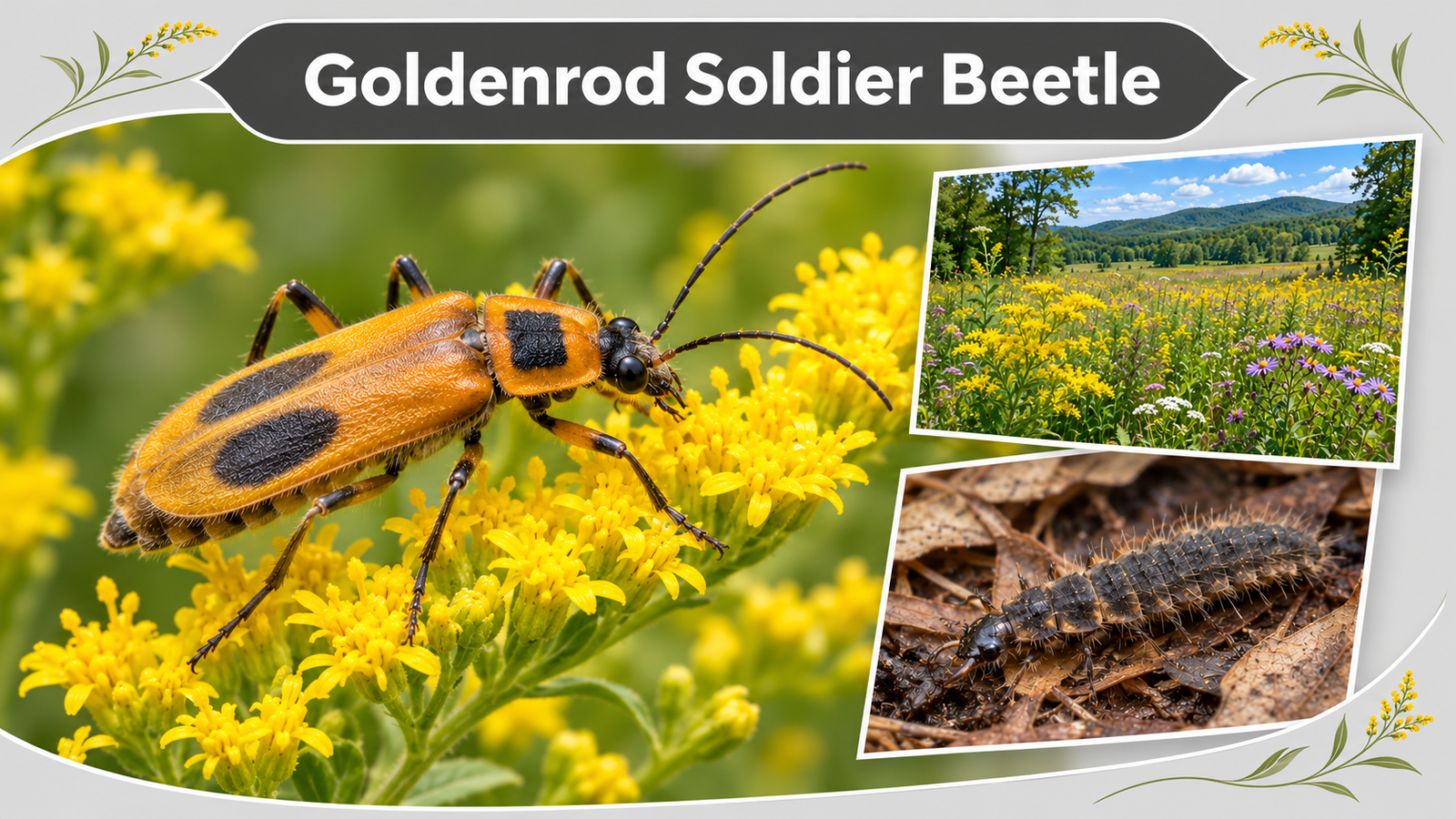
The goldenrod soldier beetle is a common late-summer visitor to flowers across much of North America. Its orange body and dark wing markings make it easy to spot, especially on goldenrod, milkweed, and other flowering plants. Also called the Pennsylvania leatherwing, this beetle is generally harmless to people and plants. Adults feed on pollen, nectar, and small insects, while the larvae hunt insects in soil and leaf litter. This guide explains how to identify goldenrod soldier beetles, what they eat, where they live, and whether you need to control them.
Goldenrod Soldier Beetle at a Glance
| Feature | Details |
|---|---|
| Common names | Goldenrod soldier beetle, Pennsylvania leatherwing |
| Scientific name | Chauliognathus pensylvanicus |
| Family | Cantharidae |
| Adult length | About ½ inch (12–16 mm) |
| Adult season | Usually late summer to early fall |
| Common habitats | Meadows, fields, gardens, and other flowering areas |
| Diet | Adults eat pollen, nectar, and some small insects; larvae prey on insects in soil |
Goldenrod soldier beetles belong to the soldier beetle family, Cantharidae. Their soft, flexible wing covers give them the name Pennsylvania leatherwing. They are not fireflies, although their elongated shape and coloring can look similar. Unlike fireflies, goldenrod soldier beetles do not produce light.
How to Identify a Goldenrod Soldier Beetle
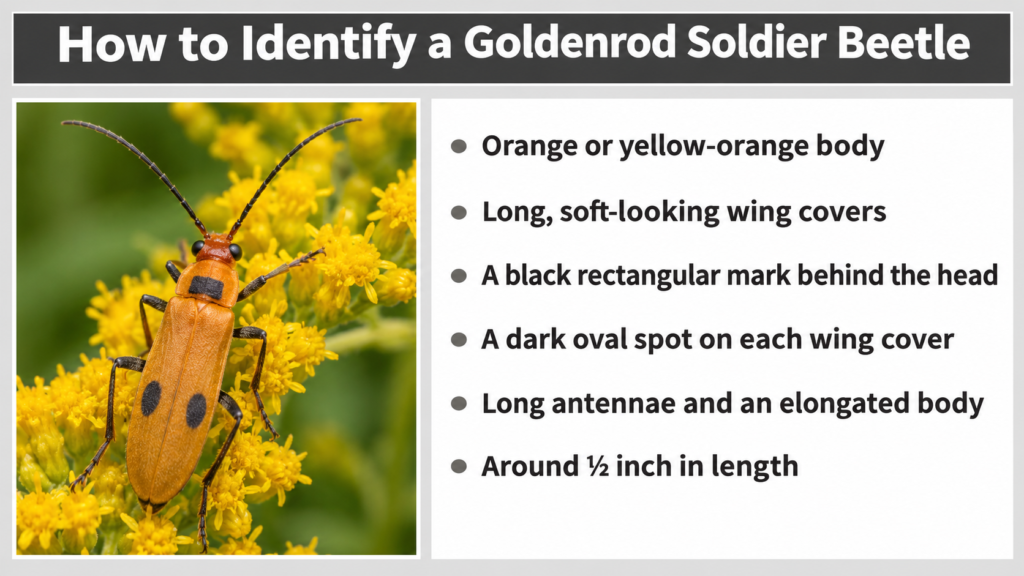
An adult goldenrod soldier beetle is elongated and soft-bodied, with an orange or yellow-orange color and dark markings. It is commonly about half an inch long. Look for it on flowers during late summer, when adults gather to feed and find mates.
Key identification features
- Orange or yellow-orange body
- Long, soft-looking wing covers
- A black rectangular mark behind the head
- A dark oval spot on each wing cover
- Long antennae and an elongated body
- Around ½ inch in length
The exact color and shape of the dark markings can vary. Some individuals may have less distinct spots, so check the beetle’s overall shape and color as well as its markings.
Goldenrod soldier beetle or firefly?
These beetles can be mistaken for fireflies because both have elongated bodies and may have dark markings. Goldenrod soldier beetles, however, do not have light-producing organs and do not glow. They are often found on flowers during the day, while many familiar fireflies are most noticeable at dusk or night.
They may also be confused with other soldier beetles. The margined soldier beetle, for example, is darker orange and has different patterns on its wing covers. Time of year can help: goldenrod soldier beetles are especially common from late July through September, while some related species appear earlier.
Where Goldenrod Soldier Beetles Live
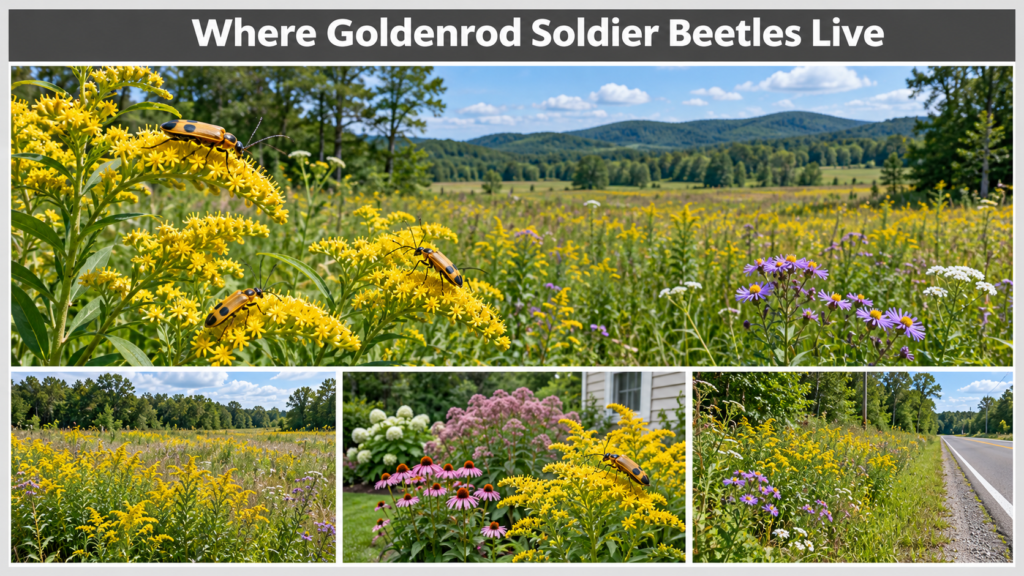
Goldenrod soldier beetles are found in many parts of North America and are especially common in the Midwest. They live in places where flowering plants and suitable ground cover are available, including meadows, fields, gardens, and roadsides.
Adults are most often noticed on flowers. Goldenrod is a favorite, but the beetles also visit milkweed, Queen Anne’s lace, rattlesnake master, and other late-season blooms. They may gather in groups when a plant provides abundant flowers, food, and places to find mates.
Why they gather on goldenrod
Goldenrod blooms when adult beetles are active, offering pollen and nectar at the right time of year. The flowers also attract small insects that the beetles can prey on. A patch of goldenrod can therefore provide food and a meeting place in one spot.
Despite its name, goldenrod is not the beetle’s only food source or habitat. Other flowering plants can attract adults too, particularly when they bloom in late summer and fall.
What Do Goldenrod Soldier Beetles Eat?
Adult goldenrod soldier beetles mainly feed on pollen and nectar. They may also eat small insects, including aphids, insect eggs, and caterpillars. While feeding on flowers, they can transfer pollen between blooms and may contribute to pollination.
The larvae have a different diet. They live in soil and leaf litter and prey on other small insects, including grasshopper eggs, small caterpillars, and soft-bodied insects. Larvae may sometimes come above ground to hunt. Because adults and larvae feed in different places and on different foods, the beetle can be part of the garden food web throughout its life.
Goldenrod Soldier Beetle Life Cycle
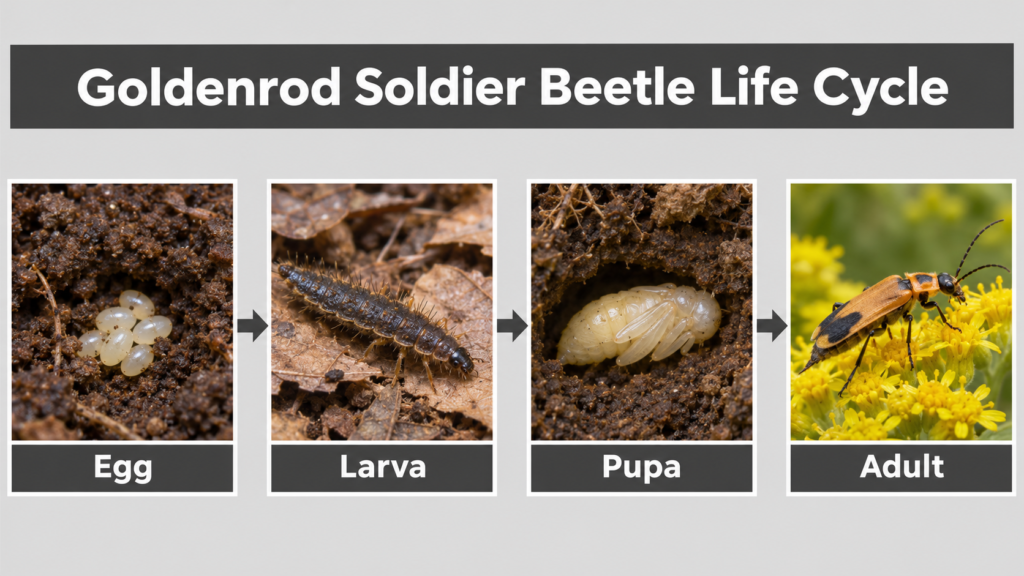
Goldenrod soldier beetles undergo complete metamorphosis. Their life cycle has four stages: egg, larva, pupa, and adult. The visible adults are only one part of the beetle’s life, since larvae spend their time mostly out of sight near the ground.
Eggs and larvae
Females lay clusters of eggs in soil. After hatching, the dark, slender larvae live in the soil or leaf litter, where they hunt small insects and their eggs. The larvae are covered with tiny, dense bristles that give them a velvety appearance.
Pupation and adults
After developing as larvae, they pupate just below the soil surface before emerging as adults. Adults are generally seen from late July to September, with numbers often highest in August. They gather on flowering plants to feed and mate. The exact timing can shift with local weather and growing conditions.
Are Goldenrod Soldier Beetles Good for the Garden?
Goldenrod soldier beetles are generally beneficial garden visitors. Adults feed on pollen and nectar, visit flowers, and may eat small insects. Their larvae prey on insect eggs and other small prey in soil and leaf litter. They do not chew flower petals or damage plants.
Their presence on flowers can sometimes make gardeners worry that the beetles are eating the blooms. Usually, they are feeding on pollen or nectar, hunting small insects, or mating. If flowers are visibly damaged, look for other possible causes, such as beetles that chew petals, caterpillars, or slugs. Goldenrod soldier beetles themselves are not considered plant pests.
Do Goldenrod Soldier Beetles Bite or Sting?
Goldenrod soldier beetles do not sting and are not known to bite people. They are harmless to handle briefly, though it is best to leave wild insects undisturbed when possible. Their orange-and-black coloring can look striking, but they are not aggressive and do not damage household materials.
If one flies or crawls indoors, guide it into a container and release it outside near vegetation. Insecticide is unnecessary for an occasional beetle.
How to Attract Goldenrod Soldier Beetles
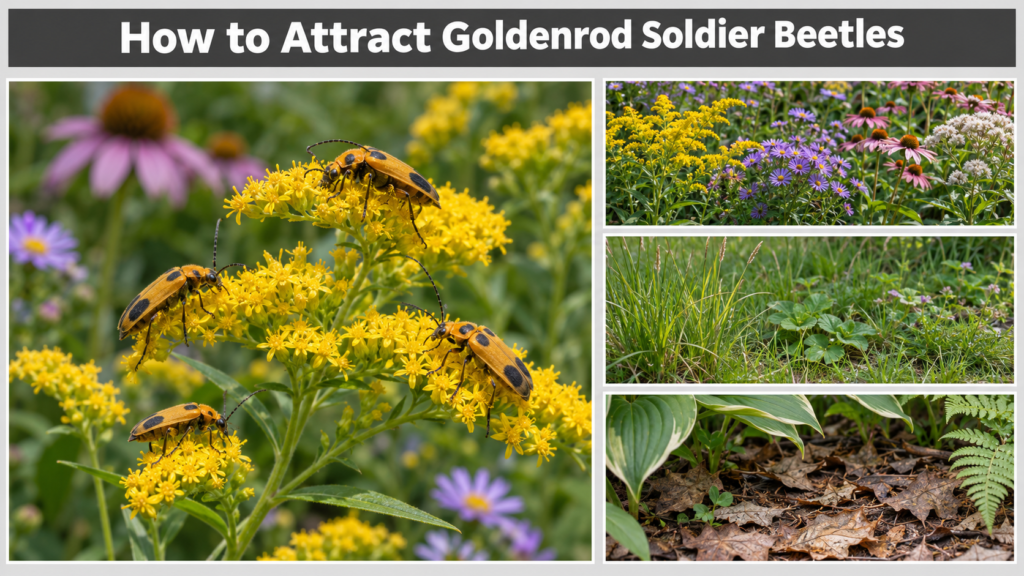
A garden with late-season flowers and sheltered ground cover can provide food and habitat for goldenrod soldier beetles.
- Plant goldenrod or other late-blooming flowers suited to your region.
- Include a variety of flowering plants so nectar and pollen are available at different times.
- Leave some areas of grass or leaf litter undisturbed.
- Avoid unnecessary broad-spectrum insecticide use around flowering plants.
- Allow some flowers to bloom before cutting them back.
These steps may attract other pollinators and beneficial insects as well. Beetles may not appear every year in the same numbers, since their presence depends on local weather, plant blooms, and available habitat.
How to Get Rid of Goldenrod Soldier Beetles
Most gardeners do not need to remove goldenrod soldier beetles. They do not damage plants, bite, or sting, and they can contribute to pollination and natural insect predation. If several adults gather on a flower, you can simply leave them alone.
If you need to move one, gently guide it onto nearby vegetation or use a cup and piece of paper to carry it outside. Avoid spraying flowers with insecticide, as that can harm other insects visiting the same blooms. If a plant shows chewing damage, inspect it for a different pest before taking action.
FAQs
Are goldenrod soldier beetles harmful?
No. Goldenrod soldier beetles are harmless to people and do not damage flowers or other plants. Adults feed on pollen, nectar, and some small insects. Their larvae hunt insect eggs and other prey in soil and leaf litter.
Why are goldenrod soldier beetles all over my flowers?
Late-summer flowers provide pollen and nectar, as well as small insects for the beetles to eat. Flowers are also where adults meet and mate. A group of beetles on goldenrod or another blooming plant is normal and usually does not indicate plant damage.
Do goldenrod soldier beetles eat goldenrod?
They visit goldenrod mainly for pollen, nectar, and small insects. They do not chew flower petals. Their presence on the blooms does not mean they are harming the plant.
Do goldenrod soldier beetles bite or sting?
No. They do not sting and are not known to bite people. If one lands on you, you can let it crawl away or gently move it onto a plant.
Are goldenrod soldier beetles the same as fireflies?
No. They are different beetles, though their elongated bodies can look similar. Goldenrod soldier beetles do not glow. They are usually seen on flowers during late summer, while many fireflies are best known for producing light.