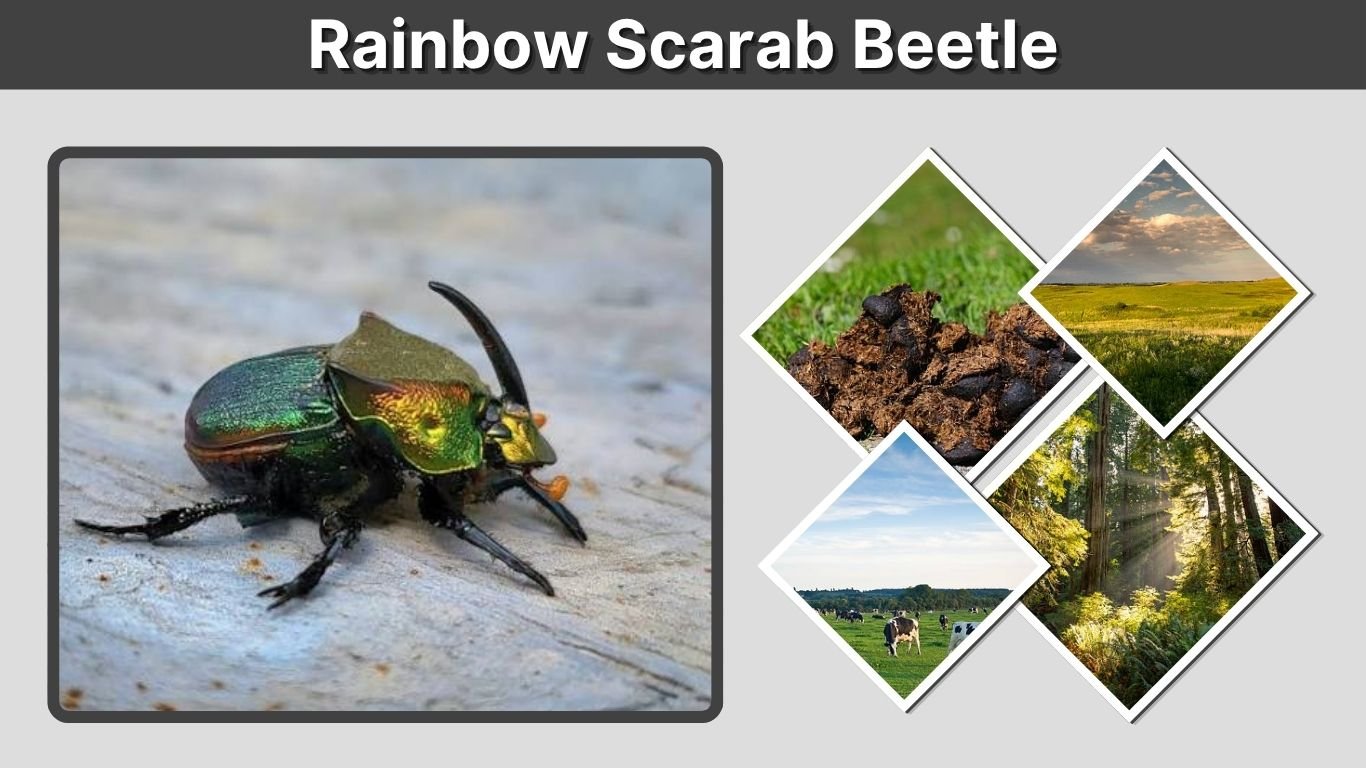
The rainbow scarab beetle (Phanaeus vindex) is a colorful North American dung beetle recognized by its metallic green, blue, red, and golden body. Males often have a prominent horn on their heads, while females lack this large projection. Despite their brilliant appearance, these beetles spend much of their lives digging underground and feeding on animal dung. They help improve soil quality, recycle nutrients, and reduce waste in natural environments. Understanding the rainbow scarab beetle’s appearance, habitat, diet, and life cycle reveals its important ecological role.
What Is a Rainbow Scarab Beetle?
The rainbow scarab beetle is a species of dung beetle belonging to the family Scarabaeidae. Its scientific name is Phanaeus vindex, and it is native to North America.
This species is known for its iridescent exoskeleton, which reflects different colors depending on lighting and viewing angle.
Unlike dung beetles that roll balls across the ground, rainbow scarabs primarily bury dung in underground tunnels.
They are beneficial insects that help maintain healthy soil and support nutrient recycling.
What Does a Rainbow Scarab Beetle Look Like?
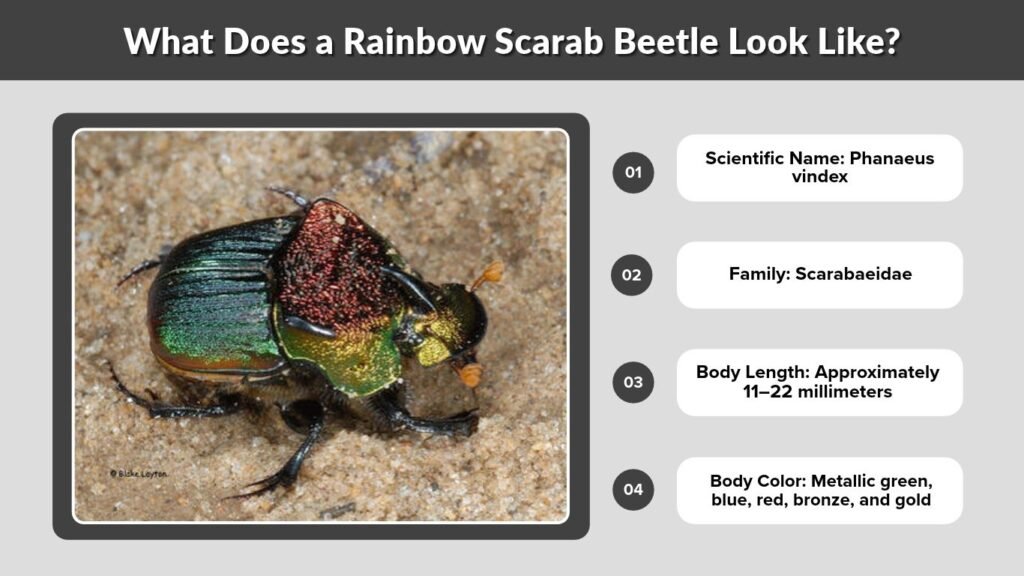
Rainbow scarab beetles have sturdy, oval bodies covered with brilliant metallic colors. Their wing covers are usually green or blue-green, while the thorax displays copper, red, or golden reflections.
Their appearance varies between individuals, and some beetles display unusually dark blue or nearly black coloration.
Rainbow Scarab Beetle Identification
- Scientific Name: Phanaeus vindex
- Family: Scarabaeidae
- Body Length: Approximately 11–22 millimeters
- Body Color: Metallic green, blue, red, bronze, and gold
- Wing Covers: Usually shiny green or blue-green
- Antennae: Short with expandable, leaflike clubs
- Legs: Strong and adapted for digging
- Male Horn: A prominent backward-curving horn in well-developed males
Their metallic coloration makes rainbow scarabs among the most visually distinctive dung beetles in North America.
Male vs. Female Rainbow Scarab Beetles
Male and female rainbow scarab beetles share similar metallic colors, but their head structures differ.
These differences are particularly noticeable in larger individuals.
Male Rainbow Scarab Beetle
Male rainbow scarabs often possess a large, curved horn extending from the head. This horn helps them compete with other males.
However, smaller males may develop greatly reduced horns, making identification more challenging.
Female Rainbow Scarab Beetle
Female rainbow scarabs lack the prominent head horn found in large males.
Their thorax is also shaped differently, helping them manipulate dung and excavate nesting chambers.
Females are responsible for preparing brood balls and laying eggs that develop underground.
Where Do Rainbow Scarab Beetles Live?
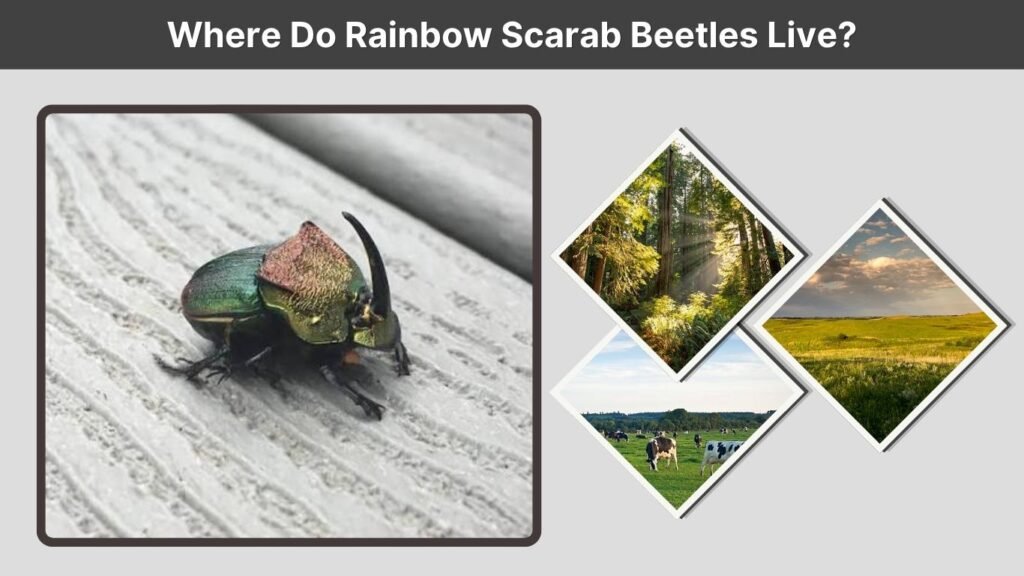
Rainbow scarab beetles inhabit much of the eastern and central United States, extending into parts of the Southwest.
Their range includes areas from Massachusetts and South Dakota southward to Florida and Texas.
They are commonly associated with environments containing suitable soil and animal dung.
Common Rainbow Scarab Beetle Habitats
- Pastures: Livestock manure provides food and breeding resources.
- Grasslands: Open areas offer suitable soil for digging.
- Woodland Edges: Animal droppings and sheltered soil support populations.
- Agricultural Fields: Beetles may occur where livestock and wildlife are present.
- Open Meadows: Warm environments provide feeding and nesting opportunities.
- Natural Wildlife Habitats: Mammal dung supports adult beetles and developing larvae.
Rainbow Scarab Beetles in Florida
Rainbow scarab beetles are native to Florida and occur across much of the state.
They inhabit pastures, grasslands, and other areas with suitable soil and animal dung.
Historical distribution records have not documented them in the Florida Keys or Everglades.
What Do Rainbow Scarab Beetles Eat?
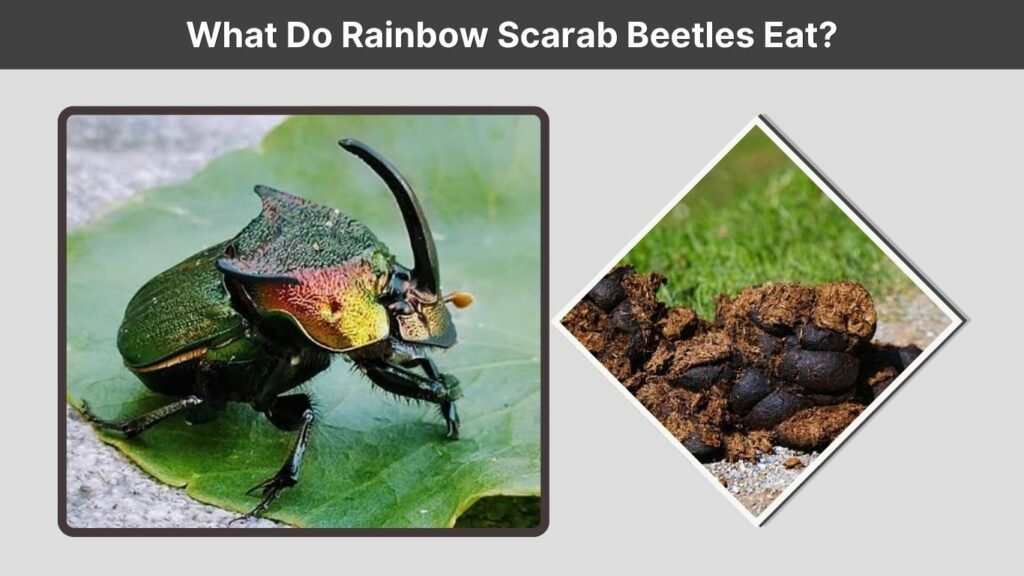
Rainbow scarab beetles primarily feed on animal dung. Both adults and larvae use this material as an important nutritional resource.
Adults locate fresh dung and transport portions underground, where they consume it or prepare food for their offspring.
Feeding Preferences
Rainbow scarabs are attracted to dung from several mammals, including cattle, horses, dogs, pigs, and wildlife.
Their attraction varies depending on dung type, freshness, and environmental conditions.
Larvae develop inside prepared dung balls, consuming the material until they complete their development.
This feeding behavior helps remove animal waste from the ground surface.
Rainbow Scarab Beetle Life Cycle
Rainbow scarab beetles undergo complete metamorphosis, developing through four stages: egg, larva, pupa, and adult.
Their development takes place largely underground, where food and shelter are available.
Four Stages of Development
- Egg Stage: The female deposits an egg inside or on a prepared brood ball made from animal dung.
- Larval Stage: The egg hatches into a white, C-shaped grub that feeds on dung and molts as it grows.
- Pupal Stage: The mature larva transforms into a pupa inside its underground chamber.
- Adult Stage: A fully developed beetle emerges and eventually begins feeding, flying, mating, and reproducing.
How Long Does Development Take?
Under laboratory conditions, rainbow scarabs may complete development from egg to adult emergence in approximately two to six months.
Temperature, food quality, soil conditions, and seasonal weather influence the development period.
How Do Rainbow Scarab Beetles Build Nests?
Rainbow scarabs are tunneling dung beetles rather than typical dung rollers.
Adults dig beneath dung piles and create underground passages. They transport dung into these tunnels and form brood balls that provide food for developing larvae.
Males and females may work together during nest preparation.
The female deposits an egg in a brood ball, allowing the emerging larva to feed without searching for food.
How Long Do Rainbow Scarab Beetles Live?
Rainbow scarab beetle lifespan depends on environmental conditions, food availability, and seasonal temperatures.
Laboratory observations show that adults can survive for more than one year under favorable conditions.
However, wild individuals generally have shorter lifespans because they face predators, changing weather, and other environmental hazards.
Both larvae and adults can survive cold periods underground in suitable habitats.
Why Are Rainbow Scarab Beetles Important?
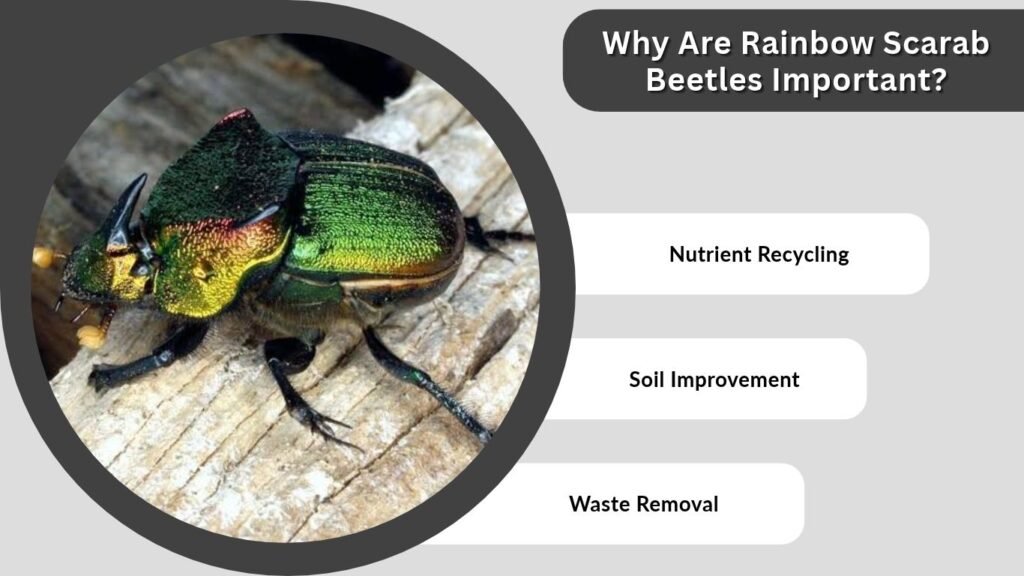
Rainbow scarab beetles perform valuable ecological functions by burying animal dung and incorporating organic material into the soil.
Their activities benefit natural ecosystems, grasslands, and agricultural environments.
Ecological Benefits of Rainbow Scarabs
- Nutrient Recycling: Return nutrients from animal waste to the soil.
- Soil Improvement: Digging creates tunnels that help improve soil structure.
- Waste Removal: Reduce the accumulation of dung on the ground.
- Fly Reduction: Burial of manure can limit breeding opportunities for certain flies.
- Pasture Health: Help clear dung-covered areas, allowing vegetation to grow.
These benefits make rainbow scarabs useful insects in livestock and wildlife environments.
Do Rainbow Scarab Beetles Bite?
Rainbow scarab beetles are not considered dangerous to humans. They do not possess venomous stingers and are not known for aggressive biting.
Their strong legs and claws may feel uncomfortable when handled, but they generally do not cause injuries.
Rainbow scarabs can fly and sometimes appear unexpectedly around lights or buildings.
If one enters a house, it can usually be guided into a container and released outside in a suitable area.
Can Rainbow Scarab Beetles Be Kept as Pets?
Rainbow scarab beetles can be maintained temporarily in specialized insect enclosures, but they require appropriate care.
Their natural behavior involves digging underground and using dung for feeding and reproduction.
A suitable enclosure requires secure ventilation, adequate soil depth, appropriate moisture, and suitable food.
Because these beetles can fly, a secure enclosure is necessary.
Their specialized breeding requirements make them less straightforward to maintain than common pet beetles.
Rainbow Scarab Beetle Spiritual Meaning
Rainbow scarab beetles are sometimes associated with transformation, renewal, protection, and personal growth.
These interpretations are influenced by the broader symbolism of scarab beetles in ancient Egyptian culture.
Ancient Egyptians associated scarabs with rebirth and the daily renewal of the sun.
However, these symbolic traditions do not establish a unique spiritual meaning for Phanaeus vindex.
FAQs
1. Are Rainbow Scarab Beetles Rare?
Rainbow scarab beetles are not generally considered rare across their natural range. However, people may encounter them infrequently because they spend considerable time underground or near animal dung. Their local abundance depends on suitable habitats and food availability.
2. Do Rainbow Scarab Beetles Live in Florida?
Yes, rainbow scarab beetles inhabit much of Florida. They commonly occur in pastures, grasslands, and areas containing animal dung. Historical records indicate that they have not been documented in the Florida Keys or Everglades.
3. Can Rainbow Scarab Beetles Fly?
Yes, rainbow scarab beetles can fly using their functional hindwings. Their hardened outer wings protect the flight wings when resting. Adults fly to locate dung, suitable habitats, and potential mates, particularly during favorable weather conditions.
4. What Is the Difference Between Male and Female Rainbow Scarabs?
Male rainbow scarabs often have a prominent curved horn on their heads, while females lack this large structure. Smaller males may have reduced horns. Both sexes display metallic green, blue, red, and bronze coloration.
5. Are Rainbow Scarab Beetles Beneficial?
Yes, rainbow scarab beetles are beneficial insects because they bury animal dung, recycle nutrients, and improve soil conditions. Their feeding and nesting activities also help reduce manure accumulation and may limit breeding opportunities for certain pest flies.