
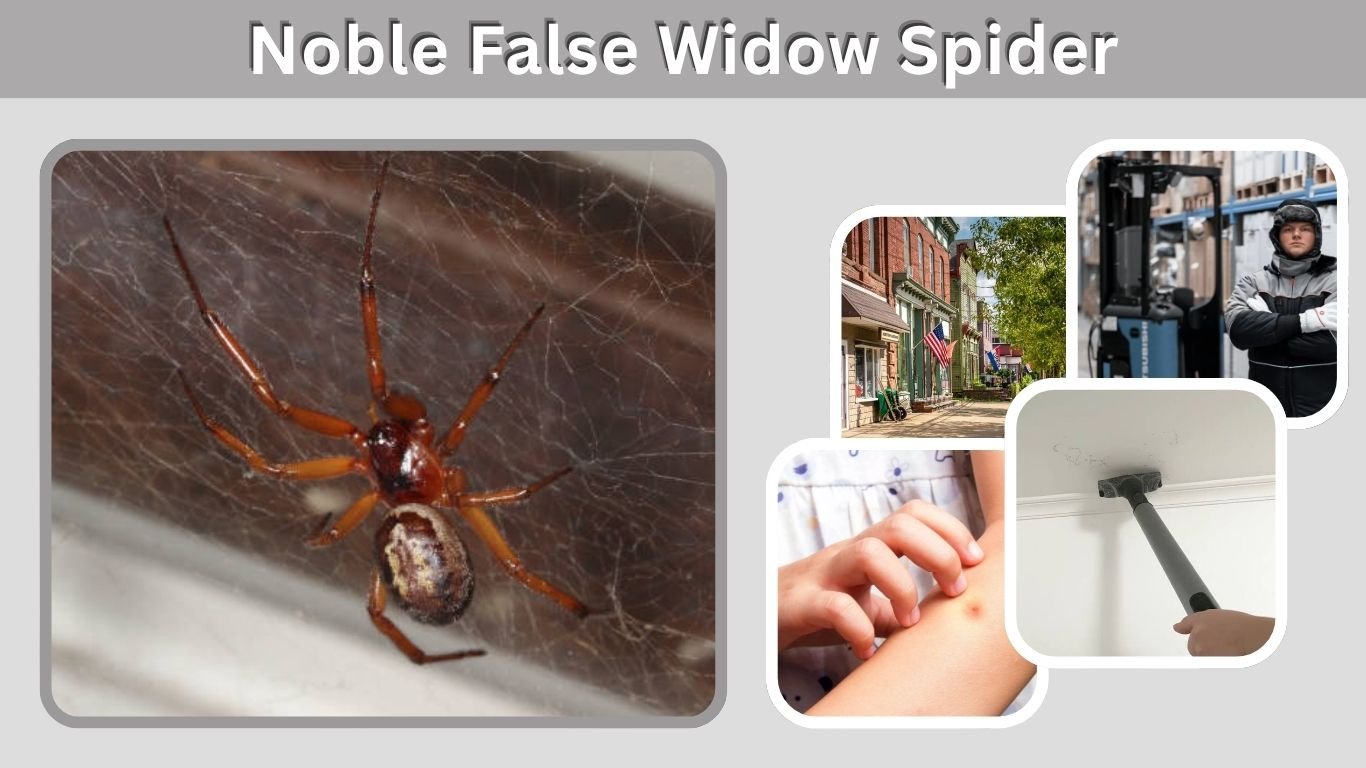
The noble false widow spider is one of the most talked-about spiders in the UK, Ireland, and parts of California. Its dark rounded body, pale markings, and connection to spider bite stories often make people nervous. However, this spider is usually shy and bites only when trapped or disturbed. This guide explains how to identify it, where it lives, how big it gets, and what to know about its bite.
What Is a Noble False Widow Spider?
The noble false widow spider, scientifically known as Steatoda nobilis, is a cobweb spider from the family Theridiidae. It is called a “false widow” because its rounded body shape can look similar to true widow spiders, such as black widows. However, it is not the same as a black widow and is usually much less dangerous.
This spider is now well known in houses, sheds, garages, window frames, and garden buildings. It is most often noticed because of its dark glossy body and cream-coloured markings on the abdomen.
Scientific Name and Common Names
The scientific name of the noble false widow spider is Steatoda nobilis. It is also commonly called the noble false widow, false widow spider, or sometimes the noble false black widow spider. The name “false black widow” is popular because people often compare it with the true black widow.
However, “false widow spider” is a wider name. It can refer to several Steatoda species, not only the noble false widow. This is why identification is important before assuming every false widow is Steatoda nobilis.
Why It Gets So Much Attention
The noble false widow gets attention because it is one of the few UK house spiders that can give a medically noticeable bite. Most bites are not serious, but they may cause pain, redness, swelling, or a reaction similar to a wasp sting.
Media stories often make this spider sound more dangerous than it really is. In reality, it is not aggressive and usually avoids people. Bites normally happen when the spider is accidentally pressed against skin.
Is It a House Spider?
Yes, the noble false widow can live around homes. It is often found in corners, window frames, porches, sheds, garages, lofts, and conservatories. It can also live outdoors in walls, fences, garden furniture, and sheltered cracks.
It prefers dry, protected spaces where it can build a messy cobweb and wait for prey.
Noble False Widow Spider Identification
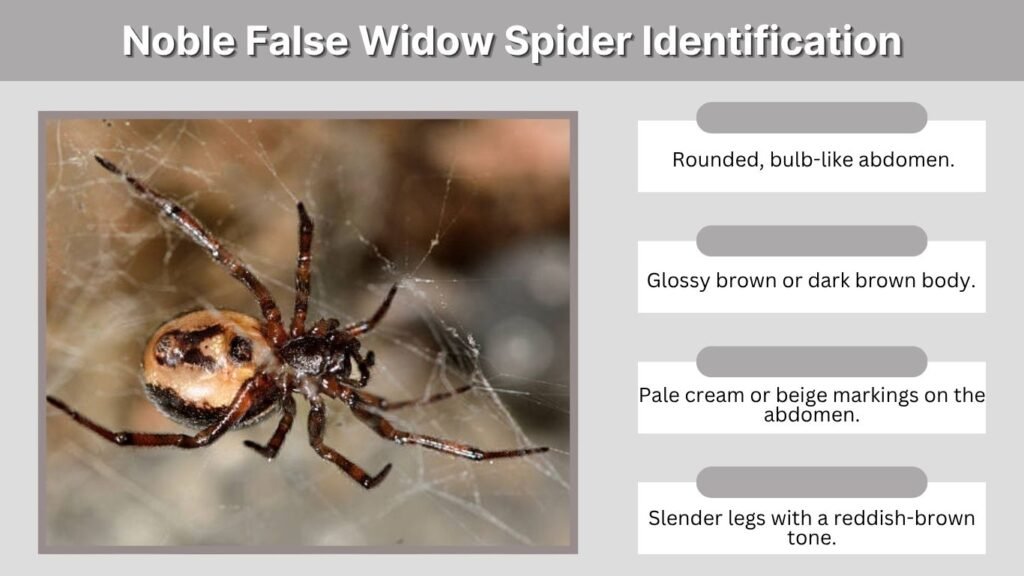
Noble false widow spider identification starts with body shape, colour, size, and markings. It has a rounded abdomen, long slender legs, and a shiny dark brown or purplish-brown body. The abdomen often has pale cream, beige, or light markings.
Some individuals have a clear pattern that looks skull-like or marbled. Others have faded markings, especially mature females. Because markings can vary, size and body shape should also be checked.
Key Identification Features
Look for these features:
- Rounded, bulb-like abdomen
- Glossy brown or dark brown body
- Pale cream or beige markings on the abdomen
- Slender legs with a reddish-brown tone
- Messy cobweb in corners or sheltered gaps
- Female body larger and rounder than male body
- Usually found near buildings, windows, sheds, or fences
Do not pick up the spider with your hands. If you need to identify it, take a clear photo from a safe distance.
Noble False Widow Spider Size
The noble false widow spider is not huge, but it can look large because of its rounded abdomen and long legs. Females are usually bigger than males. A female may have a body length of about 8.5–14 mm, while males are usually around 7–10 mm.
With legs included, the spider may appear larger than the body measurement suggests. This is one reason people often think it is bigger than it really is.
Male vs Female Appearance
Female noble false widows usually have a more rounded, swollen-looking abdomen. Males are slimmer, with longer-looking legs and a smaller body. Males may wander more during mating season, which makes people notice them indoors.
Females are more likely to stay near their webs. If you see a round-bodied spider sitting in a messy web near a window or shed, it may be a female noble false widow.
Noble False Widow Spider Habitat and Range
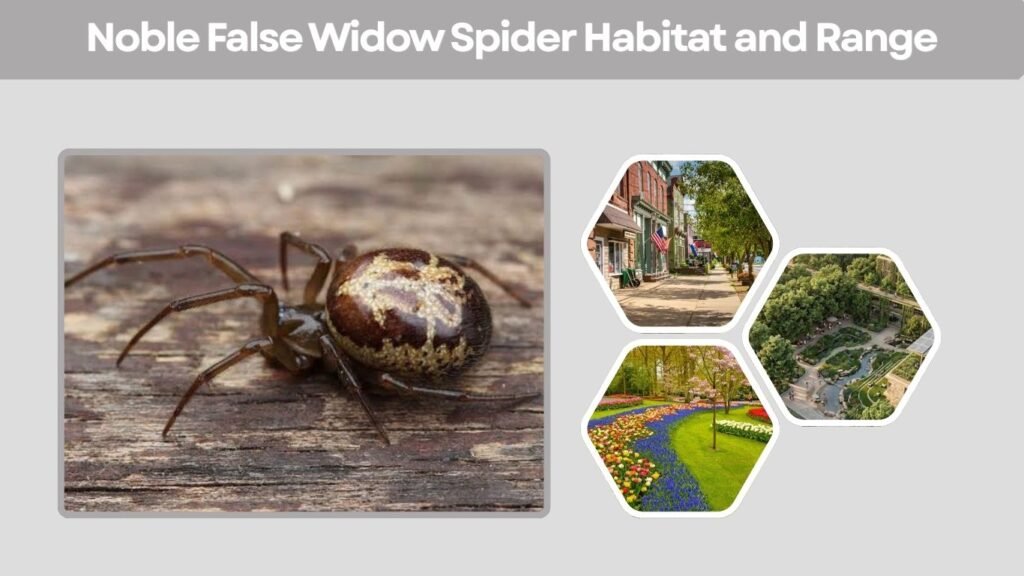
The noble false widow spider is strongly linked with human buildings. It can survive well in towns, cities, coastal areas, and gardens. It often uses man-made structures as safe shelter.
Its range has expanded in parts of the UK and Ireland, and it is also recorded in California. Warmer urban spaces, transport, and sheltered buildings help this spider spread.
Noble False Widow Spider in the UK
In the UK, the noble false widow is often found in southern England but has spread to many other areas. It is commonly seen around homes, garages, fences, and garden buildings. It is one of the best-known false widow spiders in Britain.
People often search for noble false widow UK spider identification because it can be confused with other dark house spiders. A clear photo of the body and markings can help with identification.
Noble False Widow Spider in Ireland
The noble false widow spider is also established in Ireland. It is frequently reported in homes, sheds, and urban spaces. Many Irish records come from buildings, gardens, and sheltered outdoor areas.
As with the UK, most encounters are harmless. The spider usually stays in its web and bites only if trapped against the skin.
Noble False Widow Spider in California
The noble false widow has also been found in California, especially in urban and coastal areas. In California, it may be confused with brown widows, black widows, or other cobweb spiders.
Because California has true widow spiders too, careful identification is important. A noble false widow is not the same as a western black widow, even though the body shape may look similar at first glance.
Noble False Widow Spider Web, Egg Sac, and Lifespan
The noble false widow spider builds an untidy cobweb rather than a neat circular web. Its web is usually placed in a sheltered corner where flying or crawling insects may get trapped.
Understanding its web and egg sac can help you identify where it is living around your home. It also helps you remove spiders safely if needed.
Noble False Widow Spider Web
A noble false widow spider web is usually messy, tangled, and three-dimensional. It may appear in window frames, wall corners, fences, sheds, garages, and under outdoor furniture. The web is not shaped like an orb-weaver’s round web.
The spider often hides in a retreat near the web. It may come out at night or when prey touches the silk.
Noble False Widow Spider Egg Sac
The egg sac is usually pale, round, and silk-covered. A female may protect her egg sac near the web. If you see a small white or cream silk ball near a messy cobweb, it may be an egg sac.
Avoid crushing egg sacs with bare hands. If removal is needed, use gloves, a vacuum, or a container method.
Lifespan and Activity
Noble false widow spiders can live longer than many small house spiders. Females usually live longer than males. They may remain active in sheltered indoor areas for much of the year, especially where temperatures are mild.
Males may become more visible when searching for females. This is why people sometimes notice more spiders during certain seasons.
Noble False Widow Spider Bite
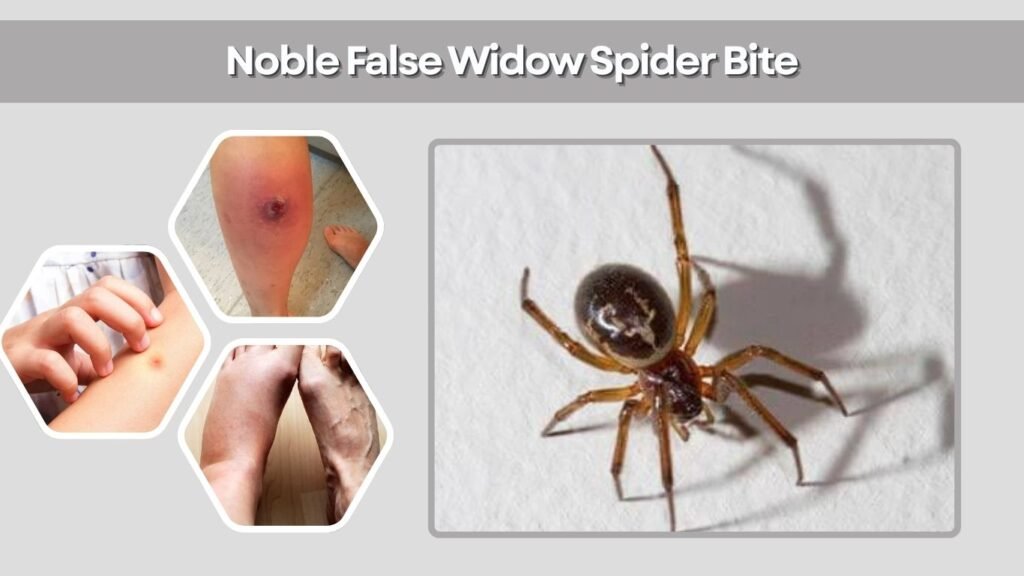
A noble false widow spider bite can be painful, but most bites are mild. The bite is often compared to a bee or wasp sting. It may cause redness, swelling, itching, and local pain around the bite area.
More serious reactions are uncommon, but they can happen. The risk may be higher if the person is allergic, the bite becomes infected, or the spider is trapped against the skin for longer.
| Topic | Quick Answer |
| Is it venomous? | Yes, but usually not dangerously venomous to healthy adults |
| Is it poisonous? | No, “venomous” is the better word because it injects venom by biting |
| Common symptoms | Pain, redness, swelling, itching, tenderness |
| Serious symptoms | Dizziness, nausea, spreading swelling, infection, allergic reaction |
| Usual cause of bites | Spider trapped in clothing, bedding, gloves, or shoes |
| Best first step | Wash the bite and apply a cold compress |
Noble False Widow Spider Bite Symptoms
Common bite symptoms include:
- Sharp pain or stinging
- Redness around the bite
- Swelling and tenderness
- Itching or burning feeling
- Small puncture marks
- Warm skin around the bite
- Mild blister in some cases
- Headache or nausea in stronger reactions
Most symptoms stay near the bite. If symptoms spread or become severe, medical advice is important.
What Does the Bite Look Like?
A noble false widow bite may look like a small red bump, raised swelling, or two tiny puncture marks. Some bites may develop a blister or a larger red area. The mark can look similar to other insect bites, so it is hard to confirm from appearance alone.
If you did not see the spider bite you, the mark could be from another insect, skin irritation, or infection.
When to Get Medical Help
Get medical help if the bite becomes very painful, swelling spreads, pus appears, red streaks develop, or you feel feverish. Also seek urgent help for breathing difficulty, fainting, facial swelling, throat swelling, or a widespread allergic rash.
Children, older adults, pregnant people, and people with immune problems should be more careful after any suspected spider bite.
Is the Noble False Widow Spider Dangerous?
The noble false widow spider is venomous, but it is not usually dangerous to healthy adults. Most bites cause local discomfort rather than serious illness. The spider is not aggressive and does not chase people.
The main concern is accidental contact. Bites are more likely when the spider is trapped in clothing, bedding, towels, gloves, or shoes.
Venomous vs Poisonous
People often ask if the noble false widow spider is poisonous. Technically, it is venomous, not poisonous. Venomous animals inject venom through a bite or sting. Poisonous animals cause harm when touched or eaten.
So, the noble false widow is venomous because it can inject venom when it bites. It is not considered poisonous in the usual sense.
False Widow Spider vs Noble False Widow
The term “false widow spider” can include several Steatoda spiders. The noble false widow is one specific species: Steatoda nobilis. Other false widows include the cupboard spider and rabbit hutch spider.
The noble false widow is usually larger than some other UK false widow species and is more often linked with noticeable bite reports.
Noble False Widow vs Black Widow
The noble false widow and black widow have similar rounded body shapes, but they are different spiders. Black widows belong to the genus Latrodectus, while noble false widows belong to Steatoda.
Black widow venom is generally more medically serious. Noble false widow bites can hurt, but they are usually much milder.
How to Deal with Noble False Widow Spiders at Home
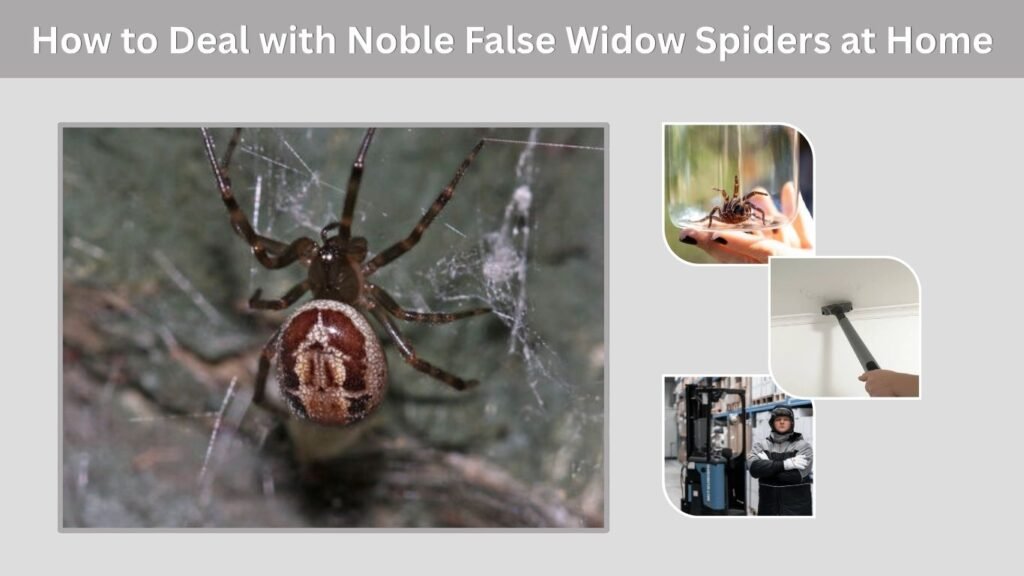
Finding a noble false widow spider at home does not always mean you have a serious problem. One spider can simply mean it found a good hiding place. However, if you see many webs or spiders, cleaning and prevention can help.
The best approach is calm removal, clutter control, and sealing common entry points.
Safe Removal Tips
Use these steps:
- Do not pick up the spider with bare hands.
- Wear gloves when cleaning sheds or garages.
- Use a glass and card to move one spider outside.
- Vacuum old webs, egg sacs, and dusty corners.
- Shake out stored clothing, gloves, and shoes.
- Seal cracks around windows, doors, and walls.
- Reduce clutter in storage areas.
- Keep outdoor lights from attracting too many insects.
These steps reduce hiding places and lower the chance of accidental contact.
Where to Check Indoors
Check window frames, conservatories, lofts, garages, sheds, storage boxes, curtains, and corners behind furniture. Also inspect garden furniture, fence posts, plant pots, and outdoor storage areas.
If you keep shoes or gloves in a shed or garage, shake them before use. This simple habit can prevent many accidental bites.
Should You Call Pest Control?
You usually do not need pest control for one or two spiders. However, pest control may help if there are many spiders in a sensitive area, such as a nursery, care home, workplace, or heavily used indoor space.
For normal home sightings, careful cleaning and sealing are usually enough.
FAQs
How big is a noble false widow spider?
A female noble false widow spider usually has a body length of about 8.5–14 mm, while males are often around 7–10 mm. With legs included, the spider may look larger. Females have a rounder abdomen, while males are slimmer and more likely to wander.
How do you identify a noble false widow spider?
Look for a shiny brown or dark brown spider with a rounded abdomen, pale cream markings, slender legs, and a messy cobweb. Females are rounder, while males are slimmer. Markings can vary, so body shape, size, web type, and location should all be considered.
Is the noble false widow spider venomous?
Yes, the noble false widow spider is venomous because it can inject venom through a bite. However, most bites are not serious for healthy adults. Symptoms are often compared to a wasp sting and may include pain, redness, swelling, and itching.
What happens if a noble false widow spider bites you?
A bite may cause sharp pain, redness, swelling, tenderness, itching, or a small blister. Some people may feel unwell, dizzy, or nauseous. Clean the bite, apply a cold compress, and watch for infection or allergic reaction. Get medical help if symptoms worsen.
Are noble false widow spiders common in the UK?
Yes, noble false widow spiders are now common in many parts of the UK, especially around buildings, gardens, sheds, and urban areas. They are also found in Ireland and have been recorded in California. They prefer sheltered spaces and messy cobweb sites.
