
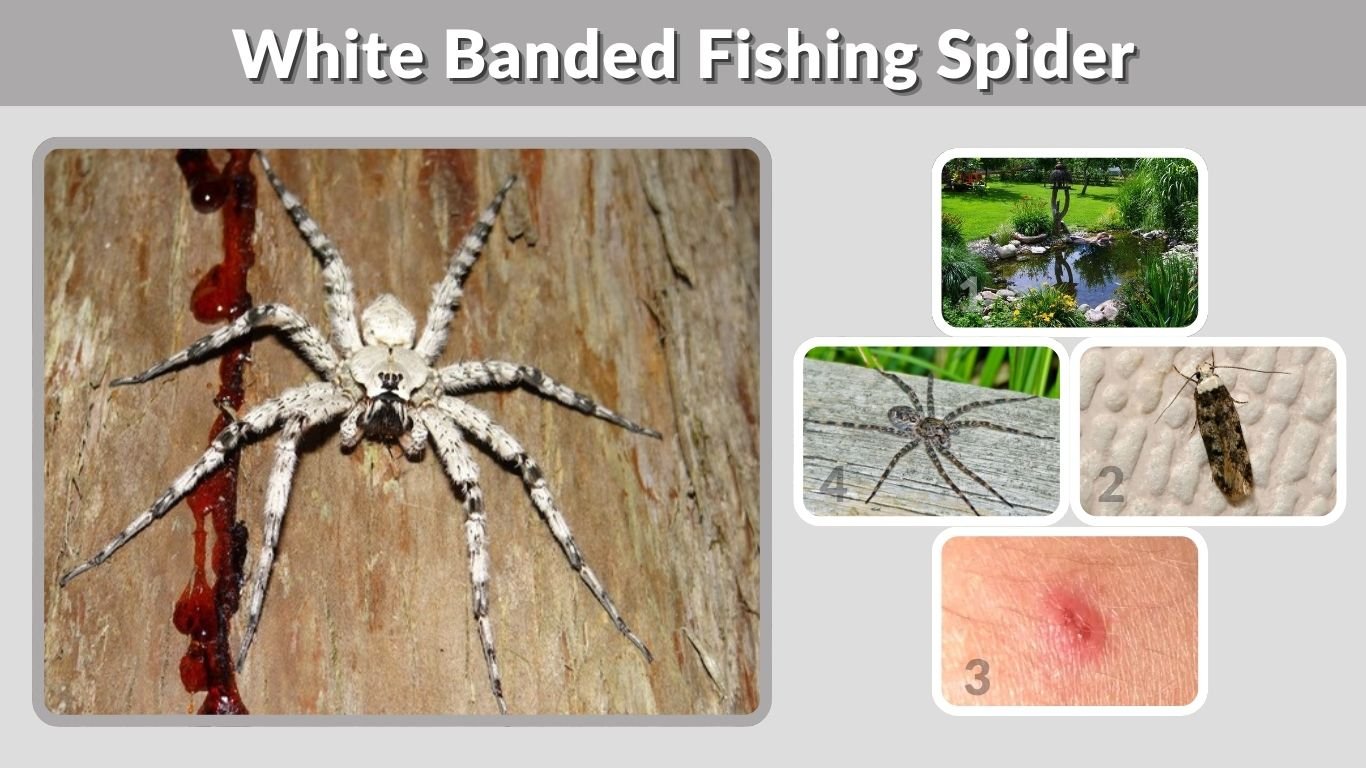
The white banded fishing spider is a large, eye-catching spider known for its pale markings, long legs, and hunting behavior near wet or wooded areas. Its scientific name is Dolomedes albineus. Although its size may look frightening, this spider is not aggressive toward people and is usually more interested in hunting insects than entering homes or biting humans.
What Is a White Banded Fishing Spider?
The white banded fishing spider is a species of fishing spider in the genus Dolomedes. It belongs to the nursery web spider group, which means females protect their young in silk nursery webs rather than using webs mainly to catch prey. Like other fishing spiders, it is an active hunter.
This spider is found in the United States and is often linked with wet habitats, trees, swamps, and vertical surfaces. The Missouri Department of Conservation says the whitebanded fishing spider is associated with aquatic or wet habitats, but it is also commonly seen away from water on tree trunks and walls.
Quick Identification
- Common name: White banded fishing spider
- Scientific name: Dolomedes albineus
- Spider group: Nursery web spider
- Family: Pisauridae
- Main color: Gray, tan, brown, rusty, olive, whitish, or mottled
- Key marking: Pale or white band across the front of the face
- Common places: Wet woods, swamps, tree trunks, walls, vegetation, and areas near water
- Behavior: Active hunter, fast runner, and not usually aggressive
White Banded Fishing Spider Size
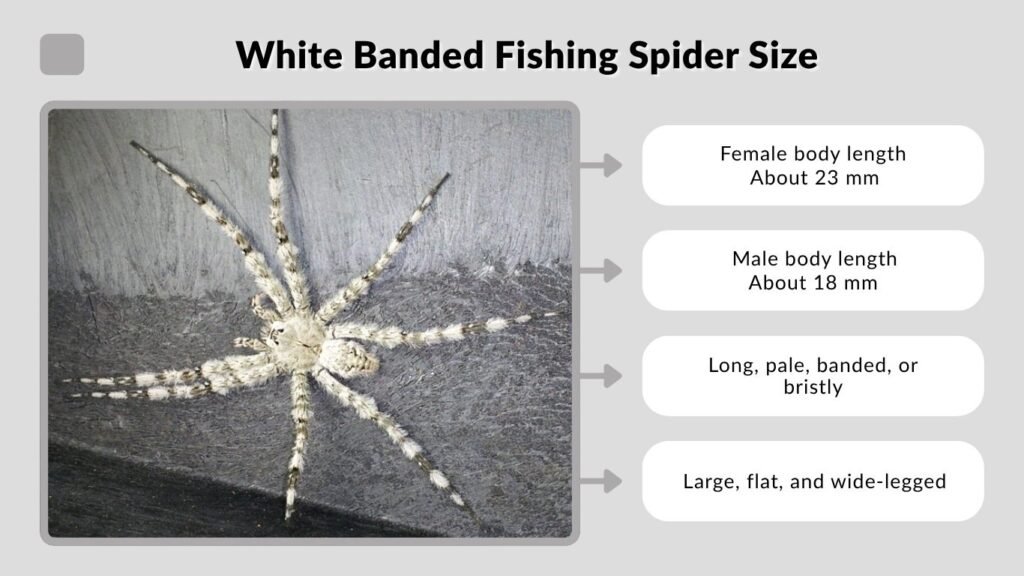
White banded fishing spiders are considered large spiders. Females are usually bigger than males, which is common in many spider species. Their long legs can make them appear even larger than their body length suggests.
Several identification guides describe adult females as reaching about 23 mm in body length, while adult males are around 18 mm. This measurement does not include the full leg span, so a resting spider can look much bigger on a wall, tree trunk, or dock.
| Feature | White Banded Fishing Spider |
| Female body length | About 23 mm |
| Male body length | About 18 mm |
| Leg appearance | Long, pale, banded, or bristly |
| Overall look | Large, flat, and wide-legged |
| Biggest visual clue | White band below the eyes and around the face |
Why It Looks So Large
The white banded fishing spider often rests with its legs spread out. This flat posture makes it look wider and more intimidating. Its pale hairs and markings may also make the body stand out against tree bark, walls, or damp surfaces. Even though it looks large, it is not considered a dangerous household spider.
How to Identify a White Banded Fishing Spider
The easiest way to recognize this spider is by looking for the pale band across the face. The band is usually located along the front edge of the face, above the chelicerae, which are the mouthpart structures near the fangs. The Missouri Department of Conservation notes that this spider usually has a white band along the front edge of the face.
Color can vary a lot. Some individuals look gray or tan, while others may appear brown, rusty, olive green, or whitish with darker markings. Because of this variation, color alone is not enough for identification.
Identification Features
- White or pale band on the front of the face
- Long legs with pale, dark, or banded markings
- Flat resting posture on trees, walls, or vegetation
- Variable body color from gray to brown, olive, tan, or whitish
- Large body compared with many common house spiders
- Often found near wetlands, swamps, streams, ponds, or wooded areas
- May have a raised head and eye region on the cephalothorax
- Sometimes has coarse pale hairs that create a bristly look
BugGuide notes that D. albineus often has coarse white hairs on the legs and abdomen, giving it a bristly appearance, though this feature is not always present. BugGuide also lists a raised head and eye region as another useful feature.
Is the White Banded Fishing Spider Venomous?
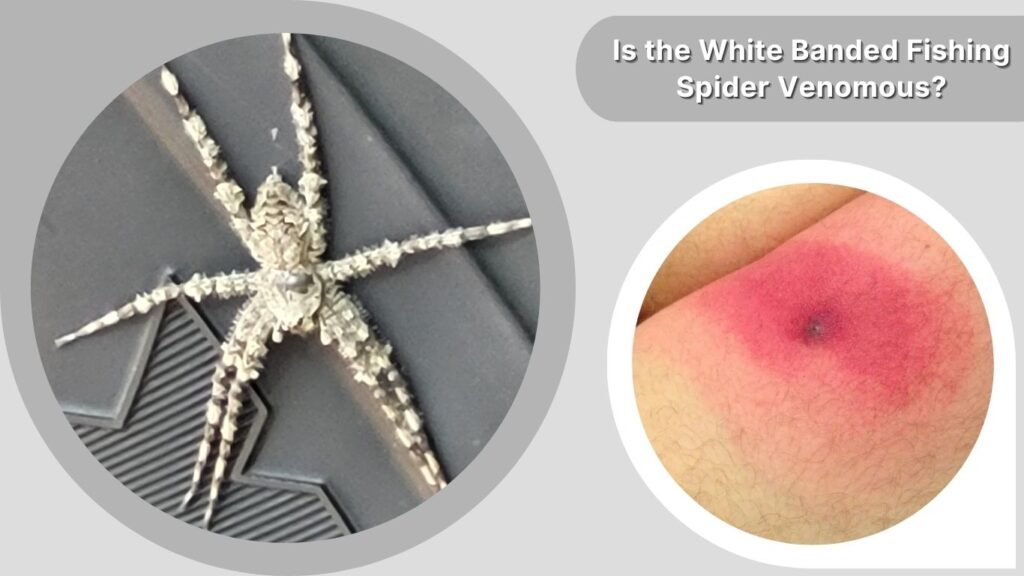
Yes, the white banded fishing spider is venomous, but that does not mean it is dangerous to people. Most spiders have venom because they use it to subdue prey. For humans, the important question is whether the venom is medically serious. For most people, this spider is not considered medically dangerous.
It may bite if handled, trapped, or pressed against skin, but it is not aggressive. A bite may cause mild pain, redness, itching, or swelling. These symptoms are usually local and short-term.
Bite and Safety Facts
- It has venom for hunting prey.
- It is not considered medically dangerous to most people.
- It usually avoids people rather than attacks.
- Bites are uncommon and usually defensive.
- Mild redness, swelling, or itching may happen.
- Serious reactions are rare but possible in sensitive individuals.
- Children, pets, and allergic people should be monitored carefully after any suspected bite.
If bitten, wash the area with soap and water. Apply a cold compress for swelling. Avoid scratching the bite area. Seek medical help if symptoms spread, swelling becomes severe, breathing becomes difficult, or signs of infection appear.
White Banded Fishing Spider Bite
A bite from a white banded fishing spider is usually a defensive reaction. This may happen when someone tries to pick it up, steps on it, traps it in clothing, or presses it against the skin. The spider does not seek out humans to bite.
Most bite symptoms are mild. The area may feel sore, itchy, or slightly swollen. Some people may notice a red bump. These symptoms can look similar to many insect bites, so the spider should not be blamed unless it was clearly seen biting.
What to Do After a Bite
Clean the area first. Use mild soap and water, then apply a cold pack wrapped in cloth. If the bite is painful, follow basic first-aid advice or ask a healthcare provider. Do not cut the bite, use harsh chemicals, or apply unverified home remedies.
Medical help is important if the person has a known allergy, severe swelling, dizziness, fever, spreading redness, pus, or trouble breathing. These signs are not typical and should be checked quickly.
White Banded Fishing Spider Habitat and Range
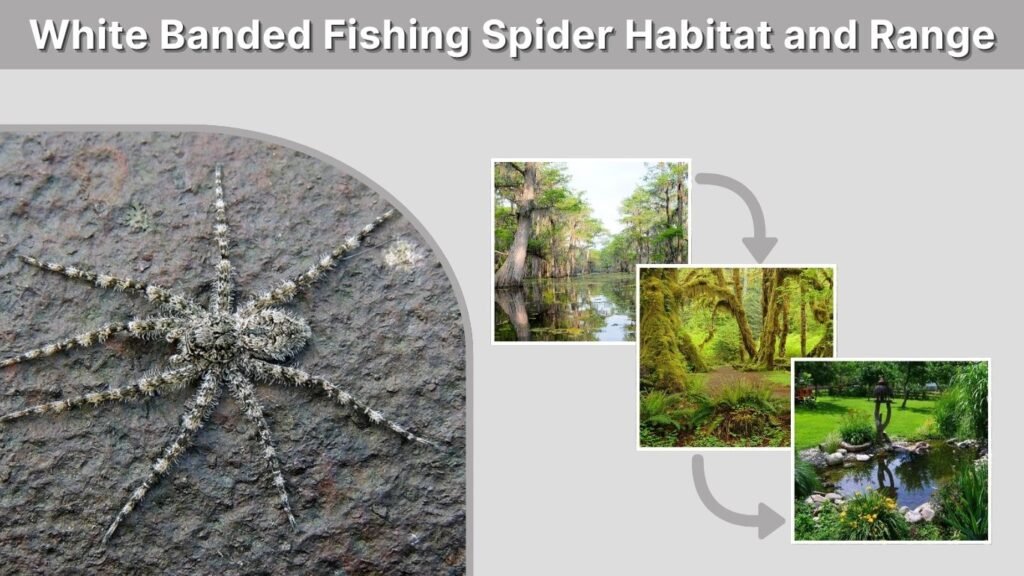
The white banded fishing spider is mainly found in the United States. It is especially associated with wet and wooded habitats. It may live near cypress swamps, streams, ponds, river edges, marshy areas, and damp forests.
It can also be found away from water. This is important because people may see it on trees, walls, porches, sheds, or outdoor structures and wonder why a “fishing” spider is not near a pond. The Missouri Department of Conservation specifically notes that it is often seen away from water, resting on vertical surfaces such as tree trunks or walls.
Common Places to Find It
- Cypress swamps
- Wet forests
- Tree trunks
- Pond edges
- River edges
- Stream banks
- Marshy vegetation
- Outdoor walls
- Porches and sheds
- Areas near lights where insects gather
White Banded Fishing Spider in Florida and Texas
Searches for this spider often include states like Florida and Texas because warm, wet, wooded habitats can support many fishing spiders. The white banded fishing spider is connected with the southeastern and central United States in several spider identification resources.
In Florida, it may be noticed near wetlands, wooded yards, swampy areas, and outdoor walls. In Texas, sightings may occur around river systems, wooded properties, and damp vegetation. Exact local abundance can vary by habitat, season, and available prey.
Why State Searches Are Common
People often search by state because large spiders are easy to notice around homes. A person in Florida, Texas, Missouri, or another southern or central state may see a large pale spider on a wall and want to know if it is dangerous. In most cases, safe identification from a clear photo is better than guessing by location alone.
White Banded Fishing Spider Diet and Hunting Behavior
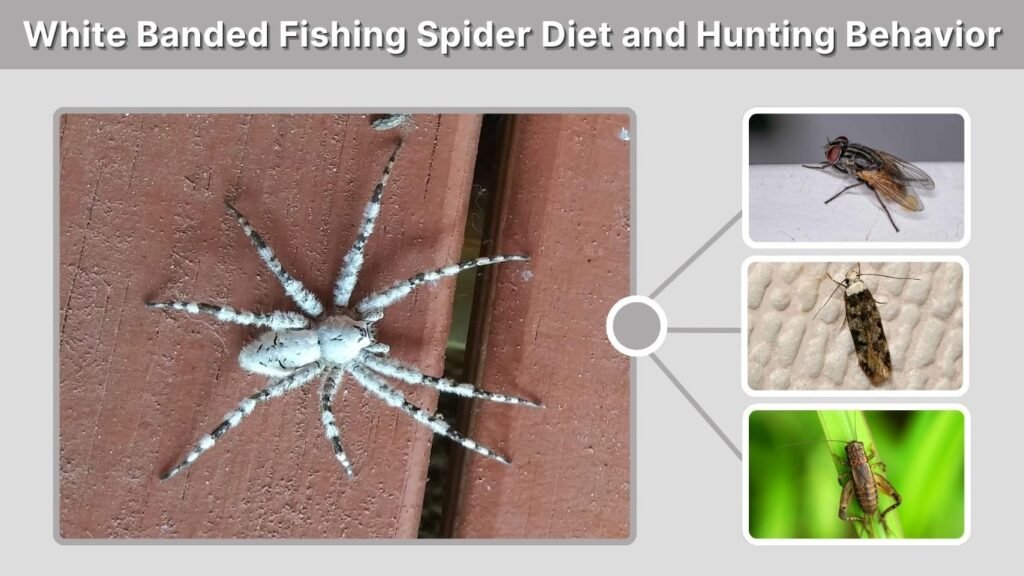
White banded fishing spiders are active predators. They do not use sticky webs to catch prey. Instead, they wait, sense movement, and rush forward to grab insects or other small animals. Fishing spiders are known for detecting vibrations, especially around water or damp surfaces.
Some fishing spiders can move across the water surface because of water-repelling hairs and surface tension. They may hunt insects near water, but white banded fishing spiders are also seen on trees and walls.
What They Eat
- Flies
- Moths
- Crickets
- Beetles
- Aquatic insects
- Small arthropods
- Other spiders
- Small prey found around wet vegetation
In nature, this spider helps control insect populations. Around outdoor spaces, it can be considered beneficial because it eats pests.
Web, Egg Sac, and Baby Spiders
The white banded fishing spider belongs to the nursery web spider group. This means silk is important in reproduction, but the spider does not usually build a classic prey-catching web like an orb-weaver.
Females produce egg sacs and protect their young. Like other nursery web spiders, the female may carry the egg sac and later create a nursery web where spiderlings can stay for a short time after hatching.
| Life Stage | What Happens |
| Egg sac | Female protects the eggs in a silk sac |
| Spiderlings | Young hatch and stay protected briefly |
| Juveniles | Small spiders disperse and begin hunting |
| Adults | Mature spiders hunt, mate, and reproduce |
| Web use | Mainly for nursery protection, not trapping prey |
Egg Sac Behavior
The egg sac is an important clue for nursery web spiders. Female fishing spiders often carry egg sacs near the mouthparts, unlike wolf spiders, which carry egg sacs attached to the spinnerets at the back of the abdomen. This difference is useful when comparing fishing spiders with wolf spiders.
Male vs Female White Banded Fishing Spider
Females are usually larger than males. A female may look heavier-bodied, especially when carrying eggs. Males are smaller and slimmer, but they may still have long legs and pale markings.
Female spiders are often noticed more because of their size and egg-carrying behavior. Males may wander more while searching for mates, which can sometimes bring them across walls, porches, or outdoor structures.
Main Differences
- Females are usually larger.
- Males are usually slimmer.
- Females may be seen with egg sacs.
- Males may wander more during mating periods.
- Females may appear heavier in the abdomen.
- Both sexes can show the white facial band.
White Banded Fishing Spider vs Other Fishing Spiders
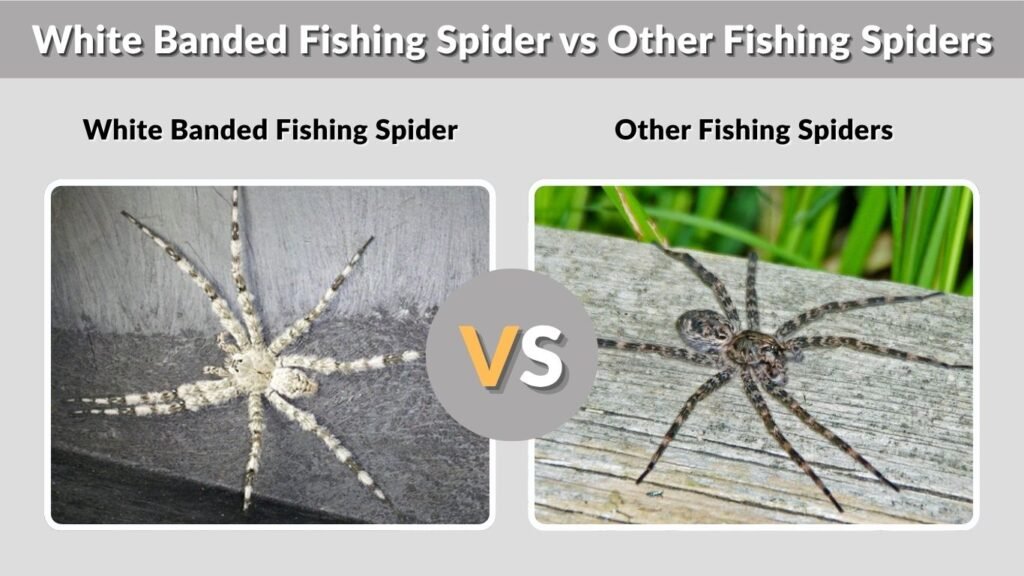
There are several fishing spider species in North America. The white banded fishing spider can be confused with dark fishing spiders, six-spotted fishing spiders, and other Dolomedes species. The white facial band is one of the most helpful features.
| Feature | White Banded Fishing Spider | Dark Fishing Spider |
| Scientific name | Dolomedes albineus | Dolomedes tenebrosus |
| Key marking | White band on front of face | Darker body with patterned markings |
| Color variation | Gray, tan, olive, brown, whitish | Brown, gray-brown, dark patterned |
| Common resting spots | Tree trunks, walls, wet habitats | Trees, walls, wooded homes |
| Danger to humans | Low | Low |
| Web use | Nursery web | Nursery web |
How It Differs from Dark Fishing Spider
The dark fishing spider often looks darker and more heavily patterned. The white banded fishing spider may look paler, bristlier, or more whitish around the face. Both can be large, fast, and harmless to most people, so careful observation is needed for identification.
White Banded Fishing Spider vs Wolf Spider
White banded fishing spiders and wolf spiders may look similar because both are large, brownish hunters. However, they belong to different spider families and behave differently.
Wolf spiders usually live and hunt on the ground. They have a distinct eye pattern with large forward-facing eyes. Fishing spiders often rest on vertical surfaces and are more closely linked with wet or wooded habitats.
Key Differences
- Fishing spiders often appear flatter and longer-legged.
- Wolf spiders usually look stockier and more ground-based.
- Fishing spiders may rest on walls, tree trunks, or vegetation.
- Wolf spiders commonly run across soil, grass, mulch, or floors.
- Fishing spider females use nursery webs.
- Wolf spider mothers carry spiderlings on their backs.
If you see a large spider resting flat on a tree or wall with a pale facial band, it may be a white banded fishing spider rather than a wolf spider.
Is It Dangerous to Pets?
A white banded fishing spider is not usually dangerous to cats or dogs, but a defensive bite may cause mild irritation. Curious pets may paw at, sniff, or bite the spider, which increases the chance of a bite.
Most pet reactions would likely be mild, but small animals or allergic pets should be watched closely. Contact a veterinarian if your pet develops facial swelling, weakness, vomiting, breathing trouble, or unusual behavior after contact with a spider.
How to Remove One Safely
If you find a white banded fishing spider indoors or on a porch, you do not need to panic. It is usually best to remove it gently instead of killing it. These spiders help control insects and are part of the local ecosystem.
Safe Removal Tips
- Do not pick it up with bare hands.
- Place a cup or container over the spider.
- Slide stiff paper or cardboard underneath.
- Carry it outside carefully.
- Release it near trees, shrubs, or vegetation.
- Seal cracks and gaps to prevent more spiders from entering.
- Keep outdoor lights off when not needed because lights attract insects.
- Reduce clutter around sheds, garages, and porches.
Interesting White Banded Fishing Spider Facts
The white banded fishing spider is interesting because it combines large size, variable color, and strong hunting ability. It may look unusual, but it plays a helpful role in controlling insects around wet and wooded habitats.
Fast Facts
- Its scientific name is Dolomedes albineus.
- It is part of the nursery web spider group.
- It is usually identified by a pale band on the front of the face.
- Females are larger than males.
- It is venomous but not usually dangerous to humans.
- It can bite defensively if handled or trapped.
- It hunts prey instead of catching insects in a sticky web.
- It may live near water, trees, swamps, walls, and wet forests.
- It is often confused with wolf spiders and other fishing spiders.
- It helps control insects naturally.
FAQs
Are white banded fishing spiders poisonous?
White banded fishing spiders have venom, but they are not considered dangerous to most people. Their venom is mainly used for catching prey. A bite may cause mild pain, redness, swelling, or itching. Serious reactions are uncommon, but sensitive people should watch symptoms carefully.
Do white banded fishing spiders bite?
Yes, they can bite, but bites are uncommon. A white banded fishing spider usually bites only when trapped, handled, or pressed against the skin. Most of the time, it tries to escape. If bitten, clean the area, apply a cold compress, and monitor symptoms.
How big is a white banded fishing spider?
Adult female white banded fishing spiders can reach about 23 mm in body length, while males are around 18 mm. Their long legs make them look much larger than their body measurement. Females are usually larger and more noticeable than males.
Where do white banded fishing spiders live?
They live in the United States, especially around wet, wooded, or swampy habitats. They may be found near ponds, streams, cypress swamps, tree trunks, vegetation, outdoor walls, and porches. Unlike some fishing spiders, they may also be seen away from water.
What does a white banded fishing spider eat?
White banded fishing spiders eat insects and other small arthropods. Their prey may include flies, moths, beetles, crickets, aquatic insects, and sometimes other spiders. They are active hunters and do not rely on sticky webs to catch prey.
