
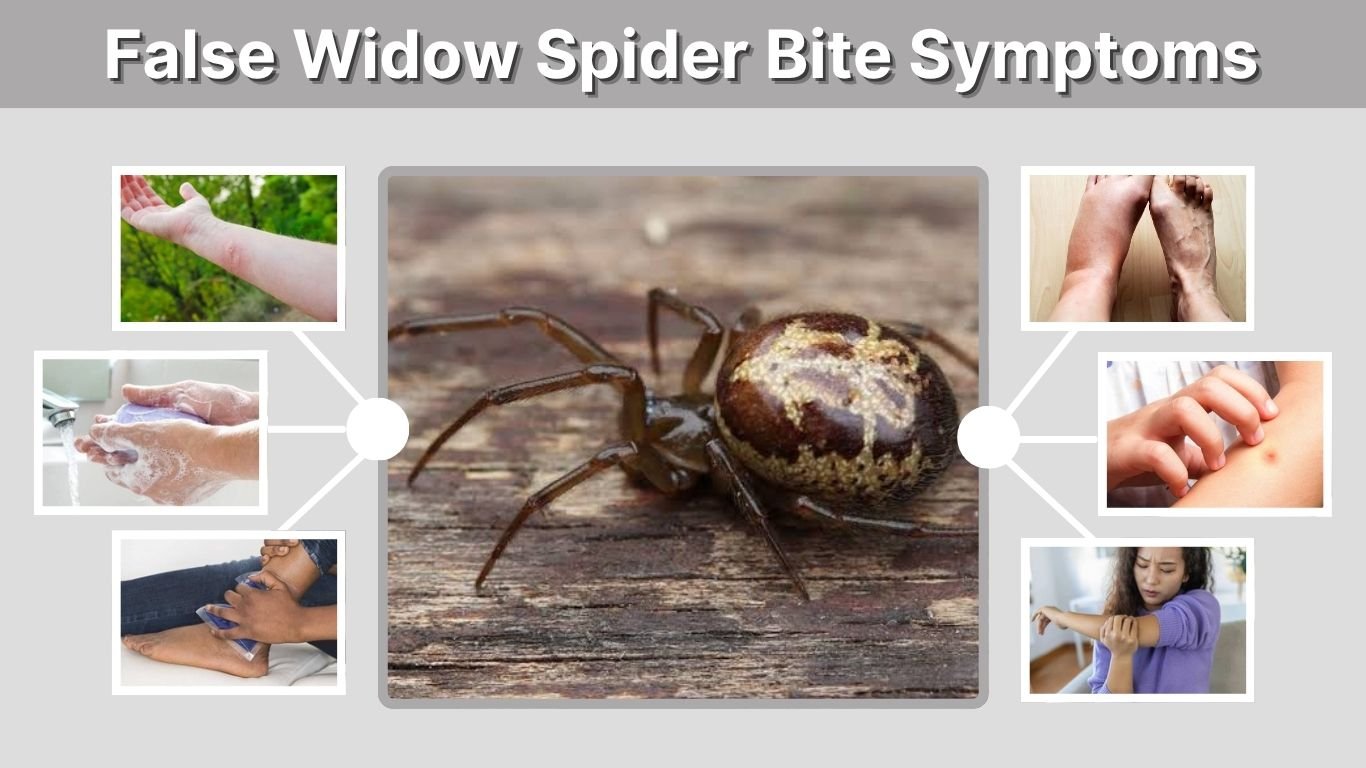
A false widow spider bite can be painful, worrying, and easy to confuse with other insect bites. Most bites are mild, causing redness, swelling, and a sharp sting-like pain. However, some people may develop blisters, infection, or stronger body-wide symptoms. This guide explains what a false widow spider bite looks like, common symptoms, bite stages, treatment steps, and when to get medical help.
What Is a False Widow Spider Bite?
False widow spiders belong to the Steatoda group and are often confused with black widow spiders because of their rounded body shape and dark colouring. In the UK and Ireland, the noble false widow is one of the best-known species. It can bite, but bites are still uncommon and usually happen when the spider is trapped against skin.
A false widow bite is mildly venomous. For most people, it feels similar to a bee or wasp sting. The bite may hurt, swell, itch, or leave small puncture marks. Serious reactions are not common, but the bite should be cleaned and watched carefully.
Why False Widow Spiders Bite
False widow spiders do not usually bite people without a reason. They are shy and prefer dark, quiet spaces such as sheds, garages, window frames, cupboards, and cluttered corners. A bite is more likely if the spider is pressed against the body inside clothing, bedding, gloves, shoes, or towels.
They bite as a defence, not because they want to attack. Many suspected spider bites are actually caused by mosquitoes, fleas, bed bugs, mites, or skin infections.
Common Bite Locations
False widow spider bites may appear on areas where clothing presses against the skin. Common bite locations include arms, legs, hands, ankles, neck, back, and feet. Bites on the leg are often reported because spiders can hide in shoes, socks, or stored clothes.
A bite on thin or sensitive skin may feel more painful. Children, older adults, and people with allergies may react more strongly.
Is It the Same as a Black Widow Bite?
A false widow spider is not the same as a black widow spider. False widows are related in appearance, but their venom is much less dangerous. A black widow bite can cause stronger muscle pain, cramps, and serious symptoms. False widow bites are usually local, meaning the symptoms stay around the bite area.
Still, any bite that causes severe pain, breathing trouble, dizziness, spreading redness, or swelling of the face or throat should be treated as urgent.
False Widow Spider Bite Symptoms
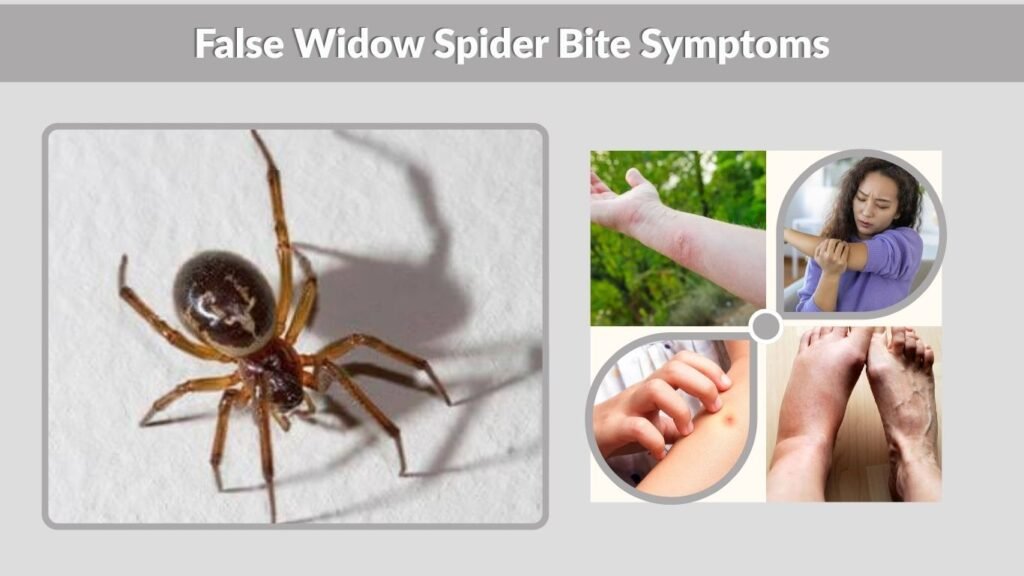
False widow spider bite symptoms can vary from person to person. Some people only notice a small red mark, while others may feel stronger pain, swelling, or mild illness. Symptoms usually begin soon after the bite and may change over the next few hours.
Most bites improve within a few days with basic care. The main risk is not always the venom itself, but scratching, poor wound care, or infection after the bite.
Mild Symptoms
Mild false widow spider bite symptoms may include:
- Sharp pain or stinging at the bite site
- Redness around the bite
- Mild swelling
- Itching or irritation
- Small puncture marks
- Warm skin around the bite
- Tenderness when touched
- A small raised bump
These symptoms can look similar to a mosquito bite, flea bite, or bee sting. The pain may be stronger at first, then slowly fade.
Moderate Symptoms
Some people develop a stronger reaction. Moderate symptoms may include a larger swollen area, throbbing pain, a blister, numbness, or redness that spreads slightly around the bite. The skin may feel hot, tight, or sore.
A false widow spider bite blister can appear as a small fluid-filled bump. Do not pop it, because opening the blister may let bacteria enter and increase the chance of infection.
Stronger Body-Wide Symptoms
In rare cases, a bite may cause symptoms beyond the bite area. These may include headache, nausea, sweating, tiredness, dizziness, feverish feelings, or muscle aches. Some people may feel generally unwell for a day or two.
These symptoms do not always mean something dangerous is happening, but they should be taken seriously if they are intense, getting worse, or combined with breathing problems or swelling of the lips, tongue, or throat.
What Does a False Widow Spider Bite Look Like?
A false widow spider bite can look different depending on the person’s skin reaction. At first, it may appear as a small red bump or two tiny puncture marks. Over time, the area may become swollen, itchy, painful, or slightly bruised.
It is difficult to identify a spider bite from the mark alone unless you saw the spider bite you. Many bite pictures online look similar to infected insect bites, allergic reactions, or skin irritation.
| Bite Feature | What You May Notice |
| Early mark | Small red bump or tiny puncture marks |
| Pain level | Mild to sharp sting-like pain |
| Swelling | Local swelling around the bite |
| Blister | Possible small fluid-filled blister |
| Rash | Redness or irritation around the skin |
| Infection sign | Pus, heat, spreading redness, worsening pain |
Early Bite Mark
An early false widow bite mark may be small and easy to miss. You may notice a sudden sting, then a red spot or tender bump. In some cases, two small puncture marks may be visible, but they are not always clear.
The bite may feel sore before it looks serious. This is why people sometimes notice pain first and only later see redness or swelling.
Blister or Rash
A blister false widow spider bite may develop within hours or by the next day. The blister can be small, clear, and tender. A rash may also form around the bite, especially if the person has sensitive skin or an allergic reaction.
Avoid scratching the rash. Scratching can break the skin and increase the chance of bacterial infection.
Signs of Infection
A bite may be infected if redness spreads, pain becomes worse, the skin feels hot, pus appears, or red streaks move away from the bite. Fever, chills, or feeling very unwell can also suggest infection.
Infected bites need medical advice. A doctor may recommend antibiotics if there is a bacterial infection.
False Widow Spider Bite Stages
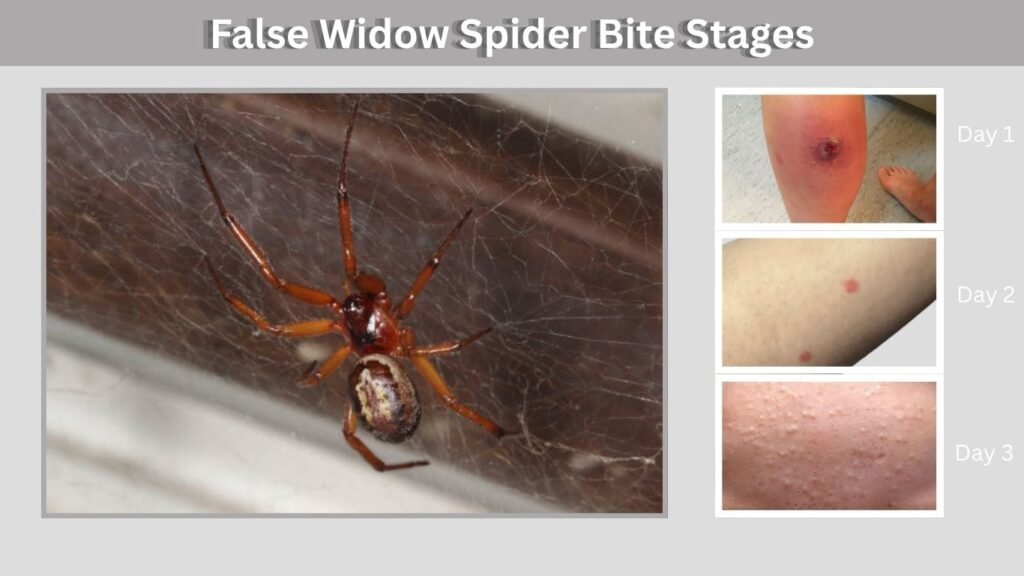
False widow spider bite stages are not the same for everyone, but many bites follow a simple pattern. The first day usually brings pain, redness, and swelling. The next few days may involve itching, tenderness, or a small blister before healing begins.
If symptoms worsen instead of improving, the bite may be infected or the person may be having a stronger reaction.
Day 1 False Widow Spider Bite
On day 1, the bite may feel like a sharp sting or burning pain. The skin may become red, swollen, and tender. Some people may notice small puncture marks. Pain can last for a few hours and may feel stronger than a normal insect bite.
Wash the area with soap and water, apply a cold compress, and avoid scratching. Marking the edge of redness with a pen can help you see if it is spreading.
Day 2 to Day 3
By day 2 or day 3, mild bites often begin to settle. Pain may reduce, while itching or tenderness may continue. A small blister may appear in some cases. The swelling should not keep spreading.
If the bite becomes more painful, hot, swollen, or begins to leak pus, this may suggest infection. Medical advice is important if symptoms are getting worse.
Healing Stage
Most mild false widow bites improve within a few days. The mark may take longer to fade, especially if there was a blister or heavy scratching. Keep the area clean and dry while it heals.
Do not use harsh chemicals, cut the skin, or try to “remove venom.” These methods can damage the skin and increase infection risk.
False Widow Spider Bite Treatment
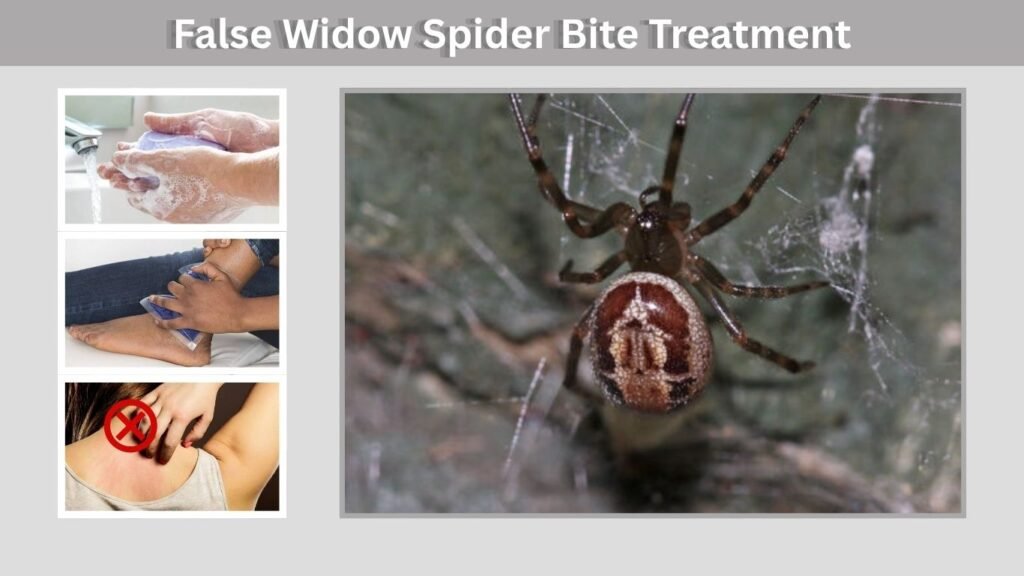
False widow spider bite treatment is usually simple home care. The goal is to reduce pain, swelling, itching, and infection risk. Most mild bites do not need hospital treatment, but you should watch the bite for changes.
If the person is a baby, pregnant, elderly, allergic, or has a weak immune system, it is safer to get medical advice early.
First Aid Steps
Follow these basic treatment steps:
- Wash the bite with soap and water.
- Apply a cold compress for 10–15 minutes.
- Keep the area raised if swelling is on an arm or leg.
- Avoid scratching the bite.
- Do not pop any blisters.
- Use a clean dressing if the skin is broken.
- Take normal pain relief if suitable for you.
- Ask a pharmacist about antihistamine cream or tablets for itching.
These steps can help mild bites feel better and reduce the chance of infection.
What Not to Do
Do not cut the bite, squeeze it, burn it, or apply strong home remedies. Do not use alcohol, bleach, or unknown creams on the wound. These can irritate the skin and make healing slower.
Do not rely only on online pictures to diagnose a bite. Skin infections, allergic reactions, and other insect bites can look very similar.
When to See a Doctor
Get medical advice if pain is severe, swelling is spreading, the bite looks infected, or symptoms do not improve after a few days. Also seek help if you develop fever, nausea, dizziness, vomiting, or strong muscle pain.
Call emergency services if there are signs of a serious allergic reaction, such as breathing trouble, swelling of the face or throat, fainting, confusion, or a widespread rash.
Are False Widow Spider Bites Dangerous?
False widow spider bites are usually not dangerous for healthy adults. Most cases are mild and improve with simple care. However, “not usually dangerous” does not mean every bite should be ignored. Infection, allergic reaction, or rare stronger venom reactions can happen.
The bite can be more concerning for young children, pets, older people, and anyone with allergies or health conditions.
Risk of Allergic Reaction
An allergic reaction may cause swelling, itching, rash, dizziness, wheezing, or difficulty breathing. A serious allergic reaction is rare but can be life-threatening. If breathing becomes difficult or the face, mouth, lips, tongue, or throat swells, seek emergency help immediately.
People who have had strong reactions to bites or stings before should be extra careful.
Risk of Infection
Infection is one of the main concerns after any bite. Bacteria can enter through broken skin, especially if the bite is scratched or a blister is opened. Signs include spreading redness, warmth, pus, increasing pain, and fever.
Clean wound care is important. If infection signs appear, a doctor may need to check the bite.
False Widow Bite in Dogs and Cats
A false widow spider bite on a dog or cat may cause pain, swelling, licking, limping, restlessness, or a tender lump. Pets may react differently because they cannot explain pain. Small pets may be more sensitive.
If your dog or cat seems weak, swollen, sick, or in pain after a suspected bite, contact a vet. Do not give human medicine to pets unless a vet tells you to.
How to Identify a False Widow Spider
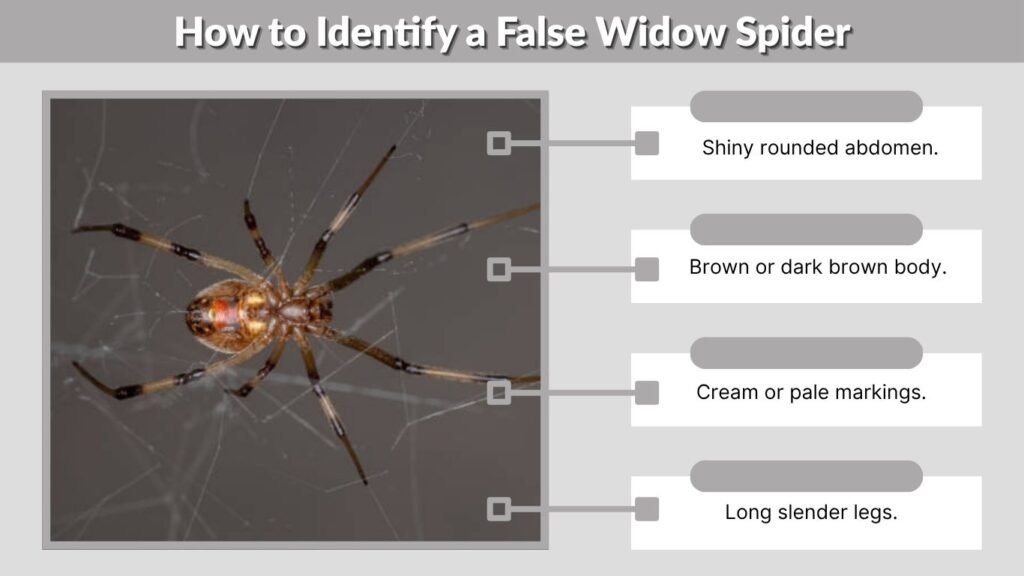
Identifying the spider can help, but do not try to handle it. False widow spiders often have a shiny, rounded abdomen and dark brown colouring. Some have pale cream markings on the body. The noble false widow may have a skull-like or marbled pattern, but markings vary.
They are often found indoors in quiet spaces, especially around windows, garages, sheds, lofts, and stored items.
Key Identification Features
False widow spiders may have:
- Shiny rounded abdomen
- Brown or dark brown body
- Cream or pale markings
- Long slender legs
- Webs in corners, sheds, or window frames
- Body shape similar to a black widow but usually less glossy black
If you are unsure, take a clear photo from a safe distance and compare it with reliable spider identification resources.
How to Avoid Bites
Shake out shoes, gloves, towels, and clothes that have been stored for a long time. Wear gloves when clearing sheds, garages, wood piles, or cluttered areas. Seal gaps around windows and doors where possible.
Regular cleaning helps reduce spider hiding places. Removing clutter also makes it harder for spiders to settle indoors.
Should You Kill False Widow Spiders?
False widow spiders help control insects, so they do have a role in the home and garden. If you find one indoors and feel uncomfortable, use a glass and card to move it outside safely. Avoid touching it with bare hands.
If there are many spiders in one area, check for insect activity, clutter, or gaps that may be attracting them.
FAQs
What does a false widow spider bite look like?
A false widow spider bite may look like a small red bump, tiny puncture marks, swelling, or a sore raised area. Some people develop a blister or rash. It can look similar to other insect bites, so it is hard to confirm unless you saw the spider bite you.
What are the first symptoms of a false widow bite?
The first symptoms are usually sharp pain, stinging, redness, tenderness, and mild swelling around the bite. Some people notice itching or warmth. In stronger reactions, headache, nausea, sweating, dizziness, or muscle aches may appear later.
How do you treat a false widow spider bite?
Wash the bite with soap and water, apply a cold compress, keep it clean, and avoid scratching. Do not burst blisters. You can ask a pharmacist about pain relief or antihistamines. See a doctor if swelling spreads, pain worsens, pus appears, or you feel unwell.
Are false widow spider bites fatal?
False widow spider bites are not usually fatal. Most bites are mild and improve within a few days. However, rare allergic reactions or infections can become serious. Emergency help is needed if there is breathing difficulty, facial swelling, fainting, or a severe whole-body reaction.
Can a false widow spider bite a dog or cat?
Yes, a false widow spider can bite a dog or cat, although it is not common. Pets may show pain, swelling, licking, limping, or tiredness. Contact a vet if your pet seems unwell, weak, swollen, or in pain after a suspected spider bite.
