
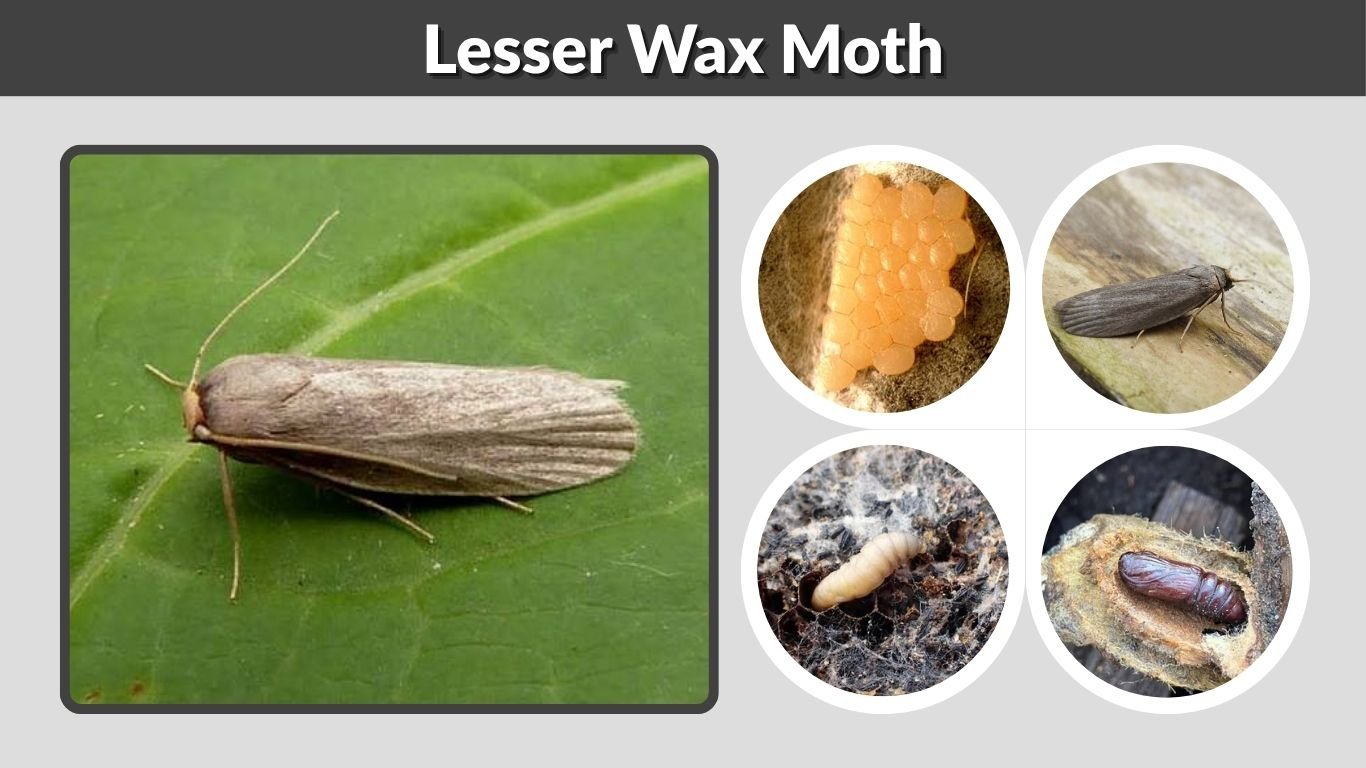
The lesser wax moth (Achroia grisella) is a small moth whose caterpillars damage honey bee comb and stored beekeeping materials. Unlike the adults, the larvae feed, producing silk tunnels and leaving waste behind as they move through comb. Infestations are most troublesome in poorly protected stored frames and colonies already weakened by other problems. Recognizing the moth, understanding its life cycle, and protecting unused equipment can prevent considerable damage. Successful control involves both removing existing infestations and addressing the conditions that allowed them to develop.
What Is a Lesser Wax Moth?
The lesser wax moth belongs to the family Pyralidae. Its close association with honey bee nests makes it important to beekeepers, although an adult moth near a hive does not automatically indicate a serious infestation.
Adult Identification
Look for these characteristics:
- Scientific name: Achroia grisella
- Body length: Approximately 13 millimeters.
- Shape: Slender, with folded wings covering the body.
- Color: Silver-gray, beige, or dull yellowish-gray.
- Head: Noticeably yellow.
- Sex differences: Females generally larger than males.
- Activity: Mainly nocturnal.
Adult body length should not be confused with wingspan. Photographs showing the head and folded wings are helpful when distinguishing this species from other small moths.
Lesser Wax Moth Larvae
Larvae are narrow, whitish caterpillars with brown heads. Mature individuals can reach approximately 20 millimeters.
They produce protective silk tunnels as they feed. Finding caterpillars together with webbing and small waste pellets provides stronger evidence of infestation than seeing an adult moth alone.
Lesser Wax Moth Life Cycle
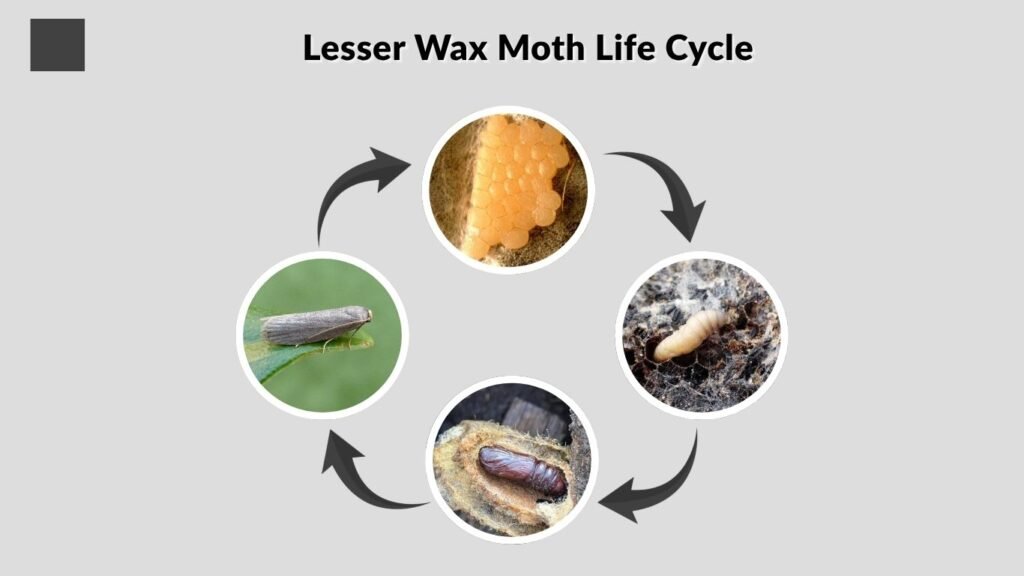
The lesser wax moth undergoes complete metamorphosis: egg, larva, pupa, and adult. Temperature and food availability influence development, so there is no single reliable timetable for every hive or storage area.
Eggs
Females deposit small, creamy-white eggs in protected cracks near suitable food. Hatching commonly takes about five to eight days, with development influenced by temperature.
Larvae and Instars
Larvae feed and grow through successive stages called instars, separated by molts. Development may take roughly one to five months.
This is the damaging stage: caterpillars tunnel through comb and consume associated food materials.
Pupa and Cocoon
A mature larva spins a tough silk cocoon before becoming a pupa. Cocoons may be attached to hive surfaces and hidden beneath debris. The insect transforms inside; it does not feed during this stage.
Adult Moths
Adults typically live about a week. Males attract females using ultrasonic signals, and mating and egg laying occur mainly at night.
Greater vs. Lesser Wax Moth
The greater wax moth and lesser wax moth are separate species, not different ages of the same insect. Both damage comb, but the greater wax moth generally causes more extensive destruction.
Main Identification Differences
| Feature | Lesser wax moth | Greater wax moth |
| Scientific name | Achroia grisella | Galleria mellonella |
| Typical adult body length | About 13 mm | About 20 mm |
| Adult appearance | Slender, pale gray or beige | Larger, brownish-gray, often mottled |
| Larval appearance | Whitish with a brown head | Creamy-white, becoming grayer with maturity |
| Larval behavior | Often found individually | May occur in large groups |
| Feeding locations | Comb, pollen, and floor debris | Often extensive feeding through brood comb |
Size alone cannot identify young larvae because a small greater wax moth caterpillar may resemble a lesser wax moth larva. Consider adults, feeding patterns, and expert identification together.
Signs of Lesser Wax Moth Infestation
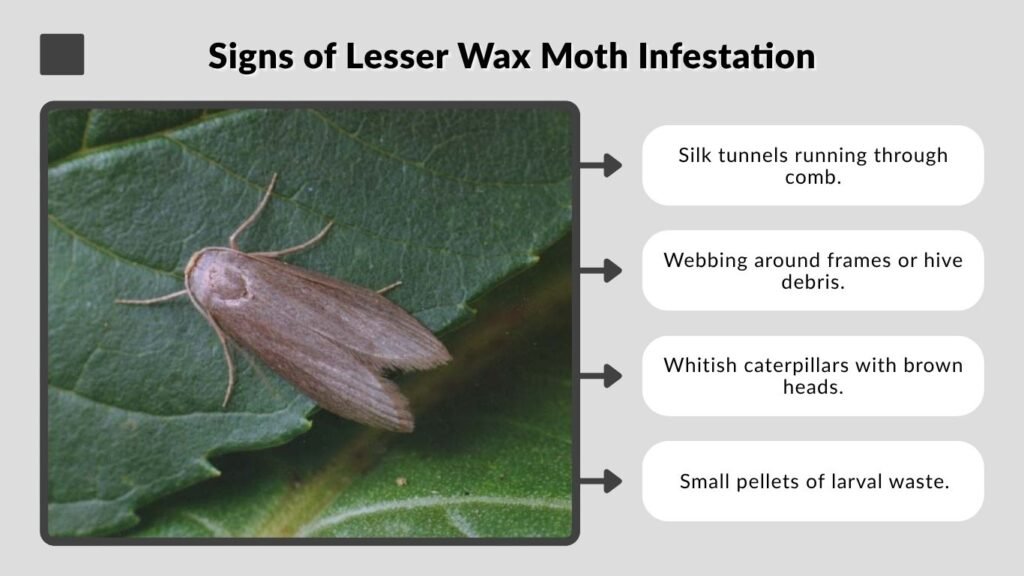
The larvae, rather than the adult moths, cause the physical damage. Regular inspection is especially important for stored comb because no worker bees are present to remove intruders.
What to Look For
Possible signs include:
- Silk tunnels running through comb.
- Webbing around frames or hive debris.
- Whitish caterpillars with brown heads.
- Small pellets of larval waste.
- Cocoons attached to equipment.
- Damaged or weakened comb.
- Lines of uncapped developing bee pupae.
A few moths or larvae do not necessarily mean the colony is collapsing. Assess the extent of damage and the number of bees protecting the comb.
Bald Brood
Lesser wax moth activity can contribute to “bald brood.” Larvae tunnel beneath capped brood cells, and worker bees remove damaged cappings, exposing developing pupae.
Affected cells may form a line following the caterpillar’s route. However, uncapped brood is not proof of wax moth infestation by itself; look for tunnels, silk, or larvae.
Why Weak Colonies Are Vulnerable
Healthy, populous colonies usually keep wax moths under control. Infestations become more likely when too few workers remain to defend the comb.
Queen problems, disease, inadequate nutrition, and other pests can weaken that defense. Heavy moth damage may therefore be a consequence of colony decline rather than its original cause.
Treatment for Lesser Wax Moth
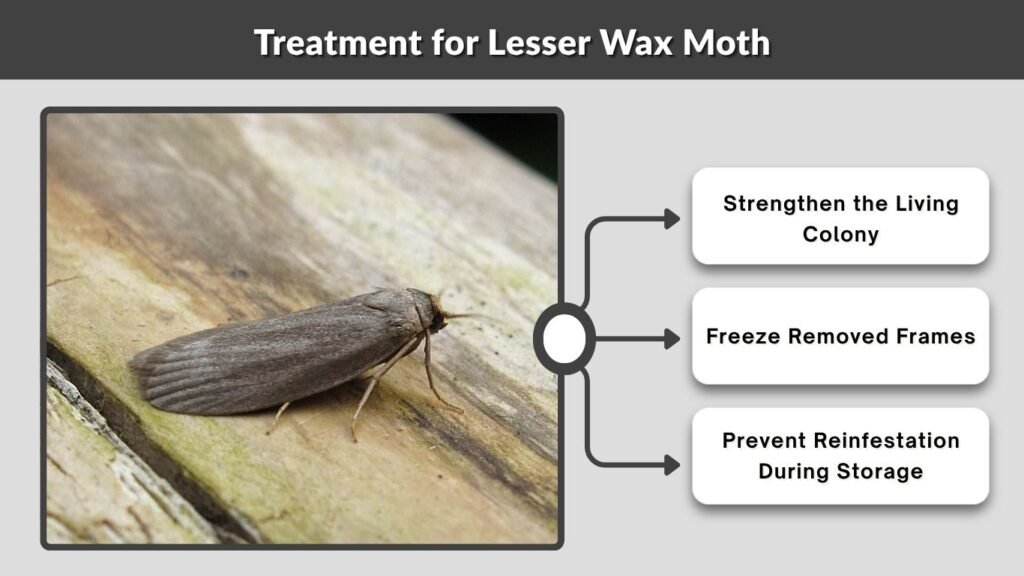
Management differs between occupied hives and stored equipment. A treatment appropriate for empty frames must never be assumed safe for bees, brood, or honey intended for consumption.
Strengthen the Living Colony
Investigate why the colony cannot protect its comb. Check queen status, food availability, brood health, and other pest problems.
Match the amount of hive space to the colony’s strength so bees are not expected to defend excessive unused comb. Seek help from an experienced beekeeper or bee inspector when the cause of decline is unclear.
Freeze Removed Frames
Freezing can kill wax moth eggs, larvae, pupae, and adults in removed equipment. The UK National Bee Unit recommends freezing frames for 48 hours before storage. Treatment success depends on temperature and the entire load becoming sufficiently cold, not merely the freezer’s air temperature.
Treat only suitable removed materials—not occupied hives or frames containing living brood. Frozen comb is brittle, so handle it carefully. Freezing controls moths; it does not make diseased equipment safe to reuse.
Prevent Reinfestation During Storage
Keep treated, dry equipment in moth-proof storage and inspect it periodically. Untreated boxes or new adult moths can reintroduce an infestation.
Dispose of unusable comb appropriately and avoid leaving exposed comb scraps around the apiary.
Use Products Only as Labeled
Never substitute household mothballs or general insect sprays for an approved beekeeping treatment. Some products are intended only for stored equipment, not living colonies or edible comb honey.
Check local authorization and the current label before applying anything. When uncertain, use local beekeeping extension or inspection services for advice.
FAQs
These answers address common questions about lesser wax moths and their management.
Do Lesser Wax Moth Adults Eat Beeswax?
No. The larval stage feeds and causes damage; adult moths do not chew through comb.
Can Lesser Wax Moths Destroy a Healthy Hive?
Strong colonies generally suppress them. Serious infestations are more often associated with weakened colonies or unprotected stored equipment.
Does Freezing Permanently Protect Comb?
No. Freezing kills moth stages present during successful treatment, but adults can lay new eggs afterward. Protected storage remains essential.
Are Lesser Wax Moth Larvae Sold as Waxworms?
They can be cultured, but a product labeled “waxworms” does not necessarily contain Achroia grisella. Confirm the scientific name when purchasing larvae for research or culture, and prevent escapes near apiaries.
Can Damaged Frames Be Reused?
Some structurally sound comb can be reused after moth control and cleaning. Severely damaged comb may need replacement. If disease is suspected, obtain advice before moving equipment into another colony.
