
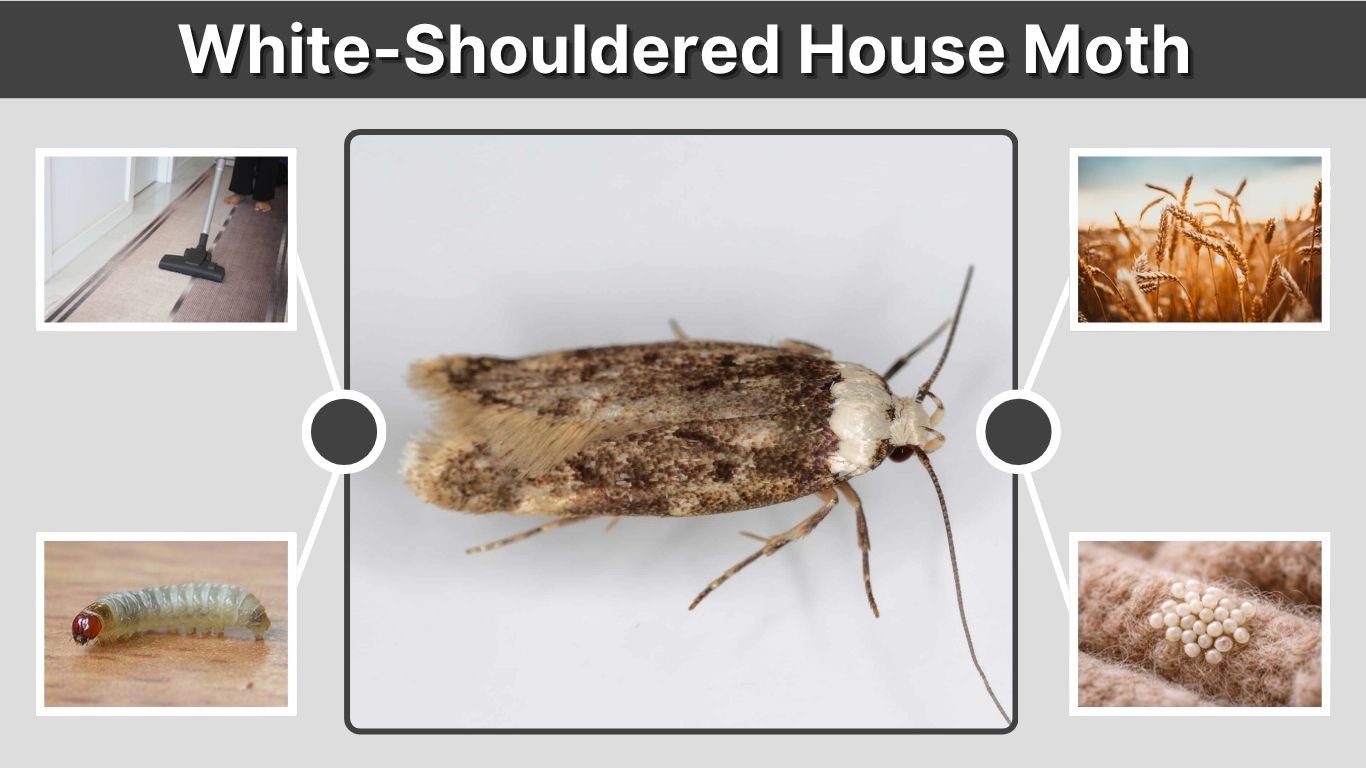
The white-shouldered house moth is a small, mottled moth with a distinctive white head and shoulders. Finding one indoors can raise concerns about clothing, carpets, or stored food, but identifying its breeding source is more useful than immediately spraying the room. Its larvae feed on various plant and animal materials, particularly in neglected areas. This guide explains how to recognize white-shouldered house moths, understand their life cycle, check for damage, and tackle an infestation through targeted cleaning and prevention.
What Is a White-Shouldered House Moth?
The white-shouldered house moth, Endrosis sarcitrella, occurs in buildings and has spread internationally through transported goods.
Identification
Look for these features:
- Scientific name: Endrosis sarcitrella
- Wingspan: Approximately 15–21 mm
- Head and shoulders: Conspicuously white
- Forewings: Mottled grayish-brown with darker markings
- Larvae: Pale caterpillars with brown heads
- Season: Adults may appear throughout the year indoors
The wingspan measures the spread wings, not body length. The white head and thorax are particularly useful identification features.
How Does It Differ From a Clothes Moth?
A typical webbing clothes moth looks more uniformly golden or buff. A white-shouldered house moth has contrasting white shoulders and patterned wings.
Finding holes in clothing does not establish which pest caused them. Examine the insects and affected material together before choosing treatment.
What Do White-Shouldered House Moths Eat?
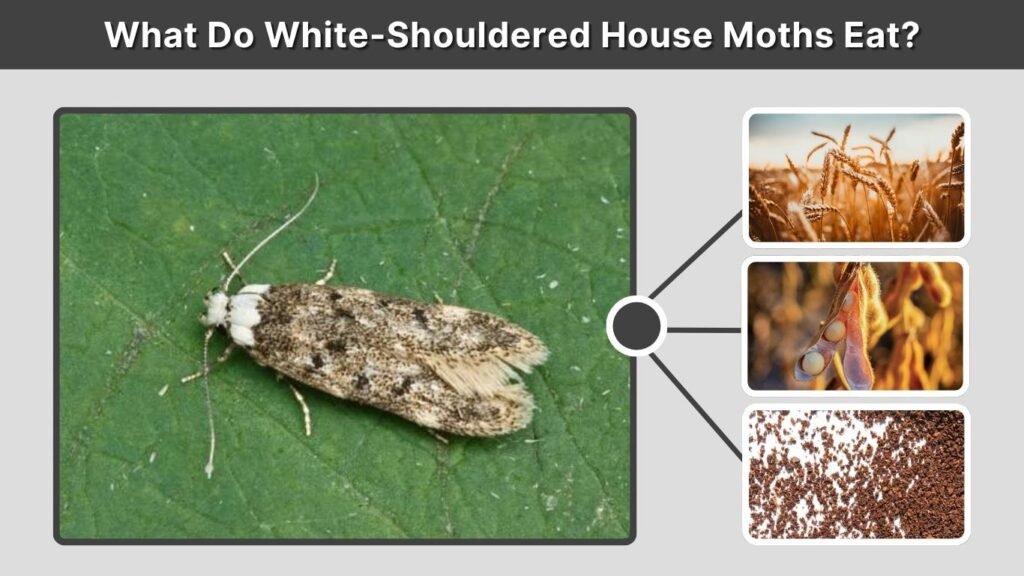
The larvae are scavengers with a broader diet than their association with clothing might suggest.
Common Food Sources
Potential feeding materials include:
- Grain, cereals, and spilled dry food
- Seeds and animal-feed residues
- Dried plant debris
- Hair, feathers, and other animal remains
- Debris associated with old bird nests
They can develop in houses, sheds, and outbuildings where suitable material accumulates.
Do White-Shouldered House Moths Eat Clothes?
Their larvae can damage textiles, but this is particularly associated with material stored in damp, dirty conditions. They should not automatically be treated as equivalent to the main clothes-moth species.
Inspect neglected woolens, carpets, and stored furnishings, especially where moisture or organic debris is present. One adult near a wardrobe does not prove that clean clothing is being eaten. The feeding damage comes from larvae, not adult moths chewing garments.
White-Shouldered House Moth Life Cycle
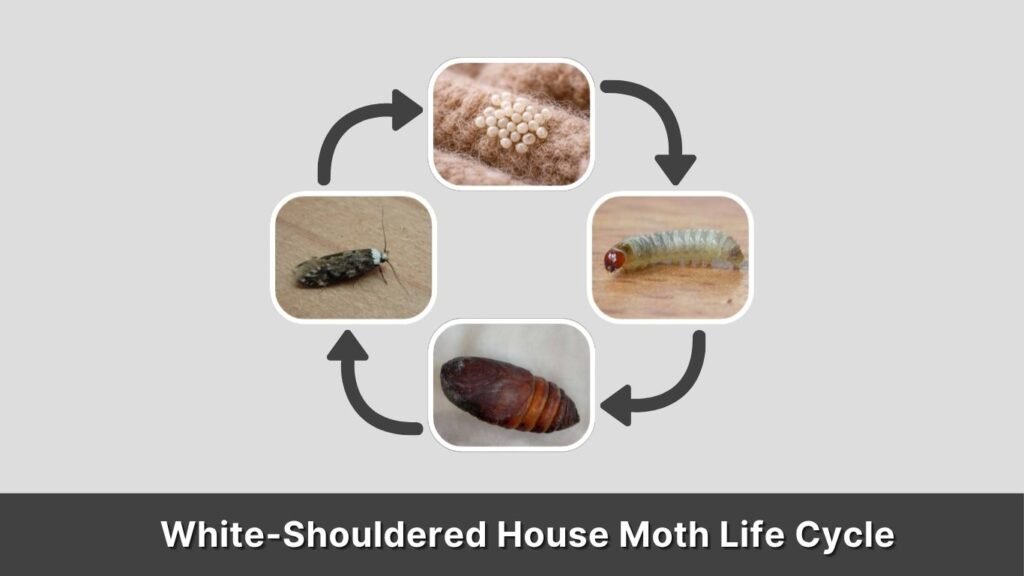
These moths undergo complete metamorphosis: egg, larva, pupa, and adult. Development depends on temperature, moisture, and food availability.
Eggs and Larvae
Females lay tiny eggs near suitable feeding material. After hatching, the caterpillars feed and grow, often remaining concealed within debris.
The larval stage can last several months. Consequently, killing visible adults alone may leave the feeding population untouched.
Cocoons, Pupae, and Adults
Mature larvae form silken cocoons and become pupae before emerging as winged adults. A cocoon found in a sheltered crevice may be separate from the original feeding site.
Conditions inside buildings can support overlapping generations, so eggs, larvae, pupae, and adults may be present simultaneously.
Why Are White-Shouldered House Moths in Your Home?
A recurring problem suggests that suitable food and shelter are available somewhere nearby. The source may be small and easily overlooked.
Signs of an Infestation
Check for:
- Repeated adult sightings in the same area
- Pale caterpillars in stored material
- Silk webbing or cocoons
- Contaminated food residues
- Damage to neglected textiles
Photograph an adult before cleaning. Larvae alone can be harder to identify reliably.
White-Shouldered House Moth in the Bathroom
A bathroom sighting does not mean the moth is breeding inside a drain. Drain flies are different insects, despite their mothlike appearance.
A practical first check is accumulated lint and hair, damp storage areas, and adjoining cupboards. The moth may also have flown in from another room. Confirm identification before applying any drain treatment.
Hidden Sources Elsewhere
Inspect behind furniture, around radiators, in food-storage areas, and near roof spaces. Old nesting material can provide a hidden source, but do not disturb active bird nests or bat roosts. Arrange a wildlife-aware inspection when access or occupancy is uncertain.
How to Get Rid of White-Shouldered House Moths
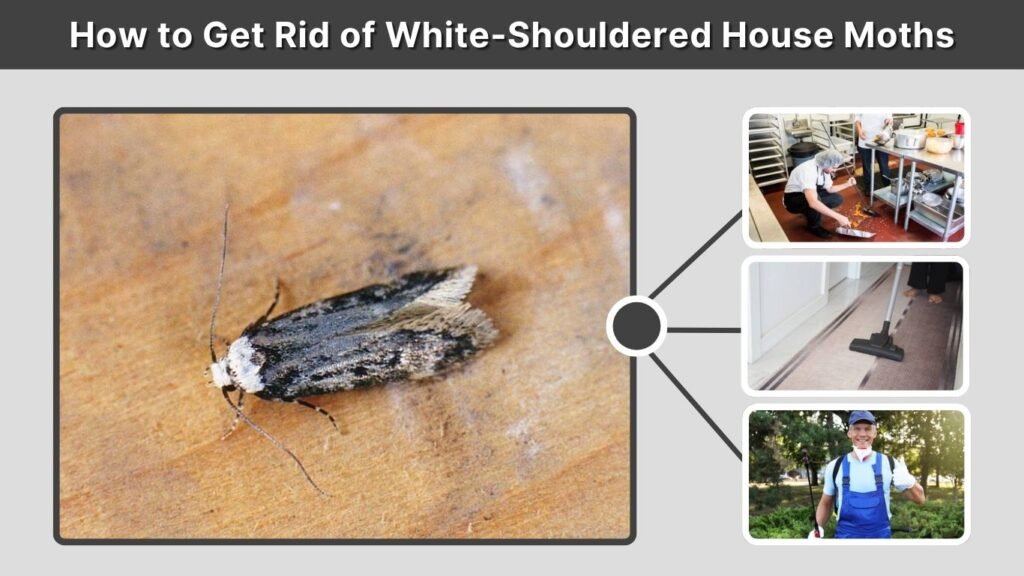
Effective control starts with finding and removing the material supporting the larvae. Spraying flying adults without addressing that source rarely resolves the underlying problem.
Inspect and Remove Infested Food
Examine cereals, seeds, pet food, and nearby spills. Bag contaminated products and dispose of them outside the home.
Vacuum cupboard seams and corners, then store unaffected food in tightly closed glass, metal, or sturdy plastic containers. Check nearby packages rather than assuming the first infested item is the only source.
Clean Textiles and Concealed Areas
Vacuum carpet edges, underneath furniture, wardrobe corners, and accessible lint accumulations. Promptly empty the vacuum into a sealed waste bag.
Isolate suspect textiles until they can be inspected and cleaned. Follow garment-care instructions; an unsuitable hot wash can damage wool. Tell a professional cleaner about the suspected infestation when arranging treatment for delicate items.
Correct Damp Conditions
Repair leaks, improve ventilation, and allow damp storage areas to dry. Keep stored clothing clean and dry, and regularly inspect items that remain unused for long periods.
Cleaning and moisture correction work together: removing moths while leaving damp, contaminated material behind can allow the problem to continue.
Choose Traps Carefully
A white-shouldered house moth trap must be appropriate for the target insect. Pheromone lures are species-specific, so a product sold for clothes moths or pantry moths should not automatically be assumed effective against Endrosis sarcitrella.
Check the manufacturer’s stated target species. Unbaited sticky monitors may catch passing insects, but neither monitoring traps nor adult catches eliminate hidden larvae.
Seek Professional Treatment When Necessary
Consider professional help when moths persist despite source removal, the infestation involves inaccessible spaces, or valuable textiles are affected.
Ask for identification and a source inspection before treatment. If an insecticide is recommended, it must be labeled for the intended use and location. Do not improvise by spraying food, clothing, or drains.
FAQs
These answers address common concerns after finding a moth indoors.
Are White-Shouldered House Moths Dangerous?
They are not biting or stinging pests. The main concerns are contaminated materials and possible larval damage, rather than direct injury to people.
Does One Moth Mean an Infestation?
No. One adult could be an isolated visitor. Repeated sightings, larvae, or damage provide stronger evidence of a breeding population.
What Does a Baby White-Shouldered House Moth Look Like?
The immature feeding stage is a pale caterpillar with a brown head. There is no miniature winged “baby moth” stage.
Why Are My Moth Traps Empty?
The lure may target another species, the placement may be unsuitable, or few adults may be present. Empty traps do not rule out hidden larvae.
How Long Does Treatment Take?
There is no fixed timeline. Existing pupae may still produce adults after cleaning. Record sightings and reinspect if activity persists or increases rather than relying on a promised number of days.
