
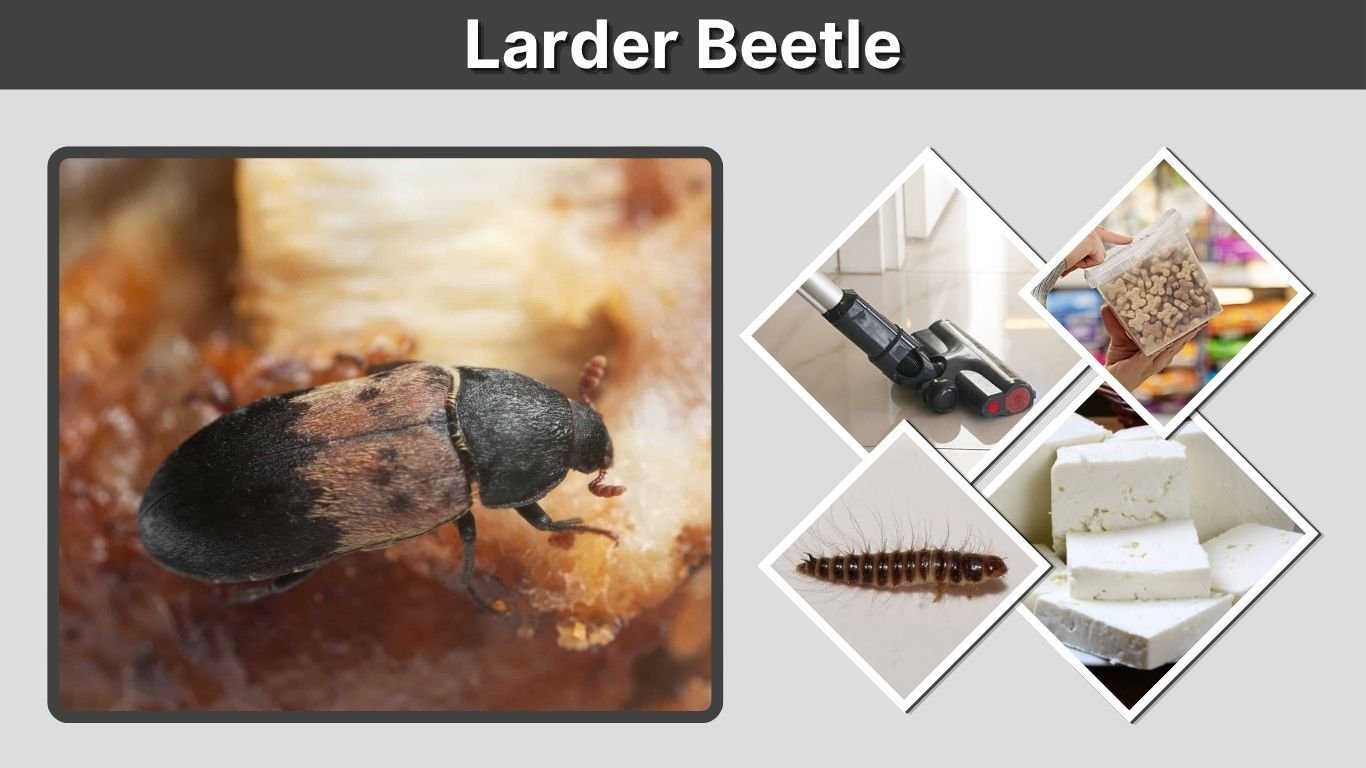
Finding a larder beetle in your house can be surprising, especially when you notice several crawling around the kitchen, bedroom, or pantry. These small insects are attracted to animal-based materials, stored foods, and hidden organic debris. Although larder beetles are generally harmless to humans, their larvae can contaminate food and damage certain household materials. Understanding what larder beetles look like, why they enter homes, and how they reproduce is essential for effective control. This guide explains their identification, life cycle, feeding habits, and practical ways to eliminate an infestation.
What Is a Larder Beetle?
The larder beetle (Dermestes lardarius) is a small scavenging beetle belonging to the Dermestidae family. It commonly lives around animal remains, dried food products, and other protein-rich materials. These beetles occur in many regions and sometimes enter residential buildings searching for shelter or suitable breeding locations.
Where Do Larder Beetles Live?
Larder beetles inhabit outdoor areas containing dead insects, animal remains, and decaying organic materials. Indoors, they may appear in kitchens, storage rooms, attics, basements, and wall cavities.
Adult beetles can enter homes through small openings around windows, doors, and other structural gaps. However, finding one beetle does not necessarily indicate an established infestation.
Larder Beetle Identification: What Do They Look Like?
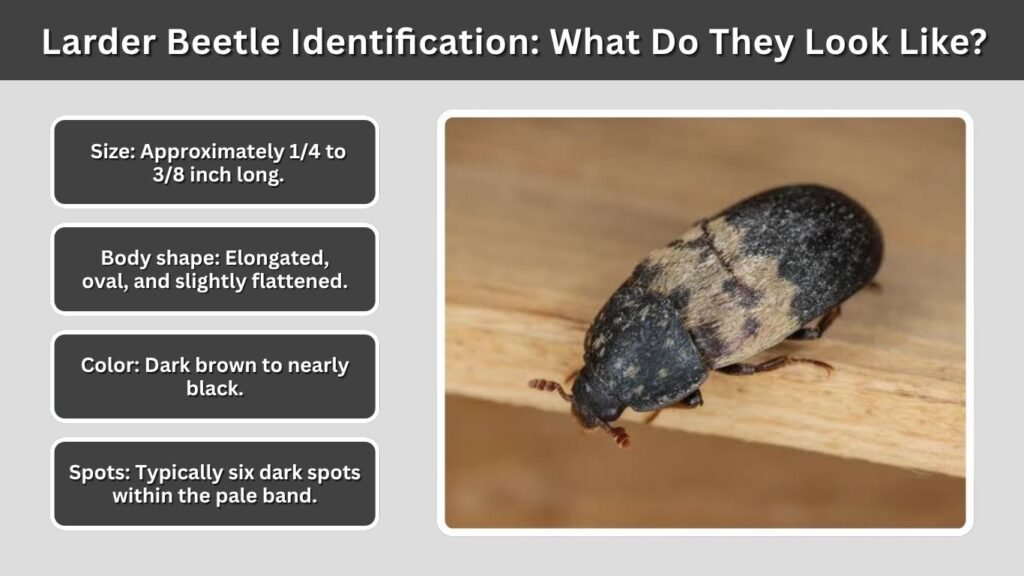
Recognizing a larder beetle requires examining its body shape, coloration, and distinctive markings. Adult beetles look considerably different from their larvae. Correct identification helps distinguish them from other household insects and makes locating an infestation easier.
Adult Larder Beetle Identification
Adult larder beetles have several recognizable physical characteristics:
- Size: Approximately 1/4 to 3/8 inch long.
- Body shape: Elongated, oval, and slightly flattened.
- Color: Dark brown to nearly black.
- Markings: A broad yellowish-tan band across the front portion of the wing covers.
- Spots: Typically six dark spots within the pale band.
- Legs: Six relatively short legs beneath the body.
Their distinctive light-colored band is particularly useful for identification. Adult larder beetles also have functional wings and can fly.
Larder Beetle Larvae Identification
Larder beetle larvae are elongated, hairy, and reddish-brown to dark brown. Mature larvae may reach approximately half an inch in length.
Their bodies are segmented and covered with bristly hairs. Two curved spines near the rear end are especially useful identification features.
Unlike adults, larvae spend much of their development feeding in protected locations. Homeowners sometimes discover them moving across floors or walls when they search for places to pupate.
Larder Beetle Life Cycle
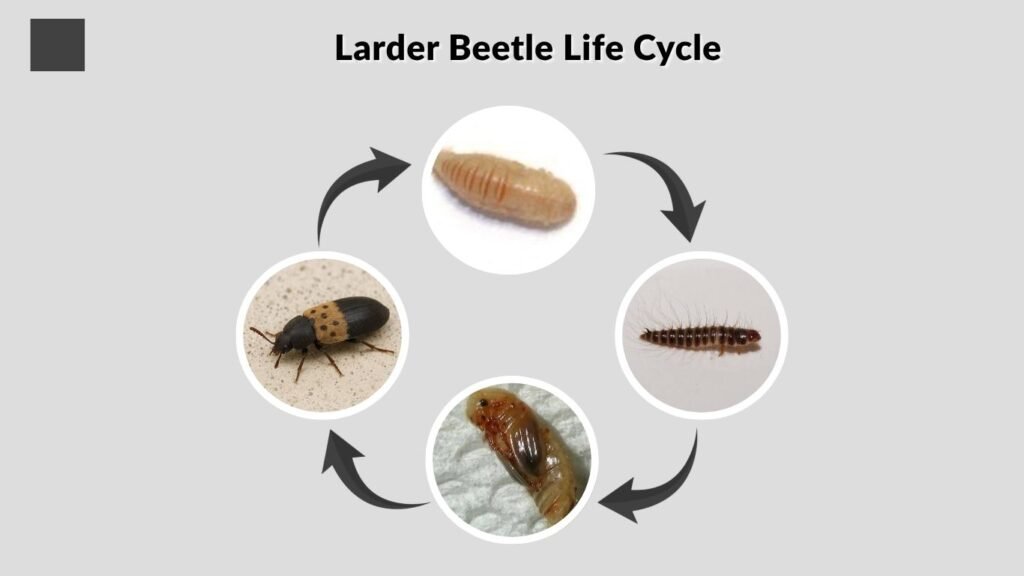
Larder beetles undergo complete metamorphosis, developing through four stages: egg, larva, pupa, and adult. Their development depends on environmental conditions, food availability, and temperature. Understanding these stages helps explain why adults and larvae may appear in different areas of a building.
Eggs and Larval Development
Female larder beetles lay eggs near suitable food materials. After hatching, the larvae begin feeding on protein-rich substances.
They grow through several molts before reaching maturity. During this period, their feeding can contaminate stored products or damage vulnerable animal-derived materials.
Pupae and Adult Beetles
Mature larvae leave feeding areas and search for protected locations to pupate. They sometimes bore into wood, insulation, and other relatively soft materials to create shelter.
Following pupation, adult beetles emerge and eventually reproduce. Under favorable conditions, their entire life cycle may take several weeks.
Why Are Larder Beetles in My House?
Larder beetles enter homes for several reasons, including shelter, food availability, and suitable breeding environments. Their presence is sometimes associated with hidden animal remains or accumulated dead insects rather than poor household cleanliness.
Common Reasons for an Infestation
Larder beetles may appear because of:
- Unsealed dry pet food or contaminated food packages.
- Dead rodents or birds inside walls, chimneys, or attics.
- Accumulations of dead flies and other insects.
- Stored animal products, feathers, hides, or leather.
- Food crumbs and organic debris in storage areas.
Repeated sightings of larvae or numerous adults suggest that a breeding source may be nearby.
Larder Beetles in Bedrooms
Finding larder beetles in a bedroom does not automatically mean they are feeding on the mattress or bedding.
Adult beetles may wander indoors, while mature larvae sometimes travel away from their food source before pupating.
Inspect window areas, stored materials, and nearby cracks. If beetles appear repeatedly, check adjoining rooms and possible hidden infestation sources.
What Do Larder Beetles Eat?
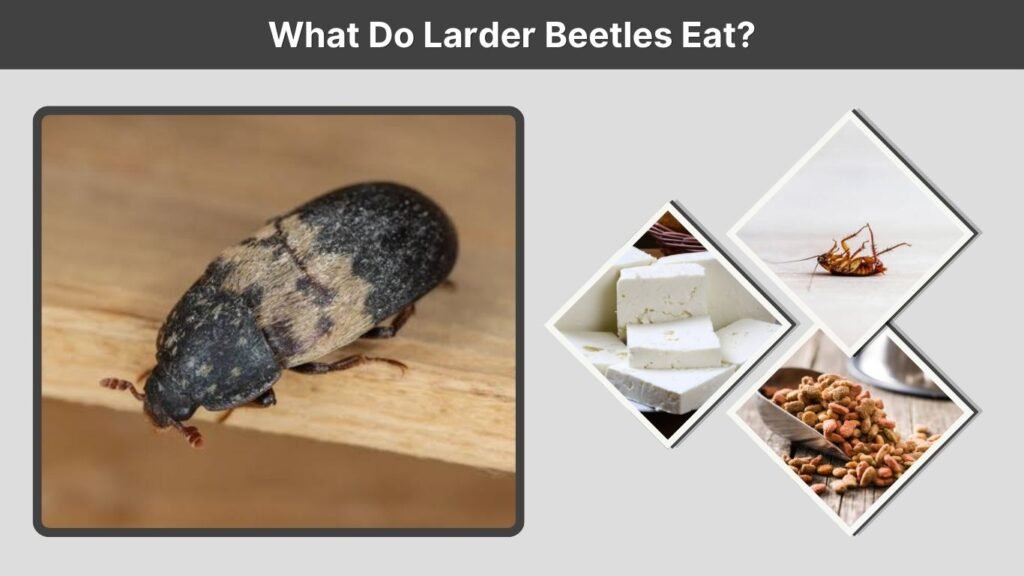
Larder beetles primarily consume dry, protein-rich animal materials. Both adults and larvae can feed on suitable organic substances, although developing larvae often cause the most noticeable problems.
Natural and Household Food Sources
Their diet includes dried meat, cheese, dead insects, animal carcasses, dry pet food, feathers, and animal hides.
They may also infest preserved animal specimens or other materials containing animal proteins.
Although larder beetles can infest pantry products, hidden animal remains and dead insects are important household food sources.
Are Larder Beetles Harmful or Dangerous?
Larder beetles are generally not dangerous to humans. They are not known for aggressive behavior, and their main significance as household pests involves food contamination and damage to certain materials.
Do Larder Beetles Bite Humans?
Larder beetles do not normally bite people and are not blood-feeding parasites. They also do not sting.
If you discover unexplained bites while finding beetles indoors, another insect may be responsible.
Can Larder Beetles Damage Your House?
Developing larvae sometimes bore into wood, insulation, or similar materials while preparing to pupate.
However, serious structural wood damage is uncommon. More typical problems involve infested food, animal-derived household materials, and persistent insect activity.
How to Get Rid of Larder Beetles in Your House
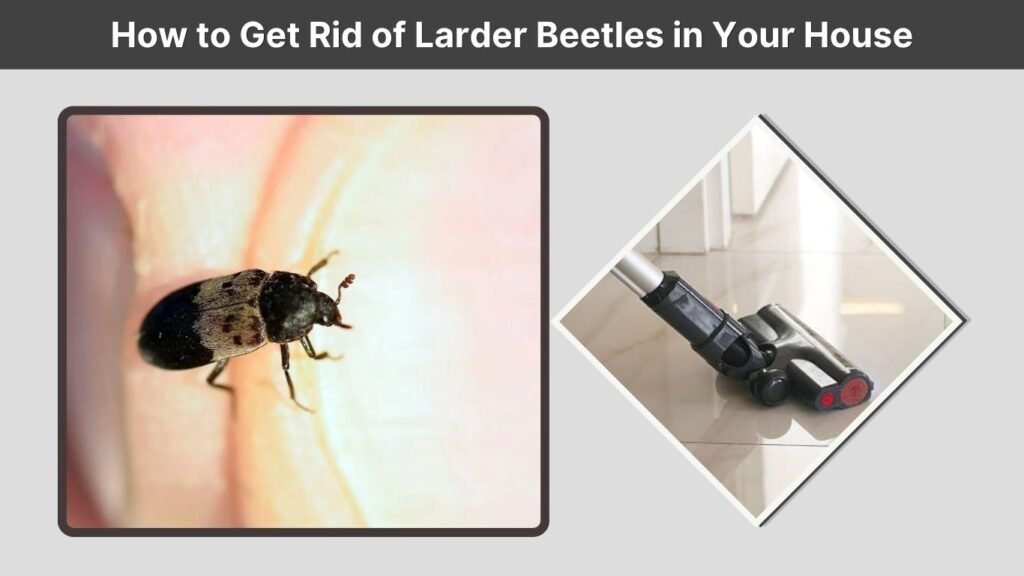
Successful larder beetle control begins with locating and eliminating their food source. Removing visible beetles without addressing their breeding material usually provides only temporary relief.
Step-by-Step Larder Beetle Removal
- Locate the infestation: Inspect pantries, pet food containers, attic spaces, and areas with repeated beetle sightings.
- Remove contaminated materials: Dispose of infested food and accessible animal remains safely.
- Vacuum thoroughly: Clean cracks, shelves, baseboards, and nearby hiding places. Empty the vacuum contents promptly.
- Clean storage areas: Remove crumbs, food residue, shed skins, and other organic debris.
- Secure food supplies: Transfer vulnerable dry foods and pet food into tightly sealed containers.
- Monitor activity: Watch for new larvae or adults to determine whether the infestation continues.
If the source is inaccessible, especially inside walls or ceilings, professional pest control may be necessary.
Do Larder Beetle Traps Work?
Sticky insect monitors can help identify where adult beetles are moving and whether activity continues.
However, traps alone rarely eliminate an established infestation because eggs and larvae may remain near hidden food sources.
Best Insecticide for Larder Beetles
Insecticides may help control beetles in appropriate locations, but they cannot replace removing infested materials.
If chemical treatment is necessary, select a product specifically labeled for the intended site and pest, and follow its directions carefully. Never apply household insecticides directly to food, food-preparation surfaces, or bedding unless explicitly permitted by the product label.
University of Minnesota Extension emphasizes that removing the food source is essential for effective control.
How to Prevent Larder Beetle Infestations
Preventing larder beetles involves reducing accessible food sources and limiting their entry into your home. Routine inspections are especially important in households storing pet food or animal-based materials.
Essential Prevention Tips
- Store dry pet food and vulnerable foods in pest-resistant containers.
- Inspect cupboards and storage areas regularly.
- Remove accumulated dead insects from accessible areas.
- Seal gaps around windows, doors, and exterior openings.
- Address rodent activity and remove accessible carcasses safely.
- Vacuum neglected spaces and clean spilled food promptly.
Consistent prevention reduces the likelihood of future infestations and makes new beetle activity easier to detect.
Larder Beetle vs. Carpet Beetle
Larder beetles and carpet beetles belong to the same insect family, Dermestidae, but they differ in appearance and typical feeding habits.
Adult larder beetles are relatively large and display a distinctive pale band across their dark wing covers.
Many common carpet beetles are smaller and may have mottled scales or different markings.
Carpet beetle larvae frequently damage wool, fur, and other animal-derived fabrics. Larder beetles are more strongly associated with dried animal materials, dead insects, and protein-rich stored products.
FAQs
1. Can larder beetles fly?
Yes. Adult larder beetles possess wings and can fly, allowing them to enter buildings and move between locations.
2. Are larder beetles poisonous?
No. Larder beetles are not poisonous or venomous to humans. Their principal risks involve contaminating food and damaging susceptible materials.
3. How do I get rid of larder beetle larvae?
Identify and remove the larvae’s food source, vacuum accessible hiding places, and inspect surrounding storage areas for additional activity.
4. How many larder beetles indicate an infestation?
There is no fixed number. Repeatedly finding larvae or numerous adults indoors is a stronger indication of an infestation than discovering a single beetle.
5. Do larder beetles eat wood?
Larder beetles do not normally consume wood for nutrition. However, mature larvae may bore into wooden materials to create protected pupation sites.
