
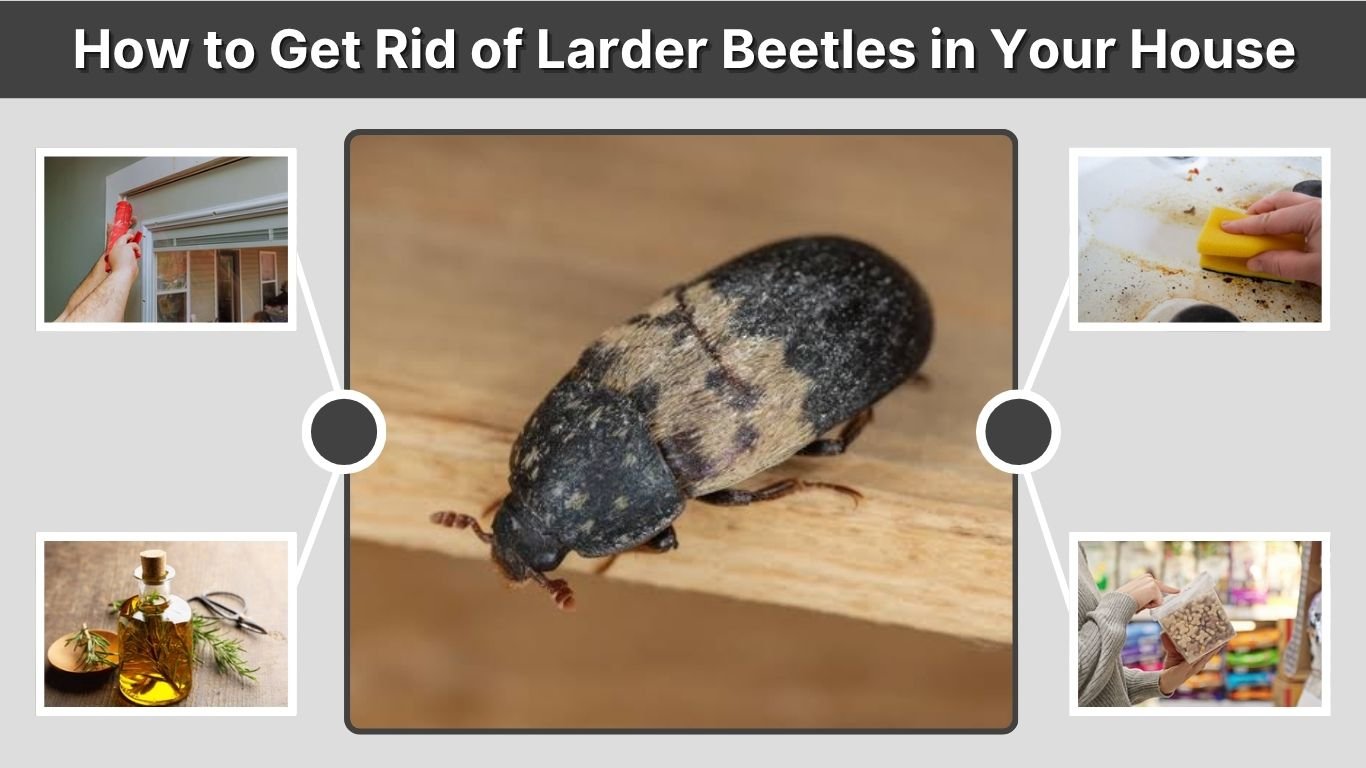
Finding larder beetles crawling around your kitchen, bedroom, or pantry can be frustrating, especially when they keep returning after cleaning. These small household pests feed on animal-based materials, dead insects, and certain stored food products. Although they are not usually dangerous to humans, an infestation can contaminate food and damage household materials. Learning how to get rid of larder beetles requires identifying their hiding places, removing food sources, and preventing reproduction. This guide explains effective removal methods, natural control options, and practical steps to keep your home beetle-free.
Why Do Larder Beetles Get Into Your House?
Larder beetles enter houses searching for food, shelter, and suitable breeding conditions. Adult beetles may fly inside through open windows or crawl through small structural openings. However, recurring infestations are often associated with hidden food sources that allow their larvae to develop.
Common Causes of Larder Beetle Infestations
Larder beetles are particularly attracted to materials containing animal proteins. Their presence may be associated with:
- Dry dog food or cat food stored in open containers.
- Dead rodents or birds in attics and wall cavities.
- Accumulations of dead flies or other insects.
- Stored feathers, animal hides, and preserved specimens.
- Contaminated meat products or other suitable foods.
Sometimes, beetles emerge from concealed spaces rather than nearby kitchen cupboards. Finding several larvae is a stronger indication of an established infestation than spotting one adult beetle.
How to Get Rid of Larder Beetles Step by Step
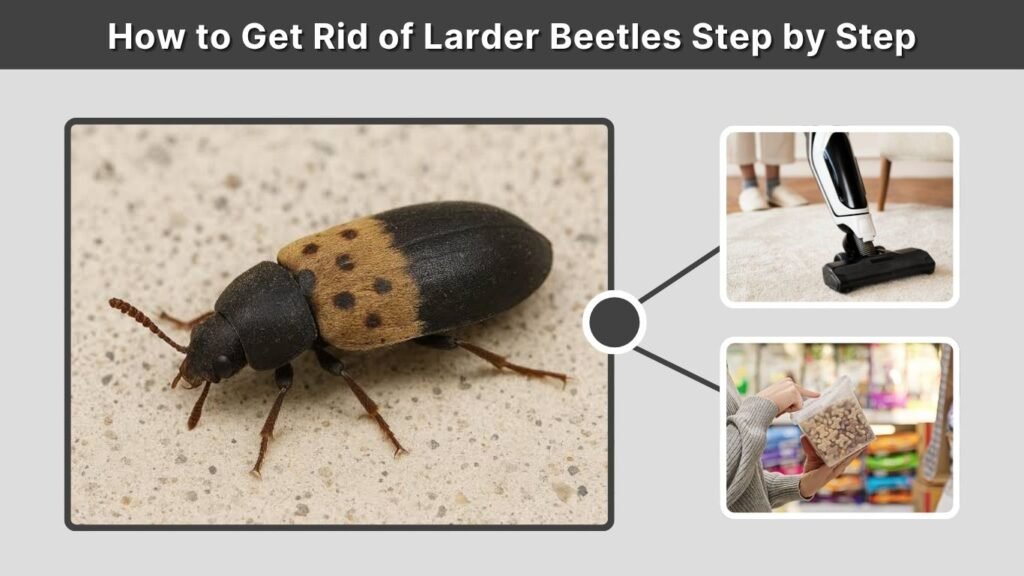
Getting rid of larder beetles requires more than killing the insects you see. Successful control involves locating their breeding source, removing contaminated materials, and cleaning affected areas. Following a systematic removal process helps prevent remaining larvae from developing into adults.
1. Find the Main Infestation Source
Begin by examining locations where beetles appear most frequently. Adult beetles often wander away from their original breeding sites, so nearby food sources should receive particular attention.
Check these areas carefully:
- Kitchen cabinets, pantries, and food shelves.
- Dry pet food containers and feeding stations.
- Attics, basements, and accessible crawl spaces.
- Window frames containing accumulated dead insects.
- Stored animal products and preserved specimens.
Look for adult beetles, hairy larvae, shed skins, and damaged materials. If you suspect a dead animal inside a wall, professional inspection may be necessary.
2. Remove Infested Food and Materials
Once you discover the source, remove it as quickly as possible. Discard contaminated food in a sealed bag and place it in an outdoor trash container.
Examine nearby packages because larvae may spread to other suitable materials.
Do not rely on insecticide sprays while leaving contaminated products untouched. Removing the breeding source interrupts the beetles’ development and significantly improves your chances of eliminating the infestation.
3. Vacuum and Deep Clean Affected Areas
Thorough cleaning removes visible beetles, larvae, shed skins, and accessible eggs. Pay particular attention to cracks and neglected areas.
Follow these cleaning practices:
- Vacuum shelves, floor edges, and baseboards.
- Clean gaps around cabinets and storage containers.
- Remove accumulated dead insects from accessible spaces.
- Wipe food shelves and allow them to dry completely.
- Empty vacuum contents into a sealed outdoor trash bag.
Avoid disturbing suspected rodent droppings or carcasses without following appropriate public-health cleanup guidance.
4. Monitor Remaining Beetle Activity
After removing food sources and cleaning, monitor the affected rooms for new beetles.
Sticky insect monitors can help identify areas where adults continue moving. Place them near suspected activity zones and inspect them regularly.
Traps are useful for monitoring, but they cannot eliminate a hidden infestation on their own. Continued larval activity indicates that additional breeding material may remain.
How to Get Rid of Larder Beetle Larvae
Larder beetle larvae cause much of the damage associated with these insects. They are hairy, brownish, elongated creatures that feed on suitable organic materials before moving into protected locations to pupate. Removing larvae requires addressing both their feeding sites and nearby hiding places.
Identify and Remove Larvae
Search around suspected food sources and examine nearby cracks, shelves, and storage materials.
Vacuum exposed larvae and dispose of the collected debris promptly. Remove infested materials whenever possible.
Mature larvae sometimes travel away from their original feeding sites. Therefore, finding larvae on a wall or bedroom floor does not necessarily mean they are feeding in that exact location.
Treat Infested Household Items
Wash suitable fabrics according to their care instructions and dry them thoroughly. For valuable infested objects, carefully controlled freezing or heat treatment may be appropriate when the materials can tolerate those conditions.
Avoid applying chemicals directly to clothing, bedding, or personal items unless the product label specifically permits that use.
How to Get Rid of Larder Beetles Naturally
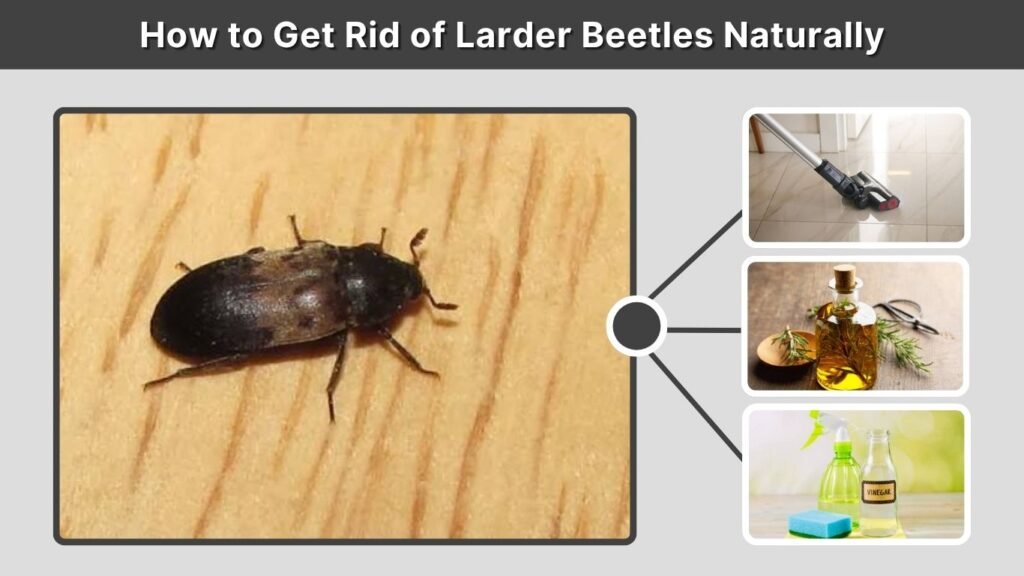
Natural larder beetle control focuses on physical removal, sanitation, and preventing access to food. These methods are useful for homeowners who want to reduce unnecessary insecticide applications while addressing the actual cause of an infestation.
Vacuuming and Food Source Removal
Vacuuming is one of the simplest methods for removing exposed beetles and larvae.
Combine regular vacuuming with the disposal of infested materials and secure storage of susceptible foods.
This approach works because larvae cannot continue developing without an appropriate food source. However, concealed infestations may require further investigation.
Do Vinegar and Essential Oils Work?
Vinegar can be used to clean some household surfaces, but it is not a proven solution for eliminating larder beetle infestations.
Similarly, essential oils lack reliable evidence as a dependable stand-alone treatment.
Neither approach should replace locating the infestation source. Aerosol insect foggers and ultrasonic repellents are also unreliable for controlling beetles developing inside hidden spaces.
How to Get Rid of Larder Beetles in Your Bedroom
Larder beetles sometimes appear in bedrooms even when no obvious food is present. Adults may enter through windows, while mature larvae can travel from nearby hidden feeding areas.
Cleaning Bedrooms and Carpets
Begin by vacuuming carpet edges, underneath furniture, closets, and accessible floor cracks.
Inspect stored animal-derived materials and areas where dead insects may accumulate. If beetles appear near a window, examine the frame and surrounding gaps.
Wash bedding as appropriate, but do not assume the insects are living in your mattress.
Repeated bedroom sightings may originate from an attic, wall cavity, or another connected space.
How to Prevent Larder Beetles From Coming Back
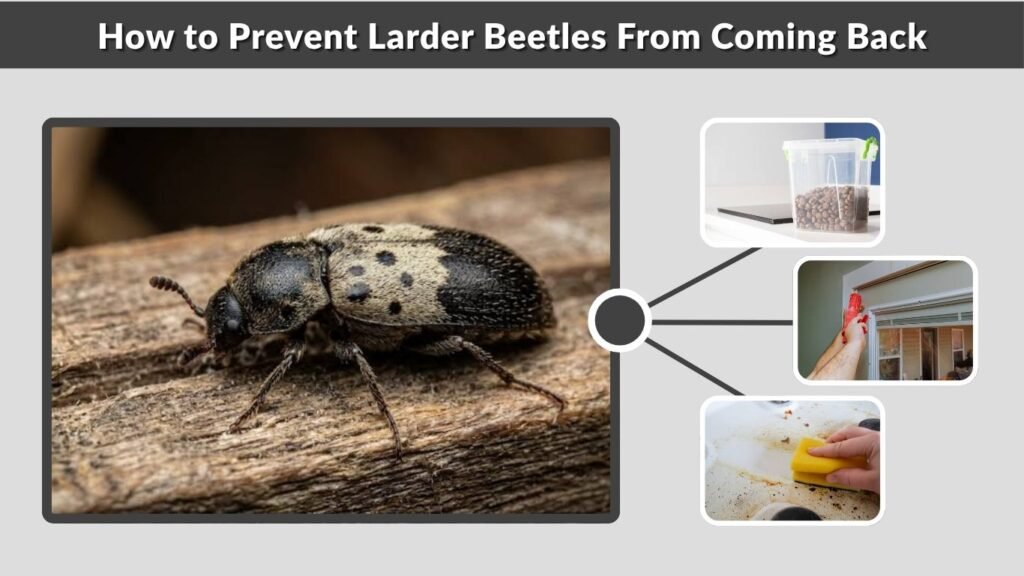
Once an infestation is controlled, prevention helps reduce the chances of recurrence. Maintaining clean storage areas, protecting vulnerable materials, and limiting entry points makes your home less attractive to larder beetles.
Essential Prevention Tips
- Store dry pet food and susceptible foods in tightly sealed containers.
- Inspect stored animal products for signs of insects.
- Remove dead insects from accessible attics and window areas.
- Seal openings around doors, windows, and utility pipes.
- Address rodent or bird activity that may create hidden food sources.
- Clean food spills and inspect storage shelves regularly.
Should You Use Insecticides?
Insecticides are generally unnecessary when the infestation source can be removed through cleaning and sanitation.
If beetles continue appearing, a properly labeled pesticide may help in certain treatment areas. Always follow label directions, especially around children, pets, and food preparation surfaces.
Indoor sprays alone are unlikely to solve infestations involving hidden animal remains or inaccessible organic materials.
When Should You Call Pest Control?
Professional assistance may be appropriate when large numbers of beetles or larvae continue appearing despite thorough cleaning. Hidden breeding sources can be difficult to locate, particularly inside insulation, ceilings, or wall cavities.
Signs You Need Professional Treatment
Persistent infestations may indicate concealed animal remains, accumulated dead insects, or inaccessible contaminated materials.
A qualified pest control professional can investigate likely sources and recommend targeted control measures.
Professional treatment is especially useful when the infestation repeatedly returns or requires access to potentially hazardous spaces.
FAQs
1. What is the fastest way to get rid of larder beetles?
The fastest effective approach is locating and removing their breeding source, followed by vacuuming visible insects and thoroughly cleaning affected areas.
2. Are larder beetles hard to get rid of?
Not usually when their food source is accessible. However, infestations inside walls, ceilings, or inaccessible spaces can be more difficult to eliminate.
3. Can larder beetles go away on their own?
Sometimes. Their population may decline once a limited food source disappears. However, waiting does not address contamination or recurring sources.
4. How do you get rid of larder beetles in carpet?
Vacuum the carpet thoroughly, including its edges and surrounding cracks. Inspect nearby materials and investigate whether beetles are emerging from another location.
5. Will larder beetles return after cleaning?
They can return if suitable food sources remain or new adults enter the house. Continued inspection, secure food storage, and sealing entry points help prevent recurrence.
