
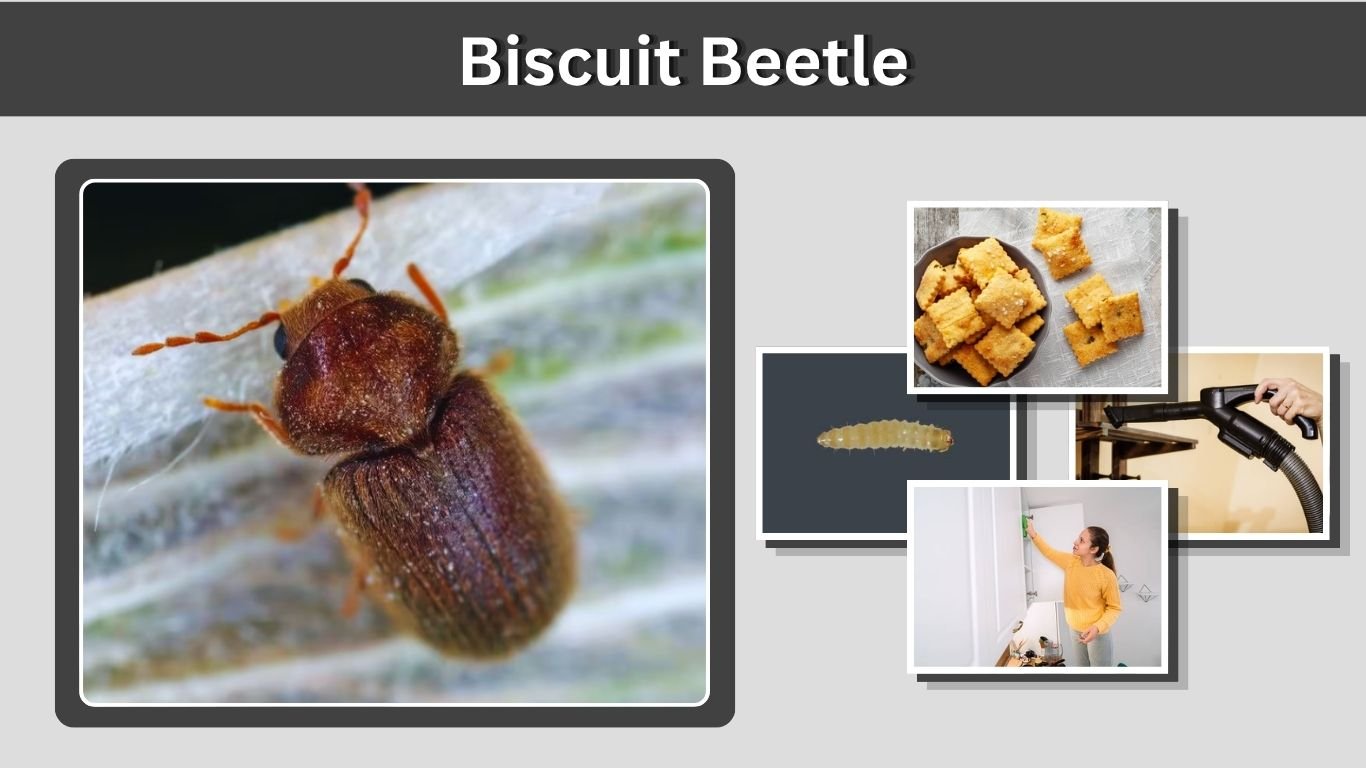
Have you spotted tiny brown beetles crawling across your kitchen shelves, bedroom walls, or windowsills? You might be dealing with a biscuit beetle, a common household pest that infests dried foods and stored products. Although these insects are harmless to humans, their larvae can damage food packaging and contaminate pantry supplies. Understanding their appearance, life cycle, and hiding places can help you identify an infestation early. This guide explains how to recognize biscuit beetles, remove them effectively, and prevent them from returning.
What Is a Biscuit Beetle?
The biscuit beetle (Stegobium paniceum), also called the drugstore beetle or bread beetle, is a small, reddish-brown insect belonging to the family Ptinidae. It is found worldwide, particularly in homes, bakeries, warehouses, and food storage facilities. These beetles are known for infesting dried foods, spices, and other stored materials. Their tiny size makes them difficult to detect until an infestation develops.
Biscuit Beetle Identification
Adult biscuit beetles have small, cylindrical bodies with a slightly rounded or humpbacked appearance. Their heads are usually hidden beneath the upper portion of the thorax when viewed from above.
Important identification features include:
- Size: Approximately 2–4 mm long.
- Color: Light brown to reddish-brown.
- Body shape: Oval, cylindrical, and slightly rounded.
- Wing covers: Fine longitudinal grooves.
- Antennae: Three enlarged segments near the tips.
- Flight: Adults can fly and are often attracted to light.
Their appearance closely resembles several other household beetles, making careful identification important.
Biscuit Beetle vs. Cigarette Beetle
Biscuit beetles and cigarette beetles look remarkably similar. However, biscuit beetles have distinct grooves along their wing covers and antennae ending in three enlarged segments.
Cigarette beetles have smoother wing covers and sawlike antennae. Both species infest dry food products, but these physical differences help distinguish them under magnification.
Where Do Biscuit Beetles Come From?
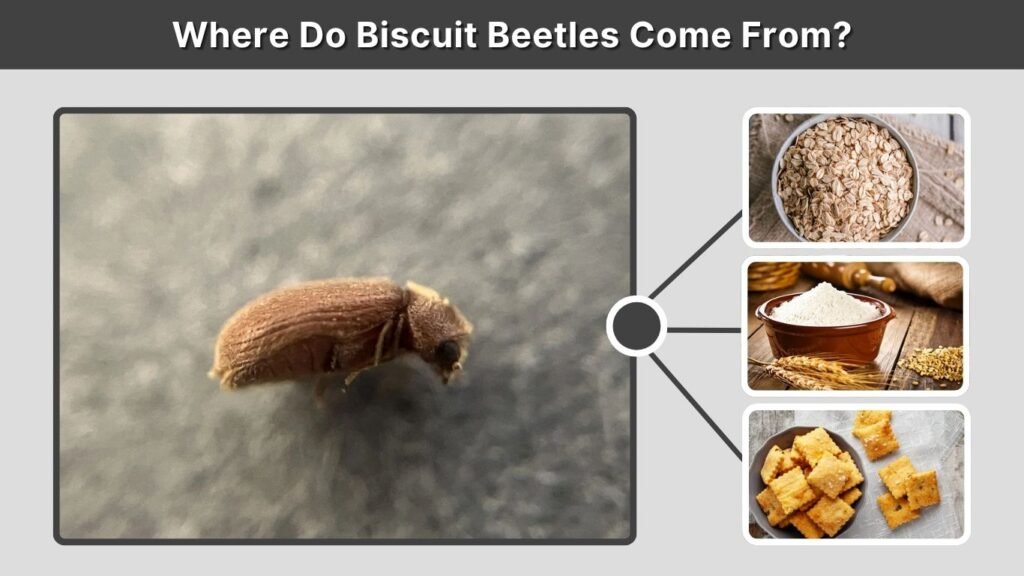
Biscuit beetles commonly enter homes through infested packaged foods, including flour, biscuits, cereal, and spices. Their larvae develop inside food products, where they may remain unnoticed for weeks. Adults can also fly through open windows or enter from outdoor nesting materials. Identifying the original infestation source is essential because killing individual beetles will not eliminate hidden eggs and larvae.
Common Biscuit Beetle Food Sources
Biscuit beetle larvae feed on many dried materials, including:
- Biscuits, crackers, and bread products
- Flour, cereal, pasta, and rice
- Dried herbs and spices
- Nuts, seeds, and pet food
- Dried flowers and plant materials
- Certain pharmaceuticals and stored organic materials
Infested products may contain tiny exit holes, powdery debris, larvae, or adult beetles.
Biscuit Beetles in Bedrooms and Beds
Finding a biscuit beetle in your bedroom does not necessarily indicate an infestation inside your mattress.
Adults can fly into bedrooms from nearby storage areas or enter through windows. They may also be attracted to indoor lighting.
If you notice biscuit beetles on your bed, inspect stored snacks, dried flowers, and nearby cupboards. Unlike bed bugs, biscuit beetles do not feed on human blood.
Biscuit Beetles on Windowsills
Biscuit beetles frequently appear around windows because adults can fly and are attracted to light.
Finding several beetles near a window may indicate adults emerging from an indoor infestation or entering from outside.
Check nearby stored foods, cupboards, and wall openings. Bird or wasp nests in roof spaces can occasionally provide another breeding source.
Biscuit Beetle Life Cycle
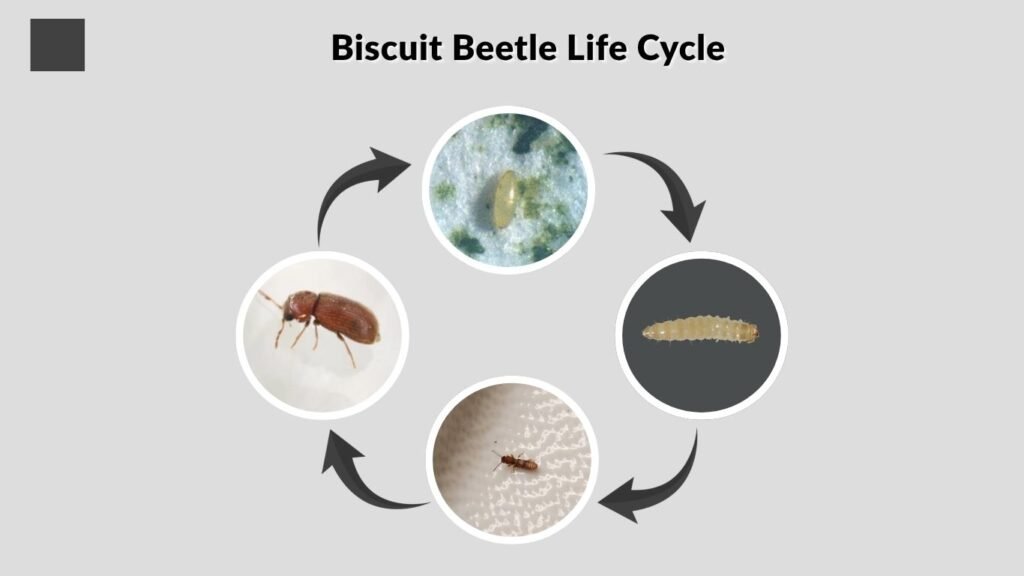
Biscuit beetles undergo complete metamorphosis, developing through four stages: egg, larva, pupa, and adult. Their development depends on temperature, humidity, and food availability. Warm indoor environments allow these insects to reproduce throughout the year. Understanding their life cycle helps explain why an infestation may continue even after visible adults have been removed.
Biscuit Beetle Eggs and Larvae
Female biscuit beetles lay tiny, pale eggs on or near suitable food materials.
After hatching, the larvae begin feeding inside stored products. They are creamy white, slightly curved, and covered with fine hairs.
Fully grown biscuit beetle larvae can reach approximately 5 mm long.
These larvae are responsible for most food damage because they tunnel through packaging and consume dried materials.
Pupal and Adult Stages
Once fully developed, larvae create small protective cells using food particles and surrounding materials.
Inside these cells, they transform into pupae before emerging as adults.
Depending on environmental conditions, the complete life cycle may take several weeks to several months. Adult beetles may live for several weeks and can disperse to new locations.
Are Biscuit Beetles Dangerous or Harmful?
Biscuit beetles are not generally considered dangerous to humans or pets. They are primarily stored-product pests that contaminate food rather than attacking people. However, infestations can become troublesome when larvae spread through multiple packages. Their presence may also be confused with bed bugs, carpet beetles, or furniture beetles, which have different habits and associated problems.
Do Biscuit Beetles Bite Humans?
No, biscuit beetles do not normally bite or sting humans.
Their mouthparts are adapted for chewing dry materials rather than piercing human skin.
If you experience unexplained bites while finding beetles in your bedroom, investigate other possible causes instead of assuming biscuit beetles are responsible.
Biscuit Beetle vs. Bed Bug
Biscuit beetles are small, reddish-brown insects with hard wing covers and rounded bodies.
Bed bugs are broader, flatter, and wingless. They feed on blood and usually hide near sleeping areas.
A flying brown beetle is not a bed bug. Correct identification is essential before selecting any treatment.
Biscuit Beetle vs. Carpet Beetle and Woodworm
Carpet beetles often have rounded bodies, sometimes displaying mottled patterns. Their larvae typically feed on animal-based materials such as wool, feathers, and natural fibers.
Common furniture beetles, often called woodworm, look similar to biscuit beetles but develop inside wood.
Although biscuit beetles may occasionally bore into wooden objects, they are not typical wood-feeding pests and do not cause the structural damage associated with woodworm.
How to Get Rid of Biscuit Beetles
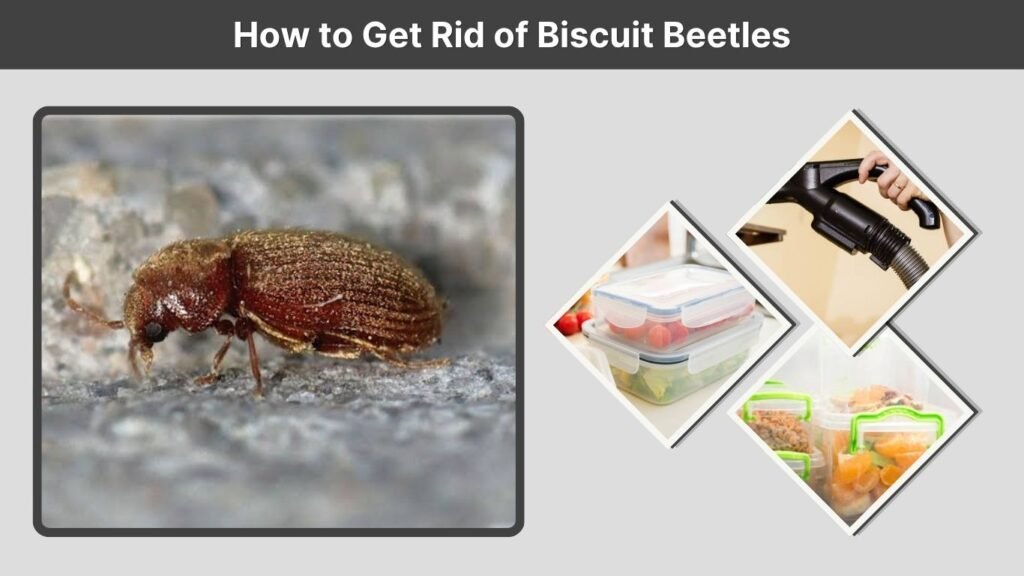
Getting rid of biscuit beetles requires finding their breeding source and removing contaminated materials. Since larvae develop inside food packages, treating only visible adults will not stop an infestation. A thorough inspection, combined with pantry cleaning and proper storage, provides the most reliable control method. Follow these practical steps to eliminate biscuit beetles from your home.
1. Inspect Stored Foods
Remove food packages from your kitchen cupboards and pantry.
Examine flour, biscuits, cereals, spices, pasta, dried herbs, and pet food for tiny beetles, larvae, or damaged packaging.
Check forgotten products stored at the back of cupboards.
2. Dispose of Infested Products
Place heavily infested products in sealed plastic bags and discard them in an outdoor rubbish bin.
Avoid transferring contaminated food into clean containers because hidden eggs and larvae may spread.
3. Vacuum and Clean Cabinets
Thoroughly vacuum shelves, cabinet corners, cracks, and gaps around kitchen appliances.
After vacuuming, clean surfaces with warm, soapy water and allow them to dry completely.
Dispose of vacuum contents promptly to prevent surviving insects from escaping.
4. Freeze Suspected Food Products
Freezing suitable dry foods at 0°F (-18°C) for approximately seven days can kill biscuit beetles at different developmental stages.
Keep products sealed during freezing. Discard visibly contaminated foods rather than attempting to salvage them.
5. Store Food in Airtight Containers
Transfer uncontaminated dry foods into tightly sealed glass, metal, or sturdy plastic containers.
This prevents beetles from spreading between products and helps protect newly purchased food.
Biscuit Beetle Traps and Treatment Options
Biscuit beetle traps can help detect adult populations and identify areas where activity is concentrated. However, traps alone rarely eliminate an infestation because eggs and larvae remain hidden inside stored materials. Effective treatment requires combining monitoring with food inspection, sanitation, and proper storage. Chemical treatments are usually unnecessary for small household infestations.
Do Biscuit Beetle Pheromone Traps Work?
Yes. Species-specific pheromone traps attract male biscuit beetles and can help monitor their activity.
Place appropriate monitoring traps near suspected infestation areas and check them regularly.
Although useful for detection, pheromone traps should not replace removal of contaminated products.
Can You Use Biscuit Beetle Sprays?
Insecticide sprays are generally unnecessary when the infested food source can be located and removed.
Never spray pesticides directly onto food, food packages, or food-contact surfaces.
If an infestation persists, consult a qualified pest-control professional about suitable treatments.
How to Prevent Biscuit Beetle Infestations
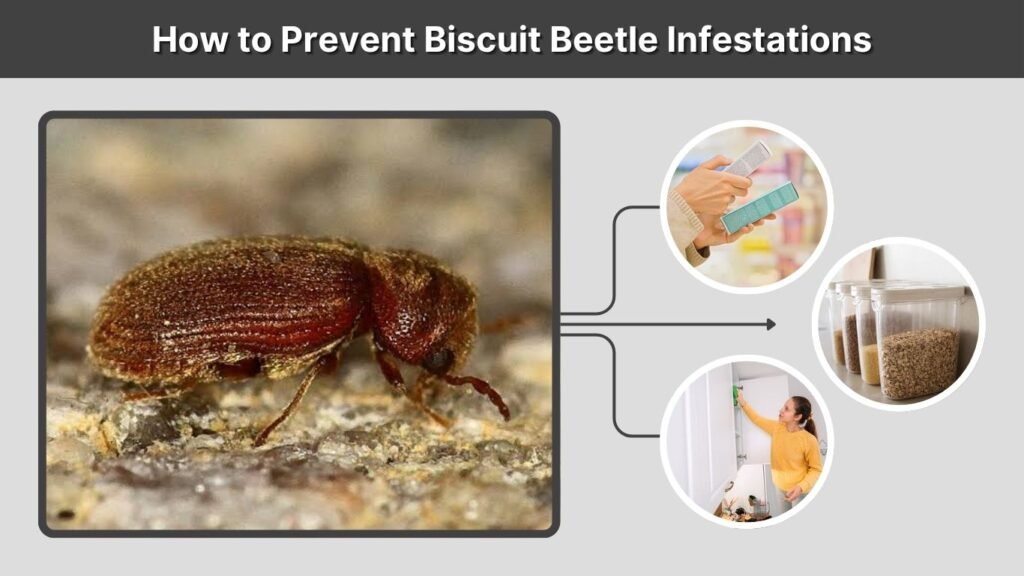
Preventing biscuit beetles requires maintaining clean storage areas and reducing access to vulnerable dried foods. Since these insects frequently enter through contaminated products, regular inspections are particularly important. Good storage habits can prevent larvae from developing unnoticed and reduce the likelihood of adults spreading throughout your home.
Essential Prevention Tips
- Inspect food packages: Check products before storing them.
- Use sealed containers: Protect flour, cereal, spices, and pet food.
- Clean cupboards regularly: Remove food crumbs and powdery residue.
- Rotate stored foods: Use older products before newer purchases.
- Check forgotten items: Inspect dried flowers, spices, and rarely used ingredients.
- Monitor beetle activity: Investigate repeated sightings immediately.
FAQs
1. Can biscuit beetles fly?
Yes. Adult biscuit beetles can fly and may gather around windowsills, lamps, and other light sources. Their ability to fly allows them to spread between rooms.
2. Are biscuit beetles harmful to humans?
Biscuit beetles are not known to bite or transmit diseases directly to humans. However, they contaminate stored foods with insects, shed skins, and waste, so infested products should be discarded.
3. How long do biscuit beetles live?
Adult biscuit beetles generally survive for several weeks, while their complete life cycle can take weeks or months depending on environmental conditions.
4. What is the best biscuit beetle trap?
A pheromone trap specifically designed for biscuit or drugstore beetles is useful for detecting and monitoring adult males. However, removing infested food remains the most effective control method.
5. Why do I keep finding biscuit beetles in my bedroom?
Adults may fly into bedrooms from contaminated food sources, nearby storage spaces, or outdoors. Inspect stored snacks, dried plant materials, windows, and adjacent cupboards to locate possible sources.
