
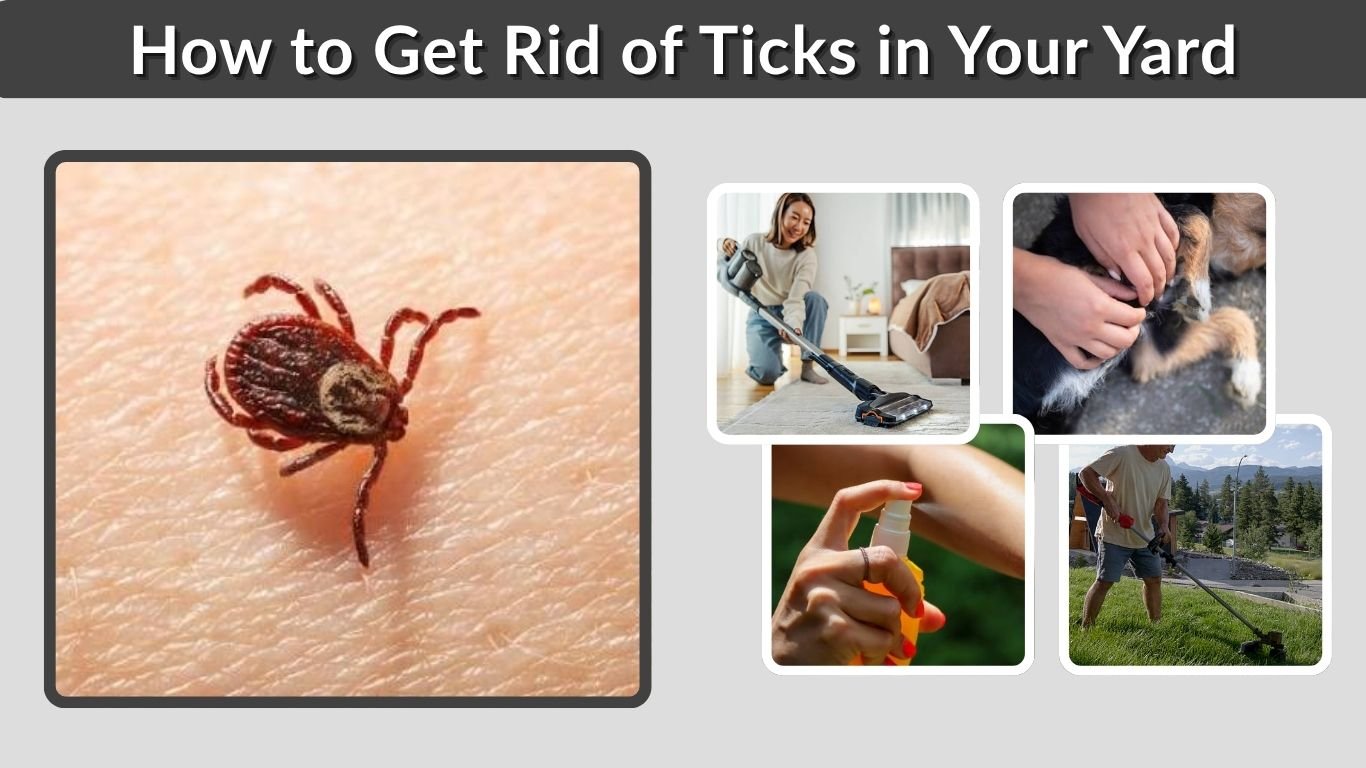
Ticks can become a serious nuisance when they appear around your yard, inside your home, or on pets and people. Because some tick species can carry disease-causing organisms, removing them quickly and reducing future exposure is important. The best approach depends on where you find them. Yard maintenance, careful indoor cleaning, proper tick removal, and veterinarian-approved pet treatments can all help. Here’s how to get rid of ticks safely and make your property less attractive to them.
How to Get Rid of Ticks in Your Yard
Ticks thrive in humid, shaded areas with tall grass, leaf litter, weeds, and dense vegetation. Making your yard warmer, drier, and less hospitable can significantly reduce the places where ticks can survive.
Keep Grass and Vegetation Trimmed
Regular yard maintenance is one of the most effective long-term strategies.
- Mow grass regularly.
- Remove fallen leaves and garden debris.
- Trim shrubs and overgrown plants.
- Remove weeds around fences and buildings.
- Keep frequently used areas away from dense vegetation.
- Stack firewood neatly in a dry location.
- Remove unnecessary piles of brush.
Pay special attention to shady areas along fences, trees, sheds, and property borders.
Create a Tick Barrier
Ticks often move into lawns from wooded or brushy areas. Creating a dry barrier between these habitats and frequently used areas can help.
A strip of gravel, wood chips, or another dry landscaping material between the lawn and woodland may reduce tick movement.
Place playground equipment, patios, and outdoor seating away from thick vegetation whenever possible.
Consider Yard Treatments
When tick populations remain high, an appropriately labeled acaricide or pesticide may help.
Always follow label directions carefully. If you have children, pets, pollinator gardens, ponds, or other sensitive areas, consider contacting a licensed pest-management professional for advice before applying pesticides.
How to Get Rid of Ticks in the House
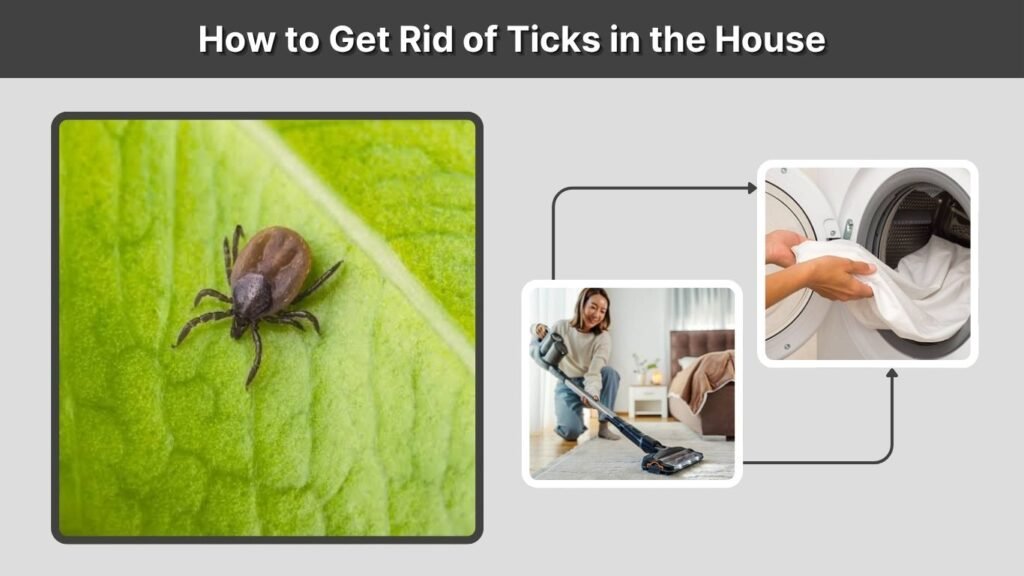
Finding a single tick indoors does not always mean there is an infestation. A tick may have been carried inside on clothing, a person, or a pet. However, repeated sightings deserve closer attention.
Vacuum Thoroughly
Vacuum areas where ticks could hide, including:
- Carpet edges
- Baseboards
- Pet bedding areas
- Upholstered furniture
- Cracks and crevices
- Areas beneath furniture
Empty the vacuum contents into a sealed bag and dispose of it appropriately.
Regular cleaning is especially useful when pets frequently enter and leave the house.
Wash Bedding and Clothing
Wash clothing, bedding, and pet bedding when ticks may have been brought indoors.
Drying clothing using suitable high heat, when the fabric allows it, can help kill ticks that may remain hidden in clothing.
Always check garment care instructions before choosing a washing or drying temperature.
Check Pets Regularly
Dogs and cats are common ways for ticks to enter homes.
Inspect pets after outdoor activity, especially around:
- Ears
- Neck
- Armpits
- Groin
- Between the toes
- Around the tail
- Under collars
Using veterinarian-recommended tick prevention can greatly reduce the chance of pets bringing live ticks indoors.
How to Get Rid of Ticks on Humans
If you discover an attached tick, removing it correctly and promptly is more important than applying home remedies.
Remove an Attached Tick Safely
Use fine-tipped tweezers.
- Grasp the tick as close to the skin’s surface as possible.
- Pull upward using steady, even pressure.
- Avoid twisting or jerking the tick.
- Clean the bite area and your hands afterward.
- Monitor the area for unusual symptoms.
Avoid squeezing the tick’s body unnecessarily while removing it.
Avoid Unsafe Tick Removal Methods
Do not try to force an attached tick to detach using petroleum jelly, nail polish, essential oils, gasoline, heat, or similar remedies.
These methods can delay removal and may irritate the tick or your skin.
The priority is to physically remove an attached tick as soon as possible using proper tweezers.
Watch for Symptoms
A small amount of redness immediately after removal may simply be irritation.
However, seek medical advice if you later develop symptoms such as an expanding rash, fever, severe headache, unusual fatigue, muscle aches, joint pain, or other concerning symptoms.
Tell your healthcare provider about the recent tick exposure.
How to Get Rid of Ticks on Dogs
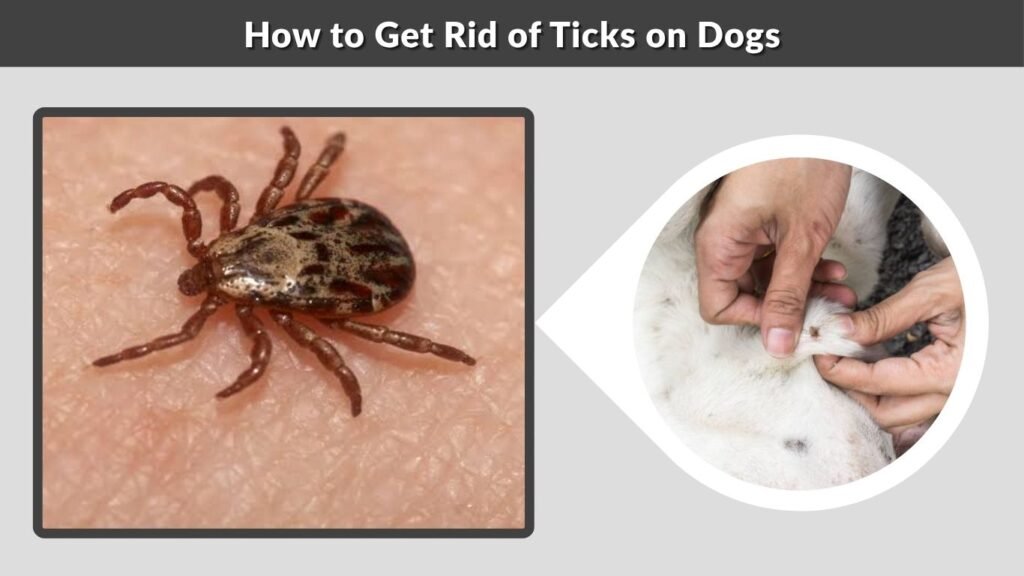
Ticks commonly attach to dogs after walks through tall grass, wooded areas, parks, or brush. Regular checks combined with preventive treatment offer the best protection.
Removing a Tick From a Dog
Part the dog’s fur until you can clearly see the tick.
Use a tick-removal tool or fine-tipped tweezers to grasp the tick near the skin and pull it outward using steady pressure.
Afterward, clean the area appropriately and wash your hands.
Avoid crushing ticks with bare fingers.
Use Veterinarian-Approved Prevention
Tick-control products for dogs may include topical treatments, collars, sprays, or oral medications.
Ask your veterinarian which product is appropriate for your dog’s:
- Age
- Weight
- Breed
- Health
- Lifestyle
- Local tick exposure
Never assume that a product formulated for one animal species is safe for another.
How to Get Rid of Ticks on Cats
Cats can also pick up ticks while roaming through gardens, fields, and wooded environments.
Check Your Cat Carefully
Ticks may be difficult to spot beneath thick fur. Examine the head, neck, ears, feet, armpits, and groin carefully.
Use fine-tipped tweezers or an appropriate tick-removal tool if you find an attached tick.
If the tick is located near the eye, deep inside the ear, or in another difficult location, a veterinarian may be able to remove it more safely.
Be Careful With Tick Products
Never use a dog tick treatment on a cat unless a veterinarian specifically confirms that it is safe.
Some ingredients used in canine parasite-control products can be dangerous to cats.
Choose products specifically labeled for cats and follow the manufacturer’s instructions.
How to Get Rid of Seed Ticks
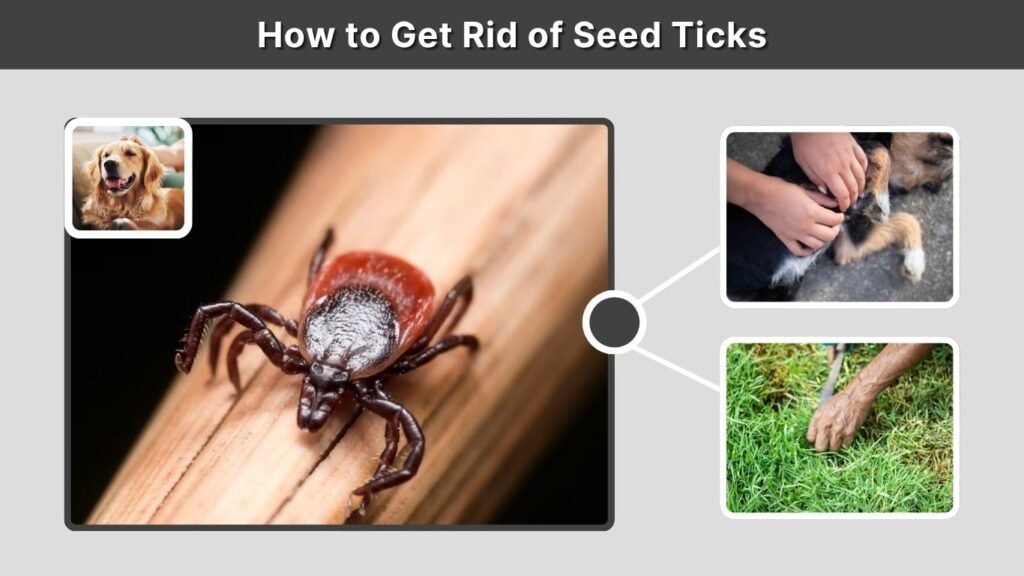
Seed ticks are tick larvae. Because they are extremely small, people or pets may encounter many of them simultaneously after brushing against infested vegetation.
Removing Seed Ticks From Skin
Check the entire body carefully after exposure.
Visible attached ticks should be removed using fine-tipped tweezers. Clothing should also be inspected because tiny larvae can be difficult to see.
Taking a shower after outdoor activities may help wash away ticks that have not yet attached.
Seek medical advice if you experience numerous bites or develop concerning symptoms afterward.
Reduce Seed Ticks Around Your Property
The same yard-management techniques used against adult ticks can help reduce larvae:
- Keep grass short.
- Remove leaf litter.
- Reduce dense vegetation.
- Prevent wildlife from nesting near frequently used areas.
- Keep pets on effective tick prevention.
Breaking up humid tick habitat makes the property less suitable for several stages of the tick life cycle.
How to Get Rid of Ticks Naturally
Natural control focuses primarily on changing the environment rather than trying to kill every tick with homemade substances.
Make Your Property Less Tick-Friendly
Keep sunny recreational areas open and dry while reducing leaf litter and dense ground vegetation.
Discouraging rodents and other wildlife from living immediately beside your home can also reduce opportunities for ticks to enter frequently used spaces.
Avoid leaving pet food outside overnight, and keep garbage containers secured.
Be cautious with claims that household mixtures, herbs, or essential oils can completely eliminate ticks. Some substances may irritate people or animals and may not provide dependable control.
How to Prevent Ticks From Coming Back
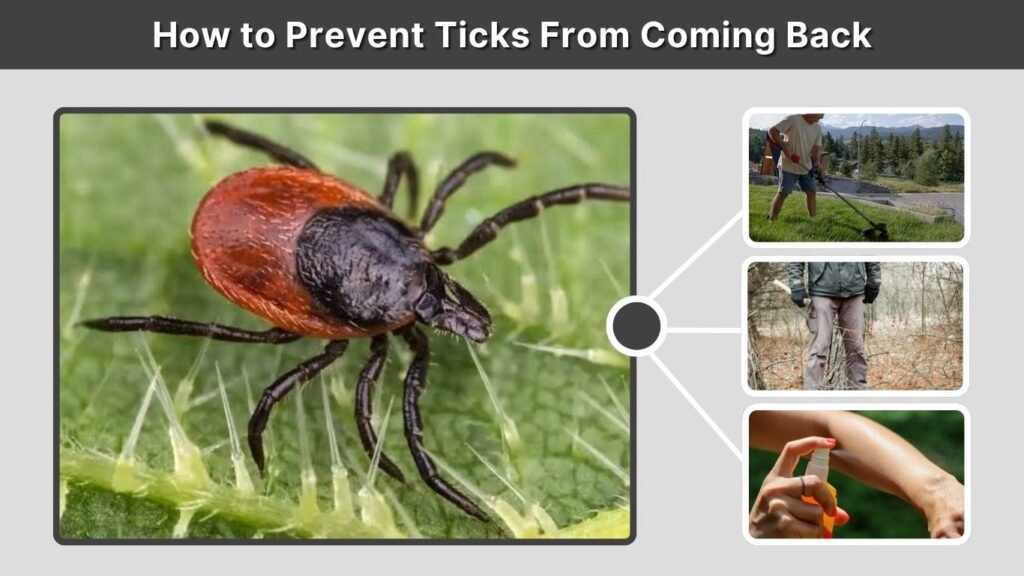
Long-term prevention works best when you combine property maintenance with personal and pet protection.
Simple Prevention Tips
- Check yourself after outdoor activities.
- Inspect children carefully after playing outside.
- Examine pets every day during tick season.
- Keep grass and weeds trimmed.
- Remove leaf litter regularly.
- Use appropriate insect repellent when entering tick habitat.
- Wear long pants when walking through dense vegetation.
- Keep pets on veterinarian-recommended tick prevention.
- Check clothing before bringing it into living areas.
Early detection makes ticks much easier to manage.
FAQs
1. What kills ticks in the yard?
Reducing tall grass, leaf litter, brush, and humid hiding places can lower tick numbers. Properly labeled tick-control pesticides may also be used when necessary according to label directions.
2. Can ticks live inside a house?
Yes, ticks can be carried indoors on people, clothing, or pets. Some species are better able to survive indoors than others, so repeated sightings should be investigated.
3. What is the fastest way to remove a tick from a person?
Use fine-tipped tweezers to grasp the tick close to the skin and pull upward with steady pressure. Clean the area afterward.
4. How do I get rid of ticks on my dog naturally?
Physical tick checks and prompt removal can help, but natural remedies should not replace reliable parasite prevention. Ask your veterinarian about safe and effective preventive options.
5. Why do I keep finding ticks in my yard?
Tall grass, leaf litter, shade, dense vegetation, wildlife activity, and humid conditions can create ideal tick habitat. Regular landscaping and wildlife management can make the area less suitable for them.
