
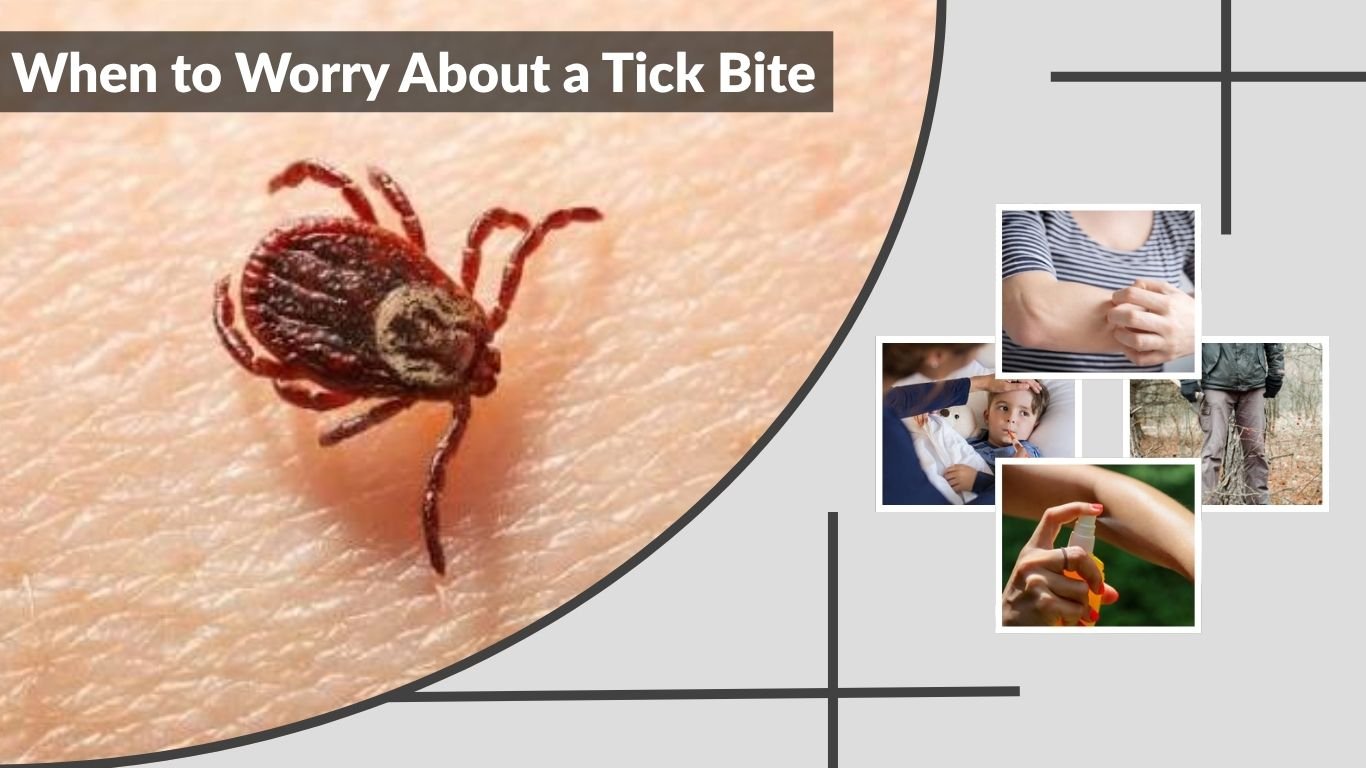
Most tick bites cause little more than mild redness or irritation, but some ticks can transmit infections such as Lyme disease, Rocky Mountain spotted fever, ehrlichiosis, and anaplasmosis. Knowing when to worry about a tick bite can help you seek medical care at the right time. The risk depends on the tick species, how long it was attached, your location, and whether symptoms develop afterward. Watch the bite area and your overall health for several weeks after removing a tick.
When Should You Worry About a Tick Bite?
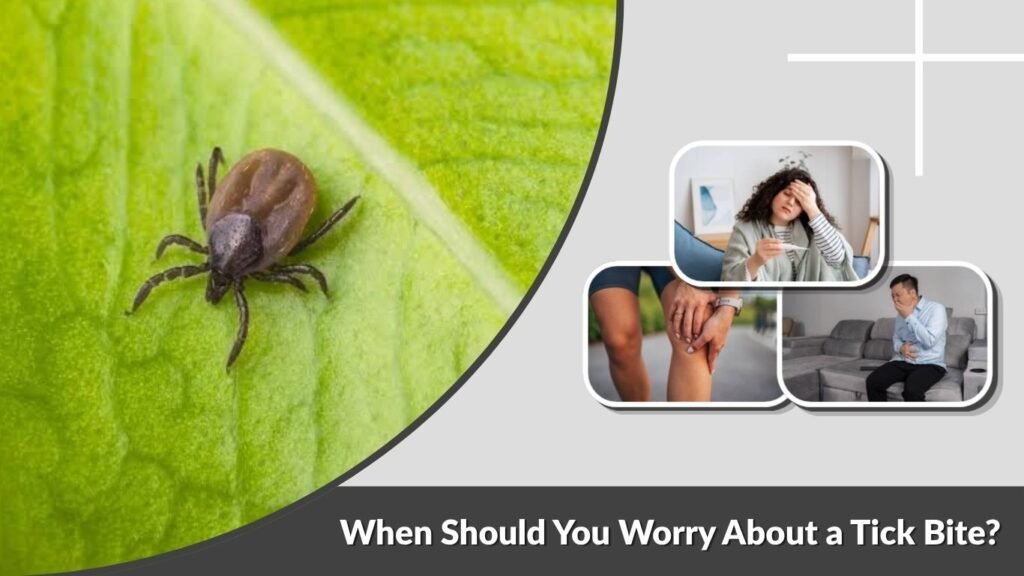
A tick bite becomes more concerning when the tick was attached for a long time, appeared swollen with blood, or when unusual symptoms develop afterward. Not every bite results in disease, but certain warning signs deserve medical attention.
Signs That Need Medical Attention
Contact a healthcare professional if you notice:
- Fever or chills after a tick bite
- Severe or worsening headache
- Muscle or joint pain
- Unusual tiredness or weakness
- Swollen lymph nodes
- A spreading rash
- Difficulty breathing
- Facial weakness or drooping
- Persistent nausea or vomiting
- Confusion or neurological symptoms
- Increasing redness, warmth, swelling, or pus at the bite site
Symptoms may appear within days, while some tick-borne illnesses can take several weeks to become noticeable.
A Spreading Rash Is Particularly Important
A small red spot immediately around a tick bite is common and may simply be skin irritation. It usually remains small and gradually improves.
A rash that continues expanding over several days deserves more attention. Lyme disease can cause an expanding rash called erythema migrans. It is sometimes described as a bull’s-eye rash, but many Lyme rashes do not develop the classic ring-shaped appearance.
If redness grows significantly rather than fading, contact a healthcare professional.
Fever After a Tick Bite
Developing a fever after being bitten by a tick should not be ignored, especially when accompanied by headache, body aches, rash, or fatigue.
Several tick-borne infections can initially resemble the flu. Because early treatment can be important for certain illnesses, tell your healthcare provider about the recent tick exposure rather than assuming you simply have a viral infection.
When to Worry About a Deer Tick Bite
Blacklegged ticks, commonly called deer ticks, are particularly important because they can transmit the bacteria responsible for Lyme disease. However, simply finding a deer tick attached to your skin does not mean you have Lyme disease.
How Long Was the Tick Attached?
Transmission risk generally increases the longer an infected blacklegged tick remains attached.
You should be more cautious when:
- The tick appears noticeably engorged.
- You believe it was attached for approximately 36 hours or longer.
- The tick came from an area where Lyme disease is common.
- You cannot determine how long the tick was attached.
Removing ticks as quickly as possible reduces the chance of infection.
When Preventive Treatment May Be Considered
In certain circumstances, a healthcare professional may recommend preventive antibiotic treatment after a high-risk blacklegged tick bite.
This decision depends on factors such as the species of tick, estimated attachment time, geographic location, age, medical history, and how recently the tick was removed.
Because preventive treatment is most useful within a limited period after removal, contact a clinician promptly if you believe the bite was high risk.
When Not to Worry About a Tick Bite
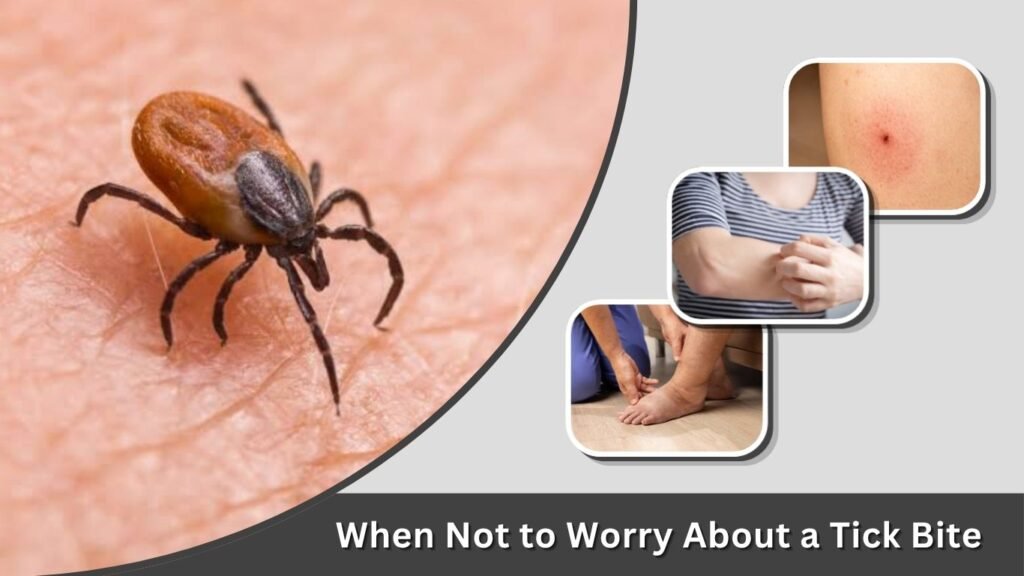
Finding a tick can be alarming, but many bites never cause illness. A small amount of localized redness, itching, or tenderness soon after removal is usually not a sign of a tick-borne infection.
Normal Reactions After a Tick Bite
Minor reactions can include:
- A small red bump
- Mild itching
- Slight tenderness
- Minor localized swelling
- Temporary irritation where the tick was attached
These symptoms should gradually improve rather than continue spreading.
Keep monitoring yourself for several weeks because some infections do not cause immediate symptoms.
What to Do After Removing the Tick
Use fine-tipped tweezers to grasp the tick as close to the skin as possible. Pull upward using steady pressure without twisting or crushing the tick.
After removal, wash the bite area and your hands with soap and water or clean the area with an appropriate antiseptic.
Do not try to remove ticks by burning them or covering them with petroleum jelly, nail polish, essential oils, or other substances. These methods may delay proper removal.
When to Worry About a Tick Bite on a Child
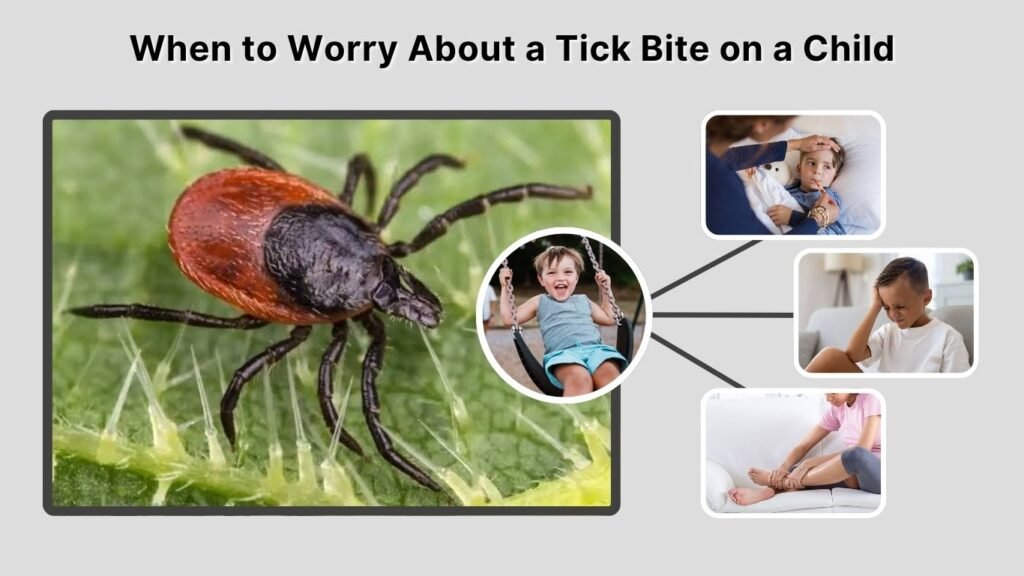
Children generally develop the same warning signs as adults, but younger children may have difficulty describing symptoms such as headache, muscle pain, or unusual fatigue. Parents should therefore pay attention to changes in behavior following a tick bite.
Warning Signs in Children
Seek medical advice if a child develops:
- Fever
- Expanding rash
- Severe headache
- Unusual sleepiness
- Significant weakness
- Joint swelling or pain
- Facial drooping
- Trouble walking
- Breathing difficulties
- Persistent vomiting
Write down when the tick was discovered and removed. If possible, note where the child was when exposure likely occurred.
Prompt evaluation is especially important when symptoms are severe or rapidly worsening.
How Long Should You Watch for Symptoms?
Do not judge a tick bite only by how the skin looks immediately after removing the tick. Different tick-borne diseases have different incubation periods.
Monitor Yourself for Several Weeks
For roughly the next 30 days, watch for changes such as fever, rash, headaches, unexplained fatigue, joint pain, or muscle aches.
If symptoms appear, tell your healthcare provider:
- When the tick bite occurred
- Where you may have encountered the tick
- How long it may have been attached
- Whether it appeared engorged
- When symptoms began
A photo of the tick or bite can sometimes provide useful information.
When to Worry About a Tick Bite on a Dog
Ticks can also transmit diseases to dogs. Common tick-borne illnesses affecting dogs include Lyme disease, ehrlichiosis, anaplasmosis, and Rocky Mountain spotted fever.
Signs of Tick-Borne Illness in Dogs
Contact a veterinarian if your dog develops:
- Loss of appetite
- Unusual tiredness
- Fever
- Limping or shifting leg lameness
- Swollen or painful joints
- Enlarged lymph nodes
- Weakness
- Pale gums
- Unexplained bruising or bleeding
Symptoms may develop days or weeks after exposure.
After removing a tick from your dog, inspect the rest of its body carefully. Common hiding places include around the ears, neck, toes, armpits, groin, and beneath the collar.
How to Reduce Your Risk After Future Tick Exposure
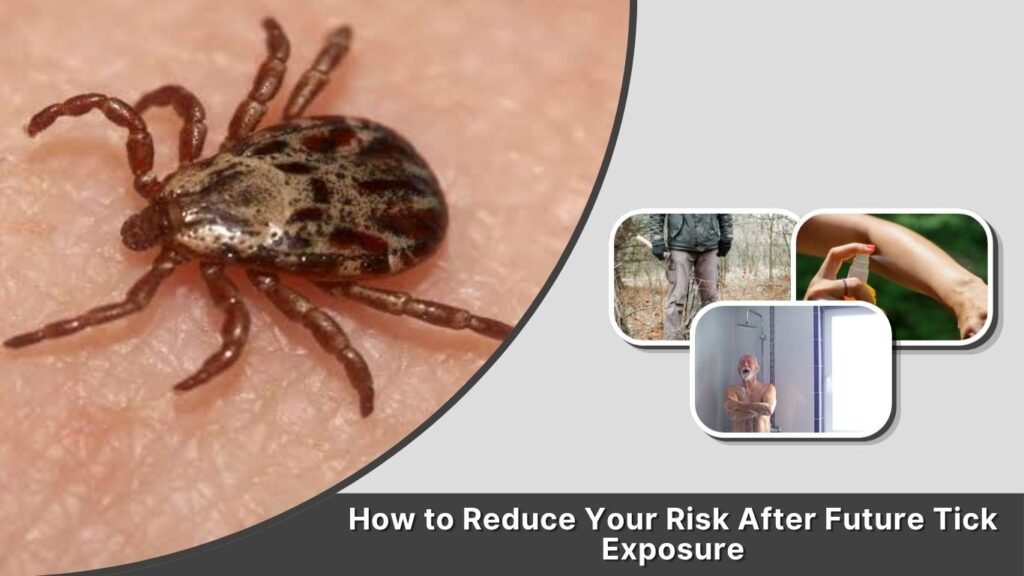
Tick bites are easier to prevent than tick-borne illnesses are to deal with afterward. Taking simple precautions is especially important when walking through wooded, grassy, or brush-filled environments.
Tick Bite Prevention Tips
- Wear long pants and long sleeves in tick habitats.
- Use an appropriate insect repellent.
- Walk near the center of trails.
- Avoid brushing against tall grass and dense vegetation.
- Check your body after spending time outdoors.
- Check children and pets carefully.
- Shower soon after returning indoors.
- Examine clothing and outdoor equipment for ticks.
- Pay particular attention to the scalp, waist, groin, armpits, behind the knees, and around the ears.
Finding and removing an attached tick early can substantially reduce the risk of several tick-borne infections.
FAQs
1. How soon after a tick bite should I worry?
You should seek medical advice promptly if you develop fever, an expanding rash, severe headache, weakness, facial drooping, breathing problems, or other significant symptoms. Otherwise, continue watching for symptoms for several weeks.
2. Does every tick bite cause Lyme disease?
No. Lyme disease occurs only when an infected tick capable of transmitting the bacteria bites a person. Many tick bites do not result in any infection.
3. Is redness around a tick bite normal?
A small area of redness immediately after a bite can be normal. Redness that continues expanding, becomes very painful, produces pus, or occurs along with fever should be evaluated.
4. What happens if part of the tick remains in the skin?
Small mouthparts sometimes remain after removal. The skin can often naturally expel them. Avoid aggressively digging into the skin. Contact a healthcare professional if significant redness, pain, swelling, or signs of infection develop.
5. Can you get sick weeks after a tick bite?
Yes. Some tick-borne illnesses do not cause symptoms immediately. Fever, rash, fatigue, joint pain, headache, or other unexplained symptoms developing days or weeks later should be discussed with a healthcare professional, especially if you recently had a tick bite.
