
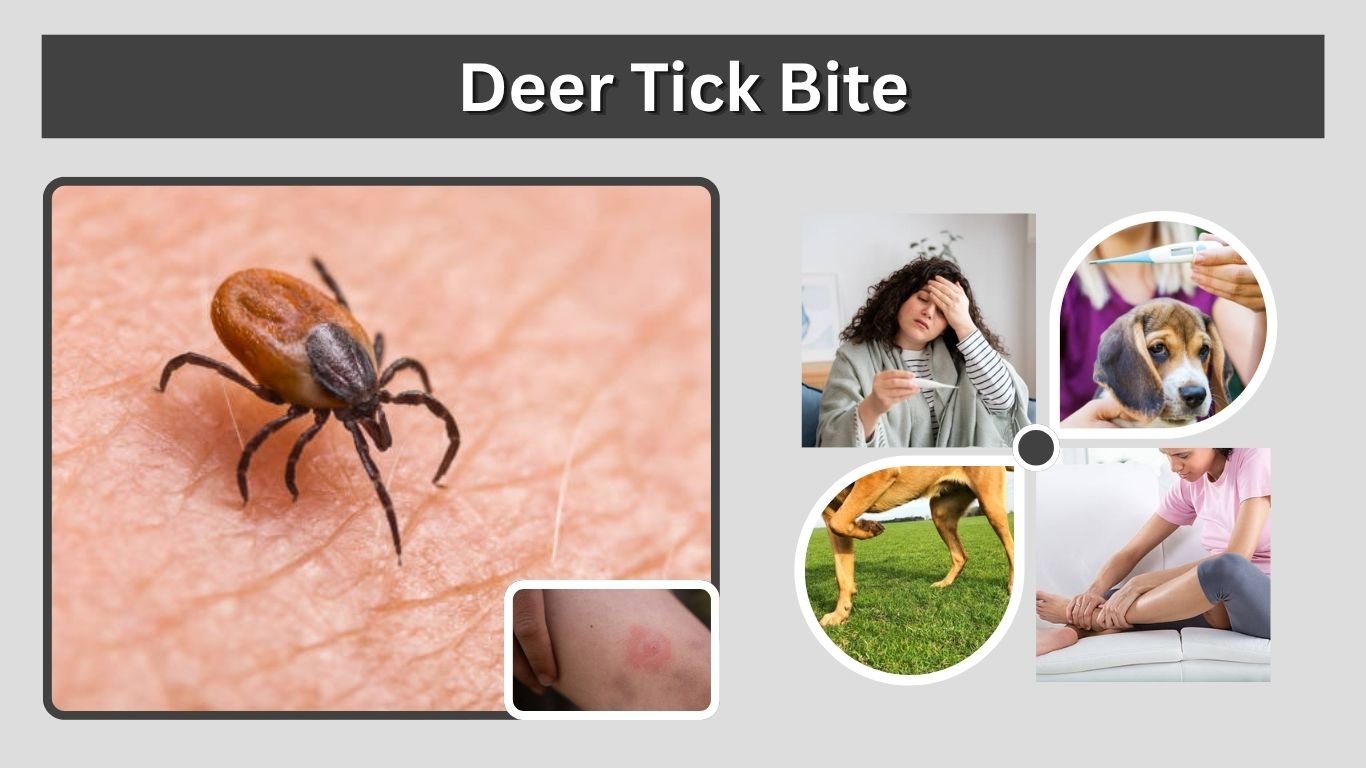
A deer tick bite can be easy to miss because blacklegged ticks are extremely small and their bites are often painless. Most bites do not cause Lyme disease, but infected deer ticks can transmit the bacteria responsible for it. The appearance of the bite, how long the tick was attached, and symptoms that develop afterward can help determine the level of concern. Prompt removal is important, and anyone who develops an expanding rash, fever, headache, unusual fatigue, or other concerning symptoms should contact a healthcare professional.
What Does a Deer Tick Bite Look Like?
A deer tick, also called a blacklegged tick, may remain attached while feeding. After removal, the skin can show a small red bump similar to many other minor insect bites. The appearance alone usually cannot confirm whether Lyme disease has been transmitted.
Early Deer Tick Bite Appearance
During the first day or two, you might notice:
- A small red bump
- Mild localized redness
- Slight swelling
- Minor tenderness
- Mild itching
- A tiny mark where the tick was attached
A small reaction soon after a bite is often caused by irritation or sensitivity to tick saliva rather than Lyme disease.
Does a Deer Tick Bite Itch?
It can. Mild itching around the bite is possible, but itching does not tell you whether the tick carried Lyme disease.
The characteristic Lyme disease rash is usually not particularly itchy or painful. Therefore, an itchy bite alone should not be considered proof of Lyme disease.
Deer Tick Bite Red Ring
A small red circle immediately around the attachment point can be a local skin reaction.
More concerning is redness that gradually expands over several days. An expanding rash should be evaluated by a healthcare professional, especially after possible blacklegged tick exposure.
Deer Tick Bite Symptoms and Timeline
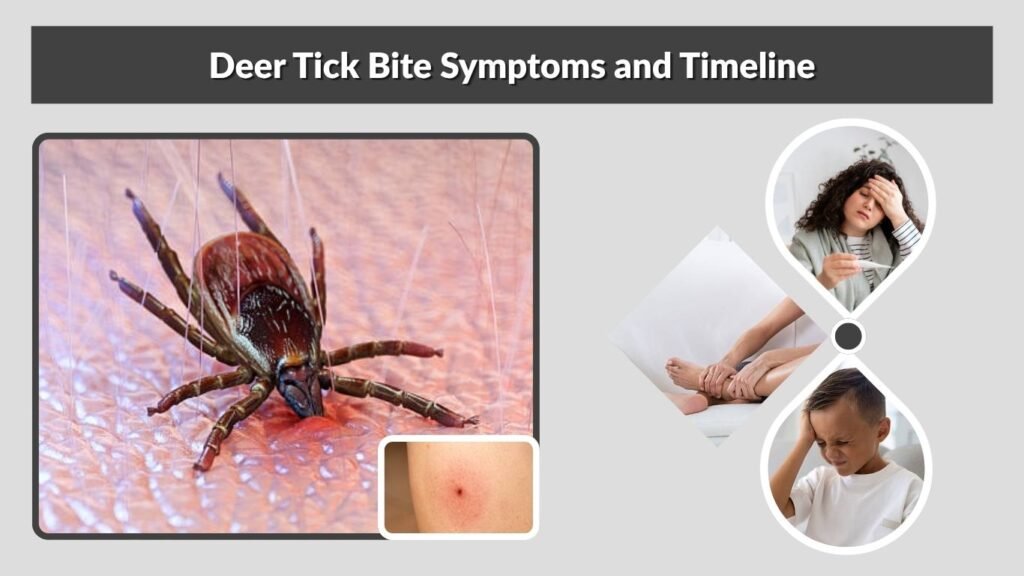
Most people cannot feel the actual tick bite. Symptoms of a tick-borne infection, when they occur, may not appear immediately. Monitoring your health during the following weeks is therefore more useful than judging the bite only on day one.
Deer Tick Bite Day 1
Immediately after removing the tick, the area may appear slightly red or irritated.
At this stage:
- Remove the entire tick promptly.
- Clean the bite area.
- Record the date.
- Consider photographing the tick and bite.
- Watch for changes.
A small mark on day one does not mean Lyme disease is developing.
Symptoms During the Following Days and Weeks
Early Lyme disease symptoms can include:
- Expanding rash
- Fever or chills
- Headache
- Fatigue
- Muscle aches
- Joint pain
- Swollen lymph nodes
The erythema migrans rash associated with Lyme disease typically appears 3–30 days after infection and gradually expands.
Can You Have Lyme Disease Without a Bullseye Rash?
Yes. A Lyme rash does not always resemble a perfect bullseye.
The rash may simply be a gradually expanding reddish, pink, or purplish patch. Central clearing sometimes occurs, creating the familiar target-like appearance, but it is not required.
People should therefore not wait for a textbook bullseye pattern before seeking medical advice when other concerning symptoms develop.
What to Do If Bitten by a Deer Tick
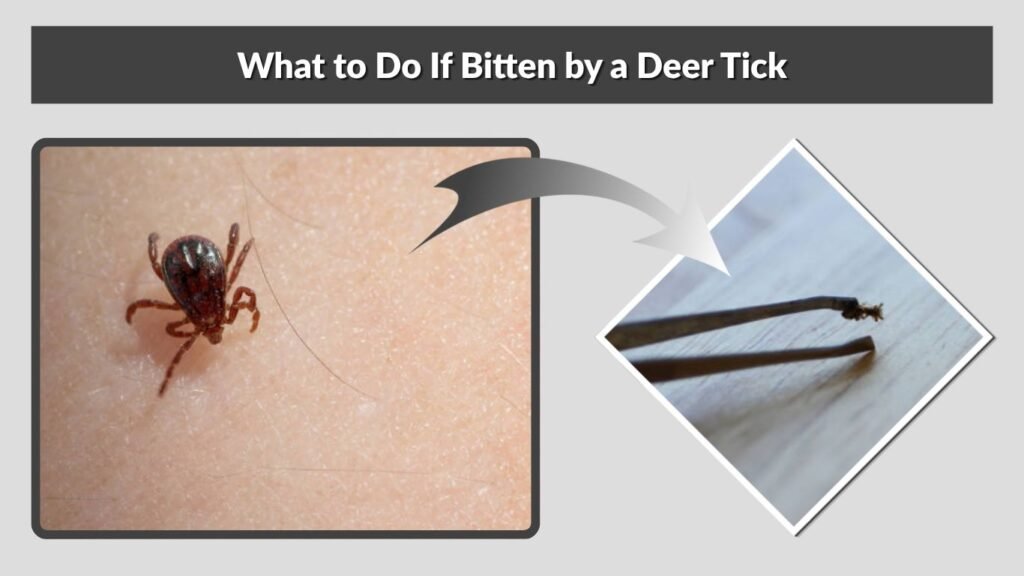
Finding an attached deer tick does not automatically mean you have Lyme disease. The immediate priority is removing it correctly and monitoring for symptoms.
How to Remove the Tick
CDC guidance recommends:
- Use clean, fine-tipped tweezers.
- Grasp the tick as close to the skin as possible.
- Pull upward using steady, even pressure.
- Do not twist or jerk the tick.
- Dispose of it safely.
- Clean your hands and the bite area afterward.
Do not try to remove the tick using petroleum jelly, nail polish, heat, or similar methods. Removing attached ticks as soon as possible can reduce the risk of tick-borne infection.
Check the Rest of Your Body
Finding one tick does not guarantee that it is the only one.
Pay particular attention to:
- Scalp and hairline
- Behind the ears
- Armpits
- Waist
- Groin
- Behind the knees
- Belly button
Nymphal deer ticks can be extremely small and difficult to notice.
Deer Tick Bite and Lyme Disease Risk
Blacklegged ticks can transmit the bacteria that cause Lyme disease. However, the tick must itself be infected, and risk depends partly on the circumstances of the bite.
Does Attachment Time Matter?
Yes. Risk generally increases when an infected blacklegged tick has been feeding for an extended period.
An engorged tick suggests that it has taken a blood meal and may have remained attached longer than a flat, unfed tick. Prompt daily tick checks are therefore particularly valuable.
Does Every Deer Tick Bite Cause Lyme Disease?
No.
A deer tick bite does not automatically cause Lyme disease because not every tick carries Borrelia bacteria. Geographic location, tick species, feeding status, and attachment duration all affect risk.
Lyme disease is particularly common in parts of the Northeast, mid-Atlantic, and upper Midwest of the United States.
Antibiotics for a Deer Tick Bite
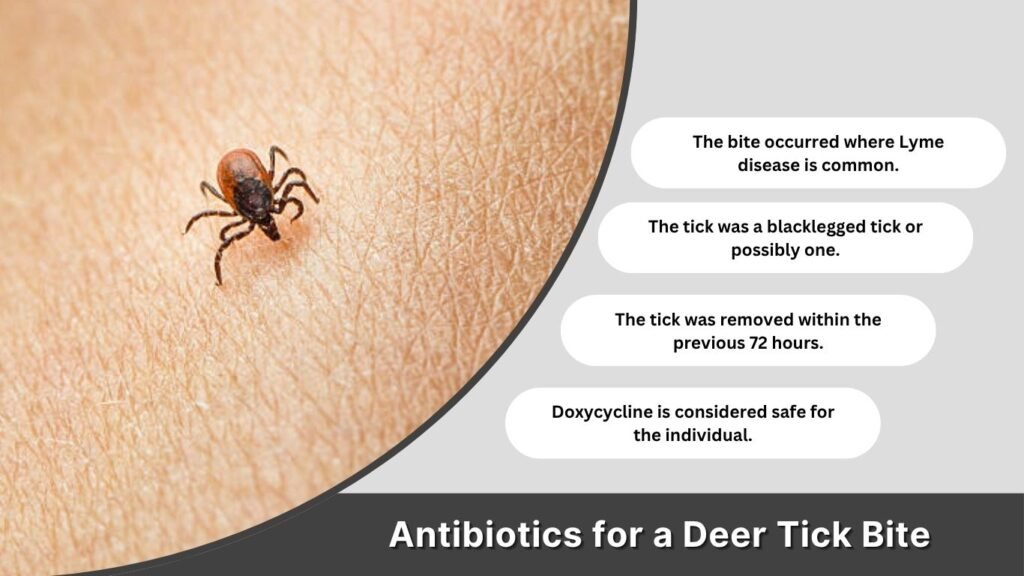
Antibiotics are not automatically necessary after every tick bite. Whether preventive medication is appropriate depends on the circumstances.
When Preventive Antibiotics May Be Considered
CDC guidance states that in certain situations, a single dose of doxycycline may reduce Lyme disease risk after a high-risk blacklegged tick bite.
Important considerations include:
- The bite occurred where Lyme disease is common.
- The tick was a blacklegged tick or possibly one.
- The tick was engorged or considered a higher-risk exposure.
- The tick was removed within the previous 72 hours.
- Doxycycline is considered safe for the individual.
A healthcare professional should decide whether preventive antibiotics are appropriate.
Treatment If Lyme Disease Develops
People diagnosed with Lyme disease are treated with antibiotics. Common options include doxycycline, amoxicillin, or cefuroxime axetil, with the choice depending on factors such as symptoms, age, allergies, and pregnancy.
Do not take leftover antibiotics or self-treat a suspected infection.
When to Worry About a Deer Tick Bite
Many bites cause nothing more than temporary local irritation. Certain changes, however, deserve medical evaluation.
Warning Signs After a Bite
Contact a healthcare professional if you develop:
- An expanding skin rash
- Fever or chills
- Severe or persistent headache
- Significant fatigue
- Muscle or joint pain
- Swollen lymph nodes
- Facial weakness
- Neurological symptoms
- Unexplained heart symptoms
- Increasing redness, pain, warmth, or drainage suggesting a skin infection
CDC advises seeking medical care if a rash or fever develops within weeks of a tick bite and telling the clinician where and when the exposure occurred.
Deer Tick Bite on a Dog
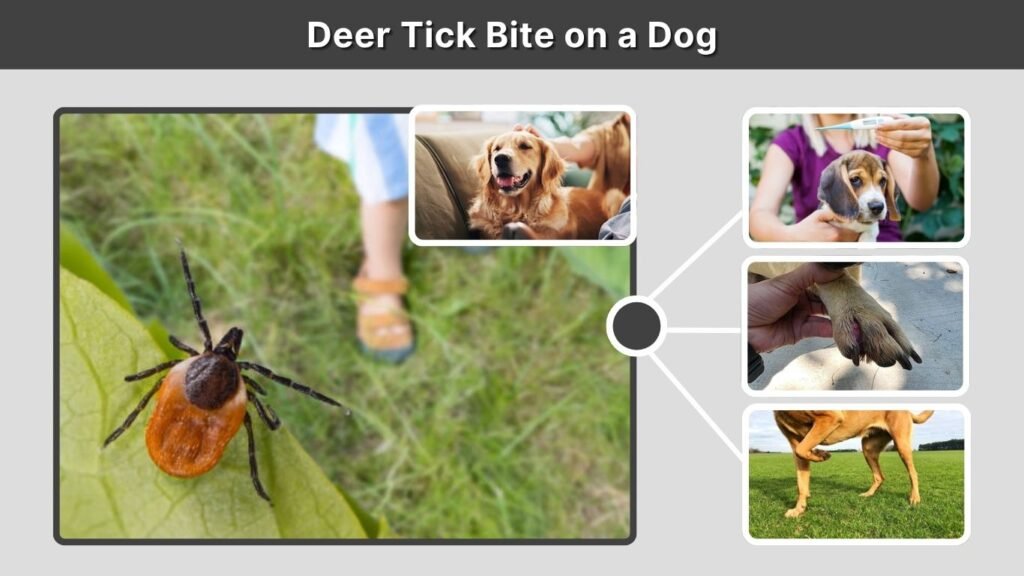
Dogs can also be bitten by blacklegged ticks and contract tick-borne infections. Checking pets after outdoor activities is important, especially during tick season.
Signs to Watch for in Dogs
Potential signs of tick-borne illness can include:
- Lethargy
- Reduced appetite
- Fever
- Joint discomfort
- Limping
- Swollen joints
- Unusual weakness
Remove attached ticks promptly and speak with a veterinarian if your dog becomes ill. Veterinarian-recommended tick prevention can reduce future exposure.
Can a Deer Tick Bite Cause Red Meat Allergy?
Alpha-gal syndrome is sometimes called red meat allergy and can develop after certain tick bites.
In the United States, however, it is most strongly associated with the lone star tick, not the blacklegged deer tick. Therefore, a deer tick bite should not automatically be considered a cause of red meat allergy. Research continues into possible associations with other tick species.
FAQs
1. What does a deer tick bite look like at first?
It may appear as a tiny red bump with mild redness or swelling. This local reaction alone does not indicate Lyme disease.
2. How soon do Lyme disease symptoms appear after a deer tick bite?
An erythema migrans rash associated with Lyme disease can appear approximately 3–30 days after infection, while other symptoms may also develop during this period.
3. Does a deer tick bite always leave a bullseye?
No. Lyme disease rashes can have many appearances and do not always develop the classic bullseye pattern.
4. Should I get antibiotics after a deer tick bite?
Not automatically. Preventive doxycycline may be appropriate for certain higher-risk bites, so contact a healthcare professional promptly to discuss your specific exposure.
5. When should I see a doctor after a deer tick bite?
Seek medical advice if you develop an expanding rash, fever, headache, unusual fatigue, joint or muscle pain, neurological symptoms, or other concerning symptoms in the days or weeks following the bite.
