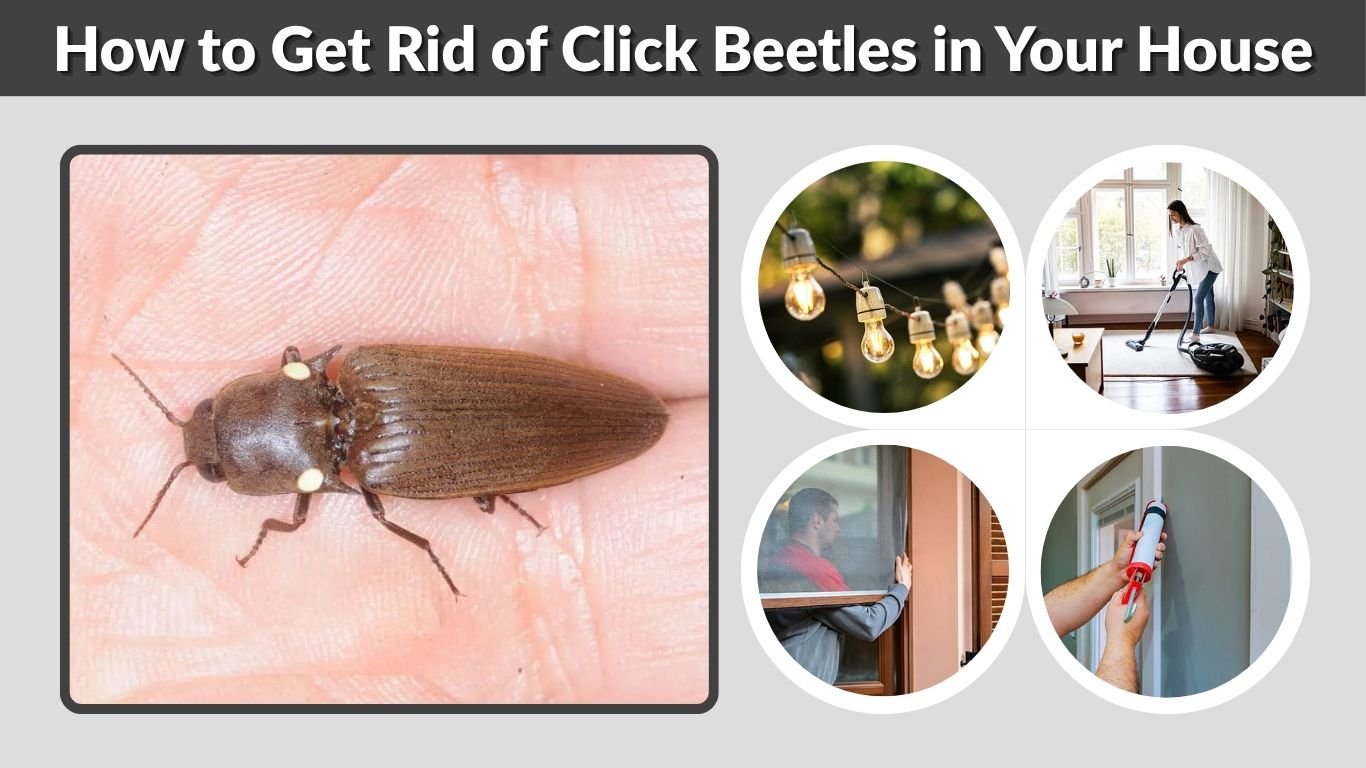
Click beetles are common insects that sometimes enter homes, gather around outdoor lights, or appear in gardens. Although adult click beetles are generally harmless, their presence can become annoying when several enter your house. Their larvae, called wireworms, may also damage garden plants by feeding on underground roots and tubers.
Fortunately, you can usually control click beetles without using strong chemicals. Simple methods like sealing entry points, reducing outdoor lighting, and managing garden soil can make a difference. This guide explains how to get rid of click beetles naturally, remove them from your home, and prevent future problems.
What Are Click Beetles and Why Do They Appear?
Click beetles belong to the family Elateridae and are recognized by their unusual clicking mechanism. When flipped onto their backs, they can snap their bodies and jump into the air. They commonly live in gardens, fields, lawns, and wooded areas, but adults sometimes enter homes accidentally.
How to Identify Click Beetles
Most click beetles have long, narrow bodies and hard wing covers. Common characteristics include:
- Body shape: Elongated, flattened, and slightly tapered.
- Color: Usually brown, black, gray, or reddish-brown.
- Size: Many common species measure approximately ¼ to ¾ inch long.
- Clicking sound: They make a noticeable click when trying to turn themselves upright.
- Activity: Many species become active at night and gather near lights.
Why Are Click Beetles in Your House?
Click beetles often enter homes because artificial lights attract them. They may fly toward porch lights, illuminated windows, or open doors during warm evenings.
Cracks around windows, damaged screens, and gaps beneath doors allow them to enter. Their presence does not necessarily indicate poor housekeeping or an established indoor infestation.
How to Get Rid of Click Beetles in Your House
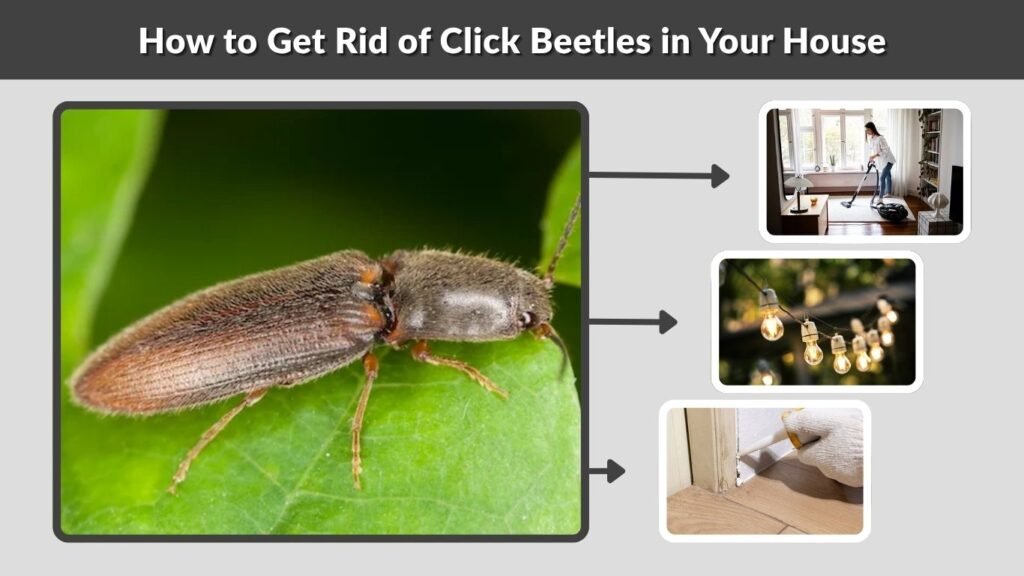
Getting rid of click beetles indoors usually requires removing the insects already present and preventing more from entering. Unlike cockroaches or some household beetles, click beetles generally do not reproduce inside ordinary living spaces.
1. Vacuum Up Click Beetles
Vacuuming is one of the easiest ways to remove click beetles without insecticides.
- Check windowsills, curtains, floors, and areas near lights.
- Use a vacuum hose to collect visible beetles.
- Empty the vacuum contents into a sealed bag.
- Dispose of the bag outside your home.
For just one or two beetles, use a cup and paper to capture and release them outdoors.
2. Reduce Outdoor Lighting
Adult click beetles are attracted to bright lights at night. Reducing unnecessary lighting can significantly lower the number approaching your house.
Turn off porch lights when they are not needed. Consider motion-activated lighting or lower-intensity bulbs around entrances.
Also, close curtains at night to reduce indoor light shining through windows.
3. Seal Cracks and Entry Points
Small openings around your house provide convenient entry routes for click beetles.
Inspect door frames, window edges, foundation cracks, and gaps around pipes. Seal suitable openings with caulk and install weatherstripping beneath doors.
Repair torn window screens and ensure they fit tightly.
4. Remove Beetles Around Doors and Windows
Regularly inspect areas where click beetles gather. Sweep or vacuum beetles from doorways, window tracks, and enclosed porches.
Keeping doors closed during peak nighttime activity can also prevent accidental entry.
How to Get Rid of Click Beetles Naturally
Natural click beetle control focuses on physical removal, habitat management, and prevention rather than chemical treatments. These methods are especially useful in households with children or pets.
Use Manual Removal
Collecting visible click beetles is a practical solution when only a few are present.
Wear gardening gloves if preferred and gently place the insects into a container. Release them away from entrances and outdoor lighting.
Reduce Areas That Attract Beetles
Keep doorways clear of unnecessary clutter and check stored outdoor equipment before bringing it indoors.
Avoid leaving brightly illuminated doors or windows open at night. Reducing entry opportunities is generally more effective than trying homemade insect repellents.
Avoid Unproven Home Remedies
Vinegar, essential oils, baking soda, and homemade insect sprays are sometimes recommended for beetle control.
However, reliable evidence that these remedies consistently eliminate click beetles is limited. Essential oils can also create risks for pets, and homemade sprays may damage surfaces or plants.
Physical removal and exclusion are safer first choices.
How to Get Rid of Click Beetles in the Garden
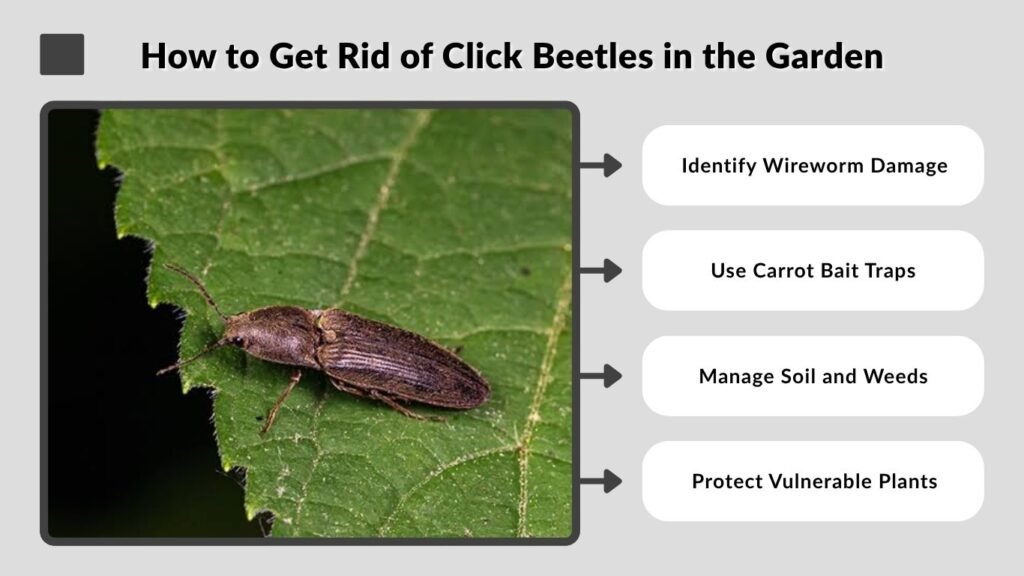
Garden management is different from indoor control. Adult click beetles generally cause little plant damage, but the larvae of certain species, called wireworms, can attack roots, germinating seeds, and underground vegetables.
Effective garden control should therefore focus on identifying and managing damaging wireworms rather than eliminating every adult beetle.
Identify Wireworm Damage
Wireworms are slender, firm-bodied larvae that usually appear yellowish-brown.
Signs of their feeding include:
- Small holes or tunnels inside potatoes and other root vegetables.
- Damaged seedlings that fail to grow properly.
- Roots showing signs of chewing.
- Poor germination where seeds have been attacked.
Because other pests can cause similar symptoms, inspect the surrounding soil before choosing a treatment.
Use Carrot Bait Traps
Carrot baiting is a useful nonchemical method recommended by the University of California’s Integrated Pest Management program.
Follow these steps:
- Place nearly mature carrots into the affected garden soil.
- Space them approximately 2½–3 feet apart.
- Check the carrots every two to three days.
- Remove wireworms found feeding on the carrots.
- Replace the carrots and continue monitoring.
This method can help reduce some wireworms and confirm their presence, although it may not eliminate a large population.
Manage Soil and Weeds
Wireworms may become troublesome in areas recently converted from grassland or where susceptible plants have been grown repeatedly.
Remove grass weeds from vegetable beds and consider rotating crops when practical.
Careful soil cultivation before planting may expose some larvae to predators. Avoid excessive digging that could harm soil structure and beneficial organisms.
Protect Vulnerable Plants
Inspect planting beds before sowing potatoes, carrots, or other susceptible crops.
If wireworms are present in large numbers, consider using another planting area or consulting your local agricultural extension service.
Managing wireworms may require more than one growing season because some species spend several years developing underground.
How to Prevent Click Beetles From Coming Back
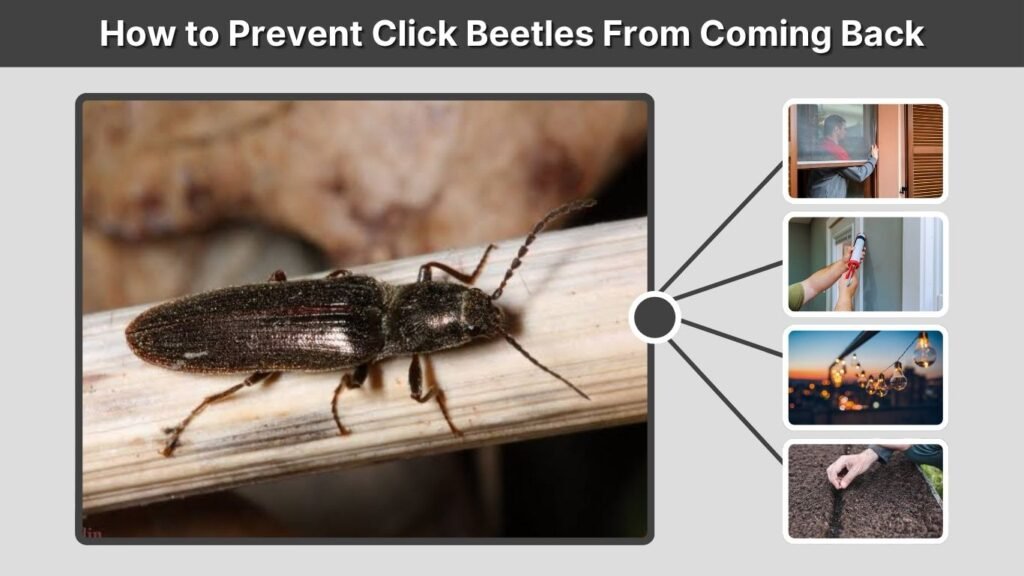
Long-term click beetle prevention involves maintaining your home and monitoring outdoor conditions. A few simple habits can significantly reduce recurring problems.
Follow these prevention tips:
- Maintain window screens: Repair holes that allow beetles to fly indoors.
- Seal exterior gaps: Inspect doors, windows, foundations, and utility openings.
- Control nighttime lighting: Turn off unnecessary lights near entrances.
- Check windows regularly: Remove beetles before they accumulate indoors.
- Monitor garden soil: Look for wireworms before planting vulnerable vegetables.
- Manage grass weeds: Keep vegetable beds from becoming heavily overgrown.
Remember that click beetles naturally live outdoors. Preventing them from entering your home is more realistic than eliminating every beetle from your property.
Should You Use Insecticides to Kill Click Beetles?
Insecticides are generally unnecessary for occasional click beetles inside the house. Vacuuming, repairing screens, and reducing outdoor lights usually provide adequate control.
Garden insecticides are also not automatically effective against wireworms because the larvae live underground. Treatment success depends on the pest species, crop, soil conditions, and product.
If serious wireworm damage continues, contact a local agricultural extension specialist or qualified pest-control professional.
Only use pesticides registered for the specific pest and application site, and always follow label instructions. Avoid spraying living areas or vegetable beds unnecessarily.
FAQs
1. Are Click Beetles Harmful to Humans?
Adult click beetles are generally harmless to humans. They do not sting, and they are not known for biting people. Their clicking sound may seem alarming, but it is simply part of a mechanism that helps them escape danger or turn themselves upright.
2. How Do You Get Rid of Click Beetles in Your House Naturally?
Vacuum up visible beetles, repair damaged window screens, seal gaps around doors, and reduce outdoor lighting. These methods remove existing insects and limit new arrivals without requiring chemical sprays or potentially irritating homemade repellents.
3. Why Are There So Many Click Beetles Around My House?
Large numbers of click beetles may appear during periods of adult activity, especially on warm evenings. Outdoor lights can attract them from nearby lawns, gardens, or wooded areas. Open windows and poorly sealed doors allow them to enter.
4. Do Click Beetles Infest Houses?
Click beetles usually enter houses accidentally and do not establish breeding populations in ordinary indoor rooms. Finding several near windows or lights typically indicates outdoor activity rather than a developing household infestation.
5. What Is the Best Way to Get Rid of Click Beetles in the Garden?
First determine whether wireworms are damaging your plants. Use carrot bait traps to monitor larvae, control grass weeds, and protect vulnerable crops. Adult click beetles usually require no treatment unless a specific species is causing a confirmed problem.