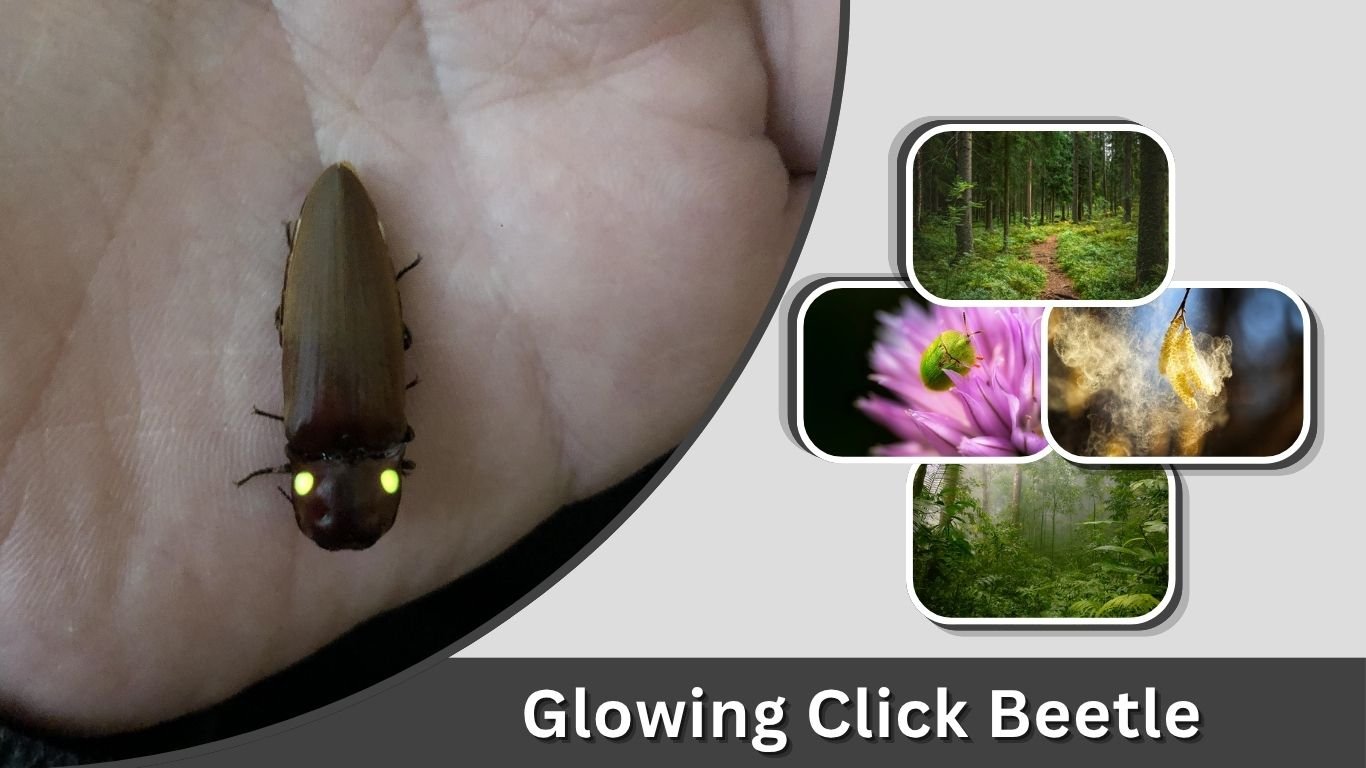
The glowing click beetle is a fascinating insect known for producing natural light from specialized organs on its body. Unlike ordinary click beetles, these remarkable insects display bright green or yellowish glowing spots that resemble tiny headlights. They are mostly found in tropical and subtropical regions, including parts of Florida and Texas. Although their unusual appearance may seem mysterious, glowing click beetles are generally harmless to humans. This guide explains their identification, glowing behavior, habitat, diet, life cycle, and whether they pose any danger.
What Is a Glowing Click Beetle?
Glowing click beetles are bioluminescent insects belonging to the family Elateridae. Several species occur within the genera Pyrophorus, Deilelater, and related groups.
These beetles produce visible light through specialized organs called photophores. Their glowing spots often appear near the rear corners of the pronotum, the shieldlike section immediately behind the head.
Like ordinary click beetles, they possess a clicking mechanism that helps them flip upright when overturned. However, their ability to generate natural light makes them particularly distinctive.
How to Identify a Glowing Click Beetle
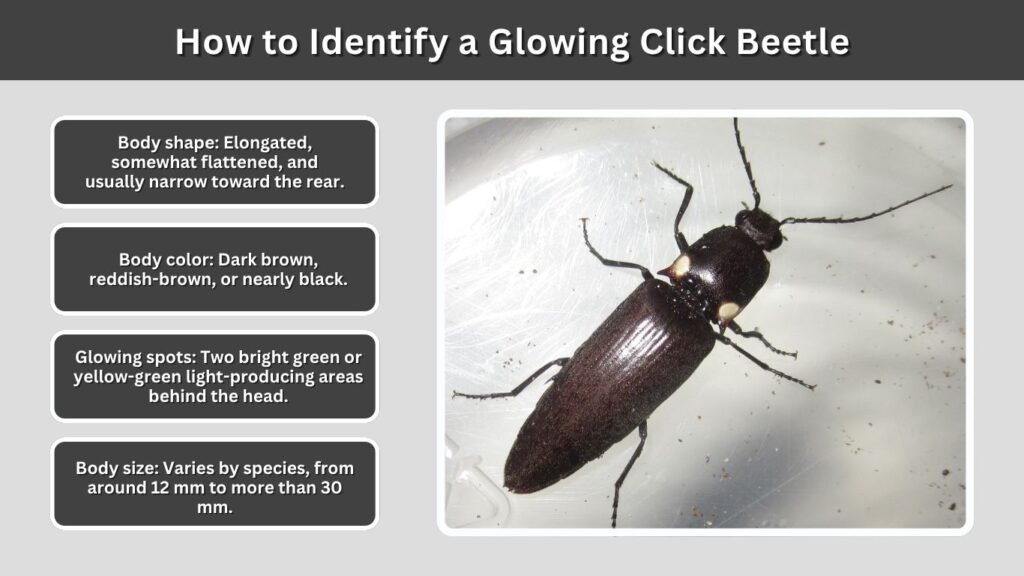
Glowing click beetles have elongated bodies, hard wing covers, and distinctive light-producing spots. Their body coloration varies from dark brown to almost black, depending on the species.
Although their glowing appearance is easiest to recognize at night, several physical characteristics can help with identification during daylight.
Glowing Click Beetle Identification Features
- Body shape: Elongated, somewhat flattened, and usually narrow toward the rear.
- Body color: Dark brown, reddish-brown, or nearly black.
- Glowing spots: Two bright green or yellow-green light-producing areas behind the head.
- Body size: Varies by species, from around 12 mm to more than 30 mm.
- Antennae: Segmented and often slightly serrated.
- Clicking mechanism: Produces a sharp snapping sound when the beetle flips itself upright.
The exact appearance varies between species, so body color and glowing spots alone may not establish a precise identification.
Why Do Glowing Click Beetles Glow?
Glowing click beetles produce light through a natural chemical process called bioluminescence. This process involves luciferin, the enzyme luciferase, oxygen, and other cellular components.
The resulting reaction releases energy as visible light while producing relatively little heat.
What Is the Purpose of Their Glow?
Scientists have identified several possible functions for bioluminescence in click beetles, including communication between potential mates and defensive signaling.
In some species, adults use glowing signals during courtship. Light may also startle predators, although its defensive role varies and remains incompletely understood.
Unlike the familiar flashing patterns of many fireflies, glowing click beetles often produce a relatively steady light that can change in brightness.
Where Do Glowing Click Beetles Live?
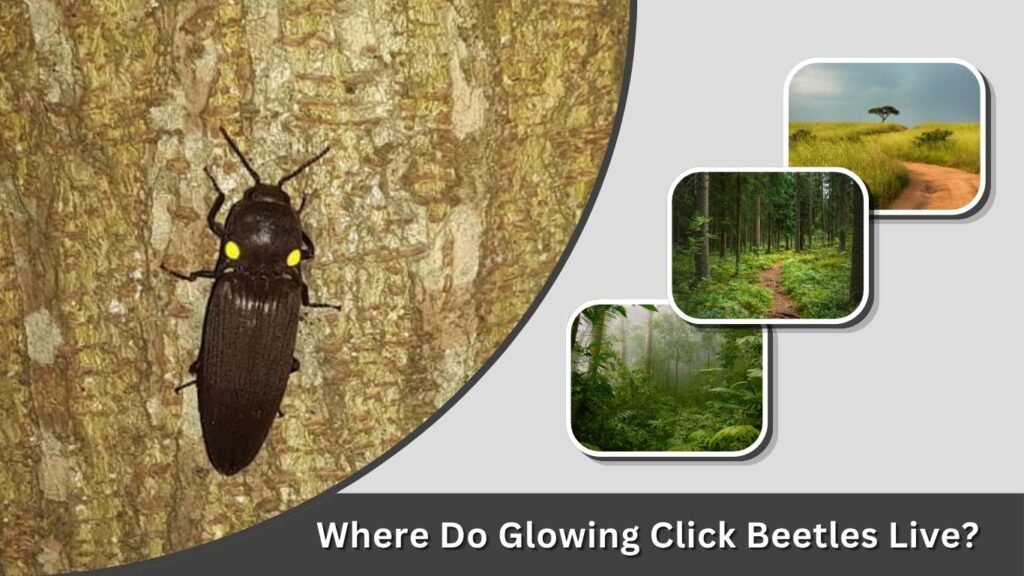
Glowing click beetles primarily inhabit warm tropical and subtropical environments. They occur in Central America, South America, the Caribbean, and parts of the southeastern United States.
Adults are often active after sunset, when their glowing organs become easier to observe.
Common Glowing Click Beetle Habitats
- Tropical forests: Provide vegetation, moisture, and suitable breeding environments.
- Wooded areas: Offer shelter and decaying organic material.
- Gardens: Some adults visit vegetation and artificial lights.
- Grasslands: Certain species occur in open, vegetated habitats.
- Florida and Texas: Native Deilelater species occur in parts of these states.
Their distribution depends on species, climate, habitat availability, and seasonal conditions.
Common Species of Glowing Click Beetles
Several glowing click beetle species have distinctive appearances and geographic ranges. Although they share similar glowing mechanisms, their size, coloration, and behavior may differ.
Pyrophorus Click Beetles
Members of the genus Pyrophorus are commonly called fire beetles or headlight beetles. They are especially associated with tropical regions of the Americas.
Many species display two bright glowing spots on the pronotum and an additional light-producing area underneath the abdomen.
Deilelater Click Beetles
Deilelater species include glowing click beetles found in the southern United States.
For example, Deilelater physoderus has been recorded in Texas and Florida. Other members of the genus occur in Georgia and Florida.
These beetles generally have dark bodies and paired light-producing organs behind the head.
What Do Glowing Click Beetles Eat?
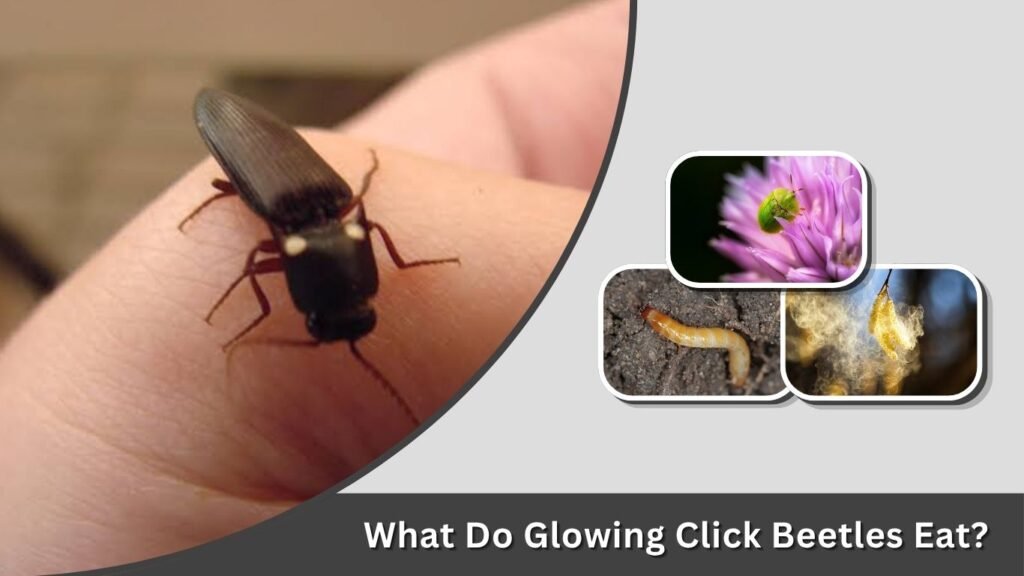
Glowing click beetles have different feeding habits depending on their species and developmental stage. Adults and larvae may consume different food sources.
Some larvae are predatory and help regulate populations of other small invertebrates.
Common Food Sources
- Small insects: Predatory larvae may capture and consume other insects.
- Insect larvae: Underground larvae of certain species feed on beetle grubs.
- Nectar: Adults of some click beetle species consume floral resources.
- Pollen: Certain adult click beetles feed on pollen.
- Other organic materials: Feeding habits vary considerably among species.
Not all glowing click beetles share the same diet. Accurate dietary information depends on identifying the particular species.
Do Glowing Click Beetle Larvae Glow?
Yes, larvae of several bioluminescent click beetle species can produce light. Their appearance differs considerably from that of adults.
These larvae usually have elongated bodies and live underground, within decaying wood, or in other protected habitats.
Their light-producing organs can appear on different body regions depending on the species.
Some larvae glow when disturbed, while others use bioluminescence during activities such as prey attraction.
One remarkable example is Pyrearinus termitilluminans, whose larvae create glowing displays in termite mounds in Brazil.
Are Glowing Click Beetles Dangerous?
Glowing click beetles are generally harmless to humans and household pets. Their light-producing organs do not deliver electrical shocks or inject venom.
Despite their unusual appearance, these insects normally avoid confrontation and attempt to escape when disturbed.
Do Glowing Click Beetles Bite?
Glowing click beetles are not aggressive and do not ordinarily bite humans. Some larger beetles may pinch defensively when handled roughly, but serious injuries are unlikely.
They do not possess stingers, and their bioluminescence is not harmful to human skin.
Although glowing click beetles are not generally considered poisonous, pets should be discouraged from eating unidentified insects.
Glowing Click Beetle vs. Firefly
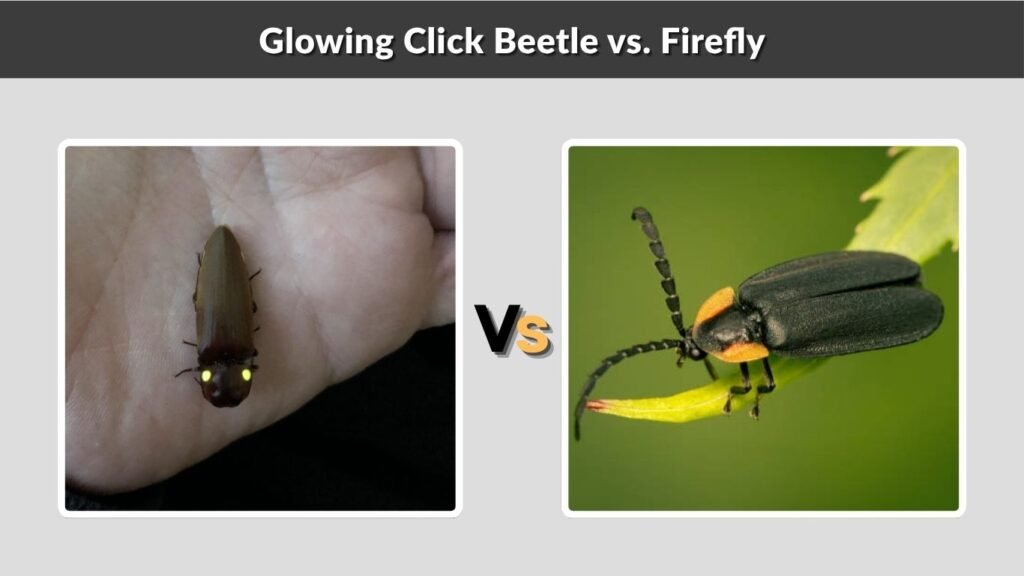
Glowing click beetles and fireflies both produce natural light, but they belong to different beetle families.
Fireflies belong to Lampyridae, while glowing click beetles belong to Elateridae.
Many fireflies communicate using timed flashes from organs near the abdomen. Glowing click beetles often display paired light-producing spots on the pronotum and may produce more continuous illumination.
Click beetles also possess the distinctive snapping mechanism that allows them to launch themselves into the air.
FAQs
1. Do All Click Beetles Glow?
No, most click beetle species do not produce light. Bioluminescence occurs in particular groups, including Pyrophorus and Deilelater. Ordinary click beetles have the same general clicking mechanism but lack the specialized light-producing organs found in glowing species.
2. Are Glowing Click Beetles Poisonous?
Glowing click beetles are not generally considered poisonous to humans. Their light is produced through bioluminescence rather than toxic chemicals released externally. However, avoiding unnecessary handling and preventing pets from eating unidentified insects are sensible precautions.
3. Do Glowing Click Beetles Have Glowing Eyes?
No, glowing click beetles do not actually have glowing eyes. Their apparent headlights are specialized light-producing organs located on the pronotum, directly behind the head. These organs emit greenish or yellowish light that can resemble two illuminated eyes.
4. Can Glowing Click Beetles Fly?
Yes, adult glowing click beetles can fly using membranous wings beneath their hardened wing covers. Some species produce visible light during flight, including from an abdominal light organ. Their flight activity generally increases during suitable warm nighttime conditions.
5. Are Glowing Click Beetles Found in Florida?
Yes, certain glowing click beetles occur naturally in Florida. Species belonging to the genus Deilelater have been recorded in the state. They inhabit suitable outdoor environments and may occasionally appear around lights during warm evenings.