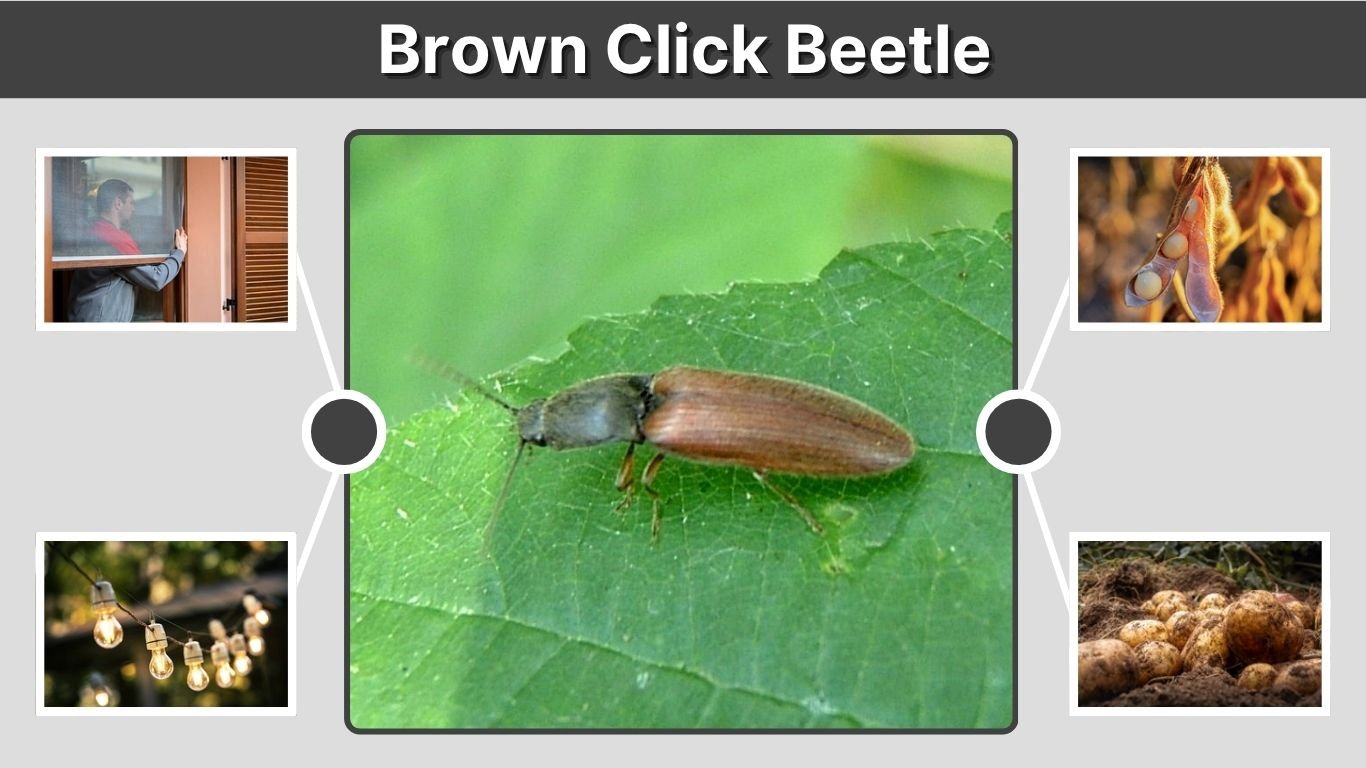
A brown click beetle is a slender, hard-bodied insect commonly found in gardens, lawns, wooded areas, and sometimes inside houses. These beetles are known for producing a clicking sound and jumping into the air when turned upside down. Their unusual movement can surprise homeowners, but most are harmless to people.
Brown click beetles come in different sizes and shades, including light brown, reddish-brown, and dark brown. Some species have spots or contrasting markings. Understanding their appearance, behavior, and habitat can help you identify them correctly. This guide covers brown click beetle identification, whether they bite, what they eat, and how to remove them from your home.
What Is a Brown Click Beetle?
Brown click beetles belong to the family Elateridae, within the beetle order Coleoptera. They are found in many parts of the world and commonly inhabit grassy areas, forests, gardens, and agricultural fields. Although several species look similar, they share distinctive body shapes and clicking mechanisms that distinguish them from other household beetles.
Brown Click Beetle Identification
Brown click beetles generally have elongated bodies with hard wing covers and small heads. Their bodies often appear narrow, flattened, and slightly pointed toward the rear.
Common identification features include:
- Color: Light brown, reddish-brown, dark brown, or nearly black.
- Size: Many common species measure approximately ¼ to ¾ inch long.
- Body shape: Long, narrow, and somewhat flattened.
- Antennae: Usually segmented, threadlike, or slightly sawtoothed.
- Wing covers: Hard, often with fine longitudinal grooves.
- Movement: Capable of producing a clicking sound and suddenly jumping.
The shieldlike section behind the head often has pointed rear corners, another helpful identification feature.
Why Do Brown Click Beetles Make Clicking Sounds?
Brown click beetles have a specialized mechanism beneath their thorax. When they become trapped on their backs, they bend their bodies and release stored mechanical energy.
This produces a sharp clicking sound and launches the beetle upward, helping it regain its normal position.
The movement also helps them escape predators. A brown beetle that clicks and jumps when overturned is therefore likely to be a click beetle.
Common Types and Colors of Brown Click Beetles
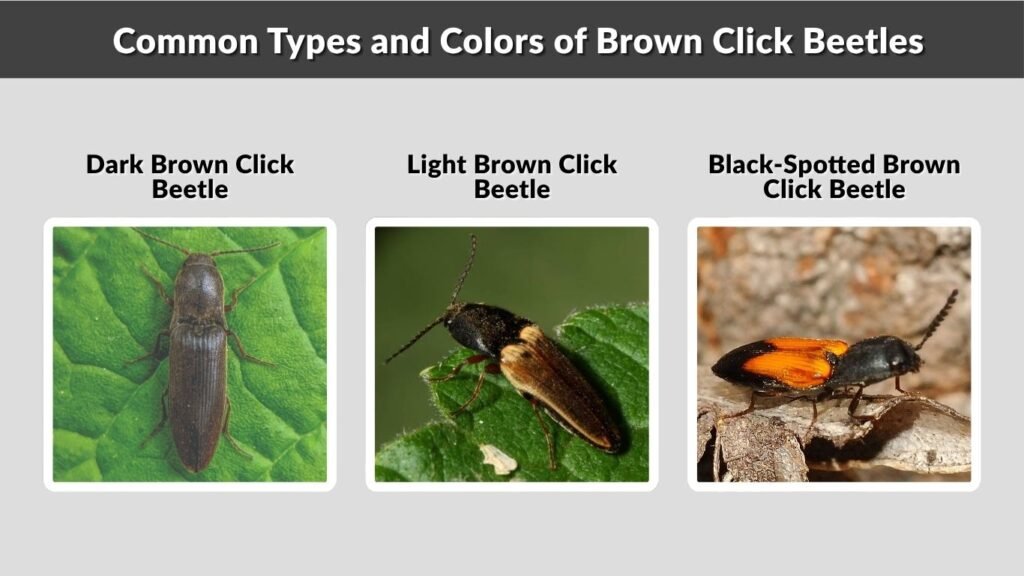
Not every brown click beetle belongs to the same species. The family contains numerous species with different sizes, colors, and patterns. Identifying individual species requires examining more than body color, but several general appearances are frequently encountered.
1. Dark Brown Click Beetle
Dark brown click beetles often have elongated bodies with chocolate-brown or nearly black wing covers. Some species in the genus Melanotus have this appearance.
They may be found in lawns, gardens, and grassy habitats. Adults sometimes appear around outdoor lights or enter houses accidentally.
Their dark coloration makes them easy to confuse with other beetles, so their body shape and clicking behavior are important identification clues.
2. Light Brown Click Beetle
Light brown click beetles may appear tan, golden-brown, or reddish-brown. Some Agriotes species have brown bodies, relatively slender shapes, and visible grooves on their wing covers.
These beetles often inhabit grassy vegetation and agricultural landscapes. Their larvae may feed underground, although the extent of plant damage depends on the species.
3. Black-Spotted Brown Click Beetle
Some brown click beetles have dark spots, mottled wing covers, or contrasting markings.
Certain species, such as the eyed click beetle (Alaus oculatus), have large dark markings resembling eyes near the front of the body.
However, not every spotted brown beetle is an eyed click beetle. Accurate identification requires comparing the shape, location, and arrangement of its markings.
Why Are Brown Beetles Click in Your House?
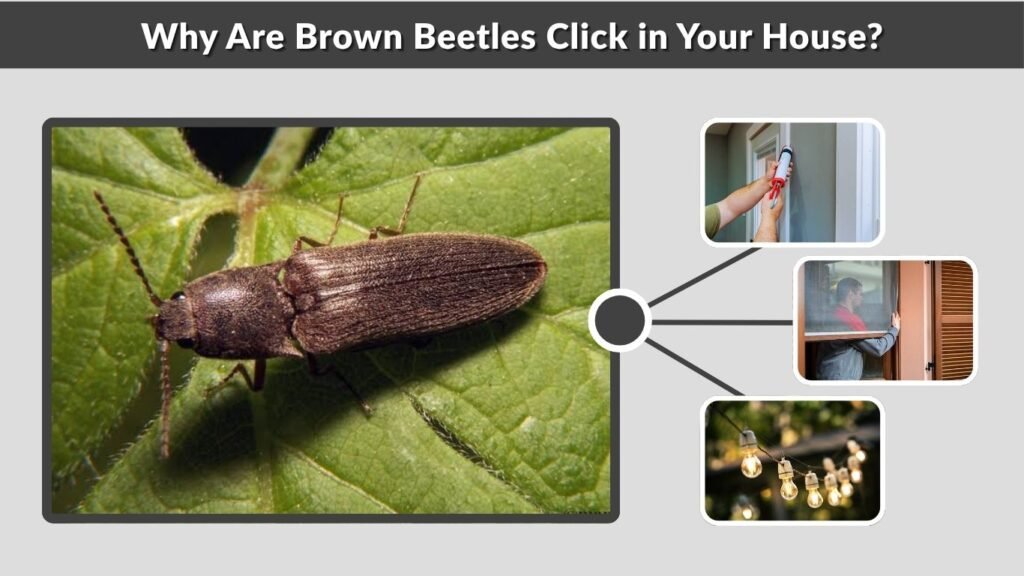
Finding a brown click beetle in your house is relatively common during periods of adult beetle activity. These insects normally live outdoors but may enter buildings accidentally, particularly when lights attract them toward doors and windows.
What Attracts Brown Click Beetles Indoors?
Outdoor lighting is one of the main reasons click beetles approach houses at night. Bright porch lights and illuminated windows can attract flying adults.
They may enter through small gaps around doors, torn window screens, or open windows.
Some may also appear in basements or near walls, especially where access from outdoors is available. Finding one indoors does not automatically mean your home has an infestation.
How to Get Rid of Brown Click Beetles in Your House
Brown click beetles usually do not require extensive pest-control treatments.
Try these removal and prevention methods:
- Vacuum visible beetles: Remove adults from floors, windowsills, and walls.
- Reduce outdoor lighting: Turn off unnecessary lights or use motion-activated fixtures.
- Repair window screens: Close openings that allow flying insects indoors.
- Seal entry points: Use suitable caulk or weatherstripping around gaps.
- Remove individual beetles: Capture them in a container and release them outdoors.
These simple methods are generally sufficient for occasional indoor sightings.
Are Dark Brown Click Beetles Dangerous?
Despite their unusual jumping behavior, dark brown click beetles are not considered dangerous household insects. They do not attack humans, and their clicking mechanism is primarily defensive.
The main concern associated with some click beetle species involves their larvae in gardens rather than the adults inside houses.
Do Brown Click Beetles Bite Humans?
No. Adult brown click beetles are not known to bite or sting humans.
They may move suddenly or click when handled, but this is not an aggressive response.
Their jumping mechanism is designed to help them escape danger. If you encounter one, you can usually move it outside without worrying about being bitten.
Can Brown Click Beetles Damage Your House?
Adult click beetles do not normally damage furniture, clothing, carpets, or wooden building structures.
They also do not generally establish breeding populations in ordinary indoor living spaces.
However, larvae of some species, called wireworms, can damage plant roots, seeds, and underground vegetables. This is primarily an outdoor agricultural or gardening concern.
What Do Brown Click Beetles Eat?
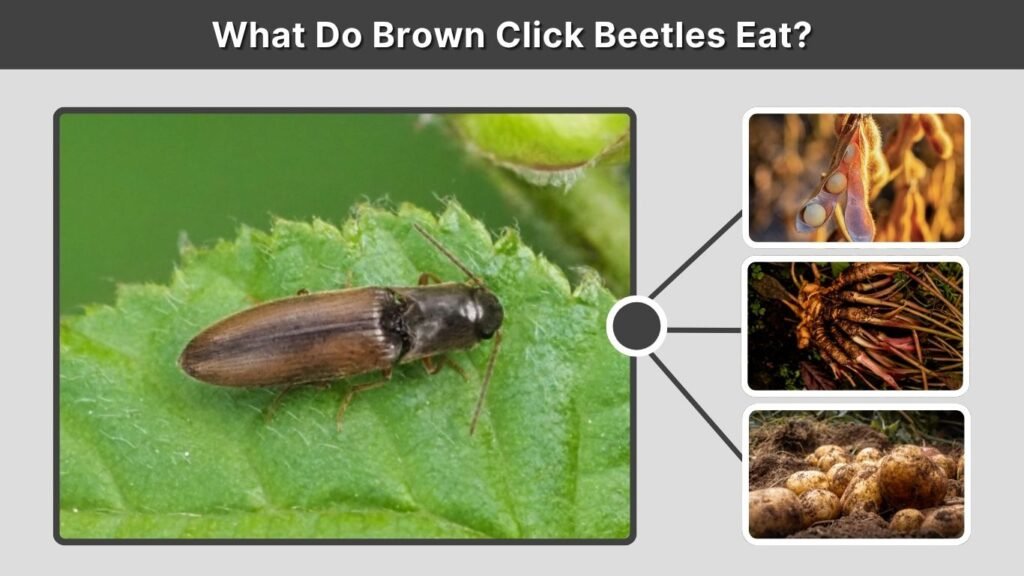
The diet of a brown click beetle depends on its species and developmental stage. Adults and larvae often feed on different materials. Understanding these differences is useful when determining whether a beetle poses a risk to garden plants.
Adult Brown Click Beetle Food
Adult click beetles of many species feed on plant materials such as nectar, pollen, or tender vegetation. Some adults feed very little.
Common food sources can include:
- Flower nectar
- Pollen
- Soft plant tissues
- Other species-specific plant materials
Adult click beetles generally do not feed on stored household foods.
What Do Brown Click Beetle Larvae Eat?
The larvae are commonly called wireworms because of their narrow, tough bodies.
Many soil-dwelling wireworms feed on germinating seeds, roots, and underground plant parts. Potatoes, corn, and other vegetables may be affected by certain species.
Other click beetle larvae live in decaying wood and may prey on small invertebrates.
Not every wireworm is a serious garden pest.
Brown Click Beetle vs. Other Brown Beetles
Brown click beetles can resemble flour beetles, ground beetles, and various other small brown insects. Their elongated bodies sometimes make identification difficult, especially when they are found indoors.
| Feature | Brown Click Beetle | Flour Beetle |
| Body shape | Long, narrow, often tapered | Small, elongated, relatively flat |
| Typical color | Brown to dark brown | Usually reddish-brown |
| Clicking jump | Yes | No |
| Common location | Outdoors, lights, windows | Stored grains and dry foods |
| Main household concern | Occasional nuisance | Pantry food infestation |
A small brown beetle found in flour or cereal is more likely to be a stored-product pest than a click beetle.
Likewise, an insect with a dark body and brown head cannot be identified by color alone.
FAQs
1. How Big Are Brown Click Beetles?
Many common adult brown click beetles measure approximately ¼ to ¾ inch long. However, their size varies by species. Some are considerably smaller, while certain large click beetles can exceed an inch in length.
2. Do Dark Brown Click Beetles Play Dead?
Yes, some click beetles temporarily remain motionless when disturbed. They may tuck their legs close to their bodies before moving again. Their clicking mechanism also helps them escape when overturned.
3. Can Brown Click Beetles Fly?
Yes. Adult brown click beetles have functional wings in many species and can fly. They are often attracted to artificial lights, which explains why they occasionally appear near illuminated windows and porch lights.
4. What Is the Scientific Name of a Brown Click Beetle?
Brown click beetles belong to the family Elateridae in the order Coleoptera. Because many different species are brown, there is no single scientific species name that applies to every brown click beetle.
5. Why Do I Keep Finding Dark Brown Click Beetles in My House?
Repeated sightings may occur when outdoor lights attract adults toward your home. Gaps around doors and windows allow them inside. Reducing lighting and repairing screens can help prevent further entry.