
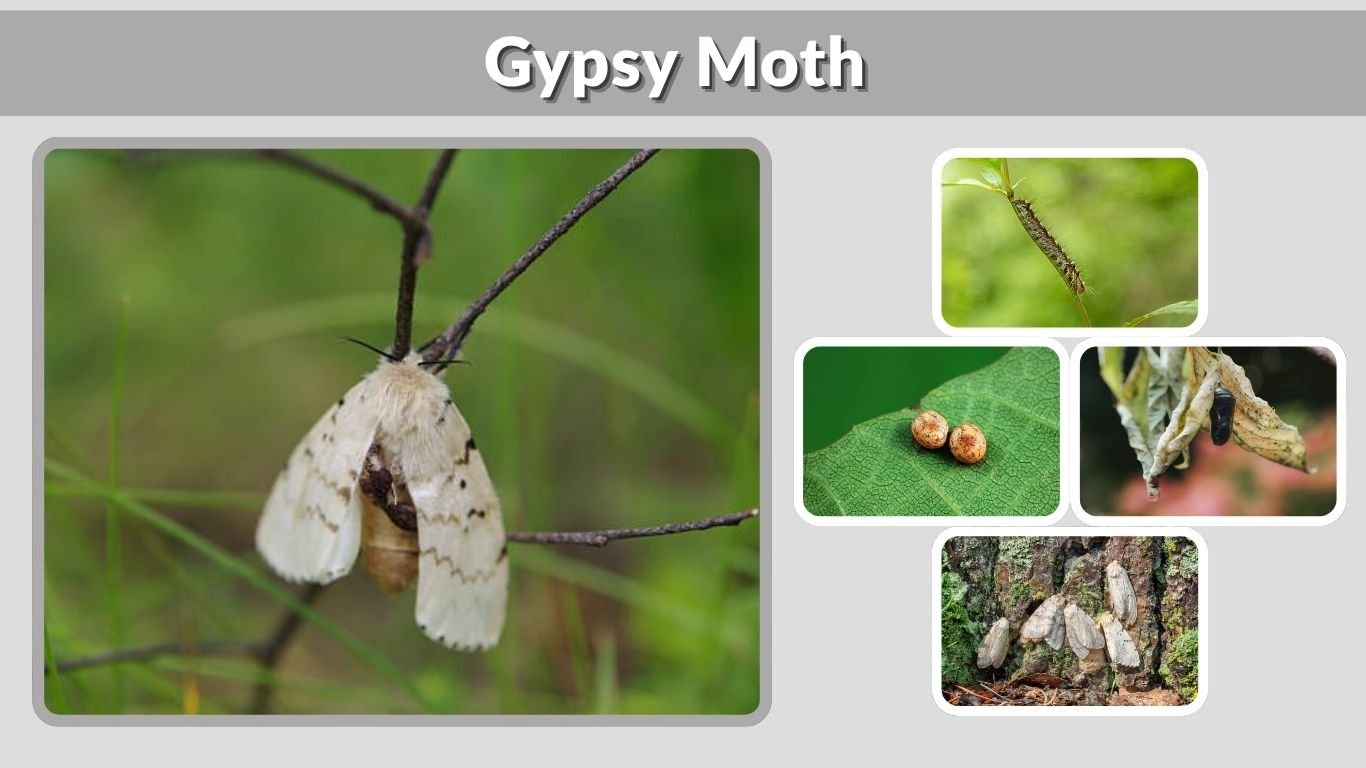
The gypsy moth, now widely known as the spongy moth, is one of the most destructive invasive forest pests in North America and parts of Europe. This insect is especially known for its caterpillar stage, which feeds aggressively on tree leaves and can strip entire forests bare during outbreaks. Understanding its characteristics, life cycle, and impact is essential for early detection and control. This guide covers identification, origins, and the damage caused by this species in a clear and structured way.
What Is a Gypsy Moth?
The gypsy moth (Lymantria dispar) is an invasive insect species that primarily targets hardwood trees. It was accidentally introduced to North America in the 1800s and has since spread widely. Today, it is considered a major forest pest due to its ability to defoliate large areas quickly. The insect goes through a complete metamorphosis, with the caterpillar stage causing the most visible damage to trees and vegetation.
Key Characteristics
- Hairy caterpillars with blue and red spots along the body
- Adult moths vary in color; females are larger and lighter
- Known for rapid population growth during outbreak cycles
Origin and Spread Overview
The gypsy moth is native to regions of Europe and Asia. It was introduced into the United States in Massachusetts during the late 1860s as part of a failed silk production experiment. Since then, it has spread across much of the eastern United States and into parts of Canada. Its ability to adapt to different climates and lack of natural predators in new environments has allowed populations to grow rapidly.
European vs Asian Types
- European gypsy moth females cannot fly, limiting spread speed
- Asian gypsy moth females can fly, increasing invasion risk
- Asian variety can infest a wider range of tree species
Life Cycle of the Gypsy Moth
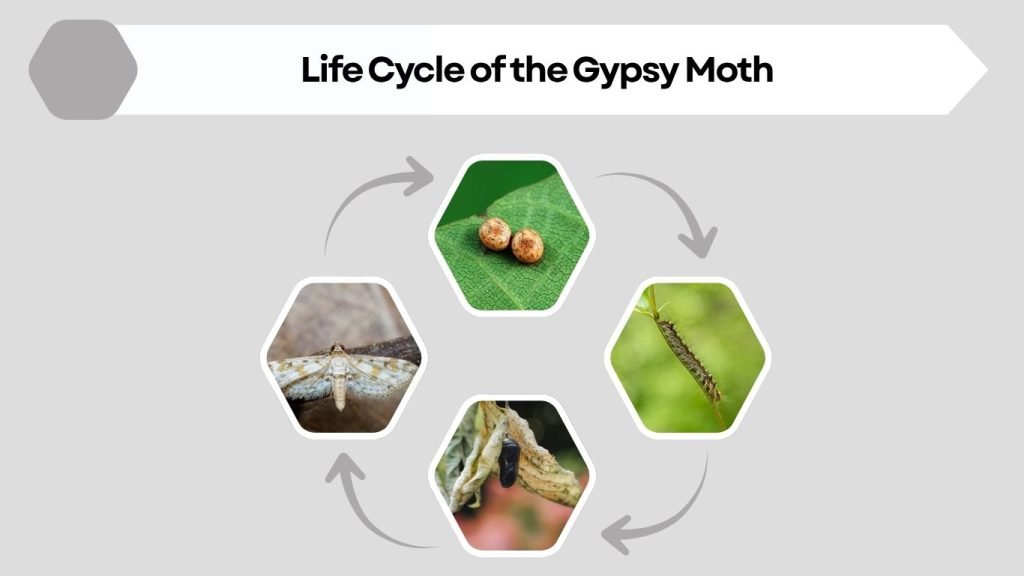
The life cycle of the gypsy moth consists of four distinct stages, each playing a role in its survival and spread. This cycle repeats annually, with timing depending on climate conditions. Understanding each stage helps in identifying the best time for control measures and prevention strategies.
Egg Stage
Egg masses are laid in late summer and remain through winter. These masses have a sponge-like appearance and can be found on tree bark, outdoor furniture, and even vehicles. Each mass can contain hundreds of eggs, making early removal important.
Larva (Caterpillar) Stage
This is the most destructive phase. Caterpillars emerge in spring and begin feeding on leaves. As they grow, their appetite increases significantly, and large populations can defoliate entire trees. The caterpillars are easily recognized by their distinctive pattern of blue and red dots.
Pupa Stage
After feeding for several weeks, the caterpillars enter the pupal stage. During this phase, they rest in protected areas such as bark crevices or sheltered surfaces. This stage lasts for a short period before the adult moth emerges.
Adult Stage
Adult moths emerge in mid to late summer. Male moths can fly and are usually smaller and darker, while females are larger and lighter in color. The primary purpose of this stage is reproduction, after which the cycle begins again.
Gypsy Moth Damage and Effects
The damage caused by gypsy moths is mainly due to the feeding habits of the caterpillars. They consume large amounts of foliage, weakening trees and making them more vulnerable to disease and other pests. Repeated defoliation over several years can lead to tree death, especially in already stressed environments.
In addition to environmental damage, gypsy moth caterpillars can also affect humans. Their tiny hairs may cause skin irritation or rashes when touched. During severe infestations, falling caterpillars and droppings can create nuisance conditions in residential areas.
Gypsy Moth Identification and Common Signs Overview
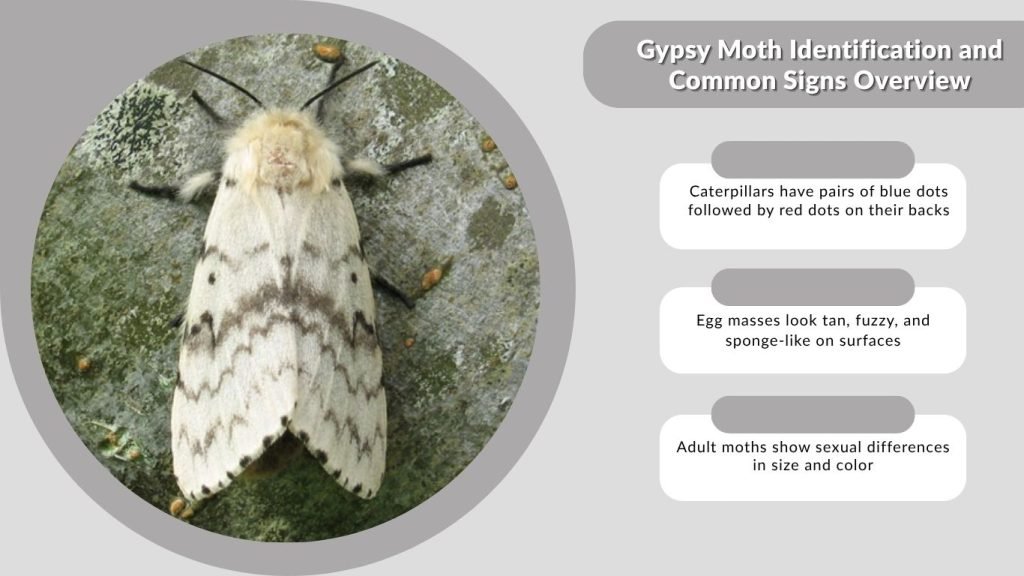
Recognizing gypsy moth presence early can prevent large-scale infestations. While the caterpillars are the most visible stage, other signs such as egg masses and feeding damage also help with identification. These indicators often appear before major defoliation occurs, making early observation an important step in control.
How to Identify Gypsy Moths
- Caterpillars have pairs of blue dots followed by red dots on their backs
- Egg masses look tan, fuzzy, and sponge-like on surfaces
- Adult moths show sexual differences in size and color
Signs of Infestation
- Leaves with irregular holes or completely eaten edges
- Presence of caterpillars on tree trunks and branches
- Accumulation of droppings (frass) under trees
Gypsy Moth Nests, Eggs, and Cocoon Overview
Unlike some other caterpillar species, gypsy moths do not create visible silk tents or nests in trees. Instead, they rely on hidden or scattered locations for their development stages. Understanding these differences helps avoid confusion with similar insects such as tent caterpillars.
Egg Mass Locations
Egg masses can be found in a wide variety of places, not just on trees. They are often attached to outdoor objects, making them easy to transport unknowingly.
Pupa and Cocoon Areas
The pupal stage occurs in sheltered environments. These include bark crevices, under leaves, or even on buildings and outdoor furniture, where the insect remains protected until adulthood.
Control and Prevention Methods Overview
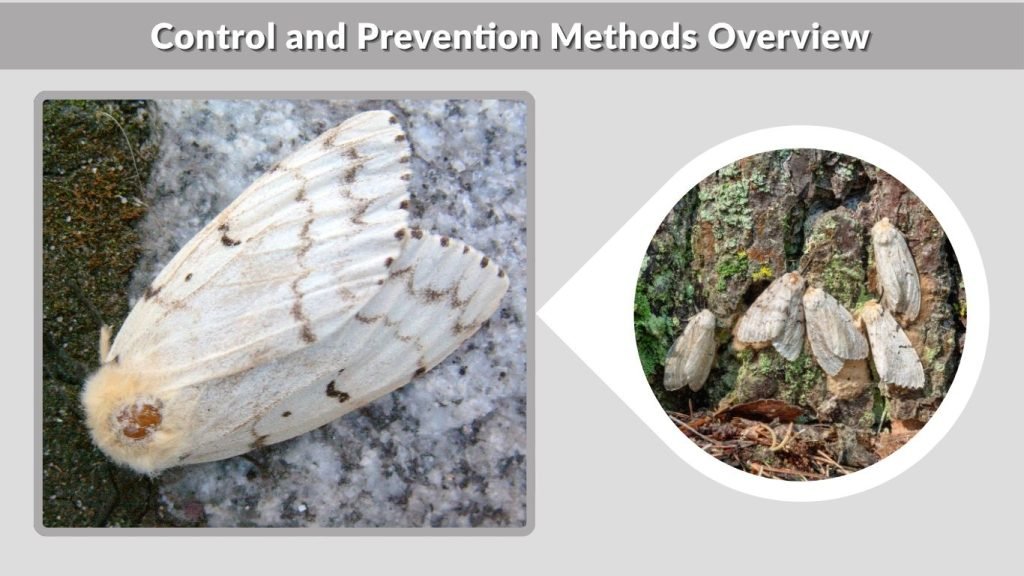
Managing gypsy moth populations requires a combination of early detection and targeted control techniques. The most effective methods focus on disrupting the life cycle before the caterpillars reach their most destructive stage. Both natural and chemical approaches are commonly used depending on the severity of infestation.
Common Control Methods
- Applying biological insecticides like Bacillus thuringiensis (Bt)
- Scraping and destroying egg masses before hatching
- Using sticky bands or traps to block caterpillar movement
Preventive Measures
- Regular inspection of trees and outdoor surfaces
- Avoid transporting firewood or outdoor items from infested areas
- Encouraging natural predators such as birds and insects
Invasive Species Impact Overview
The gypsy moth is considered an invasive species because it disrupts ecosystems where it is not naturally found. Its rapid spread and lack of natural predators allow populations to grow quickly, causing widespread environmental and economic damage.
Environmental Effects
Forests affected by repeated defoliation become weaker and less resilient. This can lead to reduced biodiversity, as some plant and animal species struggle to survive in damaged habitats.
Economic Consequences
Infestations can result in significant costs for tree removal, pest control, and forest management. Residential areas may also experience decreased property value due to tree loss and nuisance conditions.
Related Terms and Common Confusions Overview
Many people confuse gypsy moths with other similarly named or unrelated topics. Clarifying these differences helps ensure accurate understanding and avoids misinformation.
Common Confusions Explained
- Tent caterpillars build silk tents, while gypsy moths do not
- The “gypsy moth” aircraft is unrelated to the insect
- The 1969 movie “The Gypsy Moths” has no connection to the species
Naming Update
The insect is now more commonly referred to as the spongy moth, a name adopted to replace older terminology. This updated name is gradually being used in scientific and public discussions.
FAQs
What does a gypsy moth look like?
Adult gypsy moths vary by sex. Males are smaller, darker, and can fly, while females are larger, lighter in color, and usually cannot fly (European type). Caterpillars are more noticeable, with hairy bodies and distinct pairs of blue and red spots along their backs.
What is the new name for gypsy moth?
The insect is now commonly called the spongy moth. This updated name is used in scientific and public communication to replace older terminology, while still referring to the same species, Lymantria dispar.
Can gypsy moth caterpillars harm humans?
Gypsy moth caterpillars do not bite or sting, but their tiny hairs can cause skin irritation or rashes in some people. Sensitive individuals may experience itching or redness after contact, especially during heavy infestations.
How do you get rid of gypsy moths?
Effective control includes removing egg masses before they hatch, applying biological insecticides like Bt during early larval stages, and using barriers or traps to limit caterpillar movement. Early action is key to reducing population growth.
What trees do gypsy moths attack?
Gypsy moths prefer hardwood trees such as oak, maple, and birch. However, during severe outbreaks, they may feed on many other tree species, including some evergreens, especially when their preferred food sources become limited.
