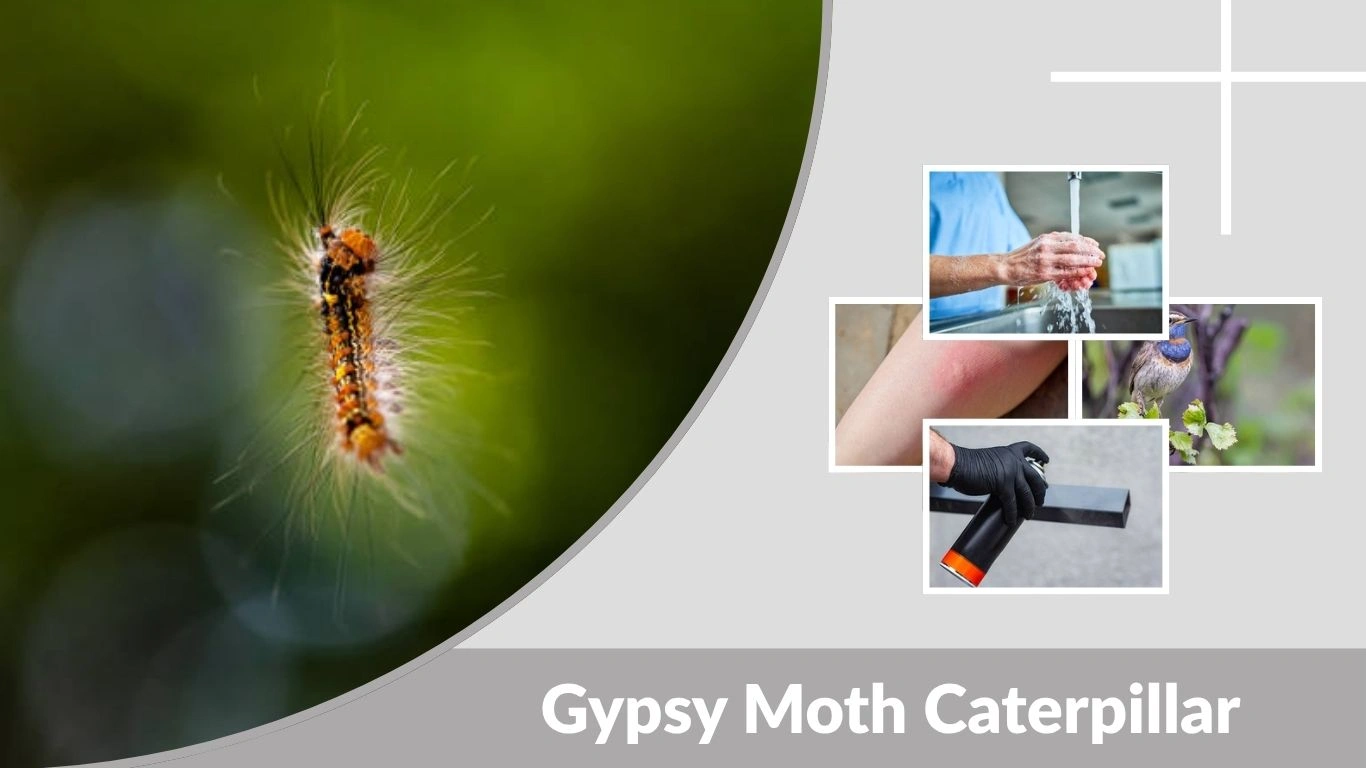
The gypsy moth caterpillar, now more commonly called the spongy moth caterpillar, is a well-known forest pest that can cause serious damage to trees and sometimes irritation to humans. These caterpillars are especially active in spring and early summer, feeding aggressively on leaves and often appearing in large numbers. Understanding how to identify them, recognize their effects, and manage their presence is essential for homeowners and gardeners. This guide explains their appearance, life cycle, and the potential risks they pose.
What Is a Gypsy Moth Caterpillar?
The gypsy moth caterpillar is the larval stage of an invasive moth species that has spread across many regions of North America and parts of Europe and Asia. It is considered a destructive pest because of its ability to defoliate large areas of forest during outbreaks.
These caterpillars are highly adaptable and feed on a wide variety of trees, including oak, maple, and birch. When populations increase rapidly, they can strip trees of their leaves, weakening them and making them more vulnerable to disease or death. Because of their impact, they are closely monitored in many regions.
What Does a Gypsy Moth Caterpillar Look Like?
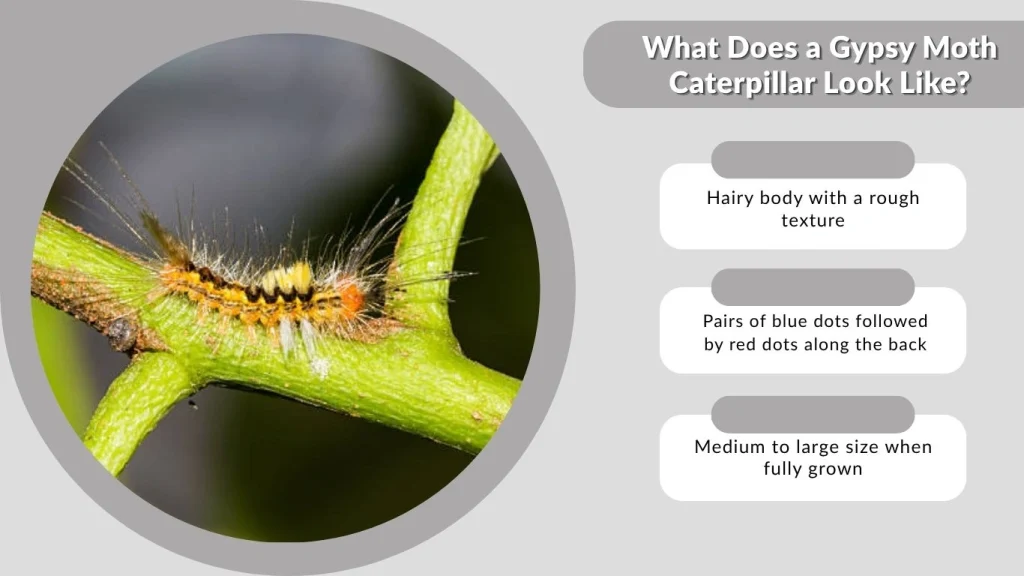
Recognizing this caterpillar is key to early control. Its distinct features make it easier to identify compared to other species.
Key Identification Features
- Hairy body with a rough texture
- Pairs of blue dots followed by red dots along the back
- Medium to large size when fully grown
Young vs Mature Caterpillars
Young caterpillars are much smaller and darker, often lacking clearly visible markings. As they grow, their characteristic blue and red spots become more defined, and their bodies become longer and more noticeable on tree trunks and branches.
Gypsy Moth Caterpillar Life Cycle
The life cycle of the gypsy moth caterpillar follows a predictable pattern that repeats each year. Understanding this cycle helps in identifying the right time for control measures.
Stages of Development
- Egg masses laid on tree bark and outdoor surfaces
- Larvae (caterpillar stage) that feed heavily on leaves
- Pupa stage where they transform into moths
Seasonal Timing
Eggs hatch in spring, releasing tiny caterpillars that begin feeding immediately. Their activity peaks in late spring to early summer when they consume the most foliage. By mid-summer, they enter the pupal stage and later emerge as adult moths.
Signs of a Gypsy Moth Caterpillar Infestation

An infestation can often be detected before severe damage occurs if you know what to look for.
Common Warning Signs
- Leaves appear chewed or completely stripped
- Large numbers of caterpillars on trees and surfaces
- Small dark droppings (frass) falling from above
During heavy infestations, the sound of caterpillars feeding can even be heard in quiet areas, especially in dense tree coverage.
Damage Caused by Gypsy Moth Caterpillars
Gypsy moth caterpillars are known for their ability to defoliate trees rapidly. When they feed, they remove leaves, which are essential for photosynthesis. A single season of defoliation can weaken a tree, but repeated attacks over multiple years can lead to permanent damage or death.
Forests, parks, and residential landscapes can all be affected. Trees that are already stressed by drought or disease are especially vulnerable. In addition to ecological damage, infestations can also reduce property value and create unpleasant outdoor conditions due to falling debris and caterpillars.
Are Gypsy Moth Caterpillars Poisonous?
Many people worry about whether these caterpillars are dangerous. While they are not poisonous in the traditional sense, they can still cause discomfort when touched.
What You Should Know
- They do not bite or sting
- Tiny hairs can irritate the skin
- Some people may experience allergic reactions
Contact with these hairs can lead to itching or redness, especially in sensitive individuals. Avoid handling them directly to reduce the risk of irritation.
Gypsy Moth Caterpillar Rash

Contact with gypsy moth caterpillars can sometimes lead to skin irritation. This reaction is not caused by venom but by the tiny hairs covering the caterpillar’s body, which can trigger sensitivity in some people. The severity of the reaction varies depending on individual skin sensitivity and level of exposure.
Causes of the Rash
The rash typically occurs when the fine hairs break off and come into contact with the skin. These hairs can carry irritating substances that provoke an immune response, especially in individuals with allergies or sensitive skin.
Symptoms to Watch For
- Redness and itching on exposed skin
- Small bumps or mild swelling
Gypsy Moth Caterpillar Rash Treatment
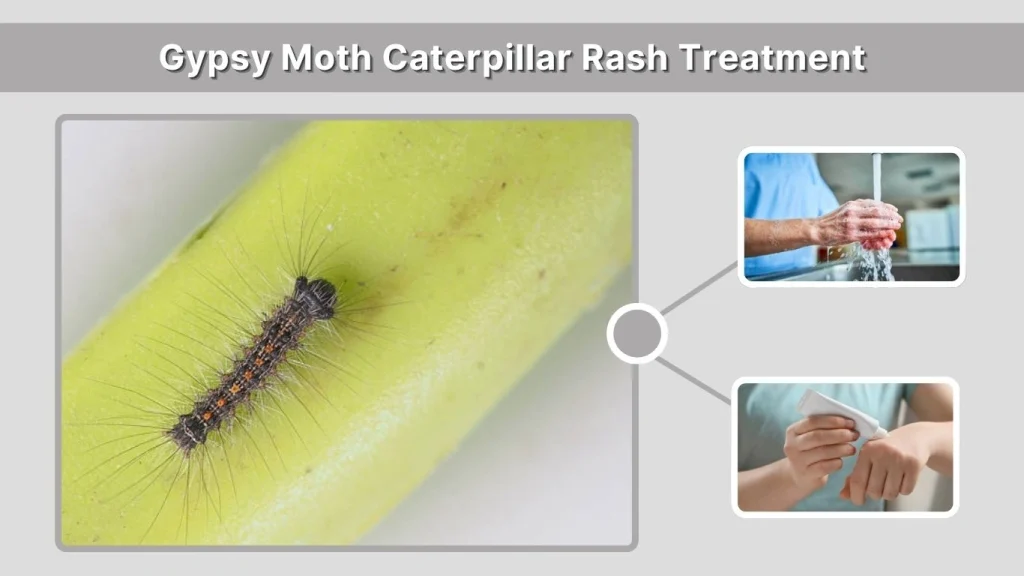
If you develop a rash after contact, prompt care can help reduce discomfort and prevent further irritation.
Basic Treatment Steps
- Wash the affected area gently with soap and water
- Apply anti-itch creams or soothing lotions
- Avoid scratching to prevent worsening the irritation
If symptoms persist or become severe, medical advice may be necessary. Most mild reactions, however, improve within a few days with simple care.
Gypsy Moth Caterpillar vs Tent Caterpillar
Gypsy moth caterpillars are often confused with tent caterpillars, but they differ in several important ways. Knowing these differences can help you correctly identify and manage the problem.
Key Differences
- Gypsy moth caterpillars have blue and red spots, while tent caterpillars often have stripes
- Tent caterpillars build visible silk tents, gypsy moths do not
- Feeding behavior differs, with tent caterpillars staying near nests
Nest Differences
Tent caterpillars create large, noticeable silk tents in tree branches. In contrast, gypsy moth caterpillars do not form true nests or tents, although they may rest in sheltered areas during the day.
How to Get Rid of Gypsy Moth Caterpillars

Controlling these caterpillars early can prevent widespread damage. A combination of methods is often the most effective approach.
Natural Control Methods
- Birds and other predators help reduce populations
- Naturally occurring diseases can limit outbreaks
Mechanical Control
- Removing and destroying egg masses
- Using barriers like tree bands to trap caterpillars
Chemical Control
- Applying insecticides when populations are high
- Using sprays carefully to minimize environmental impact
Gypsy Moth Caterpillar Habitat and Behavior
Gypsy moth caterpillars prefer hardwood trees, especially oak species, but they are not limited to a single type of plant. They are active feeders and can travel across trees and surfaces in search of food. During the day, they often hide in shaded or protected areas, becoming more active during cooler periods.
Their ability to disperse, especially when young, allows them to spread quickly across large areas. This behavior contributes to rapid infestations when conditions are favorable.
Gypsy Moth Caterpillar Season
The activity of gypsy moth caterpillars is seasonal and closely tied to temperature and environmental conditions. They typically emerge in spring when eggs hatch and begin feeding immediately.
The most active period occurs in late spring and early summer. By mid to late summer, they transition into the pupal stage, marking the end of their feeding phase.
FAQs
What does a gypsy moth caterpillar look like?
A gypsy moth caterpillar has a hairy body with pairs of blue and red spots along its back. As it matures, these markings become more visible, making it easier to distinguish from other caterpillars.
Is a gypsy moth caterpillar poisonous?
No, it is not poisonous. However, its tiny hairs can cause skin irritation or allergic reactions in some individuals, leading to itching or redness after contact.
Do gypsy moth caterpillars bite or sting?
They do not bite or sting. Any discomfort comes from contact with their hairs, which can irritate sensitive skin rather than inject venom.
How do you control gypsy moth caterpillars?
Control methods include removing egg masses, using natural predators, applying barriers, and in severe cases, using insecticides. Early intervention is key to preventing large infestations.