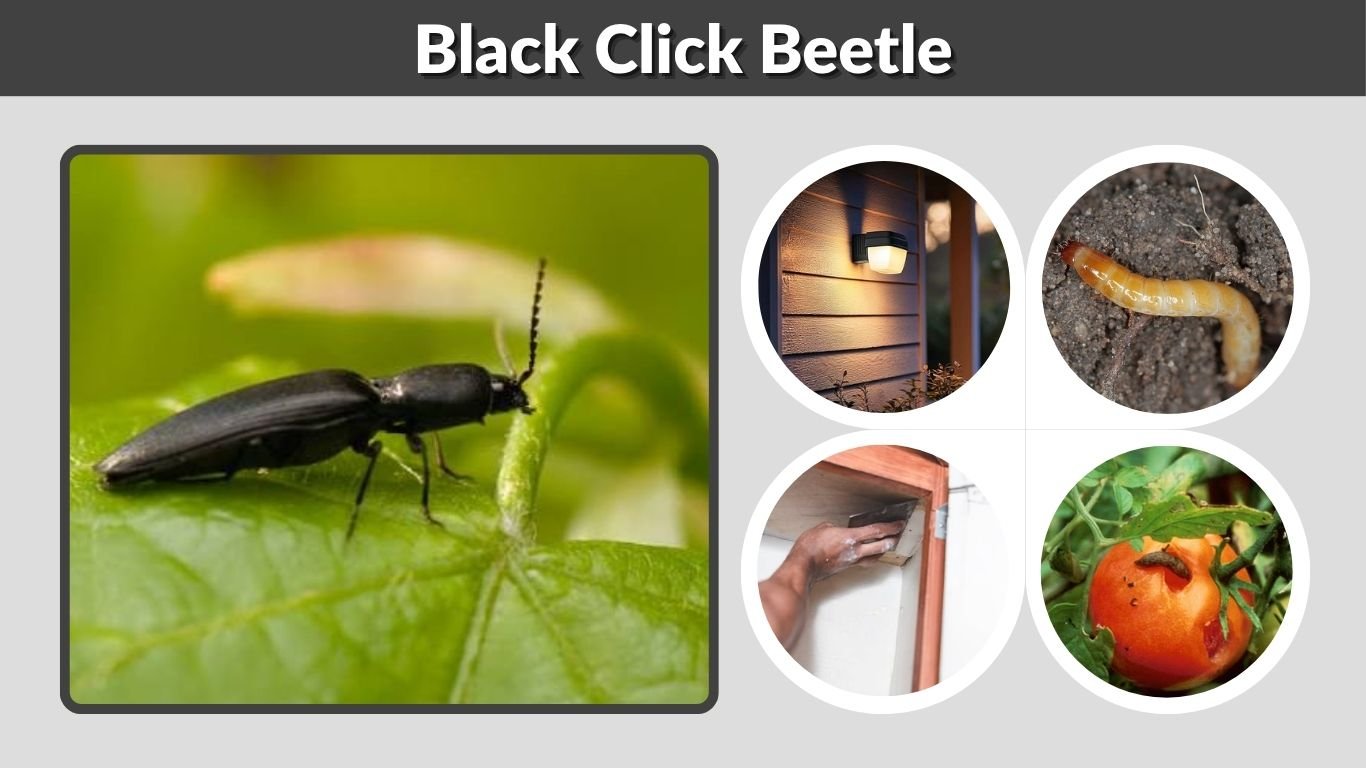
A black click beetle is a dark-colored insect known for its unusual clicking sound and sudden jumping movement. These beetles often appear in gardens, wooded areas, and occasionally inside homes. Although their appearance can seem alarming, most adult click beetles are harmless to humans and pets. Some species have completely black bodies, while others display brown, white, or spotted patterns. Understanding their physical features, behavior, and life cycle makes identification easier. This guide explains how to identify black click beetles, whether they bite, and why they enter houses.
What Is a Black Click Beetle?
Black click beetles belong to the family Elateridae, a large group of beetles found worldwide. The term describes several dark-colored species rather than one specific insect. Many have elongated bodies, hard wing covers, and a distinctive clicking mechanism beneath the thorax.
These insects are commonly found in gardens, fields, forests, and areas with vegetation. Adults often feed on nectar, pollen, or other plant materials, depending on the species.
Their most recognizable behavior is suddenly launching themselves into the air when overturned or threatened.
How to Identify a Black Click Beetle
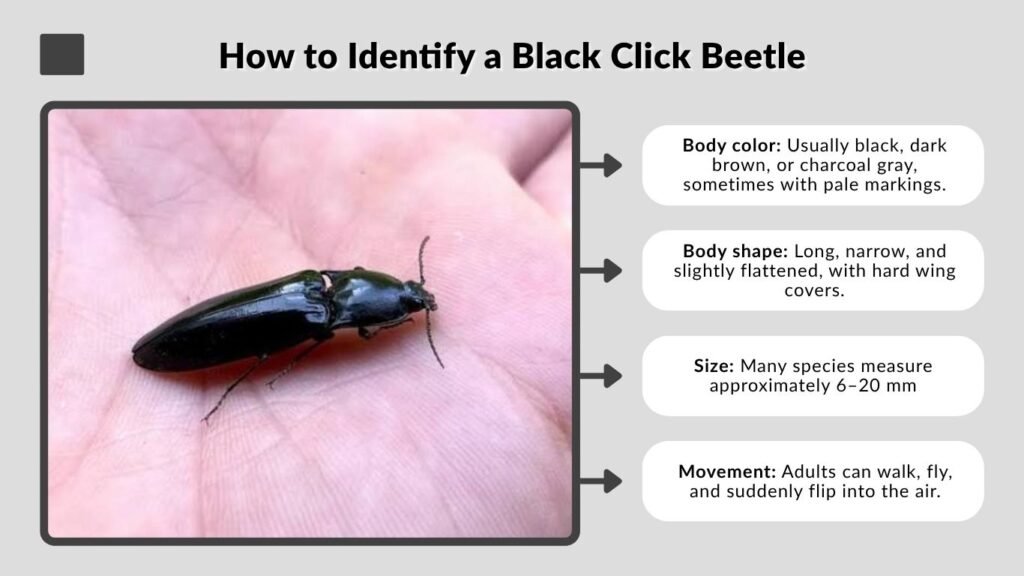
Black click beetles usually have narrow, elongated bodies with a somewhat flattened appearance. Their color ranges from shiny black to dark brown, sometimes with gray or pale markings.
Unlike many rounded beetles, click beetles typically have a streamlined shape with pointed rear corners on the pronotum, the shieldlike section behind the head.
Black Click Beetle Identification Features
The following characteristics can help identify these insects:
- Body color: Usually black, dark brown, or charcoal gray, sometimes with pale markings.
- Body shape: Long, narrow, and slightly flattened, with hard wing covers.
- Size: Many species measure approximately 6–20 mm, although some are considerably larger.
- Antennae: Segmented antennae that may appear threadlike, sawtoothed, or comb-shaped.
- Clicking sound: A distinct snap produced when the beetle activates its jumping mechanism.
- Movement: Adults can walk, fly, and suddenly flip into the air.
Color alone cannot confirm the species. Body structure and geographic location are also important.
Common Types of Black Click Beetles
Black click beetles vary considerably in appearance. Some species are uniformly dark, while others have pale spots, contrasting body sections, or distinctive false eyespots.
Recognizing these variations helps distinguish click beetles from unrelated insects.
Black Click Beetle Color Variations
- Shiny black click beetle: Some Melanotus species have dark, elongated bodies with finely ridged wing covers.
- Black and white click beetle: The eastern eyed click beetle has a black body with irregular whitish markings.
- Black eyed click beetle: Alaus oculatus displays two large black false eyespots surrounded by pale rings.
- Black spotted brown click beetle: Some click beetles have brown or gray backgrounds with darker markings, although this description does not identify one species.
- Red and black click beetle: Certain species display reddish-brown body sections contrasting with darker wing covers.
Species identification may require close photographs and examination of physical features.
Why Is a Black Click Beetle in My House?
Finding a black click beetle indoors is fairly common during warmer weather. These insects normally live outdoors but may enter buildings accidentally through doors, windows, or small openings.
Many adult click beetles are attracted to artificial lighting at night. Porch lights, illuminated windows, and outdoor lamps can draw them toward houses.
Do Black Click Beetles Infest Houses?
Black click beetles generally do not establish breeding populations inside ordinary homes. They are usually temporary visitors rather than household pests.
They do not normally feed on furniture, carpets, clothing, or stored household materials.
A single beetle near a window rarely indicates an infestation. However, repeated appearances may suggest that outdoor lighting or openings around the building are attracting adults.
Are Black Click Beetles Dangerous?
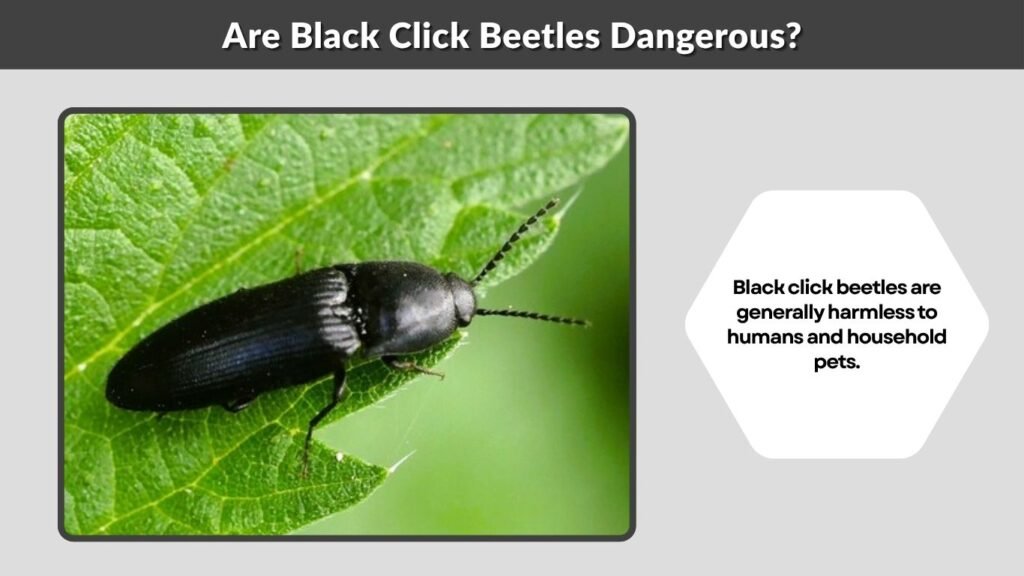
Black click beetles are generally harmless to humans and household pets. Their clicking movements may look aggressive, but they primarily use this mechanism to escape danger.
They do not have stingers or venom-injecting structures and are not recognized as important carriers of human diseases.
Do Black Click Beetles Bite?
Black click beetles are not aggressive and do not normally bite humans. Their primary response to disturbance is escaping rather than attacking.
Although some larger beetles may pinch when handled roughly, significant injuries are extremely unlikely.
If you find one indoors, gently move it outside instead of squeezing or crushing it.
Black Click Beetle Larvae: Appearance and Damage
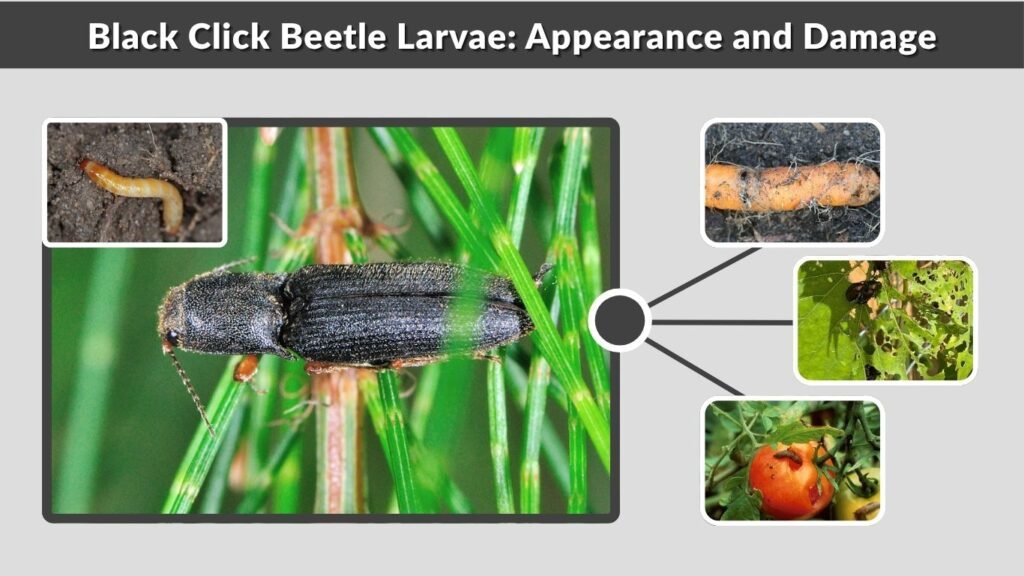
Black click beetle larvae are commonly called wireworms. They have long, narrow bodies covered by a relatively hard outer surface. Their color varies from pale yellow to reddish-brown or darker shades.
Depending on the species, larvae develop underground or inside decaying wood. Some feed on plants, while others prey on insects.
Can Black Click Beetle Larvae Harm Plants?
Certain wireworm species feed on seeds, roots, and underground stems. Their feeding can damage garden vegetables and agricultural crops.
Common signs of wireworm damage include:
- Damaged roots: Feeding injuries can weaken plant growth.
- Wilting seedlings: Young plants may die after underground feeding.
- Holes in potatoes: Wireworms sometimes tunnel into root crops and tubers.
- Poor germination: Feeding on seeds may prevent seedlings from emerging.
- Uneven growth: Affected garden areas may contain weak or missing plants.
However, not every click beetle larva is harmful. Eastern eyed click beetle larvae, for example, prey on other insects in decaying wood.
Can Black Click Beetles Fly and Make Clicking Sounds?
Adult black click beetles generally have functional wings and can fly between plants, trees, and other suitable habitats. Some species frequently fly toward artificial lights after dark.
Their clicking sound comes from a specialized structure beneath the thorax. A flexible joint allows the beetle to arch its body and release stored energy suddenly.
This movement produces an audible click and can propel the beetle into the air.
The clicking mechanism helps overturned beetles return to their feet and escape potential predators.
How to Get Rid of Black Click Beetles in Your House
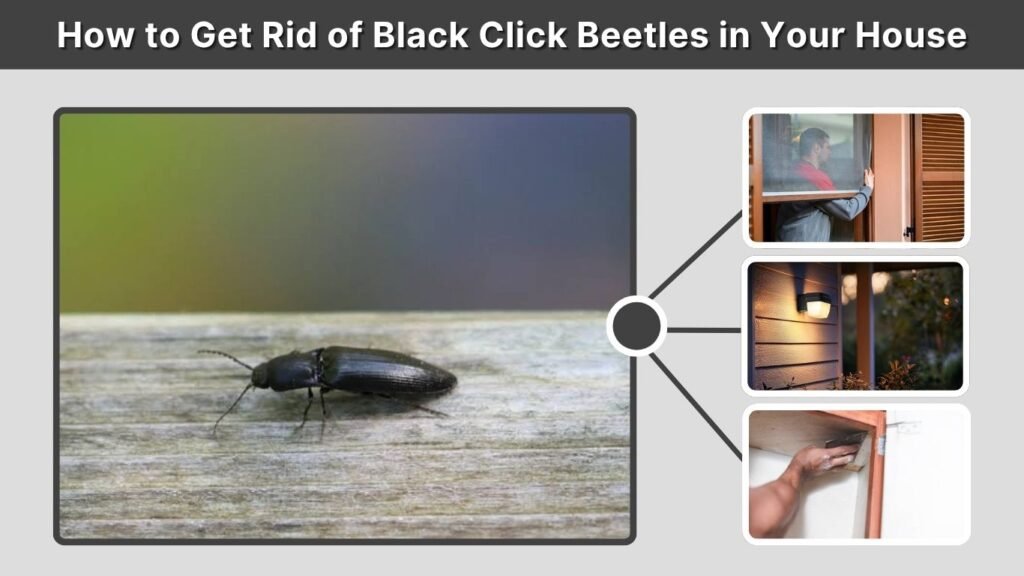
Black click beetles rarely require professional pest control. Because they normally originate outdoors, preventing entry is usually more effective than spraying indoor areas.
Effective Black Click Beetle Prevention Methods
- Reduce outdoor lighting: Turn off unnecessary porch and garden lights at night.
- Repair window screens: Replace damaged screens to block flying beetles.
- Seal entry points: Close cracks around doors, windows, and exterior walls.
- Remove indoor beetles: Gently collect individual beetles and release them outside.
- Maintain entrances: Keep doorways clear and ensure exterior doors close properly.
Avoid unnecessary insecticide applications because occasional adult click beetles generally cause no damage.
FAQs
1. Are Black Click Beetles Harmful?
Black click beetles are generally harmless to humans and pets. They do not sting, inject venom, or normally bite. However, the larvae of certain click beetle species, known as wireworms, may damage garden plants by feeding on underground roots and seeds.
2. Why Do Black Click Beetles Enter Houses?
Black click beetles usually enter houses accidentally while searching for light or shelter. Many adults are attracted to illuminated windows and porch lights at night. Open doors, damaged screens, and small exterior gaps can also allow them to enter.
3. What Is the Scientific Name of a Black Click Beetle?
Black click beetle is not a single scientific species name. These insects belong to the family Elateridae. Some dark-colored species belong to the genus Melanotus, but accurate identification requires examining body features, location, and sometimes specialized taxonomic characteristics.
4. Can Black Click Beetles Fly?
Most adult black click beetles can fly using their membranous wings beneath hardened wing covers. They may fly between plants or toward artificial lights at night. Their clicking mechanism is separate from flight and helps them flip upright when overturned.
5. Are Black and White Click Beetles Dangerous?
Black and white click beetles, including the eastern eyed click beetle, are generally harmless to humans and pets. Their contrasting markings help discourage predators. Eastern eyed click beetle larvae also feed on other insects inside decaying wood rather than damaging crops.