
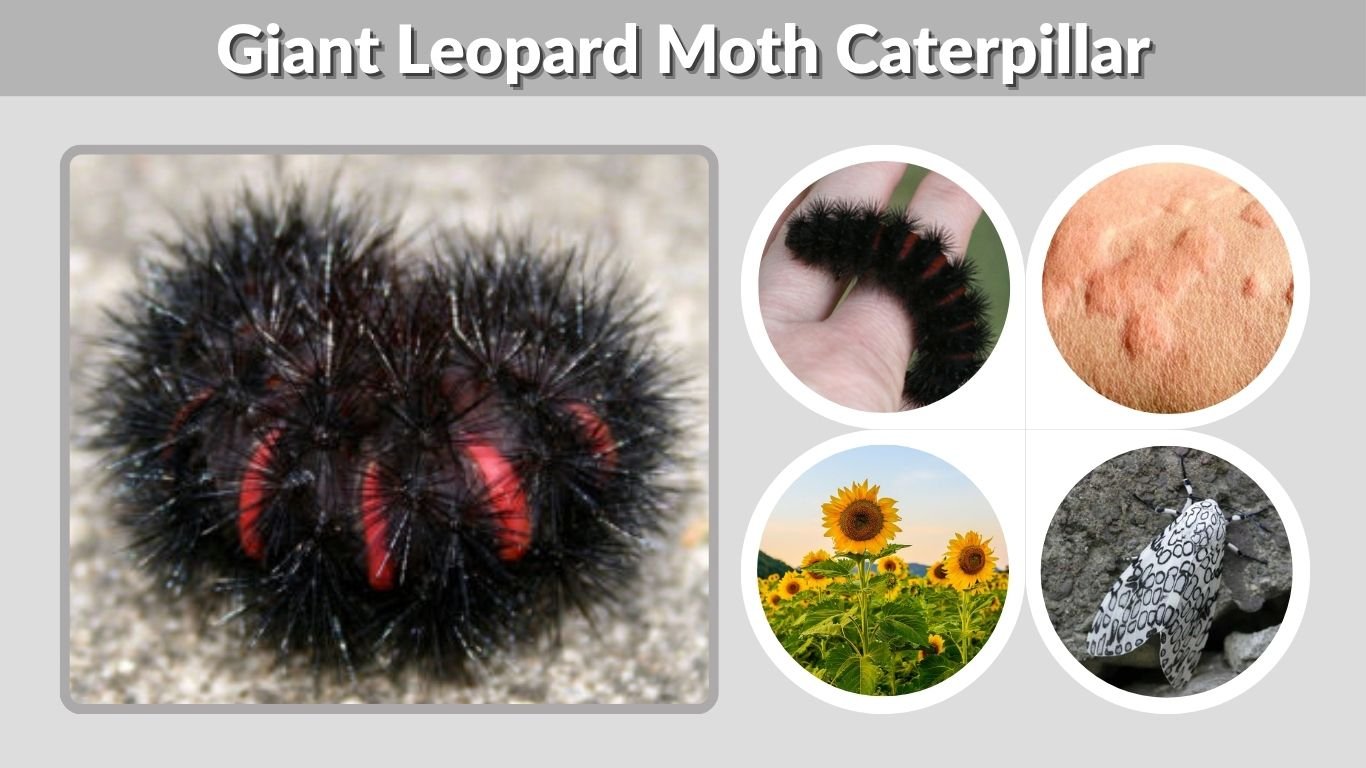
The giant leopard moth caterpillar is a large black fuzzy caterpillar that often curls into a ball when disturbed. At first glance, it may look dangerous because of its thick black bristles and hidden red or orange bands. However, this caterpillar is usually not considered poisonous or venomous. This guide explains how to identify it, what it eats, whether it can sting, and what it turns into.
What Is a Giant Leopard Moth Caterpillar?
The giant leopard moth caterpillar is the larval stage of the giant leopard moth, scientifically known as Hypercompe scribonia. It is also called the great leopard moth or eyed tiger moth. The adult moth is striking white with black spots, while the caterpillar looks completely different.
The caterpillar is a type of woolly bear. It has a dense coat of black bristles and red or orange bands between its body segments. These bands are easiest to see when the caterpillar curls into a defensive ball.
Although it looks intimidating, the giant leopard moth caterpillar is generally not aggressive. It does not chase, jump, or attack people. Most encounters happen when someone finds it crawling across a sidewalk, driveway, garden bed, lawn, or porch.
How to Identify a Giant Leopard Moth Caterpillar
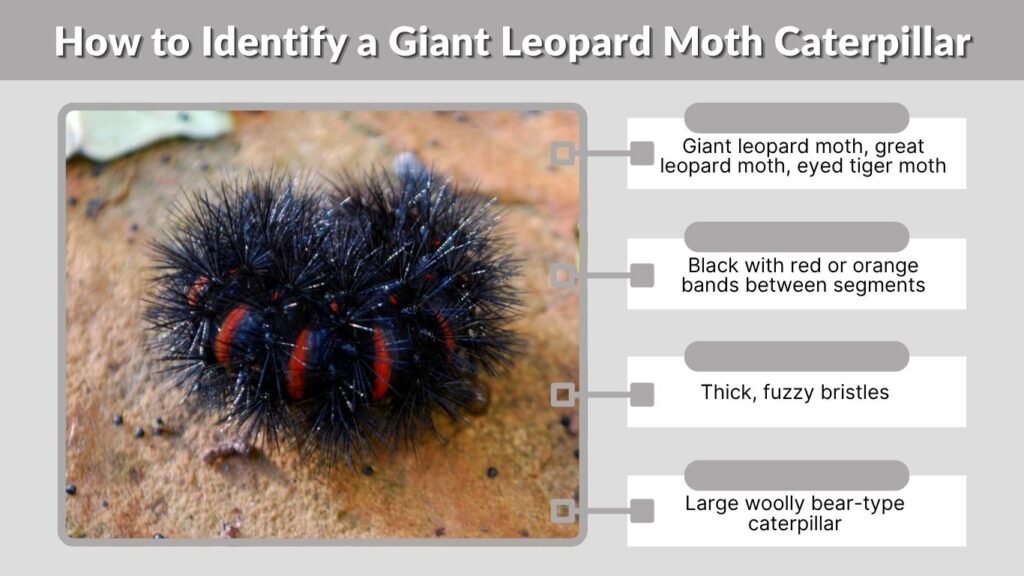
A giant leopard moth caterpillar is usually easy to recognize once you know the key features. The most noticeable trait is its black fuzzy body. Unlike some fuzzy caterpillars, it has red or orange rings hidden between the segments.
When disturbed, it often curls up tightly. This behavior exposes the reddish bands and protects the softer underside of its body.
Identification Table
| Feature | Description |
|---|---|
| Scientific name | Hypercompe scribonia |
| Common names | Giant leopard moth, great leopard moth, eyed tiger moth |
| Caterpillar color | Black with red or orange bands between segments |
| Body texture | Thick, fuzzy bristles |
| Size | Large woolly bear-type caterpillar |
| Adult moth | White moth with black spots |
| Main safety concern | Mild skin irritation in sensitive people |
| Common behavior | Curls into a ball when disturbed |
Main Identification Clues
Look for these signs before deciding what caterpillar you found:
- Large black fuzzy body
- Red or orange bands visible when curled
- No obvious long stinging spines
- Slow crawling movement
- Defensive ball-like posture
- Found near broadleaf plants, weeds, gardens, or wooded edges
Do not identify the caterpillar by fuzz alone. Many fuzzy black caterpillars are called “woolly bears,” but not all of them become giant leopard moths.
Is the Giant Leopard Moth Caterpillar Poisonous?
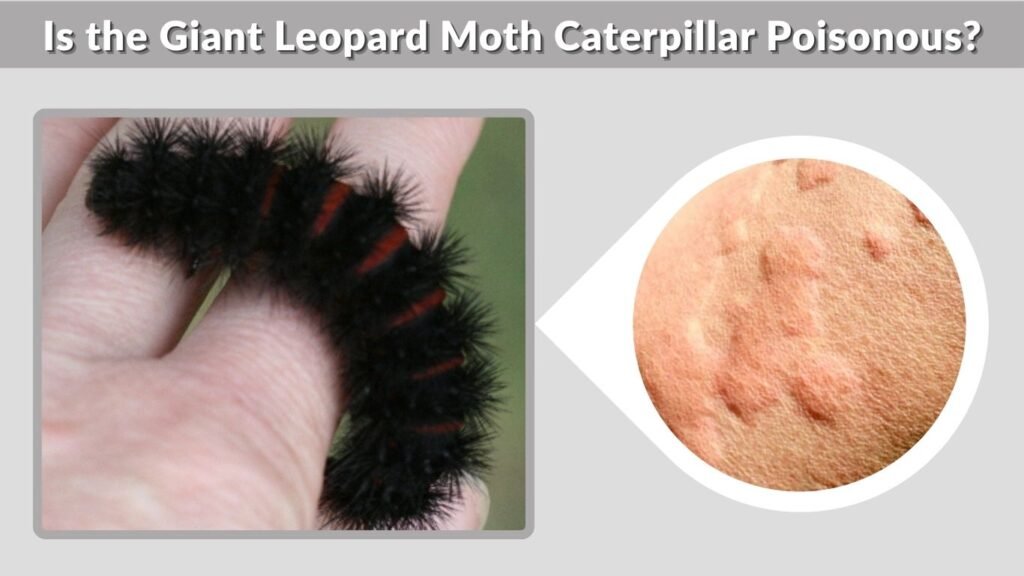
The giant leopard moth caterpillar is not generally considered poisonous to humans. It is also not considered venomous in the way some stinging caterpillars are. Its bristles are mostly defensive and are not the same as venom-filled spines.
However, that does not mean every person should handle it freely. Some people have sensitive skin and may experience mild irritation after touching hairy caterpillars. For this reason, it is better to avoid unnecessary handling.
The best practical answer is this: the giant leopard moth caterpillar is usually not dangerous, but you should still treat it gently and avoid rubbing its hairs against your skin.
Does the Giant Leopard Moth Caterpillar Sting?
The giant leopard moth caterpillar does not have a true stinger. It does not sting like a bee or wasp. It also does not bite people in a meaningful way.
Some people search for giant leopard moth caterpillar sting because they see the black bristles and assume they must sting. In most cases, the hairs are not designed to inject venom. Still, stiff hairs can feel prickly if pressed into the skin.
Can It Cause a Rash?
A rash is possible but not common for everyone. Sensitive individuals may develop redness, itching, or mild irritation after contact. This is more likely if the caterpillar is squeezed, rubbed, or handled roughly.
If irritation happens, wash the area with soap and water. You can also use a cold compress for itching. Seek medical advice if a rash becomes severe, spreads, or involves the eyes, mouth, or breathing symptoms.
Is the Giant Leopard Moth Caterpillar Dangerous?
For most people, the giant leopard moth caterpillar is not dangerous. It is more alarming in appearance than in actual risk. Its black fuzzy body and red bands are warning-like colors, but the caterpillar is usually harmless when left alone.
It may be risky in a few situations:
- A child squeezes it or rubs it on skin
- A person has strong skin sensitivity
- A pet bites or eats it
- Someone touches their eyes after handling it
- The caterpillar is mistaken for a more irritating species
The safest approach is to observe without touching. If you need to move it, use a leaf, stick, paper, or gloved hand.
Giant Leopard Moth Caterpillar vs Woolly Bear
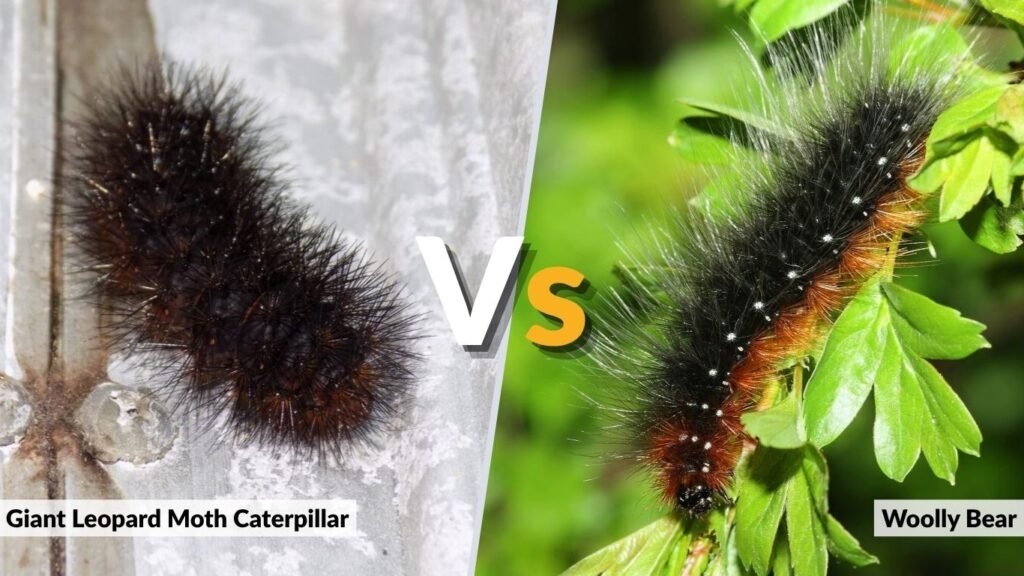
The phrase woolly bear giant leopard moth caterpillar appears because this caterpillar belongs to the woolly bear type. However, it is different from the familiar banded woolly bear caterpillar.
The banded woolly bear usually has a black body with a broad brown or rusty band around the middle. The giant leopard moth caterpillar is mostly black, with red or orange bands hidden between the segments.
Key Differences
The giant leopard moth caterpillar usually has:
- Mostly black bristles
- Red or orange bands between segments
- A larger, darker appearance
- A tendency to curl into a ball and show red bands
- An adult moth that is white with black spots
The common banded woolly bear usually has:
- Black ends and a rusty-brown middle band
- A more even, familiar woolly appearance
- An adult form known as the Isabella tiger moth
- A strong association with fall weather folklore
Both caterpillars are fuzzy and often seen crawling in fall, but they turn into different moths.
What Does a Giant Leopard Moth Caterpillar Eat?
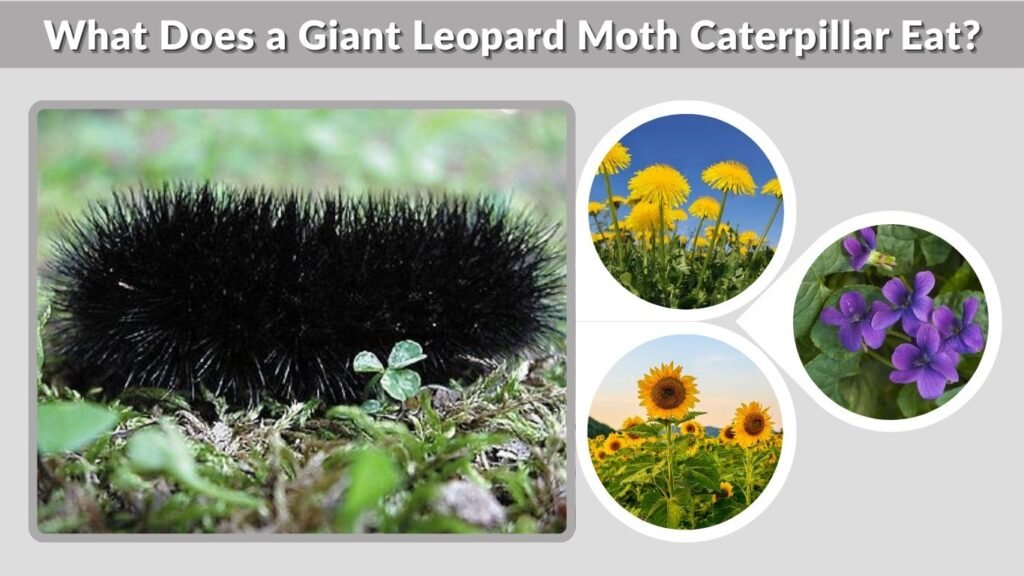
The giant leopard moth caterpillar has a broad diet. It feeds on many low-growing plants, weeds, shrubs, and some trees. Because it is not limited to one host plant, it can live in gardens, fields, wooded edges, lawns, and suburban yards.
Common food plants include:
- Dandelion
- Plantain
- Violet
- Sunflower
- Lettuce
- Cabbage and related plants
- Honeysuckle
- Willow
- Maple
- Cherry
- Magnolia
- Lilac
- Mulberry
- Basil and other soft garden leaves
Its broad diet is one reason the caterpillar can appear in many different habitats. It may feed at night and hide during the day, which means you might see the caterpillar crawling rather than actively eating.
Giant Leopard Moth Caterpillar Host Plants
A host plant is a plant that the caterpillar can eat and develop on. The giant leopard moth caterpillar is a generalist feeder, meaning it uses many host plants instead of relying on one specific species.
This makes it different from specialist caterpillars, such as monarch caterpillars, which depend on milkweed. A giant leopard moth caterpillar may survive on several broadleaf weeds and garden plants.
Garden Plants It May Use
In yards and gardens, it may be found near:
- Violets
- Dandelions
- Plantain weeds
- Sunflowers
- Lettuce
- Cabbage
- Basil
- Honeysuckle
- Young tree leaves
If you want to support native moths, avoid removing every low-growing plant from your yard. A small patch of native or unsprayed plants can provide food for caterpillars and other insects.
Giant Leopard Moth Caterpillar Life Cycle
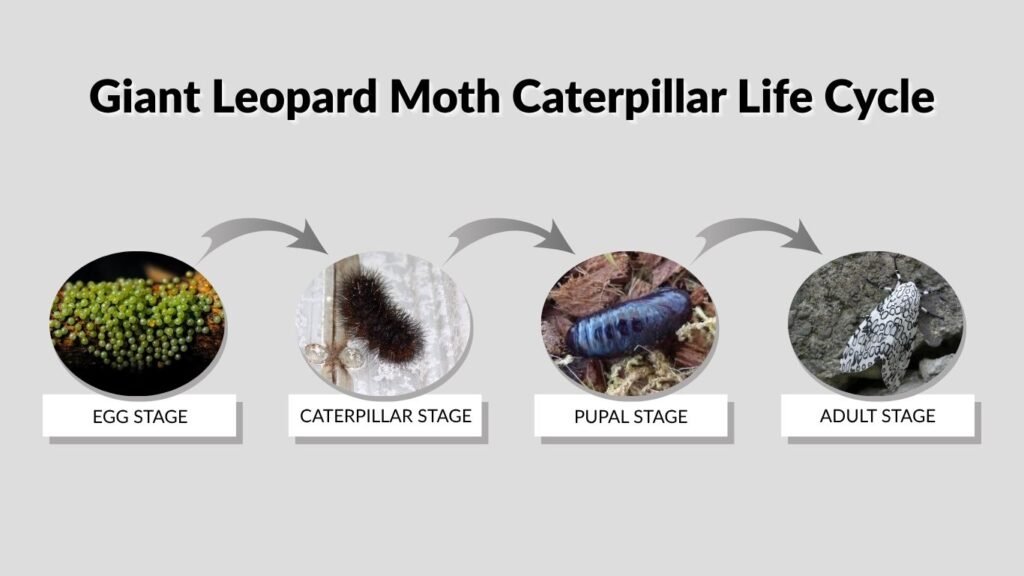
The giant leopard moth has a complete life cycle: egg, caterpillar, pupa, and adult moth. The caterpillar stage is the one people notice most often because it is large, dark, and fuzzy.
Adult giant leopard moths are nocturnal. They are often attracted to lights at night. The adult moth looks very different from the caterpillar, with white wings covered in black spots or rings.
Egg Stage
The life cycle begins when the female moth lays eggs on or near suitable host plants. After hatching, the young caterpillars begin feeding on leaves.
Caterpillar Stage
The caterpillar grows through several molts. As it matures, it becomes larger and more recognizable. It may be seen crawling across open areas, especially when searching for shelter or a place to pupate.
Hibernation and Winter
The giant leopard moth caterpillar can overwinter as a caterpillar. During colder months, it may shelter under leaf litter, loose bark, logs, or other protected debris. In spring, it becomes active again and continues its development.
Cocoon and Pupa Stage
When ready to transform, the caterpillar forms a protected pupal stage. People often call this a cocoon. Inside, the caterpillar changes into the adult moth.
Adult Moth Stage
The adult giant leopard moth is white with black spots and may have a colorful abdomen with blue and orange markings. Adults are usually active at night and are not seen as often as the caterpillars.
Can You Touch a Giant Leopard Moth Caterpillar?
Many people ask, “Can you touch a giant leopard moth caterpillar?” Technically, many people can touch one without a serious reaction, but it is still better not to handle it unless necessary.
If you do handle it, use a gentle method. Never squeeze, pinch, or rub the caterpillar. Its body is delicate, and rough handling may injure it.
Safe Handling Tips
Use these tips if you need to move one:
- Let it crawl onto a leaf or piece of paper.
- Wear gloves if you have sensitive skin.
- Move it away from roads, doors, or walkways.
- Place it near low plants or leaf litter.
- Wash your hands afterward.
- Do not let young children handle it roughly.
The safest option is always observation rather than handling.
Is the Giant Leopard Moth Caterpillar Poisonous to Dogs or Cats?
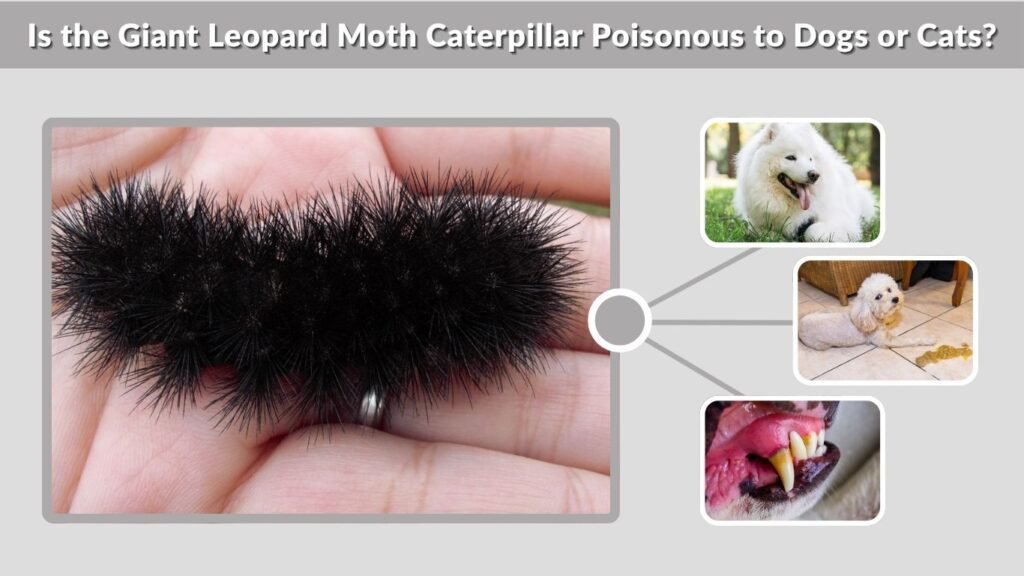
The giant leopard moth caterpillar is not usually considered highly poisonous to dogs or cats, but pets should not eat it. The bristles may irritate the mouth, throat, or stomach. A pet may also vomit after eating unfamiliar insects.
If a dog or cat mouths or eats one, watch for symptoms such as drooling, pawing at the mouth, vomiting, gagging, or swelling. Call a veterinarian if symptoms appear or if your pet seems distressed.
What to Do If a Pet Eats One
If your pet eats a giant leopard moth caterpillar:
- Remove any remaining caterpillar pieces from the area.
- Offer water if your pet is alert and acting normally.
- Do not force food or medicine.
- Watch for vomiting, swelling, or breathing issues.
- Contact a veterinarian if symptoms occur.
Serious reactions are not expected in most cases, but professional advice is best if your pet is small, sensitive, or showing signs of discomfort.
How to Care for a Giant Leopard Moth Caterpillar
Some people want to raise a giant leopard moth caterpillar to see it transform. This can be done carefully, but it should be handled responsibly. Never collect large numbers from the wild, and release the adult moth where the caterpillar was found.
Basic care needs include:
- A ventilated container
- Fresh leaves from the plant where it was found
- A dry paper towel at the bottom
- No standing water
- Leaf litter or bark for hiding
- Regular cleaning to remove droppings
- Outdoor-like seasonal conditions if overwintering
Do not feed random leaves if you do not know what it was eating. The safest food is usually the same plant where the caterpillar was found.
Should You Get Rid of Giant Leopard Moth Caterpillars?
Most of the time, you do not need to get rid of giant leopard moth caterpillars. They are not major household pests, and one or two caterpillars will not usually destroy a garden.
If one is in a risky place, such as a driveway, porch, or doorway, move it gently to a safer area. If several are feeding on plants, inspect the damage before taking action. Minor leaf chewing is usually not a serious problem.
Avoid using pesticides for a single caterpillar. These moths are part of the food web and can support birds, predators, and local biodiversity.
FAQs
Is the giant leopard moth caterpillar poisonous?
The giant leopard moth caterpillar is not generally considered poisonous or venomous. Its black bristles may look dangerous, but they are not true stinging spines. Some people may still get mild skin irritation, so it is best to avoid unnecessary handling.
Does the giant leopard moth caterpillar sting?
No, the giant leopard moth caterpillar does not sting like a bee or wasp. Its bristles can feel prickly if pressed into the skin, and sensitive people may experience itching or redness. If irritation occurs, wash the area and avoid scratching.
What does a giant leopard moth caterpillar eat?
It eats many broadleaf plants, including dandelion, plantain, violets, sunflower, lettuce, cabbage, honeysuckle, willow, maple, cherry, magnolia, and lilac. It is a generalist feeder, which means it can survive on many different host plants.
What does the giant leopard moth caterpillar turn into?
The giant leopard moth caterpillar turns into the adult giant leopard moth. The adult moth is white with black spots or rings and may show blue and orange markings on the abdomen. It is mostly active at night.
Is a giant leopard moth caterpillar safe to touch?
It is usually safer than many stinging caterpillars, but touching is still not recommended. Some people may get mild irritation from the hairs. If you need to move one, use a leaf, paper, stick, or gloves instead of bare hands.
