
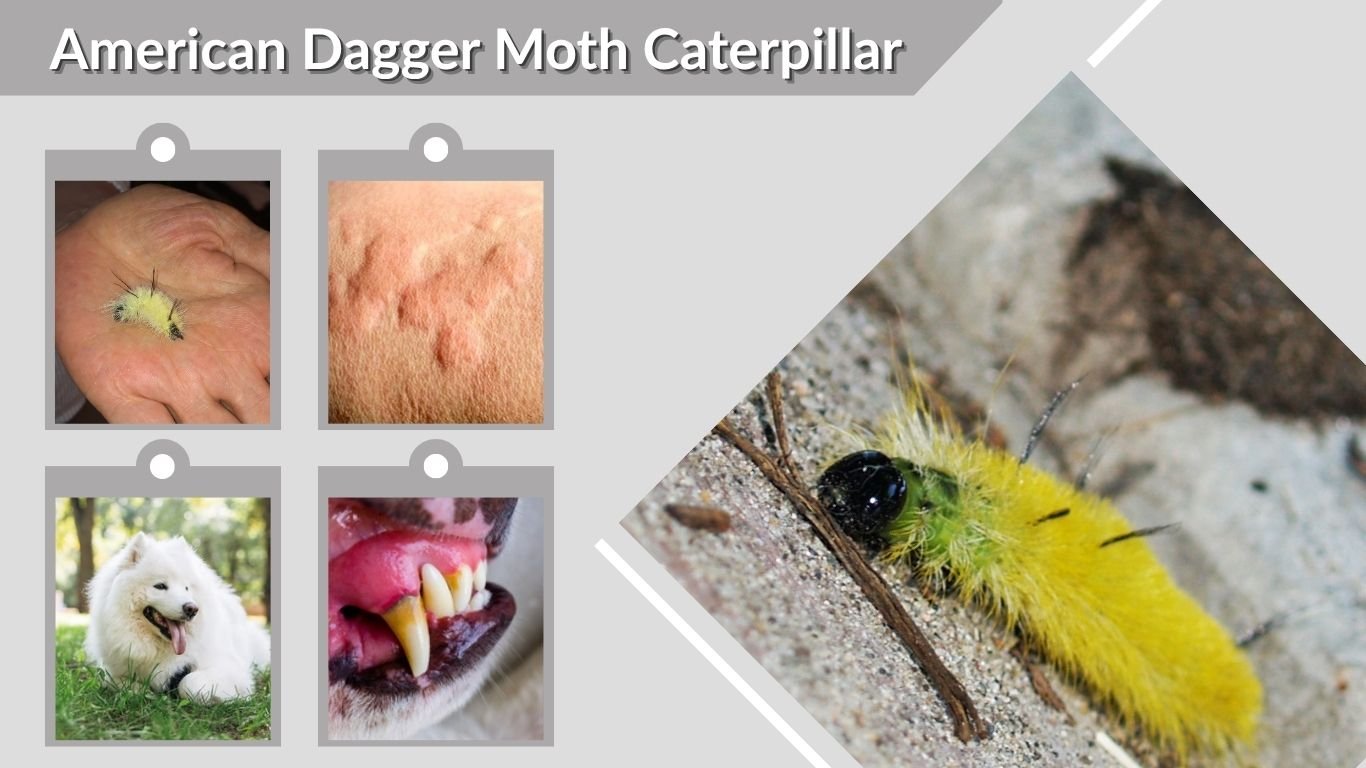
The American dagger moth caterpillar is a fuzzy yellow or white caterpillar that often surprises people on trees, sidewalks, porches, and garden plants. Its soft-looking hairs may seem harmless, but touching it can cause itching, burning, or a rash. This guide explains how to identify it, whether it is poisonous, what it eats, and what to do after contact.
Keyword Analysis
The keyword set shows one clear parent topic: american dagger moth caterpillar. With 6,600 monthly searches, this should be the main keyword for the article title, introduction, first H2, meta description, and several natural mentions throughout the content.
The strongest secondary keywords focus on safety. Search terms like american dagger moth caterpillar poisonous, american dagger moth caterpillar sting, american dagger moth caterpillar poisonous to humans, american dagger moth caterpillar rash, and skin reaction american dagger moth caterpillar sting show that readers are worried about touching the caterpillar. These queries should be answered early in the article.
A second important cluster involves pets. Keywords such as american dagger moth caterpillar poisonous to dogs, american dagger moth caterpillar poisonous to cats, dog ate american dagger moth caterpillar, and american dagger moth caterpillar dog show pet owners need practical advice. A dedicated pet-safety section can capture these long-tail searches.
The third cluster covers identification and biology. Searches like white american dagger moth caterpillar, american dagger moth caterpillar life cycle, american dagger moth caterpillar cocoon, what does the american dagger moth caterpillar eat, and what does an american dagger moth caterpillar turn into suggest readers also want to know what it becomes, where it lives, and what plants it feeds on.
What Is an American Dagger Moth Caterpillar?
The American dagger moth caterpillar is the larval stage of the American dagger moth, scientifically known as Acronicta americana. It is one of the most recognizable fuzzy caterpillars in eastern North America because of its bright yellow or pale white hairs and long black bristles.
Many people notice this caterpillar in late summer or fall when it is larger and more visible. It may crawl across sidewalks, tree trunks, decks, or garden areas while searching for food or a place to pupate.
Although it looks soft, the caterpillar should not be handled with bare hands. Its hairs can irritate the skin and may cause a rash in sensitive people.
How to Identify an American Dagger Moth Caterpillar
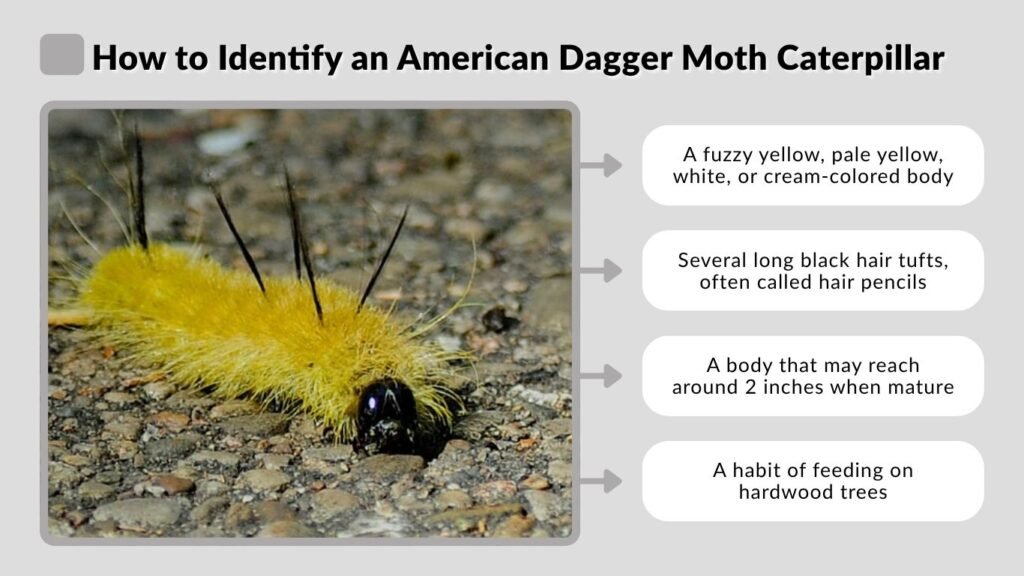
Identification is important because many fuzzy yellow caterpillars look similar. The American dagger moth caterpillar has a few features that help separate it from woolly bears, tussock moth caterpillars, and other hairy larvae.
Look for these common traits:
- A fuzzy yellow, pale yellow, white, or cream-colored body
- Several long black hair tufts, often called hair pencils
- A soft, woolly appearance
- A body that may reach around 2 inches when mature
- A habit of feeding on hardwood trees
- A tendency to appear in wooded yards, parks, and suburban landscapes
Young caterpillars are often brighter yellow. Older caterpillars may appear pale yellow, whitish, or almost cream-colored. This is why people may search for both yellow American dagger moth caterpillar and white American dagger moth caterpillar.
American Dagger Moth Caterpillar Identification Table
| Feature | What to Look For |
|---|---|
| Scientific name | Acronicta americana |
| Common color | Yellow, pale yellow, cream, or white |
| Hair pattern | Dense fuzzy hairs with longer black tufts |
| Main risk | Skin irritation from contact with hairs |
| Common host plants | Maple, oak, elm, birch, willow, hickory, walnut, and other hardwoods |
| Adult form | Grayish American dagger moth |
| Best safety rule | Do not touch with bare hands |
Is the American Dagger Moth Caterpillar Poisonous?
The American dagger moth caterpillar is often described online as poisonous, but the more accurate concern is skin irritation. It is not known for injecting venom like a bee or wasp. Instead, its tiny hairs can break off and irritate the skin.
For most people, contact may cause a mild rash, itching, redness, or a burning feeling. Some people may have a stronger reaction, especially if they have sensitive skin or allergies.
Poisonous vs. Irritating
Many searchers ask, “Is the American dagger moth caterpillar poisonous?” In everyday language, people use “poisonous” to mean dangerous to touch. Scientifically, the issue is usually not poison but irritating hairs.
That said, you should still treat the caterpillar with caution. Do not pick it up, rub it against skin, or allow children to play with it.
Does the American Dagger Moth Caterpillar Sting?
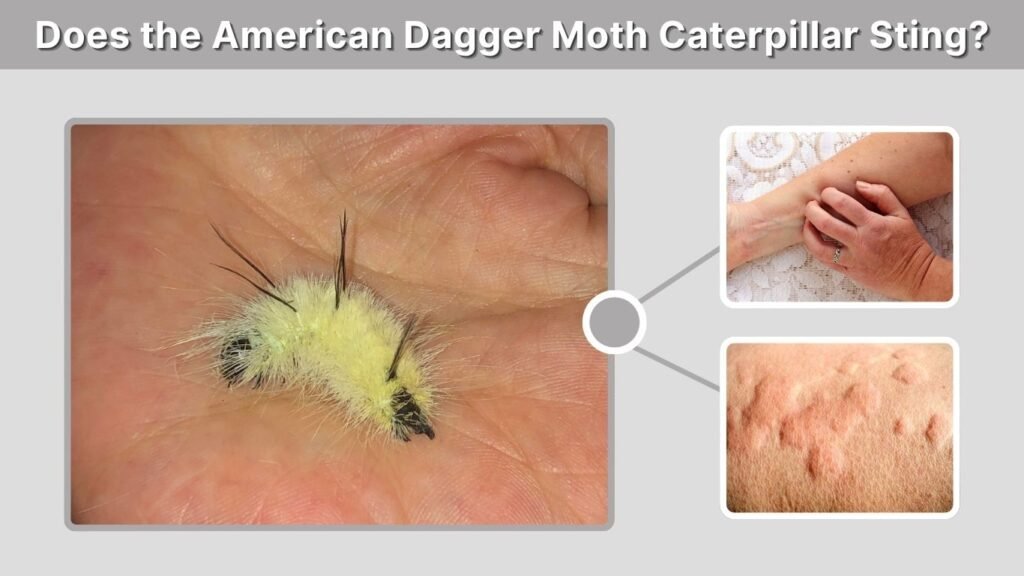
The American dagger moth caterpillar does not sting in the same way a bee stings. It does not have a stinger. However, people often describe the reaction as a sting because the hairs can cause a sharp, burning, or itchy feeling.
The phrase American dagger moth caterpillar sting is common because the symptoms can feel sudden and painful. The discomfort usually comes from contact dermatitis caused by the caterpillar’s hairs.
Common Skin Reaction Symptoms
A skin reaction may appear shortly after contact or develop gradually. Symptoms can vary from person to person.
Possible symptoms include:
- Itching
- Redness
- Burning sensation
- Small bumps or rash
- Mild swelling
- Tenderness where the caterpillar touched the skin
- Irritation that worsens after scratching
Avoid scratching the area because it can push hairs deeper into the skin or make irritation worse.
What to Do If You Touch an American Dagger Moth Caterpillar
If you touch one, act quickly but calmly. Most reactions are not serious, but proper first aid can reduce discomfort.
Use these steps:
- Remove the caterpillar without using bare hands.
- Place sticky tape over the affected skin and gently lift it off to remove tiny hairs.
- Wash the area with soap and water.
- Apply a cold compress to reduce itching or burning.
- Change and wash any clothing that touched the caterpillar.
- Avoid scratching the rash.
- Seek medical advice if symptoms are severe, spreading, or near the eyes.
If a child touches the caterpillar, follow the same steps and monitor the reaction closely. Get medical help if there is facial swelling, breathing trouble, eye irritation, or a strong allergic response.
Is the American Dagger Moth Caterpillar Poisonous to Dogs?
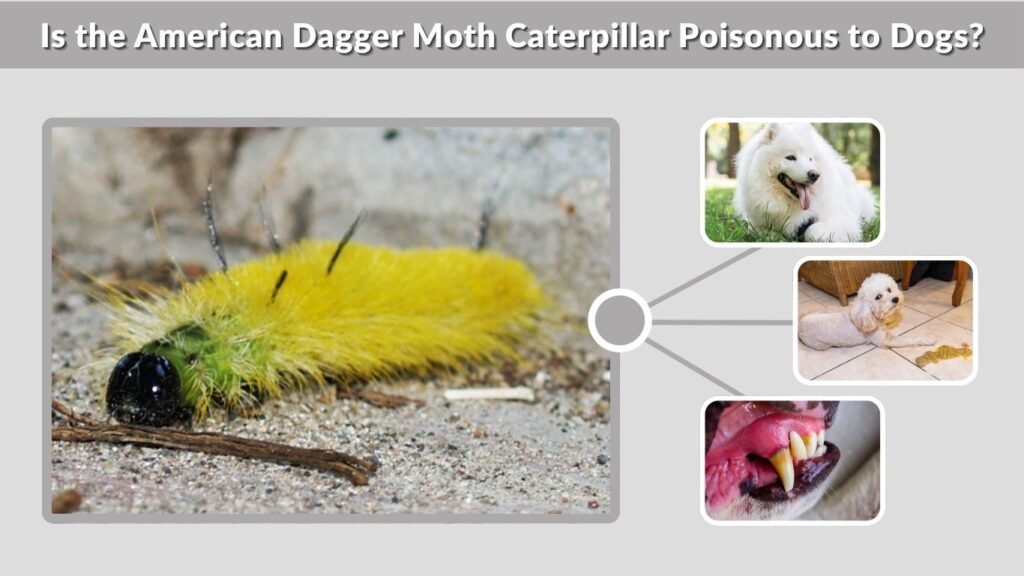
Dogs may sniff, lick, paw at, or eat fuzzy caterpillars out of curiosity. The American dagger moth caterpillar can irritate a dog’s mouth, nose, paws, or digestive tract if contact occurs.
The caterpillar is not something dogs should eat. Even if the reaction is mild, the hairs may cause drooling, pawing at the mouth, vomiting, gagging, or discomfort.
What to Do If a Dog Eats One
If your dog ate an American dagger moth caterpillar, contact a veterinarian for advice, especially if symptoms appear. Try to note when it happened, how much was eaten, and whether the caterpillar was alive or dead.
Watch for:
- Drooling
- Vomiting
- Pawing at the mouth
- Swelling around the lips or tongue
- Coughing or gagging
- Loss of appetite
- Unusual tiredness
- Signs of pain or distress
Do not try risky home treatments without veterinary guidance. If your dog has swelling, breathing trouble, repeated vomiting, or severe discomfort, seek urgent care.
Is It Poisonous to Cats?
Cats can also be affected if they bat at, bite, or eat the caterpillar. Their paws, mouth, and nose may become irritated by the hairs. Because cats groom themselves, hairs may also transfer from the paws to the mouth.
If your cat has drooling, pawing, vomiting, swelling, or unusual hiding after contact with a fuzzy caterpillar, call a veterinarian. Keep the caterpillar away from cats and remove it safely from patios, doorways, and play areas.
What Does the American Dagger Moth Caterpillar Eat?
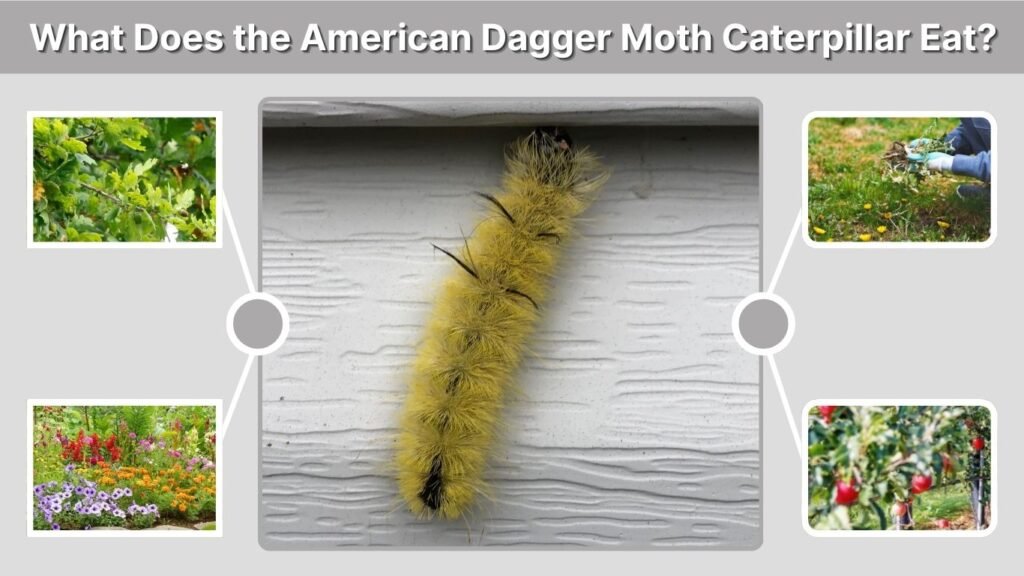
The American dagger moth caterpillar feeds on many hardwood trees. It is not usually limited to one plant, which is why it can appear in many yards and wooded areas.
Common host plants include:
- Maple
- Oak
- Birch
- Elm
- Willow
- Alder
- Hickory
- Walnut
- Poplar
- Ash
- Sycamore
- Basswood
Because it feeds on tree leaves, homeowners may notice chewed foliage. However, one or two caterpillars usually do not cause major damage to a healthy mature tree.
American Dagger Moth Caterpillar Life Cycle
The American dagger moth goes through complete metamorphosis: egg, caterpillar, pupa, and adult moth. The caterpillar is the stage most people notice because it is colorful and hairy.
The adult moth is much less flashy. It is usually gray or pale with darker markings. The name “dagger moth” comes from dark dagger-like marks on the adult moth’s wings.
What Does It Turn Into?
An American dagger moth caterpillar turns into an American dagger moth. The adult moth is not fuzzy like the caterpillar and is usually grayish-white or pale gray. It is nocturnal and may be attracted to lights at night.
Cocoon and Pupa Stage
When the caterpillar is ready to pupate, it looks for a protected place. It may form a cocoon in leaf litter, bark crevices, soil surface debris, or other sheltered areas. During this stage, the caterpillar transforms into the adult moth.
People sometimes search for American dagger moth caterpillar chrysalis, but moths are usually described as forming pupae, often protected by cocoons. The adult moth emerges later to mate and continue the life cycle.
Where Are American Dagger Moth Caterpillars Found?
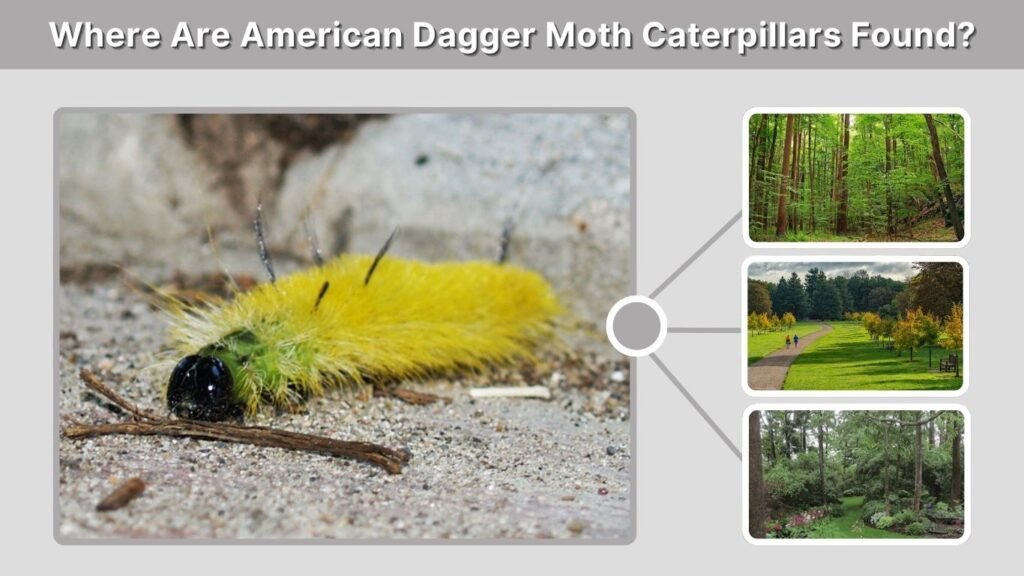
American dagger moth caterpillars are common in eastern North America. They are often reported in states and regions such as Michigan, Wisconsin, Illinois, Ohio, Maryland, Massachusetts, New York, Georgia, Ontario, and other areas with hardwood trees.
They are commonly found in:
- Deciduous forests
- Parks
- Wooded yards
- Suburban neighborhoods
- Tree-lined streets
- Gardens near hardwood trees
- Areas with maple, oak, birch, elm, or willow
If you find one in your yard, it probably came from a nearby host tree.
How to Get Rid of American Dagger Moth Caterpillars
In most cases, you do not need to kill an American dagger moth caterpillar. A single caterpillar is part of the local ecosystem and can be moved away from high-contact areas.
If one is on a porch, chair, walkway, or children’s play area, relocate it safely.
Safe Removal Steps
Use these methods instead of touching it:
- Wear thick gloves.
- Use a leaf, stick, cardboard, or container.
- Move it to a tree or natural area away from people.
- Wash gloves or tools afterward.
- Keep pets indoors while removing it.
- Teach children not to touch fuzzy caterpillars.
If you see many caterpillars damaging a valuable tree, contact a local extension office or pest professional for species confirmation and management advice.
Should You Kill an American Dagger Moth Caterpillar?
Usually, no. Killing is not necessary unless there is a serious infestation or direct safety concern. These caterpillars become moths and play a role in the food web. Birds and other wildlife may rely on caterpillars as food.
The best approach is caution, not panic. Avoid touching them, move them when needed, and protect children and pets from contact.
American Dagger Moth Caterpillar Lookalikes
Several caterpillars can be mistaken for the American dagger moth caterpillar. This is especially true when searchers only remember that the caterpillar was yellow, fuzzy, black-tufted, or white.
Common lookalikes include:
- Yellow tussock moth caterpillars
- Hickory tussock moth caterpillars
- White-marked tussock moth caterpillars
- Yellow woolly bear caterpillars
- Tiger moth caterpillars
- American lappet moth caterpillars
- Other dagger moth caterpillars
Do not rely on color alone. Look at the hair tufts, body shape, host plant, and location. If you cannot identify the caterpillar confidently, treat it as a no-touch species.
FAQs
Is the American dagger moth caterpillar poisonous to humans?
The American dagger moth caterpillar is not usually considered dangerously poisonous to humans, but its hairs can irritate skin. Contact may cause itching, redness, burning, or a rash. Sensitive people may react more strongly, so it is best to avoid touching the caterpillar with bare hands.
What happens if you touch an American dagger moth caterpillar?
Touching an American dagger moth caterpillar can cause a skin reaction from its tiny hairs. You may feel itching, stinging, burning, or see a red rash. Remove hairs with tape, wash the area with soap and water, and use a cold compress. Seek medical help for severe symptoms.
Is the American dagger moth caterpillar poisonous to dogs?
It can irritate dogs if they sniff, lick, bite, or eat it. A dog may drool, vomit, paw at the mouth, or show swelling and discomfort. If your dog ate one or has symptoms after contact, call a veterinarian for guidance, especially if breathing or swelling problems appear.
What does an American dagger moth caterpillar eat?
The American dagger moth caterpillar eats leaves from many hardwood trees. Common host plants include maple, oak, birch, elm, willow, hickory, walnut, poplar, ash, and sycamore. It is often found in wooded yards, parks, and forests where these trees grow.
What does the American dagger moth caterpillar turn into?
It turns into the American dagger moth, a grayish nocturnal moth with darker markings on the wings. The adult moth is much less noticeable than the fuzzy caterpillar. The caterpillar pupates in a protected place before emerging later as an adult moth.
