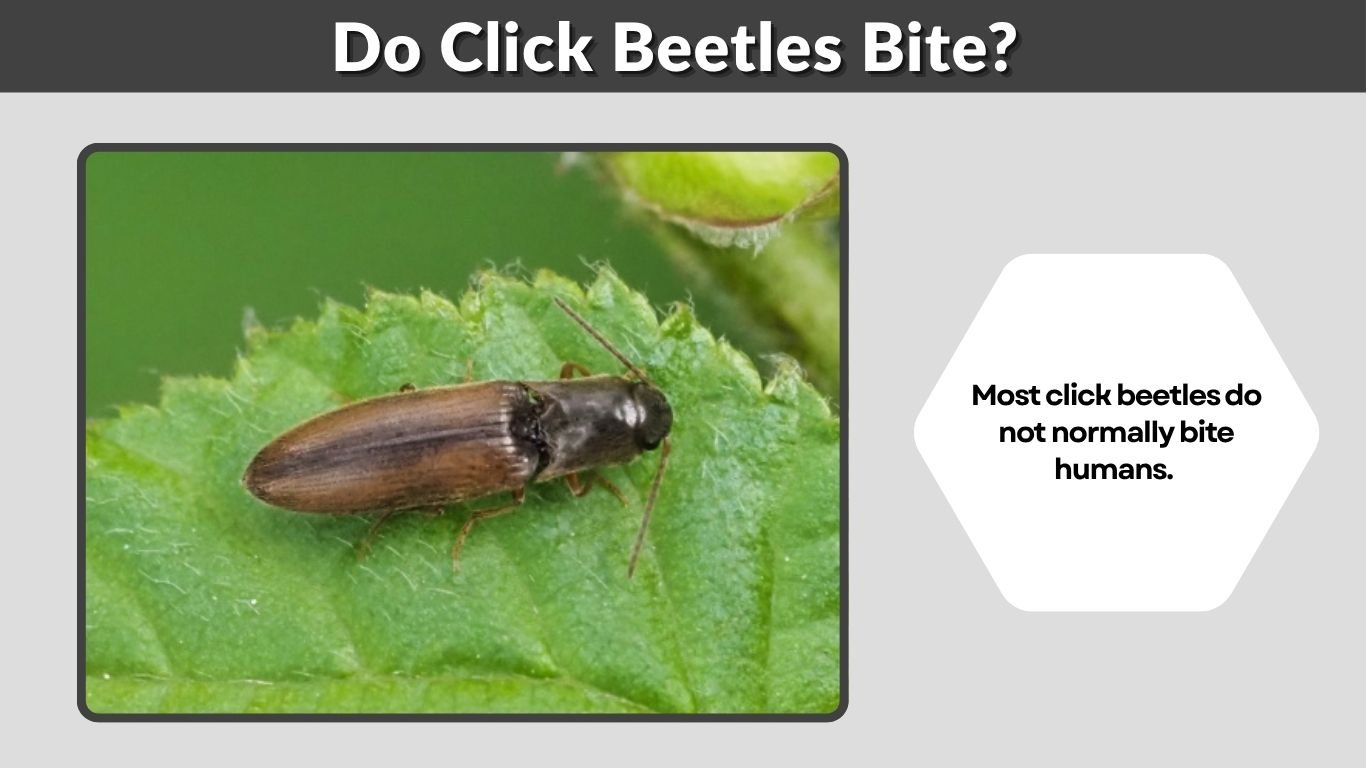
Click beetles are unusual insects known for making clicking sounds and suddenly jumping into the air. If you find one crawling on your hand, clothing, or inside your home, you might wonder: Do click beetles bite humans? Fortunately, most click beetles are harmless and rarely attempt to bite people.
However, some larger species, particularly the eastern eyed click beetle, have strong jaws that can occasionally deliver a painful pinch when handled roughly. These incidents are uncommon and usually not medically serious. Understanding how click beetles defend themselves, which species can bite, and what to do after a suspected bite can help you stay safe.
Do Click Beetles Bite Humans?
Most click beetles do not normally bite humans. These insects are not aggressive and generally prefer escaping danger rather than attacking. However, some species have functional jaws capable of pinching skin when they feel threatened or are handled carelessly.
Can Click Beetles Bite You?
Yes, certain click beetles can bite or pinch if handled roughly, but this behavior is uncommon.
Adult click beetles have mouthparts designed for feeding rather than attacking humans. They do not seek people as food sources and are not blood-feeding insects.
Important facts about click beetle bites include:
- Biting is uncommon: Most click beetles never bite people.
- No venom: Click beetles do not have venomous bites.
- No stinger: They cannot sting like bees or wasps.
- Possible pinching: Some larger species can pinch skin with their jaws.
- Low health risk: An occasional pinch is unlikely to cause serious injury.
Their unusual clicking and jumping movements are far more common than biting.
Why Do Click Beetles Click Instead of Bite?
Click beetles have a specialized mechanical structure beneath their thorax. When they become trapped upside down, they bend their bodies and suddenly release the mechanism.
This creates a clicking sound and propels the beetle into the air, allowing it to turn upright or escape danger.
The clicking movement is not caused by the beetle’s jaws. It is a physical escape mechanism rather than an attempt to bite.
Do Eastern Eyed Click Beetles Bite?
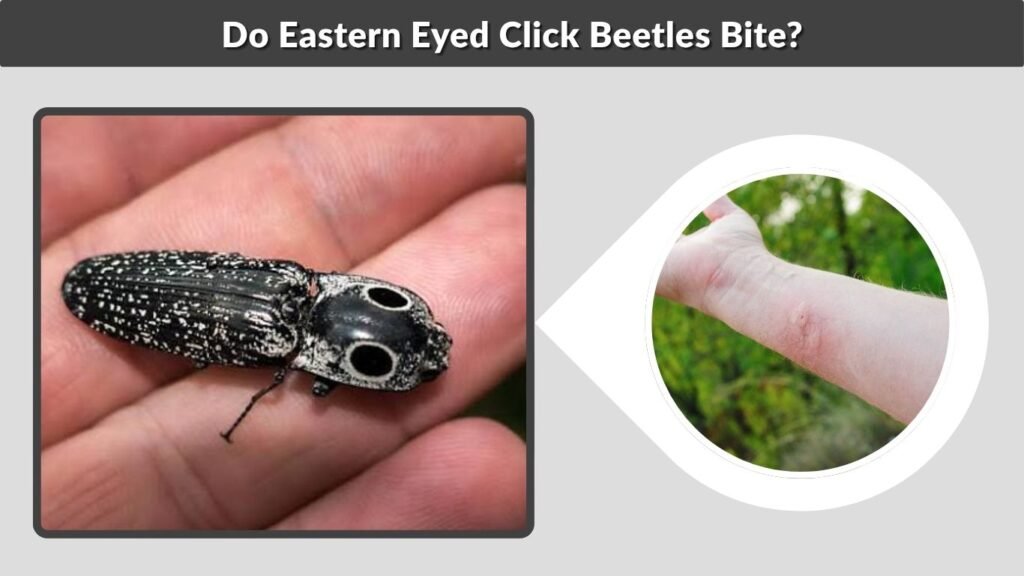
The eastern eyed click beetle (Alaus oculatus) is one of the most recognizable click beetles in North America. Its large black body, white speckles, and two prominent eye-like spots make it look intimidating.
Despite its appearance, this species is generally harmless unless handled carelessly.
Can an Eastern Eyed Click Beetle Bite Humans?
Yes. Eastern eyed click beetles have strong mandibles and can deliver a sharp bite when handled improperly.
According to Mississippi State University Extension, these beetles may bite if they are not handled carefully.
However, they are not aggressive toward humans and do not actively seek opportunities to bite.
Their large jaws are functional feeding structures, but their primary defensive responses usually involve clicking, jumping, or attempting to escape.
What Happens if an Eastern Eyed Click Beetle Bites You?
An eastern eyed click beetle bite may feel like a sudden, sharp pinch.
The amount of discomfort depends on the beetle’s size, how firmly it grips the skin, and whether the skin becomes damaged.
A minor pinch may cause temporary discomfort or localized redness. A stronger bite could potentially leave a small mark.
These beetles do not inject venom, and serious complications are not expected from an ordinary encounter.
Avoid squeezing or grabbing large click beetles with bare fingers to minimize the chance of being bitten.
Do Black, Brown, and Glowing Click Beetles Bite?
Click beetles occur in many colors and sizes. Some are brown or nearly black, while certain tropical species produce visible light. Their coloration alone does not determine whether they can bite.
Do Black Click Beetles Bite?
Black click beetles are generally harmless and do not normally bite people.
However, black coloration occurs in numerous species, including the large eastern eyed click beetle, which can occasionally pinch when handled.
If you find a black click beetle in your house, there is usually no reason to worry.
The safest approach is to capture it gently and release it outdoors.
Do Brown Click Beetles Bite?
Brown and dark brown click beetles are common in gardens, lawns, and wooded areas.
Most do not bite humans during ordinary encounters. They generally attempt to escape when disturbed.
Even when a brown click beetle lands on your skin, it is unlikely to cause harm.
Avoid crushing or squeezing the insect, as rough handling increases the possibility of defensive pinching.
Do Glowing Click Beetles Bite?
Glowing click beetles, including species of Pyrophorus, are known for producing light using specialized organs on their bodies.
They are not known as insects that habitually bite humans, although handling any beetle roughly is best avoided.
Their glowing organs are not venomous weapons and do not produce a harmful sting.
Unlike these bioluminescent species, the large spots on an eastern eyed click beetle are simply markings that resemble eyes. They do not produce light.
What Does a Click Beetle Bite Look Like?

Because click beetle bites are uncommon, there is no distinctive bite pattern that reliably identifies them. If a beetle does pinch the skin, the resulting mark may be minor or barely noticeable.
A suspected click beetle bite should not be diagnosed based on appearance alone.
Possible Click Beetle Bite Symptoms
A minor defensive pinch could potentially produce the following symptoms:
- Brief, localized discomfort.
- Slight redness around the affected area.
- Minor tenderness.
- A small mark if the skin is broken.
These are possible effects of a mechanical pinch, not symptoms unique to click beetles.
If you develop widespread itching, multiple raised bumps, or a spreading rash, consider whether another insect may be responsible.
Mosquitoes, fleas, and bed bugs are much more typical causes of recurring itchy bites.
How to Treat a Click Beetle Bite
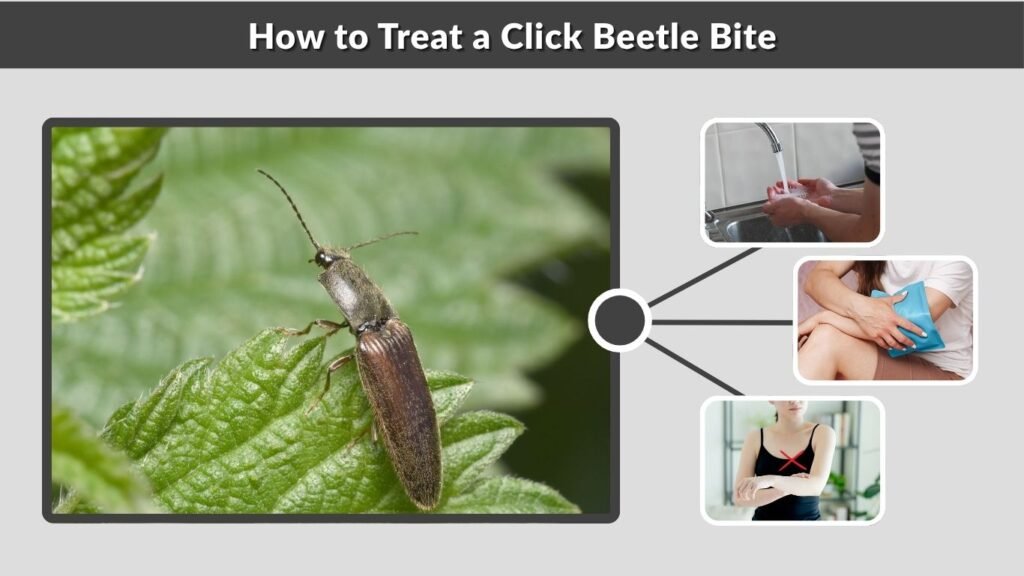
If you believe a click beetle has bitten you, basic first aid is usually sufficient.
Follow these steps:
- Wash the area: Clean the affected skin with mild soap and water.
- Apply a cold compress: Use a clean, cool cloth to reduce discomfort or swelling.
- Avoid scratching: Scratching may irritate the skin or introduce bacteria.
- Check for broken skin: Keep any small wound clean and monitor its condition.
- Monitor symptoms: Seek medical advice if pain, swelling, or redness worsens.
A minor pinch generally does not require specialized treatment. However, increasing warmth, spreading redness, pus, or persistent pain may indicate infection and should be assessed by a healthcare professional.
Seek emergency medical care for severe allergic symptoms, including difficulty breathing or swelling of the mouth or throat, regardless of which insect is suspected.
How to Avoid Click Beetle Bites
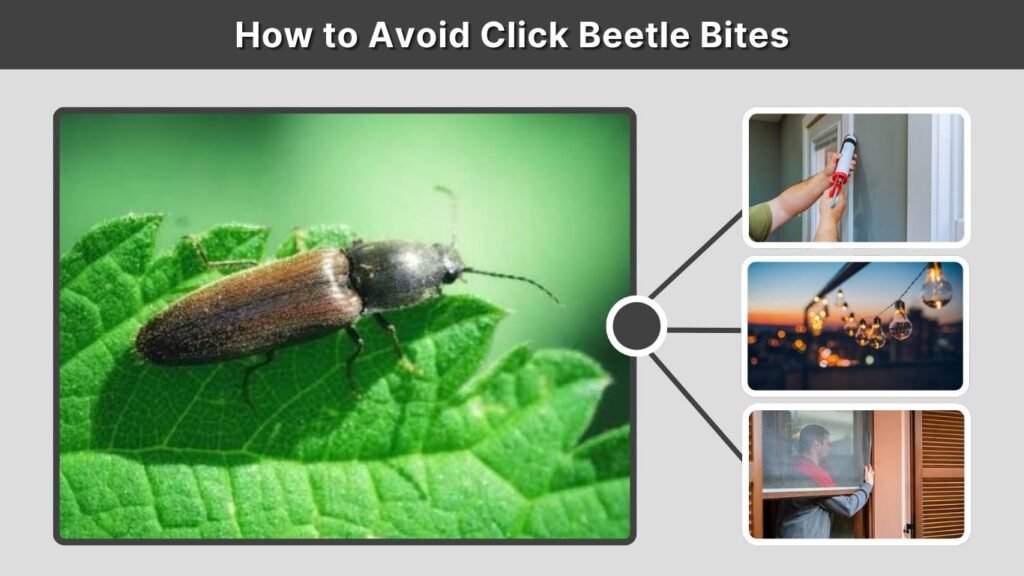
Avoiding a potential click beetle bite is relatively simple because these insects do not actively attack humans. Most encounters happen when beetles enter homes accidentally or are picked up outdoors.
Handle Click Beetles Safely
If you find a click beetle, avoid squeezing it between your fingers.
Instead, place a container over the insect and gently slide a piece of paper underneath.
Carry the container outside and release the beetle in a suitable area away from your entrance.
This method reduces unnecessary contact and allows the insect to escape safely.
Prevent Click Beetles From Entering Your House
Adult click beetles are often attracted to artificial lights at night. They may enter homes through open windows, damaged screens, or gaps around doors.
To reduce indoor encounters:
- Turn off unnecessary outdoor lights.
- Use motion-activated lighting near entrances.
- Repair damaged window screens.
- Seal cracks around doors and windows.
- Vacuum or safely relocate beetles found indoors.
Click beetles generally do not establish breeding populations in ordinary indoor living spaces, so chemical treatments are rarely necessary.
FAQs
1. Are Click Beetle Bites Dangerous?
Click beetle bites are uncommon and generally not dangerous. Some larger species can give a painful pinch, but they do not inject venom. Minor skin irritation can usually be managed with basic first aid.
2. Do All Click Beetles Bite?
No. Although click beetles have mouthparts, most do not bite humans. Certain larger species, including eastern eyed click beetles, can pinch when handled carelessly. Biting is not their typical defensive behavior.
3. Can Click Beetles Bite You While Sleeping?
Click beetles are not known for biting sleeping humans. They do not feed on blood or seek people as hosts. If you repeatedly wake with itchy bites, another household insect may be responsible.
4. Do Eastern Eyed Click Beetles Sting?
No. Eastern eyed click beetles do not have stingers. Their clicking sound comes from a mechanical structure beneath their thorax. Although their jaws can occasionally pinch, they cannot deliver a venomous sting.
5. Are Glowing Click Beetles Dangerous to Humans?
Glowing click beetles are generally harmless. Their light-producing organs are used for biological communication rather than attacking humans. They are not known for routinely biting people or injecting venom.