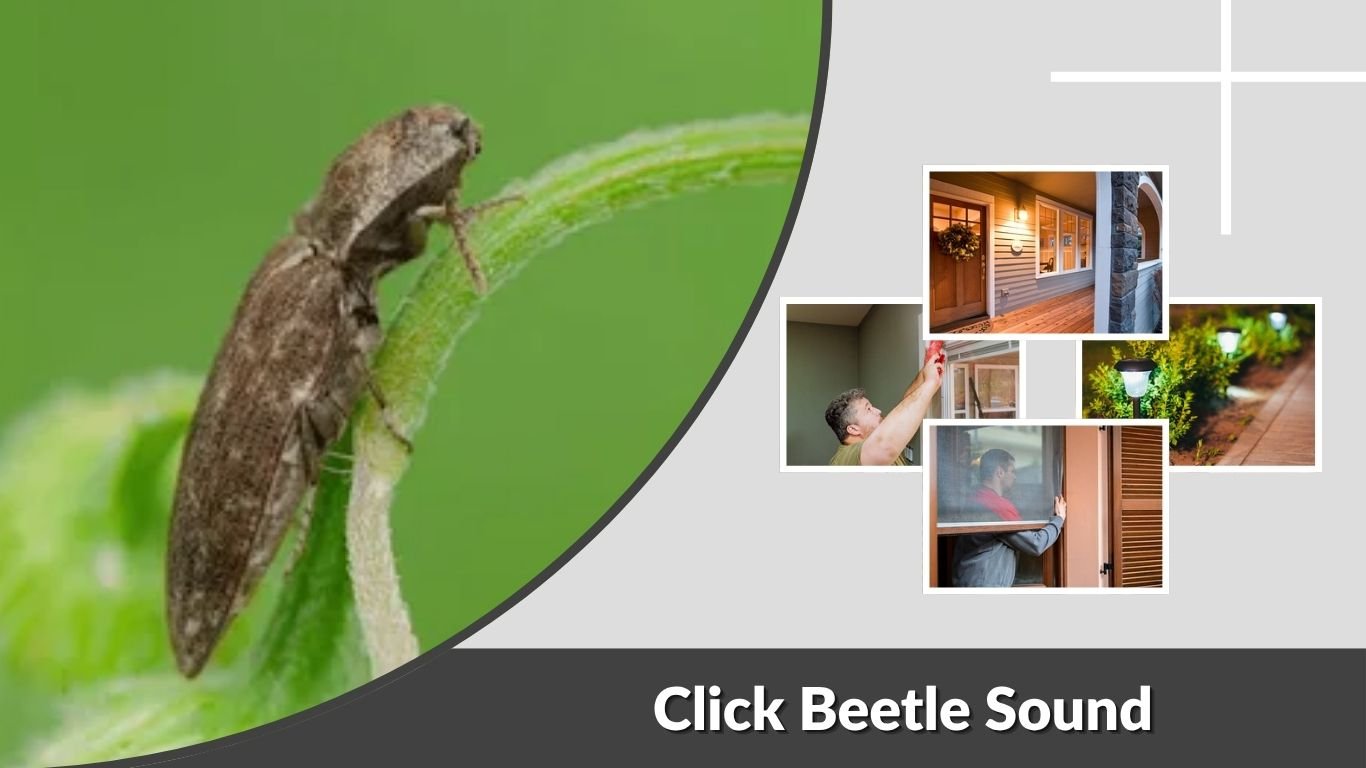
Have you ever heard a strange clicking noise coming from a beetle in your home or garden? The click beetle sound is a distinctive popping or snapping noise produced by an unusual body mechanism. Unlike insects that chirp or buzz, click beetles create a sharp click when they suddenly move their bodies. This behavior helps them escape danger and turn themselves upright. Understanding what a click beetle sounds like, why it makes noise, and when you might hear it can help you identify these fascinating insects.
What Does a Click Beetle Sound Like?
A click beetle makes a short, sharp snapping noise that resembles a tiny pop or mechanical click. The sound usually occurs when the beetle suddenly straightens its body. Unlike continuous insect calls, clicking beetle sounds happen as separate, brief noises, often accompanied by a sudden jump.
Common Characteristics of Click Beetle Sounds
The sound of a click beetle has several recognizable features that distinguish it from other insect noises.
- Sharp clicking: A quick snap similar to a small plastic object clicking.
- Short duration: Each click lasts only a fraction of a second.
- Sudden movement: The beetle may jump immediately after clicking.
- Repeated clicking: Several clicks may occur if the beetle struggles to turn upright.
- Variable loudness: Larger species may produce more noticeable sounds.
How Loud Is a Click Beetle Sound?
Most click beetle sounds are relatively quiet, although they can be surprisingly noticeable at close range. Larger beetles may create a distinct popping noise that can be heard in a quiet room.
The loudness depends on the beetle’s size, species, and surroundings. A click against a hard surface may seem louder than one occurring on soft soil or leaves.
Why Do Click Beetles Make Clicking Sounds?
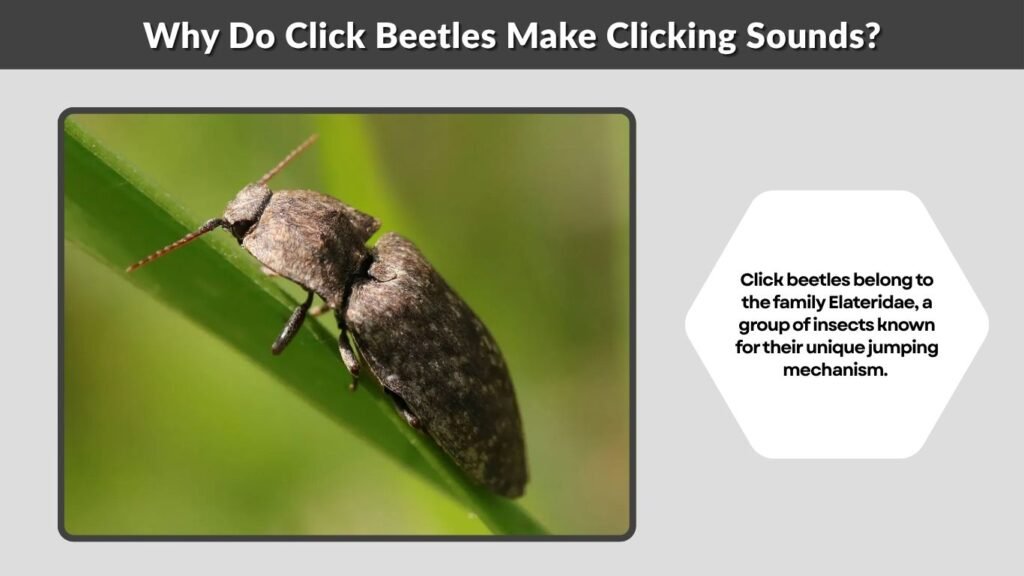
Click beetles belong to the family Elateridae, a group of insects known for their unique jumping mechanism. Their clicking sound is produced mechanically rather than through vocal communication. This fascinating adaptation helps adult beetles recover from being overturned and can also startle predators.
How the Clicking Mechanism Works
Click beetles possess a specialized spine underneath the front section of their thorax. This spine interacts with a groove in the middle section of the thorax.
When the beetle bends its body, the mechanism temporarily locks and stores elastic energy. Releasing that energy causes the body to snap rapidly, producing an audible clicking noise.
The sudden movement can propel the beetle several inches into the air. This allows it to flip over without using its legs to push against the ground.
Clicking as a Defense Mechanism
Clicking serves two important purposes: escaping danger and returning to an upright position.
When a predator disturbs a click beetle, the sudden snap and jump may surprise the attacker. The movement can provide an opportunity to escape.
Similarly, a beetle trapped on its back can repeatedly click until it lands upright. The noise is therefore associated primarily with movement and survival rather than aggression.
Why Do You Hear Click Beetle Sounds at Night?
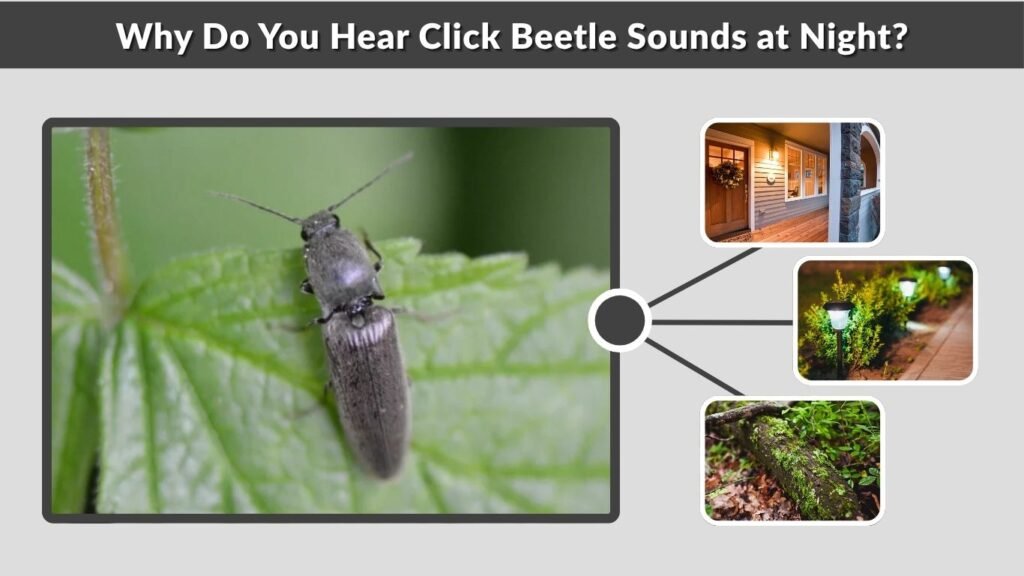
Hearing a click beetle sound at night can be surprising, especially inside a quiet bedroom. Some click beetles are active after sunset, and certain species are attracted to artificial lighting. Their occasional snapping noises may become easier to notice when household activity decreases.
Are Click Beetles More Active at Night?
Many click beetle species are nocturnal or active around dusk. They may fly toward porch lights, windows, or illuminated rooms while searching for suitable habitats.
If a beetle enters a house, it may become trapped on its back or encounter obstacles. Its clicking mechanism can activate repeatedly as it attempts to escape.
However, not all click beetles are nocturnal. Activity patterns vary by species and environmental conditions.
Where Can You Hear Clicking Beetles?
Clicking sounds may occur around several locations, including:
- Near porch lights and outdoor lamps.
- Around windows and doorways.
- On hardwood floors or other solid surfaces.
- Beneath furniture where beetles become trapped.
- Near gardens, trees, and decaying logs.
A single occasional click does not necessarily indicate an infestation. In many cases, an adult beetle has simply wandered indoors.
Eastern Eyed Click Beetle Sound and Identification
The eastern eyed click beetle (Alaus oculatus) is one of the most recognizable click beetles in North America. Its large body and unusual markings make it particularly memorable. Like other click beetles, this species produces an audible snapping sound when activating its jumping mechanism.
What Does an Eastern Eyed Click Beetle Sound Like?
The eastern eyed click beetle produces a sharp, mechanical click accompanied by a sudden body movement.
Because adults are relatively large, their clicking can be particularly noticeable compared with that of smaller species. The clicking is most commonly associated with defensive movements or attempts to turn upright.
An eastern eyed click beetle is recognizable by its black-and-white speckled body and two prominent false eyespots on its thorax. Adults can reach approximately two inches in length.
Do Eyed Click Beetles Make Noise at Night?
Yes, eastern eyed click beetles can produce clicking sounds at night when disturbed or overturned.
Adults sometimes appear around exterior lights and may accidentally enter buildings. Although their appearance can seem intimidating, they are harmless to people and pets.
Their large eyespots are visual markings, not sound-producing structures, and do not glow in the dark.
Click Beetle Sound in Walls: What Could It Mean?
A clicking noise coming from inside a wall is not necessarily produced by a click beetle. Although adult click beetles occasionally enter buildings, repeated tapping from concealed wooden structures may have a different explanation. Identifying the sound pattern is important before assuming that beetles are responsible.
Click Beetle vs. Deathwatch Beetle Clicking Sound
The deathwatch beetle (Xestobium rufovillosum) produces a tapping noise that can resemble a ticking clock.
Unlike click beetles, which create sounds through sudden body movements, adult deathwatch beetles tap against wood to communicate during mating.
Deathwatch beetle sounds often occur in repeated patterns, while typical click beetle noises are isolated snaps associated with jumping.
Deathwatch beetle larvae can also damage structural timber, making persistent sounds from wooden areas worth investigating.
How to Identify Clicking Sounds in Walls
Begin by listening to the rhythm and location of the noise.
An occasional sharp snap near a window or floor may come from a click beetle. Repeated tapping from the same wooden beam could indicate a wood-boring insect, although sound alone cannot confirm the species.
Look for small emergence holes, fine wood dust, or damaged timber. If these signs appear, consider arranging a professional inspection rather than disturbing structural wood.
How to Identify and Prevent Clicking Beetles Indoors

A beetle that makes a clicking sound is often easy to recognize once you observe its body and behavior. Most adult click beetles have elongated bodies, firm wing covers, and pointed rear corners on the thorax. They generally enter homes accidentally rather than establishing indoor colonies.
How to Recognize a Click Beetle
Look for these common identification features:
- Long, narrow, somewhat flattened body.
- Brown, black, or patterned coloration.
- Antennae that may appear serrated.
- Two pointed rear corners on the thorax.
- A sudden clicking or jumping movement when overturned.
Avoid repeatedly handling or flipping beetles merely to test their clicking mechanism. Natural behavior and visible physical features are usually sufficient for identification.
How to Reduce Click Beetle Sounds at Home
Preventing adult click beetles from entering your home is generally straightforward.
- Reduce unnecessary outdoor lighting during peak insect activity.
- Repair damaged window screens and door seals.
- Close gaps around windows, vents, and entryways.
- Gently capture and release individual beetles outdoors.
- Keep doors closed when exterior lights attract insects.
Adult click beetles usually do not damage household furnishings. However, larvae of certain species, called wireworms, can feed on plant roots and become agricultural or garden pests.
FAQs
1. What Sound Does a Click Beetle Make?
A click beetle makes a short, sharp popping or snapping sound, similar to a tiny mechanical click. The noise occurs when its thoracic mechanism releases stored energy, often making the beetle jump suddenly. The sound is brief rather than continuous.
2. Do Click Beetles Make Clicking Sounds at Night?
Yes, many click beetle species are active after sunset and may produce clicking noises when disturbed or overturned. These sounds become more noticeable at night because the surroundings are quieter. You might hear them near windows, floors, or outdoor lights.
3. Are Click Beetle Sounds Dangerous?
No, click beetle sounds are completely harmless to humans and pets. The clicking noise comes from a specialized body mechanism used for jumping and escaping danger. Click beetles do not produce this sound to attack, threaten, or communicate aggressively with people.
4. Why Does a Click Beetle Keep Clicking?
A click beetle may repeatedly click when it becomes trapped on its back or feels threatened. Each clicking movement helps the insect jump and reposition itself. If the first attempt fails, it may continue clicking until it successfully lands upright.
5. Can I Record a Click Beetle Sound Effect?
Yes, you can record a click beetle sound using a smartphone or sensitive microphone. Choose a quiet environment and position your recording device near a naturally clicking beetle. Avoid disturbing the insect unnecessarily, as its clicking behavior is primarily defensive.