
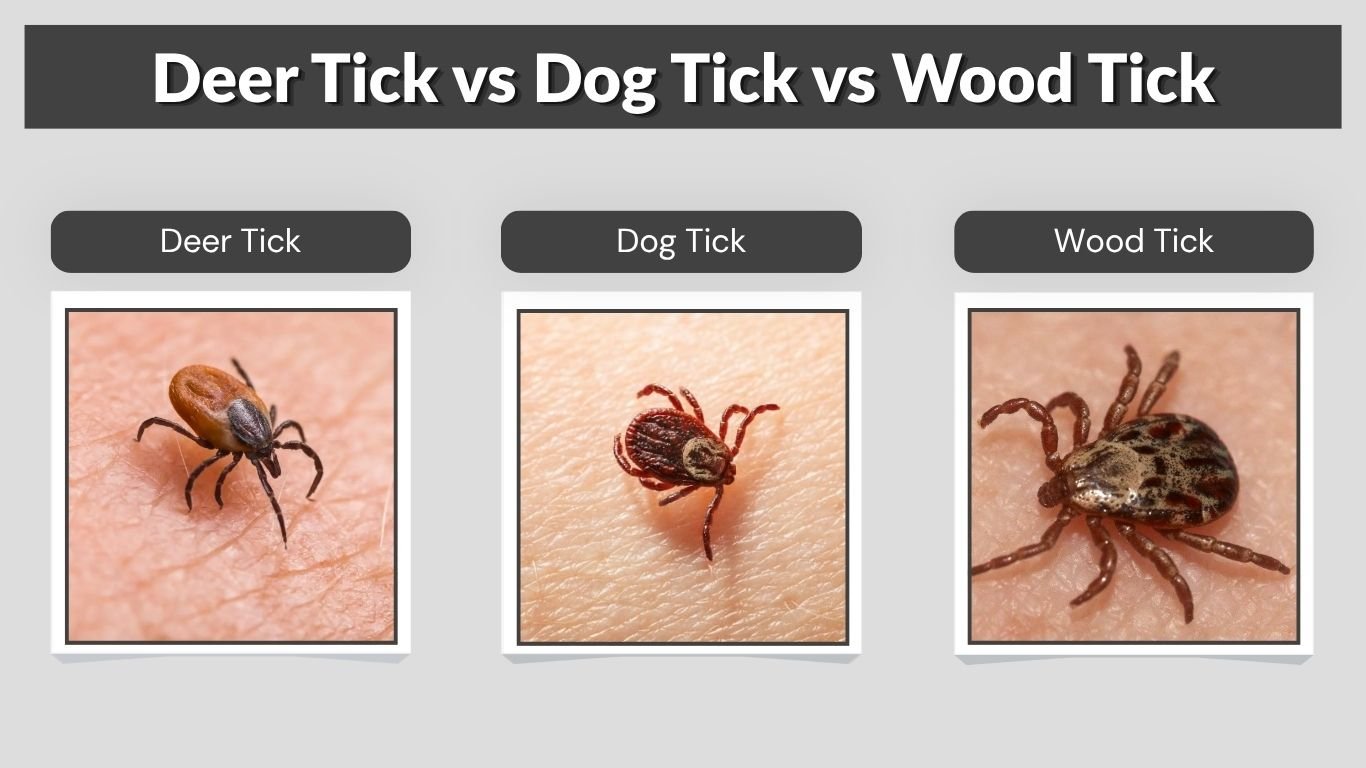
Deer ticks, dog ticks, and wood ticks can look surprisingly similar, especially after they have fed and become engorged. However, they differ in size, body markings, preferred hosts, habitat, and the diseases they may transmit. Correct identification becomes especially important after finding an attached tick on yourself, a child, or a pet. This guide compares deer tick vs dog tick vs wood tick, including their appearance, size, engorged forms, bites, and health risks.
Deer Tick vs Dog Tick: Quick Identification
Deer ticks and dog ticks are common in many parts of North America, but they belong to different tick groups. Size and body markings provide some of the easiest clues when trying to tell them apart.
Deer Tick Appearance
The deer tick is also called the blacklegged tick. Adult females typically have a dark shield near the head and a reddish-orange or reddish-brown abdomen.
Common characteristics include:
- Small overall body size
- Dark or black legs
- Reddish-brown abdomen in adult females
- Darker appearance in males
- No prominent white patterns on the back
- Eight legs in the nymph and adult stages
Deer ticks can be extremely difficult to notice during their immature nymph stage.
Dog Tick Appearance
The American dog tick is generally larger and more heavily patterned.
Adult females often have a brown body with pale or silvery-white markings near the head. Males usually have light-colored patterns covering more of their backs.
Compared with deer ticks, dog ticks typically appear wider and easier to see.
Deer Tick vs Dog Tick Size
Size is one of the most useful differences.
An unfed adult deer tick may be approximately the size of a sesame seed, while a nymph may resemble a poppy seed.
Adult American dog ticks are generally noticeably larger. However, size becomes less reliable after feeding because both species can expand significantly.
Deer Tick vs Wood Tick
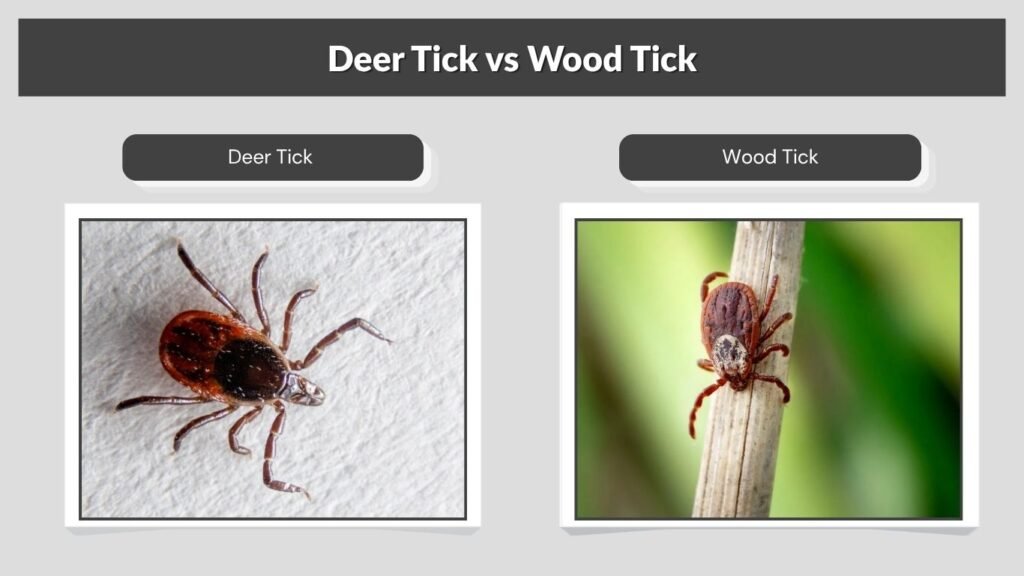
The term “wood tick” can be confusing because it is a common name rather than one specific species everywhere. In many areas of the United States, people use “wood tick” to describe the American dog tick. In western regions, it may refer to the Rocky Mountain wood tick.
What Does a Wood Tick Look Like?
Wood ticks are generally larger and more visibly patterned than deer ticks.
Typical features include:
- Brown body
- Pale gray or whitish markings
- Relatively large adult size
- Broader appearance than a deer tick
- Eight legs in adult and nymph stages
If a tick has noticeable pale decorative markings across its back, it is more likely to be a dog or wood tick than a deer tick.
Deer Tick vs Wood Tick Size
Adult wood ticks are generally larger than adult deer ticks.
This difference is especially apparent when both are unfed. Deer tick nymphs can be so tiny that they are easily overlooked during a body check.
Once either tick becomes engorged, however, body size alone may no longer provide reliable identification.
Deer Tick vs Wood Tick Disease Risk
Deer ticks receive particular attention because they can transmit the bacteria responsible for Lyme disease.
Wood ticks and American dog ticks are associated with other tick-borne diseases, depending on species and location. For this reason, any unexplained fever, rash, headache, or illness following a tick bite deserves attention regardless of which tick species is suspected.
Engorged Deer Tick vs Dog Tick
Ticks expand as they consume blood. A fully engorged tick can look very different from its unfed form, making identification more challenging.
What Does an Engorged Deer Tick Look Like?
A feeding female deer tick can develop a swollen abdomen that appears grayish, bluish-gray, or pale brown.
The legs and front portion of the body remain darker, while the abdomen becomes increasingly rounded.
An engorged deer tick may have:
- Dark legs
- Small dark shield near the head
- Swollen pale abdomen
- Rounded or oval body
The degree of engorgement can also provide clues about how long the tick may have been feeding.
What Does an Engorged Dog Tick Look Like?
Engorged female dog ticks can become substantially larger than their unfed size.
Their abdomen may turn gray, tan, or grayish-brown as it expands. Pale markings near the front of the body may remain visible, although they can become harder to recognize.
How to Tell Them Apart When Engorged
Instead of relying on body size alone, examine:
- Leg color
- Shield markings
- Shape of the body
- Remaining pale patterns
- Size of the shield
- Geographic location
If identification is uncertain after an attached tick has been removed, taking a clear photograph may be helpful.
Deer Tick vs Brown Dog Tick
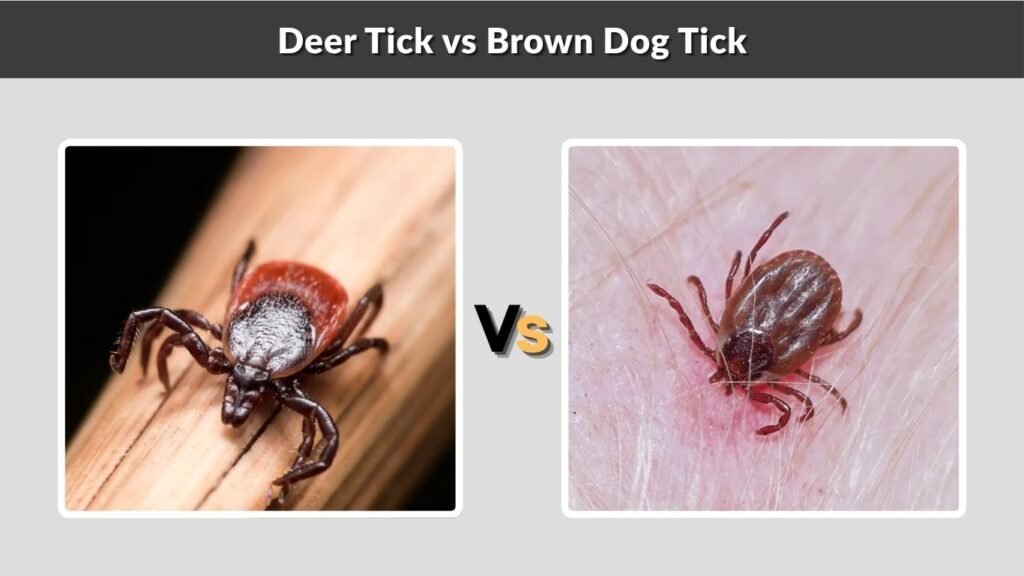
The brown dog tick is another species that can sometimes be confused with deer ticks. Unlike many ticks, brown dog ticks are particularly well adapted to living around homes, kennels, and other structures where dogs are present.
Brown Dog Tick Identification
Brown dog ticks are typically reddish-brown and lack the dramatic white markings seen on American dog ticks.
Key characteristics include:
- Reddish-brown body
- Fairly uniform coloration
- Longer-looking body
- Strong association with dogs
- Ability to survive indoors
Deer ticks usually have much darker legs and adult females often show stronger contrast between the dark shield and reddish abdomen.
Where You Find Them Matters
Habitat can provide an additional clue.
Deer ticks are commonly associated with wooded areas, leaf litter, brush, and forest edges.
Brown dog ticks may establish populations around dog bedding, kennels, cracks, walls, and other sheltered indoor or outdoor environments.
Deer Tick vs Lone Star Tick
Lone star ticks are another common species that can occasionally be mistaken for deer ticks.
Female Lone Star Tick
Adult female lone star ticks are relatively easy to recognize because they typically have a distinct white or pale spot in the middle of their backs.
Deer ticks do not have this single central white dot.
Male Lone Star Tick
Male lone star ticks lack the female’s distinctive single spot but may have pale markings around the edge of their bodies.
Identification can therefore be more difficult with males and immature ticks.
Deer Tick Nymph vs Adult
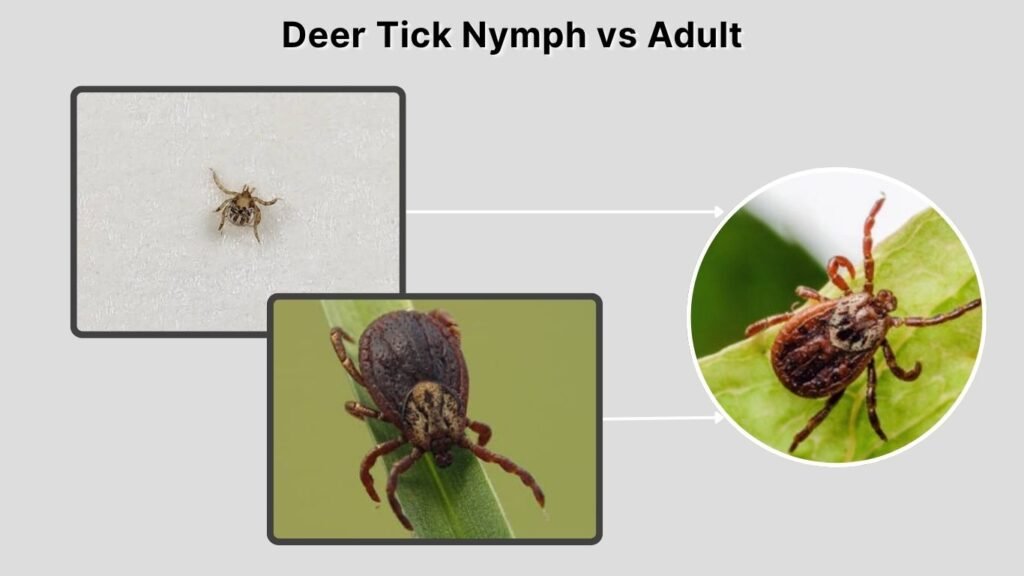
Deer ticks change in size and appearance as they develop. Their life cycle includes egg, larva, nymph, and adult stages.
Deer Tick Nymph
Nymphs are extremely small and can be roughly compared to a poppy seed.
They have eight legs but may remain unnoticed because of their size.
Small nymphs can attach around hidden areas such as the scalp, waist, groin, behind the knees, or armpits.
Adult Deer Tick
Adults are larger and easier to identify.
Adult females have the characteristic dark shield and reddish-brown abdomen, while males are generally darker overall.
Because nymphs can be difficult to detect, careful body checks are important after spending time in tick habitat.
Deer Tick vs Dog Tick Bite
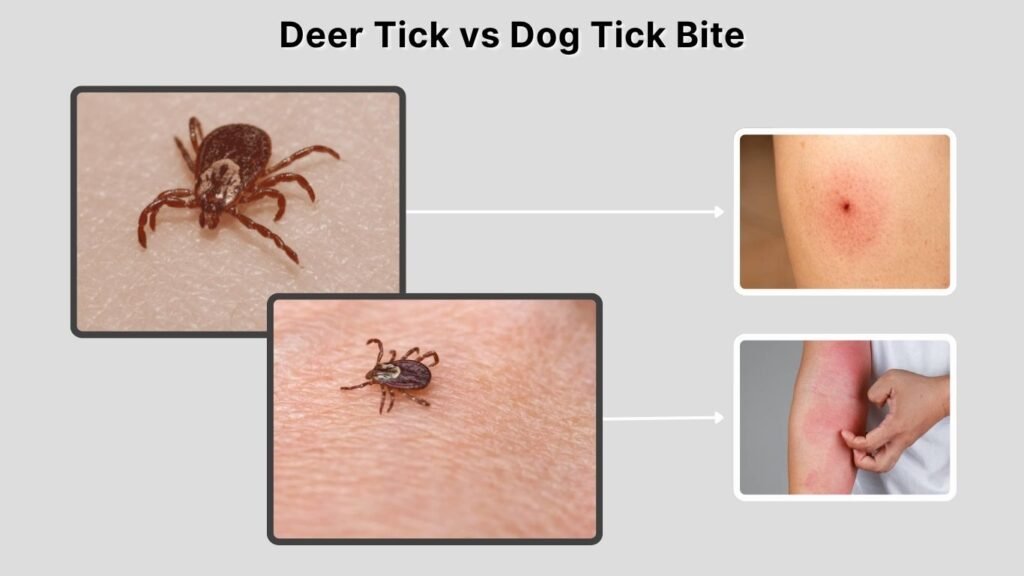
A bite mark usually cannot reliably tell you whether you were bitten by a deer tick or dog tick.
The appearance of the actual tick is much more useful for identification.
Deer Tick Bite
A deer tick bite may initially cause:
- Small red bump
- Mild irritation
- Slight itching
- Minor swelling
- Little or no pain
If Lyme disease develops, some people may later develop an expanding rash along with flu-like symptoms.
Dog or Wood Tick Bite
Dog and wood tick bites can produce similar local reactions.
A small red or irritated area may develop around the attachment site. The bite itself therefore provides limited information about the species.
If fever, rash, severe headache, weakness, or other unusual symptoms develop after any tick bite, contact a healthcare professional.
How to Remove Any Attached Tick
Regardless of whether you find a deer tick, dog tick, or wood tick, prompt removal is important.
Correct Tick Removal
Follow these steps:
- Use fine-tipped tweezers.
- Grasp the tick close to the skin.
- Pull upward with steady pressure.
- Avoid twisting or crushing it.
- Clean the bite area afterward.
- Wash your hands thoroughly.
- Monitor yourself for symptoms.
Avoid using heat, petroleum jelly, nail polish, or essential oils to force a tick to release.
FAQs
1. Which is smaller, a deer tick or dog tick?
Deer ticks are generally smaller than American dog ticks. Deer tick nymphs are particularly tiny and may resemble poppy seeds.
2. Is a wood tick the same as a dog tick?
The term wood tick is commonly used for the American dog tick in some regions, although it may refer to other species, such as the Rocky Mountain wood tick, elsewhere.
3. Can dog ticks carry Lyme disease?
American dog ticks are not considered primary vectors of Lyme disease. Blacklegged deer ticks are the major Lyme disease vectors in much of the eastern United States.
4. What does an engorged deer tick look like?
An engorged female deer tick develops a swollen, pale gray or brownish abdomen while its legs and front shield remain relatively dark.
5. What is the easiest way to identify a deer tick?
Look for its small size, dark legs, lack of prominent white markings, and, in adult females, a reddish-brown abdomen behind a dark shield.
