
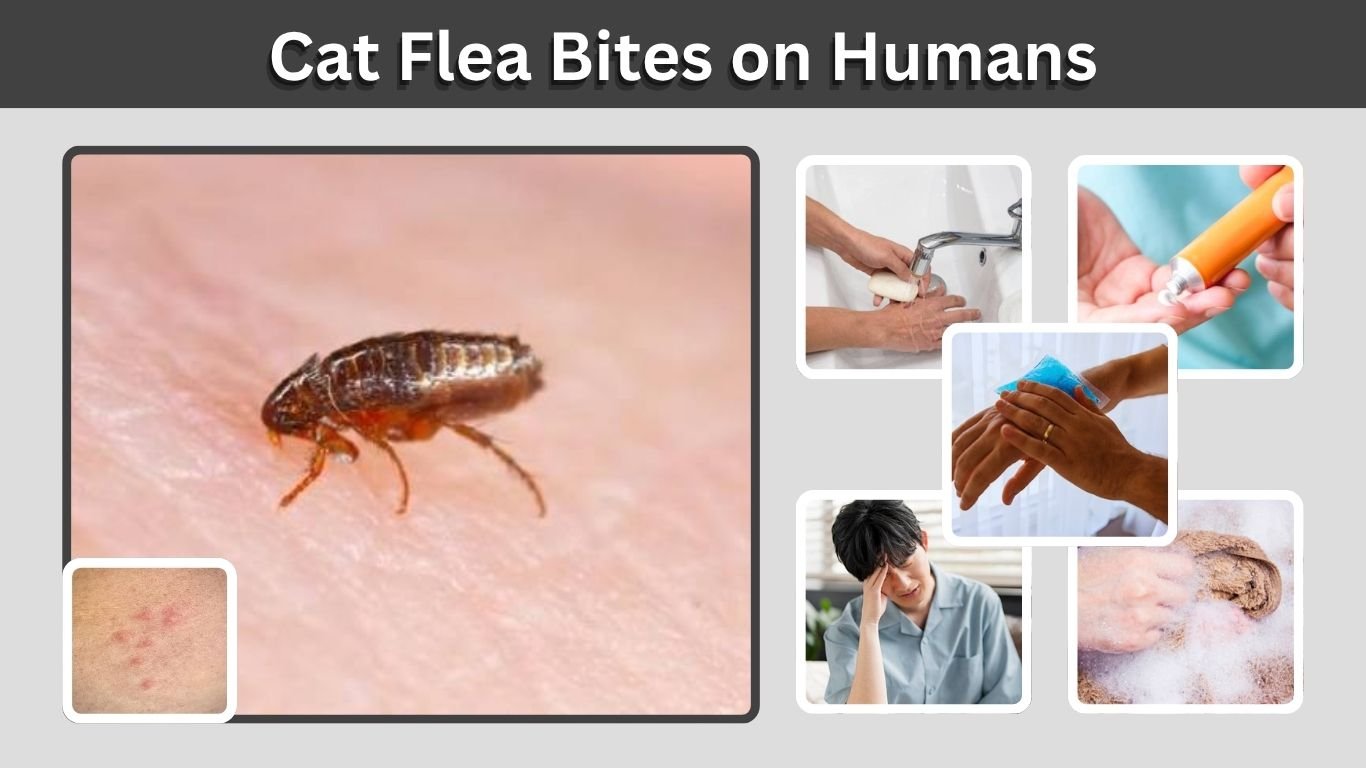
Cat flea bites on humans usually appear as small, intensely itchy, raised bumps, often grouped around the ankles, feet, or lower legs. The cat flea (Ctenocephalides felis) prefers animal hosts, but it can readily bite people when fleas are present on pets or throughout the home. Most bites improve within several days, although scratching may cause infection or prolonged irritation. This guide explains what cat flea bites look like, their symptoms, treatment, healing time, possible side effects, and how to prevent new bites.
What Do Cat Flea Bites Look Like on Humans?
Cat flea bites can resemble bites from mosquitoes, bed bugs, or other insects, so appearance alone does not always identify the cause. They are typically small and very itchy and often occur in groups. Because fleas commonly jump from floors, carpets, or pet resting areas, bites are particularly common below the knees.
Common Signs of Cat Flea Bites
- Small, raised bumps
- Intense itching
- Pink or red discoloration on lighter skin
- Purple, brown, or darker marks on darker skin
- Several bites clustered together
- Bites arranged in a short line
- Mild swelling around the bite
- Small central puncture marks in some cases
Where Do Cat Fleas Usually Bite Humans?
The ankles, feet, calves, and lower legs are common locations because fleas can jump onto people from carpeting, furniture, pet bedding, and floors. The NHS notes that flea bites commonly occur in groups below the knees.
Bites can occur elsewhere if someone sits or sleeps in an infested area. Fleas hiding in sofas, bedding, or other fabrics may reach the thighs, waist, arms, or other exposed skin.
Cat Flea Bite Symptoms in Humans
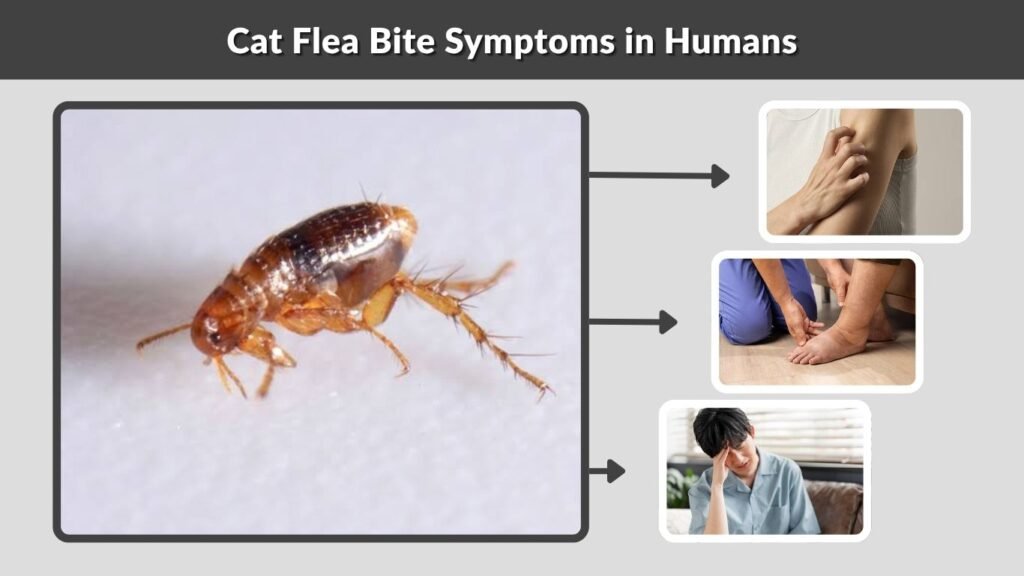
People react differently to flea saliva. Some develop only minor irritation, while others experience intense itching and more noticeable swelling. Fleas feed on blood, and the immune response to their saliva produces many of the visible symptoms. Repeated scratching can make otherwise mild bites look considerably worse and increases the possibility of secondary skin infection.
Typical Symptoms
- Persistent itching
- Small swollen bumps
- Localized skin irritation
- Tenderness after scratching
- Groups of closely spaced bites
- Mild inflammation
- Temporary skin discoloration
- Small scabs if the skin is scratched
Do Cat Flea Bites Itch?
Yes. Itching is one of the most characteristic symptoms of flea bites. For some people, itching can be surprisingly intense compared with the small size of the bumps.
Scratching provides temporary relief but can damage the skin. Keeping the affected area clean and avoiding repeated scratching helps reduce the chance of infection.
How to Treat Cat Flea Bites on Humans
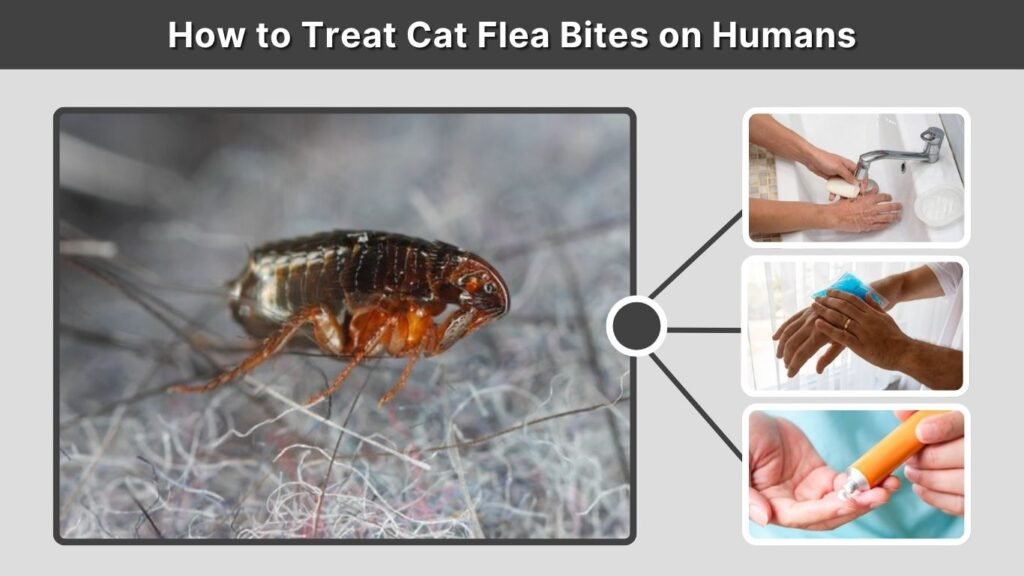
Most uncomplicated cat flea bites can be treated at home. Treatment primarily focuses on controlling itching, swelling, and irritation while allowing the skin to heal. Treating the human bites alone, however, will not stop new bites if fleas remain on the cat or in the household. Pet treatment and environmental flea control need to happen alongside bite care.
Treatment for Cat Flea Bites
- Wash bites gently with soap and water.
- Apply a cool compress to swollen areas.
- Avoid scratching whenever possible.
- Keep fingernails short to reduce skin damage.
- Ask a pharmacist about an appropriate antihistamine for itching.
- Hydrocortisone cream may help reduce itching and swelling when appropriate.
- Follow medicine labels and professional advice.
- Seek medical help if symptoms become severe.
The NHS recommends washing insect bites and using measures such as a wrapped ice pack, antihistamines, or hydrocortisone for symptom relief when appropriate.
How Long Do Cat Flea Bites Last?
Mild flea bites commonly improve within a few days. Itching and swelling usually become less intense as the inflammatory response settles.
Marks can remain longer when bites are repeatedly scratched or when a person has a stronger reaction. If new bumps continue appearing, ongoing flea exposure is more likely than the original bites simply taking a long time to heal.
Side Effects of Cat Flea Bites
Most cat flea bites cause temporary itching rather than serious illness. Complications are more likely when a person scratches repeatedly, develops an unusually strong reaction, or is exposed to infected fleas in an area where flea-borne illnesses occur. The CDC notes that some flea species, including cat fleas, can carry germs associated with illnesses such as murine typhus.
Possible Side Effects
- Persistent itching
- Localized swelling
- Broken skin from scratching
- Scabbing
- Secondary bacterial infection
- Temporary dark marks after healing
- Allergic skin reactions in sensitive individuals
- Rare flea-borne illness in relevant geographic areas
Can Cat Flea Bites Cause an Allergic Reaction?
Some people react more strongly to insect bites than others. A larger swollen area, significant itching, or widespread skin reaction can occur.
Seek urgent medical care for serious allergic symptoms such as difficulty breathing or significant swelling of the mouth, tongue, or throat. These reactions are uncommon but require prompt attention.
What Do Infected Cat Flea Bites Look Like?
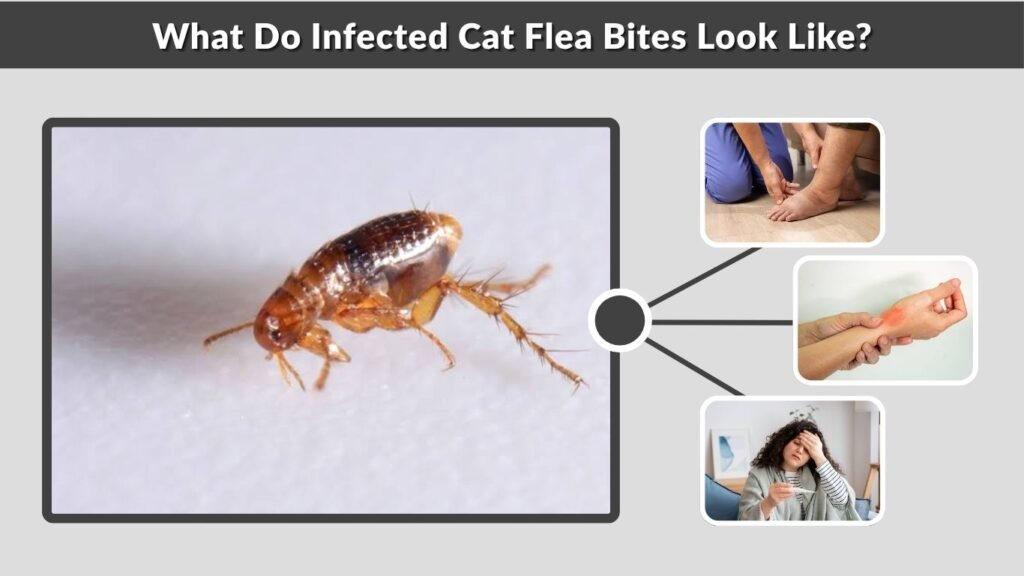
An uncomplicated flea bite should gradually become less itchy and swollen. A bite that becomes increasingly painful, warm, swollen, or inflamed may have developed a secondary infection, particularly when scratching has broken the skin. Insect bites can become infected when bacteria enter damaged skin.
Signs a Flea Bite May Be Infected
- Increasing pain
- Increasing swelling
- Warm skin around the bite
- Pus or drainage
- Expanding redness or discoloration
- Open sores
- Increasing tenderness
- Fever or feeling unwell
When to Seek Medical Care
Contact a healthcare professional when bites become increasingly painful or swollen, produce pus, fail to improve, or are accompanied by fever or other illness.
Medical evaluation is also sensible when the skin reaction is severe or you cannot determine whether the marks are actually flea bites.
Why Are Cat Fleas Biting You?
Cat fleas prefer animal hosts but can feed on humans. The CDC explains that fleas locate hosts through signals such as body heat, movement, vibration, and breathing. People may therefore become alternative hosts when sharing space with flea-infested animals or when large numbers of newly emerged fleas are present in the environment.
Fleas Can Live Beyond Your Cat
Adult fleas commonly feed on animals, but eggs can fall from an infested pet into carpets, rugs, furniture, bedding, and other resting areas. Immature stages then develop in the environment.
This explains why someone may continue receiving bites even after fleas are no longer immediately visible on the cat. Successful control needs to address the entire flea life cycle.
Why Do Fleas Bite Humans but Seem Absent From the Cat?
A cat may have only a small number of visible adult fleas while large numbers of eggs, larvae, and pupae remain throughout the environment. Cats also groom themselves and may remove some fleas before owners notice them.
Finding bites on yourself without immediately seeing fleas on the pet therefore does not rule out a household infestation.
How to Prevent Cat Flea Bites on Humans
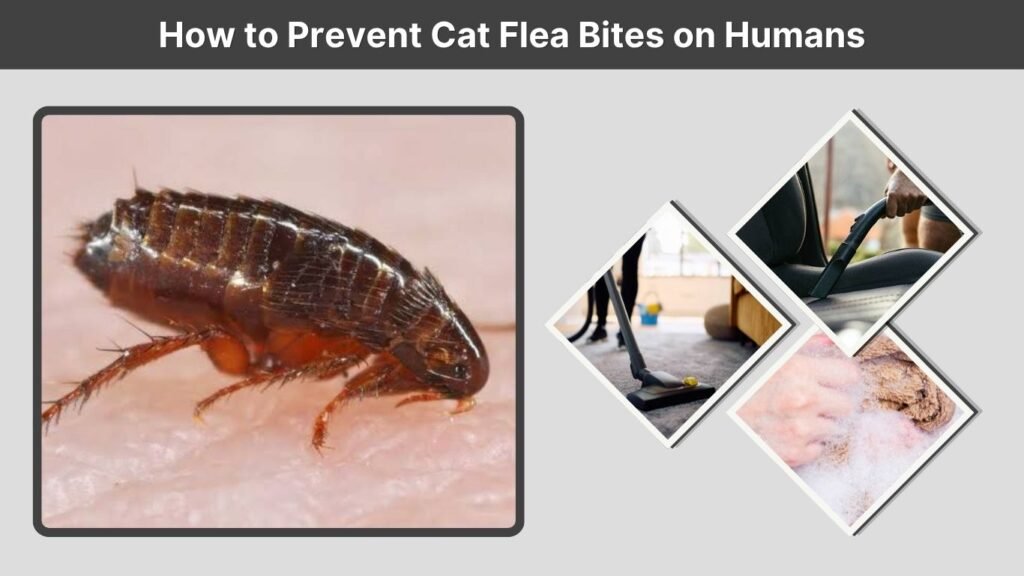
The most effective way to prevent repeated bites is to control fleas on pets and within their environment at the same time. Flea development occurs through several stages, so removing visible adult fleas alone may not end an infestation. CDC guidance recommends sanitation, pet treatment, household treatment when necessary, and continued follow-up.
Steps to Prevent New Bites
- Have your cat checked and treated appropriately for fleas.
- Ask a veterinarian which flea-control product is suitable.
- Treat all pets in the household when appropriate.
- Wash pet bedding regularly.
- Vacuum carpets and rugs thoroughly.
- Vacuum sofas and upholstered furniture.
- Clean areas where pets frequently sleep.
- Empty vacuum contents appropriately after cleaning.
- Continue flea-control measures through the entire life cycle.
- Avoid using flea products intended for dogs on cats unless specifically directed by a veterinarian.
Treat the Pet and Home Together
The CDC recommends beginning household treatment at the same time as pet treatment when dealing with an infestation. Regular vacuuming and cleaning help remove flea eggs and immature stages, while veterinary flea control targets fleas using the animal as a host.
Moderate or severe infestations may require repeated treatment because some flea life stages are more difficult to eliminate immediately.
FAQs
1. What do cat flea bites on humans look like?
They generally appear as small, itchy, raised bumps that may occur in groups or short lines. The ankles, feet, and lower legs are especially common locations.
2. How long do cat flea bites last on humans?
Mild bites often begin improving within a few days. Scratching, sensitive skin, or a stronger inflammatory response can make irritation and discoloration last longer.
3. How do you treat cat flea bites on humans?
Wash the area with soap and water, avoid scratching, and use a cool compress for swelling. A pharmacist or healthcare professional can recommend suitable anti-itch treatments when needed.
4. Can cat fleas live permanently on humans?
Cat fleas prefer furry animal hosts and do not normally establish themselves permanently on the human body. However, they can repeatedly bite people when an infestation exists in pets, carpets, furniture, or bedding.
5. Why am I still getting flea bites after treating my cat?
Flea eggs, larvae, and pupae can remain in carpets, bedding, furniture, and other areas even after the pet is treated. Continued cleaning and appropriate follow-up treatment are often necessary to interrupt the full flea life cycle.
