
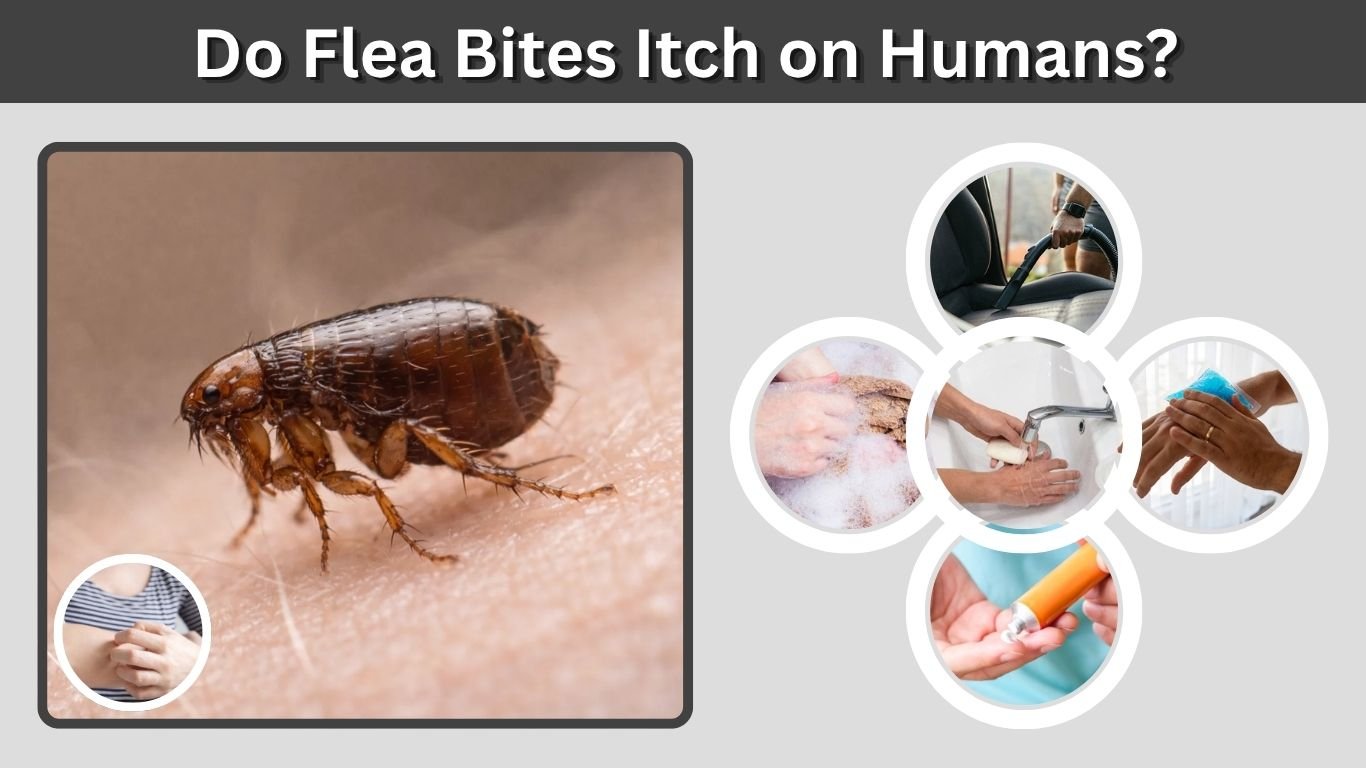
Yes, flea bites usually itch on humans, and for some people the itching can be surprisingly intense. Fleas pierce the skin to feed on blood, and the body’s reaction to substances in flea saliva produces itching, swelling, and irritation. The bites often appear as small bumps around the ankles, feet, or lower legs and may occur in clusters. This guide explains why flea bites itch, how long the itching lasts, ways to relieve it, useful anti-itch treatments, and when symptoms may need medical attention.
Why Do Flea Bites Itch on Humans?
Flea bites become itchy because the immune system reacts to proteins and other substances introduced in flea saliva during feeding. The resulting inflammation can produce a small raised bump, discoloration, and persistent itching. Reactions vary considerably: one person may barely notice a bite, while another may experience intense itching after being bitten in the same environment. Flea bites commonly cause itchiness and irritation.
Your Immune System Causes the Itching
When a flea bites, it penetrates the skin to reach blood. Your immune system recognizes components of its saliva as foreign and begins an inflammatory response.
This reaction contributes to swelling and itching around the bite. Repeated scratching can make inflammation worse, which is why a tiny original bite can eventually look much larger.
What Do Itchy Flea Bites Look and Feel Like?
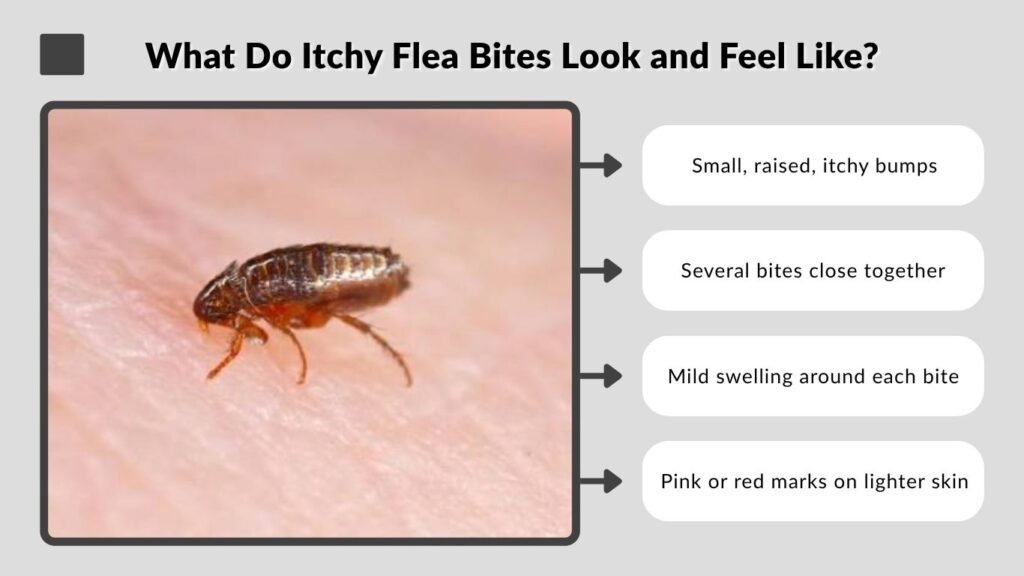
Flea bites are often smaller than typical mosquito welts and may occur several at a time. They frequently affect lower parts of the body because fleas can jump from floors, carpets, pet bedding, and furniture. Appearance also varies with skin tone, so itching and raised texture can sometimes be more noticeable than redness or other color changes.
Common Flea Bite Symptoms
- Small, raised, itchy bumps
- Several bites close together
- Bites appearing in short lines or clusters
- Mild swelling around each bite
- Pink or red marks on lighter skin
- Purple, brown, or darker marks on darker skin
- Tenderness after repeated scratching
- Small scabs if the skin has been broken
Flea bites commonly cause discomfort, itching, and irritation. However, appearance alone cannot always distinguish them from mosquito, bed bug, or other insect bites.
Do Flea Bites Always Itch?
Not necessarily. Most noticeable flea bites are itchy, but immune reactions differ. Some people develop only minor bumps and limited itching, while others experience a much stronger inflammatory response.
The absence of severe itching therefore does not completely rule out flea exposure, particularly if fleas have been found on pets or in the home.
How Long Do Flea Bites Itch on Humans?
Most uncomplicated insect-bite reactions improve within several days. The exact duration of itching depends on individual sensitivity, the number of bites, repeated scratching, and whether new flea bites are continuing to occur. If a person keeps receiving new bites, it can seem as though the original bites are lasting much longer than they actually are.
The First Few Days
Itching may begin soon after the bite and can be strongest while the skin is inflamed. As the immune reaction settles, the bump generally becomes flatter and less uncomfortable.
Some discoloration or a small scab can remain after the itching has mostly disappeared, particularly when the area has been scratched repeatedly.
Why Some Flea Bites Itch Longer
A stronger reaction can make symptoms persist longer. Scratching is another common reason because fingernails damage already irritated skin and trigger additional inflammation.
Continued exposure matters too. When fleas remain in carpeting, bedding, furniture, or on pets, new bites can appear before older ones have healed.
How to Stop Flea Bites From Itching on Humans
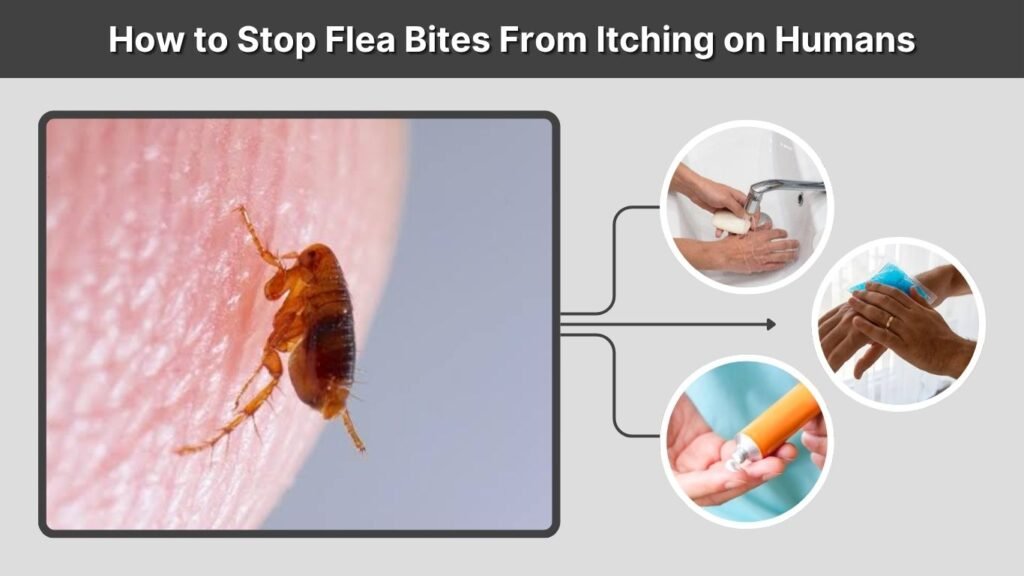
Mild flea bites can usually be managed with simple measures aimed at calming inflammation and protecting the skin. It is equally important to avoid scratching because broken skin can develop a secondary bacterial infection. NHS guidance recommends washing insect bites, cooling swollen skin, and considering antihistamines or hydrocortisone when appropriate.
Ways to Relieve Flea Bite Itching
- Wash the affected skin gently with soap and water.
- Apply a cold compress or wrapped ice pack.
- Avoid scratching the bumps.
- Keep fingernails short and clean.
- Consider an appropriate oral antihistamine for itching.
- Consider hydrocortisone cream for itching and swelling.
- Follow medication instructions carefully.
- Ask a pharmacist when you are unsure which treatment is suitable.
A cold compress can be applied for about 20 minutes when swelling is present.
Anti-Itch Cream for Flea Bites
Hydrocortisone is a mild corticosteroid commonly used for inflammatory skin reactions, including insect bites. It reduces inflammation and can help relieve swelling and itching.
However, topical medications are not appropriate for every person or every body area. Follow package instructions and ask a pharmacist or healthcare professional about use in children, during pregnancy, on damaged skin, or when other medical conditions are present.
Can Antihistamines Help?
Antihistamines are commonly used to relieve allergic symptoms and reactions to insect bites. Some can cause significant drowsiness, while others are less sedating.
A pharmacist can help identify an option appropriate for your circumstances, especially if you take other medicines.
How to Prevent More Itchy Flea Bites
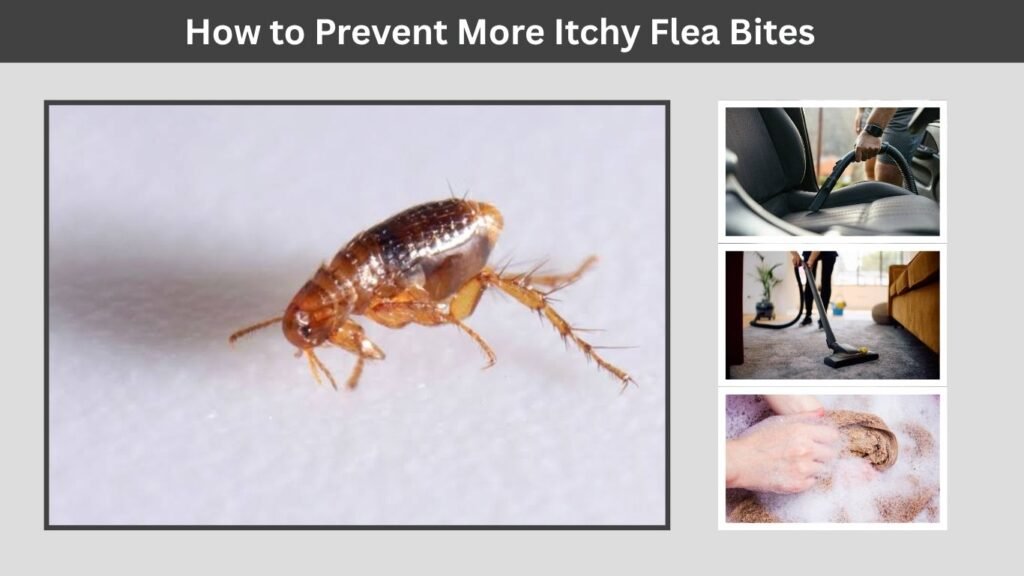
Treating existing bites provides temporary relief, but new bites will continue if fleas remain in the environment. Flea control can take time because eggs, larvae, pupae, and adults may all be present. The CDC recommends combining sanitation, treatment of pets, household control when necessary, and follow-up measures to interrupt the flea life cycle.
Steps to Stop New Flea Bites
- Check cats and dogs regularly for fleas.
- Ask a veterinarian about appropriate flea prevention.
- Treat all affected pets as recommended.
- Wash pet bedding and household bedding.
- Vacuum carpets and rugs thoroughly.
- Vacuum sofas and upholstered furniture.
- Clean areas where pets commonly sleep.
- Empty vacuum contents appropriately after cleaning.
- Continue follow-up flea control rather than stopping after one treatment.
- Cover the feet and lower legs when exposure is likely.
The CDC notes that keeping pets free of fleas is one of the most important ways to prevent flea bites in people.
When Should You Worry About Itchy Flea Bites?
Most flea bites are irritating rather than dangerous. Problems can develop when scratching damages the skin or when someone experiences an unusually strong reaction. Monitor bites that become more painful, swollen, warm, or inflamed instead of gradually improving. Some flea species can also transmit infections, although ordinary flea bites generally resolve without serious complications.
Signs a Bite May Be Infected
- Increasing pain or tenderness
- Increasing warmth around the bite
- Expanding swelling
- Pus or fluid
- Broken or open skin
- Worsening discoloration
- Fever or feeling unwell
- Symptoms that continue getting worse
The NHS recommends medical assessment when an insect bite becomes hot, painful, swollen, or begins producing pus or fluid.
When Is It an Emergency?
Seek urgent medical attention if an insect bite is followed by serious symptoms such as difficulty breathing or significant swelling of the mouth, tongue, or throat.
Severe allergic reactions are uncommon, but they should not be treated as ordinary flea-bite itching.
FAQs
1. Do flea bites itch immediately on humans?
They can begin itching relatively quickly, but reactions vary. Some people develop noticeable itching and swelling sooner than others depending on their sensitivity to flea saliva.
2. How long do flea bites itch for on humans?
Mild bites commonly improve within several days. Strong reactions, scratching, or repeated new bites may cause symptoms to persist longer.
3. What is the best way to stop flea bite itching?
Gently wash the skin, use a cold compress, and avoid scratching. Antihistamines or hydrocortisone may also help when appropriate.
4. Why do flea bites itch more after scratching?
Scratching physically damages already inflamed skin and can intensify irritation. It also creates openings through which bacteria can enter, increasing the risk of infection.
5. Why do my flea bites keep itching and new ones appear?
New bumps may indicate continued flea exposure rather than one set of bites failing to heal. Pets, carpets, bedding, and upholstered furniture may need coordinated flea control to stop repeated biting.
