
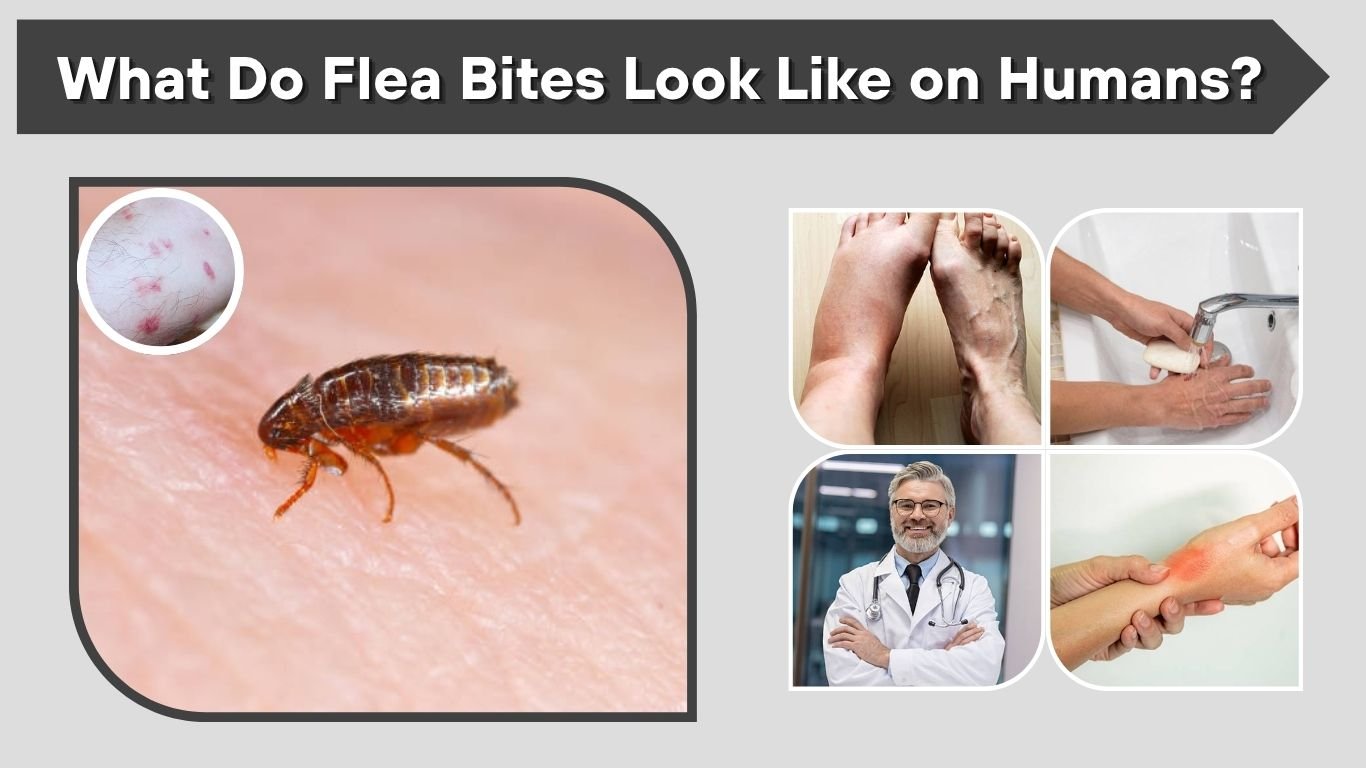
Flea bites on humans usually look like small, itchy, raised bumps that may appear in clusters or short lines. They commonly develop around the ankles, feet, and lower legs because fleas often jump from floors, carpets, pets, or bedding onto exposed skin. The color of the bites varies with skin tone, ranging from pink or red to purple or darker brown. This guide explains what flea bites look like on humans, where they appear, how cat and dog flea bites compare, and when bites may need medical attention.
What Do Flea Bites Look Like on Humans?
Flea bites are generally much smaller than the swollen welts produced by some mosquitoes. A bite develops when a flea pierces the skin and feeds on blood. The body’s reaction to flea saliva creates the itching, discoloration, and mild swelling. Several bites are often found together because a flea may bite repeatedly while searching for a suitable feeding location.
Common Appearance of Flea Bites
- Small, raised bumps on the skin
- Strong itching or irritation
- Red, pink, purple, or darker discoloration
- A small halo around the bite
- Several bites grouped together
- Bites appearing in a short line
- Mild swelling around individual marks
- Sometimes a tiny central bite point
Flea bites generally remain relatively small. A person’s immune response, previous exposure, scratching, and skin sensitivity can influence how noticeable the bumps become.
Do Flea Bites Look Like Pimples?
They sometimes do. A small flea bite can resemble a tiny pimple because both may produce a raised bump with surrounding discoloration.
However, flea bites usually itch significantly and frequently occur in groups. Pimples are more likely to involve clogged pores and may develop whiteheads or other acne-related changes. Appearance alone cannot always distinguish them.
Where Do Flea Bites Usually Appear?
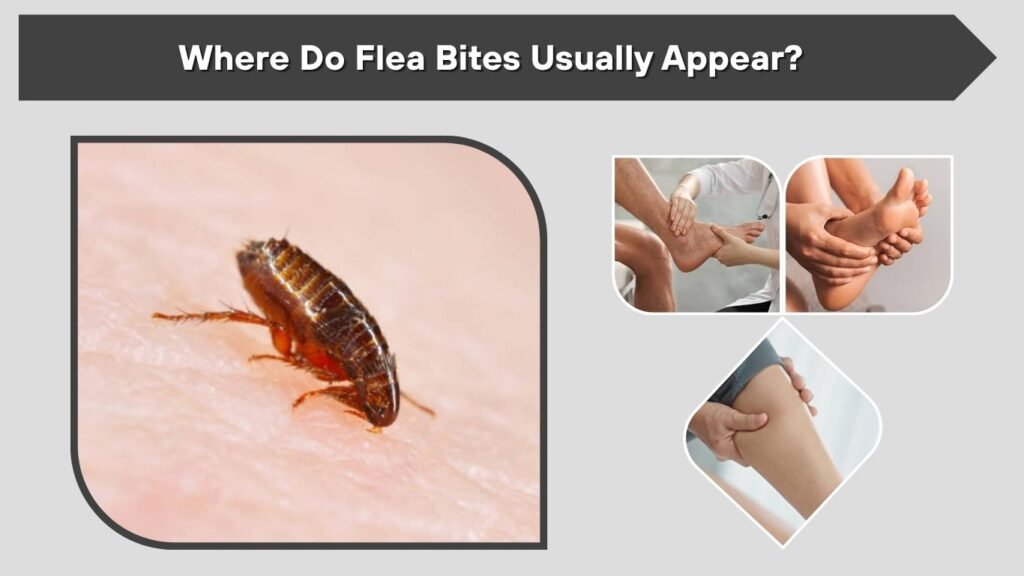
Body location can provide an important clue when trying to identify flea bites. Fleas commonly live in carpeting, bedding, floor cracks, furniture, and areas used by pets. Because they jump upward from relatively low surfaces, bites frequently concentrate around the feet and lower legs. Higher areas can still be affected depending on exposure.
Common Flea Bite Locations
- Ankles
- Feet
- Lower legs
- Calves
- Around sock lines
- Behind or around the knees
- Thighs in some situations
- Other exposed skin after contact with infested furniture or bedding
The NHS notes that flea bites are commonly found in groups below the knees. Cleveland Clinic similarly identifies the feet, ankles, and calves as particularly common locations.
What Do Flea Bites Look Like on the Legs?
On the legs, flea bites may resemble multiple tiny itchy bumps scattered around the ankles or calves. Some appear clustered together, while others form a loose line.
Repeated scratching can make them look larger and more inflamed than the original bites. This may also create scabs or broken skin that make identification more difficult.
What Do Flea Bites Look Like on Different Skin Tones?
Descriptions that simply call flea bites “red” do not reflect how inflammation appears on everyone. The basic physical reaction—raised, itchy bumps—can occur on any skin tone, but coloration varies. On darker skin, redness may be subtle or difficult to see, making changes in texture, swelling, itching, and differences from the surrounding skin more useful clues.
Flea Bites on Light Skin
On lighter skin, flea bites often appear pink to red. A slightly darker or discolored halo may surround the center of a bite.
Scratching can make the affected area brighter red, larger, or crusted. Several closely grouped bites can create a patch that looks more extensive than the individual bites themselves.
Flea Bites on Black or Brown Skin
On Black or brown skin, flea bites may appear reddish-brown, purple, deep brown, or simply darker than the surrounding area. Some bumps may show little obvious color difference but remain easy to feel.
The NHS notes that redness from insect bites can be harder to see on black or brown skin even when swelling is noticeable.
Cat and Dog Flea Bites on Humans
Cat fleas and dog fleas can both bite people. In fact, the cat flea is one of the flea species commonly associated with human exposure. Fleas generally prefer furry animal hosts because fur provides better shelter, but they can readily feed on humans when they encounter exposed skin. The appearance of a bite does not reliably reveal whether it came from a cat or dog flea.
What Do Cat Flea Bites Look Like?
Cat flea bites typically produce the same small, itchy bumps associated with other common flea bites. People may develop them around the ankles and legs after spending time near an infested cat, pet bedding, furniture, or carpet.
Finding fleas or flea dirt on a pet alongside fresh bites on household members makes flea exposure more likely.
What Do Dog Flea Bites Look Like?
Dog flea bites also appear as small itchy bumps and cannot normally be distinguished visually from cat flea bites.
The important issue is finding and controlling the source. Treating only human bites while fleas continue reproducing on pets and in the household environment can result in repeated exposure.
Flea Bites vs. Mosquito, Bed Bug, and Tick Bites
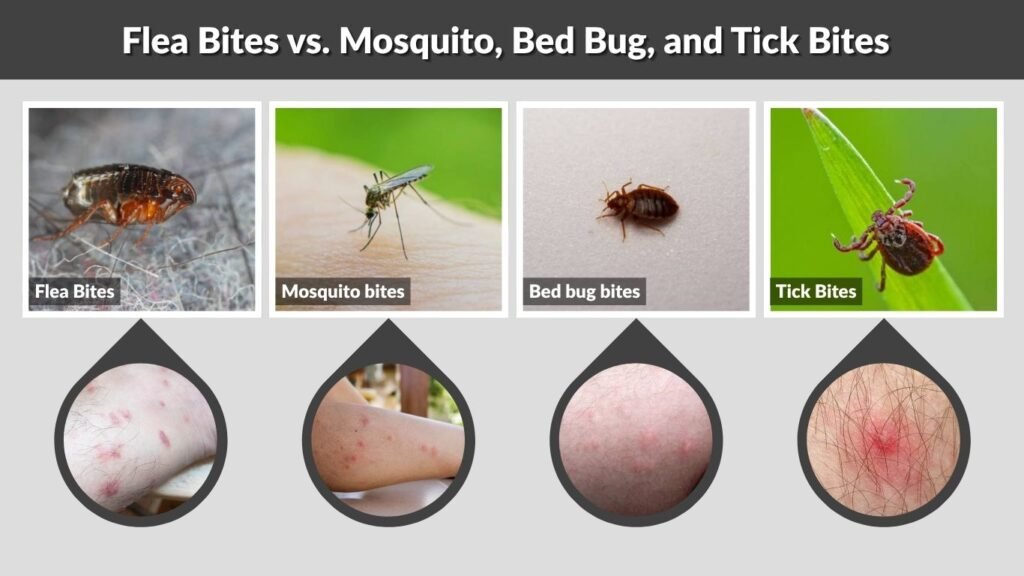
Many insect bites look similar, so a single skin mark rarely provides definite identification. Location, pattern, exposure history, and evidence of the pest are more useful when considered together. Flea bites tend to remain small and frequently affect the lower legs, whereas other biting insects can produce different patterns or occur on other exposed body areas.
Key Differences
- Flea bites: Small, very itchy bumps, often clustered around ankles and lower legs.
- Mosquito bites: Usually larger, puffy, itchy bumps that can occur on any exposed skin.
- Bed bug bites: May occur in clusters or lines, often on exposed skin after sleeping.
- Tick bites: A tick may remain attached to the skin; some tick-related infections can later cause distinctive rashes.
- Flea exposure: Often associated with pets, carpeting, bedding, or infested indoor environments.
These differences are clues rather than definitive tests. Several skin conditions can also resemble insect bites.
Flea Bites vs. Mosquito Bites
Mosquito bites commonly swell into larger raised welts. Flea bites tend to be smaller and are especially common around the lower legs and ankles.
Both can itch intensely, however, so size alone is not enough to determine the cause.
What Do Infected Flea Bites Look Like?
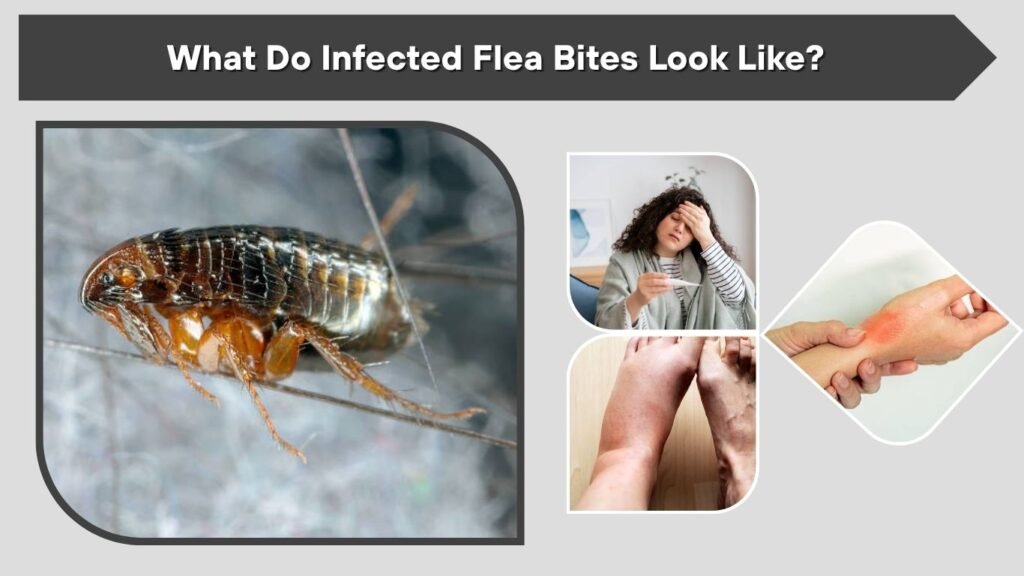
Most flea bites improve without complications, but persistent scratching can break the skin and allow bacteria to enter. A bite that becomes progressively more painful or inflamed rather than gradually improving deserves attention. Fleas can also transmit certain infections in some geographic settings, although ordinary flea bites generally cause only temporary irritation.
Possible Signs of Infection
- Increasing redness or discoloration
- Growing swelling
- Increasing warmth around the bite
- Pain or tenderness
- Pus or other drainage
- Open or crusted sores
- Fever or feeling unwell
- Redness or swelling that continues spreading
Seek medical advice if you develop symptoms suggesting infection, a significant allergic reaction, fever, or other systemic illness after suspected flea exposure. Difficulty breathing or significant swelling requires urgent medical attention.
Why Scratching Makes Bites Worse
Scratching may temporarily relieve itching, but it can damage the skin and prolong irritation. Broken skin also increases the risk of bacterial infection.
Keeping fingernails short and using measures that reduce itching can make it easier to avoid repeated scratching while the bites heal.
How Long Do Flea Bites Last?
Uncomplicated flea bites commonly improve within several days, although the exact healing time differs among people. Someone with a stronger allergic response or heavily scratched bites may have visible marks for longer. Continued appearance of fresh bumps may indicate ongoing exposure to fleas rather than unusually slow healing of the original bites.
How Flea Bites Change as They Heal
At first, a bite may be raised and intensely itchy. Over time, the swelling generally decreases and the bump becomes flatter.
Temporary discoloration or a small scab may remain, particularly if the skin was scratched. Continued worsening rather than gradual improvement could indicate infection or another skin condition.
How to Treat Flea Bites on Humans
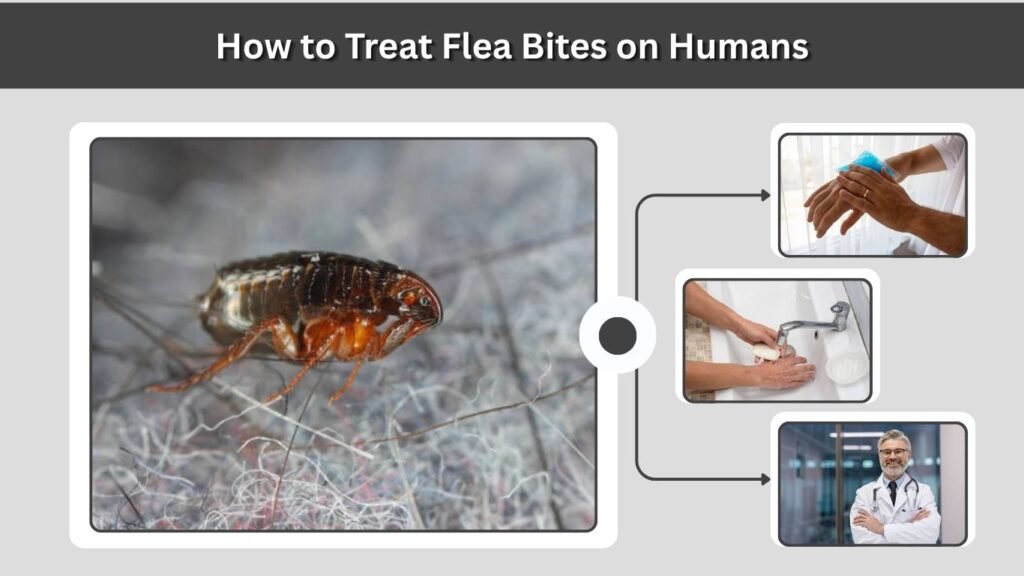
Most uncomplicated flea bites require only symptom relief. Washing the skin helps keep scratched areas clean, while cold compresses can reduce discomfort and swelling. The larger problem is preventing repeated exposure, which may require treating pets and the household environment rather than concentrating only on the skin symptoms.
Relieving Itching
Wash affected skin gently with soap and water and avoid scratching. A cool compress can help reduce itching and swelling.
Depending on your circumstances, a pharmacist or healthcare professional may suggest an antihistamine or hydrocortisone treatment. Follow medication instructions and seek medical advice if symptoms are severe or persistent.
Stop New Flea Bites
If you have pets, inspect them for fleas and obtain appropriate veterinary treatment when needed. Household flea control may also involve cleaning pet bedding, vacuuming carpets and furniture, and addressing areas where fleas or their immature stages are developing.
Without controlling the infestation, new bites may continue even while older bites heal.
FAQs
1. What do flea bites look like when they first appear?
They usually begin as small, itchy, raised bumps. Several may appear close together or in a short line, particularly around the feet, ankles, and lower legs.
2. What do flea bites look like on humans’ legs?
They commonly appear as multiple small itchy bumps around the ankles, calves, or lower legs. They may be scattered, clustered, or arranged loosely in a line.
3. Can flea bites look like mosquito bites?
Yes. Both can cause itchy raised bumps. Flea bites tend to be smaller and occur more often around the lower legs, while mosquito bites frequently produce larger puffy welts.
4. What do infected flea bites look like?
An infected bite may become increasingly warm, painful, swollen, or discolored and may produce pus. Fever or spreading inflammation should prompt medical evaluation.
5. Do cat and dog flea bites look different on humans?
Usually not. Cat and dog flea bites can produce very similar small, itchy bumps, so their appearance generally cannot identify which flea species caused them.
