
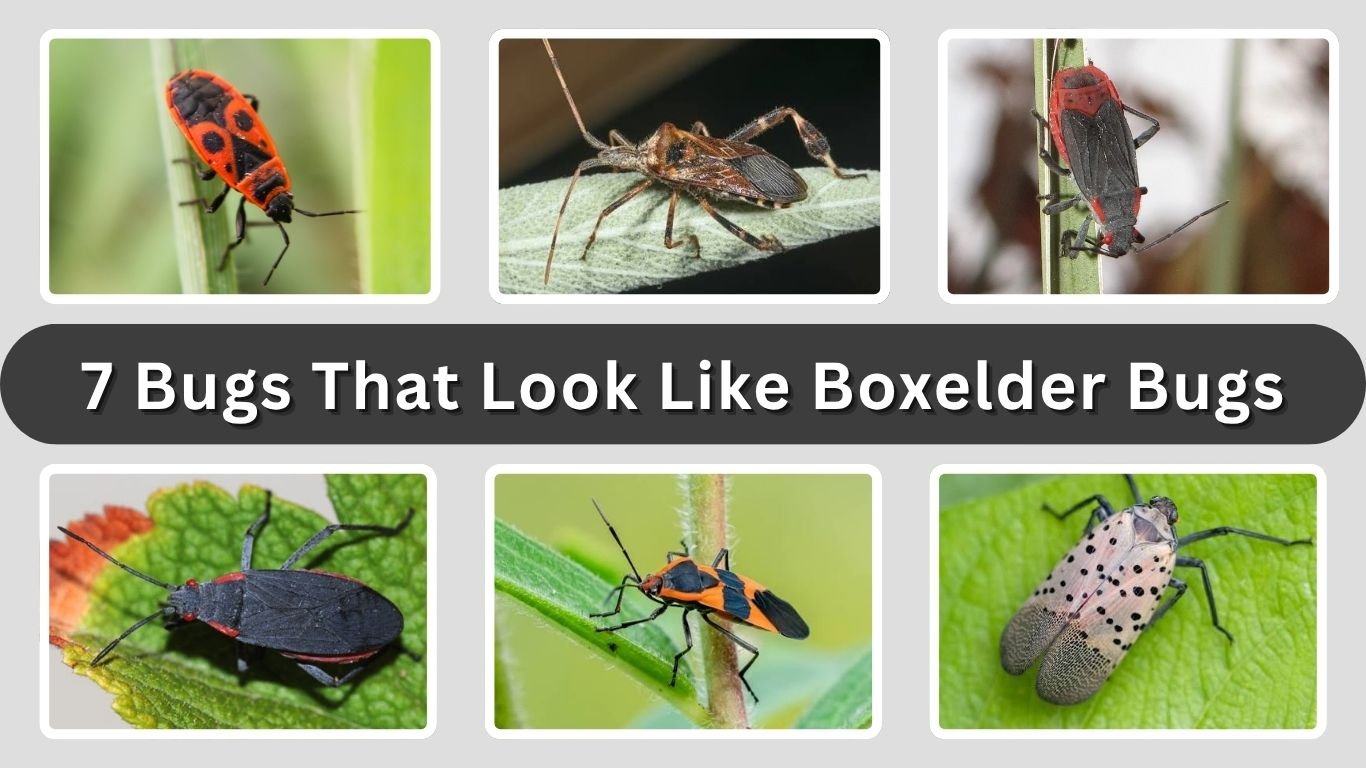
Boxelder bugs are easy to recognize by their black bodies and bright red markings, but several other insects share a similar appearance. Milkweed bugs, red-shouldered bugs, stink bugs, kissing bugs, firebugs, western conifer seed bugs, and spotted lanternflies may all cause confusion at first glance. Some are harmless garden visitors, while others can damage plants or require careful identification. Understanding differences in body shape, color patterns, size, habitat, and feeding behavior can help you identify each species correctly. This guide explains seven bugs that resemble boxelder bugs and shows the key features that separate one insect from another more easily.
1. Milkweed Bug
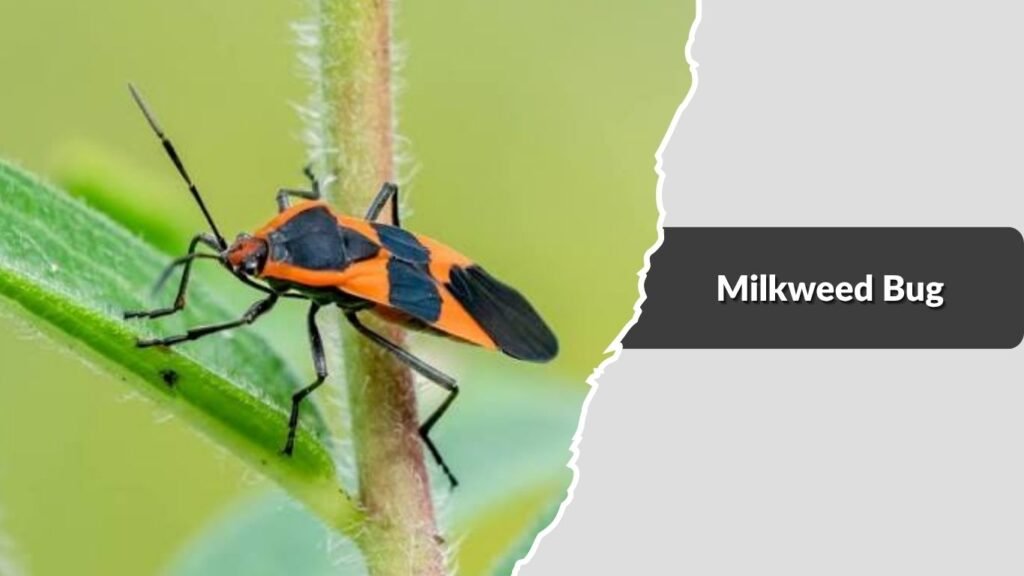
Milkweed bugs are commonly mistaken for boxelder bugs because both have black bodies marked with bright red or orange patterns. They often gather in groups on plants and warm surfaces, making the resemblance even stronger. However, milkweed bugs mainly live around milkweed plants and have different wing markings, feeding habits, and body shapes.
Identification
- Adults usually measure about ½ to ¾ inch long.
- The body is black with bold red or orange markings.
- Their wings form a dark, diamond-shaped pattern across the back.
- They have long black legs and antennae.
- Young nymphs are bright orange-red with black legs and developing wing pads.
- Milkweed bugs are commonly found clustered on milkweed seedpods.
Why They Look Like Boxelder Bugs
Both insects belong to the true bug group and have elongated bodies with red-and-black coloring. Their wings overlap across the back, and both species may appear in large groups. Milkweed bugs are often slightly larger and display broader orange-red areas, while boxelder bugs are mostly black with thin red lines along their wings and thorax.
Habitat and Diet
Milkweed bugs live in fields, gardens, roadsides, and other places where milkweed plants grow. They use piercing mouthparts to drink fluids from milkweed seeds. They may also feed on nectar or seeds from related plants when milkweed is unavailable. Unlike boxelder bugs, they are closely tied to milkweed rather than boxelder or maple trees.
Are Milkweed Bugs Harmful?
Milkweed bugs are harmless to people and pets. They do not bite, sting, spread disease, or damage buildings. Large populations may reduce the number of viable milkweed seeds, but they rarely kill healthy plants. In most gardens, they can be left alone unless they become unusually numerous.
2. Red-Shouldered Bug
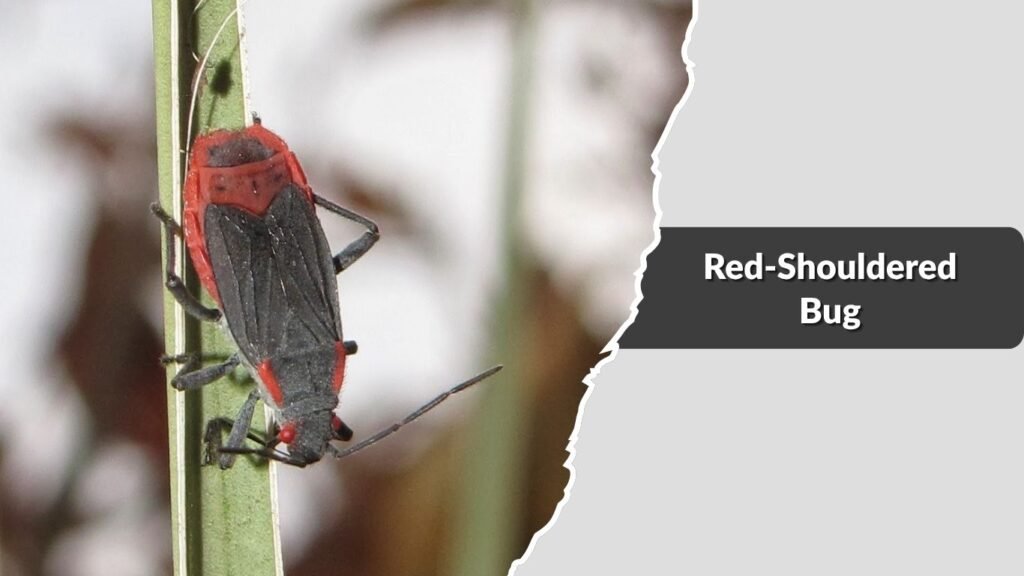
The red-shouldered bug is one of the insects most commonly confused with a boxelder bug. Both species have dark bodies with red markings, gather in large groups, and may appear around houses during seasonal changes. However, red-shouldered bugs usually live near soapberry-family plants and have noticeable red coloring along the sides of the body.
Identification
- Adults are approximately ⅜ to ½ inch long.
- The body is dark gray, brownish-black, or black.
- Red or orange lines appear along the shoulders and outer edges.
- The eyes are often reddish.
- The wings form an overlapping pattern across the back.
- Young nymphs have bright-red abdomens with darker heads and wing pads.
- Adults have six legs and long, segmented antennae.
Why They Look Like Boxelder Bugs
Red-shouldered bugs and boxelder bugs share a narrow body shape and similar black-and-red coloring. Their nymphs are also bright red and may gather in large clusters. Boxelder bugs are usually darker with thin red lines across their wings, while red-shouldered bugs often have more visible red coloring along their sides and shoulders.
Habitat and Diet
Red-shouldered bugs commonly live around goldenrain trees, soapberry trees, balloon vines, and other plants in the soapberry family. They feed mainly on fallen and developing seeds by piercing them and drinking the liquid inside. Large groups may gather beneath host trees, along sidewalks, or on sunny exterior walls.
Are Red-Shouldered Bugs Harmful?
Red-shouldered bugs are not considered dangerous to people or pets. They do not normally bite, sting, spread disease, or damage buildings. Although large numbers can become annoying around homes, their feeding rarely causes serious injury to healthy trees. Vacuuming indoor bugs and sealing exterior cracks are usually sufficient for control.
3. Stink Bug
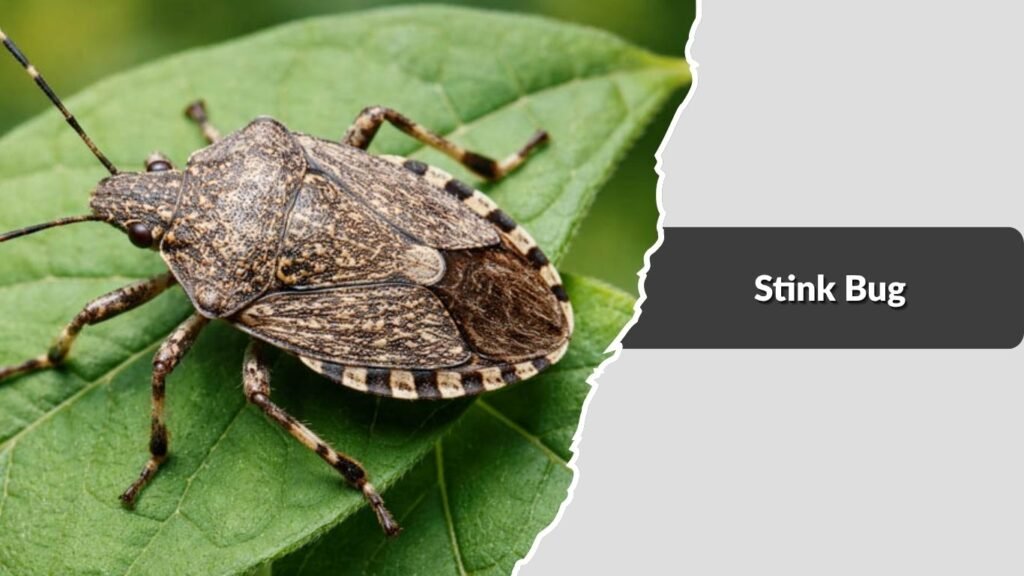
Stink bugs are sometimes mistaken for boxelder bugs because both are true bugs that may gather on houses and enter buildings during cooler weather. However, stink bugs usually have wider, shield-shaped bodies and muted brown, green, or gray coloring. Their defensive odor is another important feature that separates them from boxelder bugs.
Identification
- Adults usually measure about ½ to ¾ inch long.
- The body is broad and shield-shaped.
- Common colors include brown, gray, green, and mottled tan.
- Many species have alternating light and dark bands along the abdomen.
- The antennae may have pale bands.
- They have six legs and overlapping wings.
- Stink bugs release a strong odor when disturbed or crushed.
Why They Look Like Boxelder Bugs
Both insects have flattened bodies, long antennae, and overlapping wings that form a pattern across the back. They may also gather on sunny walls and enter homes in autumn. Boxelder bugs are slimmer and mostly black with red lines, while stink bugs are broader and usually lack bright red markings.
Habitat and Diet
Stink bugs live in gardens, orchards, farms, woodlands, and residential yards. Many species feed on plant juices from fruits, vegetables, leaves, seeds, and stems. Some predatory stink bugs eat caterpillars and other insects. During fall, adults may seek shelter inside wall gaps, attics, garages, and window frames.
Are Stink Bugs Harmful?
Stink bugs do not normally bite people, damage furniture, or reproduce indoors. However, plant-feeding species can harm crops and garden plants by leaving puncture marks, scars, or distorted fruit. Indoors, they are mainly nuisance pests because of their smell and tendency to appear in large numbers.
4. Kissing Bug
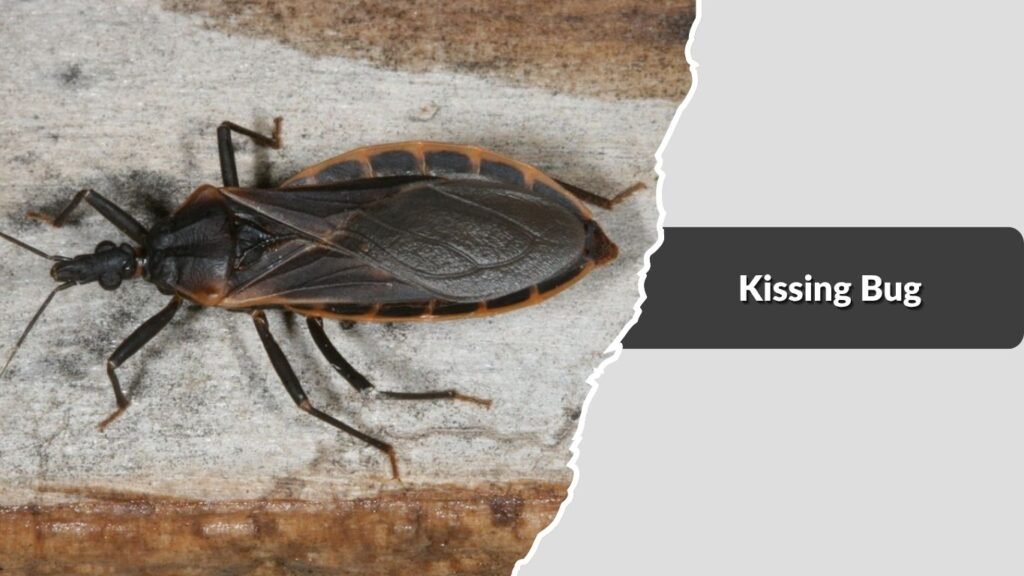
Kissing bugs can be confused with boxelder bugs because both have elongated bodies, dark coloring, and reddish markings along their sides. However, kissing bugs are generally larger, have a narrow cone-shaped head, and feed on the blood of animals. Correct identification is important because some species can carry the parasite associated with Chagas disease.
Identification
- Adults usually measure about ¾ to 1¼ inches long.
- The body is dark brown or black and relatively flat.
- Red, orange, or yellow markings appear along the edges of the abdomen.
- The head is narrow, elongated, and cone-shaped.
- A prominent piercing mouthpart is folded beneath the head.
- They have six slender legs and long antennae.
- Their wings lie flat across the back when resting.
Why They Look Like Boxelder Bugs
Both insects have dark bodies with reddish or orange markings and overlapping wings. Their long legs and antennae can also appear similar from a distance. Boxelder bugs are smaller and have thin red lines across the wings, while kissing bugs have broader abdominal markings and a noticeably longer, narrower head.
Habitat and Diet
Kissing bugs are commonly found in warm regions, especially around rodent nests, animal shelters, woodpiles, rock piles, and outdoor buildings. They hide during the day and become active at night. Unlike plant-feeding boxelder bugs, kissing bugs consume blood from mammals, birds, reptiles, and occasionally humans.
Are Kissing Bugs Harmful?
Kissing bugs can bite people and animals, although many bites cause only mild redness or irritation. Some may produce allergic reactions. Certain species can carry Trypanosoma cruzi, the parasite that causes Chagas disease. Avoid handling a suspected kissing bug with bare hands; capture it safely in a sealed container for professional identification.
5. Firebug
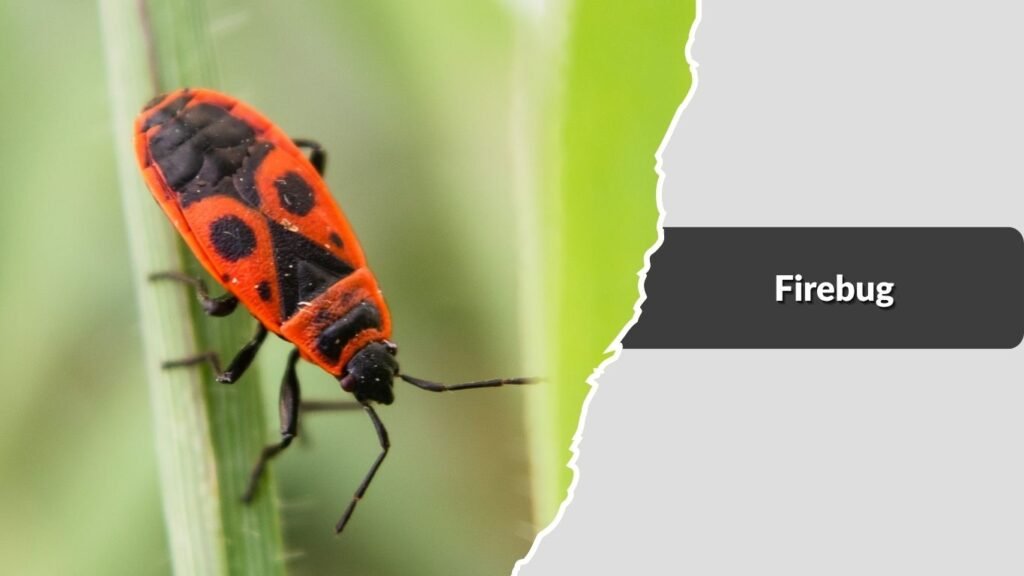
Firebugs are often confused with boxelder bugs because both insects have striking red-and-black bodies and may gather in large groups. Firebugs are especially common in parts of Europe, Asia, and North Africa. Unlike boxelder bugs, they usually have broader red markings and distinctive black spots on their wings.
Identification
- Adults typically measure about ⅜ to ½ inch long.
- The body is bright red or orange-red with bold black markings.
- Two large black spots usually appear on the wings.
- A black triangular marking is visible near the center of the back.
- The head, legs, and antennae are black.
- The body is oval, flattened, and slightly wider than a boxelder bug.
- Young nymphs are mostly red with smaller black markings.
Why They Look Like Boxelder Bugs
Both firebugs and boxelder bugs are true bugs with red-and-black coloring, long antennae, and overlapping wings. They may also form large clusters on tree trunks, walls, and sunny ground. Firebugs have broader red areas and round black wing spots, while boxelder bugs are mostly black with narrow red lines.
Habitat and Diet
Firebugs commonly live around linden trees, hibiscus, hollyhocks, and other plants in the mallow family. They feed mainly on fallen seeds by piercing them and sucking out the contents. They may also consume plant debris, dead insects, and occasionally other small invertebrates.
Are Firebugs Harmful?
Firebugs are generally harmless to people, pets, and buildings. They do not sting, spread disease, or cause structural damage. Large groups may look alarming, but they rarely seriously damage healthy plants. Sweeping them away or reducing fallen seeds is usually enough when control is necessary.
6. Western Conifer Seed Bug
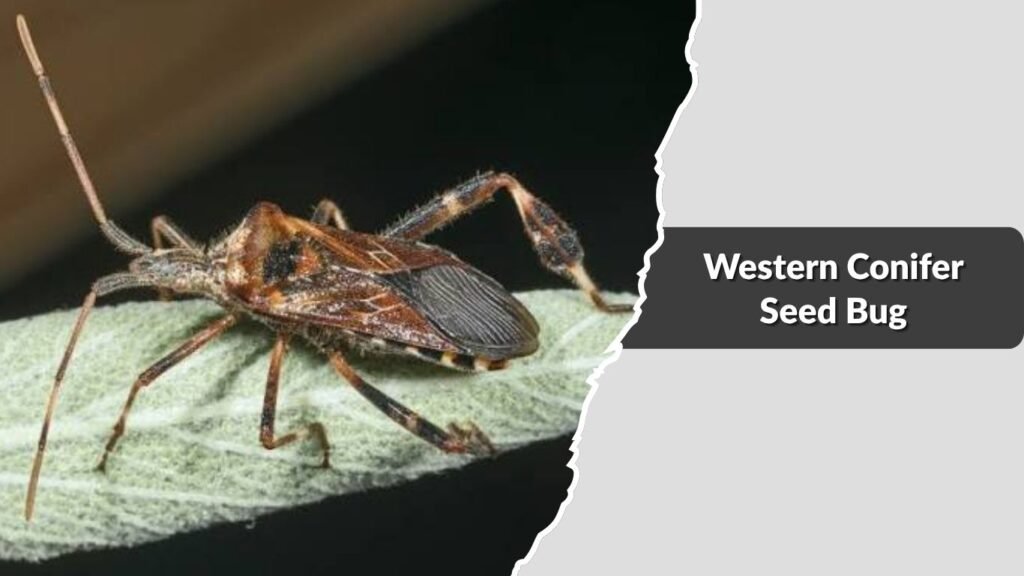
The western conifer seed bug may be mistaken for a boxelder bug because both are elongated true bugs that often gather on exterior walls and enter homes during fall. However, this species is usually brown rather than black and red, and its widened hind legs make it easier to identify at close range.
Identification
- Adults typically measure about ¾ inch long.
- The body is elongated and reddish-brown to dark brown.
- A pale white zigzag line often crosses the center of the wings.
- The hind legs have flattened, leaf-like expansions.
- The antennae are long and divided into several segments.
- The sides of the abdomen may show alternating light and dark patches.
- When disturbed, the insect may release a strong pine-like odor.
Why They Look Like Boxelder Bugs
Both insects have narrow bodies, long antennae, overlapping wings, and a habit of entering buildings before winter. They may also gather around sunny windows, doors, and siding. Boxelder bugs are mostly black with red lines, while western conifer seed bugs are larger, brown, and have distinctive widened hind legs.
Habitat and Diet
Western conifer seed bugs live around pine, fir, spruce, hemlock, and other cone-producing trees. They use piercing mouthparts to feed on developing seeds inside cones. During late summer and fall, adults may fly toward warm buildings and enter through gaps around windows, vents, rooflines, and doors.
Are Western Conifer Seed Bugs Harmful?
Western conifer seed bugs are not dangerous to people or pets. They do not normally bite, reproduce indoors, or damage furniture and structural wood. Their main problem is their unpleasant odor and tendency to appear inside homes. Vacuuming visible insects and sealing exterior openings usually provides effective control.
7. Spotted Lanternfly
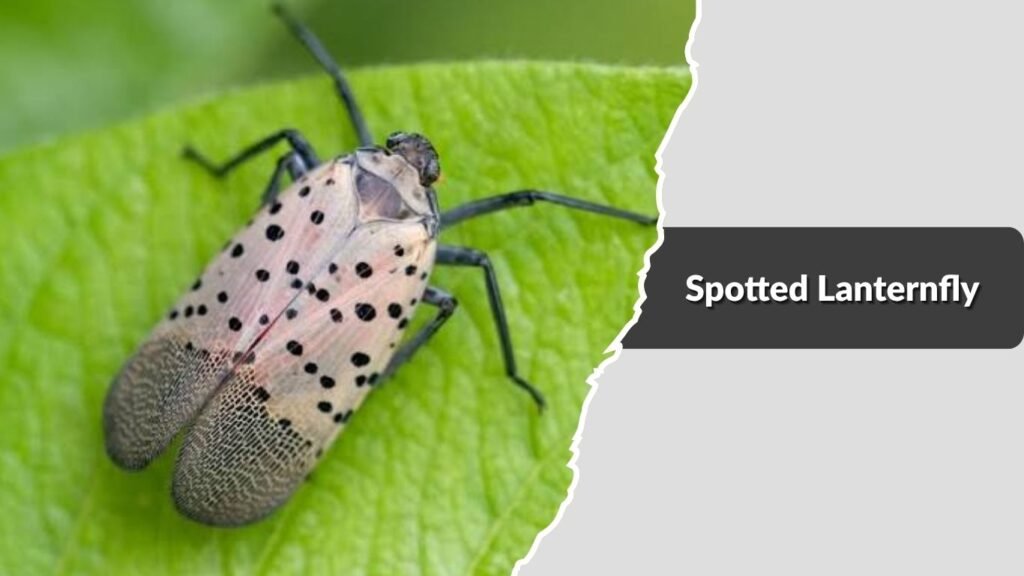
The spotted lanternfly can sometimes be confused with a boxelder bug because both insects have dark wings, reddish coloring, and a habit of gathering on trees, walls, and outdoor surfaces. However, spotted lanternflies are larger, more colorful, and have distinctive spotted wings that clearly separate them from boxelder bugs.
Identification
- Adults are approximately 1 inch long and about ½ inch wide.
- The front wings are gray with numerous black spots.
- The hind wings have bright red, black, and white sections.
- The abdomen is yellow with black horizontal bands.
- Young nymphs are black with white spots.
- Older nymphs are red with black and white markings.
- Adults often hold their wings roof-like over the body while resting.
Why They Look Like Boxelder Bugs
Both insects may display red-and-black coloring and gather in large numbers on tree trunks, siding, fences, and patios. Their nymphs can also appear red and black. Boxelder bugs are smaller and mostly black with thin red lines, while spotted lanternflies have broad gray wings covered with black spots.
Habitat and Diet
Spotted lanternflies feed on the sap of many trees, vines, and crops. Tree-of-heaven is their preferred host, but they may also feed on grapevines, maples, walnuts, fruit trees, and ornamental plants. Large groups can weaken plants and leave sticky honeydew on surfaces below them.
Are Spotted Lanternflies Harmful?
Spotted lanternflies do not bite or sting people, but they can seriously damage vineyards, orchards, and certain trees. Their honeydew encourages black sooty mold and attracts wasps. In areas where they are invasive, suspected insects or egg masses should be photographed and reported to the appropriate local agricultural authority.
FAQs
What bug is most commonly mistaken for a boxelder bug?
The red-shouldered bug is one of the insects most often confused with a boxelder bug. Both have dark bodies, red markings, and a habit of gathering in groups. Red-shouldered bugs usually have more noticeable red coloring along the edges of their bodies.
How can you identify a boxelder bug?
Adult boxelder bugs are about ½ inch long and mostly black. They have thin red or orange lines behind the head, along the wings, and around the body. Their narrow shape and distinctive red wing markings help separate them from similar-looking insects.
Are bugs that look like boxelder bugs dangerous?
Most similar-looking bugs, including milkweed bugs, firebugs, red-shouldered bugs, and western conifer seed bugs, are harmless nuisance insects. Kissing bugs require more caution because some species can bite and carry the parasite associated with Chagas disease.
Do boxelder bugs and similar insects damage homes?
Boxelder bugs and most of their look-alikes do not eat wood, furniture, clothing, or stored food. They may enter buildings for shelter and leave stains or odors when crushed, but they do not normally cause structural damage or reproduce indoors.
Why do boxelder bugs and similar bugs gather in houses?
Many of these insects gather on sunny exterior walls during late summer and fall because the surfaces provide warmth. Some, including boxelder bugs, stink bugs, and western conifer seed bugs, may enter cracks around doors, windows, siding, and rooflines to survive winter.
