
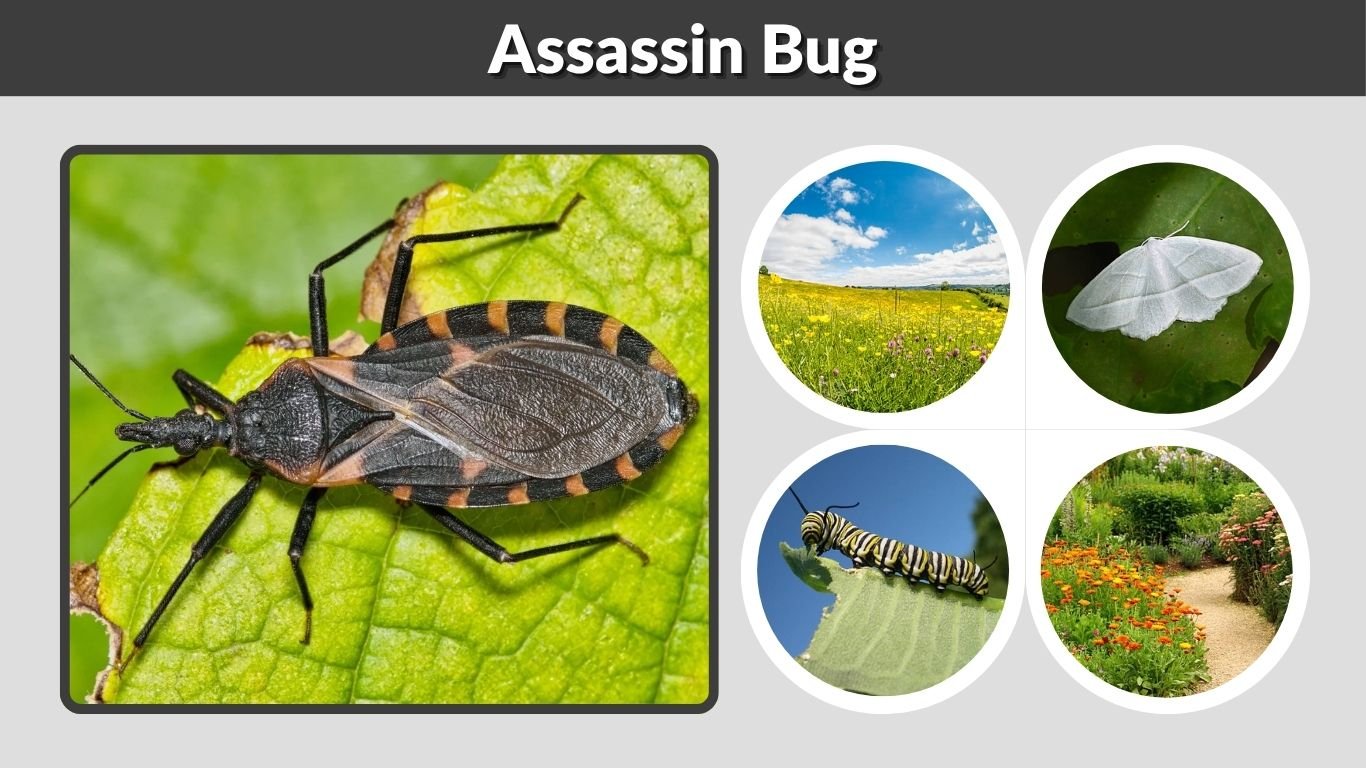
Assassin bugs are skilled predatory insects known for their powerful, curved mouthparts and patient hunting behavior. Most species help control caterpillars, flies, beetles, and other garden pests. However, their unusual appearance sometimes causes them to be confused with stink bugs, leaf-footed bugs, or kissing bugs. This guide explains the assassin bug’s size, color, habitat, diet, life cycle, bite risks, and the physical features you can use to identify one safely.
Assassin Bug Overview
Assassin bugs belong to the family Reduviidae, one of the largest families of true bugs. More than 7,000 species occur worldwide, with the greatest diversity found in tropical regions. Although most are insect predators, kissing bugs form a specialized group that feeds on vertebrate blood.
| Feature | Description |
| Scientific family | Reduviidae |
| Insect order | Hemiptera |
| Common size | 4–40 mm, depending on species |
| Common colors | Brown, black, gray, green, orange or red |
| Diet | Caterpillars, flies, beetles and other insects |
| Habitat | Gardens, forests, fields, shrubs and buildings |
| Activity | Often active at night or while waiting in vegetation |
| Human risk | Can deliver a painful defensive bite |
| Garden role | Mostly beneficial predator |
What Does an Assassin Bug Look Like?
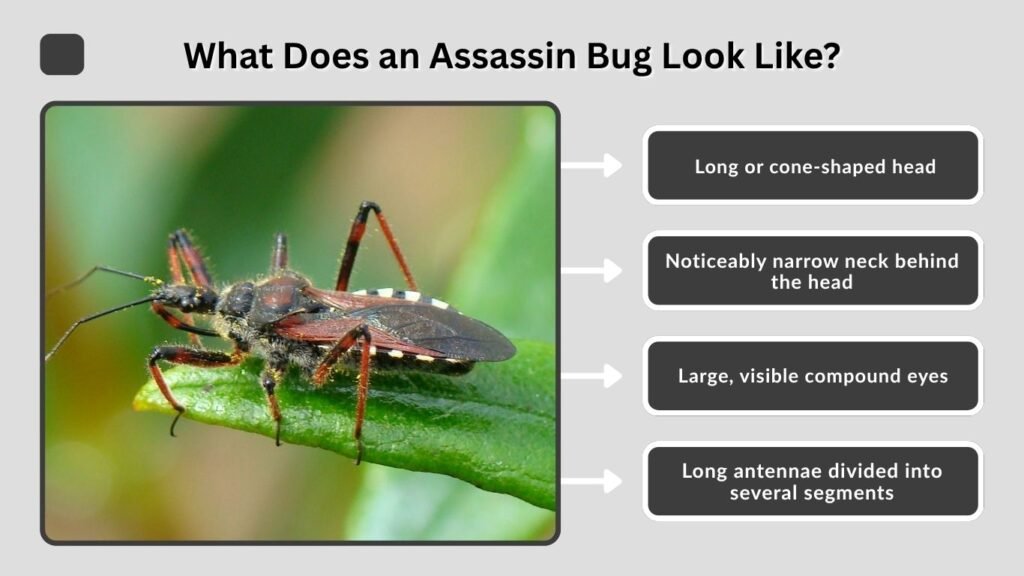
The appearance of an assassin bug varies considerably between species. Some are long, narrow and stick-like, while others are broad, heavily built or covered with spines. Despite that diversity, most share several recognizable features.
Assassin Bug Identification Features
Look for the following characteristics:
- Long or cone-shaped head
- Noticeably narrow neck behind the head
- Large, visible compound eyes
- Long antennae divided into several segments
- Curved, pointed beak folded beneath the body
- Six long legs, sometimes with thick or spiny front legs
- Abdomen that may extend beyond the folded wings
- Oval, elongated or angular body shape
The most dependable identifying feature is the short, three-segmented beak, or rostrum. It fits into a groove beneath the thorax when not being used. Assassin bugs use this strong mouthpart to pierce the hardened bodies of their prey.
Adult Assassin Bug
Adult assassin bugs have fully developed wings that usually lie flat or slightly raised over the abdomen. Their wings form the overlapping pattern typical of true bugs. Depending on the species, the sides of the abdomen may remain visible beyond the wings.
The wheel bug is one of the easiest adults to recognize. It has a raised, toothed structure on its thorax resembling part of a cogwheel. Adult wheel bugs can grow to approximately 38 mm, or 1.5 inches, long.
Assassin Bug Nymph
A nymph is an immature assassin bug. Nymphs resemble small adults but lack functional wings. Their bodies may be narrower, brighter and more delicate-looking than those of mature insects.
Young wheel bugs often have orange-red abdomens with black legs. Masked hunter nymphs collect dust, lint and debris on their sticky bodies, creating a camouflaged appearance that can make them look like moving clumps of dirt.
Assassin Bug Size
Adult assassin bugs generally measure approximately 4–40 mm, or about 0.16–1.6 inches, in length. Their exact size depends on the species, sex and stage of development.
Small thread-legged assassin bugs may look like extremely thin walking sticks. Medium-sized species commonly found on plants measure around 12–20 mm. Large species such as wheel bugs may exceed 30 mm and appear especially imposing because of their long legs and raised thoracic crest.
Nymphs begin much smaller and increase in size through several molts before becoming winged adults.
Assassin Bug Color
There is no single assassin bug color. Members of the family can be:
- Black
- Dark brown
- Gray
- Tan
- Green
- Yellowish brown
- Orange
- Bright red
- Black and red patterned
Brown and gray species blend into tree bark, dead leaves and dry vegetation. Green species are difficult to see among living leaves. Red, orange and black markings may make certain nymphs and adults more noticeable.
Color should not be used alone for identification. Body shape, head length, legs and mouthparts are much more reliable because unrelated bugs can have similar patterns.
Where Do Assassin Bugs Live?
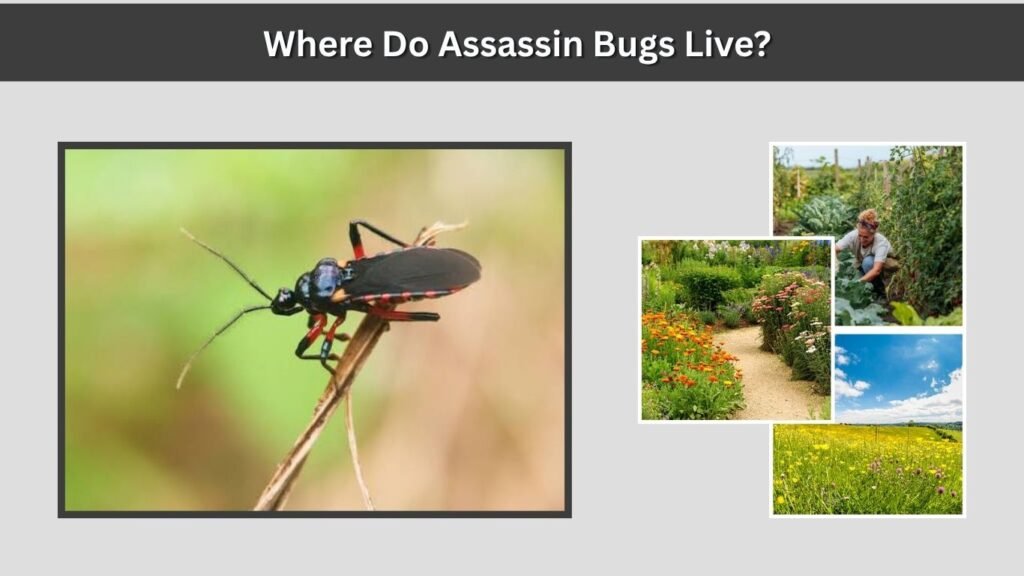
Assassin bugs have a worldwide distribution and occupy many terrestrial environments. They are especially diverse in warm tropical and subtropical regions, although numerous species also live in temperate climates.
Natural Habitat
Assassin bugs may be found in:
- Flower gardens
- Vegetable gardens
- Grasslands and meadows
- Forests and woodland edges
- Shrubs and hedges
- Tree bark and leaf litter
- Agricultural fields
- Areas around outdoor lights
They usually remain close to places where prey is abundant. Flower-dwelling ambush bugs hide among petals and capture visiting bees, wasps and flies. Other species patrol leaves, branches or tree trunks in search of caterpillars and soft-bodied insects.
Assassin Bugs Inside the House
Most assassin bugs live outdoors and enter homes accidentally. Outdoor lights may attract flying adults at night. Cracks around windows, doors, siding and foundations can also provide entry points.
The masked hunter is one species regularly encountered indoors. It may prey on bed bugs and other household arthropods, but it should not be handled because it can bite defensively.
What Do Assassin Bugs Eat?
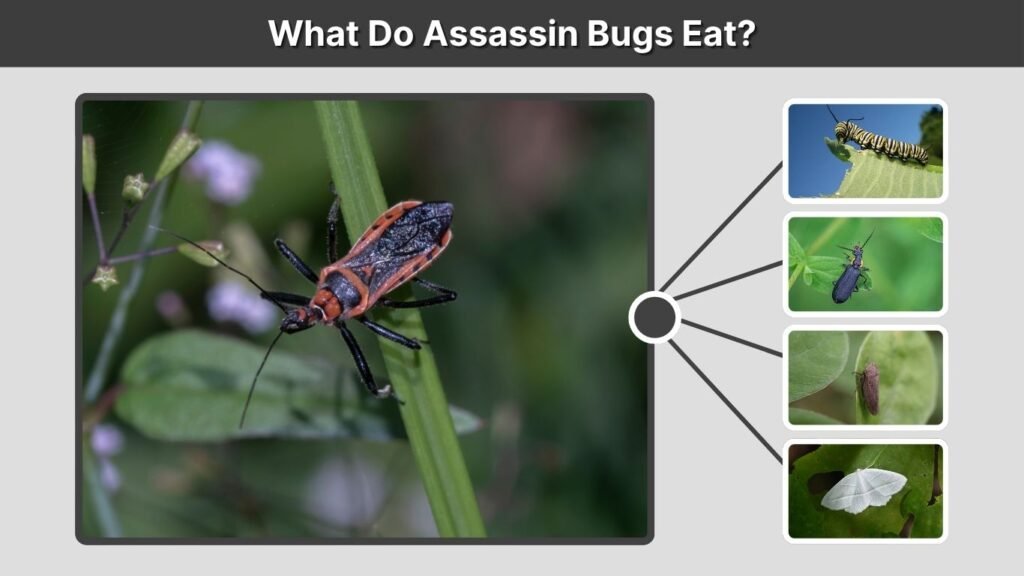
Most assassin bugs are predators that feed on other arthropods. Their common prey includes:
- Caterpillars
- Flies
- Beetles
- Aphids
- Leafhoppers
- Moths
- Bees and wasps
- Crickets
- Bed bugs
- Other true bugs
An assassin bug may stalk its victim slowly or remain motionless until the prey comes within reach. It then grasps the victim with its legs and inserts its beak. Digestive saliva helps immobilize and break down the prey’s internal tissues, which the bug consumes through its piercing mouthpart.
Because they consume many plant-feeding insects, most assassin bugs are considered beneficial garden predators. However, they are generalist hunters and may also catch pollinators or other helpful insects.
Assassin Bug vs. Similar Bugs
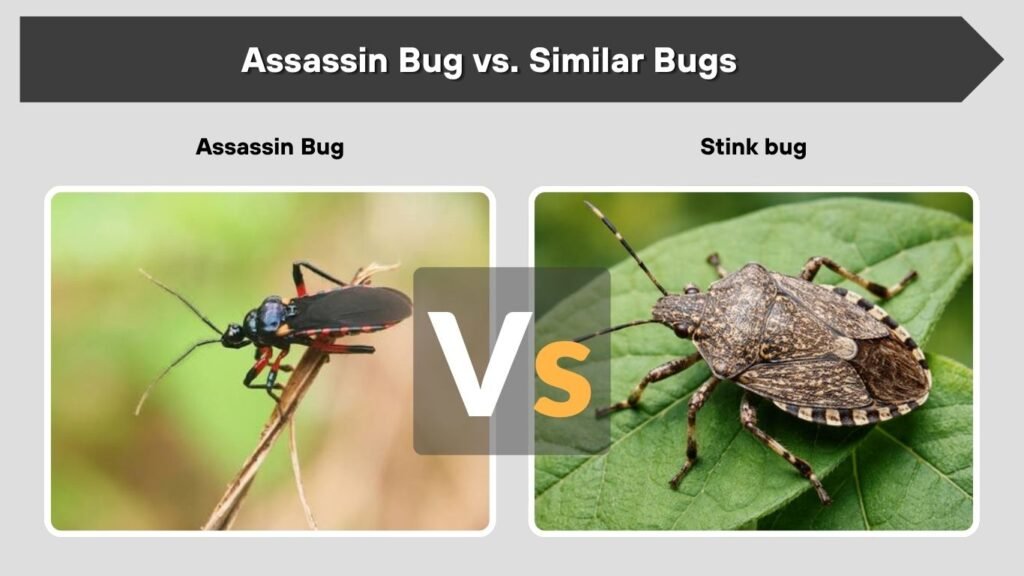
Several common insects are frequently mistaken for assassin bugs.
| Look-Alike | Main Difference |
| Stink bug | Broad, shield-shaped body and relatively small head |
| Leaf-footed bug | Flattened or widened sections on the hind legs |
| Squash bug | More uniformly oval body without a heavy curved beak |
| Kissing bug | A blood-feeding type of assassin bug with a long, flattened head |
| Wheel bug | An assassin bug identified by the cogwheel-like crest |
| Spotted lanternfly nymph | Rounder body and visible white spots |
Leaf-footed bugs often have widened, leaf-like hind legs. Assassin bugs normally lack this feature and may instead have stronger or slightly thickened front legs for seizing prey.
Is an Assassin Bug the Same as a Kissing Bug?
Every kissing bug is an assassin bug, but most assassin bugs are not kissing bugs.
Kissing bugs belong to the assassin bug subfamily Triatominae. Unlike the majority of assassin bugs, they feed on blood from mammals, birds or reptiles. They typically have elongated, flattened heads and dark bodies, sometimes with orange, red or yellow markings along the abdominal edges.
Some kissing bugs can carry the parasite responsible for Chagas disease. Transmission generally occurs when infected bug feces enter a bite wound, the eyes or the mouth—not simply through the act of biting.
Do Assassin Bugs Bite Humans?
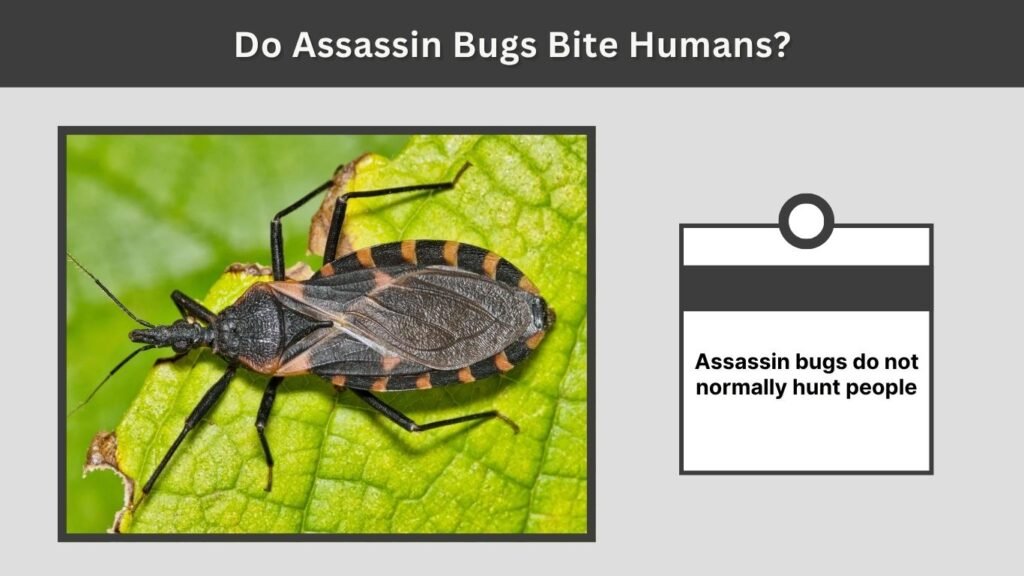
Assassin bugs do not normally hunt people, but many species can pierce human skin when trapped, squeezed or handled. The bite may cause immediate sharp pain, redness, swelling, itching or localized tenderness.
Wheel bugs and masked hunters are among the species known to deliver painful defensive bites. Most ordinary assassin bug bites improve without medical treatment, but the area should be washed with soap and water and protected from scratching.
Seek medical assistance when a bite causes breathing difficulty, facial swelling, widespread hives, severe pain, signs of infection or other unusual symptoms. Avoid picking up an unidentified assassin bug with bare hands.
Are Assassin Bugs Good or Bad?
Most assassin bugs are beneficial because they help reduce populations of caterpillars, flies, beetles and other garden pests. They do not chew leaves, bore into wood or form destructive household colonies.
Their main disadvantage is their painful defensive bite. The safest approach is to leave outdoor individuals undisturbed. A bug found indoors can be covered with a container, moved onto a stiff piece of paper and released outside without direct contact.
FAQs
Are assassin bugs poisonous?
Assassin bugs are not poisonous to touch or eat in the usual sense. However, they can inject saliva through their sharp beak while feeding or defending themselves. This can make a bite painful and may cause temporary redness, swelling or irritation.
Can assassin bugs fly?
Adult assassin bugs generally have wings and many species can fly. They may travel between plants while searching for prey or approach outdoor lights at night. Nymphs cannot fly because their wings are not fully developed.
Do assassin bugs kill plants?
Most assassin bugs do not feed on plants. They hunt insects and other arthropods living on vegetation. Their presence on a plant often means they are searching for prey rather than damaging leaves, flowers or fruit.
Should I kill assassin bugs in my garden?
It is usually unnecessary to kill them. Most species provide natural pest control and do not damage plants. Leave them alone and avoid handling them. Removal may be appropriate when one enters a home or appears in an area where accidental contact is likely.
What should I do after finding a possible kissing bug?
Do not crush or handle it with bare hands. Trap it carefully in a sealed container and photograph its back, head and abdominal edges. Contact a local health department, university extension service or qualified pest professional for identification, especially in areas where kissing bugs occur.
