
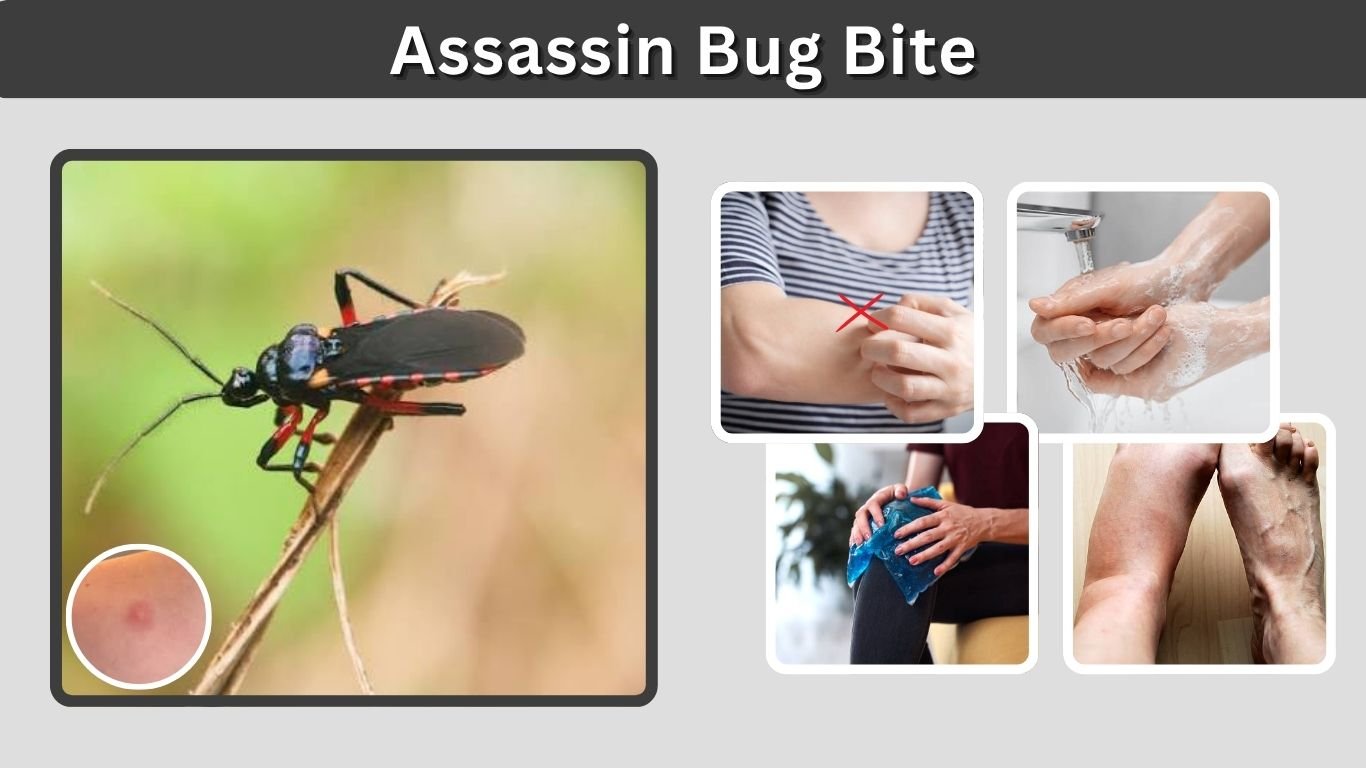
An assassin bug bite can cause sudden, intense pain followed by redness, swelling, burning or numbness. These insects do not sting; they pierce the skin with a strong, beak-like mouthpart. Most predatory assassin bugs bite only when trapped against the skin, disturbed or handled. Although the reaction is usually limited to the bite area, severe swelling, infection or an allergic reaction requires medical attention.
Do Assassin Bugs Bite Humans?
Assassin bugs are predators that normally use their curved mouthparts to capture insects. They do not generally seek humans as food. However, adults and immature nymphs can defend themselves by biting when picked up, squeezed inside clothing or accidentally pressed against the body.
Masked hunters, wheel bugs, pale green assassin bugs, milkweed assassin bugs and leafhopper assassin bugs can all potentially bite defensively. A masked hunter bite has been compared to a bee sting and may be followed by numbness and swelling. These bugs are not normally aggressive toward people.
Do Assassin Bugs Bite or Sting?
Assassin bugs bite rather than sting. They have no bee-like stinger. Instead, they use a short, sharp mouthpart called a rostrum or beak.
During a defensive bite, the beak pierces the skin and introduces saliva. This is why the bite may feel immediately sharp, burning or throbbing.
What Does an Assassin Bug Bite Look Like?
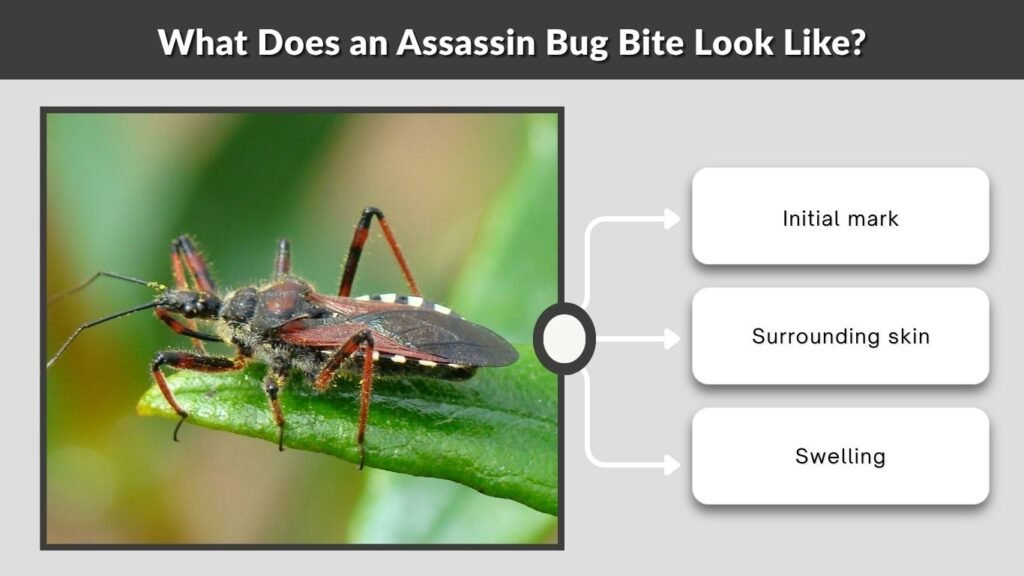
An assassin bug bite does not always produce a unique or easily recognizable mark. Its appearance varies according to the species, bite location and the person’s reaction.
| Bite feature | Possible appearance |
| Initial mark | Tiny puncture or small red spot |
| Surrounding skin | Red, pink or darker than the normal skin tone |
| Swelling | Mild puffiness to a larger raised welt |
| Sensation | Sharp pain, burning, tenderness or numbness |
| Later reaction | Itching, soreness or continued swelling |
| Serious reaction | Blistering, spreading redness, hives or severe swelling |
A typical bite may appear as a single raised red bump with a tiny puncture in the center. The surrounding area can become warm, swollen and tender. Some people notice little more than a red spot, while others develop a larger welt.
Bug bites often share similar features, including bumps, redness, swelling, itching and pain. Identifying the insect from the skin mark alone can therefore be difficult. Exposure history and a photograph or specimen of the insect are more useful.
Assassin Bug Bite Pictures
Online assassin bug bite pictures may show:
- A single red puncture mark
- A swollen welt around the bite
- Redness extending several centimeters
- A small blister or irritated center
- Swelling on a finger, hand, arm, leg or neck
These images should be treated as examples, not a diagnostic test. Mosquito bites, spider bites, ant stings, allergic rashes and bacterial skin infections can look similar.
Take a clear photograph soon after the bite and another several hours later. This can help document whether redness or swelling is spreading.
Assassin Bug Bite Symptoms
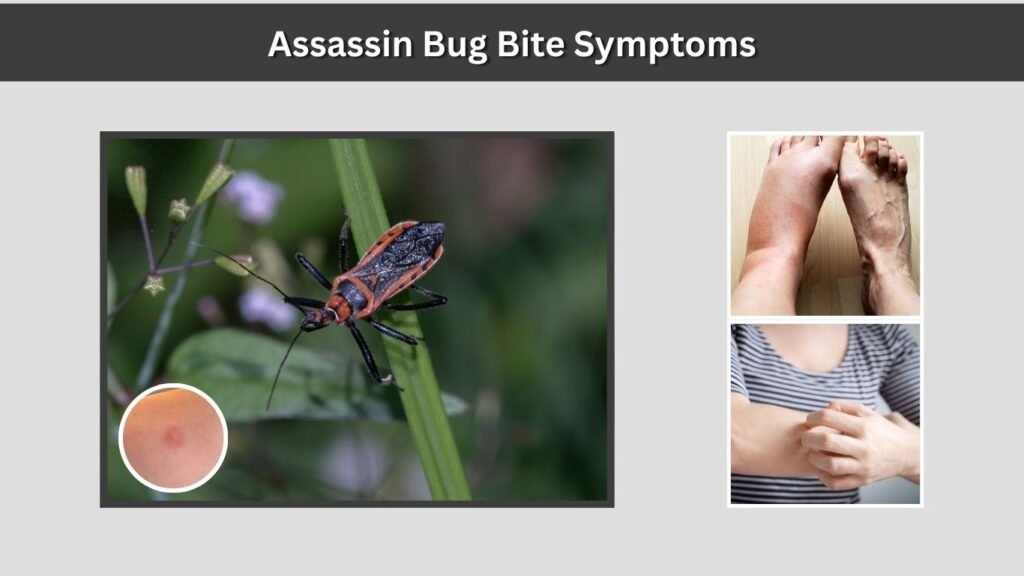
Pain often begins at the moment of the bite. The severity can range from a sharp pinprick to a strong burning sensation similar to a bee or wasp sting.
Common Symptoms
- Sudden sharp or burning pain
- A visible puncture or red bump
- Localized redness
- Swelling around the bite
- Tenderness when touched
- Itching as the reaction settles
- Tingling or temporary numbness
Masked hunter bites can feel like a bee sting and may be followed by swelling and numbness. Responses vary because the insect species and each person’s immune reaction are different.
How Painful Is an Assassin Bug Bite?
There is no accepted numerical pain scale for assassin bug bites. Most reports describe the pain as immediate and intense but localized. Larger species, including wheel bugs, can produce particularly painful bites.
Pain may gradually decrease over several hours, while tenderness, itching or swelling can remain longer. Persistent or worsening pain should be evaluated by a healthcare professional.
How Long Do Symptoms Last?
Mild discomfort may improve within a few hours, while redness, itching and swelling can last several days. A larger local reaction may take longer to settle.
Healing time depends on:
- The assassin bug species
- How deeply the skin was pierced
- The bite’s location
- Individual sensitivity
- Whether the area was scratched
- Whether infection develops
How to Treat an Assassin Bug Bite
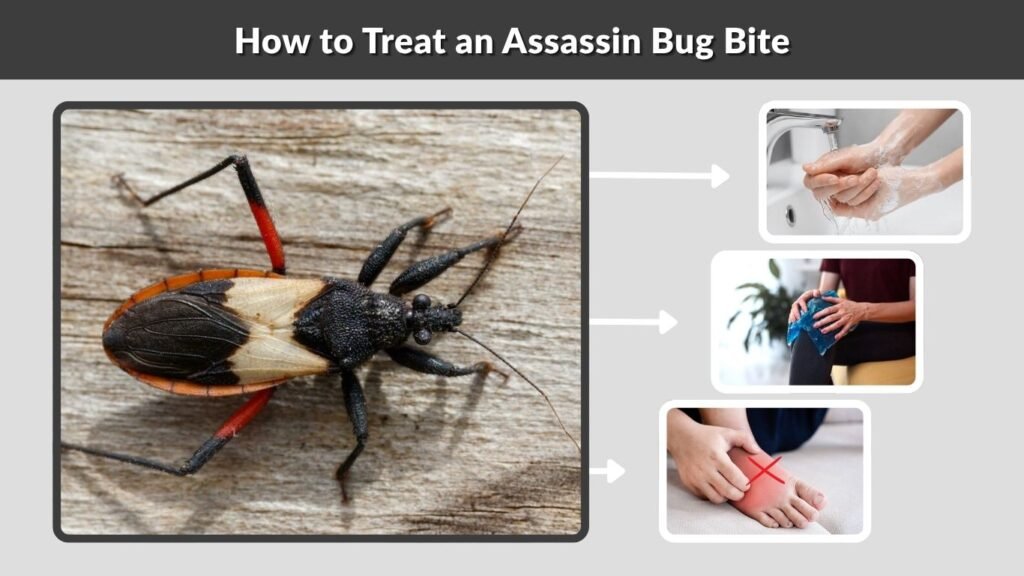
Most uncomplicated bites can be managed with basic first aid. Treatment should focus on cleaning the wound and controlling pain and swelling.
Immediate First Aid
- Move away from the insect. Do not pick it up with bare hands.
- Wash the bite. Gently clean the area with soap and water.
- Apply a cold compress. Wrap an ice pack in a thin towel and place it over the bite to reduce pain and swelling.
- Elevate the area. Raising a bitten hand, arm, foot or leg may help reduce swelling.
- Avoid scratching. Scratching can break the skin and introduce bacteria.
- Monitor the reaction. Watch for increasing redness, swelling, pain or symptoms elsewhere in the body.
Washing the skin helps reduce contamination, while a wrapped cold compress can relieve mild swelling and pain.
Medicines for Symptom Relief
Depending on your age, medical history and other medicines, a pharmacist or clinician may suggest:
- An over-the-counter pain reliever
- An oral antihistamine for itching
- Calamine lotion
- A mild topical hydrocortisone product
Follow product directions and consult a healthcare professional before treating young children, pregnancy-related cases or anyone with significant health conditions.
Do not cut the bite, attempt to suck anything out or apply harsh chemicals. Assassin bugs do not leave a stinger behind.
When Is an Assassin Bug Bite Dangerous?
Most bites cause a painful local reaction rather than a serious medical problem. However, seek urgent care when symptoms extend beyond the bite area or become progressively worse.
Get Emergency Help for:
- Difficulty breathing or swallowing
- Swelling of the tongue, lips, face or throat
- Widespread hives
- Dizziness, fainting or confusion
- Wheezing or chest tightness
- A rapid pulse with other allergic symptoms
- Repeated vomiting or severe weakness
These can indicate a serious allergic reaction. Severe reactions to insect bites may progress rapidly and require emergency treatment.
Contact a Healthcare Professional If:
- Redness continues spreading
- Pain or swelling becomes worse after initially improving
- Pus or cloudy fluid appears
- The skin becomes increasingly hot
- Red streaks extend from the wound
- Fever develops
- A blister or open wound forms
- Symptoms fail to improve
These changes may indicate infection or a stronger local reaction.
Pale Green Assassin Bug Bite
The pale green assassin bug is a slender green predator often found on leaves, flowers and garden plants. It has long legs, narrow antennae and a pointed head.
It does not normally target humans, but it may bite when handled or trapped against the skin. A pale green assassin bug bite may cause immediate pain, redness and localized swelling. Treatment is the same as for most uncomplicated assassin bug bites: wash the area, apply a cold compress and monitor the reaction.
Its green color does not make its bite more poisonous or more dangerous than bites from darker assassin bug species.
Milkweed Assassin Bug Bite
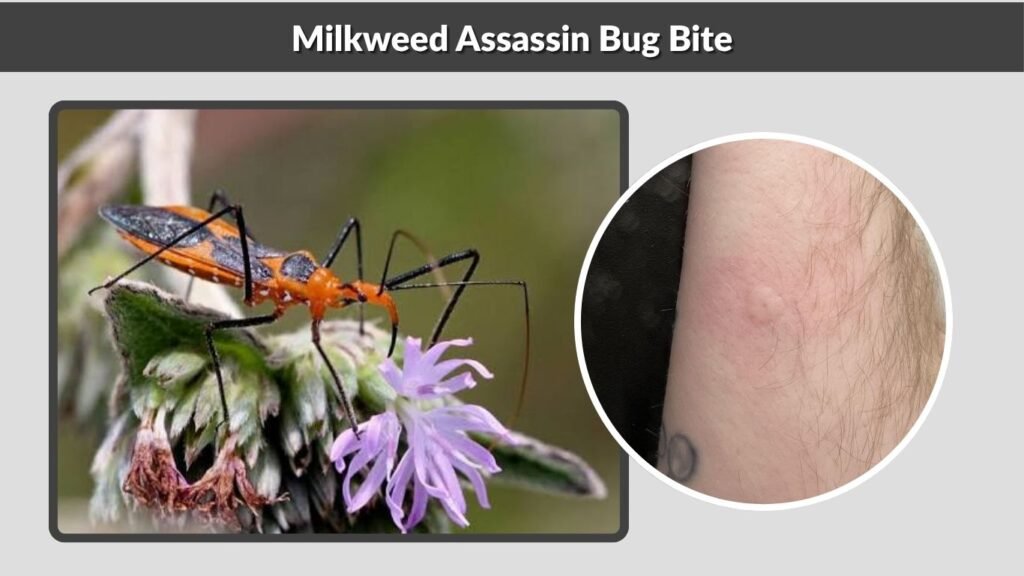
Milkweed assassin bugs are orange, red or black predators commonly found on vegetation. Despite their name, they hunt insects rather than feeding exclusively on milkweed plants.
Both adults and nymphs may bite in self-defense. A milkweed assassin bug bite can hurt, but it is not generally associated with disease transmission. Avoid touching adults, nymphs or egg clusters with bare hands.
Can an Assassin Bug Bite Cause Chagas Disease?
Most assassin bugs—including wheel bugs, masked hunters, pale green assassin bugs and milkweed assassin bugs—do not spread Chagas disease.
Kissing bugs are a specialized blood-feeding group within the assassin bug family. Chagas disease is not usually transmitted simply by the puncture itself. Transmission can occur when feces from an infected kissing bug enter the bite wound, eyes or mouth.
A suspected kissing bug should be captured without crushing it or touching it directly. Place it in a sealed container and contact a local health department, extension office or qualified pest-identification service.
FAQs
Can an assassin bug bite kill you?
A typical predatory assassin bug bite is unlikely to be fatal. Most cause localized pain, redness and swelling. A life-threatening allergic reaction is possible with insect bites, however, so breathing problems, facial swelling, fainting or widespread hives require immediate emergency care.
Do assassin bug nymphs bite?
Yes. Assassin bug nymphs have piercing mouthparts and can bite defensively even though they are smaller and do not have developed wings. Avoid handling immature pale green, milkweed or masked hunter assassin bugs with bare hands.
Is an assassin bug bite poisonous?
Assassin bugs are not poisonous to touch. Their bite introduces saliva into the skin, which can produce pain and inflammation. The severity varies by species and individual sensitivity, but most bites cause temporary local symptoms rather than systemic poisoning.
Should I pop an assassin bug bite blister?
No. Do not intentionally pop a blister because the skin covering helps protect the wound from bacteria. Keep it clean and covered loosely. Seek medical advice if the blister grows, becomes extremely painful, drains pus or develops spreading redness.
What should I do with the bug after being bitten?
Do not crush it with your fingers. Photograph it or trap it under a container, then move it into a sealed jar without direct contact. Identification is especially important when the insect resembles a blood-feeding kissing bug.
