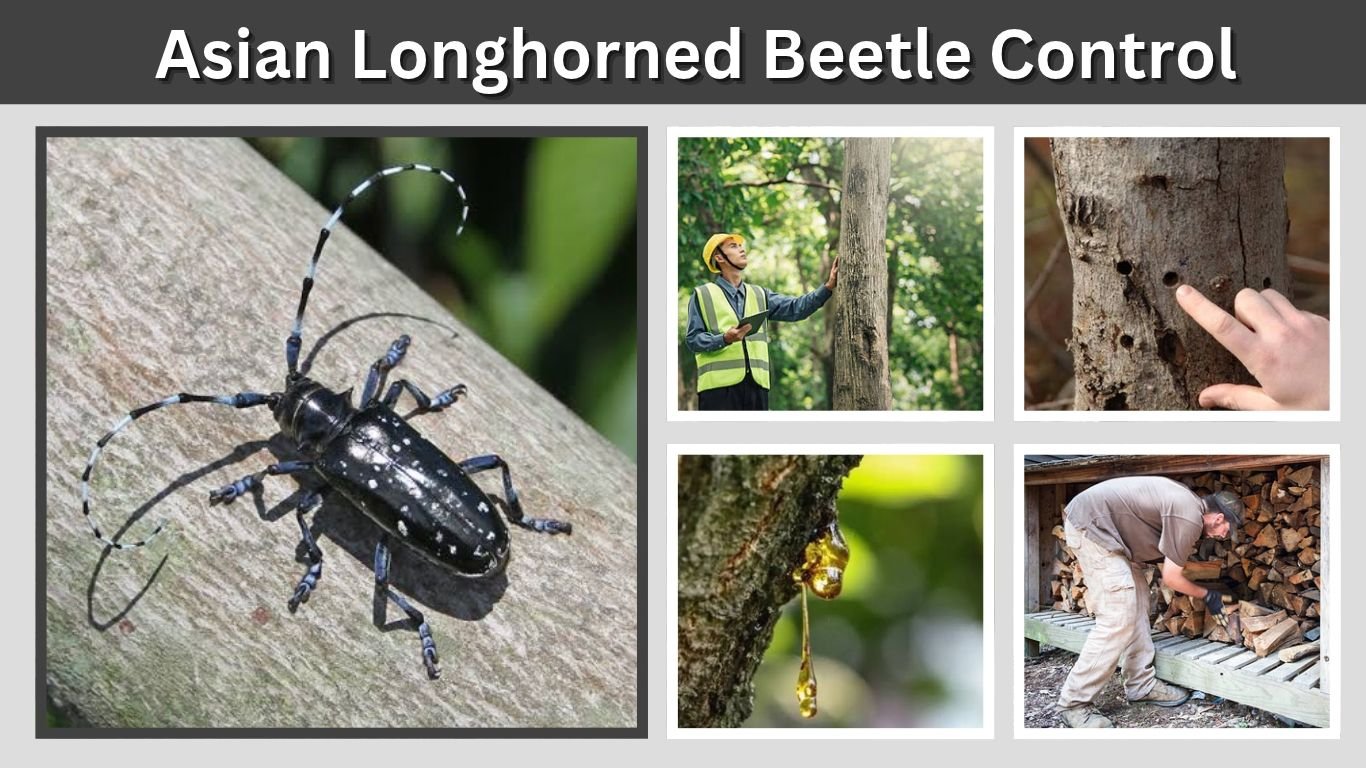
Asian longhorned beetle control is essential for protecting maple, birch, willow, and other hardwood trees from a destructive invasive pest. Its larvae tunnel deep inside living wood, weakening branches and sometimes killing entire trees. Because the insects remain hidden for months, effective management depends on early detection, reporting, quarantine, and professional eradication rather than ordinary household insect sprays. This guide explains how to identify an infestation, which chemical and biological methods are being studied or used, and what homeowners can do to prevent the beetle from spreading.
What Is the Asian Longhorned Beetle?
The Asian longhorned beetle (Anoplophora glabripennis) is a destructive wood-boring insect native to China and the Korean Peninsula. It has become an invasive pest in parts of North America and Europe. Unlike many wood-boring beetles that attack dying trees, this species can infest healthy hardwood trees and eventually kill them.
Asian Longhorned Beetle Identification
- Scientific Name: Anoplophora glabripennis
- Family: Cerambycidae
- Order: Coleoptera
- Body Length: Approximately 1–1.5 inches
- Color: Shiny black with irregular white spots
- Antennae: Long, with alternating black and white bands
- Larvae: Cream-colored, legless wood-boring grubs
- Main Host Trees: Maple, birch, willow, poplar, and elm
- Primary Damage: Tunnels inside living hardwood trees
Why Are Asian Longhorned Beetles Dangerous?
Asian longhorned beetle larvae feed inside living trees, damaging tissues responsible for transporting water and nutrients.
As the larvae grow, they create tunnels through the wood, weakening the tree’s internal structure.
Severe infestations can cause branch dieback, falling limbs, and eventual tree death. This damage also creates safety hazards in residential neighborhoods, parks, and public landscapes.
How to Identify an Asian Longhorned Beetle Infestation
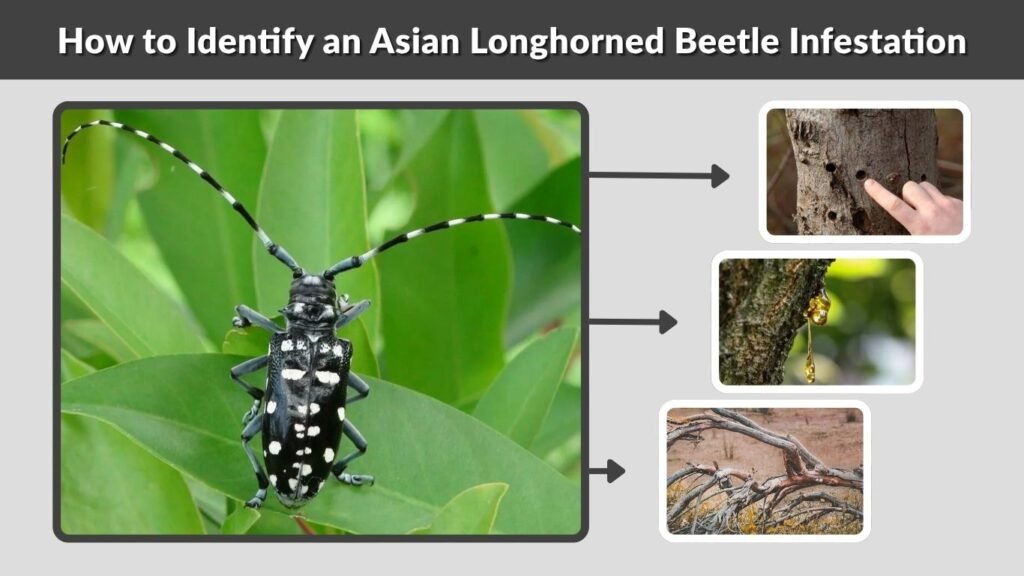
Early identification is one of the most important parts of Asian longhorned beetle control. Because the larvae remain concealed inside trunks and branches, an infestation may develop before adults become visible. Regular inspection of susceptible hardwood trees can help detect the beetle before it spreads.
Common Signs of Infestation
Look for these warning signs:
- Round Exit Holes: Circular holes approximately 3/8 inch or larger where adult beetles emerge.
- Egg-Laying Scars: Small, oval depressions chewed into the bark by females.
- Sawdust-Like Material: Coarse wood particles, called frass, around branches and tree bases.
- Leaking Sap: Sap may ooze from damaged bark near egg-laying sites.
- Dead Branches: Previously healthy branches may weaken, die, or fall.
- Adult Beetles: Black-and-white spotted beetles may appear during warmer months.
Which Trees Are Most Vulnerable?
Maple trees are particularly susceptible to Asian longhorned beetle infestations.
Other hosts include birch, willow, poplar, and certain elm species. The preferred host trees vary by location and environmental conditions.
Inspecting these trees regularly is especially important in areas where the pest has already been detected.
7 Effective Asian Longhorned Beetle Control Methods
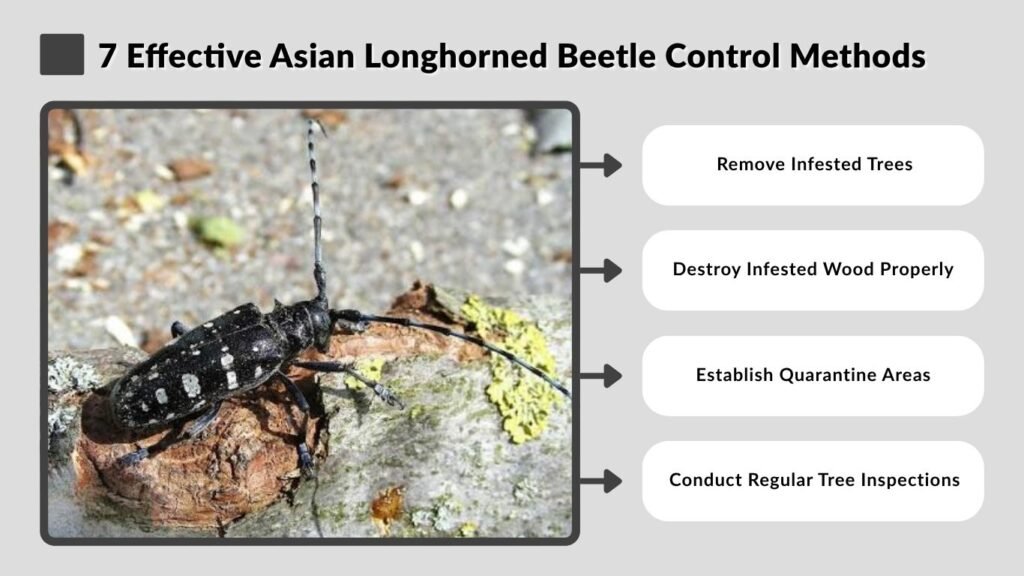
Controlling Asian longhorned beetles requires a combination of professional eradication techniques and preventive measures. Ordinary insecticide sprays are not reliable because larvae develop deep inside trees. Government agencies generally use coordinated programs designed to detect infestations, eliminate breeding populations, and prevent further spread.
1. Remove Infested Trees
Removing confirmed infested trees is the primary eradication method used in the United States.
Once larvae establish themselves deep inside a tree, insecticides cannot reliably eliminate every developing beetle.
Authorized professionals remove infested trees and destroy or process the wood according to local eradication requirements.
2. Destroy Infested Wood Properly
Infested wood must be processed to prevent larvae or adult beetles from surviving and spreading.
Approved disposal methods may include controlled chipping or incineration.
Homeowners should never transport suspected infested wood or dispose of it independently without guidance from local plant-health authorities.
3. Establish Quarantine Areas
Quarantine restrictions help prevent the beetle from spreading into unaffected regions.
Authorities may regulate the transportation of firewood, logs, branches, and other hardwood materials.
These restrictions are particularly important because beetles can remain hidden inside wood during transportation.
4. Conduct Regular Tree Inspections
Routine tree inspections help identify new infestations before they become widespread.
Inspectors examine trunks, branches, and upper canopies for exit holes, egg-laying marks, and other damage.
Professional surveys may continue for several years after the last confirmed infestation.
5. Apply Preventive Insecticide Treatments
Some eradication programs use systemic insecticides to protect selected uninfested host trees.
These treatments can reduce adult feeding and affect certain early larval stages.
However, insecticides are not considered a reliable cure for trees with established infestations.
6. Remove High-Risk Host Trees When Necessary
In certain eradication programs, authorities may recommend removing selected host trees near confirmed infestations.
This strategy reduces opportunities for surviving beetles to reproduce.
Such decisions depend on infestation severity, local regulations, environmental considerations, and property-owner permissions where applicable.
7. Report Suspected Beetles Immediately
Public reporting plays an essential role in early detection.
If you discover a suspicious beetle or tree damage, photograph it and contact local agricultural or invasive-species authorities.
In the United States, suspected Asian longhorned beetles can be reported to USDA APHIS at 1-866-702-9938.
Asian Longhorned Beetle Chemical Control
Chemical control can support Asian longhorned beetle management, but it has significant limitations. Systemic insecticides may protect certain healthy trees in active eradication areas. They should be used only through authorized programs or appropriately qualified professionals following applicable regulations.
Systemic Insecticide Treatments
Imidacloprid is an insecticide that has been used in some Asian longhorned beetle eradication programs.
It may be applied through trunk injections or soil injections, allowing the chemical to move into the tree’s tissues.
Adult beetles feeding on treated trees and some young larvae may be exposed to the insecticide.
Limitations of Chemical Control
Systemic treatments cannot reliably reach large larvae tunneling deep inside heartwood.
Their effectiveness also depends on tree condition, application timing, and environmental factors.
Imidacloprid can pose risks to pollinators and other non-target organisms. Therefore, homeowners should not attempt unauthorized chemical treatment, especially around flowering trees.
Asian Longhorned Beetle Biological Control
Biological control involves using natural enemies to reduce pest populations. Researchers have investigated predators, parasitic wasps, and insect-killing fungi as potential tools against Asian longhorned beetles. However, these methods are not currently dependable replacements for established eradication programs in North America.
Natural Predators and Parasitoids
Certain parasitic wasps and predators attack Asian longhorned beetles in their native range.
Researchers have investigated whether these natural enemies could help control invasive populations.
However, introducing predators or parasitoids may harm native insects. Additional research is necessary before biological agents can be widely adopted.
Fungal Biological Control
Some insect-pathogenic fungi, including Metarhizium species, have been studied for their ability to infect and kill adult beetles.
Experimental methods include fungal bands placed around tree trunks.
Although these approaches show potential, their effectiveness under field conditions requires further evaluation.
How to Prevent Asian Longhorned Beetle Infestations
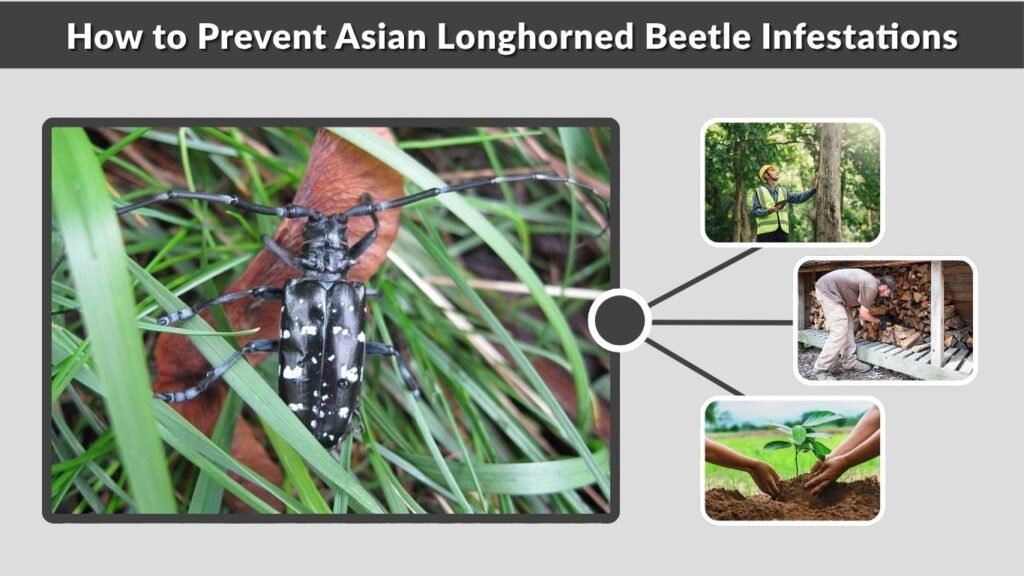
Prevention is essential because established Asian longhorned beetle infestations are expensive and difficult to eradicate. Homeowners, gardeners, and tree-care professionals can reduce the risk of spreading this pest by inspecting vulnerable trees and following wood transportation restrictions.
Prevention and Control Measures
- Inspect Hardwood Trees: Check trunks and branches regularly for unusual holes and bark damage.
- Avoid Moving Firewood: Purchase and use firewood locally rather than transporting untreated wood.
- Follow Quarantine Rules: Respect restrictions covering logs, branches, and other regulated materials.
- Report Suspicious Insects: Contact plant-health authorities when unfamiliar black-and-white beetles appear.
- Protect Healthy Trees: Maintain appropriate watering and tree care to support general tree health.
- Choose Suitable Replacement Trees: Follow local guidance when selecting trees for replanting.
Long-Term Monitoring and Eradication
Successful Asian longhorned beetle control depends on continued monitoring after infested trees are removed.
Government agencies conduct repeated surveys to detect surviving populations and determine whether eradication efforts have succeeded.
Replanting appropriate tree species helps restore affected neighborhoods and forest landscapes.
FAQs
1. What is the best way to control Asian longhorned beetles?
The most effective established control method is professional removal and approved destruction of infested trees. Quarantine restrictions, repeated inspections, and early reporting help prevent further spread. Preventive insecticide treatments may also support official eradication programs.
2. Can insecticides kill Asian longhorned beetles?
Certain systemic insecticides, including imidacloprid, can kill feeding adults and some young larvae. However, chemicals cannot reliably eliminate older larvae living deep inside tree trunks. Therefore, confirmed infested trees generally require removal under official control programs.
3. Is biological control effective against Asian longhorned beetles?
Biological control remains an active area of research. Scientists have investigated parasitic wasps, predators, and insect-killing fungi. However, these methods have not replaced tree removal, quarantine restrictions, and monitoring in established North American eradication programs.
4. Can a tree survive an Asian longhorned beetle infestation?
A lightly infested tree may remain alive for some time, but larval tunneling causes progressive structural damage. Under U.S. eradication guidance, confirmed infested trees are removed because insecticides cannot reliably eliminate the beetles or prevent further spread.
5. How can homeowners prevent Asian longhorned beetles?
Homeowners can help prevent infestations by inspecting hardwood trees, avoiding the movement of untreated firewood, following quarantine regulations, and reporting suspicious beetles. Early identification and cooperation with local plant-health authorities are essential for protecting nearby trees.