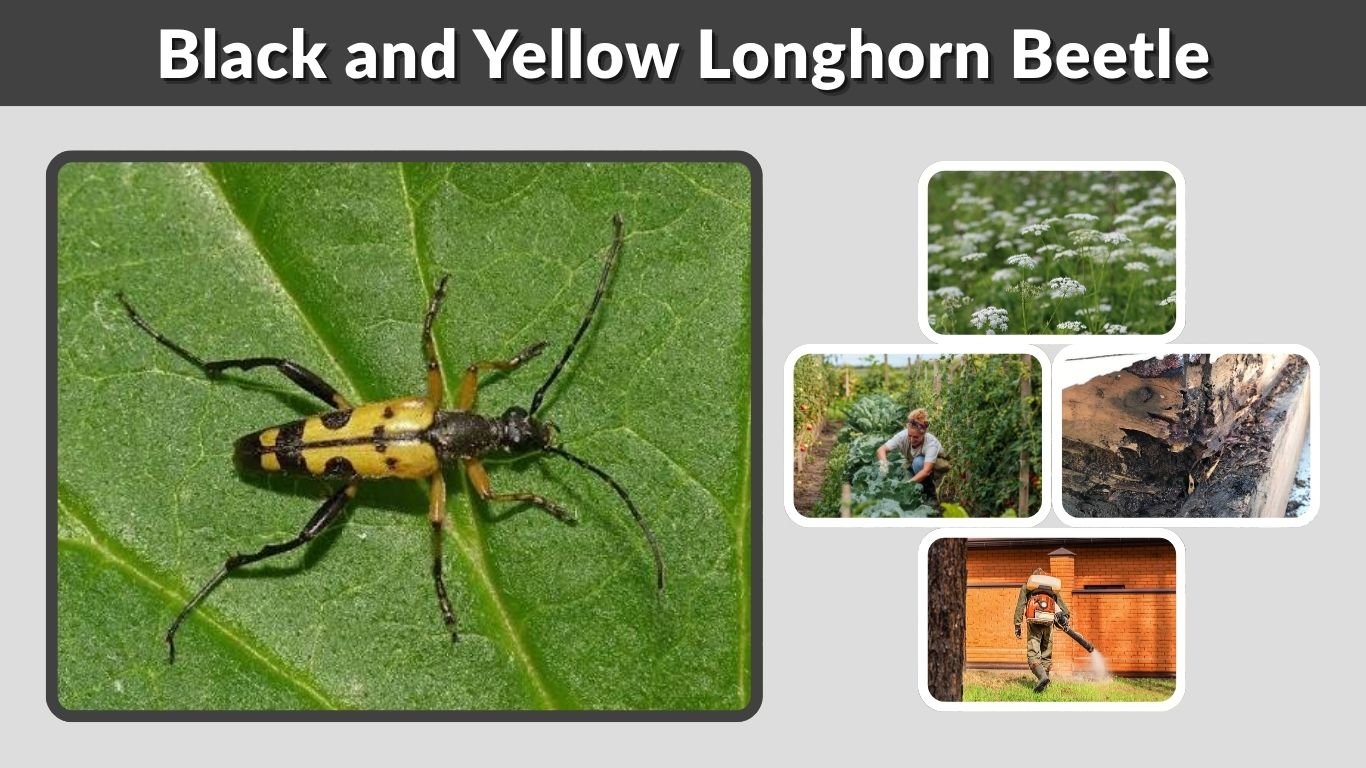
The black and yellow longhorn beetle is a distinctive insect known for its colorful wing markings, elongated body, and unusually long antennae. Commonly found around woodlands, gardens, and flowering plants, these beetles attract attention because of their striking appearance. Some species have bold black and yellow stripes, while others display spots or irregular patterns. Although they may resemble wasps, most longhorn beetles are harmless to humans. Understanding their identification, habitat, feeding habits, life cycle, and potential tree damage can help you recognize these fascinating insects.
What Is a Black and Yellow Longhorn Beetle?
The black and yellow longhorn beetle commonly refers to Rutpela maculata, also known as the spotted longhorn beetle or harlequin longhorn beetle. It belongs to the Cerambycidae family, which includes thousands of beetle species with elongated antennae.
This species is widespread across Europe, including the United Kingdom. Adults frequently visit flowers during warm summer days, while larvae develop inside decaying wood.
Other longhorn beetle species also have black and yellow markings, making accurate identification important.
Black and Yellow Longhorn Beetle Identification
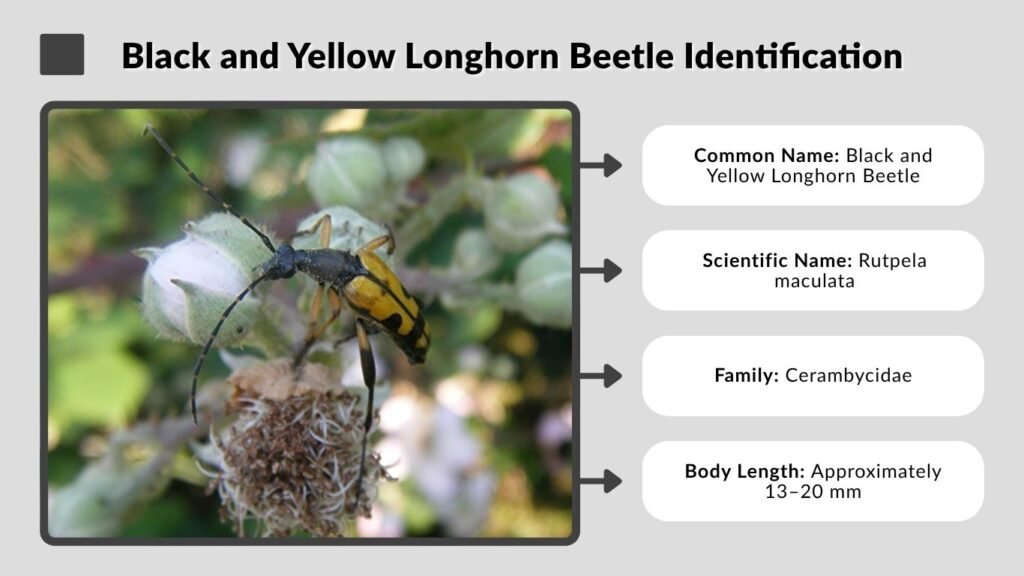
Black and yellow longhorn beetles are recognized by their elongated bodies, patterned wing covers, and long, segmented antennae. Their coloration varies between species, but many have yellow backgrounds decorated with black bands, spots, or irregular markings.
Physical Characteristics
- Common Name: Black and Yellow Longhorn Beetle
- Scientific Name: Rutpela maculata
- Family: Cerambycidae
- Body Length: Approximately 13–20 mm
- Body Shape: Narrow, elongated, and slightly tapered
- Body Color: Black head and thorax with yellow-and-black wing covers
- Antennae: Long, segmented, and alternately banded
- Legs: Long and often yellowish-orange
- Wings: Hardened, patterned wing covers protecting flight wings
- Habitat: Woodlands, hedgerows, meadows, and gardens
Why Do Longhorn Beetles Have Long Antennae?
Longhorn beetles use their antennae to detect chemical signals, explore their surroundings, and locate potential mates.
Their antennae may approach or exceed their body length, depending on the species and sex.
Despite their appearance, these structures are sensory organs rather than weapons. They help beetles navigate vegetation and recognize other members of their species.
Common Types of Black and Yellow Longhorn Beetles
Several longhorn beetle species share black and yellow patterns. Some have broad stripes resembling wasps, while others display irregular spots.
Black and Yellow Longhorn Beetle Species
- Spotted Longhorn Beetle (Rutpela maculata): A European species with yellow wing covers marked by irregular black spots and bands. Adults commonly visit woodland flowers.
- Four-Banded Longhorn Beetle (Leptura quadrifasciata): Recognized by four yellowish bands across dark wing covers. It inhabits woodlands and develops in decaying wood.
- Locust Borer (Megacyllene robiniae): A North American species featuring bright yellow markings on a black body. Its larvae develop inside black locust trees.
- Wasp Beetle (Clytus arietis): A black-and-yellow longhorn beetle with distinctive wasp-like markings. It commonly occurs around woodland edges and dead wood.
These beetles belong to the same family but differ in geographic distribution, preferred host trees, and ecological roles.
Where Do Black and Yellow Longhorn Beetles Live?
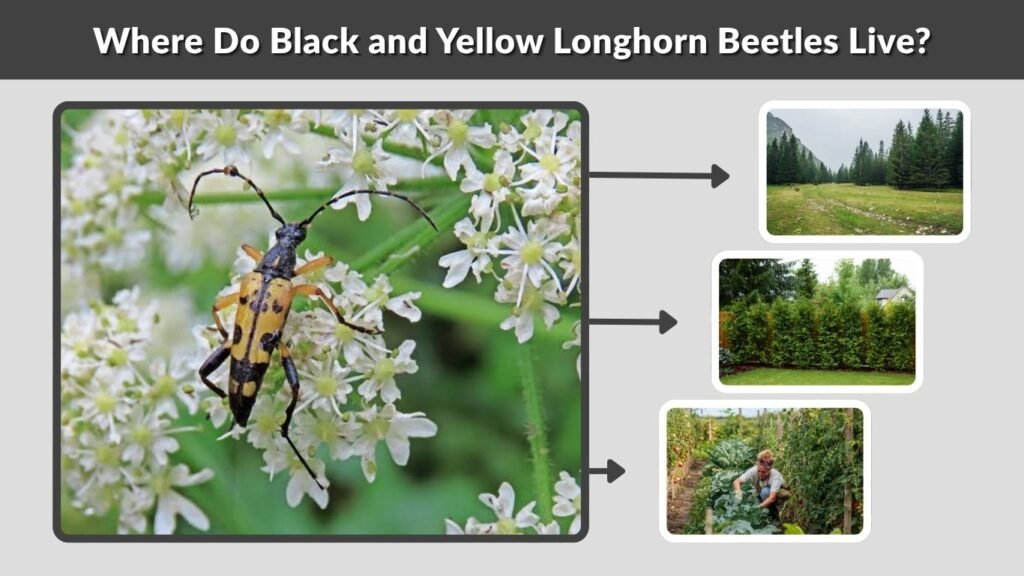
Black and yellow longhorn beetles commonly inhabit woodland edges, hedgerows, gardens, and areas containing dead or decaying trees.
The spotted longhorn beetle is particularly widespread in England and Wales, with additional populations elsewhere in Europe.
Black and Yellow Longhorn Beetle in the UK
In the United Kingdom, Rutpela maculata is frequently observed between May and August.
Adults prefer sunny woodland margins where flowering plants provide nectar and pollen.
Their larvae develop inside fallen branches, old stumps, and decomposing wood, making woodland habitats especially important.
Black and Yellow Longhorn Beetles in the USA
In North America, similarly colored species include the locust borer.
This beetle commonly visits goldenrod flowers during late summer. Its larvae tunnel into black locust trees, sometimes weakening branches and trunks.
Not every black and yellow beetle found in the United States belongs to the same species.
What Do Black and Yellow Longhorn Beetles Eat?
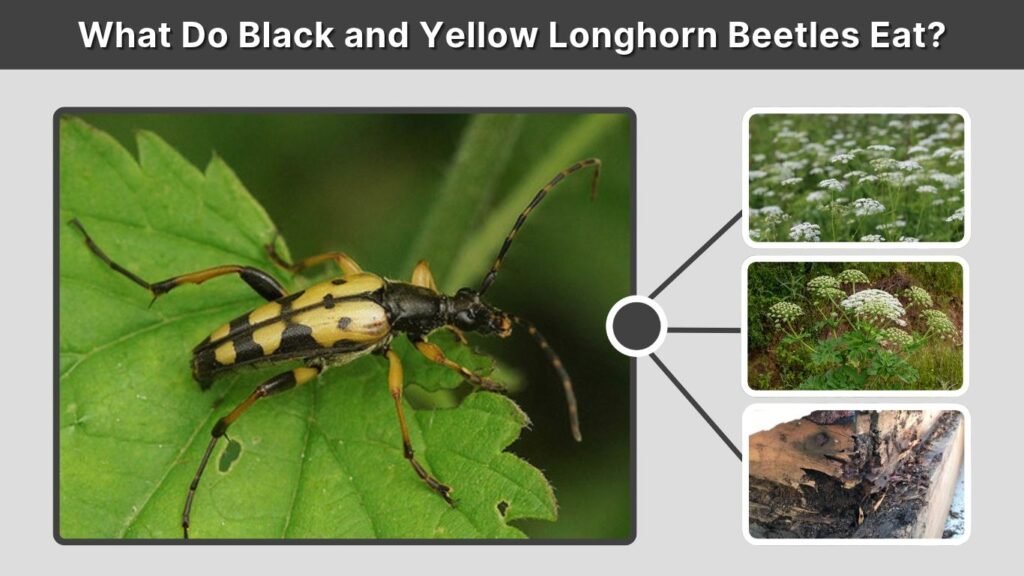
Feeding habits change considerably between the larval and adult stages.
Adult spotted longhorn beetles consume pollen and nectar from flowering plants, including cow parsley, hogweed, thistles, and other wildflowers.
Their larvae feed inside damp, decaying wood. This behavior contributes to the breakdown of dead plant material.
Do Longhorn Beetles Eat Living Trees?
Some longhorn beetles develop only in dead or weakened wood, while other species attack living trees.
The spotted longhorn beetle primarily uses decaying wood and is not considered a significant pest of healthy trees.
However, the locust borer can damage living black locust trees, especially when infestations become severe.
Black and Yellow Longhorn Beetle Life Cycle
Black and yellow longhorn beetles undergo complete metamorphosis, progressing through four developmental stages.
Four Stages of the Life Cycle
- Egg: Female beetles deposit eggs in suitable wood, often near cracks or decaying surfaces.
- Larva: After hatching, the larvae tunnel through wood and feed while gradually growing.
- Pupa: Mature larvae transform into pupae inside protected chambers.
- Adult: Fully developed beetles emerge, mate, visit flowers, and begin another reproductive cycle.
For Rutpela maculata, larval development commonly takes two to three years, while adults generally survive for only a few weeks.
Do Black and Yellow Longhorn Beetles Bite?
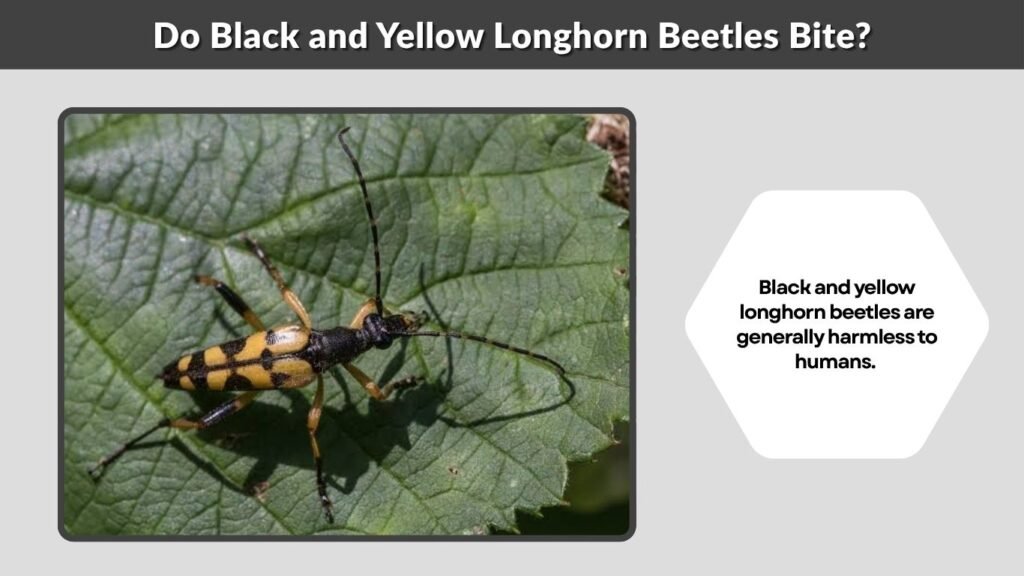
Black and yellow longhorn beetles are generally harmless to humans. They do not possess venomous stingers and are not naturally aggressive.
However, longhorn beetles have mandibles used for feeding and other activities. Some may deliver a defensive pinch if handled roughly.
Are Black and Yellow Longhorn Beetles Poisonous?
The spotted longhorn beetle is not considered poisonous or venomous to humans.
Its black and yellow coloration may resemble the warning patterns of stinging insects, but it cannot sting like a wasp.
Avoid handling unfamiliar beetles unnecessarily, and gently relocate accidental indoor visitors without squeezing them.
Black and Yellow Longhorn Beetle vs. Black and White Beetle
Black and yellow longhorn beetles are sometimes confused with black and white longhorn species because both have patterned bodies and long antennae.
However, color, body size, and preferred host trees help distinguish them.
How Are They Different?
The spotted longhorn beetle has yellow wing covers with black markings and commonly visits flowers.
The Asian longhorned beetle (Anoplophora glabripennis) has a shiny black body with white spots and long, black-and-white banded antennae.
Unlike the spotted longhorn beetle, the Asian longhorned beetle is an invasive pest in the United States that can seriously damage living hardwood trees.
Suspected sightings of invasive longhorn beetles should be reported to local plant health authorities.
How to Get Rid of Black and Yellow Longhorn Beetles
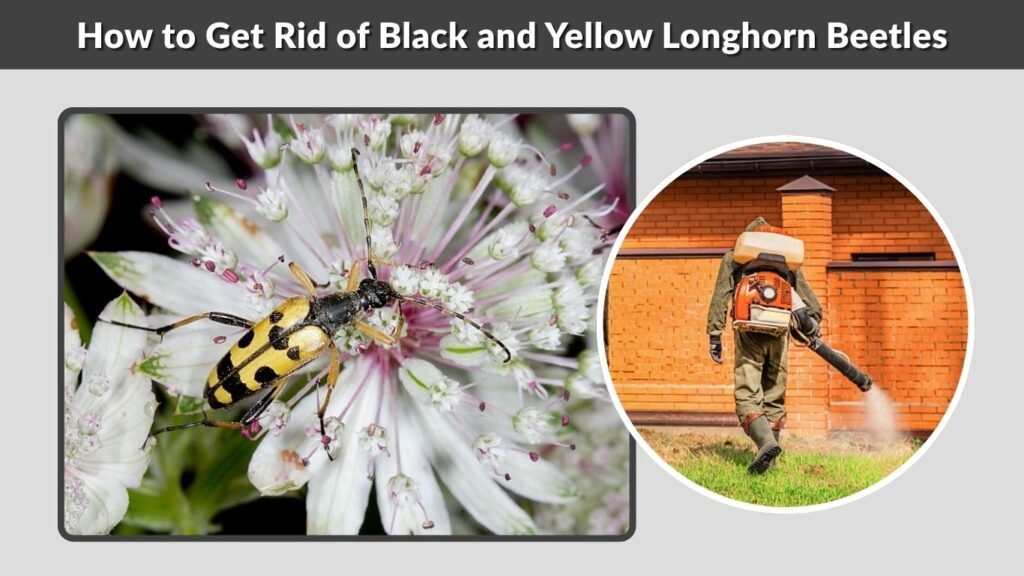
Most black and yellow longhorn beetles do not require control because they are beneficial or harmless insects.
If one enters your home, gently capture it using a container and release it outdoors when appropriate.
Prevention and Control Tips
- Inspect firewood: Check stored logs before bringing them indoors.
- Seal entry points: Repair damaged window screens and gaps around doors.
- Remove unwanted rotting wood: Keep decaying timber away from buildings when practical.
- Monitor tree health: Inspect trees for unusual holes, frass, or weakened branches.
- Avoid unnecessary pesticides: Many longhorn beetles are beneficial woodland insects.
- Seek identification: Contact an extension service or pest specialist if you suspect a damaging wood-boring species.
Are Black and Yellow Longhorn Beetles Beneficial?
Many black and yellow longhorn beetles contribute to healthy woodland ecosystems.
Adults visit flowers and can transfer pollen between plants. Their larvae help break down dead wood, returning nutrients to the environment.
These activities support natural decomposition and provide food for birds and other insect-eating animals.
FAQs
1. Are Black and Yellow Longhorn Beetles Dangerous?
Most black and yellow longhorn beetles are harmless to humans. They do not sting or intentionally attack people. However, certain wood-boring species can damage trees. Accurate identification helps determine whether a beetle is beneficial or requires management.
2. Can Black and Yellow Longhorn Beetles Bite Humans?
Yes, some longhorn beetles can pinch with their mandibles when handled roughly. However, defensive bites are uncommon and generally cause only minor discomfort. These beetles do not have venomous stingers and usually avoid contact with humans.
3. What Is the Black and Yellow Longhorn Beetle Called?
The species commonly called the black and yellow longhorn beetle is Rutpela maculata. It is also known as the spotted longhorn beetle or harlequin longhorn beetle. Several other longhorn species display similar coloration.
4. Why Are Black and Yellow Longhorn Beetles in My House?
Longhorn beetles may accidentally enter homes through open windows, doors, or firewood. Some emerge from wood brought indoors. Finding one does not necessarily indicate an infestation, but repeated appearances may justify inspecting stored timber.
5. Do Black and Yellow Longhorn Beetles Damage Trees?
Tree damage depends on the species. Spotted longhorn beetle larvae primarily develop in decaying wood and generally do not harm healthy trees. Other species, including locust borers, can infest living trees and cause structural damage.