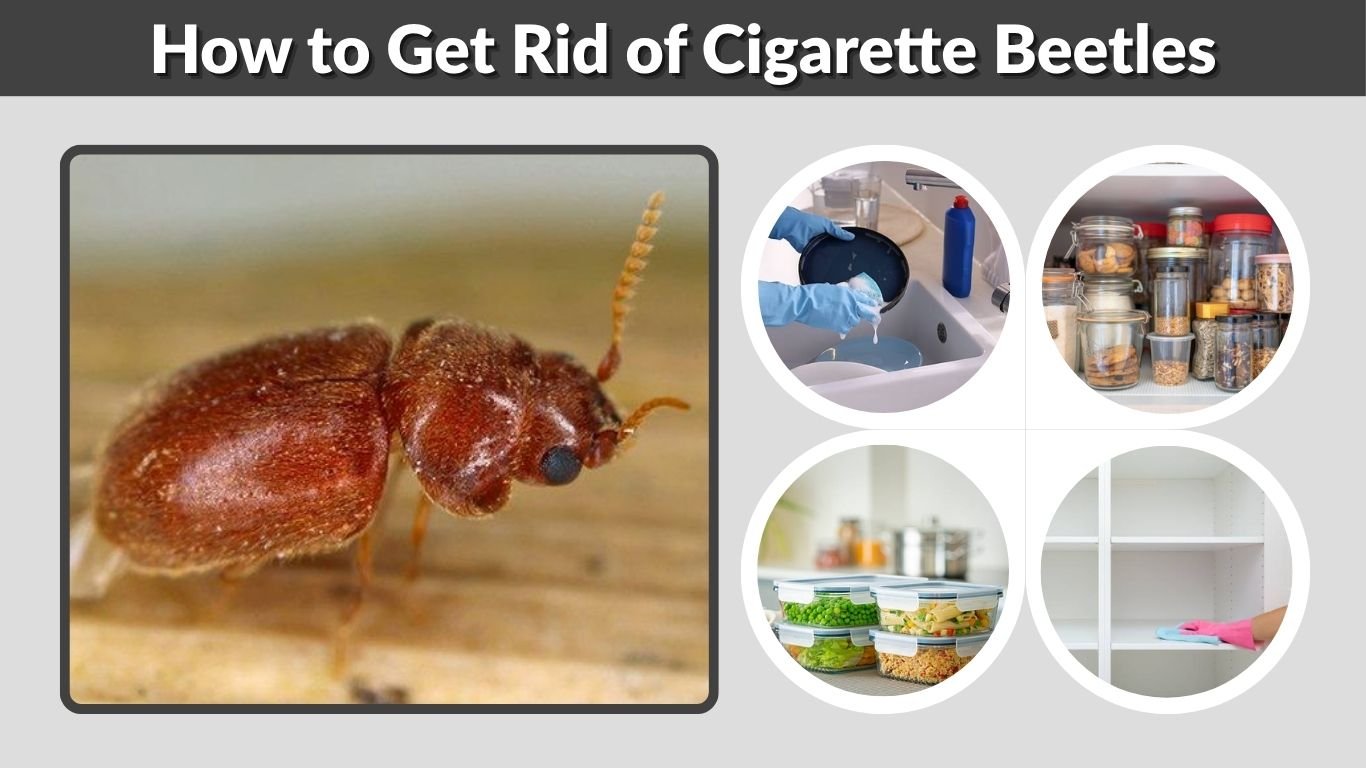
Cigarette beetles are tiny household pests that commonly infest stored foods, spices, tobacco, and dried plant materials. Although they do not bite humans, they can contaminate pantry products and become difficult to eliminate when their breeding source remains hidden. These small brown beetles often enter homes through already-infested packages and multiply in warm storage areas. Fortunately, removing them does not always require chemical treatments. This guide explains how to get rid of cigarette beetles naturally, identify infestations, eliminate hidden breeding sources, and prevent these pests from returning.
What Are Cigarette Beetles?
Cigarette beetles (Lasioderma serricorne) are small, reddish-brown insects belonging to the beetle family Ptinidae. They are common stored-product pests that damage tobacco, dried foods, spices, and other organic materials. Despite their name, they do not exclusively feed on cigarettes. Their ability to survive on numerous dried products makes them troublesome household pests.
How to Identify Cigarette Beetles
Cigarette beetles have several recognizable physical characteristics:
- Scientific Name: Lasioderma serricorne
- Size: Approximately 2–3 mm long
- Color: Light brown to reddish-brown
- Body Shape: Small, oval, and slightly humpbacked
- Antennae: Saw-like or serrated
- Wings: Smooth wing covers without noticeable grooves
- Larvae: Small, creamy-white, C-shaped grubs covered with fine hairs
- Behavior: Adults can fly and are attracted to light.
They are sometimes mistaken for drugstore beetles because both species have similar body shapes and coloring.
How Do Cigarette Beetles Get Into Your House?
Cigarette beetles usually enter homes through contaminated food packages, pet food, tobacco products, or dried plant materials.
Eggs and larvae may already be present inside purchased products without being immediately noticeable.
After entering a home, adults can move into nearby cabinets and storage areas. Warm temperatures and accessible dry food allow populations to develop and spread.
How to Get Rid of Cigarette Beetles Quickly

Getting rid of cigarette beetles requires eliminating the materials supporting their reproduction. Killing visible adults alone is usually ineffective because eggs and larvae may remain hidden inside food packages. The most successful approach combines careful inspection, disposal, cleaning, and proper storage.
7 Steps to Eliminate Cigarette Beetles
Follow these steps to remove an infestation:
- Identify the Infestation Source: Inspect flour, rice, cereal, spices, dried fruits, pet food, tobacco, and other stored products. Look for beetles, larvae, or tiny holes in packaging.
- Discard Infested Products: Place contaminated food in sealed garbage bags and remove it from the house immediately. Do not mix potentially infested products with fresh food.
- Empty Pantry Cabinets: Remove stored items from shelves and inspect corners, drawers, and storage containers for hidden insects.
- Vacuum Thoroughly: Use a vacuum attachment to clean cabinet corners, cracks, shelf joints, and other areas where food particles accumulate. Empty the vacuum outside afterward.
- Wash Storage Areas: Clean shelves and containers with warm, soapy water. Allow everything to dry completely before returning food.
- Use Airtight Containers: Transfer uncontaminated foods into tightly sealed glass, metal, or sturdy plastic containers to prevent further infestation.
- Monitor Remaining Beetles: Place traps specifically labeled for cigarette beetles near affected areas. Inspect them regularly to identify continuing activity.
Should You Use Insecticides?
Insecticides are generally unnecessary for controlling cigarette beetles in household pantries.
Spraying chemicals around food can create unnecessary exposure risks. Additionally, insecticides may kill wandering adults without reaching larvae developing inside stored products.
If a severe infestation continues after thorough cleaning and source removal, contact a qualified pest-control professional.
How to Get Rid of Cigarette Beetles Naturally

Natural cigarette beetle control focuses on removing breeding materials and creating unfavorable conditions for insect development. Nonchemical methods are particularly suitable for kitchens, bedrooms, and other household areas where pesticide use may be undesirable. However, successful elimination still depends on locating the original infestation.
Effective Natural Removal Methods
Several nonchemical techniques can help control cigarette beetles:
- Vacuum Cleaning: Removes visible beetles, larvae, food debris, and some hidden eggs from accessible surfaces.
- Freezing: Suitable infested nonfood materials may be treated at 0°F (-18°C) for approximately six days to kill developing insects.
- Soap and Water: Removes food residues and insect debris from cabinets, shelves, and containers.
- Sealed Storage: Prevents beetles from entering clean products and reduces opportunities for reproduction.
- Regular Inspections: Helps detect newly developing infestations before they spread.
These approaches are more reliable when combined rather than used individually.
Do Essential Oils Kill Cigarette Beetles?
Essential oils such as peppermint, clove, and eucalyptus are sometimes promoted as natural insect repellents.
Although certain plant oils have demonstrated insecticidal or repellent properties in laboratory studies, there is insufficient evidence that household essential-oil treatments can eliminate an established cigarette beetle infestation.
Avoid spraying essential oils directly onto stored food. Some essential oils can also be harmful to pets.
How to Get Rid of Cigarette Beetles in Your House
Cigarette beetles can appear in different rooms because adults are capable of flying. However, the breeding source is often located in stored food or dried organic materials. Understanding where beetles reproduce is essential, particularly when they appear far from the pantry.
Getting Rid of Cigarette Beetles in the Kitchen
Begin by checking rarely used spices, baking ingredients, cereals, dry pet food, and unopened packages.
Inspect the undersides of shelves and the spaces behind cabinets. Spilled grains and forgotten food can support hidden infestations.
Remove contaminated materials and clean every accessible storage surface. Keep remaining food in pest-resistant containers while monitoring for additional beetles.
Getting Rid of Cigarette Beetles in the Bedroom
Finding cigarette beetles in a bedroom does not necessarily mean they are breeding in your bed.
Adult beetles may fly toward bedroom lights or windows after emerging elsewhere in the house.
Inspect dried flowers, potpourri, decorative seed arrangements, stored snacks, and nearby cupboards.
Vacuum baseboards, window frames, and furniture crevices. If beetles continue appearing, examine nearby rooms for overlooked food sources.
Cigarette beetles do not feed on human blood and are not considered bed bugs.
Cigarette Beetles vs. Drugstore Beetles
Cigarette beetles and drugstore beetles are closely related stored-product pests. Both can infest dry foods, spices, and household materials. They also share similar reddish-brown coloring, making them difficult to distinguish without close examination.
How to Tell Them Apart
The cigarette beetle has smooth wing covers and serrated antennae. Its body usually appears rounded and humpbacked.
The drugstore beetle (Stegobium paniceum) has noticeable lengthwise grooves on its wing covers. Its antennae end in a distinctive three-segmented club.
Fortunately, the control methods are nearly identical. Both require locating contaminated products, removing infestation sources, and maintaining clean storage areas.
How to Prevent Cigarette Beetles From Returning

Preventing cigarette beetles requires proper food storage and regular household maintenance. Even after eliminating an infestation, newly purchased contaminated products can introduce beetles again. Maintaining good storage practices helps reduce this risk and makes future infestations easier to detect.
Cigarette Beetle Prevention Tips
- Inspect Groceries: Check dry food packages for damage, holes, or visible insects before storing them.
- Use Airtight Containers: Store grains, spices, flour, and pet food in tightly sealed containers.
- Clean Regularly: Vacuum pantry corners, shelves, and areas where food particles collect.
- Rotate Food Supplies: Use older products before purchasing excessive quantities of new ones.
- Keep Cabinets Dry: Reduce moisture and maintain clean, dry storage conditions.
- Check Hidden Materials: Inspect dried flowers, tobacco, birdseed, and forgotten pet food.
- Monitor Activity: Use suitable pheromone traps to detect recurring beetles.
FAQs
1. Why are cigarette beetles so hard to get rid of?
Cigarette beetles are difficult to eliminate because eggs and larvae remain hidden inside stored products. Adults may appear long after the original infestation begins. Removing contaminated materials and cleaning storage areas thoroughly are essential for successful control.
2. Can cigarette beetles live in your bedroom?
Yes, adult cigarette beetles can appear in bedrooms, especially near lights and windows. However, they usually develop in stored food, tobacco, dried flowers, or similar materials. They do not normally breed in mattresses or feed on humans.
3. What kills cigarette beetles instantly?
Crushing or vacuuming visible beetles kills or removes individual insects immediately. However, these methods cannot eliminate hidden eggs and larvae. Effective infestation control requires finding and removing contaminated materials rather than relying on immediate adult beetle removal.
4. How long does it take to get rid of cigarette beetles?
A small infestation may improve quickly after contaminated products are removed and storage areas are cleaned. However, surviving adults can continue appearing for several weeks. Persistent activity may indicate another hidden breeding source that requires inspection.
5. Do cigarette beetles bite humans?
No, cigarette beetles are not known to bite humans or feed on blood. Their primary concern is contamination and damage to stored products. They may become annoying when flying around rooms, but they are not considered dangerous biting insects.